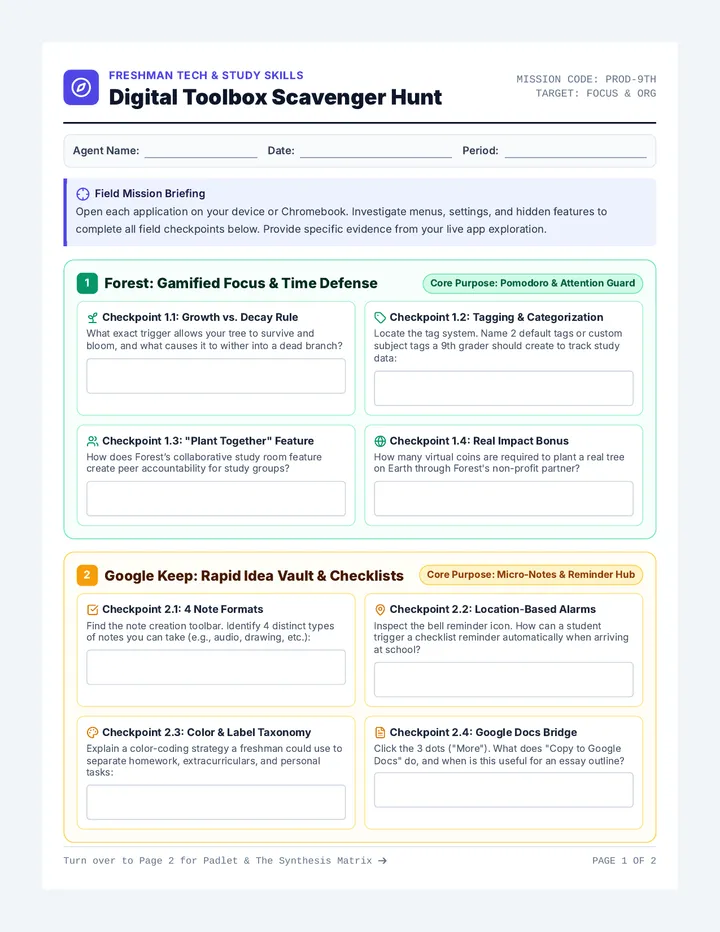
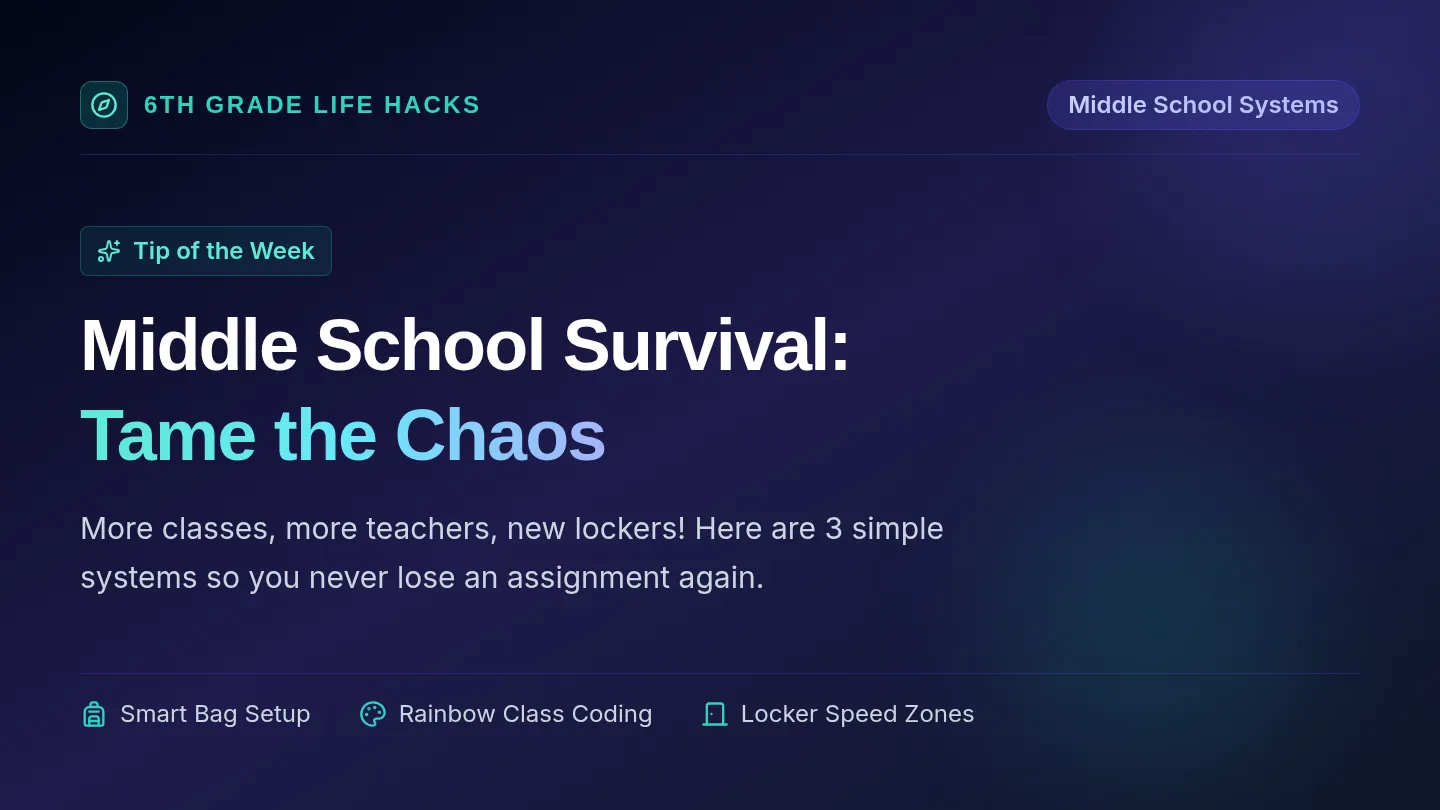
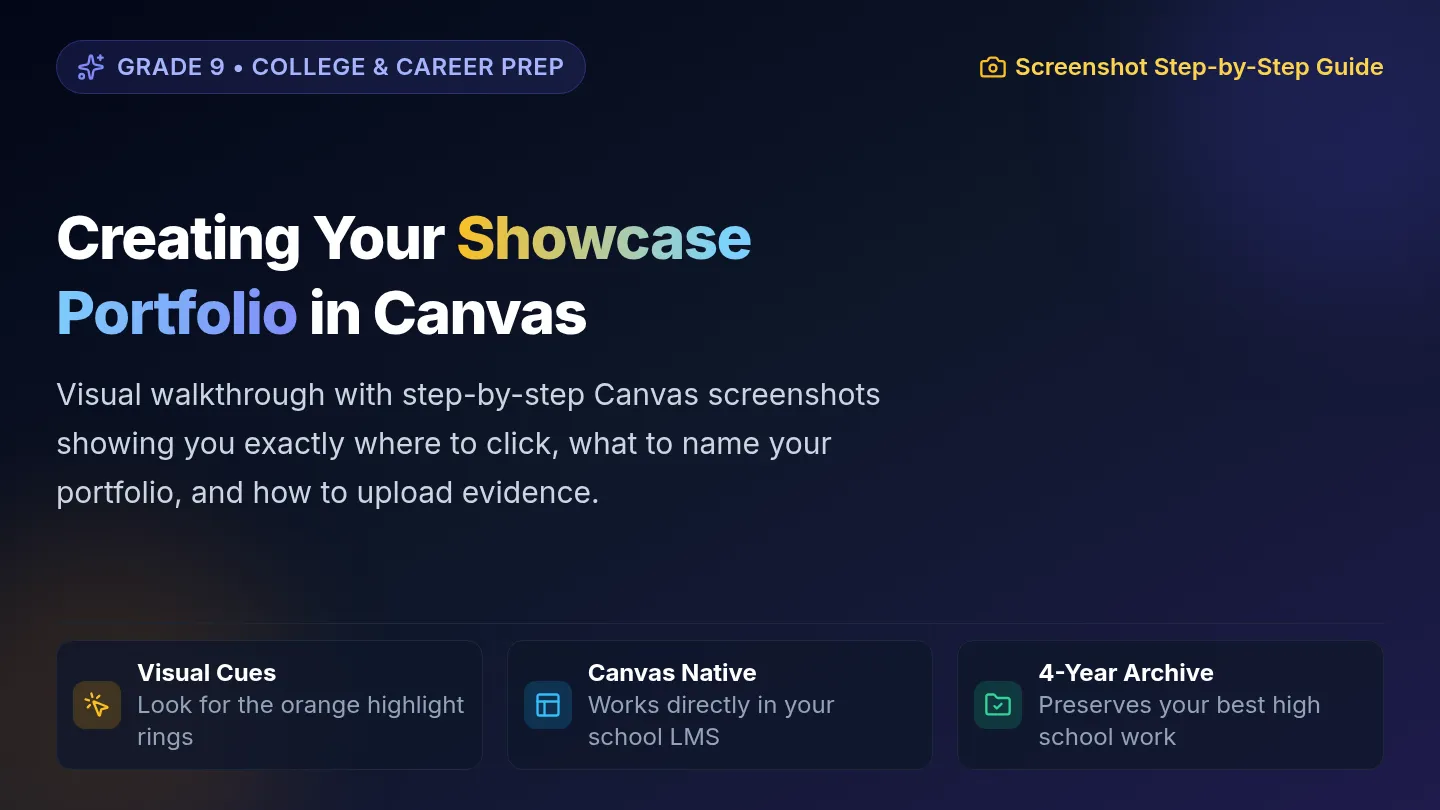
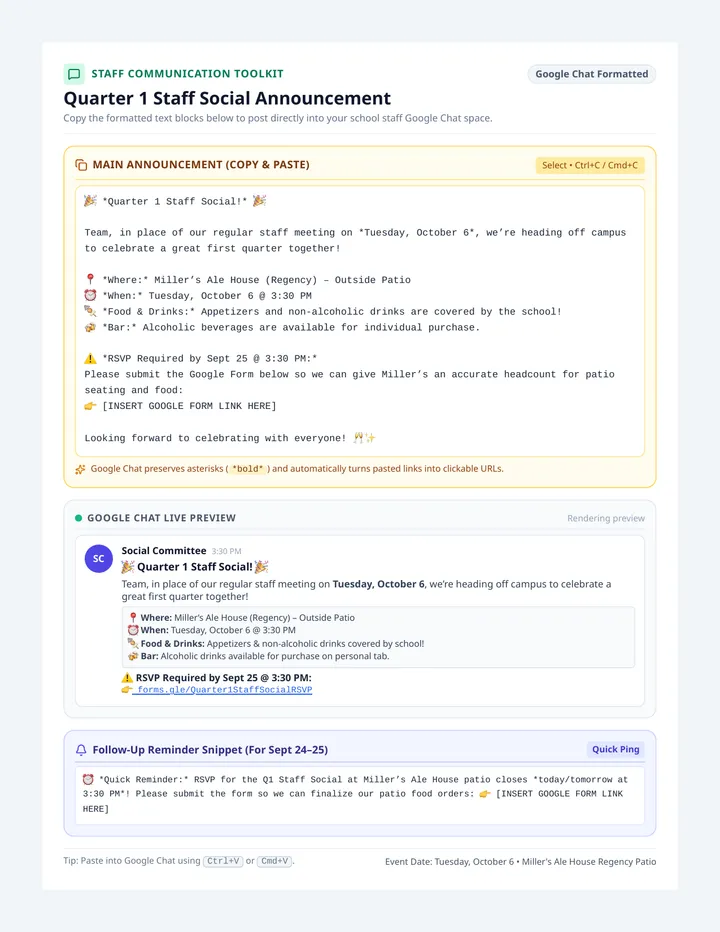
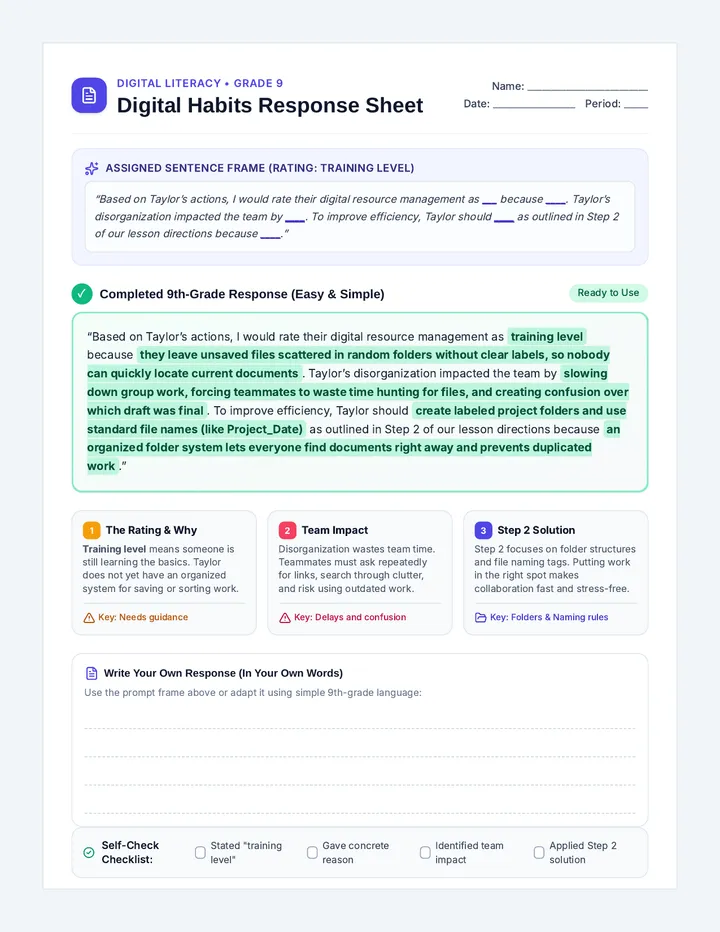
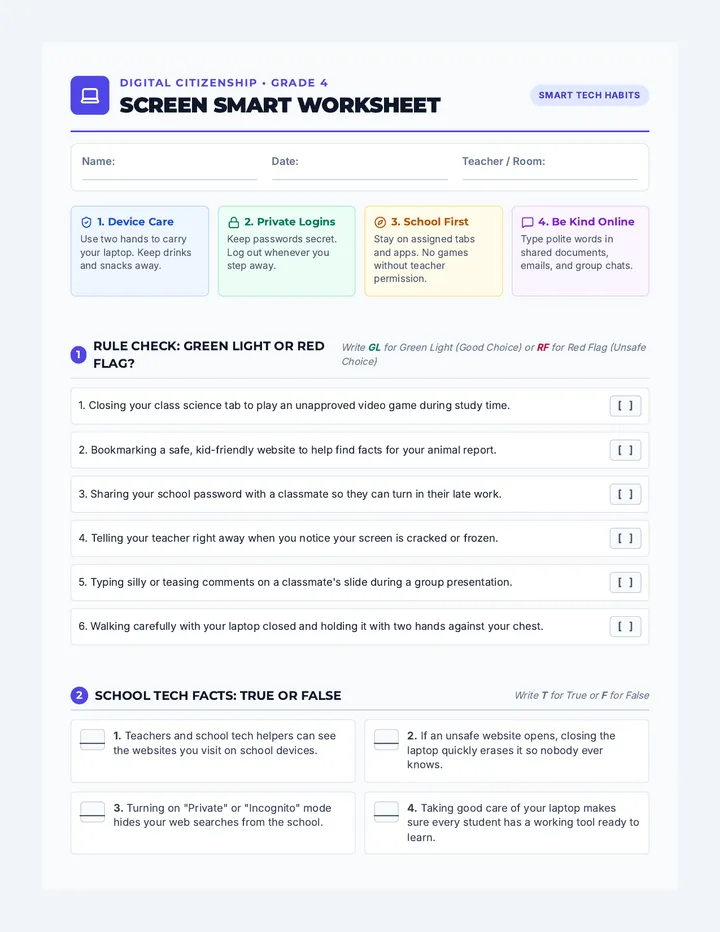
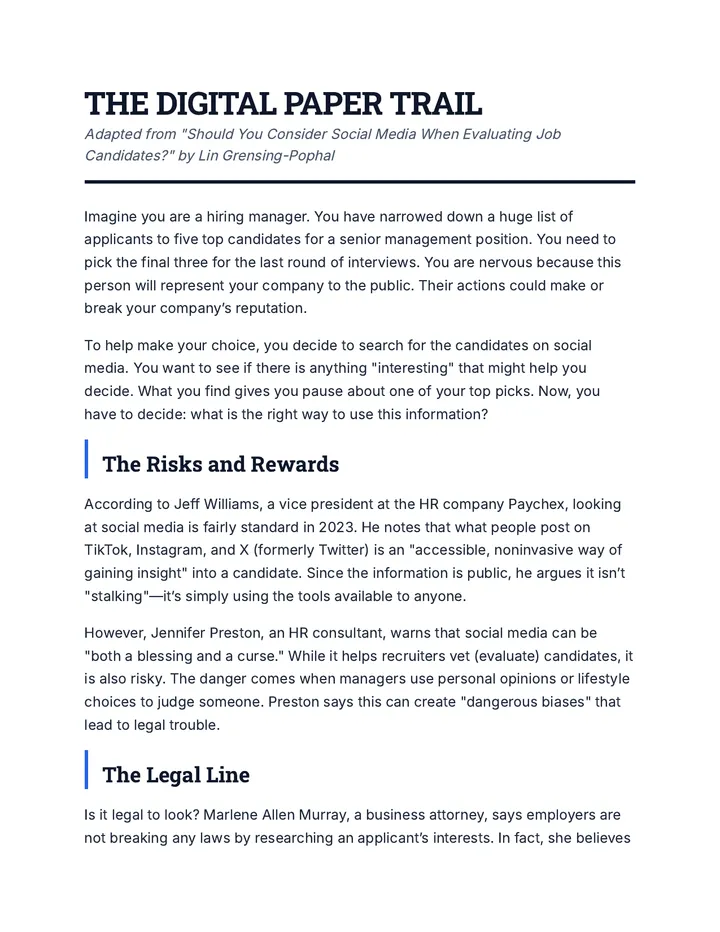
Fundamental hardware proficiency, secure online behavior, and ethical social media engagement. Equips learners with productivity tool mastery, web publishing skills, and critical evaluation of emerging technologies.
A high-energy, collaborative staff training session built around a competitive trivia game. Staff work in teams to analyze realistic scenarios and master MetroWest YMCA's Social Networking Policy (Appendix IV, Updated 6/2024), emphasizing child safety, professional boundaries, and brand protection.
A lesson focusing on digital drama, peer pressure, and changing friendships in middle school, centered around a graphic novel comic strip and reflection worksheet.
An individual intervention lesson designed for 1-on-1 counseling with an 8th-grade girl, addressing cyber-conflict, screenshot-sharing, digital boundaries, cognitive reframing, and polite coexistence with disliked peers.
A high-impact, discussion-focused group session designed for urban high schoolers to build healthy friendships, establish trust boundaries, stop gossip, and navigate what is safe to share. This lesson package includes visual slide decks, student worksheets, and teacher facilitator guides.
A comprehensive SEL lesson bundle on digital etiquette, tone misinterpretation, and respectful online communication for teens aged 13-17. Includes an interactive slide deck and an elegant table-formatted teacher facilitation guide.
A high-impact social-emotional learning lesson designed for large middle school assemblies, focusing on empathy in group chats, navigating social media pressure, and understanding how digital footprints echo in real life.
A 45-minute lesson for 10th graders to analyze curated social media posts and distinguish between online identities and reality. Students will develop media literacy, understand social comparison, and draft a personal social media wellness plan.
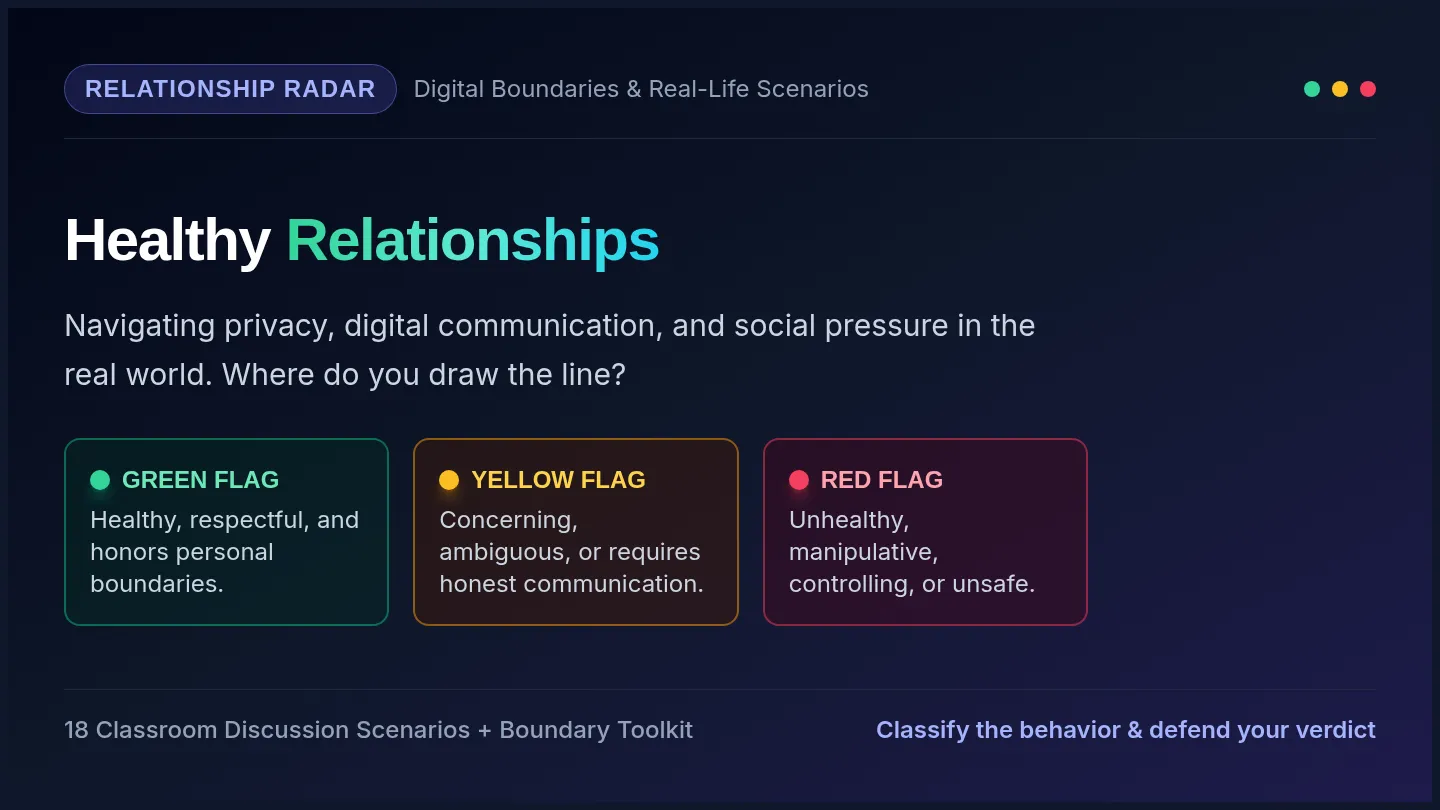
A middle school lesson bundle on navigating the green and red flags of digital peer relationships, covering group chats, social media boundaries, and texting dynamics.
An interactive transitions lesson for rising 8th graders, focusing on social-emotional resilience, digital safety, and personal goal setting over the summer break.
A lesson exploring the boundary between public and private spaces on social media, using a visual choice board icebreaker, concrete social scenarios, and a video reflection to build digital citizenship.
A lesson focusing on critical digital citizenship skills, helping students navigate the web safely and make informed choices when posting, interacting, or pondering online situations.
Focuses on building self-worth, identifying negative media messages, and shifting personal and peer narratives through positive self-talk strategies.
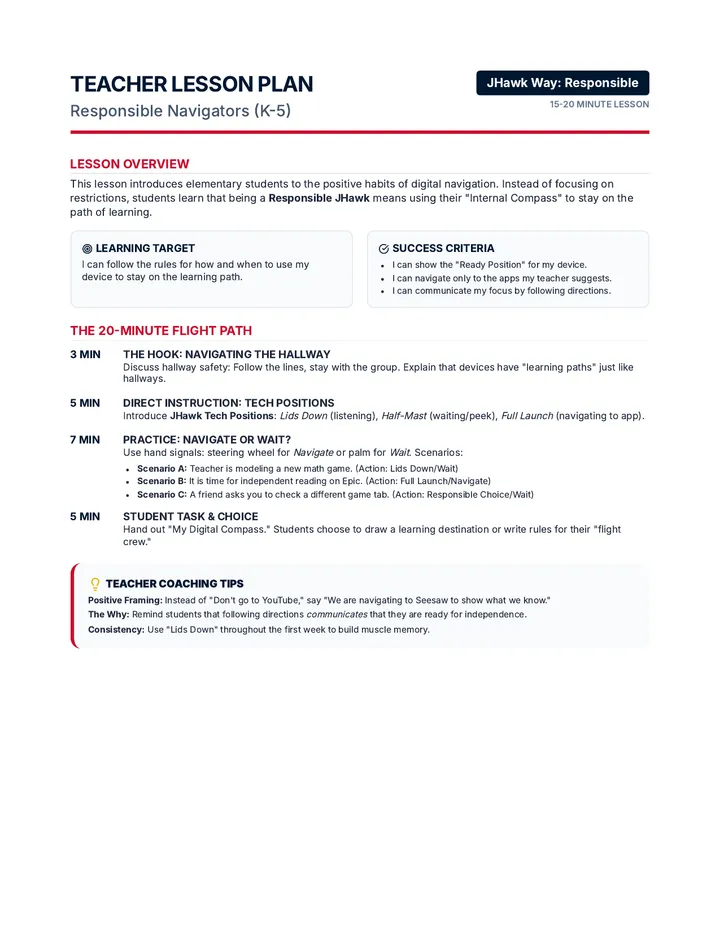
A comprehensive K-5 sequence focused on device responsibility and digital citizenship, centered on being Responsible. Lessons cover transitioning from devices as tools (K-1) to managing online distractions and maintaining integrity (4-5).
A comprehensive introduction to library navigation for elementary students, focusing on the dual pillars of respectful stewardship (book care and etiquette) and the functional systems of the library (checkout and return). Students progress from learning how to treat books as treasures to mastering the logistical 'loop' of borrowing materials.
A mini-lesson series for middle schoolers on creating and delivering high-quality presentations, featuring the 1-3-6 rule and Look-Think-Say technique.
A 2-day intensive workshop where students use NotebookLM to research and design their future careers, exploring advanced features like Audio Overviews, Mind Maps, and Studio outputs with professional career dossiers and visual supports.
A comprehensive K-5 sequence focused on device responsibility and digital citizenship, centered on the JHawk Way of being Responsible. Lessons cover transitioning from devices as tools (K-1) to managing online distractions and maintaining integrity (4-5).
A K-12 vertical alignment for device stewardship within the Urbandale Community School District, focusing on the JHawk Way of being Accountable.
A comprehensive four-cycle professional protocol program for high schoolers, focusing on the intersection of the district's Acceptable Use Policy, Code of Conduct, and personal accountability across school, home, and future career environments.
A 9-week curriculum designed for middle and high school students focused on academic readiness, healthy habits, and professional communication based on the D11 Graduate Profile. Each 30-minute lesson provides students with practical skills like SMART goal setting, email etiquette, self-advocacy, and emotional regulation.
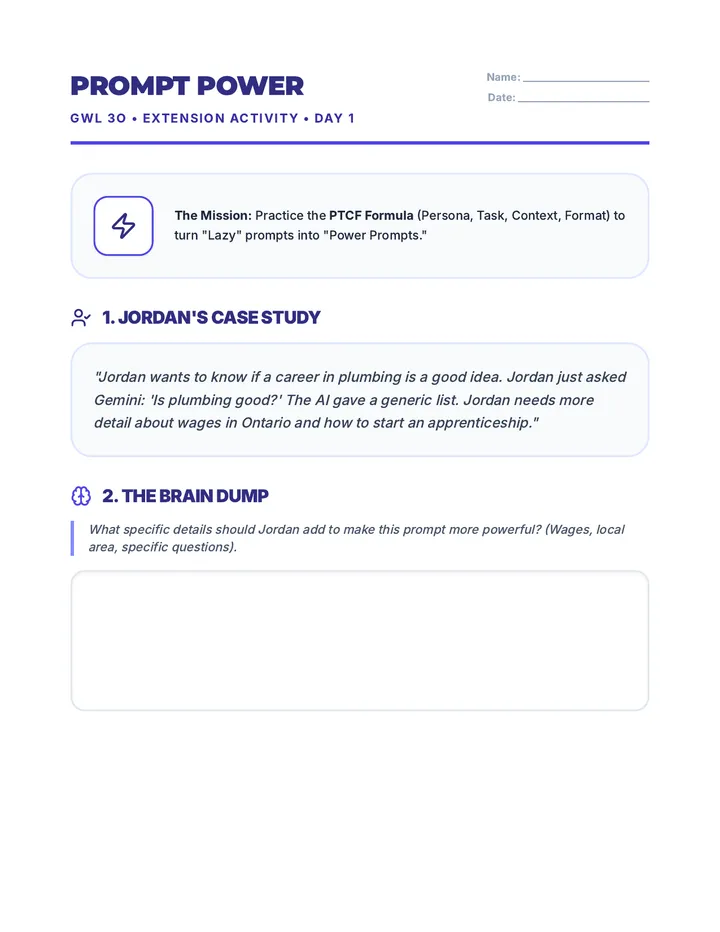
A comprehensive 7-day unit for Grade 11/12 Designing Your Future students, focusing on leveraging AI tools like Gemini for workplace and college success. Designed for special education contexts, it emphasizes self-advocacy, professional communication, research, and project management through visual and digital tasks.
An 8-week comprehensive group program designed for high school students to develop core executive functioning skills through cognitive strategies and behavioral systems.
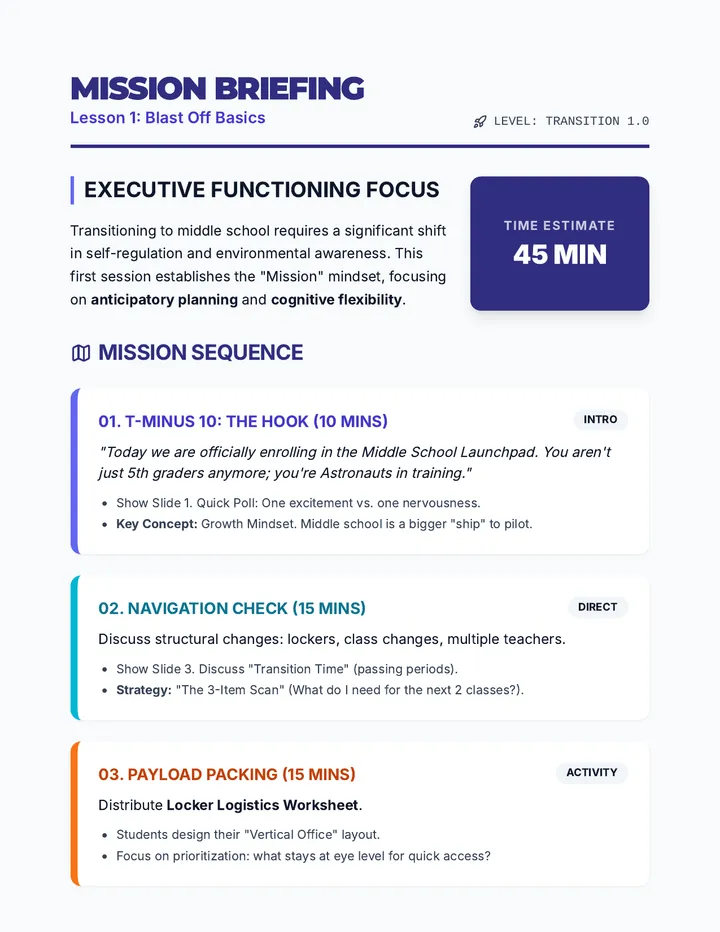
A 6-session transition bootcamp for 5th graders moving to middle school, focusing on executive functioning skills like planning, task initiation, and independence within a 'Mission to Middle School' space theme.
A comprehensive series of P3 and P4 lessons covering social-emotional learning, technology in work, and human rights. Differentiated for varied literacy and developmental levels.
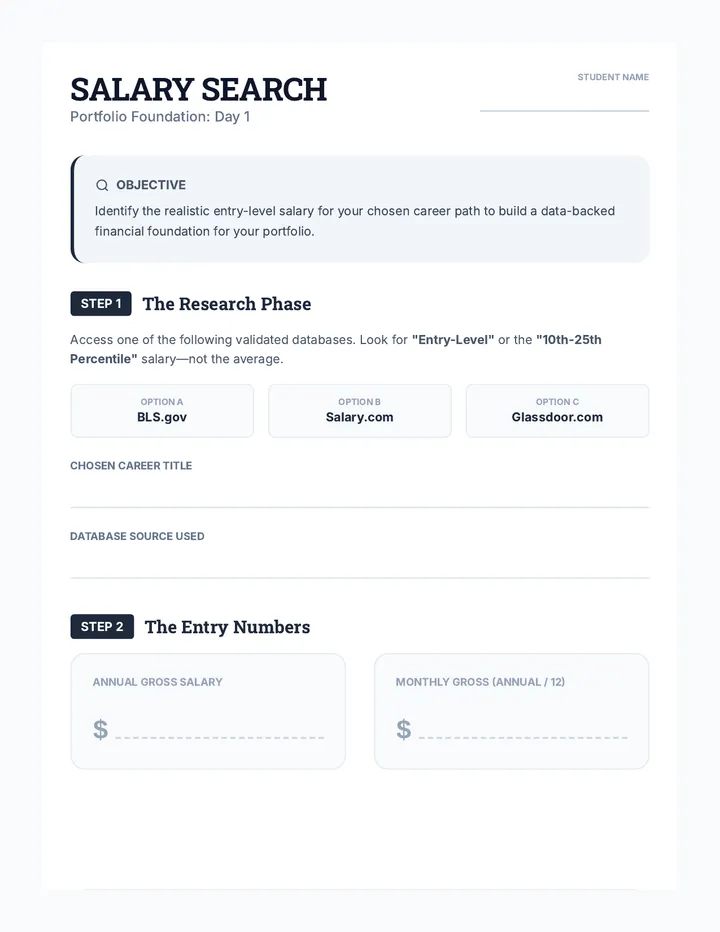
A comprehensive 5-week sequence for high school juniors to finalize their professional portfolio and career budget, culminating in a formal defense. Includes financial planning, executive summary refinement, resume building, and branding.
A comprehensive unit focused on the digital launch of marketing campaigns, bridging the gap between design and messaging to create persuasive online presences.
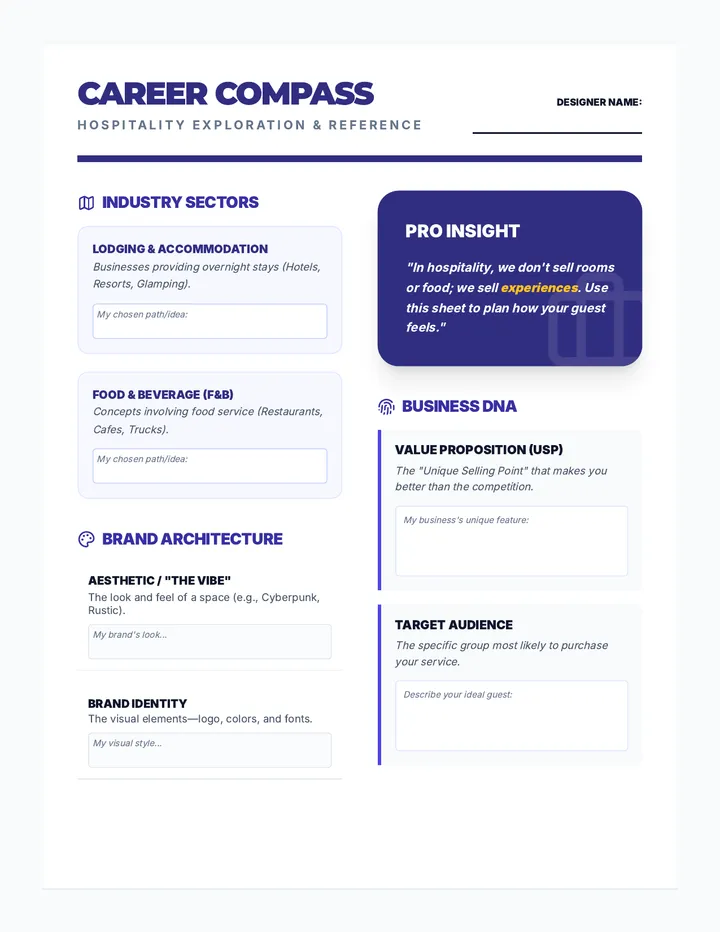
A project-based learning unit where high school students design and market a new hospitality venture, from initial concept to a full marketing campaign and presentation.
A hands-on career exploration unit focusing on the dynamic world of retail. Students will master customer service excellence, learn retail operations like inventory and POS systems, and design their own retail floor plan and brand strategy.
A comprehensive sequence for 5th-grade students exploring the ethics and skills of digital publishing. Students learn to write for web audiences, navigate copyright laws, cite media correctly, optimize images for performance, and protect their digital privacy.
A graduate-level sequence focused on long-term career architecture through strategic continuing education. Students perform gap analyses, forecast industry trends, and use backward design to build a 'Living Syllabus' for their professional advancement.
This sequence explores the therapeutic and ethical dimensions of digital memory. Students learn to curate digital artifacts, edit for emotional resonance, and create multimedia archives that honor loss and preserve personal legacies.
A 10-session unit for middle schoolers to master the art of business branding, covering everything from logos and voice to audience personas and marketing assets.
Students learn the rules of sharing digital spaces, focusing on collaborative editing and respecting others' work in a shared document.
An introduction to cloud storage and the importance of saving work online to ensure accessibility across different devices.
Students use search tools and folder navigation to find specific files in a simulated directory structure.
Learners practice creating storage pods (folders) and sorting data crystals (files) into categories using drag-and-drop concepts.
Students learn why specific file names are important and practice a naming convention (Name_Assignment) to keep their digital work identifiable.
A final simulation where students apply their knowledge to navigate a safe digital environment and earn their 'Safe Surfer' certificate.
Students build muscle memory for the 'Pause and Ask' technique to handle unexpected or scary online encounters.
Students synthesize their learning by creating a personal Digital Citizen Pledge and earning their Super Citizen badges.
Students learn that avatars can hide a person's true identity and establish the rule of never talking to strangers online.
Students practice the "Stop, Walk, and Tell" strategy to respond to unkind behavior or scary content online, focusing on seeking help from trusted adults.
This lesson focuses on identifying 'tricky' online content like pop-up ads and fake prizes that look too good to be true.
Students are introduced to the Green/Yellow/Red framework for internet safety, learning to categorize sites as safe, cautious, or dangerous.
Facilitator guide for Lesson 5, outlining the instructional flow, discussion prompts, and key concepts for the maintenance contract and habit formation.
A formal maintenance contract for students to commit to their regulation protocols, establishing maintenance schedules and accountability partners.
Final slide deck for Lesson 5, focusing on habit formation, maintenance schedules, and the commitment to protocol adherence.
Facilitator guide for Lesson 4, outlining the instructional flow, discussion prompts, and key concepts for the digital tool evaluation and UI critique.
Worksheet for students to evaluate mental health apps and digital tools, specifically focusing on their user interface and accessibility during high-stress moments.
Slide deck for Lesson 4, introducing the concepts of digital support tools, UI critique for distress, and integrating tech into regulation protocols.
Facilitator guide for Lesson 3, outlining the instructional flow, discussion prompts, and key concepts for the "pre-mortem" and "If-Then" planning.
Worksheet for identifying potential obstacles and creating 'If-Then' implementation intentions to ensure protocol adherence during distress.
Slide deck for Lesson 3, introducing the concept of the "pre-mortem" and "If-Then" implementation intentions to overcome barriers to regulation.
Facilitator guide for Lesson 2, outlining the instructional flow, discussion prompts, and key concepts for the tiered regulation plan.
A comprehensive design worksheet for students to map out their three-tiered emotional regulation plan, including indicators and specific action protocols.
Slide deck for Lesson 2, introducing the triage metaphor and the three-tiered system for emotional regulation.
The ultimate multi-layered capstone escape room challenge. Recruits analyze complex social conflict evidence, trace misinformation networks, resolve major ethical dilemmas, and decode the final system override.
A high-stakes digital safety escape room focused on identifying online scams, recognizing manipulative dark patterns, and protecting personal data. Recruits analyze active verb voices, linking verbs, ellipses punctuation, and deceptive tones to decode the final alert.
An advanced media literacy and communication escape room for Ages 13-15. Recruits distinguish facts from opinions, analyze objective realities, sort personal attitudes, and input the override PROOF to secure the school news mainframe.
A collaborative social-emotional escape room focused on identifying relational and social bullying, supporting target peers, and standing up to cyber/verbal exclusion. Recruits analyze verb verbal types, pronoun cases, intransitive verbs, and compound syntax to decode the final override.
An immersive and strategic escape room focused on managing academic stress, avoiding burnout, and planning study habits. Recruits analyze student logs under performance anxiety, build efficient schedules, and decode the override to restore positive motivation.
A cooperative and empathetic escape room focused on managing family duties and household balance. Recruits analyze parent/child perspective claims, organize daily chores timelines, and decode the final compromise override.
An advanced digital literacy and collaborative cryptography escape room for Ages 14-16. Recruits analyze verb transitivity, relative clauses, subjunctive moods, and tone to stop a school database wipe.
A high-stakes moral dilemma escape room for Ages 11-13. Recruits evaluate the trade-offs of academic honesty, identify plagiarism, analyze persuasive appeals, and decode the final ethics code.
A high-stakes perspective-taking escape room. Recruits examine conflicting first-person accounts, analyze bias, reconstruct a unified timeline, and solve the override code.
An ethical decision-making and systems-thinking escape room. Recruits analyze resource allocation options, vote on complex tradeoffs, map cascading social consequences, and draft an argumentative consensus brief to restore balance.
An online misinformation and fact-checking escape room for Ages 10-12. Recruits sort fact vs. opinion, trace original message sources, and reconstruct truth timelines to stop rumors.
A chronological reconstruction and peer exclusion escape room for Ages 10-12. Recruits analyze sticky-note observations, identify missed social interactions, and role-play restorative de-escalation scripts.
A clean, print-ready single-page team scorecard for 20-30 staff members divided into squads. It features space for team details, selection indicators, and dedicated white writing blocks for teams to cite policy rules from Appendix IV.
An engaging, high-contrast 14-slide presentation used to project the interactive trivia game during the training. It details real-world scenarios, game rules, and reveals answer explanations citing official rules from the MetroWest YMCA Social Networking Policy.
A comprehensive, two-page print-ready facilitator guide for leading the Social Media Showdown staff training. It contains game instructions, pacing guides, team division tips, and detailed policy explanations for each round based on the MetroWest YMCA Social Networking Policy (Appendix IV, Updated 6/2024).
A vibrant, superhero-themed presentation to introduce 4th grade students to their new Chromebook responsibilities and the 'Make Kindness Your SuperPower' initiative at Edgewood Intermediate.
An expanded 2-page teacher facilitation guide for the Tech Hero initiative, with detailed instructional steps, restorative reflection questions, and classroom support strategies at Edgewood Intermediate.
A comprehensive 2-page family guide and contract for 4th grade Chromebook use, adjusted to perfectly fill each page with a professional layout and improved spacing to ensure print-readability at Edgewood Intermediate.
A comprehensive 2-page teacher facilitation guide and master answer key with explicit solutions for ledger audits, calendar resolution timelines, exemplar emails, and tactical student grading rubrics.
A visually stunning 6-slide introductory presentation that outlines the core simulation parameters, teaches calendar management logic, spreadsheet audit rules, professional email etiquette, and directory taxonomy.
A polished 4-page interactive student workbook featuring mock inbox triaging, calendar conflict resolution, spreadsheet error analysis, vendor email drafting, and digital folder structure design.
A comprehensive, 1-page teacher facilitation guide outlining lesson objectives, pacing, classroom discussion questions, common student misconceptions, and the student worksheet answer key.
A 5-slide interactive companion presentation designed for classroom instruction, outlining bystander vs. upstander roles, digital communication pitfalls, and boundaries.
A 2-page student worksheet containing a highly visual, 6-panel graphic novel comic strip about group chat peer pressure, followed by an interactive reflection and analysis activity page.
A 3-part mini-lesson series designed to teach middle schoolers how to use AI tools responsibly for final projects. The series focuses on AI as a thinking partner, prompt engineering, and critical fact-checking through a modern 'Notebook/Sketch' aesthetic.
A collection of lessons focused on emotional intelligence and career awareness for Primary 4 students.
A series of lessons designed to turn educators into Lenny Learning power users, moving from basic platform navigation to advanced engaging lesson design.
A three-part progression for middle schoolers to master identifying misinformation, bias, and sophisticated digital deception like AI-generated content. Students advance from basic fact-checking to analyzing media bias and defending against deepfakes.
A comprehensive curriculum covering financial literacy, economic principles, and civic systems through historical case studies, ethical dilemmas, and real-world simulations.
A comprehensive 10-week instructional module designed to build and refine 9 core executive functioning skills including goal setting, organization, and self-regulation.
A comprehensive year-long curriculum for high school seniors focusing on college readiness, career planning, financial literacy, and social-emotional well-being. This sequence guides students through the complexities of post-secondary transitions with a special focus on arts-based pathways.
A 6-lesson sequence divided by grade level (5th, 6th, and 7th), celebrating 100 years of Black history through school values. Each grade explores two distinct lessons focusing on community joy, personal excellence, and mental health advocacy.
This sequence teaches 11th-grade students how to customize their computing environment using keyboard-based accessibility tools like Sticky Keys, screen reader commands, and custom macros. It focuses on workplace readiness, technical troubleshooting, and self-advocacy for digital accommodations.