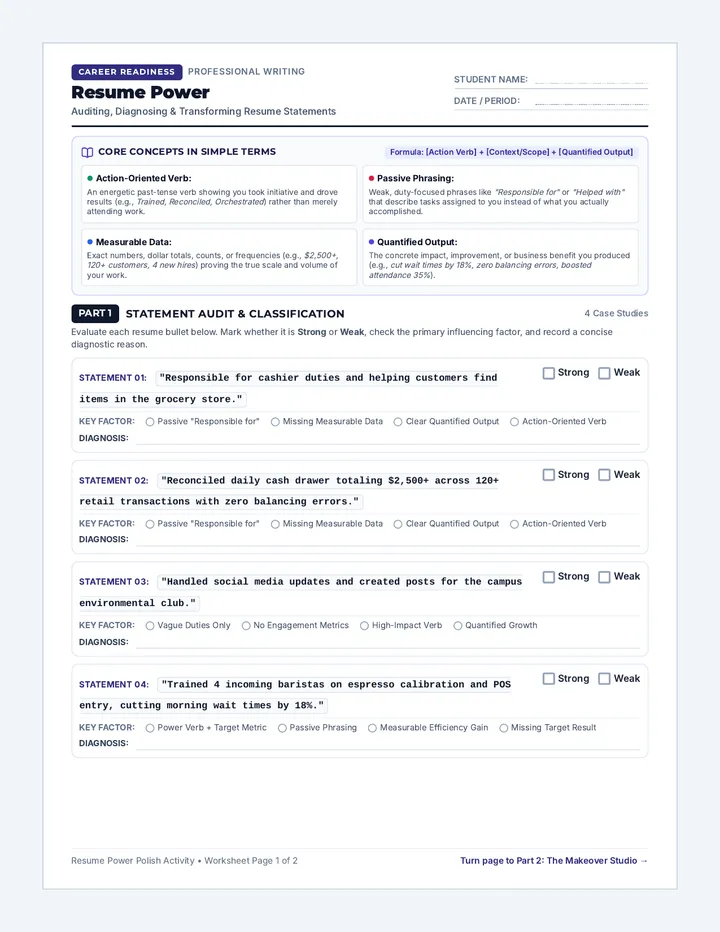
Strategies for selecting dynamic action verbs and quantifying professional accomplishments on resumes. Guides learners in transforming task-based descriptions into results-oriented impact statements.
A printable 10-question Jeopardy-style game set covering resume fundamentals for career readiness students. Features accessible, clear clues, point values, answers, and pro tips organized across Personal Information, Work Experience, Skills and Strengths, and Resume Basics.
A comprehensive sequence designed for 9th-grade transition students to master the job acquisition cycle. Students progress from identifying soft skills to mastering resumes, applications, and interviews, with a heavy focus on the social 'hidden curriculum' of the workplace.
This sequence guides seventh-grade students through the foundational process of constructing their first professional resume. It covers identifying transferable skills, using action-oriented language, and mastering professional formatting through interactive workshops and simulations.
A comprehensive 5-lesson unit for 12th-grade students to master the art of writing persuasive, tailored cover letters. Students learn to decode job descriptions, craft compelling narratives, and apply professional business formatting.
This comprehensive sequence guides undergraduate students through the technical and rhetorical process of constructing a professional cover letter. From mastering business formatting to decoding job descriptions and crafting evidence-based narratives, students move from structural basics to a polished, industry-standard final draft.
A 6-session Tier 2 group series for 12th-grade students to explore college and career pathways, develop application skills, and create a personalized post-graduation plan.
A comprehensive 5-lesson sequence for 12th-grade students on the strategic art of tailoring resumes. Students learn about ATS algorithms, decode job descriptions, translate youth experiences into professional keywords, and culminate in a project where they adapt a single resume for two distinct career paths.
A 60-minute individual Tier 3 lesson designed to help students with job-related anxiety navigate the outdoor job application process independently. The lesson covers resume drafting, cover letter writing, and interview preparation using a scaffolded, supportive approach.
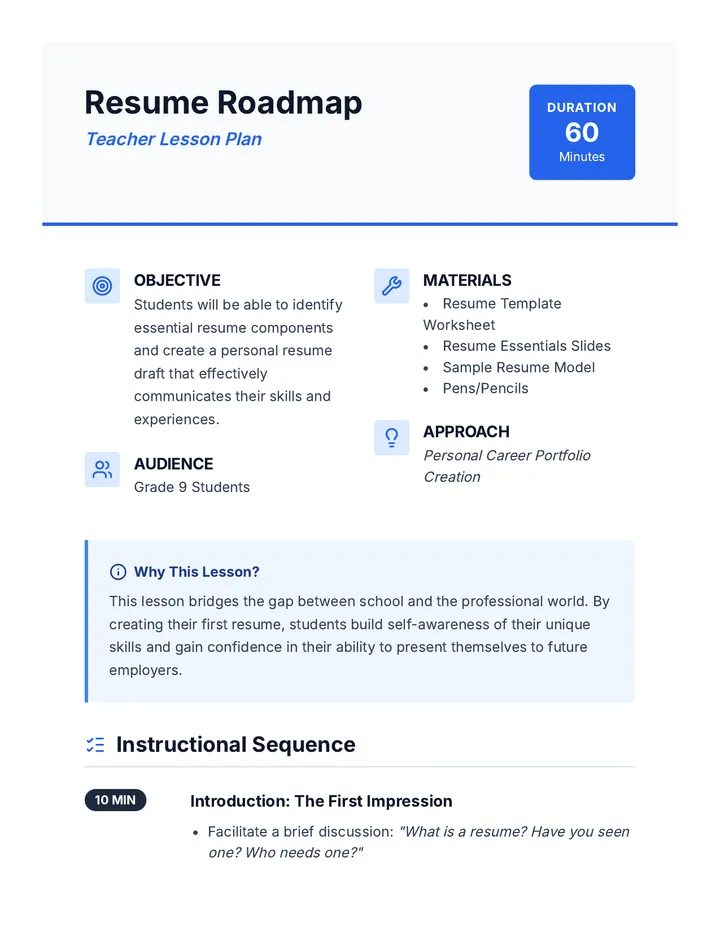
Students will learn the essential components of a resume and how to effectively present their skills and experiences using a guided template. This lesson is designed for Grade 9 students to build professional communication skills and self-confidence.
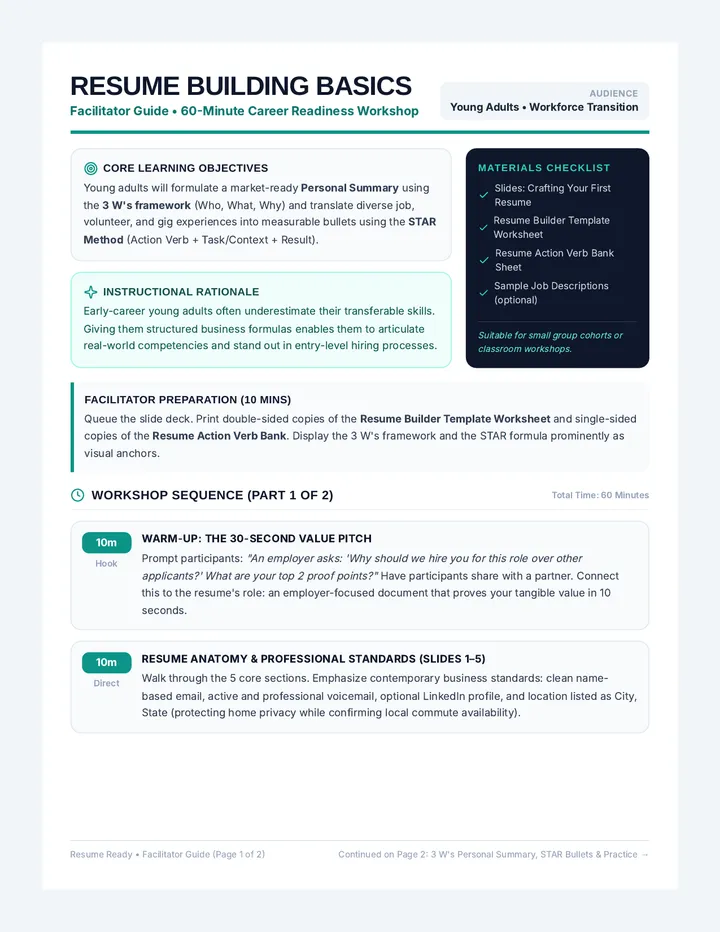
This interactive workshop guides young adults through crafting a competitive, professional resume by leveraging the 3 W's personal summary framework, extracting transferable skills from diverse experiences, and applying the STAR action verb formula. It equips early-career job seekers with practical tools for workforce and educational transitions.
A career readiness lesson focused on analyzing, diagnosing, and drafting high-impact, quantified resume bullet points.
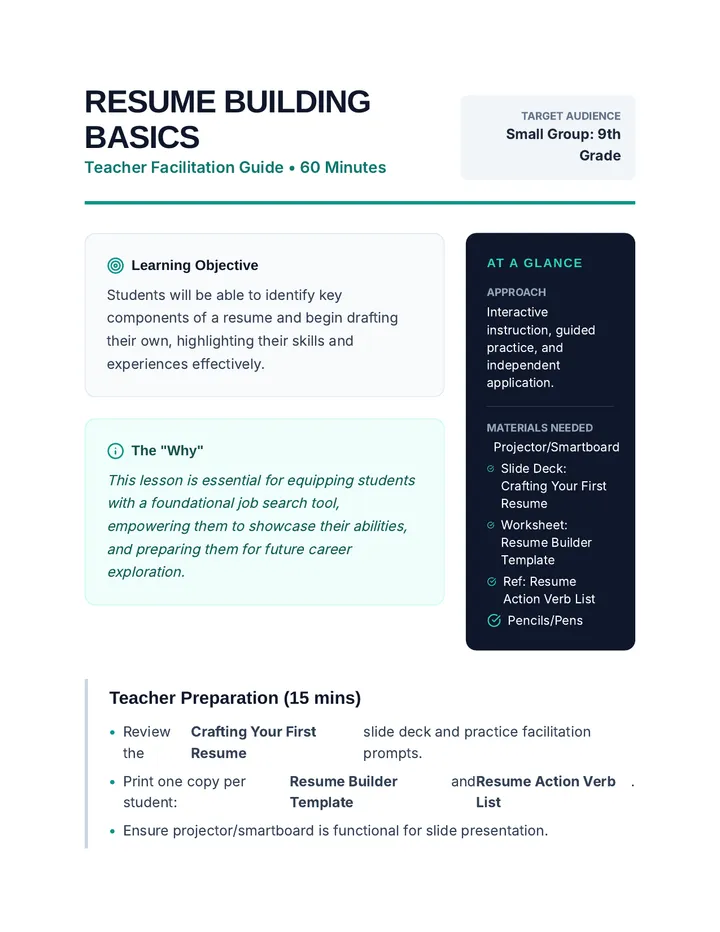
This small group session guides 9th-grade students through creating their first resume by identifying key components, brainstorming experiences beyond traditional jobs, and using powerful action verbs. it provides a foundational job search tool for future career exploration.
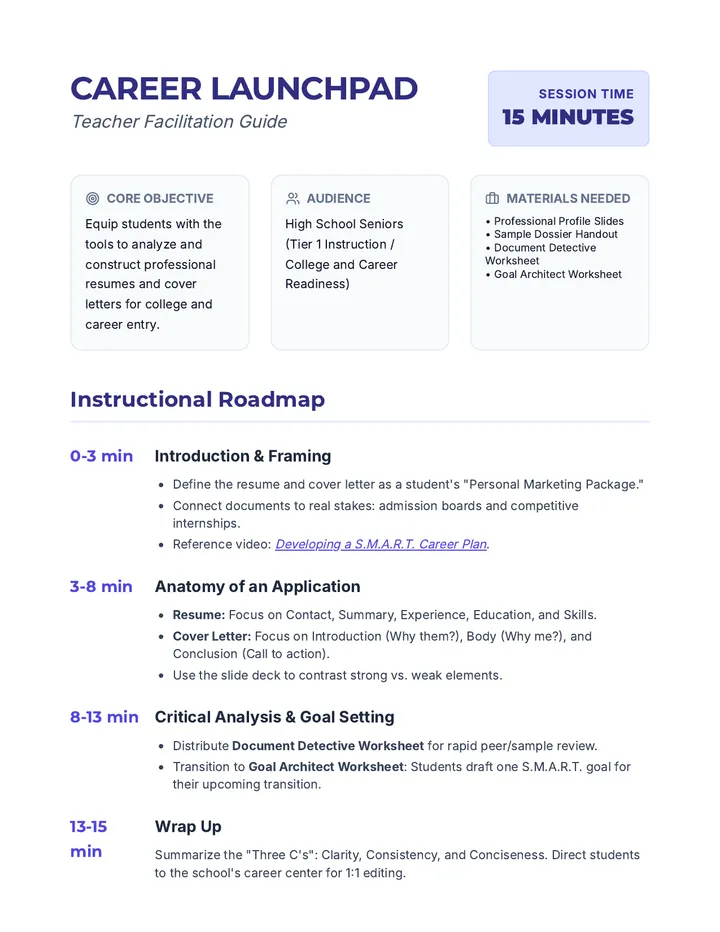
Students will master the art of crafting professional resumes and cover letters, analyzing real-world examples to identify winning strategies and setting S.M.A.R.T. goals for their future careers.