Techniques for recognizing physical, emotional, and environmental stressors. Builds self-awareness through tracking patterns of tension and identifying personal pressure points.
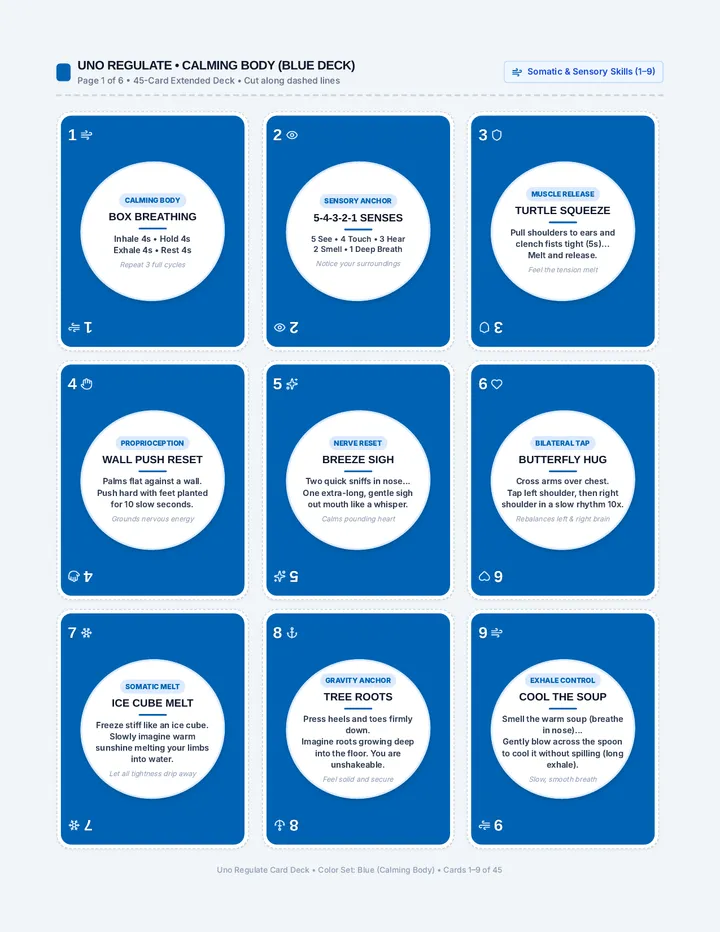
An expanded 6-page printable coping skills and self-regulation card deck styled after Uno, featuring 45 total cut-apart cards (complete 1–9 sets for all 4 color domains plus action and wild cards) and an in-depth gameplay and facilitation rulebook for classroom and small-group play.
An ultra-accessible, low-reading-demand student counseling worksheet tailored for learners with disabilities, featuring visual icon-supported checkboxes, short direct prompts, large text, and flexible draw-or-write response areas.
A simplified, single-page classroom observation form for school counselors featuring quick-check indicators and generous handwriting lines for engagement, learning behaviors, social-emotional skills, and next steps.
A two-page student worksheet designed to build emotional awareness, recognize bodily warning signs, and apply calming self-regulation strategies. Students analyze emotional intensity levels, identify physical signals, and develop concrete calming action plans.
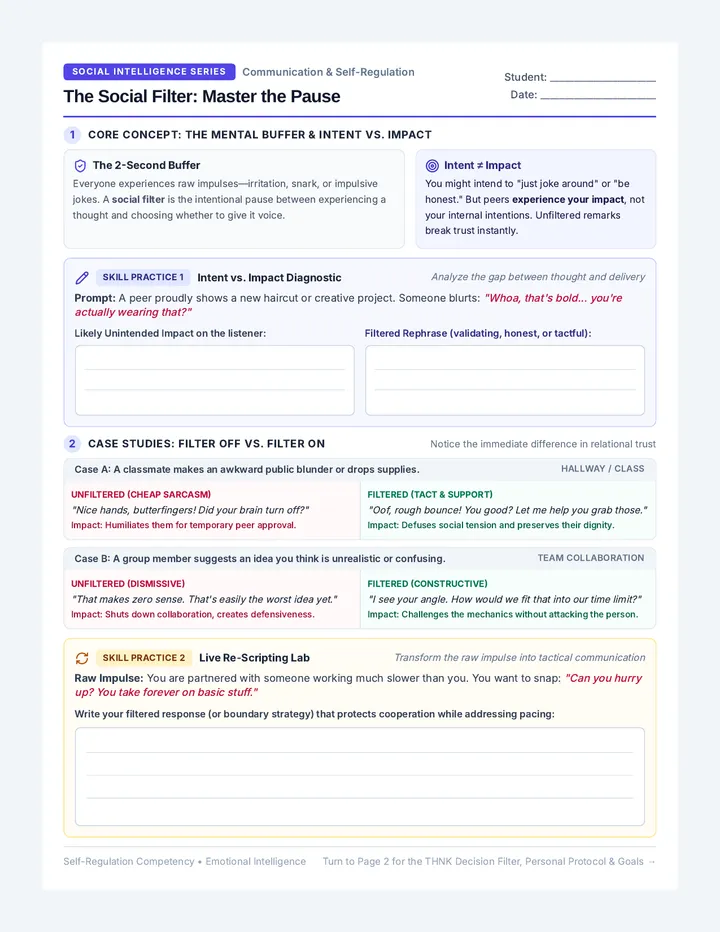
A comprehensive two-page interactive instructional guide and workbook on social intelligence and communication filters, updated with generous, ruled handwriting spaces in Skill Practice 2 and throughout all student response areas.
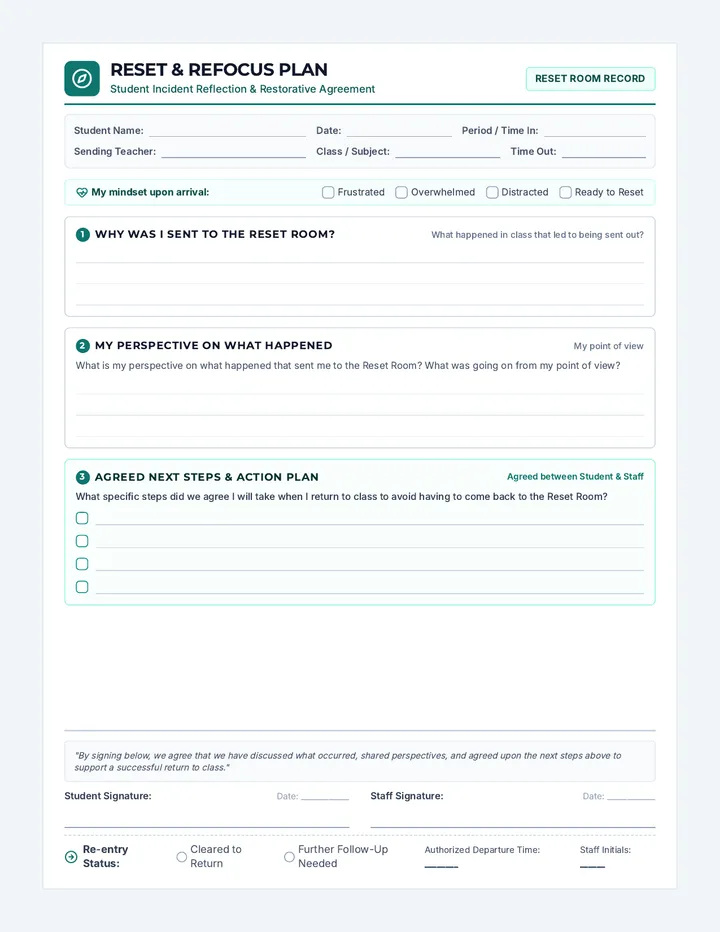
A restorative reset room reflection form with intake data, incident reason, a dedicated student perspective section, custom agreed-upon next steps, and dual student-staff signatures.
A 5-week individual lesson series for 8th-grade students with social-emotional disabilities, introducing core DBT modules: Mindfulness, Distress Tolerance, Emotion Regulation, Interpersonal Effectiveness, and Walking the Middle Path.
A comprehensive 5-session sequence for 6th-grade girls to manage anxiety through grounding, body awareness, cognitive reframing, support systems, and sensory mindfulness. Each 30-minute session provides practical 'chill skills' in a supportive small-group environment.
A 10-week series of 30-minute group lessons for high school students exploring Cognitive Behavioral Therapy. Each session builds practical skills in identifying and reframing thoughts, managing emotions, and engaging in healthy behaviors through interactive activities. This Tier 2 program develops resilience and mental wellness.
A 6-week Tier 3 intervention sequence designed for a student with an IEP, focusing on identifying triggers, developing coping strategies, and practicing self-regulation to manage anger and anxiety.
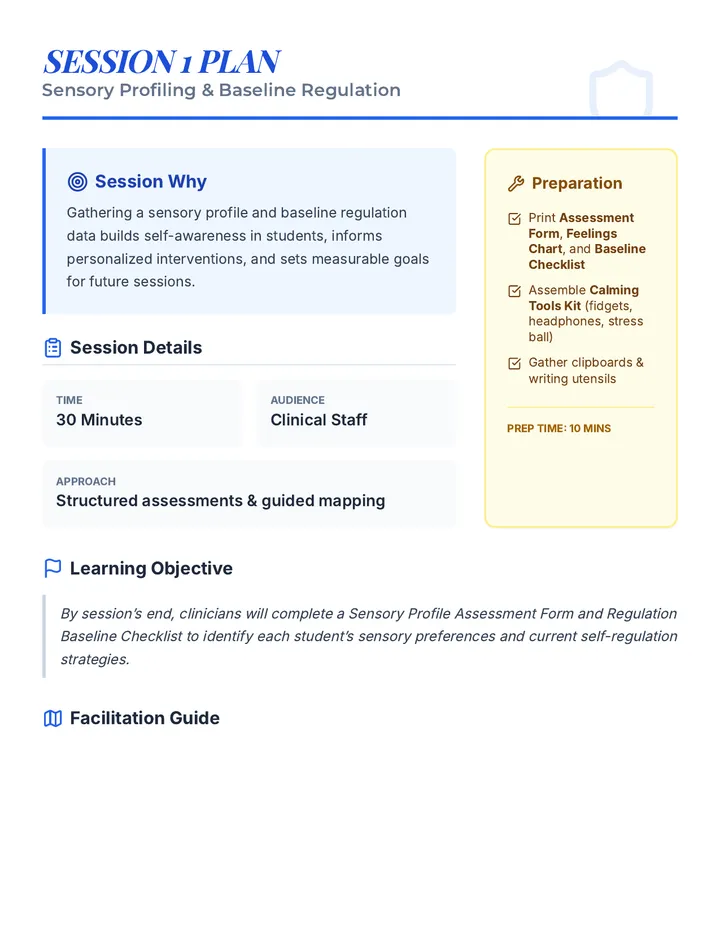
A 6-session individual counseling curriculum designed to help students develop sensory awareness and self-regulation skills through a 'Superhero' framework. The sequence covers profiling, strategy exploration, plan development, practice, advocacy, and graduation.
A 10-session Tier 3 social-emotional learning unit for students with ASD, focusing on identifying emotions, recognizing dysregulation, and applying self-regulation strategies through a space-themed journey.
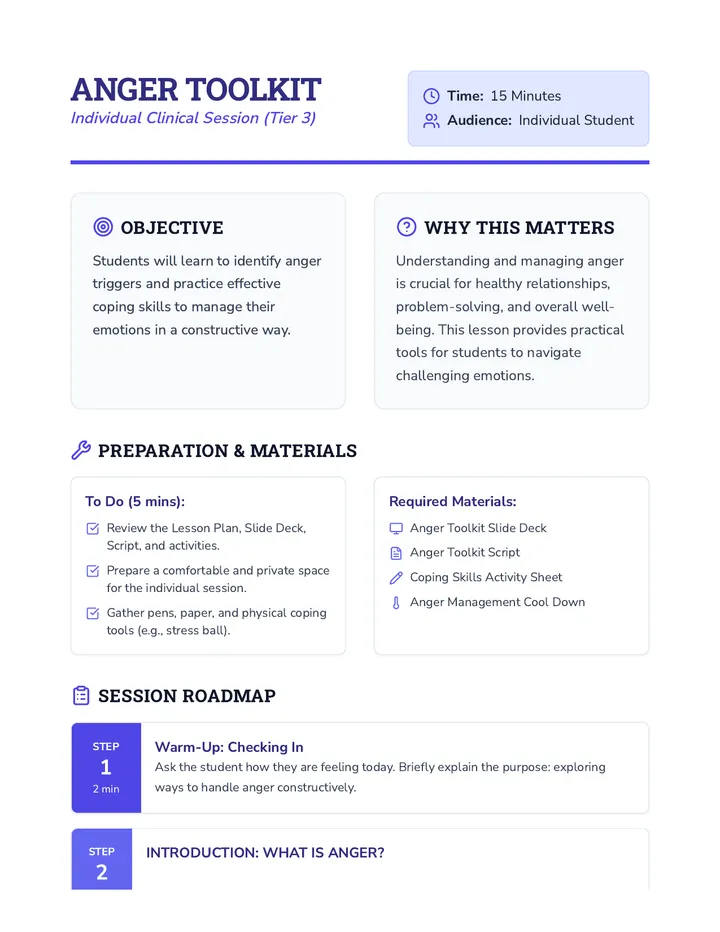
A 15-minute Tier 3 clinical lesson designed to equip individual students with practical anger coping strategies, trigger identification, and emotional regulation tools.
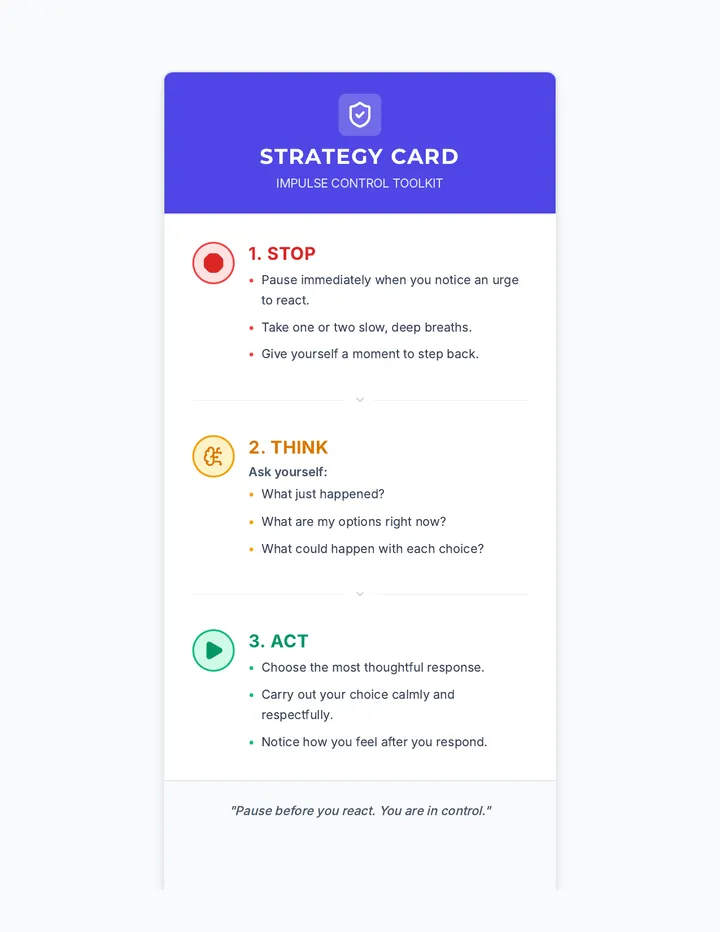
A 90-minute intensive Tier 3 intervention for 7th grade students with ADHD, focusing on the Stop-Think-Act strategy to build impulse control and self-regulation skills.
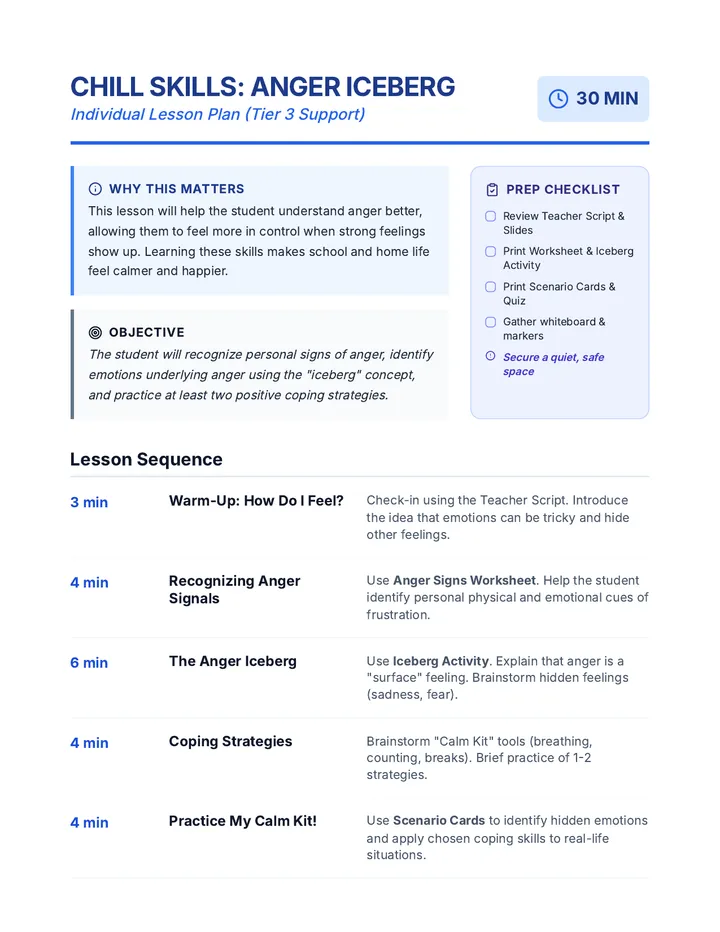
A 30-minute individual Tier 3 lesson for 3rd-grade students focused on identifying anger signals, understanding underlying emotions through the anger iceberg concept, and practicing coping strategies.
A middle school lesson introducing the Circle of Control concept to help students manage stress and anxiety through interactive activities and discussion.
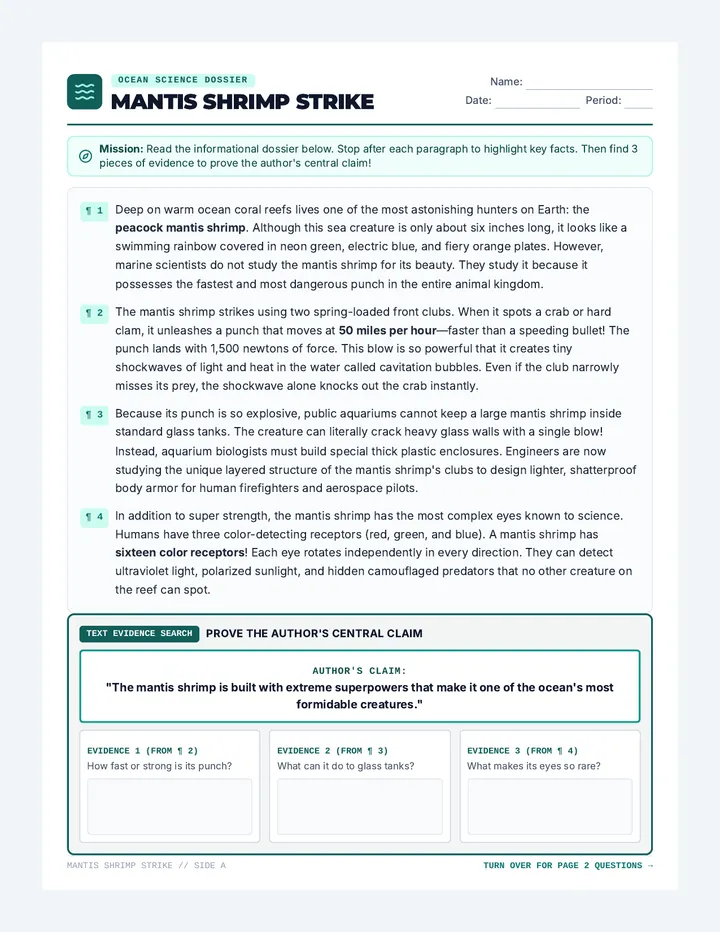
An engaging third-grade substitute teacher lesson pack featuring an informational text evidence investigation and a word-problem-free math logic puzzle.
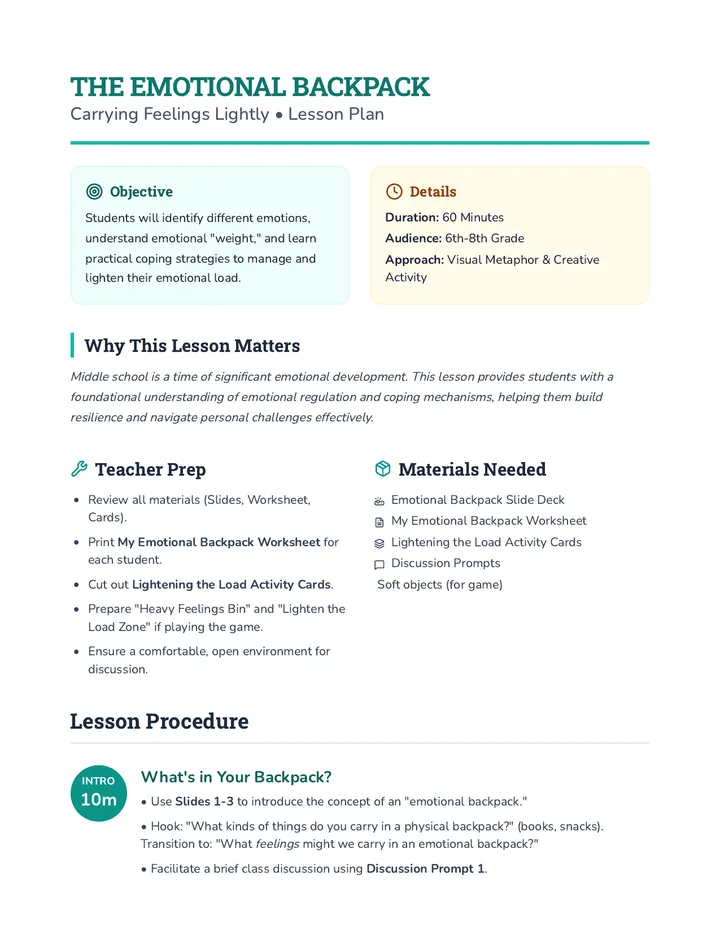
A 60-minute lesson for middle schoolers that uses the metaphor of a backpack to help students identify emotional weight and practice healthy coping strategies.