Legal standards for protected classes and criteria for identifying sexual harassment or hostile work environments. Outlines reporting procedures, bystander intervention strategies, and federal anti-discrimination requirements.
A comprehensive two-session sequence for law enforcement recruits covering the psychological dynamics of domestic violence and the legal frameworks provided by the Illinois Domestic Violence Act. Students will learn to identify patterns of abuse and apply correct legal protections to ensure victim safety.
This sequence provides 10th-grade students with a comprehensive understanding of federal anti-discrimination laws in the workplace, covering protected classes, major legislative acts, legal theories of discrimination, and practical compliance application.
A comprehensive graduate-level simulation-based course on handling workplace harassment and discrimination complaints. Students progress from initial intake to final report writing, focusing on procedural fairness, neutrality, and evidence-based determination.
A graduate-level exploration of proactive workplace harassment prevention, focusing on bystander intervention, organizational policy design, leadership accountability, and cultural measurement to foster psychological safety.
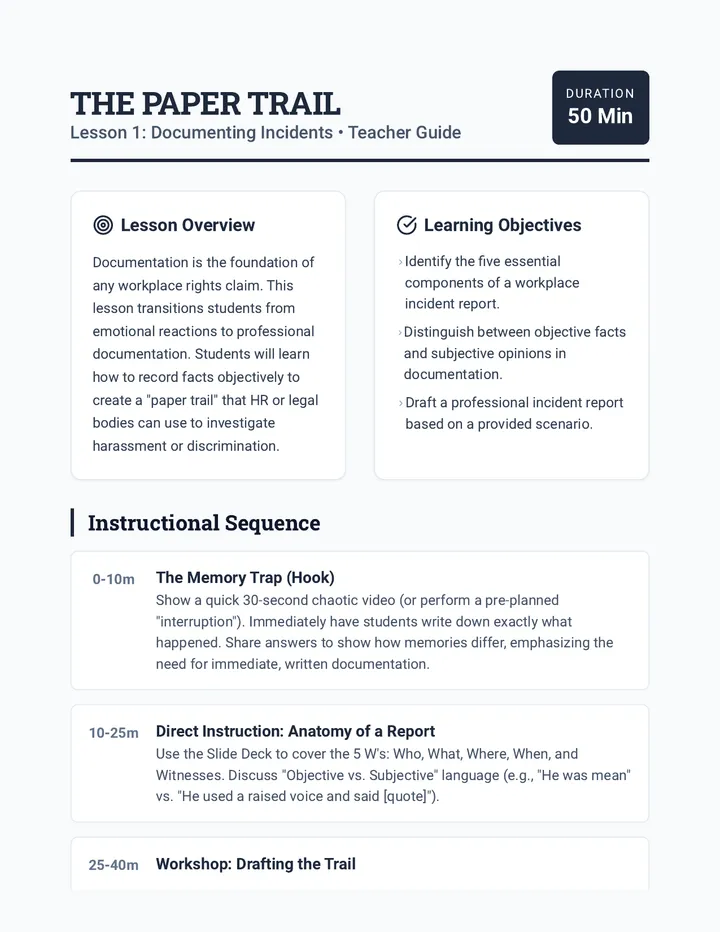
This sequence teaches 9th-grade students how to navigate the logistical and procedural aspects of workplace rights, focusing on documentation, internal reporting to HR, whistleblower protections, and external reporting through the EEOC. The unit culminates in a student-created workplace rights guide for peers.
This sequence trains 9th-grade students in bystander intervention techniques and active allyship within a workplace context. Students explore the psychological barriers to action (the bystander effect) and master the '4 Ds'—Direct, Distract, Delegate, and Delay—to safely interrupt harassment and support colleagues.
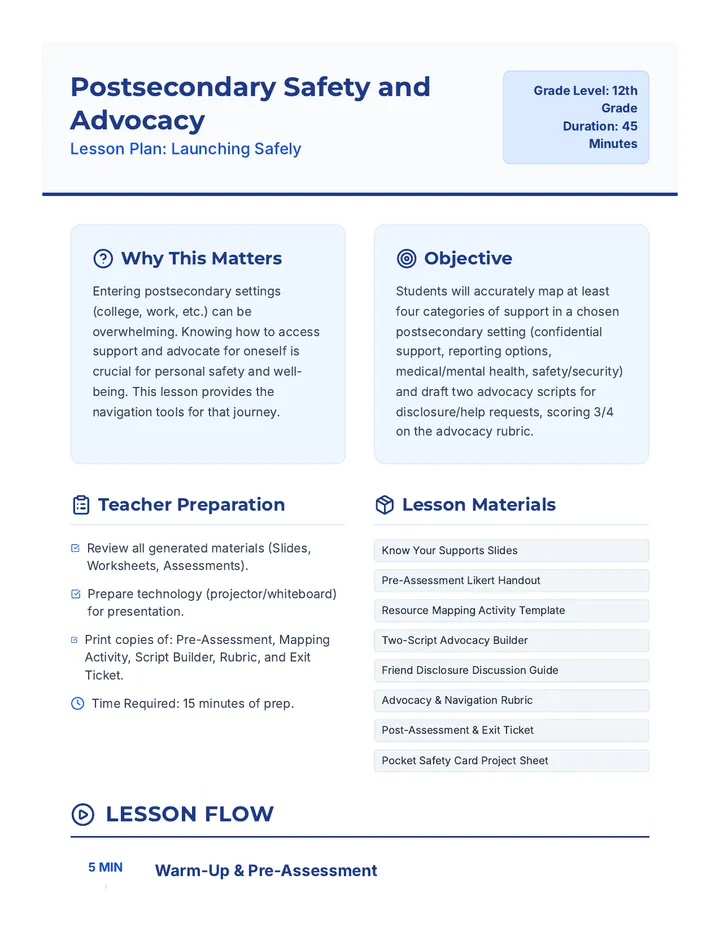
This 45-minute lesson for 12th-grade students helps them identify and utilize safety resources in postsecondary settings and develop effective advocacy skills. Students will gain practical tools for navigating new environments safely and confidently.
A 30-minute lesson for 10th-grade students to understand New Jersey's Harassment, Intimidation, and Bullying (HIB) law, including definitions, reporting, and support.
This 15-minute Tier 2 group session for 9th graders empowers students to identify bullying, understand their rights under the Jamari Terrell Act, and master effective reporting strategies. Students will develop a personal action commitment to foster a safer school environment.
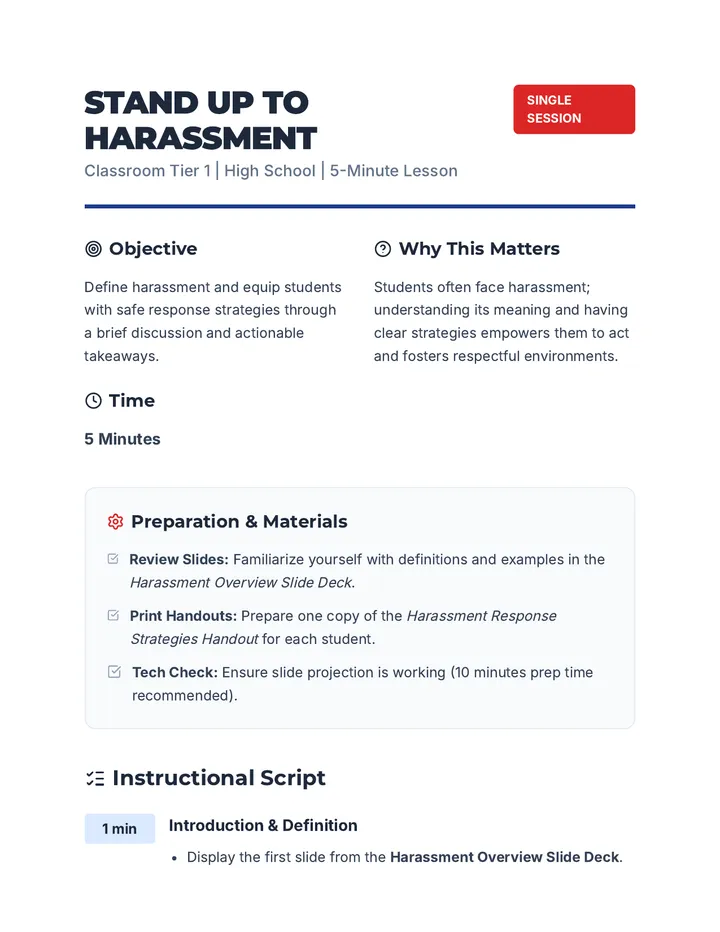
A quick 5-minute high school lesson that defines harassment, highlights its impact, and provides practical, safe response strategies to foster a respectful environment.
A 15-minute Tier 1 lesson for 10th graders focused on defining bullying, harassment, and racism, and empowering students with reporting and intervention tools.
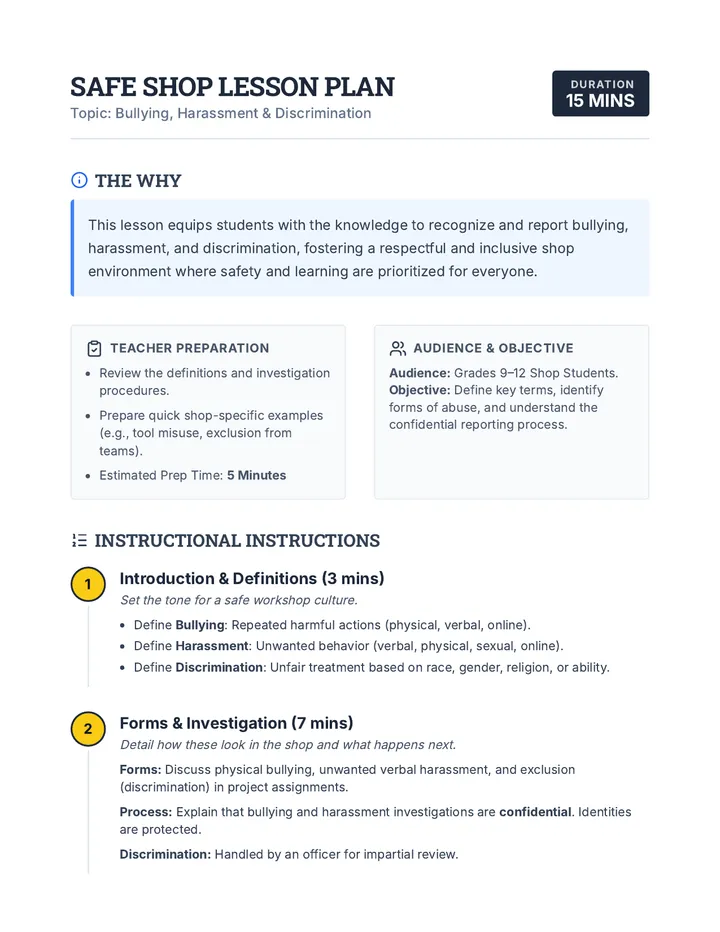
A high-impact 15-minute session for shop students to define, identify, and report bullying, harassment, and discrimination, fostering a safe workshop culture.