Lenny.com
Explore
Create
ActivitiesNewMathEnglish Language ArtsScience & EngineeringSocial StudiesGlobal LanguagesHealth & Physical EducationSpecial EducationCounseling & Life SkillsArts & CreativityESL
Lenny.com
Lenny.com
Explore
Create
ActivitiesNewMathEnglish Language ArtsScience & EngineeringSocial StudiesGlobal LanguagesHealth & Physical EducationSpecial EducationCounseling & Life SkillsArts & CreativityESL
Lenny.com
Counseling & Life SkillsSelf-AwarenessBasic Emotion RecognitionComplex Emotion IdentificationEmotional Nuance & Mixed FeelingsBuilding Positive Self-ImageRecognizing Strengths & Growth AreasAccurate Self-AssessmentPersonal Values IdentificationCultural & Individual Identity ExplorationValues-Based Decision MakingSelf-ManagementStop-and-Think StrategiesDelaying GratificationIndependent Impulse ManagementIdentifying Stress TriggersShort-Term Goal SettingSMART Goals DevelopmentGoal Monitoring & AdjustmentBuilding Perseverance & ResilienceInternal Motivation DevelopmentComprehensive Stress Reduction PlanningSocial AwarenessRecognizing Others' FeelingsDemonstrating EmpathyRespecting Individual DifferencesUnderstanding Cultural DiversityComplex Empathetic ResponsesMultiple Viewpoint ConsiderationMulti-Perspective AnalysisChallenging Stereotypes & BiasRelationship SkillsActive ListeningClear Verbal & Nonverbal CommunicationBuilding Positive FriendshipsWorking Cooperatively in GroupsCommunicating Personal BoundariesRespecting Others' BoundariesAssertive ExpressionPeaceful Problem-SolvingContributing to Team GoalsComplex Conflict NavigationMediation & NegotiationHealthy Romantic RelationshipsResponsible Decision-MakingDaily Problem IdentificationBrainstorming Multiple SolutionsEvaluating Pros & ConsRecognizing Risks & ConsequencesApplying Ethical FrameworksInformed Risk-Benefit DecisionsRoot Cause AnalysisMindfulnessMindful BreathingBody Scan MeditationDaily Mindfulness ApplicationDaily Self-Care RoutinesBalancing Life DemandsAdvocating for Wellness NeedsMental Health SupportUnderstanding Anxiety SymptomsWorry Management StrategiesProgressive Muscle RelaxationRecognizing Depression SignsBuilding Mood-Supporting RoutinesBehavioral Activation for MoodUnderstanding Grief StagesHealthy Grief CopingCreative Expression of LossBehavioral SupportDaily Check-In ProceduresDaily Goal Setting & ReviewRecognizing Escalation Warning SignsRequesting Breaks & SupportSelf-Calming During DistressUnderstanding Positive ReinforcementToken Economy ImplementationBehavior Chart TrackingAnalyzing Behavior PatternsIdentifying Antecedents & ConsequencesDetermining Behavior FunctionFunction-Based InterventionsIndividualized Behavior ContractsData-Driven Behavior AdjustmentTherapeutic ApproachesThoughts-Feelings-Behaviors ConnectionRecognizing Thinking PatternsChallenging Negative ThoughtsPositive Self-Talk PracticeThought Record TrackingAdvanced Cognitive RestructuringComprehensive CBT PlansBehavioral Activation TechniquesBuilding Positive ExperiencesExposure Hierarchies for AnxietyPresent-Moment AwarenessNon-Judgmental ObservationSelf-Soothing & DistractionComplex Emotion LabelingReducing Emotional Vulnerability (PLEASE)DEAR MAN CommunicationGIVE Skills for RelationshipsFAST Skills for Self-RespectRadical Acceptance PracticeCrisis Survival Skills (TIPP)Understanding Trauma EffectsTrauma Responses & TriggersIdentifying Trauma FeelingsGrounding TechniquesRegulation During Trauma DistressSafe Place VisualizationProcessing Through NarrativeDeveloping Trauma StoryPersonalized Safety PlanningGroup SupportTurn-Taking & SharingGroup Conversation SkillsSharing in Supportive EnvironmentLearning from Similar ChallengesBuilding Community & BelongingNavigating Peer RelationshipsGroup Skill PracticeGroup Mental Health EducationStress & Anxiety UnderstandingCrisis Support & SafetyKnowing When to Seek HelpIdentifying Mental Health CrisesGrounding During CrisisUsing Crisis HotlinesBuilding Support NetworksAccessing Mental Health ResourcesWarning Signs & Coping StrategiesDeveloping Personal Safety PlansUnderstanding Suicide Warning SignsGatekeeper Skills for PeersDigital LiteracySocial MediaTechnology BasicsProductivity ToolsInternet and Online ResearchWeb Design and PublishingDigital CitizenshipOnline Safety and PrivacyEmerging TechnologiesFinancial LiteracyMaking Financial DecisionsBanking and AccountsConsumer SkillsSaving and InvestingCredit and DebtEmployment and IncomeTaxesInsuranceMajor PurchasesEconomic ConceptsFinancial PlanningCollege & Post-Secondary PlanningCareer ExplorationUnderstanding Post-Secondary OptionsCollege Research & SelectionAdmission RequirementsCollege Application ProcessPersonal Statement WritingFAFSA CompletionScholarship Search & ApplicationsUnderstanding Student LoansContinuing Education PlanningInterview PreparationResearching EmployersCommon Interview QuestionsSTAR Method ResponsesProfessional Interview PresenceVirtual Interview SkillsInterview Follow-UpJob Search SkillsUnderstanding Job PostingsEffective Job Search StrategiesNetworking for OpportunitiesResume Writing BasicsAction Verbs & AchievementsTailoring Resumes to JobsCover Letter WritingProfessional ReferencesProfessional CommunicationBusiness Email EtiquettePhone & Voicemail ProfessionalismMeeting ParticipationPresentation SkillsProfessional Work EthicTime Management & ProductivityTeamwork & CollaborationAdaptability & FlexibilityProblem-Solving at WorkConstructive FeedbackWorkplace RightsUnderstanding Employment LawsPay & Benefits UnderstandingWorkplace SafetyAnti-Discrimination & Harassment
Lenny.com

Solutions

Lenny for EducatorsLenny for SchoolsLenny for Districts

Product

ExploreSign inCreateSupportAbout

Resources

Getting startedMTSS Acceleration Program

Newsletters

School Funding Newsletter

© 2026 Lenny Learning Inc.

TermsPrivacyAccessibility
LinkedInInstagramX
Lenny

Values-Based Decision Making

Identification of core beliefs and their application to complex life choices. Builds frameworks for ethical reasoning and aligning daily actions with long-term personal integrity.

Videos

How to Be #Happier Today

How to Be #Happier Today

In this insightful video, Joshua Becker explores the concept of happiness not as a fleeting emotion, but as a deliberate, long-term state of joy and satisfaction. He challenges the common misconception that happiness is dependent on perfect external circumstances and instead frames it as a series of daily choices and disciplines. Becker outlines eight specific, actionable steps individuals can take immediately to cultivate a deeper sense of fulfillment, ranging from shifting one's mindset to practical lifestyle changes. The video delves into key themes such as the corrosive nature of comparison, the power of gratitude and generosity, and the fallacy of consumerism. Becker argues that modern society often confuses acquiring possessions with achieving happiness, leading to wasted resources and distraction. He emphasizes the importance of nurturing relationships, maintaining physical health, and looking beyond oneself to find meaning through serving others. For educators and parents, this video serves as an excellent tool for social-emotional learning (SEL). It provides a structured framework for discussing mental well-being, character development, and values. The content is practical and accessible, making it suitable for classroom discussions on mindfulness, consumer culture, and building healthy communities. It encourages students to take agency over their own happiness rather than waiting for external validation.

Joshua BeckerJoshua Becker

6mins 18s

How to make smart decisions more easily

How to make smart decisions more easily

This animated lesson explores the psychological phenomenon of "decision fatigue," explaining why our ability to make good choices deteriorates after a long period of decision-making. Through the lens of a fascinating 2011 study on parole judges, the video demonstrates how cognitive exhaustion can lead to impulsive behavior or the avoidance of making decisions altogether. It breaks down the variables that contribute to this state, such as decision frequency, complexity, and novelty. The video delves into the biological reality that mental work consumes physical energy, creating a daily threshold for high-quality decision-making. It highlights the dangers of this fatigue in high-stakes professions like medicine and law, where exhaustion can lead to critical errors. The narrative moves from systemic issues to personal application, helping viewers understand their own cognitive limits. For educators, this resource offers practical strategies for students to manage their own mental energy. It provides actionable advice on combatting fatigue, such as simplifying daily routines, delegating choices, and tackling important tasks earlier in the day. It serves as an excellent tool for teaching executive function skills, self-regulation, and psychology concepts related to willpower and mental stamina.

TED-EdTED-Ed

5mins 16s

What they don't teach you about career fulfillment in school | Ryan Clements | TEDxKelowna

What they don't teach you about career fulfillment in school | Ryan Clements | TEDxKelowna

In this compelling TEDx talk, Ryan Clements shares a personal journey of transitioning from a stressed, unfulfilled lawyer to a passionate entrepreneur and writer. He challenges the traditional narrative of career success often taught in schools—focusing on outcomes like salary, prestige, and security—and instead argues for a values-based approach to finding work that matters. Through vivid storytelling about a pivotal moment of despair in a parking lot, Clements illustrates the difference between "push motivation" (driven by external rewards and fear) and "pull motivation" (driven by internal purpose and engagement). Key themes explored include the distinction between career outcomes versus consequences, the psychological concept of "flow," and the importance of aligning one's daily work with their unique personal values. Clements critiques the "do what you love" advice as sometimes impractical, suggesting instead that we find work that aligns with *who we are* and what we value, such as freedom, creativity, or problem-solving. He provides a framework for students to evaluate potential career paths based on intrinsic rewards rather than just external validation. For educators, this video serves as a powerful tool for career counseling, social-emotional learning, and life skills curriculum. It moves beyond standard aptitude tests to help students understand the internal drivers of satisfaction. It is particularly useful for high school and college students facing pressure to choose a path, offering them permission to prioritize mental well-being and personal alignment over societal expectations of success. The talk provides actionable questions students can ask themselves to gauge whether a potential career path will lead to genuine fulfillment.

TEDx TalksTEDx Talks

16mins 33s

Do You have a Plan for Life After High School?

Do You have a Plan for Life After High School?

Hosted by a relatable teen peer named Maria, this video addresses the anxiety and uncertainty many students face when asked, "What are you going to do after high school?" Maria normalizes the fear of the unknown but emphasizes the necessity of creating a plan. She breaks down the overwhelming process of career selection into manageable steps, starting with self-reflection rather than job titles. The video explores various post-secondary pathways, including four-year colleges, trade schools, the military, and entering the workforce immediately. It provides a concrete framework for decision-making by encouraging students to list their interests, skills, desired lifestyle, and core beliefs. Maria models this behavior by sharing her own list and how it led her to pursue medicine. For educators, this resource serves as an excellent hook for career exploration units or advisory periods. It creates a safe space for students to admit they don't have all the answers while providing a practical "homework" assignment to get started. It specifically reinforces the role of school counselors as support systems and alleviates pressure by reminding students that career choices aren't permanent and can evolve over time.

Mesquite ISDMesquite ISD

2mins 15s

How to Get Out of an Unhealthy Relationship

How to Get Out of an Unhealthy Relationship

This animated video provides a compassionate and practical guide for young people on recognizing and leaving unhealthy relationships. It begins by contrasting the feelings associated with healthy versus unhealthy dynamics, such as safety and support versus fear and anxiety. The video clearly outlines "red flags" including teasing, blaming, controlling behavior, and physical harm, helping viewers identify toxic patterns in their own lives. The core of the video focuses on a step-by-step "breakup plan" designed to keep the individual safe and supported. It advises on choosing the right method of communication (phone, text, or public place), using clear language to state that the relationship isn't working, and setting boundaries without feeling obligated to manage the other person's emotions. It emphasizes the critical importance of involving a trusted adult, especially if safety is a concern. Finally, the video addresses the emotional aftermath of a breakup, validating feelings of sadness and loss even when the relationship was bad. It encourages self-care strategies like hobbies and spending time with friends. This resource is invaluable for health and guidance curriculums, providing students with the vocabulary and actionable steps needed to navigate difficult interpersonal situations and prioritize their emotional and physical well-being.

AMAZE OrgAMAZE Org

2mins 54s

Marcus Aurelius - How to Stay Calm in Uncertain Times

Marcus Aurelius - How to Stay Calm in Uncertain Times

This animated video explores the timeless wisdom of Roman Emperor and Stoic philosopher Marcus Aurelius, specifically drawing from his personal writings, "Meditations." The narrative provides a practical framework for maintaining mental composure when life feels chaotic or uncertain, breaking down complex philosophical ideas into accessible, actionable advice appropriate for students navigating stress or anxiety. The content is structured around five core virtues derived from Stoic philosophy: Acceptance (embracing reality), Mindfulness (focusing on the present), Discrimination (understanding what is within one's control), Judgment (valuing character over material goods), and Adaptability (embracing change). Through simple animations and direct quotes from Aurelius, the video illustrates how shifting one's perspective can lead to greater emotional stability. For educators, this video serves as an excellent bridge between history, philosophy, and Social Emotional Learning (SEL). It provides concrete tools for students to manage anxiety, offering a historical context that validates their feelings while providing ancient strategies for resilience. It is particularly useful for discussions on mental health, character education, and the study of ancient civilizations.

Freedom in ThoughtFreedom in Thought

6mins 36s

Materials

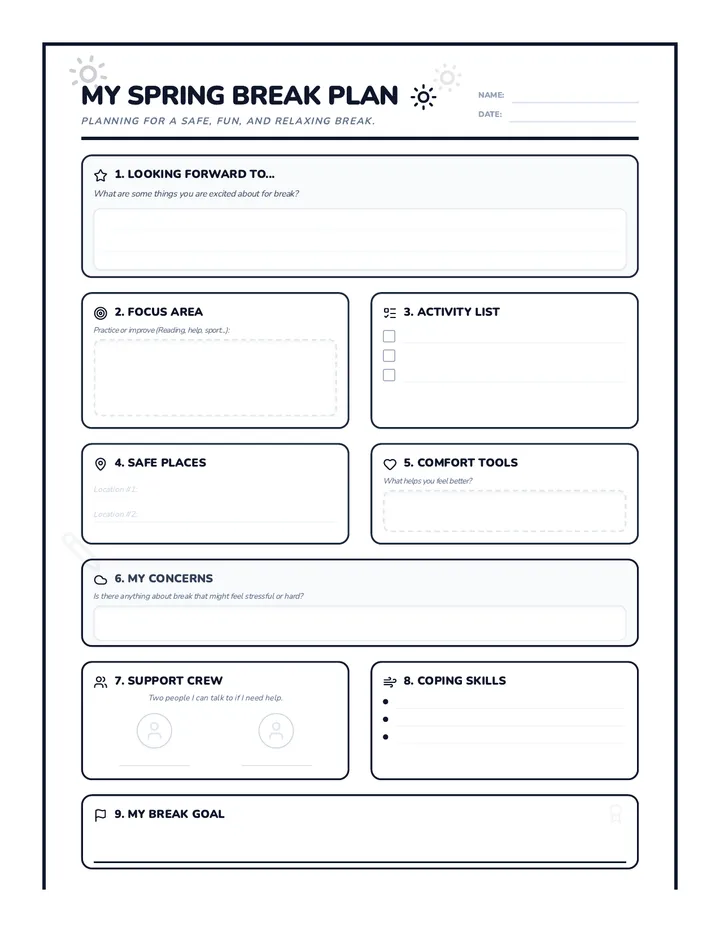
Spring Break Plan Worksheet Final Sun Theme V4 Final Final Final Final Final Final One Page Fixed One Page Fixed Fixed Fixed Fixed Fixed Fixed Fixed Final Final Final Final

Spring Break Plan Worksheet Final Sun Theme V4 Final Final Final Final Final Final One Page Fixed One Page Fixed Fixed Fixed Fixed Fixed Fixed Fixed Final Final Final Final

A finalized, single-page Spring Break Planner for middle school counseling. It features 9 journal-style sections optimized for black and white printing with a sun-themed aesthetic and explicitly listed crisis resources in a discrete footer.

A

angela_candelaria

Restorative Repair Reflection Packet

Restorative Repair Reflection Packet

A 3-page restorative reflection and accountability packet adapted for a 12-year-old (middle school) reading level with Staff/AP facilitator and administrative titles. It uses clear, direct language to explain bodily privacy, personal boundaries, and why pantsing is a serious violation rather than a joke, structured around the RAISE values framework with guided impact analysis, an apology repair plan, and a signed non-repetition contract.

B

beasleyc

Respect Superheroes Daily Slides

Respect Superheroes Daily Slides

A vibrant, 11-slide presentation designed for K-3 elementary students during the Week of Respect. Features 5 daily 5-10 minute interactive mini-lessons covering personal space, kind words, celebrating differences, caring for school property, and taking a classroom respect pledge.

TJ

Tashanique Jefferson

Values Compass Chart

Values Compass Chart

A beautifully designed, botanical-themed Visual Anchor Chart displaying categorized core values in plain language. Highly suitable for ACT therapy, psychoeducation, and general wellness goal-setting, complete with an interactive 'Top 3 Values' reflection area at the bottom.

TC

Theresa Casarella

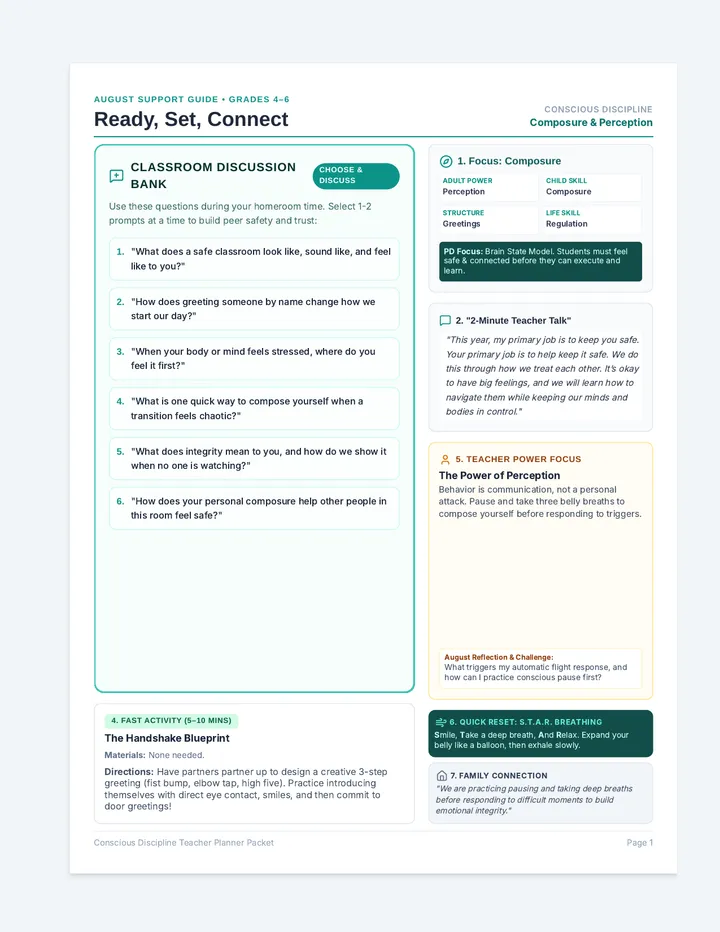
Conscious Discipline Monthly Guides

Conscious Discipline Monthly Guides

A professional, highly encouraging 9-page planner packet of monthly classroom support guides for elementary educators. Designed with the Classroom Discussion Bank as the dominant visual focal point on each page, featuring a dedicated list of highly engaging questions for grades 4–6 without subcategories, set to be utilized during homeroom time. Features 4 quick activity options (Connect, Calm, Commit, Celebrate) on each page. Optimized to fit perfectly on standard printable pages with zero layout overflow, with custom Kitley Counseling branding in the footer.

H

Heather.Koke

Paycheck Reflection Worksheet

Paycheck Reflection Worksheet

A 2-page printable restorative weekly paycheck and character reflection worksheet for 7th-grade homeroom students focusing on Integrity and Respect.

CW

Cheyenne Watkins

Sequences

Orientation Key Points Visual v2

DBT Skills for Young Explorers

A comprehensive DBT skills training sequence for elementary schools, split into K-2 and 3-5 curricula. This program covers Mindfulness, Distress Tolerance, Emotion Regulation, and Interpersonal Effectiveness using age-appropriate activities and narratives.

MB

Megan Bjork

173
Empowering You Teacher Guide

DBT Skills Empowering You

A 5-week individual lesson series for 8th-grade students with social-emotional disabilities, introducing core DBT modules: Mindfulness, Distress Tolerance, Emotion Regulation, Interpersonal Effectiveness, and Walking the Middle Path.

B

bbeldenscott

38
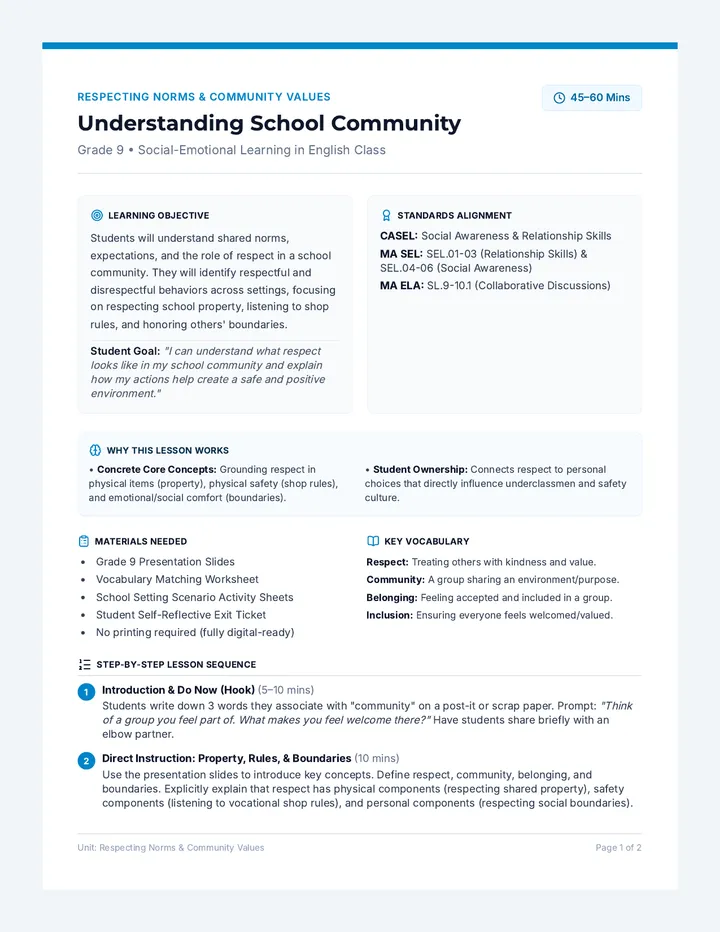
Understanding School Community Teacher Guide

Respecting Norms and Community Values

A comprehensive four-year scaffolded social-emotional learning unit for high schoolers (Grades 9-12) focused on building community, active communication, personal responsibility, and leadership around community norms and values.

J

jtoomey

36
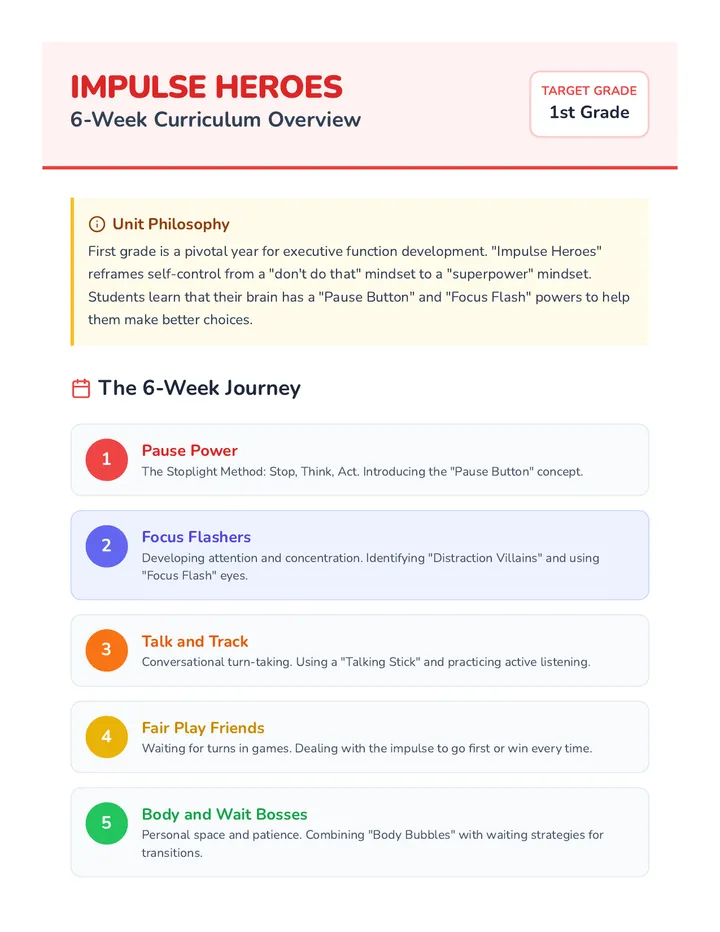
Impulse Heroes Teacher Guide

True North Identity Lab

A 6-week identity and self-esteem program for 5th graders titled 'True North: The Identity Lab.' Students explore their core values, strengths, mindset, and authentic selves through a scientific 'discovery' theme, preparing them for the social transitions of middle school.

BR

Beverly Rogers

41
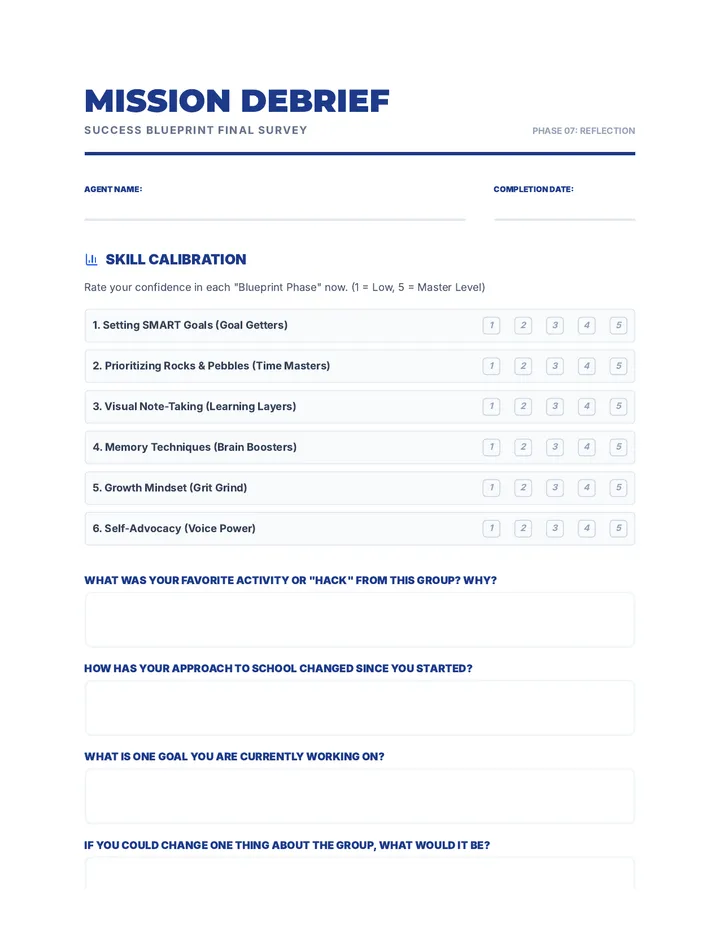
Success Blueprint Final Survey Document

Success Blueprint

A 6-session small group program designed for middle schoolers to build essential academic success habits through interactive games and hands-on activities. Topics include goal setting, time management, note-taking, study strategies, growth mindset, and self-advocacy.

AH

Amy Hill

33
Body Scan Activity Sheet

Inner Strength Lab

A comprehensive 9-week social-emotional learning curriculum for 8th graders focusing on anxiety, self-esteem, and healthy relationships. Designed for two 2-hour sessions per week, with structured instruction on Day 1 and independent creative or research projects on Day 2.

D

dmartinez

37