Lenny.com
Explore
Create
ActivitiesNewMathEnglish Language ArtsScience & EngineeringSocial StudiesGlobal LanguagesHealth & Physical EducationSpecial EducationCounseling & Life SkillsArts & CreativityESL
Lenny.com
Lenny.com
Explore
Create
ActivitiesNewMathEnglish Language ArtsScience & EngineeringSocial StudiesGlobal LanguagesHealth & Physical EducationSpecial EducationCounseling & Life SkillsArts & CreativityESL
Lenny.com
Counseling & Life SkillsSelf-AwarenessBasic Emotion RecognitionComplex Emotion IdentificationEmotional Nuance & Mixed FeelingsBuilding Positive Self-ImageRecognizing Strengths & Growth AreasAccurate Self-AssessmentPersonal Values IdentificationCultural & Individual Identity ExplorationValues-Based Decision MakingSelf-ManagementStop-and-Think StrategiesDelaying GratificationIndependent Impulse ManagementIdentifying Stress TriggersShort-Term Goal SettingSMART Goals DevelopmentGoal Monitoring & AdjustmentBuilding Perseverance & ResilienceInternal Motivation DevelopmentComprehensive Stress Reduction PlanningSocial AwarenessRecognizing Others' FeelingsDemonstrating EmpathyRespecting Individual DifferencesUnderstanding Cultural DiversityComplex Empathetic ResponsesMultiple Viewpoint ConsiderationMulti-Perspective AnalysisChallenging Stereotypes & BiasRelationship SkillsActive ListeningClear Verbal & Nonverbal CommunicationBuilding Positive FriendshipsWorking Cooperatively in GroupsCommunicating Personal BoundariesRespecting Others' BoundariesAssertive ExpressionPeaceful Problem-SolvingContributing to Team GoalsComplex Conflict NavigationMediation & NegotiationHealthy Romantic RelationshipsResponsible Decision-MakingDaily Problem IdentificationBrainstorming Multiple SolutionsEvaluating Pros & ConsRecognizing Risks & ConsequencesApplying Ethical FrameworksInformed Risk-Benefit DecisionsRoot Cause AnalysisMindfulnessMindful BreathingBody Scan MeditationDaily Mindfulness ApplicationDaily Self-Care RoutinesBalancing Life DemandsAdvocating for Wellness NeedsMental Health SupportUnderstanding Anxiety SymptomsWorry Management StrategiesProgressive Muscle RelaxationRecognizing Depression SignsBuilding Mood-Supporting RoutinesBehavioral Activation for MoodUnderstanding Grief StagesHealthy Grief CopingCreative Expression of LossBehavioral SupportDaily Check-In ProceduresDaily Goal Setting & ReviewRecognizing Escalation Warning SignsRequesting Breaks & SupportSelf-Calming During DistressUnderstanding Positive ReinforcementToken Economy ImplementationBehavior Chart TrackingAnalyzing Behavior PatternsIdentifying Antecedents & ConsequencesDetermining Behavior FunctionFunction-Based InterventionsIndividualized Behavior ContractsData-Driven Behavior AdjustmentTherapeutic ApproachesThoughts-Feelings-Behaviors ConnectionRecognizing Thinking PatternsChallenging Negative ThoughtsPositive Self-Talk PracticeThought Record TrackingAdvanced Cognitive RestructuringComprehensive CBT PlansBehavioral Activation TechniquesBuilding Positive ExperiencesExposure Hierarchies for AnxietyPresent-Moment AwarenessNon-Judgmental ObservationSelf-Soothing & DistractionComplex Emotion LabelingReducing Emotional Vulnerability (PLEASE)DEAR MAN CommunicationGIVE Skills for RelationshipsFAST Skills for Self-RespectRadical Acceptance PracticeCrisis Survival Skills (TIPP)Understanding Trauma EffectsTrauma Responses & TriggersIdentifying Trauma FeelingsGrounding TechniquesRegulation During Trauma DistressSafe Place VisualizationProcessing Through NarrativeDeveloping Trauma StoryPersonalized Safety PlanningGroup SupportTurn-Taking & SharingGroup Conversation SkillsSharing in Supportive EnvironmentLearning from Similar ChallengesBuilding Community & BelongingNavigating Peer RelationshipsGroup Skill PracticeGroup Mental Health EducationStress & Anxiety UnderstandingCrisis Support & SafetyKnowing When to Seek HelpIdentifying Mental Health CrisesGrounding During CrisisUsing Crisis HotlinesBuilding Support NetworksAccessing Mental Health ResourcesWarning Signs & Coping StrategiesDeveloping Personal Safety PlansUnderstanding Suicide Warning SignsGatekeeper Skills for PeersDigital LiteracySocial MediaTechnology BasicsProductivity ToolsInternet and Online ResearchWeb Design and PublishingDigital CitizenshipOnline Safety and PrivacyEmerging TechnologiesFinancial LiteracyMaking Financial DecisionsBanking and AccountsConsumer SkillsSaving and InvestingCredit and DebtEmployment and IncomeTaxesInsuranceMajor PurchasesEconomic ConceptsFinancial PlanningCollege & Post-Secondary PlanningCareer ExplorationUnderstanding Post-Secondary OptionsCollege Research & SelectionAdmission RequirementsCollege Application ProcessPersonal Statement WritingFAFSA CompletionScholarship Search & ApplicationsUnderstanding Student LoansContinuing Education PlanningInterview PreparationResearching EmployersCommon Interview QuestionsSTAR Method ResponsesProfessional Interview PresenceVirtual Interview SkillsInterview Follow-UpJob Search SkillsUnderstanding Job PostingsEffective Job Search StrategiesNetworking for OpportunitiesResume Writing BasicsAction Verbs & AchievementsTailoring Resumes to JobsCover Letter WritingProfessional ReferencesProfessional CommunicationBusiness Email EtiquettePhone & Voicemail ProfessionalismMeeting ParticipationPresentation SkillsProfessional Work EthicTime Management & ProductivityTeamwork & CollaborationAdaptability & FlexibilityProblem-Solving at WorkConstructive FeedbackWorkplace RightsUnderstanding Employment LawsPay & Benefits UnderstandingWorkplace SafetyAnti-Discrimination & Harassment
Lenny.com

Solutions

Lenny for EducatorsLenny for SchoolsLenny for Districts

Product

ExploreSign inCreateSupportAbout

Resources

Getting startedMTSS Acceleration Program

Newsletters

School Funding Newsletter

© 2026 Lenny Learning Inc.

TermsPrivacyAccessibility
LinkedInInstagramX
Lenny

Exposure Hierarchies for Anxiety

Systematic construction of step-by-step challenges to treat anxiety and phobias. Introduces Subjective Units of Distress Scale (SUDS) to rank fears and guide gradual exposure exercises.

Videos

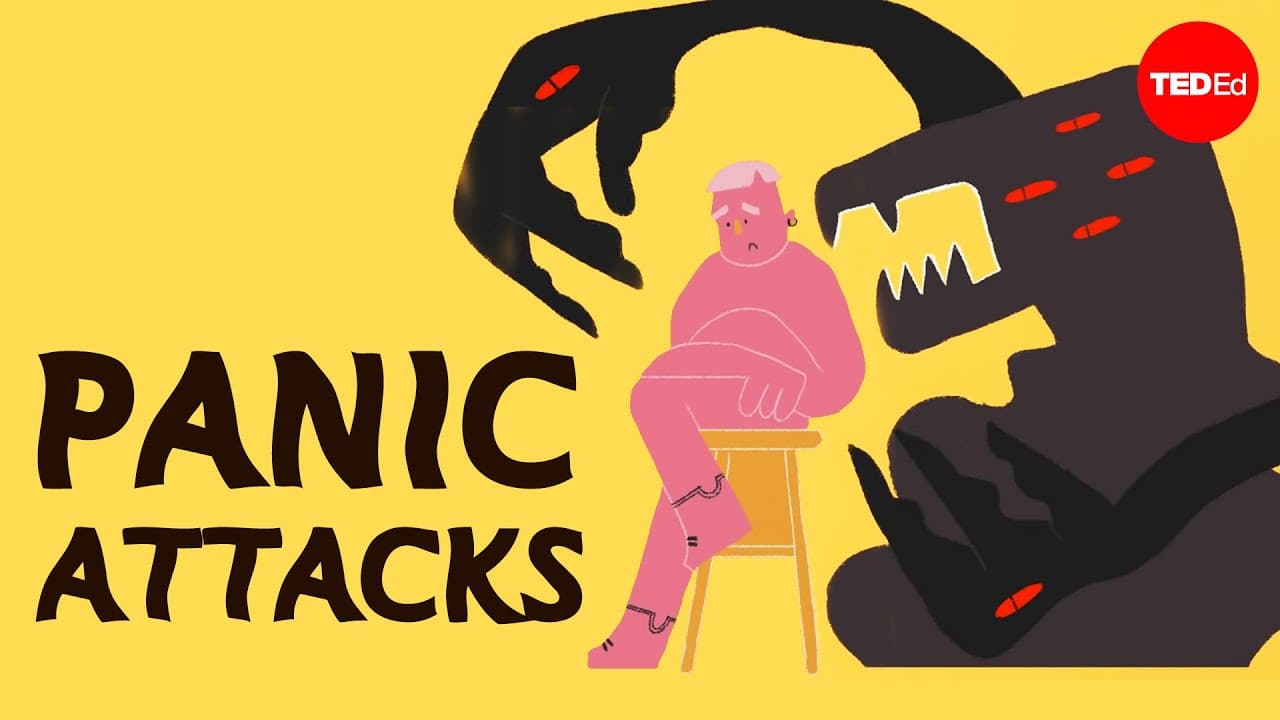
What causes panic attacks, and how can you prevent them? - Cindy J. Aaronson

What causes panic attacks, and how can you prevent them? - Cindy J. Aaronson

This animated lesson provides a deep dive into the physiological and psychological mechanics of panic attacks. It begins by vividly describing the subjective experience of a panic attack through poetic metaphor before transitioning into the hard science of what is actually happening in the brain and body. The video explains that a panic attack is essentially a "false alarm" where the body's fight-or-flight response is triggered without real danger, involving the amygdala, the sympathetic nervous system, and the release of adrenaline. The content moves beyond just the biology to explore the cycle of fear that maintains panic disorders—specifically, how the fear of having another attack can actually trigger one. It outlines the differences between distinct anxiety disorders like PTSD, OCD, and Generalized Anxiety Disorder. Crucially, it clarifies that while these experiences are terrifying and mimic life-threatening events like heart attacks, they are not physically dangerous in the long term. Finally, the video offers concrete, evidence-based solutions, comparing medication with Cognitive Behavioral Therapy (CBT). It breaks down how CBT works through physiological education, breathing exercises, cognitive restructuring (changing thoughts), and exposure therapy. This resource is invaluable for health and psychology classrooms to de-stigmatize mental health issues, explain the nervous system, and equip students with practical mental tools for managing anxiety.
TED-EdTED-Ed

5mins 23s

Materials

Brave Steps Student Workbook

Brave Steps Student Workbook

A 4-page student-facing coping and reflection workbook for middle schoolers navigating school avoidance, somatic panic symptoms (stomachaches, headaches), and peer social anxiety. Includes body signal mapping, cognitive reframing tools, somatic nervous system resets, and a personalized school day courage plan.

D

Dana

Sober Horizons Discovery Workbook

Sober Horizons Discovery Workbook

A comprehensive 4-page recovery workbook featuring an interest inventory, low-cost community exploration guide, anxiety and trigger safety protocols, and a 4-week actionable outing planner.

TC

Theresa Casarella

Feeling Meter Poster Detailed 10-Scale Planning

Feeling Meter Poster Detailed 10-Scale Planning

A detailed feelings thermometer poster with a 1-10 scale and color-coded zones: Green (1-3), Yellow (4-5), Orange (6-7), and Red (8-10). The green zone has been lightened to the palest shades to ensure a soft visual base while maintaining the light-to-dark gradient across the entire scale. Writing lines are included for student responses.

MS

Mary-Elizabeth Solomita

Sequences

CBT Bootcamp Curriculum Teacher Resource

CBT Bootcamp

A 10-week series of 30-minute group lessons for high school students exploring Cognitive Behavioral Therapy. Each session builds practical skills in identifying and reframing thoughts, managing emotions, and engaging in healthy behaviors through interactive activities. This Tier 2 program develops resilience and mental wellness.

R

Rebecca.Bibeau

22
Mission Briefing Slides Final Version

Anxiety Investigators Agency

A 6-week small group program for middle schoolers that uses a detective and scientist theme to teach anxiety management, cognitive reframing, and coping skills.

KJ

Kayle Jordan

45
Resilience Clinician Guide

Resilience Roadmap

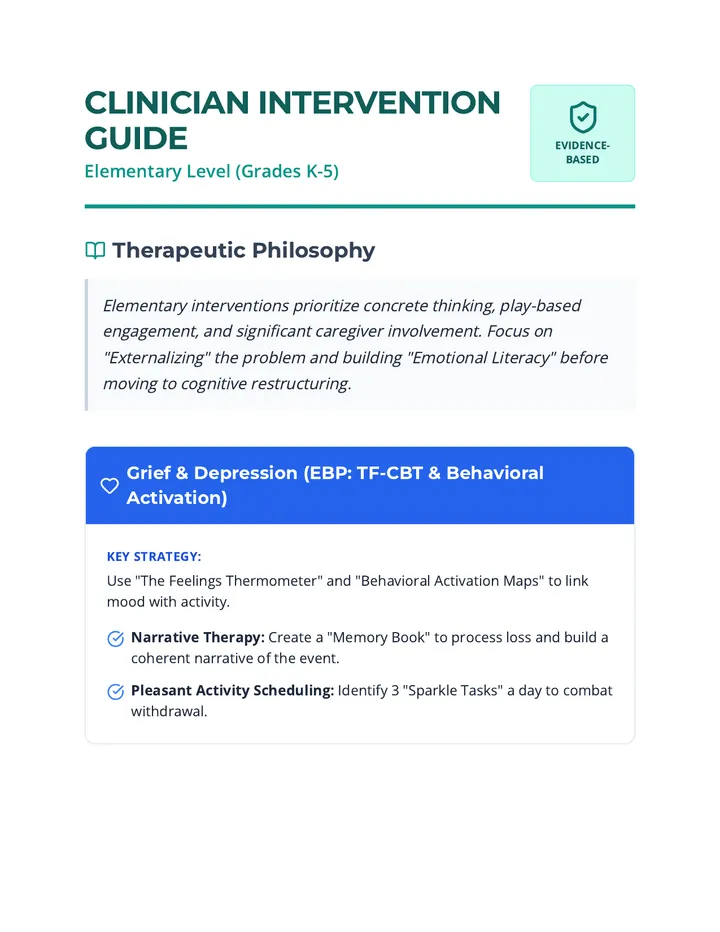
A comprehensive suite of evidence-based mental health interventions and resources for school clinicians, covering grief, depression, anxiety, conduct disorders, and crisis prevention for K-12 students.

DC

Daisy Carrera

11
Body and Brain Facilitator Guide

Mind Armor CBT

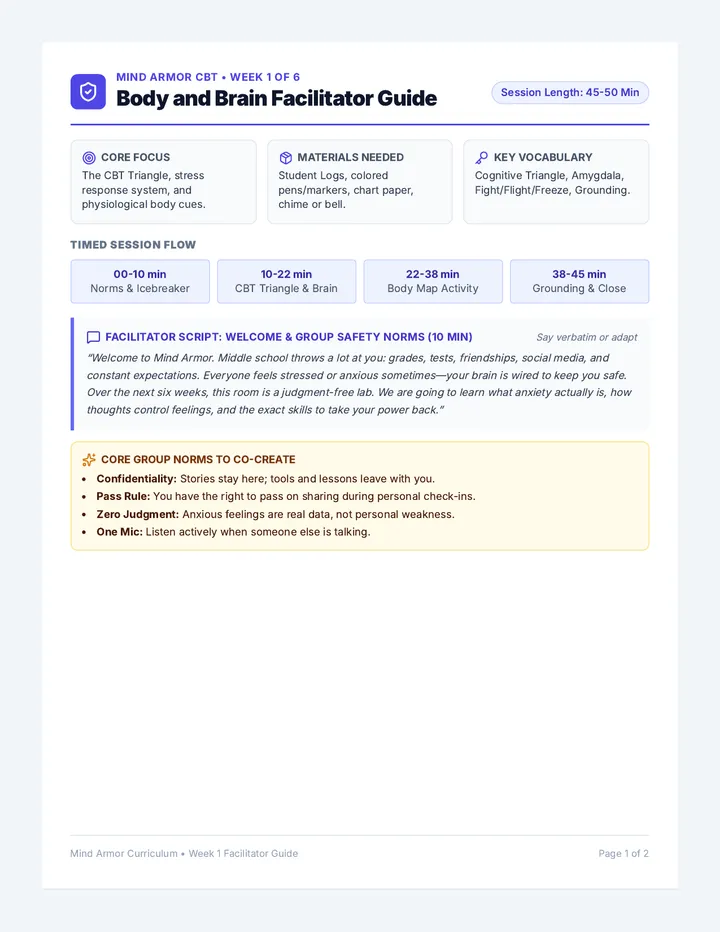
A comprehensive 6-week CBT curriculum designed for middle school students to master emotion regulation, cognitive reframing, academic stress reduction, and social confidence. Includes complete facilitator session plans, verbatim scripts, psychoeducational frameworks, and hands-on student activity materials.

GC

Georgia Chute

12
Resonance Lab Activity

Voice Studio

A gentle, evidence-based communication program for teens with Selective Mutism. It uses behavioral shaping and approximations to move from non-verbal rapport to functional vocalization in a low-pressure 1:1 environment.

A

agreenberg

5
Anxiety Explorer Worksheet

Social Courage

A series of lessons designed to equip students with CBT-based tools to manage social anxiety, improve social skills, and increase engagement in school environments.

SF

Samantha Figueroa

6

Lessons

Brave Bridge Slides

The Brave Bridge

A presentation and workshop for parents and caregivers to understand school avoidance and how to break the accommodation cycle in middle schoolers.

BH

Bennett Higgins

6
Speaking Meter Activity

Words Under Pressure

A small group stuttering therapy lesson focused on identifying, ranking, and discussing stressful speaking situations across everyday contexts. Students construct personal communication hierarchies and explore coping mindsets in a supportive peer environment.

KC

Kristina Carnes

3
Calmer Mornings Bilingual Slides

Ready and Resilient

A compassionate, solution-focused workshop for families of middle and high schoolers struggling with school anxiety and avoidance. This lesson equips facilitators and parents with actionable strategies, somatic-symptom coping tools, and collaboratively built routines to make school days feel safe, predictable, and manageable.

GR

Gaea Ray

5
Anxiety Gauge Worksheet

Anxiety Mapping

A lesson designed to help students identify and track their anxiety levels by mapping physical sensations, internal thoughts, and external behaviors.

AL

Andrea Labb

13
Bridge to School Guide

Bridge to School Home Visit

A comprehensive home visit framework designed for social workers to support students experiencing school avoidance. This lesson focuses on building trust, identifying specific barriers to attendance, and co-creating a gradual return plan with the student and family.

J

jbreneisen

7
Classroom Calm Teacher Guide

Classroom Calm Strategies

A comprehensive lesson helping teenagers manage psychosomatic anxiety symptoms (nausea, racing heart, shortness of breath) with immediate in-class strategies to prevent class avoidance.

DF

Daniel Freitas

2