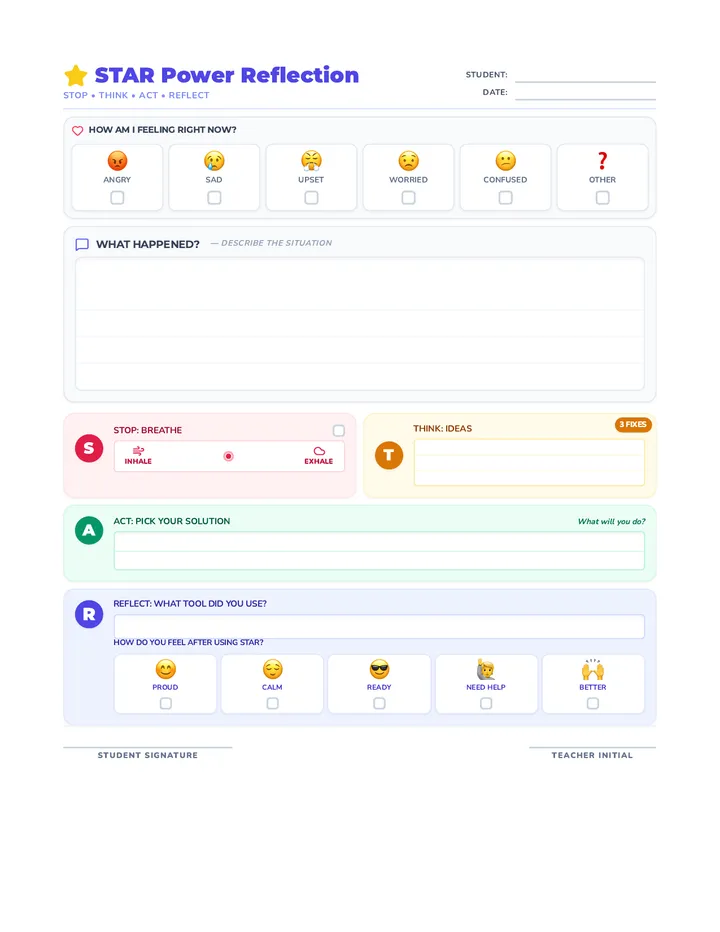
Functional communication strategies for self-advocacy and emotional regulation. Teaches students to identify internal triggers and use visual or verbal cues to access necessary pauses or assistance.
A 3-day small group SEL intervention for grades 3-5 focused on self-management and impulse control. Students learn to pause and select a school-appropriate calming strategy (deep breath, take a break, or rest 5 minutes) before responding to high-emotion situations.
A structured 4-week emotional regulation and growth mindset sequence for Year 2 students struggling with academic frustration. Designed for weekly 20-30 minute sessions with a Wellbeing Officer, using a soccer analogy to build resilience, introduce coping 'plays', normalize mistakes, and establish a daily desk goalie tracker.
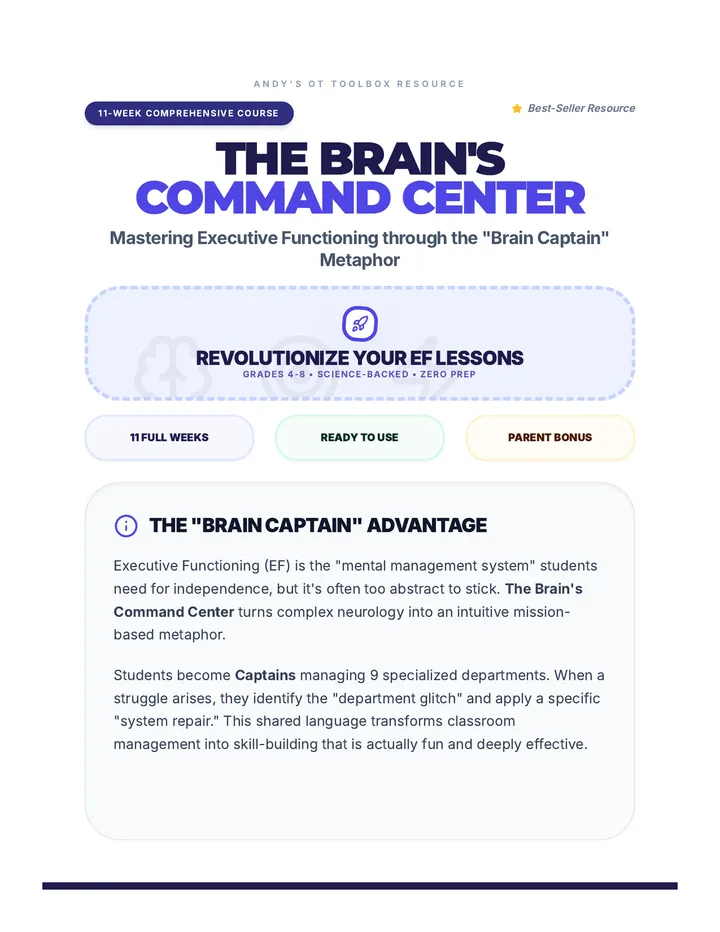
An 8-week Tier-2 counselor intervention sequence designed to help students master executive function skills. It reframes the brain as a 'corporate boardroom' where students learn to become effective CEOs of their planning, time management, impulse control, working memory, and cognitive flexibility.
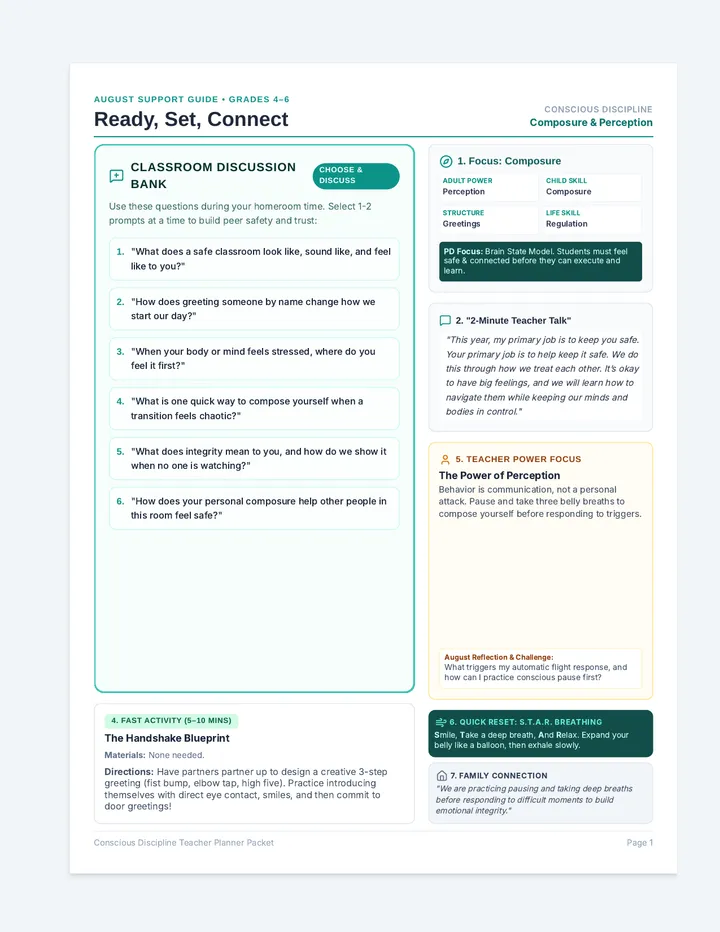
A comprehensive 9-week professional development sequence for middle school teachers, structured into three 3-week modules. The sequence focuses on trauma-informed foundations, collaborative coping co-facilitation with student services, and tiered support systems to regulate the classroom climate.
A comprehensive nine-week professional development sequence for middle school staff, delivering 10-15 minute training sessions on relationship-building, mindfulness, and de-escalation strategies. Includes interactive slides, facilitator guides, teacher reference cards, and digital newsletter templates.
A 5-lesson sequence for Kindergarten students focusing on interoception and the procedural steps of requesting and returning from a break to support self-regulation.
A 4-session Tier 3 counseling sequence for first graders based on Hunter and the Amazing Remote Control, focusing on identifying feelings, self-advocacy, and emotional regulation.
A comprehensive masterclass series for school social workers covering crisis prevention, ethical practice, and advanced school-based clinical intervention strategies.
A two-part SEL sequence for a one-on-one session. It introduces the "Gear Switch" metaphor for transitions and follows up with a deeper look at personal responsibility and how "focusing on yourself" translates to group success.
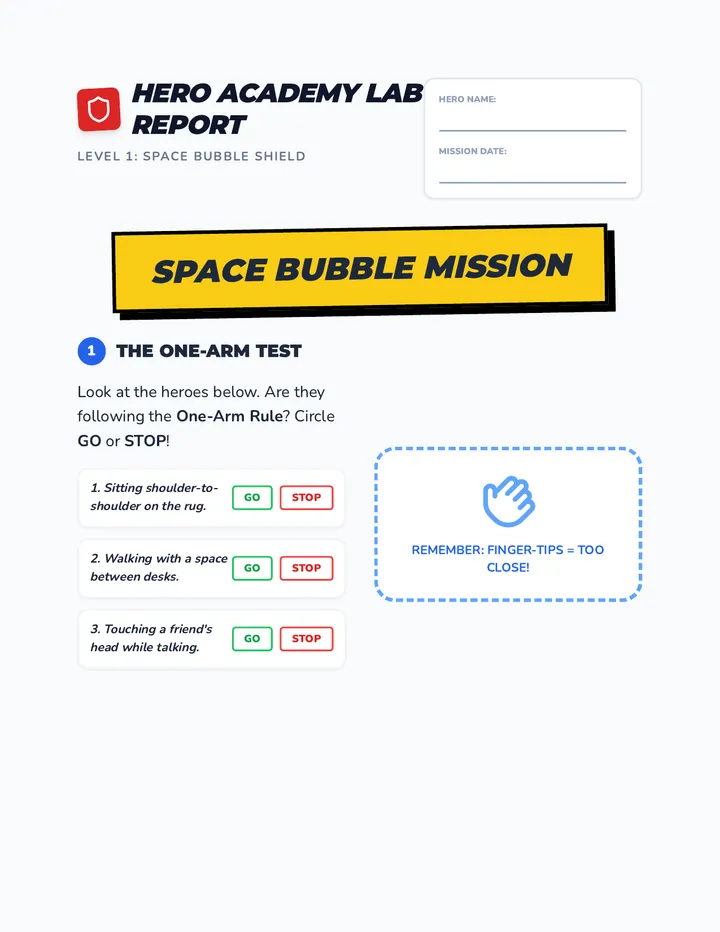
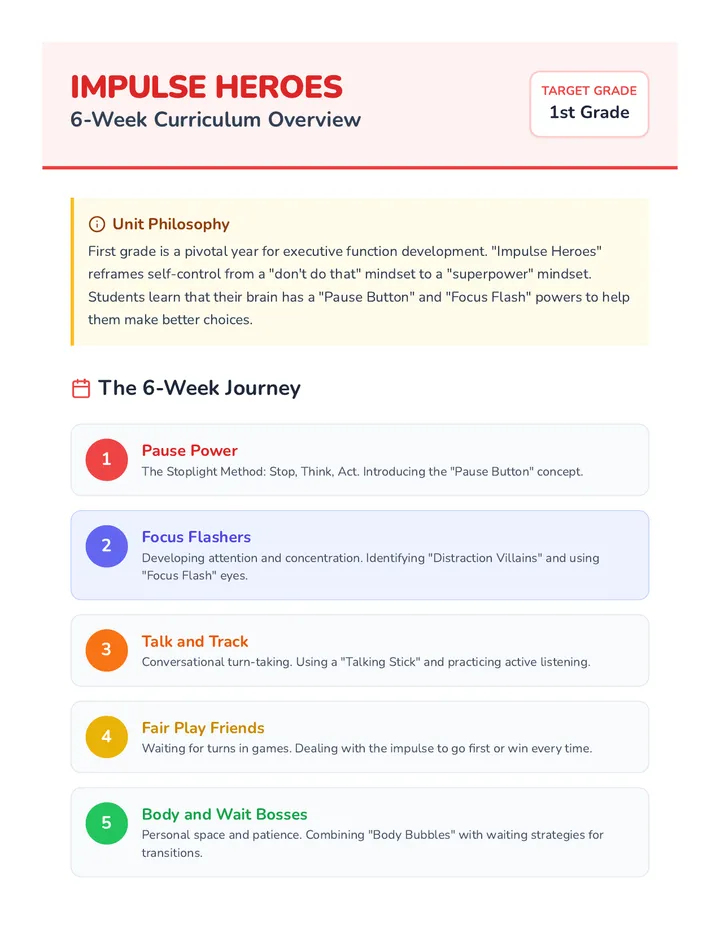
A social-emotional learning unit focusing on physical boundaries, personal space, and impulse control for students who need visual supports.
A specialized counseling sequence focused on replacing physical aggression with functional communication and sensory regulation for students with high-needs autism. This sequence emphasizes 'Gentle Hands' and provides visual tools for managing frustration when denied access.
A comprehensive social skills program for first graders, focusing on cooperative play, turn-taking, and polite communication through songs and visual supports.
A counseling and self-regulation lesson for middle school students, using a high-octane racing 'Pit Stop' metaphor to teach self-control, persistence, and double-checking work instead of rushing.
A collection of visual guides and posters to teach and remind elementary students how and when to ask for permission for daily routines.
A comprehensive professional development module for program leaders to master the art of weekly enrichment planning. This module focuses on integrating trauma-informed social-emotional learning (SEL), active enrichment, and structured reflection debriefs into cohesive weekly plans.
A supportive counseling lesson designed for kindergarten students struggling with elopement and physical aggression. It focuses on identifying big feelings, understanding safety expectations, and practicing positive replacement behaviors such as visiting a safe spot and practicing calming self-squeezes.
A self-regulation lesson for K-2 students using a remote control analogy. Students learn to 'pause' to breathe, 'rewind' to make better choices, and 'mute' distractions when overwhelmed.
A comprehensive reentry lesson plan containing the student-facing Bridge Back Guide and the companion Facilitator Protocol to support restorative reentry meetings after a student suspension.
A resource hub designed to support teachers in managing classroom adjustments and implementing trauma-informed strategies for students experiencing acute family transitions.
Students apply calming strategies to real-school scenarios, sign their personal Pause Power Calming Contract, and complete the post-test.
Students learn and practice three concrete, school-appropriate calming strategies: taking a deep breath, taking a break, and resting for 5 minutes.
Students take their pre-test, explore what an 'impulse' is, and learn the concept of the 'Brain Brake'—the physical act of pausing before reacting.
An individual counseling intervention for 2nd-grade students to build impulse control and focus. Includes a step-by-step counselor guide with visual self-regulation tools and a child-friendly daily behavioral self-monitoring chart.
Week 4 of the Wellbeing program. Launches the daily desk-mate tracker routine in the live classroom, establishing goal-setting and long-term reinforcement of coping saves.
A high-octane, racing-themed student worksheet pack. Page 1 helps students identify personal rushing triggers (Yellow Flags) and design coping skills. Page 2 provides a desk-ready FIT Check checklist and a real-world persistence drill.
A comprehensive 2-page counselor guide for the Pit Stop Precision lesson. Includes structured facilitator scripts, step-by-step lesson pacing, and 4 high-octane printable roleplay cards to practice self-regulation and double-checking.
An interactive, racing-themed slide deck designed for 6th grade counseling. It teaches the 'Pit Stop Protocol' to help students identify rushing behaviors, recognize the need for double-checking, and master task persistence.
A set of 4 vibrant, high-contrast classroom wall posters designed for elementary students. Includes step-by-step visual guides for asking permission to use the bathroom, borrow materials, and touch items in the classroom, paired with clear text scripts and support icons.
A 2-page printable completed exemplar plan showing real-world finished enrichment, SEL, and debrief sequences themed around collaborative bridge building.
A 2-page printable fillable weekly planning template featuring structured grids, prompt questions, and self-assessment checklists for trauma-informed enrichment design.
A 5-slide professional presentation deck for training program staff on weekly enrichment planning structures, trauma-informed safety practices, and co-regulation strategies.
A 3-page printable handbook for program leaders detailing the trauma-informed weekly planning framework, facilitation mechanics, and trauma-informed de-escalation protocols.
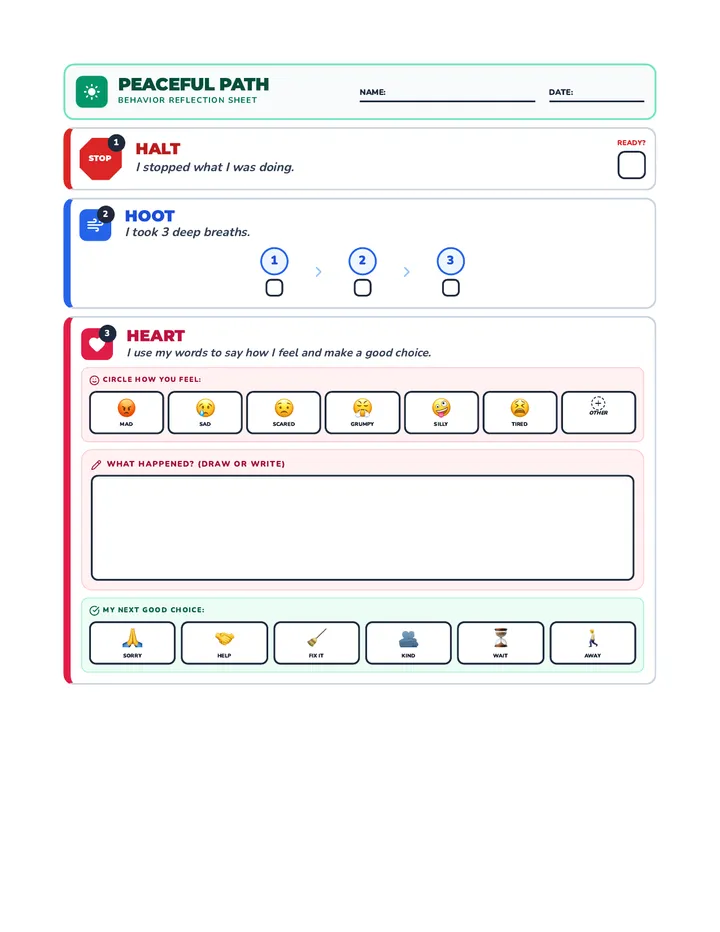
A printable visual companion sheet for students. Includes a high-contrast choice board with the designated calming strategies, space for a daily checklist, and a dedicated drawing frame for reflection on positive peer interactions.
An interactive 8-slide digital presentation for individual counseling or small groups. Designed with ultra-readable layouts, friendly kid-appropriate illustrations using Lucide icons, and explicit steps to practice calming replacement behaviors.
Printable game kit containing student clicker cards (Pause, Rewind, Mute) and teacher 'Chaos Cards' featuring 8 relatable classroom scenarios for active, hands-on self-regulation practice.
A fun student activity sheet for K-2 children. Students customize, color, and label their own pocket 'Calm Clicker' remote control, matching positive actions to each button.