Techniques for neutral conflict resolution and interest-based bargaining. Strengthens active listening, de-escalation, and collaborative problem-solving to reach mutual agreements.
A 4-page set of printable conflict de-escalation scenario practice cards, featuring essential calm communication toolkits, five realistic school conflict role-play scenarios, and a structured peer observer scorecard.
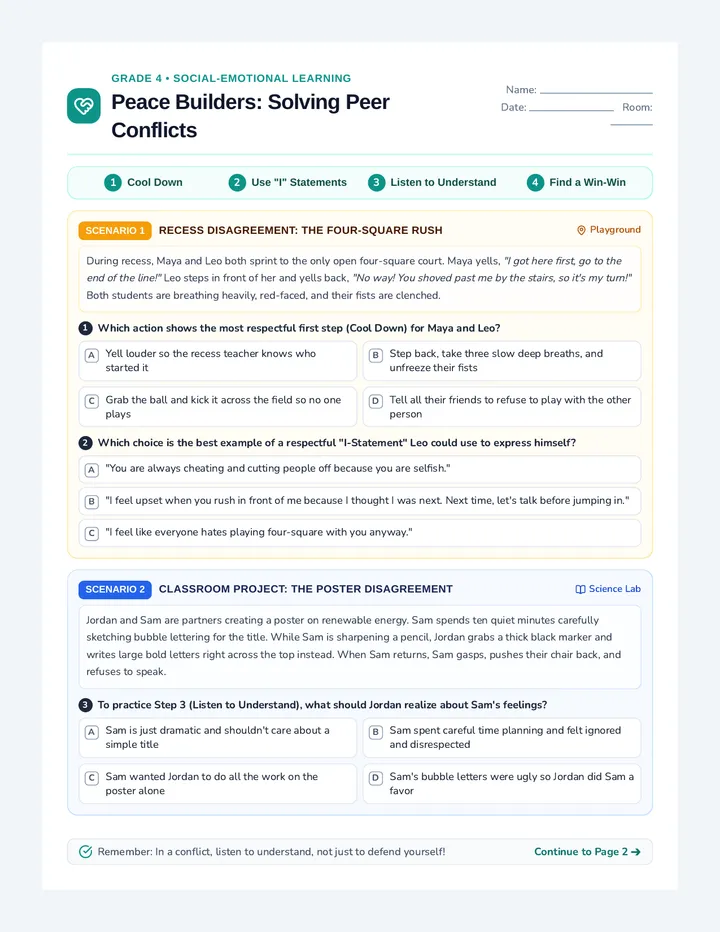
A two-page 4th-grade conflict resolution worksheet featuring realistic playground and classroom scenarios with multiple-choice questions on calming down, I-statements, empathy, win-win compromises, and written application.
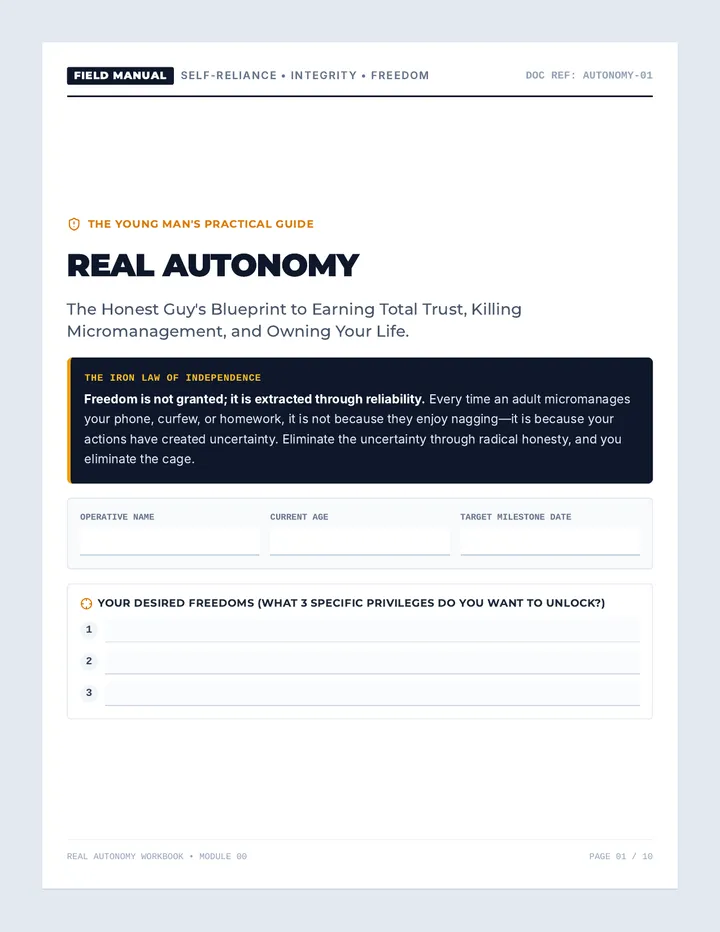
A comprehensive 10-page workbook designed for 15-year-old boys focused on developing radical honesty, accountability, and building earned independence through practical frameworks, self-audits, negotiation scripts, and daily routines.
A comprehensive 4-page restorative mediation toolkit designed for two adult co-mediators, featuring co-facilitation scripts, intake and conflict assessment logs, resolution agreement contracts, and advanced de-escalation protocols.
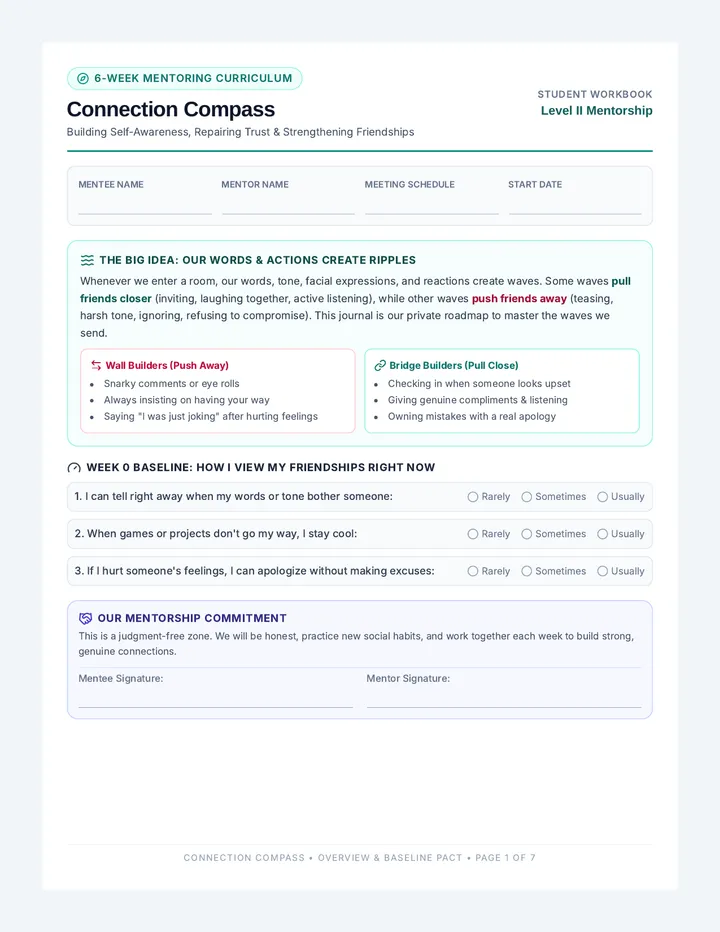
A comprehensive 6-week mentor-guided student workbook designed to foster self-awareness, recognize peer impact, repair relational friction, and build prosocial habits. Each session contains structured discussion prompts, self-reflection audits, real-life scenario practice, and weekly action challenges.
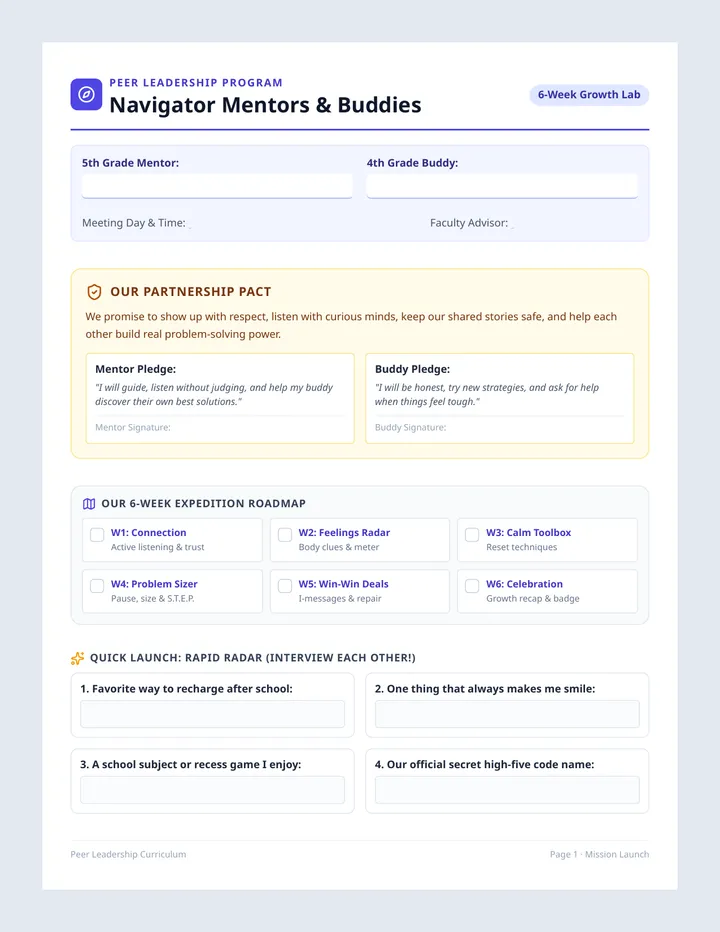
A comprehensive 6-week peer mentorship workbook designed for 5th grade mentors and 4th grade buddies. It guides pairs through weekly structured sessions covering connection building, emotional regulation, and step-by-step problem-solving with collaborative activities and reflection prompts.
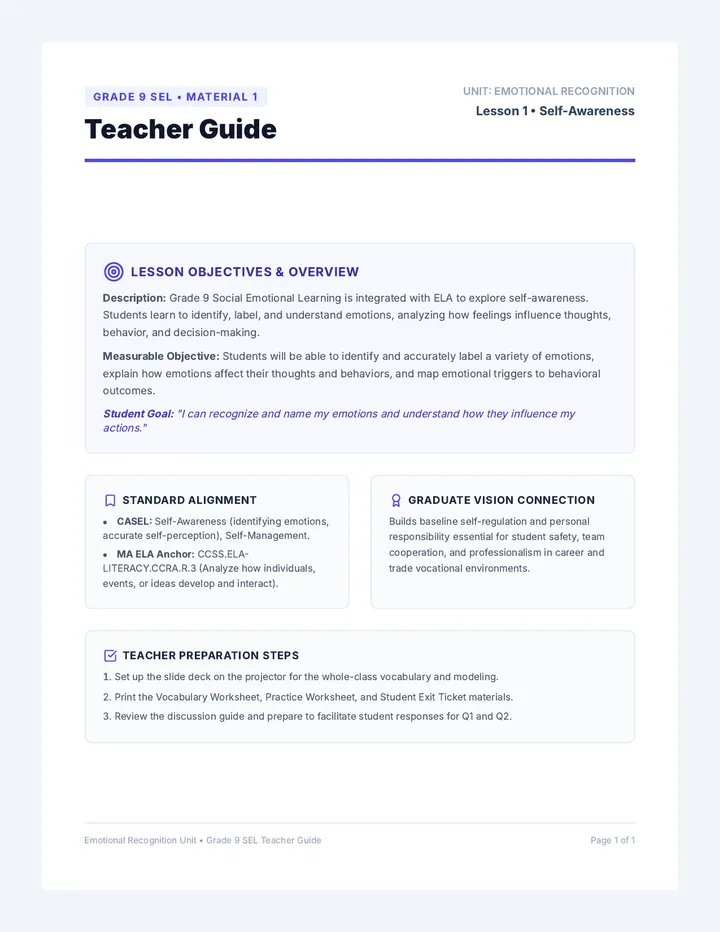
A four-lesson developmental SEL unit designed for Grades 9-12. The unit scaffolds from self-awareness to self-management, social awareness, and final mastery of emotional intelligence, aligned with the Northeast Metropolitan Regional Vocational High School graduate vision.
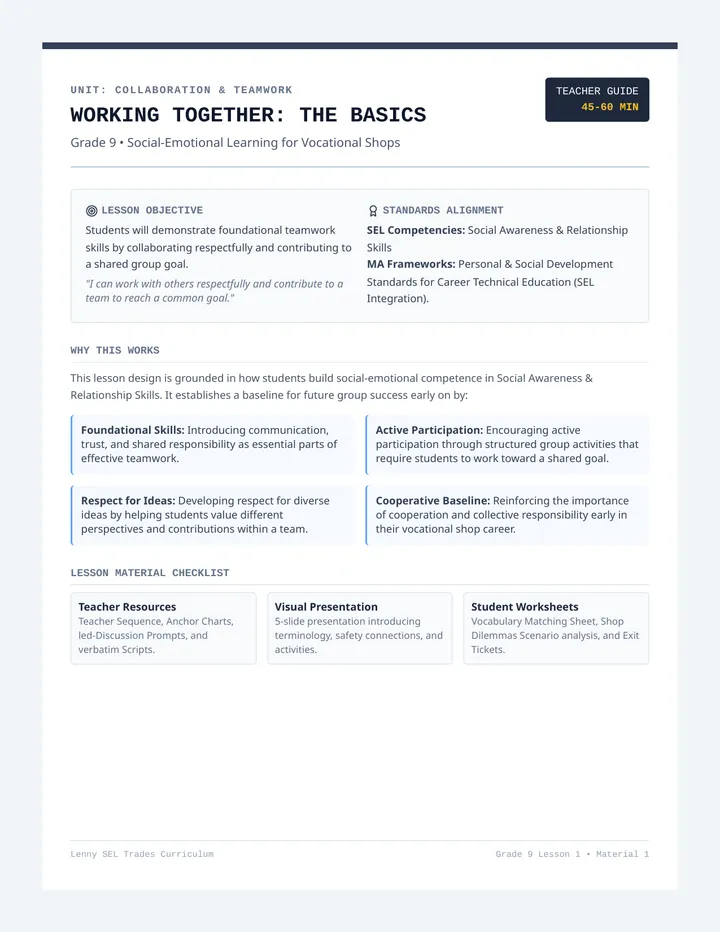
A four-part social-emotional learning unit designed for vocational shop classes (Grades 9-12). It scaffolds students from basic teamwork awareness to collaborative project management, individual accountability, and conflict resolution, preparing them for professional trades.
A four-part Social-Emotional Learning (SEL) unit designed specifically for grades 9-12 vocational shop classes. It teaches self-management, distress tolerance, behavioral chain analysis, and interpersonal effectiveness using practical, real-world trades scenarios to enhance shop safety and professionalism.
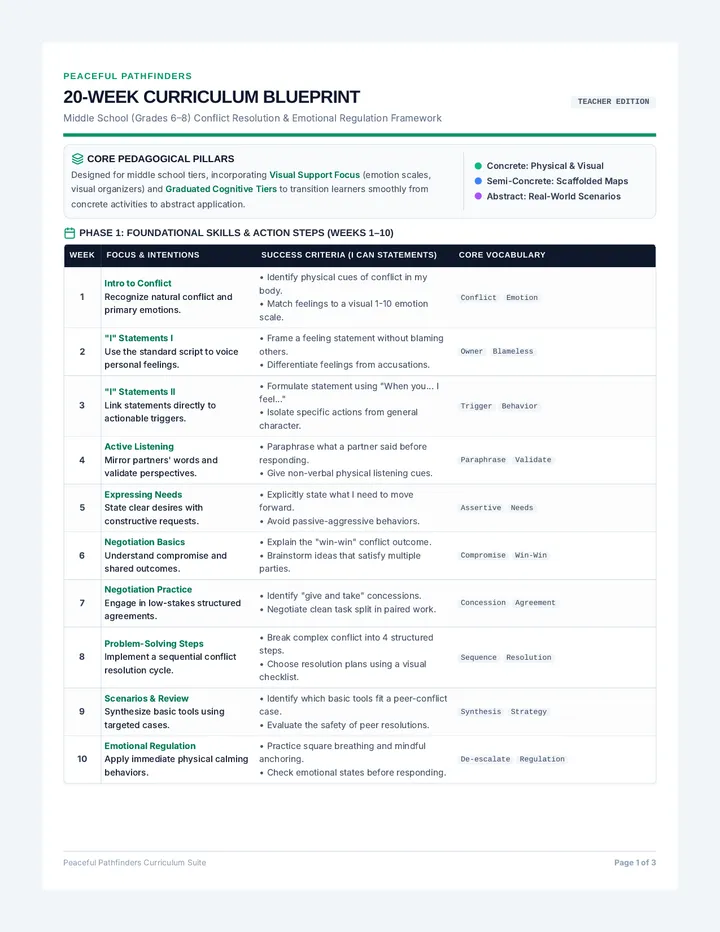
A comprehensive 20-week social-emotional learning sequence for grades 6-8 focused on conflict resolution, communication skills, emotional regulation, and peaceful problem-solving. It includes scaffolded visual supports and graduated cognitive levels.
A 5-lesson sequence for 7th grade students focusing on restorative practices, the difference between intent and impact, crafting genuine apologies, and the long-term process of rebuilding trust after conflict.
This sequence explores complex conflict navigation for 12th graders, moving from the psychological roots of identity-based conflict to the practical application of restorative circles and sustainable resolution design.
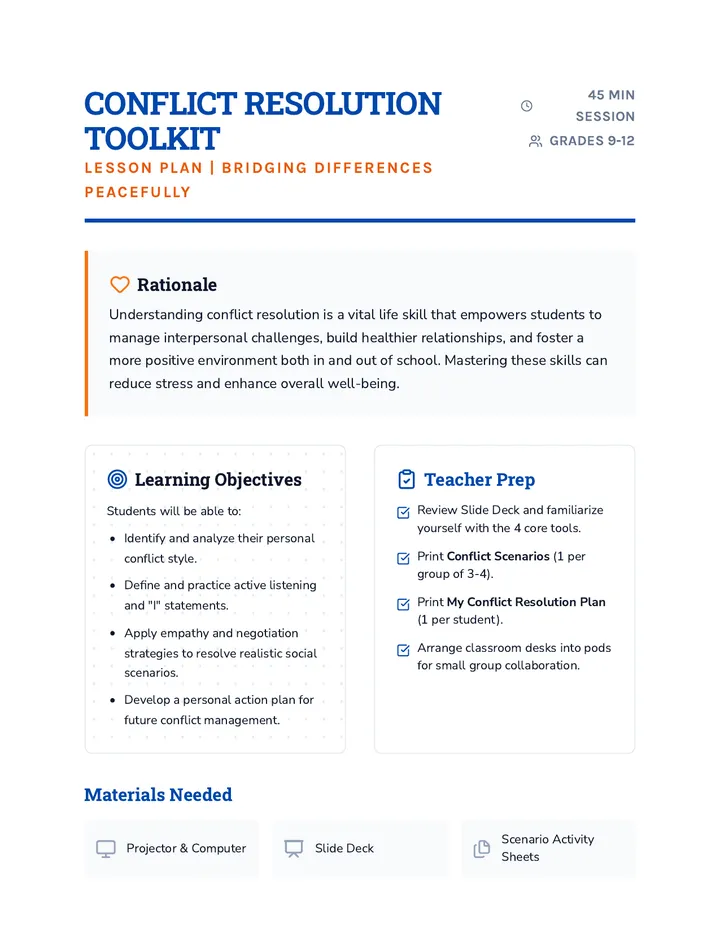
A 45-minute lesson for high school students focusing on active listening, 'I' statements, empathy, and negotiation to resolve conflicts constructively.
An interactive lesson for 11th-grade students focused on developing empathy and perspective-taking skills to foster ethical relationships and resolve conflicts. Students engage in discussions, scenario analysis, and personal reflection to understand the impact of empathy on social interactions.
This lesson equips students with practical strategies to communicate effectively with unsatisfied or angry customers, emphasizing empathy, active listening, and problem-solving to maintain loyalty.
In this Tier 2 group lesson for 10th graders, students engage in a mock auction to bid on and prioritize core values, exploring trade-offs and ethical decision-making. This 35-minute session builds responsible decision-making skills aligned with CASEL.
A 45-minute social-emotional learning lesson for 10th graders focused on conflict resolution, de-escalation, and restorative practices through fishbowl role-playing and collaborative discussion.
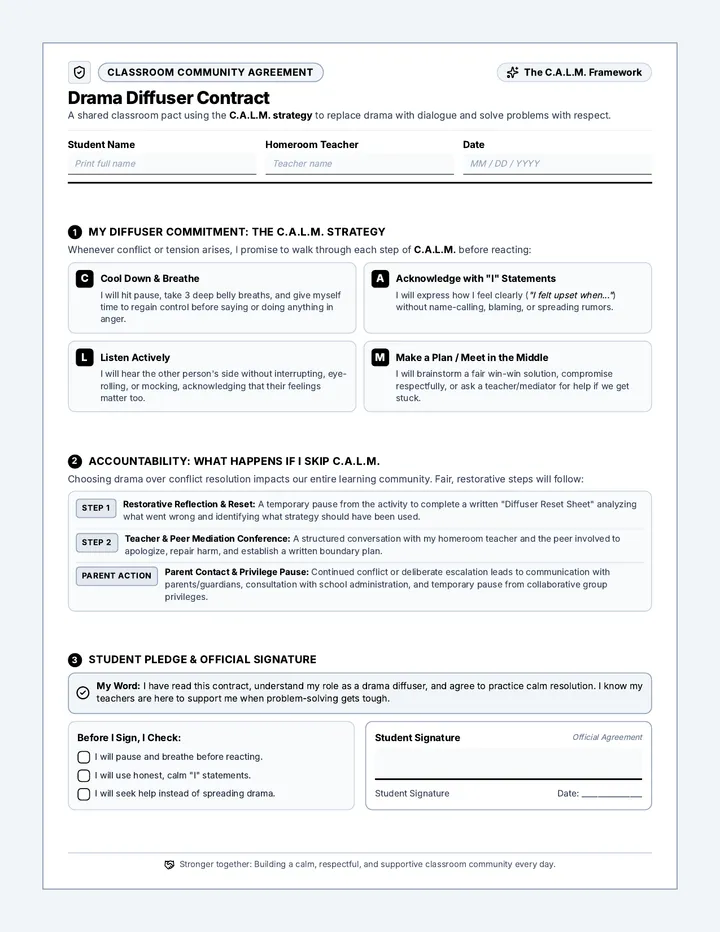
A middle school conflict resolution and social-emotional learning lesson using the C.A.L.M. strategy to diffuse peer drama, promote accountable dialogue, and implement restorative resolution protocols.