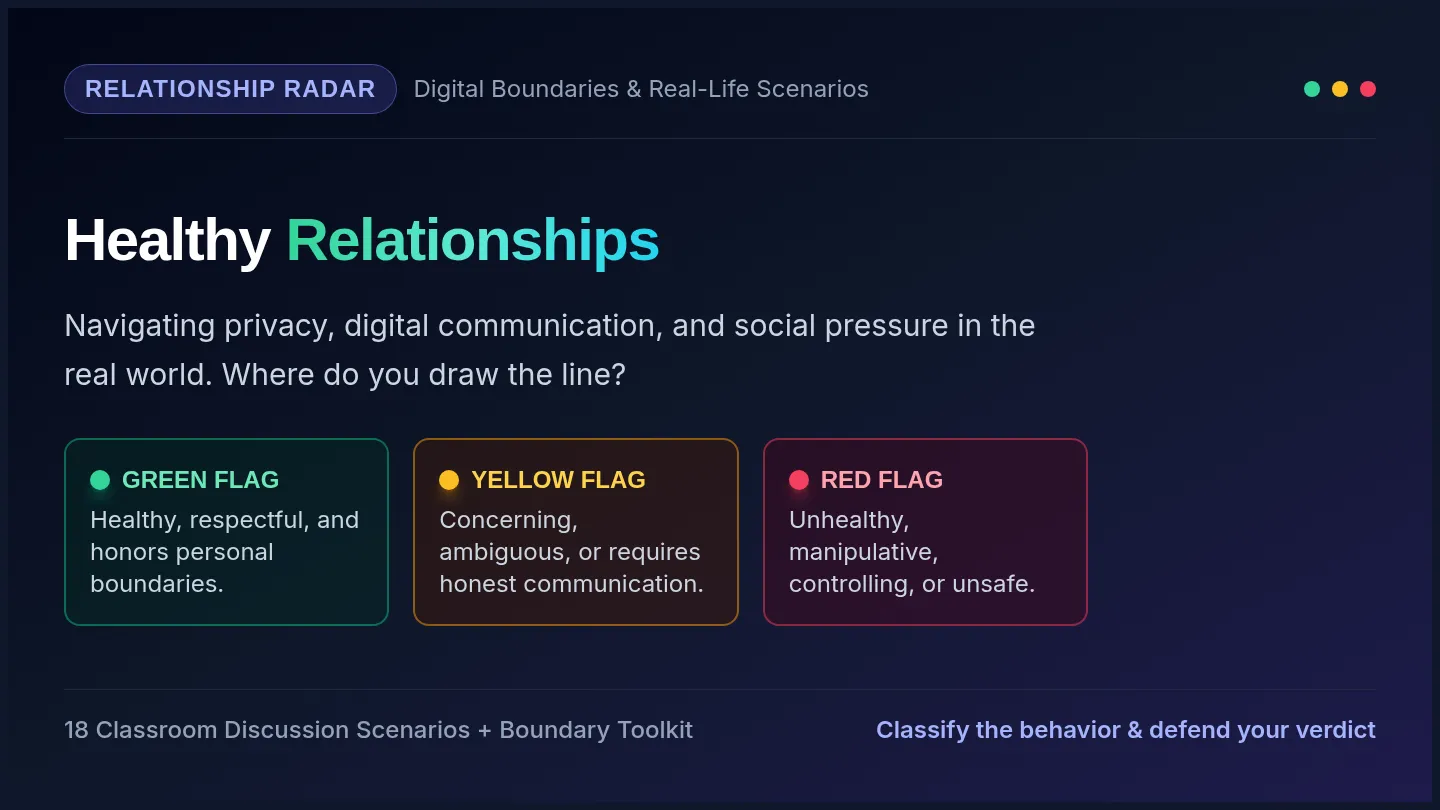
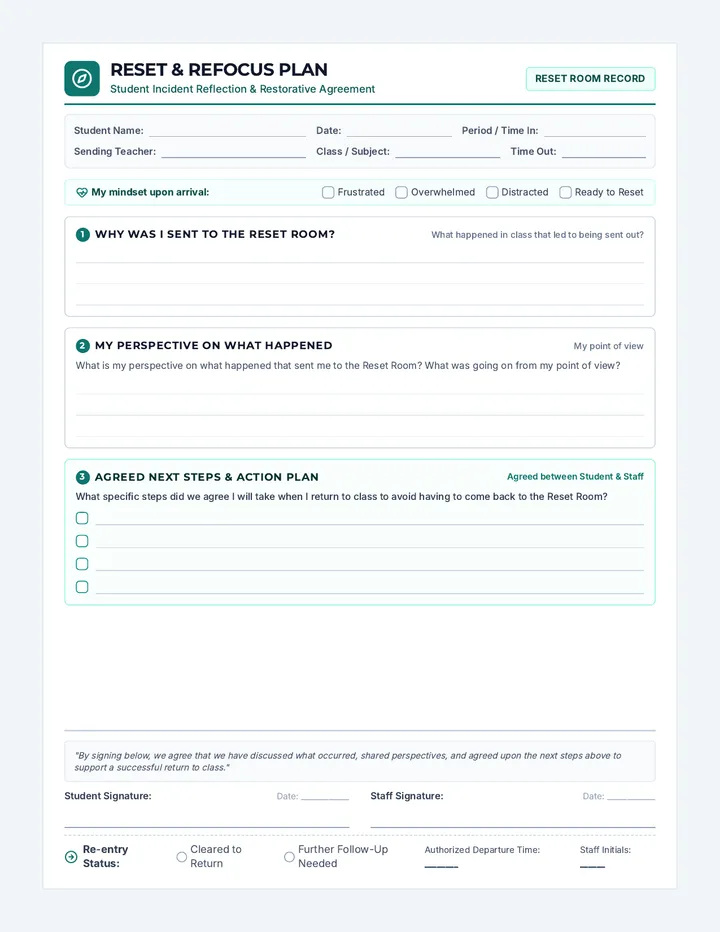
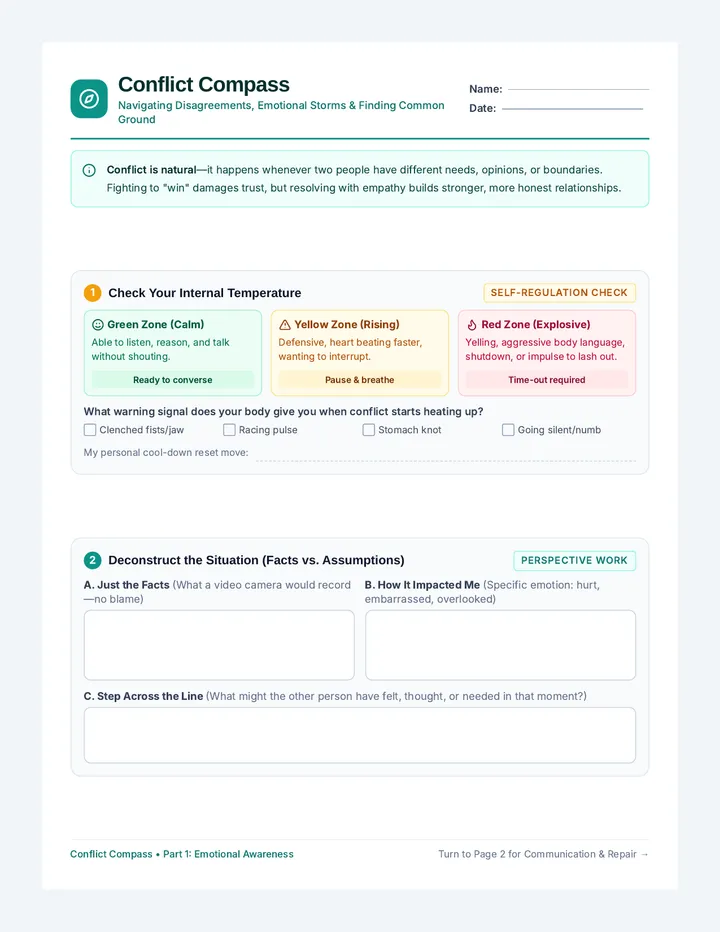
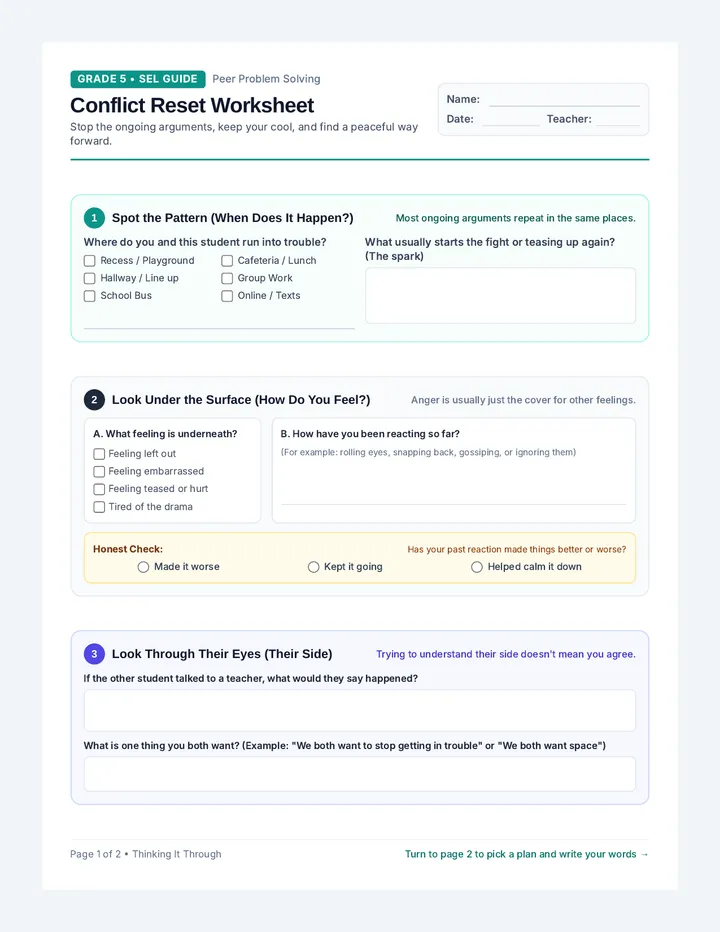
Examines diverse viewpoints and social contexts to build empathy and critical thinking skills. Targets identifying personal biases and resolving interpersonal conflicts through active perspective-taking.
A 5-lesson unit for 1st-grade students focusing on cognitive flexibility. Students learn to navigate obstacles, tool breakage, schedule changes, and unavailability using the 'Rock Brain' vs. 'Noodle Brain' metaphor and the 'Plan B' framework.
This sequence examines the PLEASE skills (Physical illness, Lunch/Eating, Avoid mood-altering substances, Sleep, Exercise) through a Social Determinants of Health lens. Undergraduate counseling students will learn to adapt these therapeutic interventions for clients facing systemic barriers such as food insecurity, housing instability, and physical disability.
A 5-lesson unit for 3rd-grade students focused on identifying and categorizing obstacles that prevent task completion. Students learn to recognize internal emotional signals and external barriers (physical, informational, and environmental) to build self-advocacy and problem-solving skills.
This 5-lesson sequence for 1st-grade students explores social awareness through the lens of challenging stereotypes and bias. Students move from understanding basic assumptions via object lessons to identifying and debunking gender-based and role-based stereotypes in play and careers, ultimately celebrating individual uniqueness.
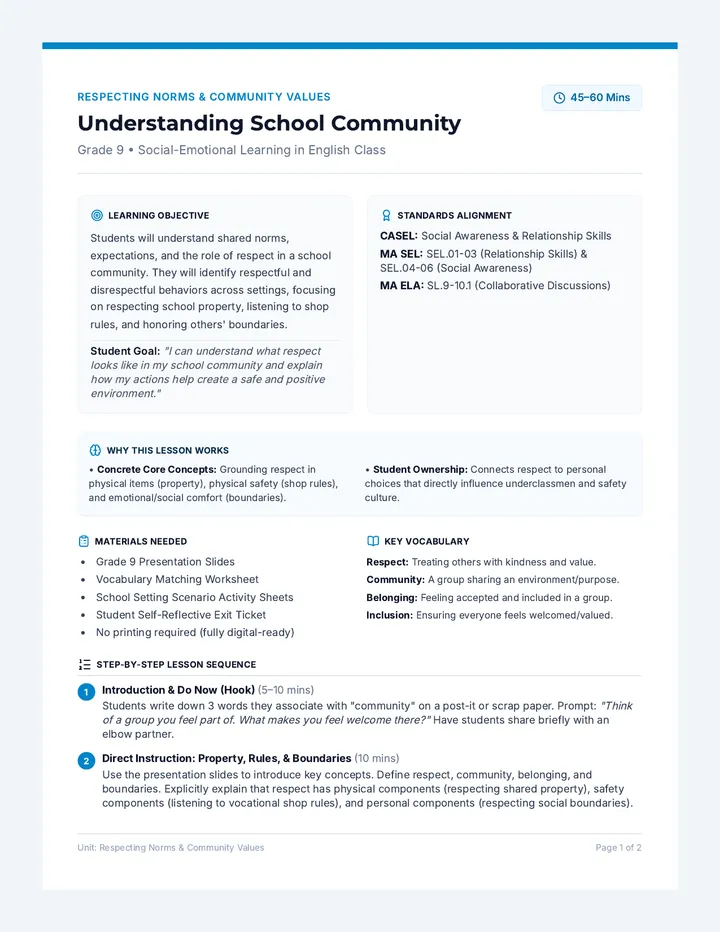
This sequence trains 9th-grade students in bystander intervention techniques and active allyship within a workplace context. Students explore the psychological barriers to action (the bystander effect) and master the '4 Ds'—Direct, Distract, Delegate, and Delay—to safely interrupt harassment and support colleagues.
A comprehensive sequence for 9th-grade students exploring the legal definitions, impacts, and identification of sexual harassment and hostile work environments in the professional world. Students move from basic legal definitions to nuanced evaluations of intent versus impact and digital professional conduct.
A comprehensive unit for 10th graders on identifying, distinguishing, and responding to workplace harassment. Students explore the legal definitions of 'quid pro quo' and 'hostile work environment' while investigating the nuances of intent versus impact.
This sequence shifts from identification to action, equipping students with the tools to report misconduct and intervene safely. Students learn the formal mechanisms for reporting discrimination, protections against retaliation, and the '4 Ds' of bystander intervention.
This sequence immerses undergraduate students in the federal legal frameworks of workplace discrimination and harassment, focusing on Title VII, the ADA, and the ADEA. Students learn to distinguish between general conflict and legally actionable harassment through case law analysis and real-world simulation.
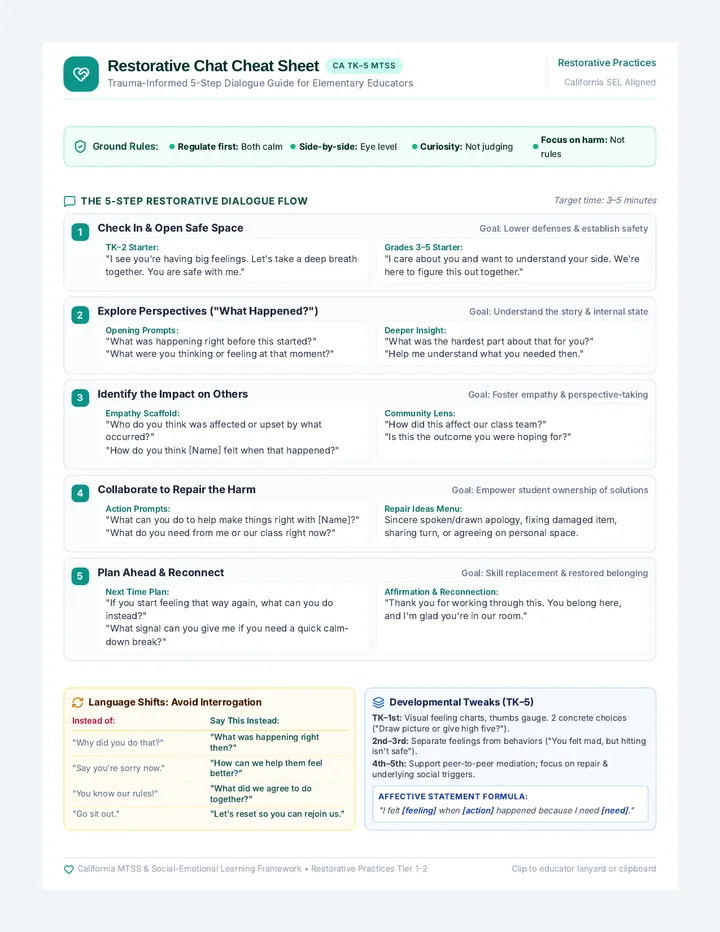
A 5-lesson sequence for 7th grade students focusing on restorative practices, the difference between intent and impact, crafting genuine apologies, and the long-term process of rebuilding trust after conflict.
This sequence teaches 7th-grade students how to move beyond simple compromise to collaborative negotiation. Students learn to separate people from problems, brainstorm creative 'win-win' options, use objective criteria for fairness, and develop a BATNA (Best Alternative to a Negotiated Agreement) to handle complex conflicts effectively while preserving relationships.
This sequence teaches 7th-grade students to navigate complex conflicts using the Iceberg Model. Students learn to look beneath surface-level arguments ('positions') to identify underlying human needs ('interests') through techniques like the Five Whys, core needs analysis, and multi-party mapping.
Students synthesize their learning by creating a personalized visual map of 'Plan B' options for common classroom obstacles.
Focuses on the skill of 'waiting' and choosing alternatives when preferred items are unavailable.
Students practice managing anxiety during schedule shifts by using visual aids and moving to a 'Plan B' activity.
Students role-play tool breakage and practice a three-step reset routine: Stop, Breathe, Swap to maintain emotional regulation.
Students explore the difference between 'rock brain' (stuck) and 'noodle brain' (flexible) using physical objects and metaphors. They establish the core vocabulary for the unit.
The sequence culminates with students mapping local community resources that support the PLEASE skills for low-income or marginalized clients.
Students learn to adapt movement recommendations for mood regulation for clients with physical disabilities or chronic pain, focusing on 'building mastery'.
This lesson addresses sleep hygiene for clients in crowded or noisy environments, focusing on environmental adaptation and behavioral modifications.
Students modify nutritional advice for clients with limited budgets or access, developing realistic harm-reduction strategies for 'Eating Balanced'.
Students critique standard PLEASE skills through a socioeconomic lens, identifying how food deserts, shift work, and environment impact emotional regulation.
A culminating lesson where students rapidly sort various scenarios into barrier categories to reduce the time between hitting a wall and identifying the solution.
Investigates sensory and environmental barriers like noise or clutter, conducting a 'detective walk' to identify classroom distractions.
Teacher resource containing cut-out icons of Plan B strategies for students to use when creating their personalized flexibility maps.
Final project template for Lesson 5, where students create a visual 'map' showing their personal strategy for navigating obstacles using learned techniques.
Student activity sheet for Lesson 4, allowing students to choose a 'Plan B' activity when a preferred item is unavailable.
Teacher instructional guide for Lesson 4, teaching students strategies for 'active waiting' and using choice boards when items are unavailable.
Engaging slide presentation for Lesson 3 on schedule changes, introducing 'Plan A' vs. 'Plan B' and the ritual of moving visual schedule cards.
Visual anchor chart and worksheet for the 'Reset Routine' (Stop-Breathe-Swap), designed for students to visualize the steps of emotional regulation when tools break.
Teacher instructional guide for Lesson 2, focusing on the Stop-Breathe-Swap routine for handling broken classroom tools.
Final capstone worksheet for Lesson 5, where students map local community resources to each of the PLEASE skills and conduct an accessibility audit.
A teacher facilitation guide for Lesson 5, including instructions for the 'Barrier Relay Race' and a unit conclusion.
Visual slide deck for Lesson 1 introducing the Rock vs. Noodle brain concepts with engaging visuals and practice scenarios.
Teacher guide for Lesson 5, including instructions for the 'Great Asset Scavenger Hunt' and final sequence reflection.
A culminating sorting activity where students categorize various problem scenarios into the four task barrier types.