Identification of physiological stress responses and cognitive triggers through peer-based discussion. Develops grounding techniques and emotional regulation strategies to manage anxiety in shared environments.
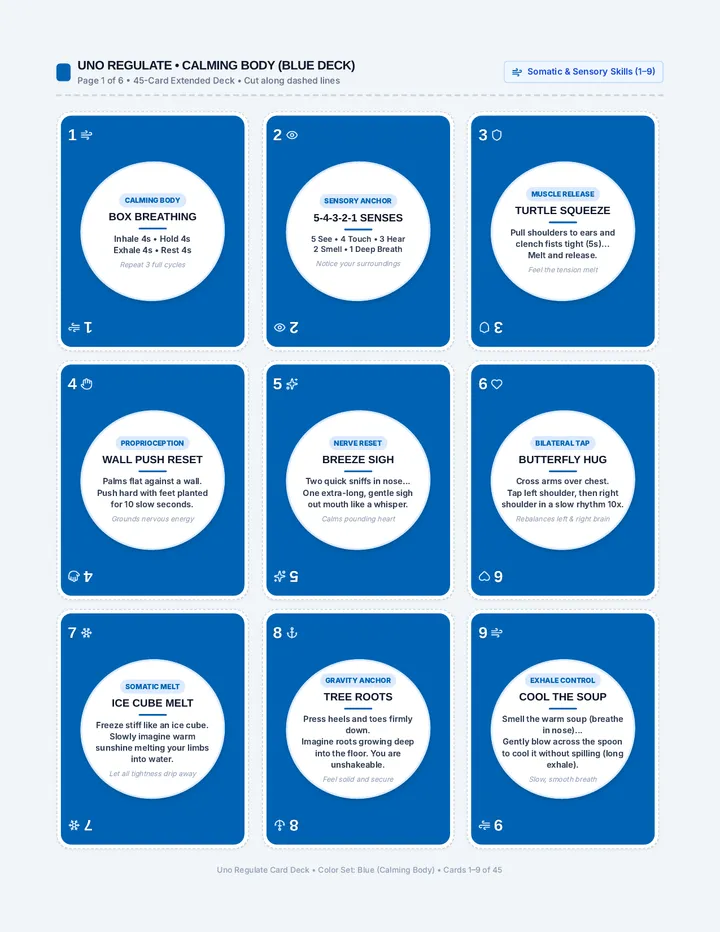
An expanded 6-page printable coping skills and self-regulation card deck styled after Uno, featuring 45 total cut-apart cards (complete 1–9 sets for all 4 color domains plus action and wild cards) and an in-depth gameplay and facilitation rulebook for classroom and small-group play.
A 4-page set of printable conflict de-escalation scenario practice cards, featuring essential calm communication toolkits, five realistic school conflict role-play scenarios, and a structured peer observer scorecard.
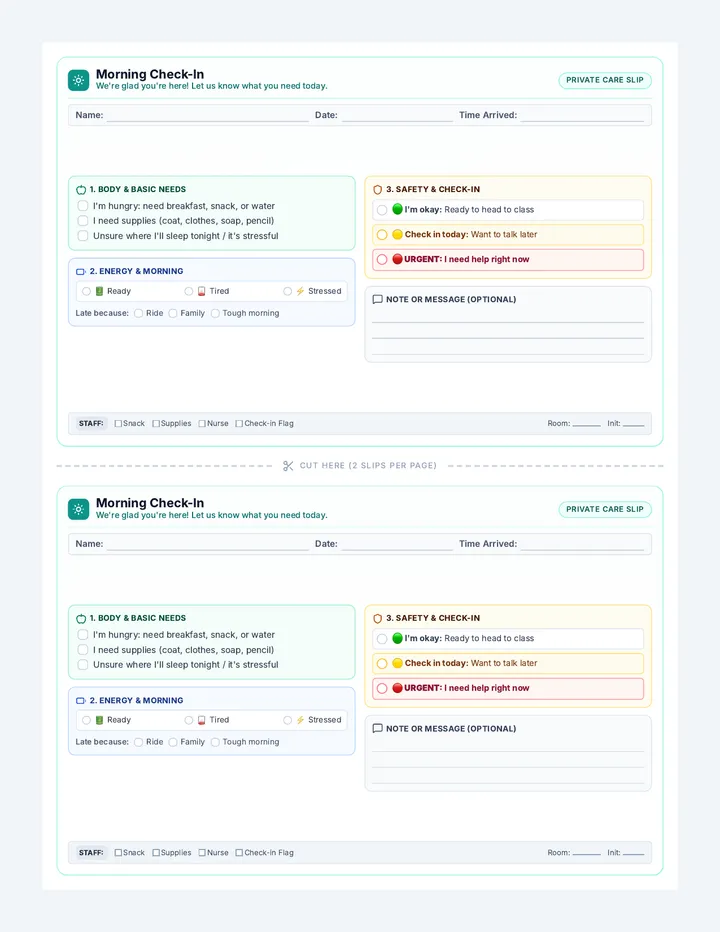
A simplified, two-per-page printable half-page check-in slip for quick morning needs assessments, covering basic essentials, energy, safety flags, and personal notes.
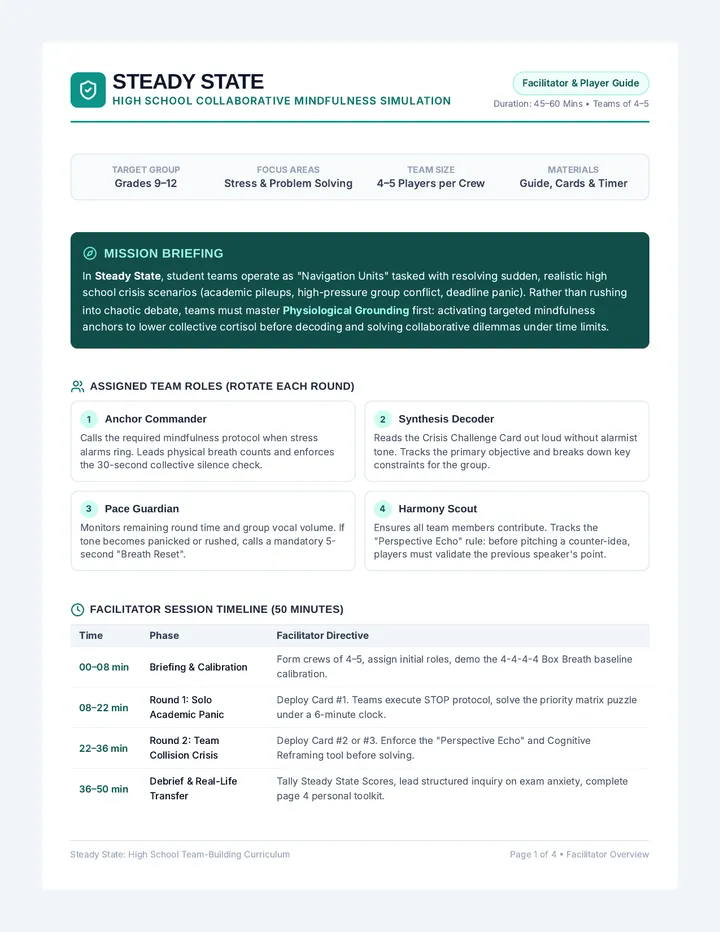
A comprehensive printable facilitation and player guide for a high school mindfulness team-building game that pairs stress management tactics with collaborative problem-solving challenges.
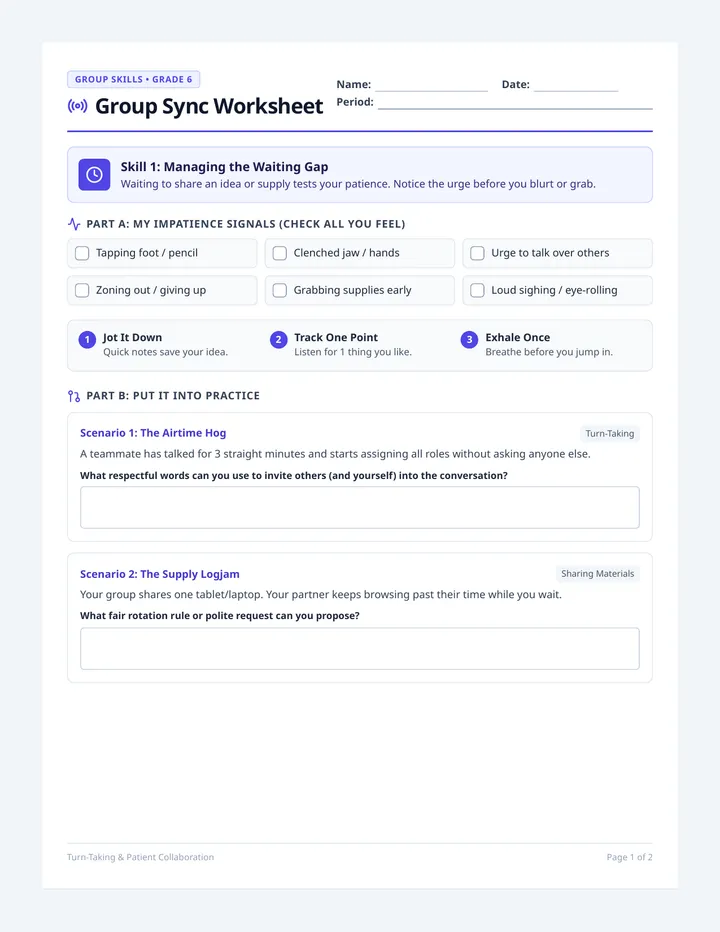
A streamlined, low-word-count self-regulation worksheet for sixth-graders with concise prompts, clear visual anchors, and ample response space for turn-taking and frustration management.
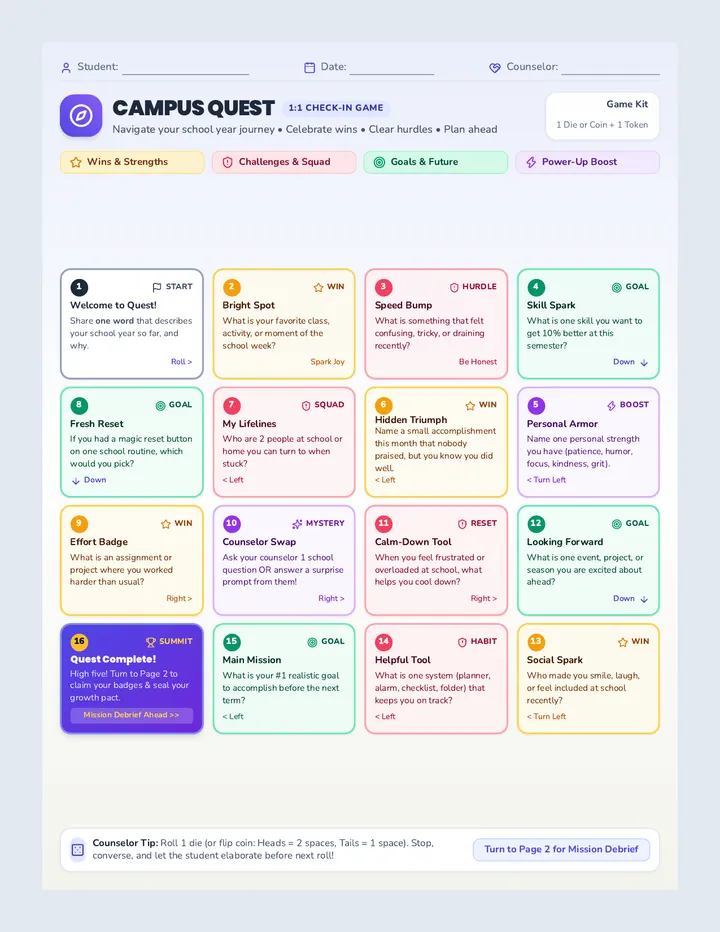
A 1-on-1 counseling board game and structured debrief activity to explore school year wins, identify challenges and support lifelines, and set actionable growth goals.
A 10-week series of 30-minute group lessons for high school students exploring Cognitive Behavioral Therapy. Each session builds practical skills in identifying and reframing thoughts, managing emotions, and engaging in healthy behaviors through interactive activities. This Tier 2 program develops resilience and mental wellness.
A 6-week social-emotional learning program designed to help students identify emotions, develop regulation skills for frustration and anger, and improve verbal communication through an 'explorer' theme.
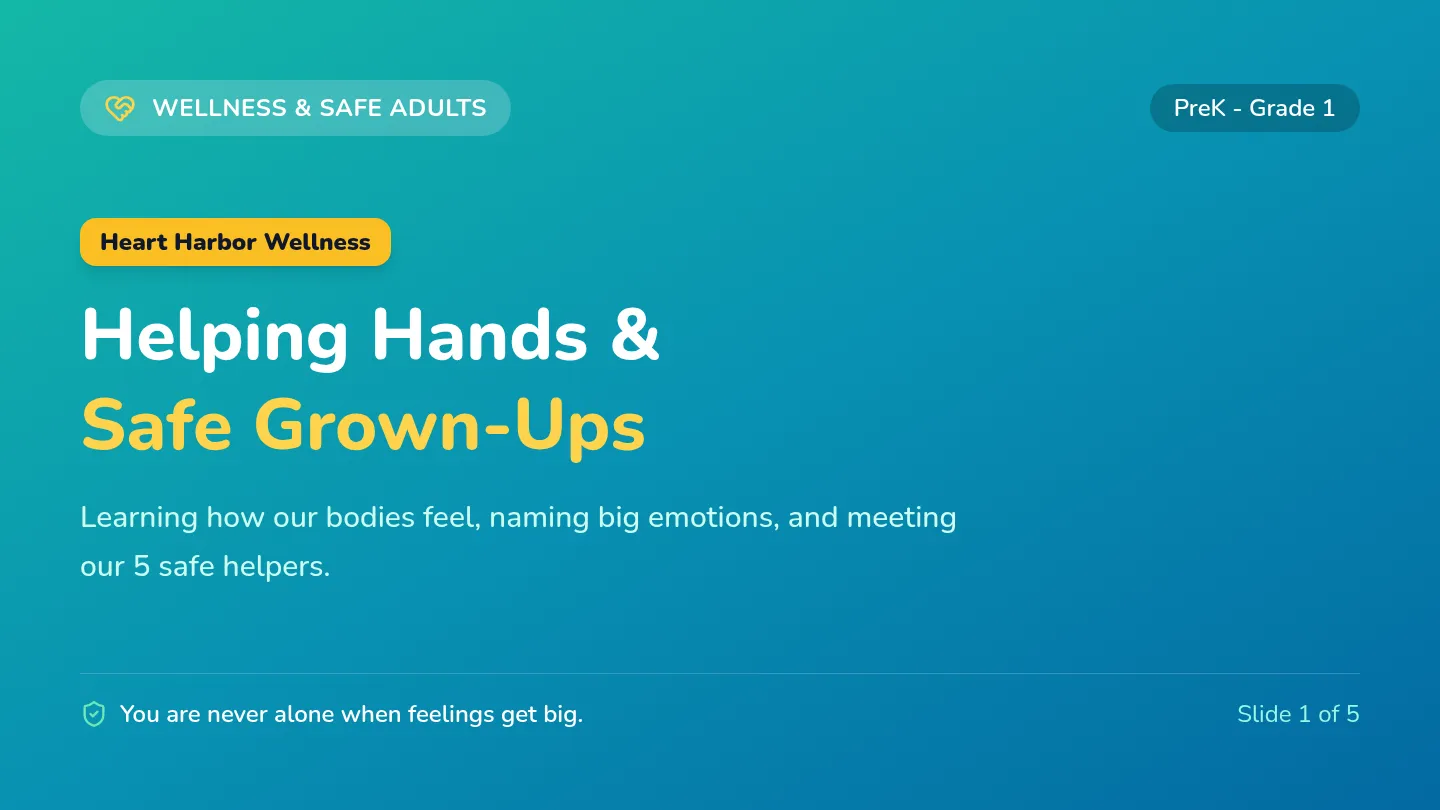
A comprehensive PreK-5 mental wellness and prevention curriculum fostering emotional literacy, self-regulation, trusted adult safety networks, and proactive help-seeking.
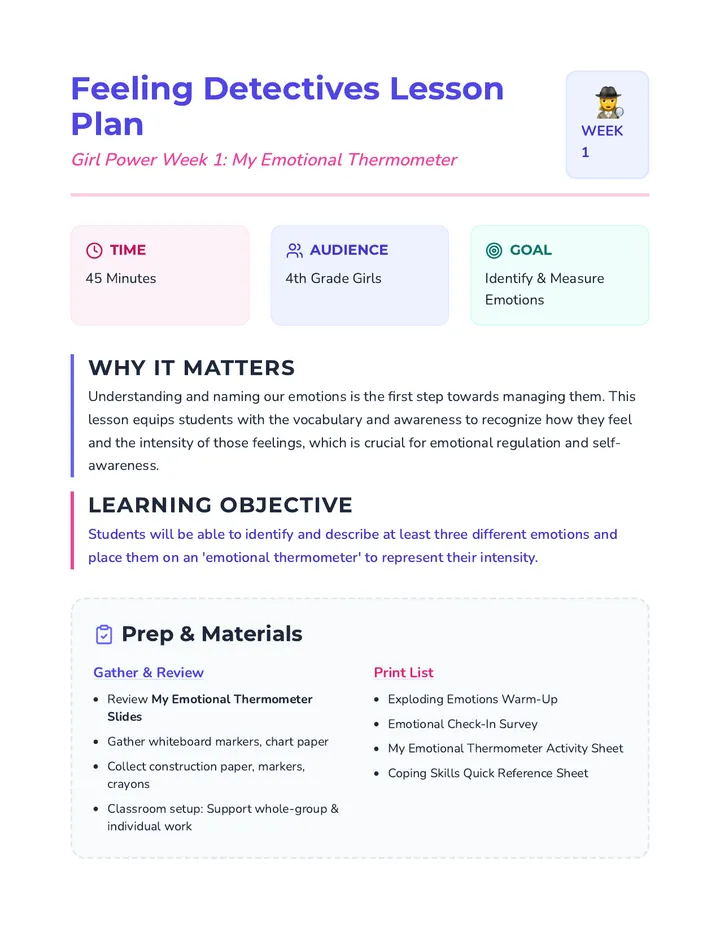
A 6-week emotional intelligence program for 4th-grade girls, covering emotion identification, coping strategies, communication, and problem-solving.
A 6-session Tier 2 group intervention for middle schoolers with autism, focusing on identifying school-related anxiety and building a toolkit of coping strategies to improve attendance and participation.
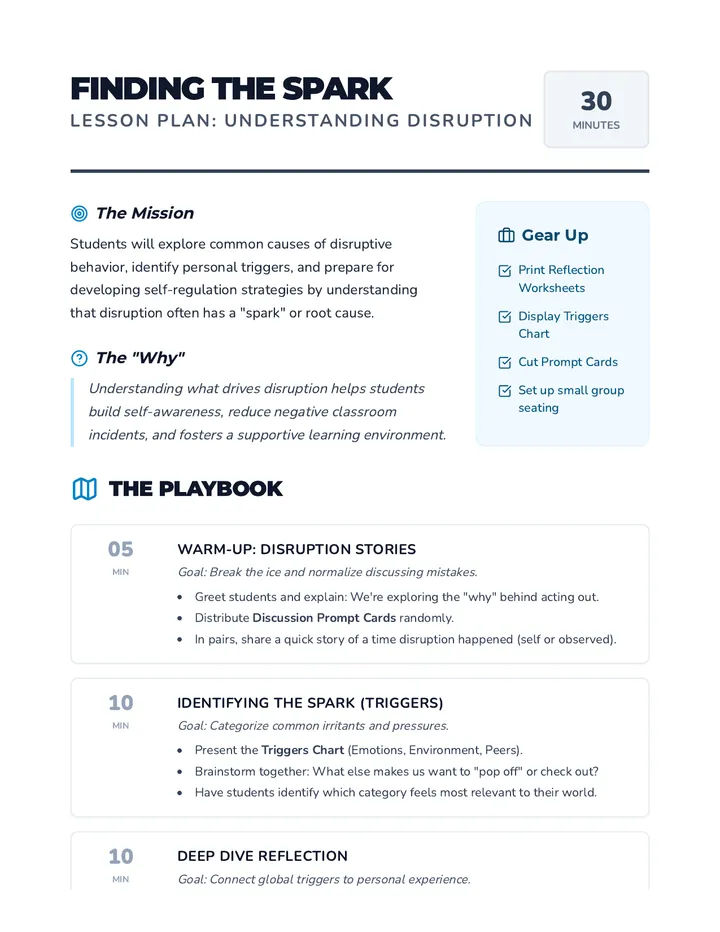
A two-session mini-unit for middle school small groups focused on understanding disruptive behaviors, identifying personal triggers, and developing concrete self-regulation strategies. Students move from awareness of external and internal pressures to practicing and planning constructive responses.
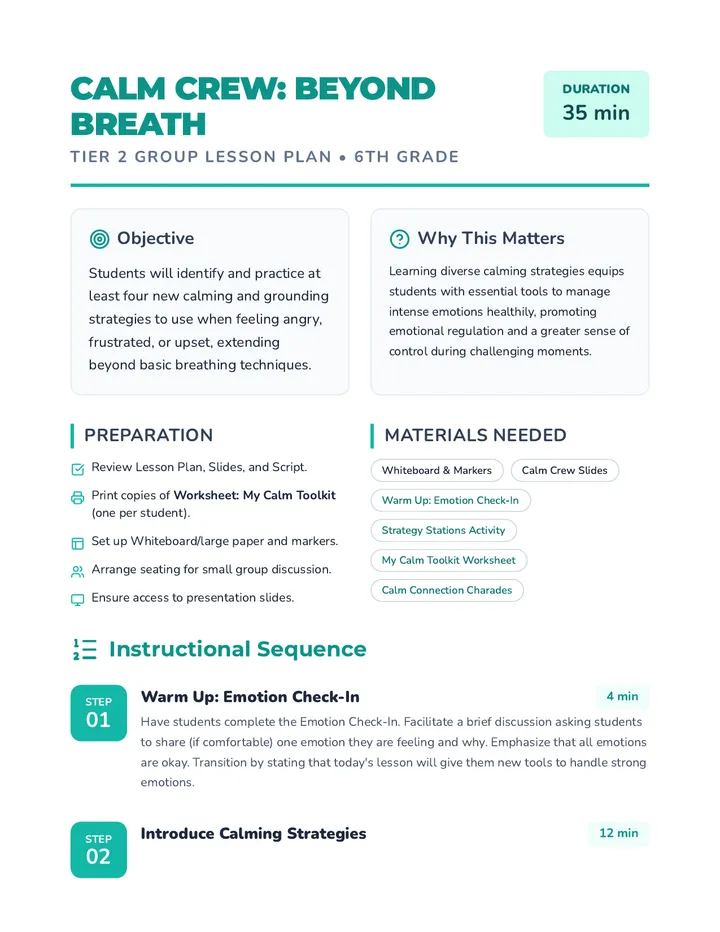
A 35-minute Tier 2 group lesson for 6th graders that introduces and practices various calming and grounding strategies beyond basic breathing, providing students with a toolkit to manage anger, frustration, and upset feelings.
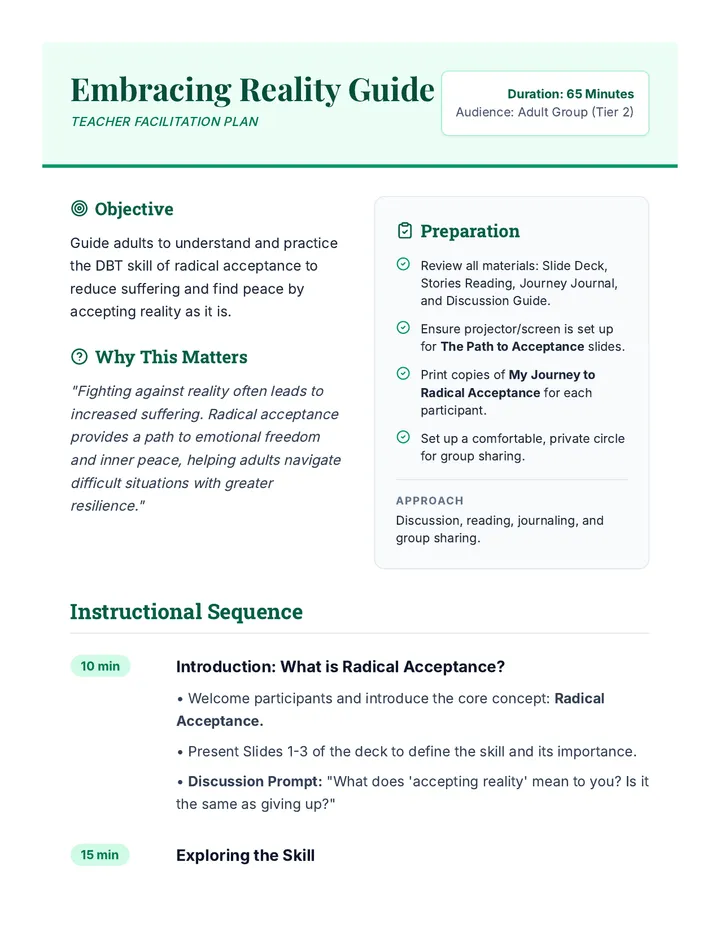
A 65-minute DBT-based lesson for adults focusing on the skill of Radical Acceptance to reduce suffering and find emotional freedom. Participants will explore the difference between pain and suffering, distinguish willingness from willfulness, and apply acceptance to personal life situations.
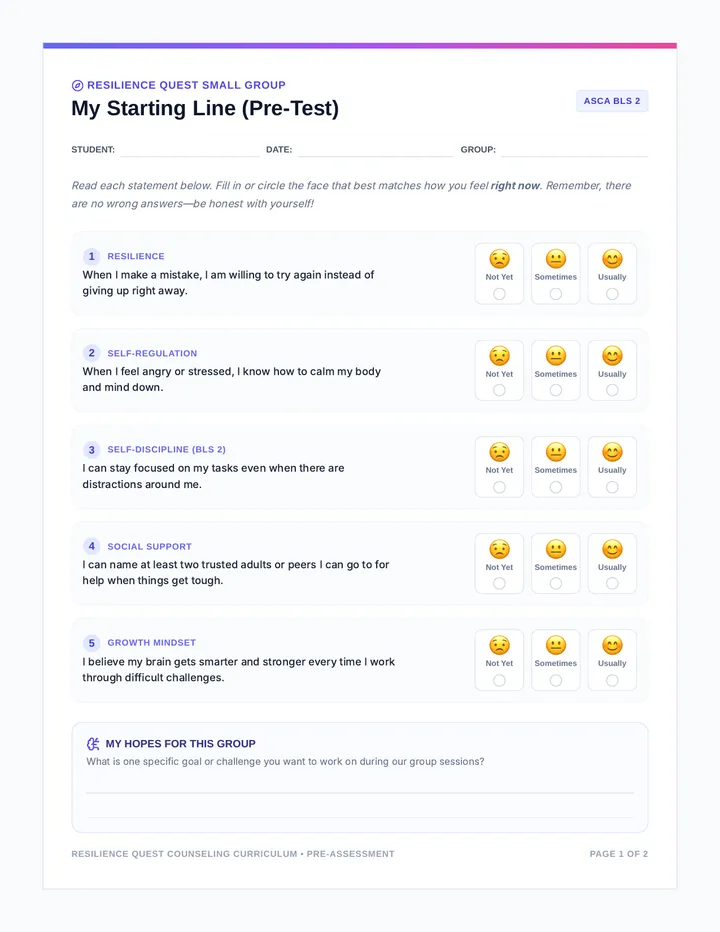
A small group counseling lesson on resilience, self-discipline, and emotional regulation (ASCA BLS 2). This lesson includes a comprehensive student workbook with pre/post assessments, reflection journals, and goal trackers.
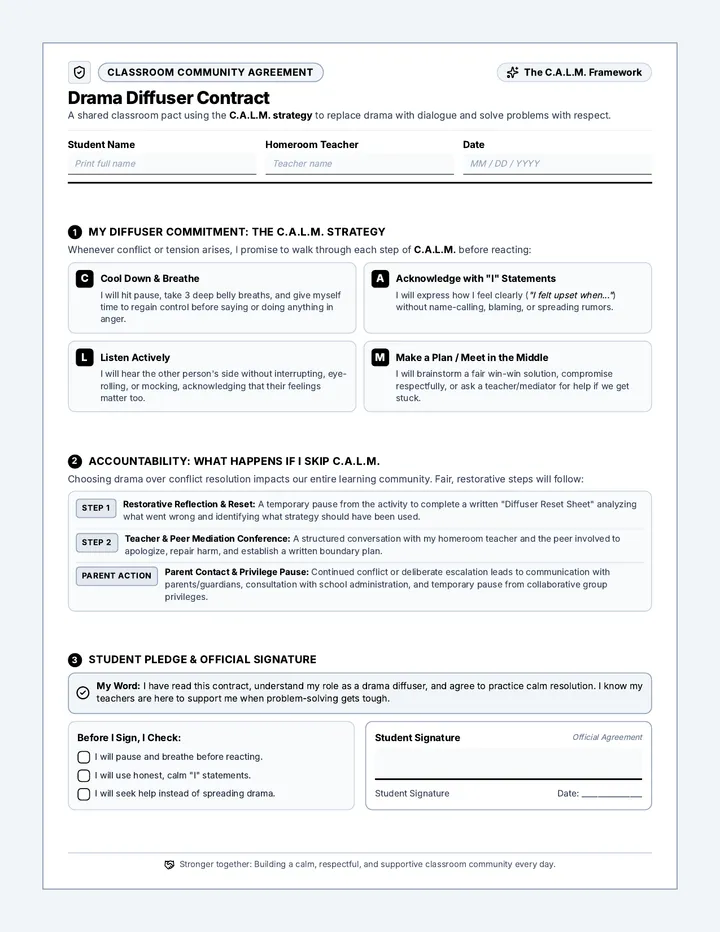
A middle school conflict resolution and social-emotional learning lesson using the C.A.L.M. strategy to diffuse peer drama, promote accountable dialogue, and implement restorative resolution protocols.
A small group stuttering therapy lesson focused on identifying, ranking, and discussing stressful speaking situations across everyday contexts. Students construct personal communication hierarchies and explore coping mindsets in a supportive peer environment.
A trauma-informed athletic coaching framework for Kitley Intermediate educators, transforming classroom management into proactive brain-state scouting, connection rituals, and sideline de-escalation plays.