Burnout Prevention Lesson Plan Teacher Toolkit: Burnout Prevention
Professional Development Workshop Lesson Plan
Duration: 90 Minutes
Audience: K-12 Teachers
Format: Interactive Workshop
The "Why"
Professional burnout among educators is a significant challenge, leading to decreased job satisfaction, reduced effectiveness, and high turnover rates. This lesson equips teachers with essential skills to safeguard their mental and emotional health, ensuring they can sustain their passion and energy in the demanding educational environment.
Learning Objectives
Identify early warning signs of professional burnout.
Implement proactive time management techniques.
Establish healthy professional boundaries.
Leverage peer support networks for sustainable well-being.
Workshop Prep
Time: 60 minutes prep
Print Self-Assessment (1 per person)
Print Boundary Handout (1 per person)
Set up projector for Slide Deck
Arrange seating in small groups
Required Materials
Burnout Prevention Slide Deck
Burnout Self-Assessment Worksheet
Boundary Setting Activity Handout
Peer Support Discussion Guide
Instructional Sequence
15
Minutes
Introduction & Warm-Up: Understanding Burnout
Welcome and introduction to workshop purpose.
Pair-Share: "What does 'burnout' mean to you in teaching?"
Distribute Self-Assessment Worksheet (5 mins individual completion).
Discuss common signs using Slides 4-5.
20
Minutes
Strategy 1: Effective Time Management
Introduce Eisenhower Matrix and Pomodoro Technique (Slides 7-9).
Lead discussion on practical classroom application.
Action Step: Identify one strategy to try next week and share with a partner.
20
Minutes
Strategy 2: Setting Healthy Boundaries
Discuss the importance of protective boundaries (Slide 10).
Distribute Boundary Setting Handout .
Focus on: email response times, extra-curriculars, and bringing work home.
Small group sharing: "What is your biggest boundary challenge?"
20
Minutes
Strategy 3: Leveraging Peer Support
Emphasize community vs. isolation (Slide 13).
Use Peer Support Discussion Guide in small groups.
Identify ways to create a culture of support within the current building.
15
Minutes
Wrap-Up & Next Steps
Recap the three pillars: Time, Boundaries, Support.
Distribute Takeaway Reading for further reflection.
Commitment: Write down ONE specific action to take in the next 24 hours.
Final Q&A and encouraging closing message.
Burnout Prevention Slide Deck Teacher Toolkit: Burnout Prevention
Strategies for Sustainable Well-being in Education
WELCOME & INTRODUCTION
Our Journey Today
1 Understand Teacher Burnout
2 Master Time Management Techniques
3 Set Healthy Professional Boundaries
4 Leverage the Power of Peer Support
5 Develop Your Personal Prevention Plan
What is Teacher Burnout?
Share your thoughts: What does "burnout" mean to you in the context of teaching?
Pair-share or quick brainstorm
Recognizing the Signs
Burnout isn't a sudden event, but a gradual process. It manifests in three main ways:
1. Emotional Exhaustion
Feeling drained, fatigued, and overwhelmed.
2. Depersonalization
Developing a cynical or detached attitude.
3. Reduced Accomplishment
Feeling ineffective and lacking achievement.
Where Are You On The Spectrum?
Your Burnout Self-Assessment Worksheet can help you reflect on your current state.
It's okay to feel these things; the goal is to equip you with tools to manage and prevent them.
Building Your Burnout Prevention Toolkit
Let's explore practical strategies to recharge your passion and energy!
Strategy 1: Effective Time Management
Time Management: A Teacher's Superpower
Feeling overwhelmed by your to-do list?
Effective time management isn't about doing more, but about doing the right things more efficiently.
The Eisenhower Matrix: Prioritize Like a Pro
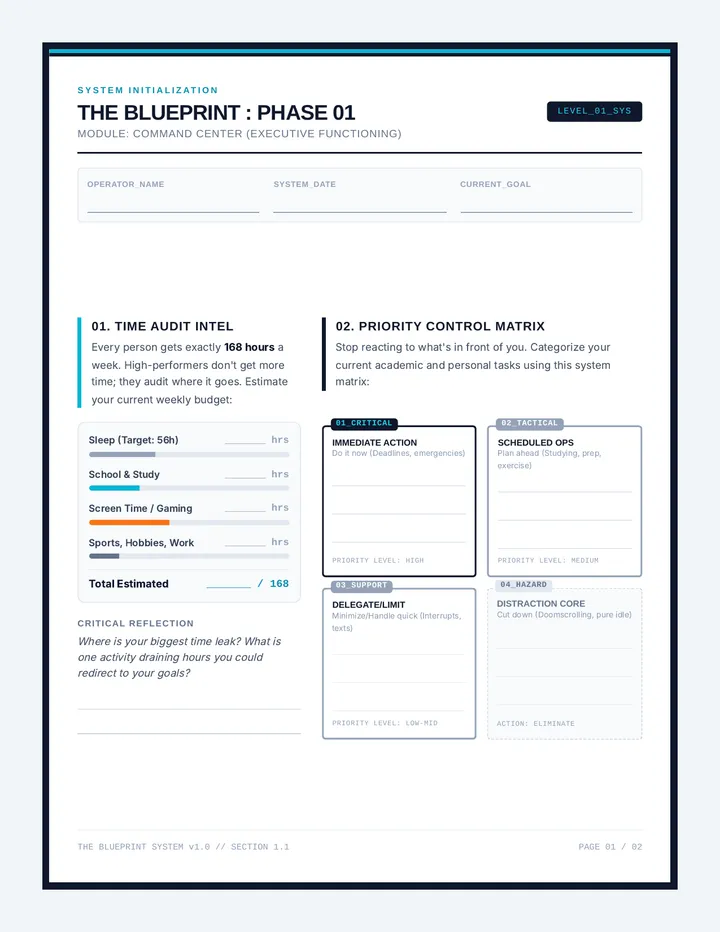
Urgent & Important
DO FIRST!
Crises, deadlines, pressing problems.
Important, Not Urgent
SCHEDULE!
Prevention, planning, relationship building.
Urgent, Not Important
DELEGATE / DECLINE!
Some emails, interruptions, certain meetings.
Not Urgent, Not Important
ELIMINATE!
Time wasters, busywork.
The Pomodoro Technique: Focused Bursts
25
Work in focused 25-minute intervals.
5
Followed by a 5-minute break.
4
After 4 "Pomodoros," take 15-30 minutes.
Why it works:
• Improves deep focus
• Reduces procrastination
Burnout Self-Assessment Worksheet Burnout Self-Assessment
Personal Reflection & Pulse Check
Name:
Date:
Instructions: Please answer the following questions honestly to reflect on your current professional well-being. This tool is for your personal reflection only . You will not be asked to share your specific answers or total score with the group unless you feel comfortable doing so.
Section 1: Emotional & Physical Energy
Scale: 1 (Never/Rarely) — 3 (Sometimes) — 5 (Always/Frequently)
1. I feel physically and emotionally exhausted at the end of most workdays.
1
2
3
4
5
2. I find it difficult to "turn off" my brain or stop thinking about work in the evening.
1
2
3
4
5
3. I feel unmotivated or dread going to work on Monday mornings.
1
2
3
4
5
Section 2: Professional Outlook
4. I feel less empathetic or more irritable toward my students or colleagues than usual.
1
2
3
4
5
5. I feel that my efforts are not making a significant difference for my students.
1
2
3
4
5
6. I am questioning if teaching is still the right profession for me.
1
2
3
4
5
Personal Reflection
Based on your answers, which area (Energy or Outlook) feels more strained right now?
What is one recurring "energy drainer" you encountered this past week?
If you were to rank your current level of burnout from 1 (Totally Fine) to 10 (Critical Point), where would you land today?
My Ranking: ________ / 10
Recognizing the signs is the first step toward recovery. Today's workshop will provide you with tools to shift these scores.
Boundary Setting Activity Handout Drawing Your Lines
Boundary Setting Activity Handout
Name:
Instructions: Boundaries are essential for protecting your time, energy, and well-being. This activity will help you identify areas where you need to set clearer boundaries in your professional life.
Part 1: Reflecting on Your Current Boundaries
Think about your typical work week. In what areas do you feel your boundaries might be blurred or non-existent? Jot down specific examples.
1. Time Boundaries
(e.g., working late, checking emails at home)
3. Physical Space Boundaries
(e.g., classroom as only personal space, work at home)
2. Energy Boundaries
(e.g., taking on too many committees/tasks)
4. Emotional Boundaries
(e.g., carrying students' emotional burdens)
Part 2: Defining Your Ideal Boundaries
For each area identified, think about what a healthy boundary would look like. What specific actions can you take to establish or reinforce these? Be specific and realistic.
My Ideal Time Boundaries:
My Ideal Energy Boundaries:
My Ideal Space Boundaries:
My Ideal Emotional Boundaries:
Peer Support Discussion Guide Peer Support Discussion Guide
Building a Supportive Teacher Community
Group Session
Instructions: In your small groups, discuss the following questions. Share your experiences, challenges, and successful strategies related to peer support in your teaching journey. Use the spaces below to capture key ideas from your conversation.
1 What role does peer support currently play in your professional life? Can you share a time when a colleague helped you through a challenge?
2 What are some common barriers to seeking or offering peer support among teachers in your school or district?
3 In what ways can we actively foster a more supportive environment among colleagues (both formally and informally)?
4 What specific actions can you take to be a better source of support for your colleagues, or to seek support when you need it?
5 Share one idea for a school-wide initiative or practice that could enhance peer support and reduce isolation among teachers.
Group Share-Out
Be prepared to share one key takeaway or action idea from your group discussion with the larger group.
Our Key Takeaway: ____________________________________________________________________
Understanding Teacher Burnout Reading Understanding Teacher Burnout
A Deeper Dive into Prevention & Well-being
What is Teacher Burnout?
Teacher burnout is a state of physical, emotional, and mental exhaustion caused by prolonged or excessive stress. It is often characterized by feelings of being overwhelmed, emotionally drained, and unable to meet constant demands.
Unlike general stress, burnout is a chronic condition that can lead to detachment and a loss of personal accomplishment. It's not simply feeling tired; it's a profound sense of depletion that affects a teacher's ability to function effectively and find joy in their profession.
The Unique Causes of Teacher Burnout
Several factors contribute to making educators particularly susceptible:
Workload & Time: Heavy workloads including planning, grading, and admin tasks often extending far beyond contract hours.
Emotional Labor: The constant need to regulate one's own emotions while managing the complex emotional needs of students.
Accountability Pressures: High-stakes testing and performance targets can overshadow the joy of actual teaching.
Lack of Autonomy: Feeling a lack of control over curriculum or instructional methods can lead to powerlessness.
The Three Pillars
Burnout is traditionally defined by three dimensions:
1. Exhaustion: Feeling physically and emotionally overextended.
2. Cynicism: Detachment or impersonal response to work.
3. Inefficacy: Decreased sense of competence and achievement.
The Ripple Effect
When a teacher burns out, the impact extends to students (lower engagement), schools (higher turnover), and the entire community (unstable learning environments).
Proactive Prevention: Taking Control
Preventing burnout is not a luxury; it's a necessity for a sustainable career. Key strategies include:
Strategy 1
Time Management
Learn to prioritize tasks and use focused work intervals to reduce overwhelm.
Strategy 2
Healthy Boundaries
Establish clear lines between your personal and professional life. Protect your space.
Strategy 3
Peer Support
Connect with colleagues. Share burdens and celebrate wins together to end professional isolation.