Identification of physiological and behavioral cues indicating rising student agitation, including pacing, vocal changes, and withdrawal. Facilitates early intervention by distinguishing between baseline behavior and crisis-bound patterns.
A 6-week Tier 3 intervention sequence designed for a student with an IEP, focusing on identifying triggers, developing coping strategies, and practicing self-regulation to manage anger and anxiety.
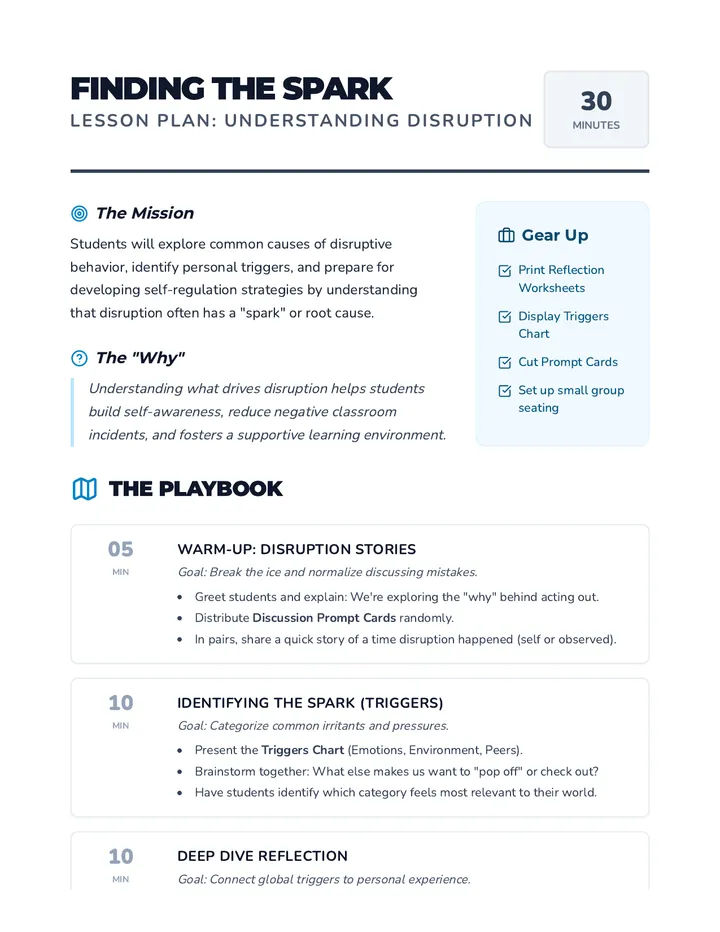
A two-session mini-unit for middle school small groups focused on understanding disruptive behaviors, identifying personal triggers, and developing concrete self-regulation strategies. Students move from awareness of external and internal pressures to practicing and planning constructive responses.
A 10-session Tier 3 social-emotional learning unit for students with ASD, focusing on identifying emotions, recognizing dysregulation, and applying self-regulation strategies through a space-themed journey.
This sequence explores the neurobiological foundations of student escalation, connecting internal physiological stress responses (the 'amygdala hijack') to observable external warning signs. Students will learn to depersonalize behavior by understanding it as a biological survival mechanism, training them to recognize subtle somatic, respiratory, and muscular cues before a full behavioral outburst occurs.
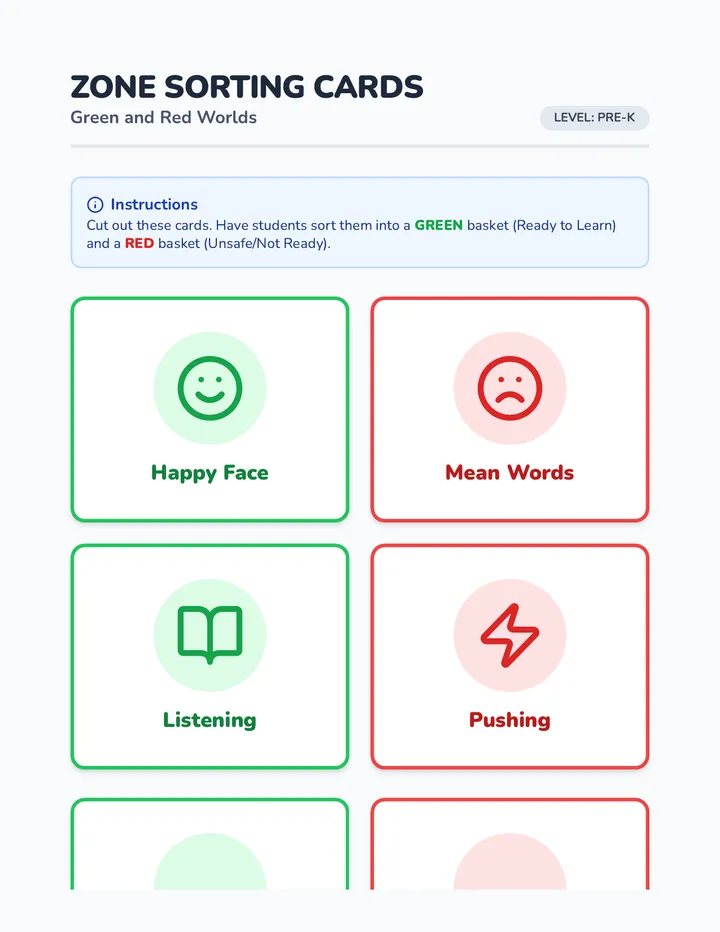
A color-coded behavioral support sequence for Pre-K students focused on identifying emotional intensity. Students learn to distinguish between 'Green' (calm), 'Yellow' (warning), and 'Red' (crisis) zones, with a heavy emphasis on recognizing the 'Yellow Zone' signs before escalation occurs.
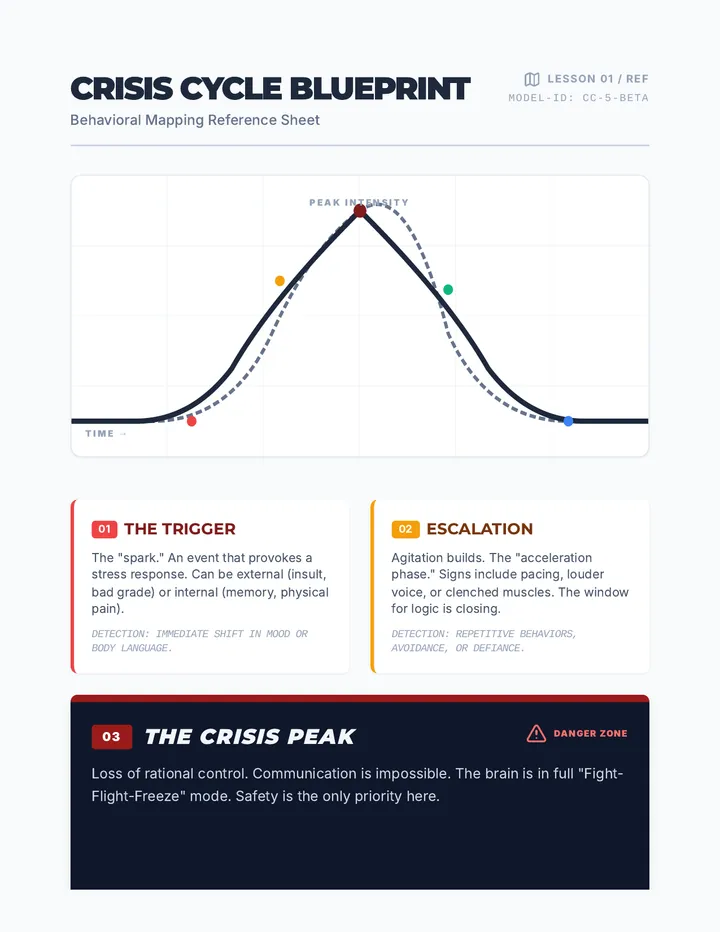
A comprehensive 5-lesson unit on the Crisis Cycle, focusing on identifying triggers, escalation stages, and intervention points through a technical mapping and simulation lens. Students move from theoretical understanding to retroactive detective work to understand behavioral patterns.
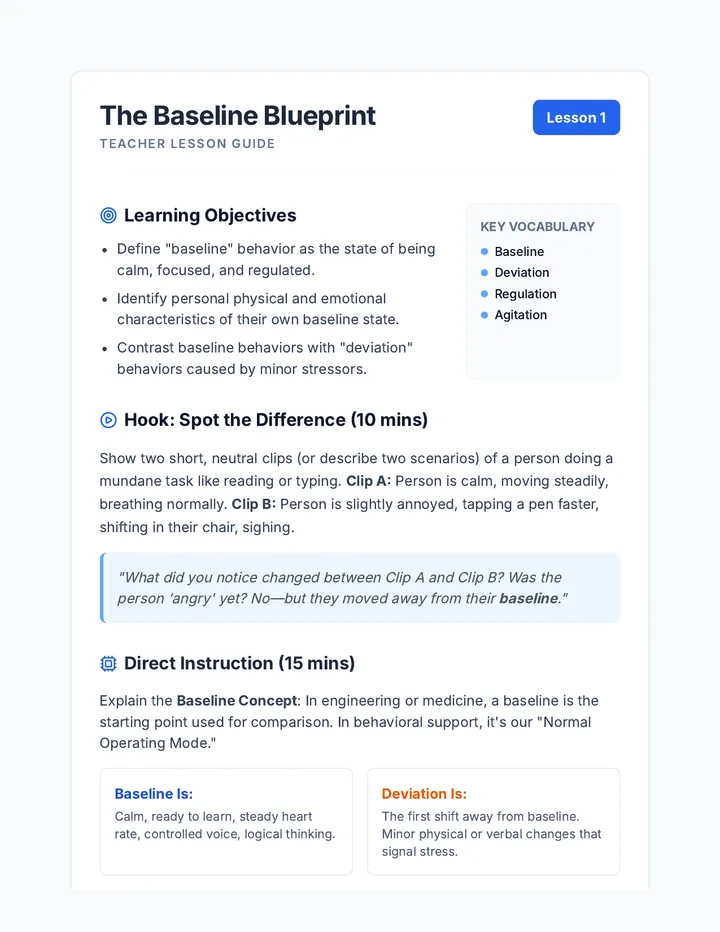
A comprehensive 5-lesson unit for 7th-grade students to identify internal and external signals of emotional escalation. Students move from establishing baseline behaviors to creating a personalized 'Escalation Map' to help them recognize when to engage coping strategies before a crisis occurs.
A 5-lesson sequence for Kindergarten students focusing on interoception and the procedural steps of requesting and returning from a break to support self-regulation.
A comprehensive 5-lesson unit for 12th-grade students on identifying behavioral baselines and recognizing early warning signs of emotional escalation through analytical observation of verbal, para-verbal, and non-verbal cues.
This sequence connects behavioral observation to the biological science of the stress response. Students investigate the 'why' behind warning signs by studying the sympathetic nervous system and the 'fight, flight, or freeze' response, culminating in a biological profile of behavioral escalation.
This sequence trains undergraduate students in behavioral health and education to identify the early warning signs of crisis. Students move from establishing behavioral baselines to analyzing motor, verbal, and passive indicators of escalation through case studies and clinical observation.
A high-intensity simulation-based unit for 12th graders focusing on situational awareness and the early detection of behavioral escalation in dynamic environments. Students take on the role of behavioral analysts to identify subtle cues before they lead to crisis.
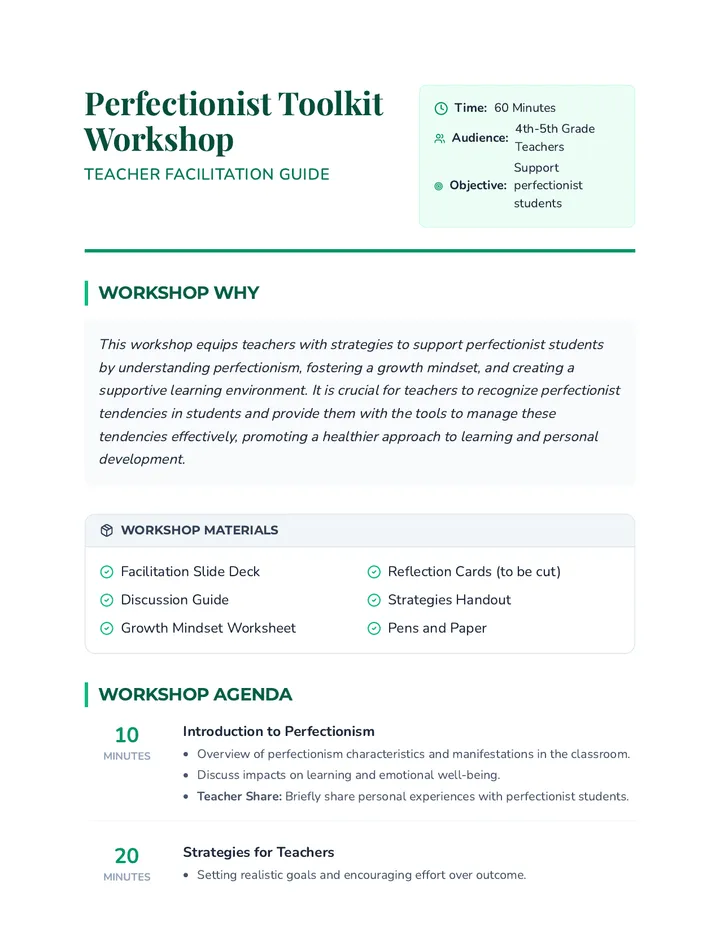
A professional development workshop designed for teachers of 4th and 5th-grade students to understand perfectionism, foster growth mindsets, and implement practical support strategies.
A 15-minute Kindergarten lesson helping students understand the importance of staying in their designated spots for safety and learning using storytelling and practice.
In this 30-minute session, 7th grade students learn to identify verbal threats and inappropriate gestures, reflect on their emotional impact, and practice respectful communication strategies to foster a safe classroom environment.
A Kindergarten social-emotional learning lesson focused on identifying the 'Red Zone' of high-arousal emotions and learning to stop and regain control to keep bodies safe.
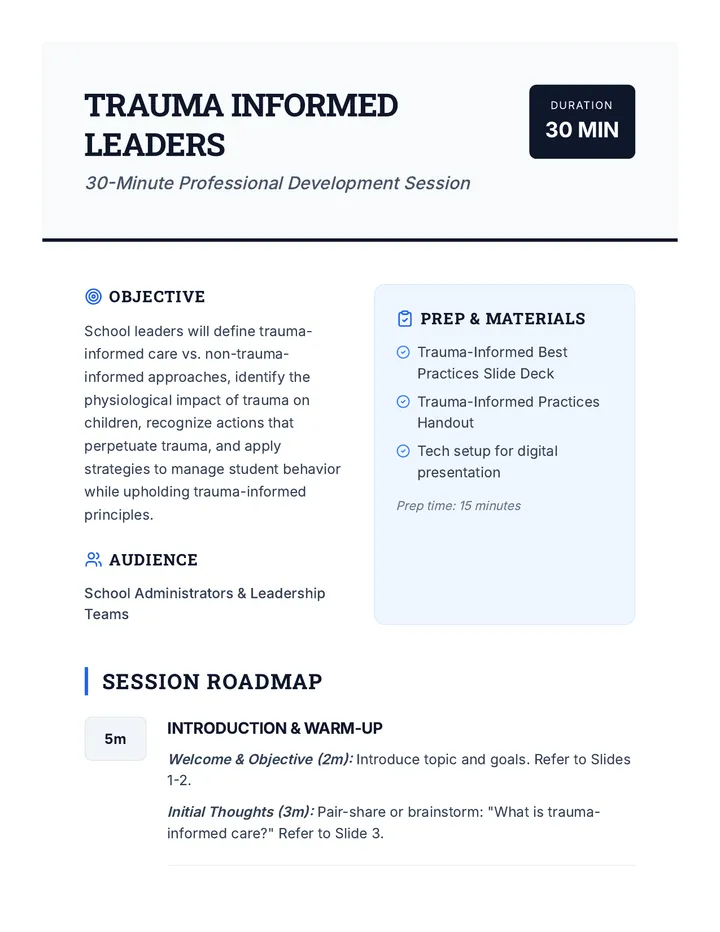
A 30-minute professional development session for school leaders focused on understanding trauma-informed practices, the physiological impact of trauma on students, and strategies for modeling these practices for staff while maintaining high expectations for student behavior.
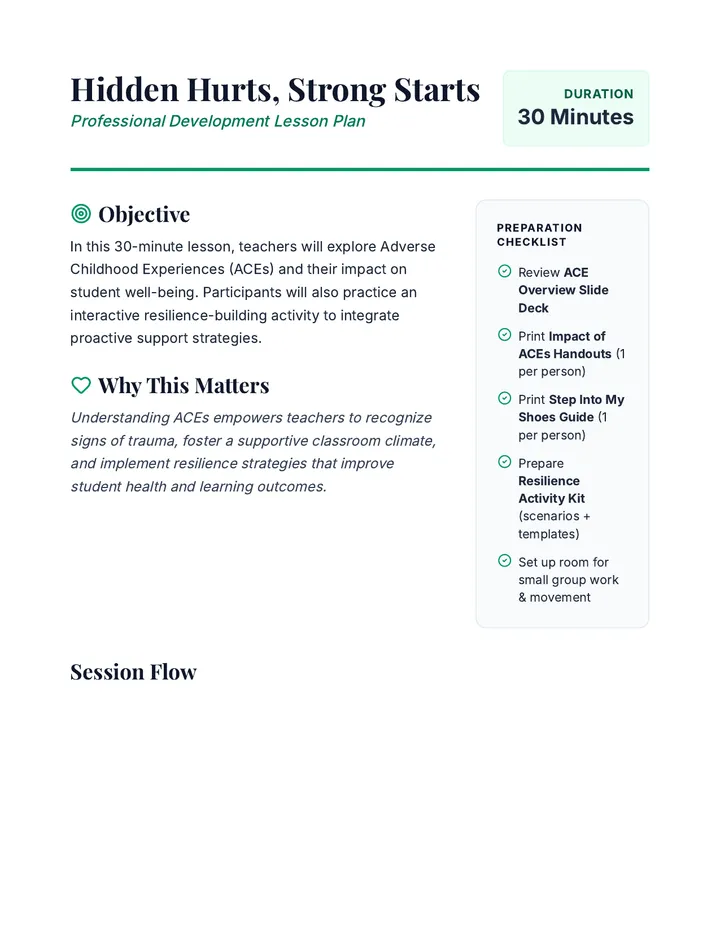
A 30-minute professional development session for elementary teachers exploring Adverse Childhood Experiences (ACEs) and practical strategies for building classroom resilience.
A 30-minute individual session for parents providing practical strategies to support children with DMDD, focusing on triggers, communication, and proactive planning.
This professional development session challenges school staff to hone their active supervision skills through realistic scenarios, focusing on the core principles of scanning, moving, and interacting to ensure a safe environment.
A 30-minute Tier 1 lesson for 7th-grade male students focusing on self-regulation and managing impulsive behavior through the 'Stop, Think, Choose' strategy. Designed for students with ODD and ADHD traits, it empowers them to 'be the boss' of their emotional reactions.
A Tier 3 individual lesson focused on teaching self-regulation strategies (requesting breaks and virtual refueling) to manage dysregulation and reduce elopement. This lesson uses a superhero/detective theme to empower students to stay in the classroom.
This professional development session hones school staff's active supervision skills through realistic scenarios, focusing on the principles of scanning, moving, and interacting to ensure a safe school environment.
A 30-minute lesson for 8th-grade students to explore the impact of horseplaying and roughhousing in school, helping them distinguish between safe fun and potentially harmful behavior.