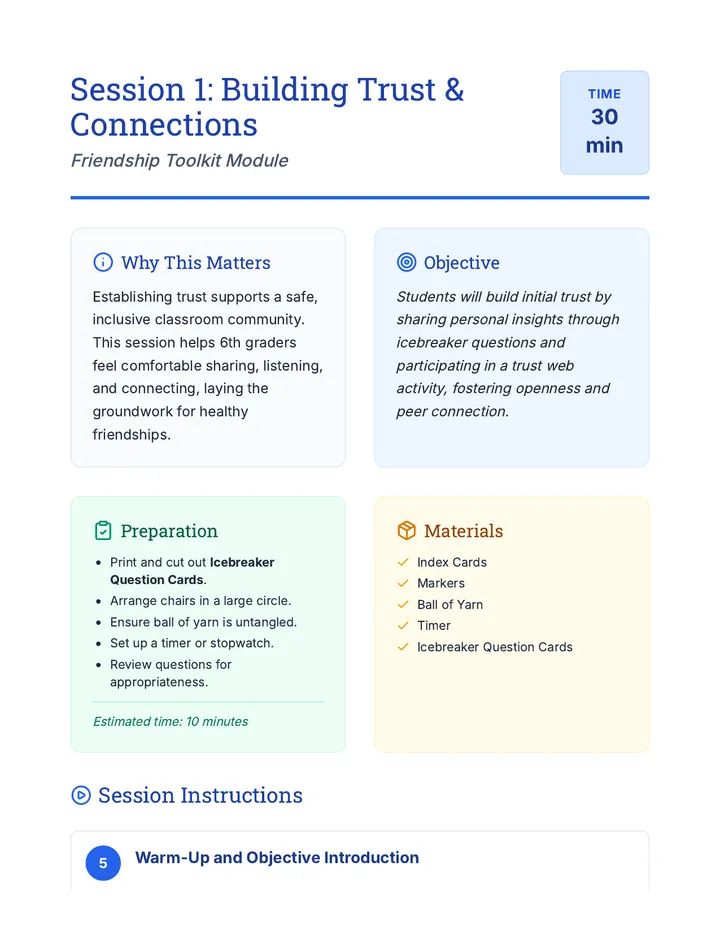
Perspective-taking strategies and recognition of emotional cues in others. Builds skills in active listening, compassionate response, and understanding diverse viewpoints.
A Pre-K sequence focused on building self-esteem and positive experiences through mastery, growth mindset, and persistence. Students learn to navigate challenges and celebrate their own progress.
A Pre-K sequence focused on moving from individual joy to shared happiness through social connection, invitations, collaboration, and celebration. Students learn how community and play amplify positive emotions and build resilience.
A sequence for Pre-K students focused on building emotional resilience through predictable, positive daily routines. Students explore greetings, reframing chores, managing transitions, finding peace in quiet time, and practicing daily gratitude.
A Kindergarten sequence focused on shared positive experiences to boost mood and build social connections through invitations, cooperation, laughter, altruism, and gratitude.
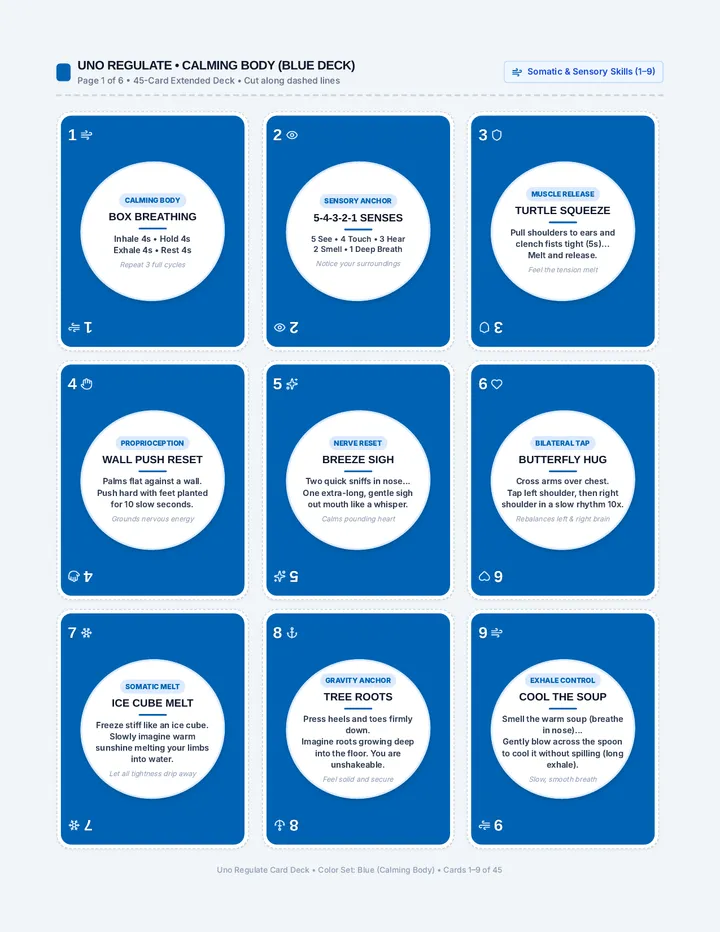
A Kindergarten sequence focused on teaching emotional regulation through positive actions. Students learn to use activities like physical movement, deep breathing, and creative expression to 'switch the channel' from negative to positive emotions, building a toolkit of coping strategies.
A Kindergarten sequence focused on helping students identify personal interests and the link between activities and emotions through sensory exploration and creative mapping.
A therapeutic and self-discovery sequence for 2nd graders to identify personal sources of joy. Students explore the physical sensations of happiness, categorize their interests, and create a personalized 'Joy Menu' to use as a coping strategy for emotional regulation.
A Kindergarten sequence focused on making digital footprints concrete through physical analogies, promoting online kindness, and establishing safety protocols for young internet users.
This sequence examines the PLEASE skills (Physical illness, Lunch/Eating, Avoid mood-altering substances, Sleep, Exercise) through a Social Determinants of Health lens. Undergraduate counseling students will learn to adapt these therapeutic interventions for clients facing systemic barriers such as food insecurity, housing instability, and physical disability.
A 5-lesson unit for 3rd-grade students focused on identifying and categorizing obstacles that prevent task completion. Students learn to recognize internal emotional signals and external barriers (physical, informational, and environmental) to build self-advocacy and problem-solving skills.
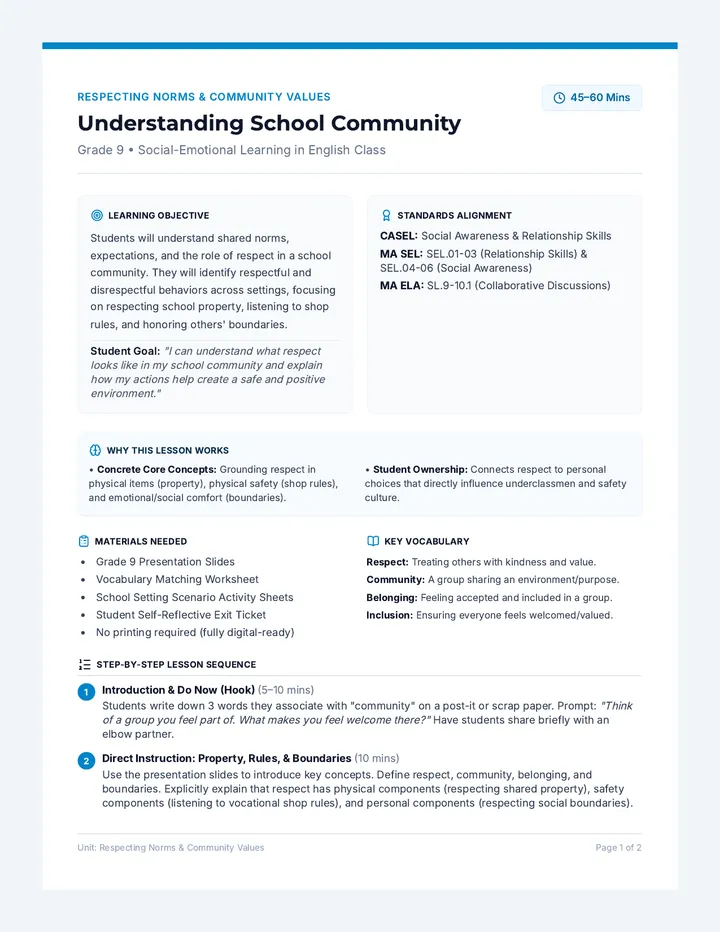
A social-emotional learning sequence for 1st graders focused on empathy, perspective-taking, and challenging exclusion. Students experience simulations, role-play, and creative projects to build an inclusive classroom community.
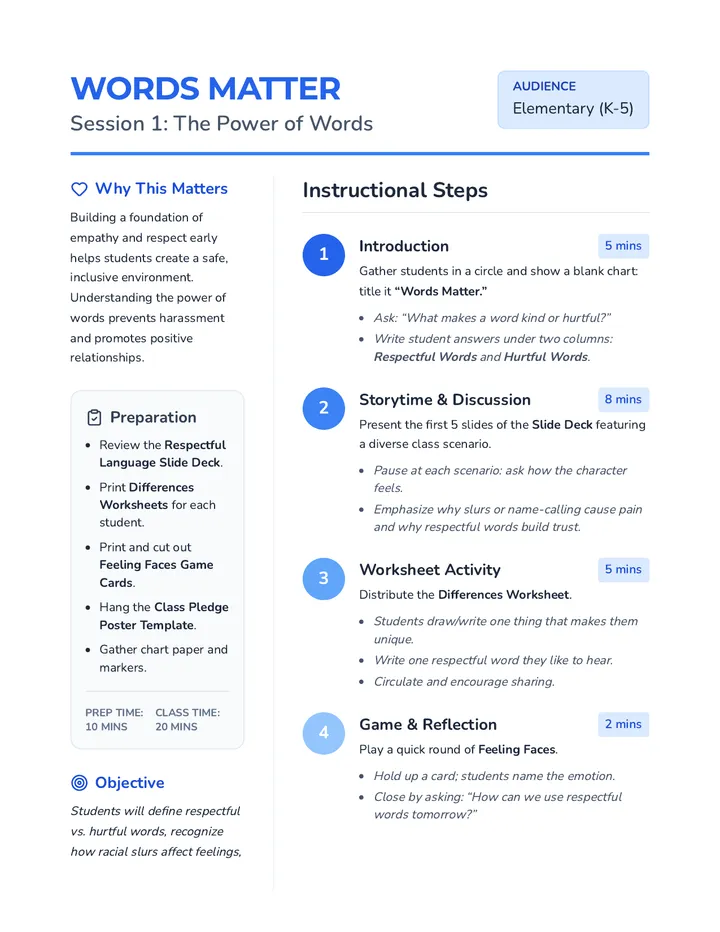
This 5-lesson sequence for 1st-grade students explores social awareness through the lens of challenging stereotypes and bias. Students move from understanding basic assumptions via object lessons to identifying and debunking gender-based and role-based stereotypes in play and careers, ultimately celebrating individual uniqueness.
A culminating event where students plan and execute a simple shared activity (like a dance party or snack share). They reflect on how doing things together feels different than doing them alone.
Students present their collages to small groups, articulating why they chose specific activities. Peer listeners practice affirming others' choices.
Students present their Joy Menus to small groups, allowing peers to borrow ideas to add to their own lists. The lesson concludes with a commitment to try one menu item over the weekend.
Students learn to identify when a friend does something good and how to celebrate them (clapping, cheering). This shifts focus from self-gratification to finding joy in others' success.
Using a collage format, students select and paste images of their favorite activities onto a personal poster. This visual aid serves as a concrete reference tool.
Small groups work together to build something (block tower, art piece). The focus is on the positive feeling of achieving a goal together rather than the final product.
Using their investigations, students create a visual 'menu' or choice board of their top 5 reliable mood-boosting activities. They illustrate these options to serve as a reference tool.
Students sort images of activities into 'high energy' fun (running, dancing) and 'calm' fun (reading, coloring). The class discusses how different times of day might need different types of positive activities.
The class engages in silly activities designed solely to produce shared laughter. They discuss how hearing others laugh makes them want to laugh too, introducing the concept of emotional contagion.
Students rotate through stations testing different types of positive engagement: creative (drawing), active (jumping jacks), and relaxing (deep breathing). They record how each station changes their energy level.
Reflecting on achievements and celebrating the internal feeling of pride through a classroom showcase.
Empowering students to share their mastered skills with peers, building leadership and reinforcing their own learning.
A celebratory completion certificate for students who have finished the 'Mood Makers' sequence, recognizing them as 'official Mood Makers and Reset Heroes'.
A student worksheet for reflecting on emotional change by creating a visual comic story of identifying a problem, choosing a tool, and achieving a positive mood shift.
Teacher-facing guide for facilitating the end-of-day "Best Part" reflection circle with Pre-K students.
A decorative cover for the student's final 'Star Power' portfolio, featuring space for a self-portrait and recognition of their growth mindset journey.
Instructional slides for Lesson 5, reviewing the key concepts of internal weather, movement experiments, and the coping toolbox.
A Kindergarten reflection and gratitude worksheet for the final lesson, where students identify traits they appreciate in their peers.
Comprehensive teacher guide for the final celebration lesson, outlining the 'Soapbox of Pride' activity, gallery walk facilitation, and portfolio assembly.
A student activity sheet where Pre-K children color and decorate their own "Magic Mover" medal for mastering classroom transitions.
A teacher guide for the Community Celebration Circle, facilitating a concluding reflection and peer-compliment activity.
Colorful slides for the final lesson celebration, focusing on internal pride, self-reflection, and the ongoing journey of growth for Pre-K students.
A teacher guide with scripted scenarios and facilitation prompts for role-playing emotional resets and building empathy.
Visual presentation for the Best Part Recap lesson, establish a gratitude habit and establishing an end-of-day routine.