Advanced mediation techniques and negotiation frameworks for addressing deep-seated interpersonal or professional disputes. Develops skills in identifying root causes, managing high-arousal emotions, and crafting sustainable resolutions.
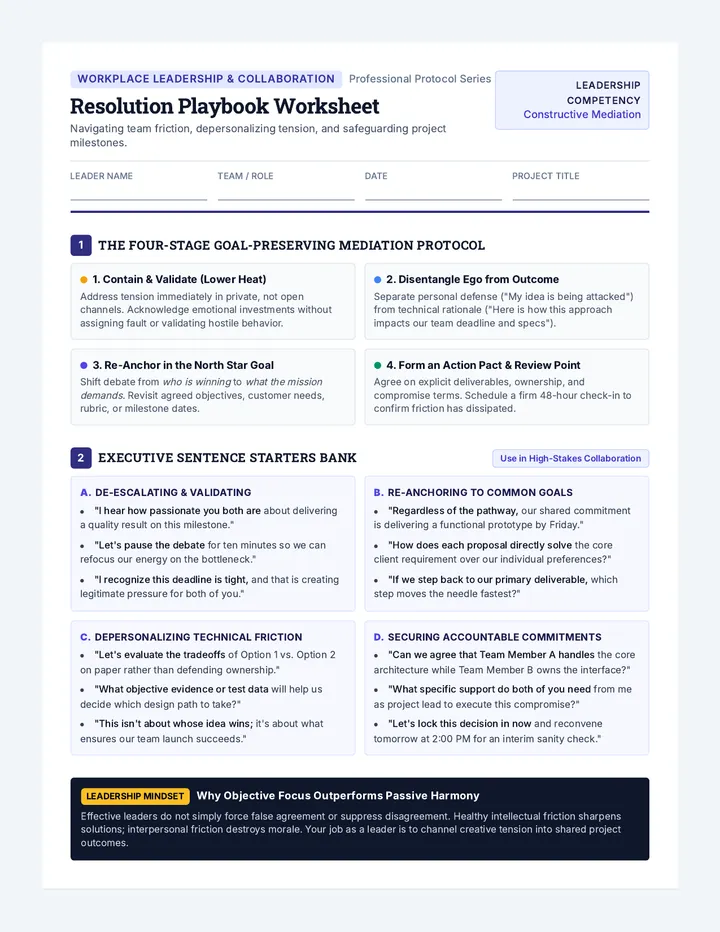
A two-page workplace leadership worksheet designed for high school students to de-escalate interpersonal conflicts while keeping shared deliverables on track. Features executive sentence starters, a four-step mediation framework, and an applied team case study with structured rationale response areas.
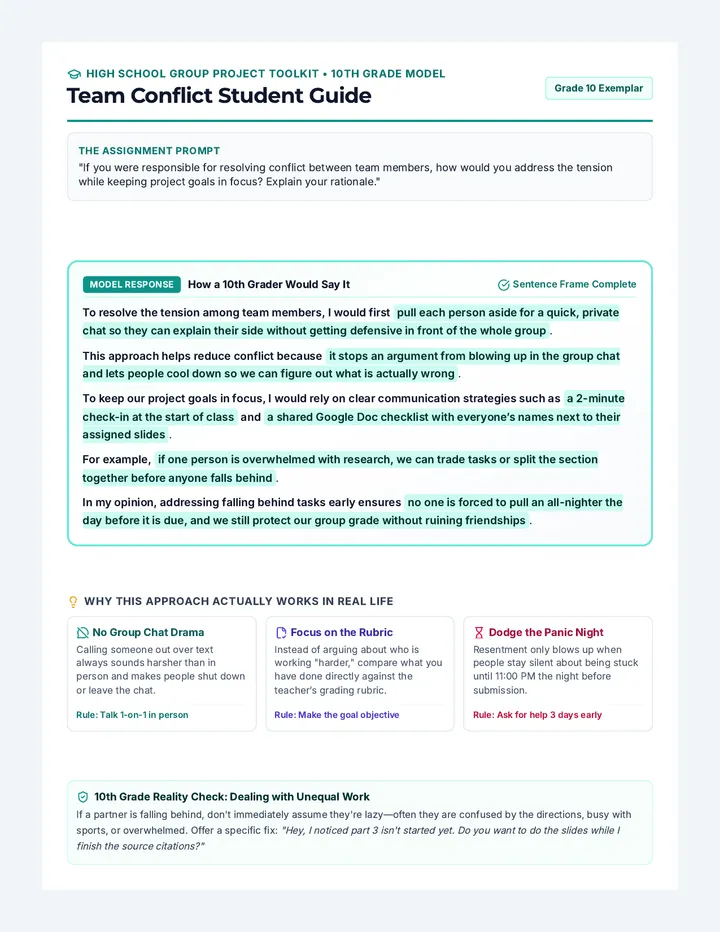
A relatable, high-school-ready 2-page conflict resolution guide written in a natural 10th-grade voice, featuring a model response and practical communication strategies for group projects.
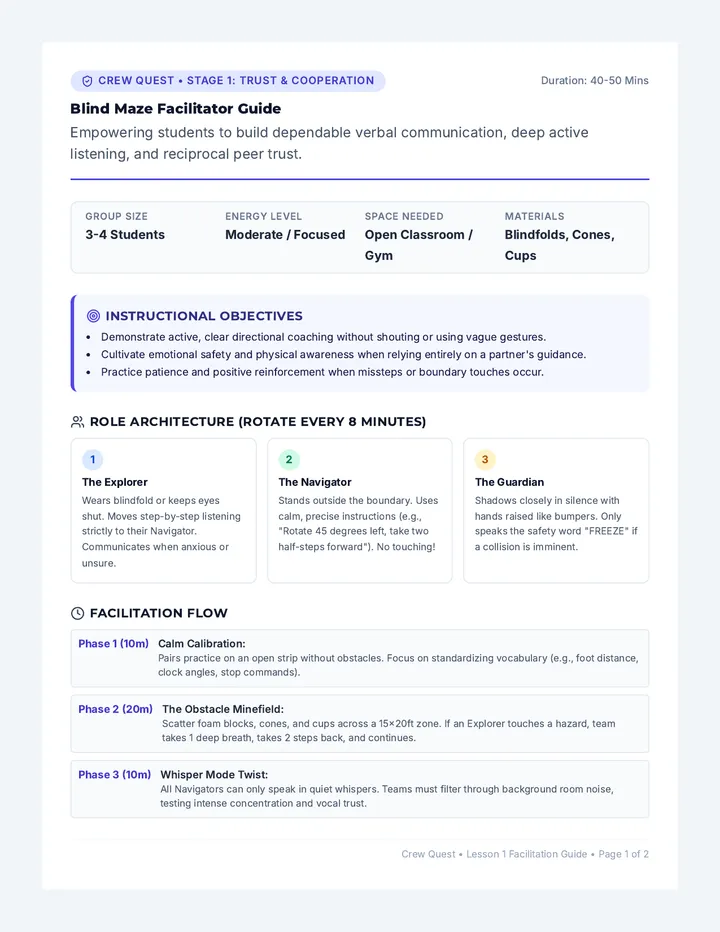
A three-part experiential team-building progression empowering students to master trust, emotional self-regulation, and constructive conflict resolution. Through dynamic collaborative challenges, teams learn to communicate authentically, stay grounded under pressure, and repair friction constructively.
This sequence explores complex conflict navigation for 12th graders, moving from the psychological roots of identity-based conflict to the practical application of restorative circles and sustainable resolution design.
A comprehensive 6th-grade sequence on conflict navigation, teaching students to identify root causes, recognize personal conflict styles, practice perspective-taking, understand escalation, and diagnose complex disputes.
This sequence teaches 7th-grade students how to move beyond simple compromise to collaborative negotiation. Students learn to separate people from problems, brainstorm creative 'win-win' options, use objective criteria for fairness, and develop a BATNA (Best Alternative to a Negotiated Agreement) to handle complex conflicts effectively while preserving relationships.
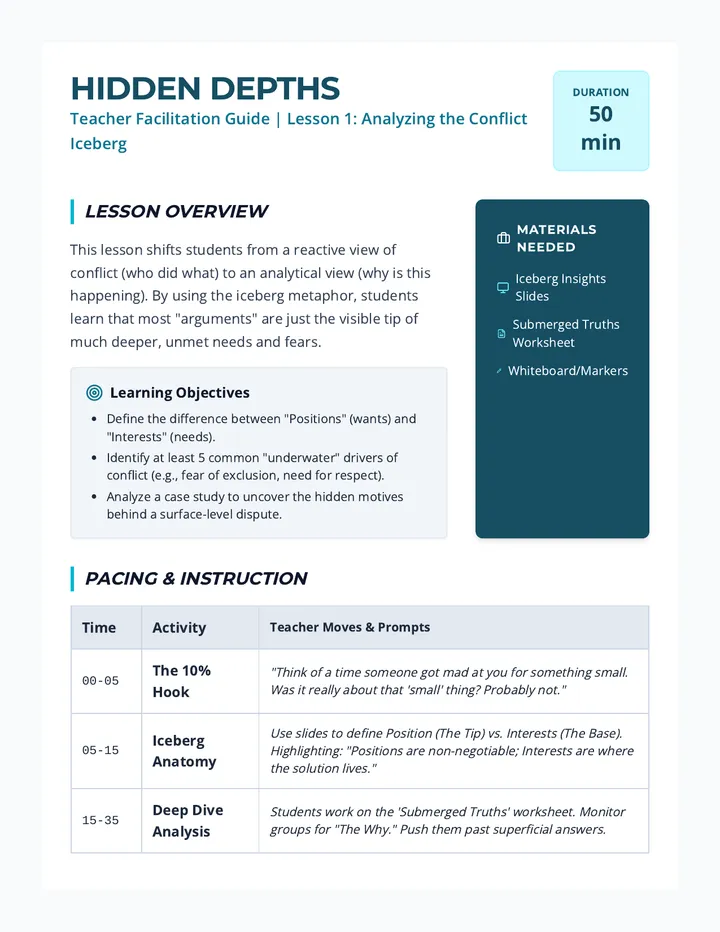
A comprehensive 9th-grade sequence exploring the psychological and biological roots of conflict. Students learn to distinguish visible behaviors from hidden needs, understand the neuroscience of emotional escalation, and develop practical self-regulation strategies to navigate complex interpersonal disputes.
A comprehensive high school unit on interest-based negotiation and formal mediation. Students move from understanding individual interests to facilitating multi-party resolutions using the Harvard Negotiation Project framework and professional mediation stages.
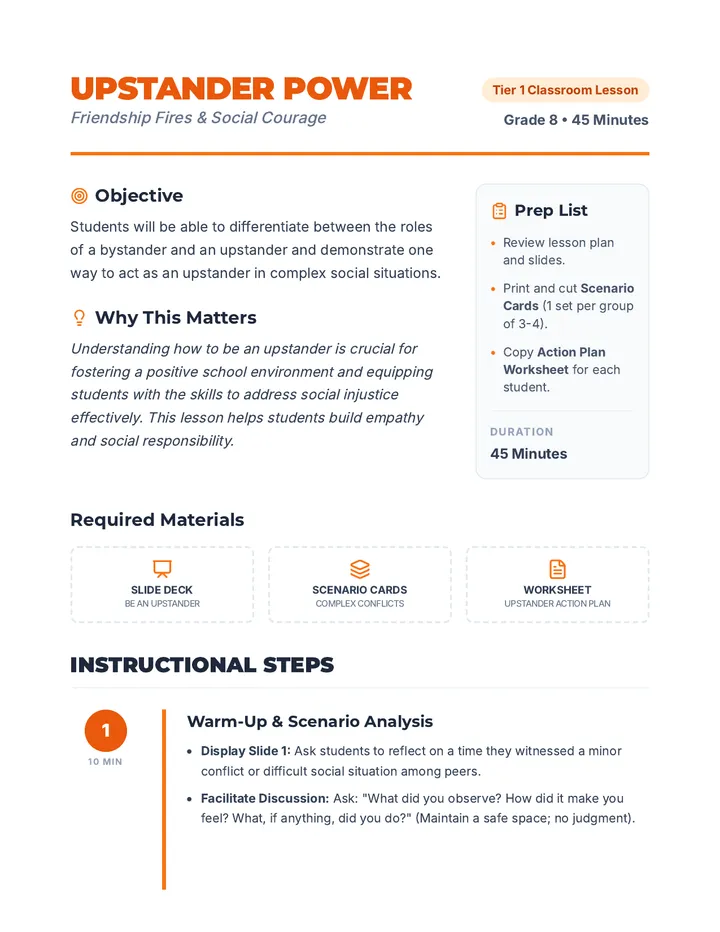
This lesson helps 8th-grade students navigate complex social conflicts by understanding the roles of bystanders and upstanders. It empowers them to take positive action through scenario analysis and role-play.
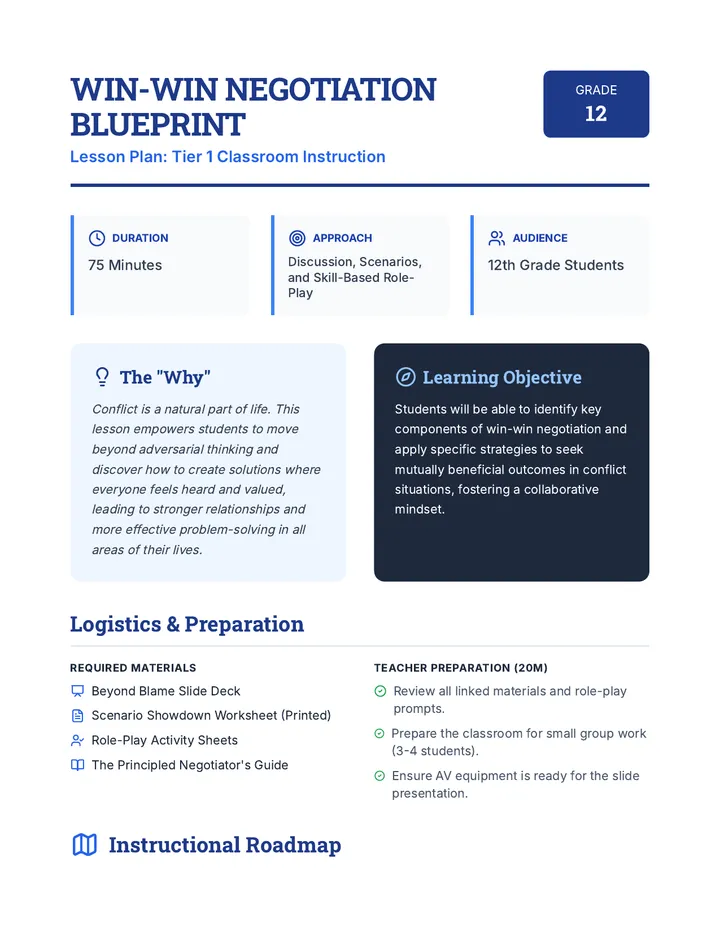
This lesson challenges 12th-grade students to move beyond zero-sum thinking in conflict, focusing on strategies for mutual gain and collaborative problem-solving. Through scenario analysis and role-play, students develop the skills to seek equitable solutions in personal and professional contexts.
A 30-minute lesson for 9th graders exploring the concept of forgiveness as a choice and a process for personal well-being.
A high-level social intelligence lesson for 11th-grade students to master advanced perspective-taking and social forecasting strategies.
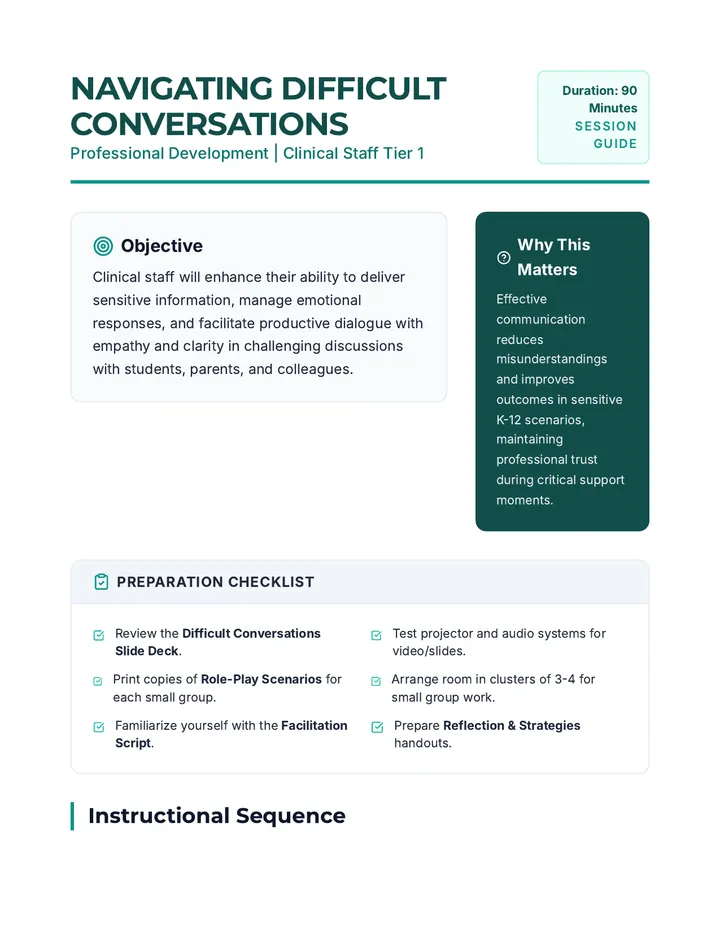
A comprehensive 90-minute professional development session for clinical staff focusing on high-stakes communication, empathy frameworks, and role-play practice for K-12 environments.
An advanced lesson for 6th graders exploring the root causes, long-term effects, and sophisticated intervention strategies for bullying. Includes Spanish translations and role-playing activities.