Cognitive restructuring techniques and identification of common cognitive distortions. Equips learners with evidence-based questioning strategies to reframe maladaptive self-talk and promote balanced thinking.
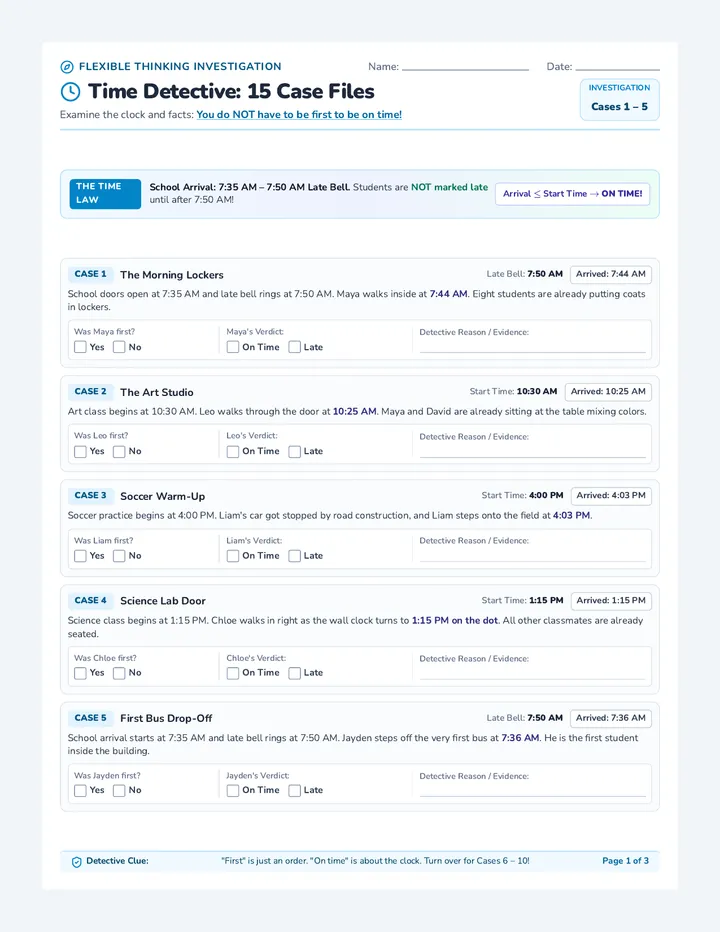
A 3-page printable worksheet featuring 15 real-world arrival scenarios for students to investigate and determine whether a person is on time or late, reinforcing flexible thinking around school arrival windows, being first versus on time, and coping with late arrivals.
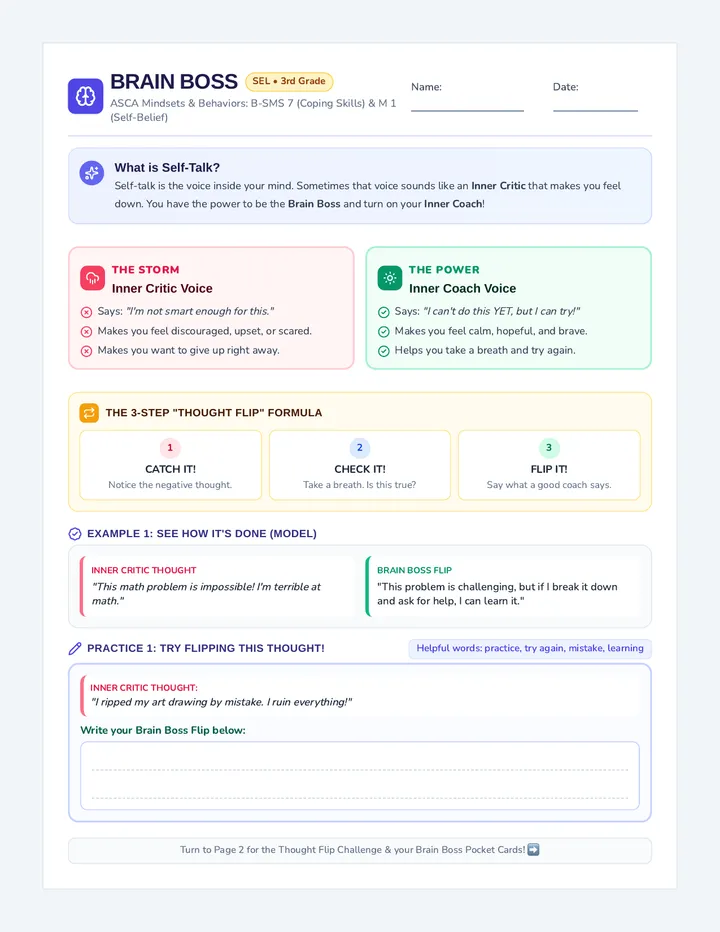
A two-page printable SEL worksheet aligned with ASCA Mindsets & Behaviors standards for 3rd graders. Students learn to identify negative self-talk, use a three-step reframing formula, and practice turning inner critic thoughts into empowering inner coach statements.
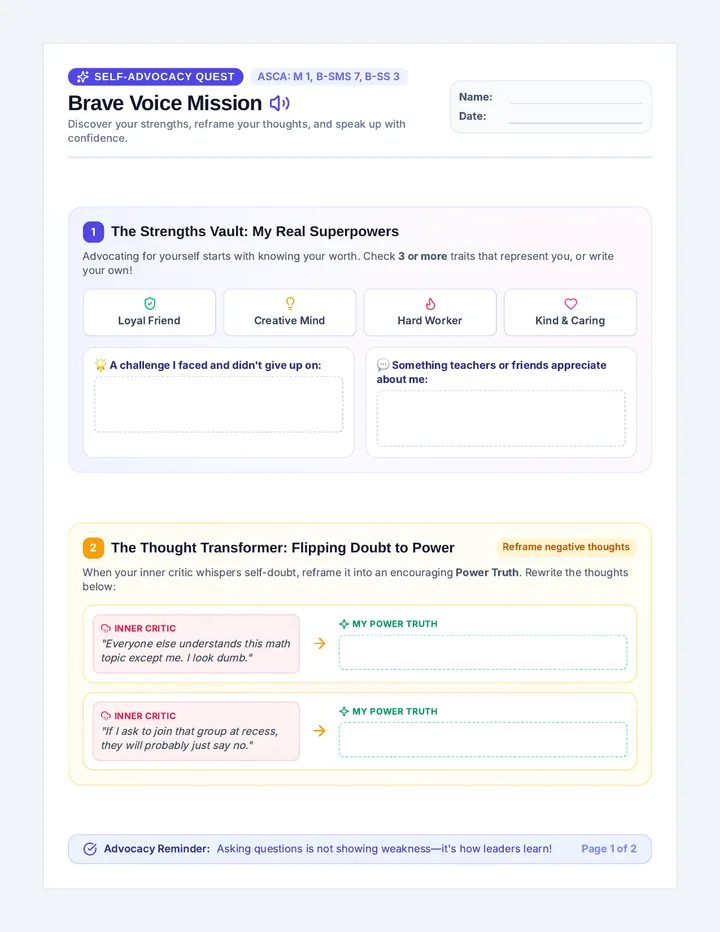
A two-page ASCA-aligned self-confidence and self-advocacy worksheet for 5th graders featuring strengths discovery, self-talk reframing, real-world speaking-up scenario scripts, and a personal action plan.
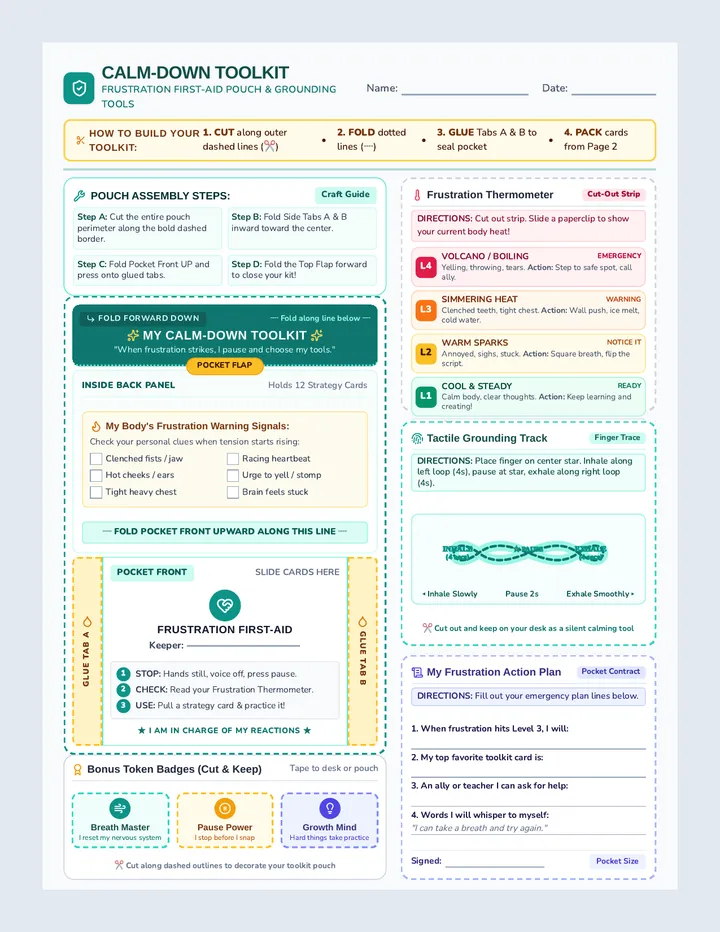
A revised 2-page printable cut-and-assemble Calm-Down Toolkit craft with prominent, fully visible directions, step-by-step assembly diagrams, and generous typography. Page 1 features the foldable pocket pouch, frustration thermometer, tactile finger-trace labyrinth, and desk calm badges. Page 2 provides 12 color-coded strategy cards with clear instructions.
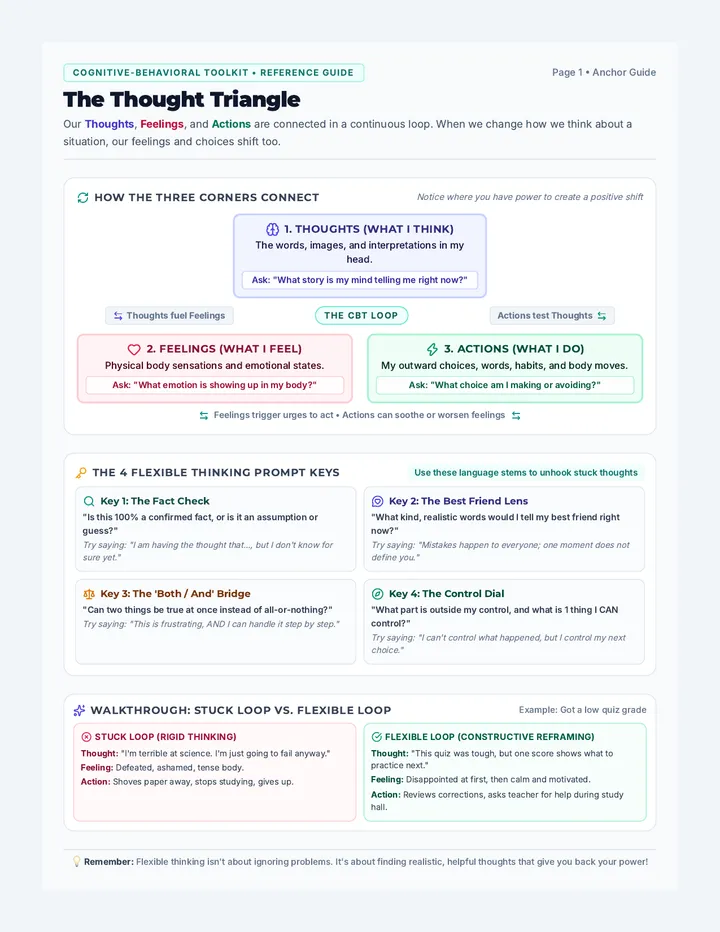
A comprehensive three-page printable cognitive-behavioral resource featuring a simplified CBT triangle with accessible language prompts and a worked example on page one, followed by five structured scenario practice exercises across pages two and three, concluding with a personal application challenge.
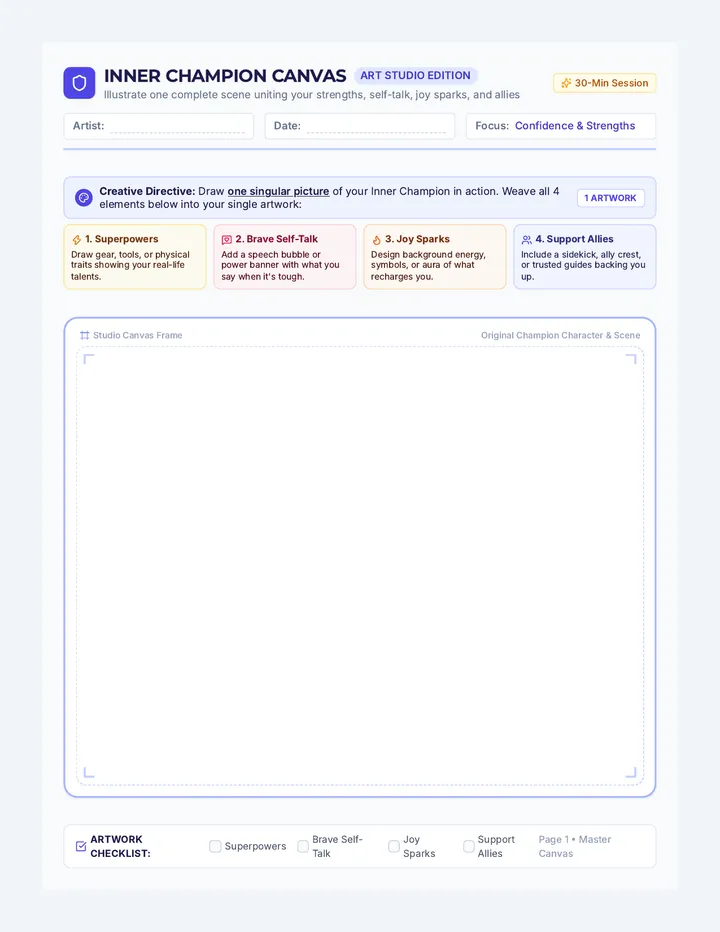
A 2-page counseling art activity for a 5th grader designed to build self-confidence. Features a singular full-page master canvas where the student illustrates one unified artwork integrating strengths, brave self-talk, joy sparks, and support allies, followed by positive self-talk reframing and a 3-step help-seeking strategy guide.
A comprehensive 5-session sequence for 6th-grade girls to manage anxiety through grounding, body awareness, cognitive reframing, support systems, and sensory mindfulness. Each 30-minute session provides practical 'chill skills' in a supportive small-group environment.
A 10-week series of 30-minute group lessons for high school students exploring Cognitive Behavioral Therapy. Each session builds practical skills in identifying and reframing thoughts, managing emotions, and engaging in healthy behaviors through interactive activities. This Tier 2 program develops resilience and mental wellness.
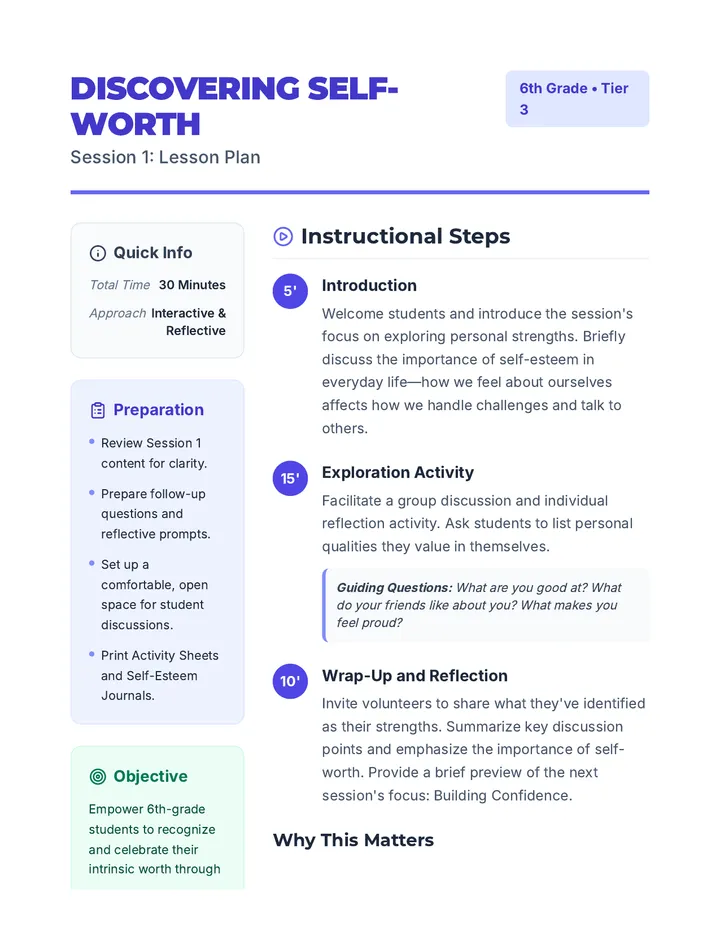
A 5-session Tier 3 intervention for 6th-grade students focused on building self-esteem, recognizing self-worth, and developing resilience through reflective activities and goal-setting.
A 6-week Tier 3 intervention sequence designed for a student with an IEP, focusing on identifying triggers, developing coping strategies, and practicing self-regulation to manage anger and anxiety.
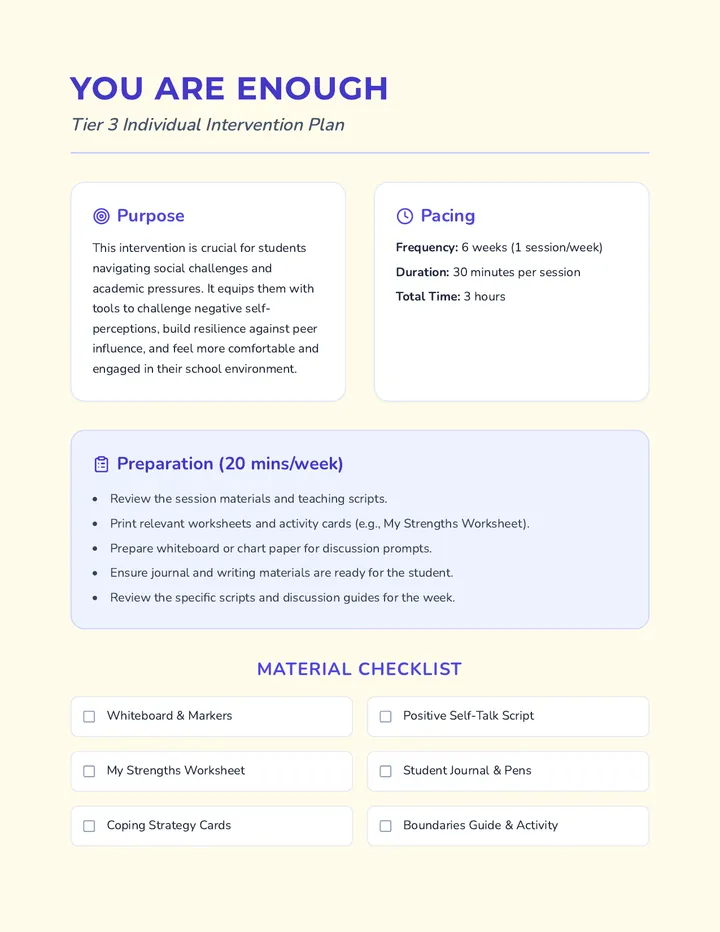
A 6-week individualized intervention designed to empower students with self-esteem, coping mechanisms, and boundary-setting skills.
A Tier 2 social-emotional learning session for 6th graders focused on identifying and reframing unhelpful thought patterns using a detective-themed 'Thought-Feeling-Action' cycle.
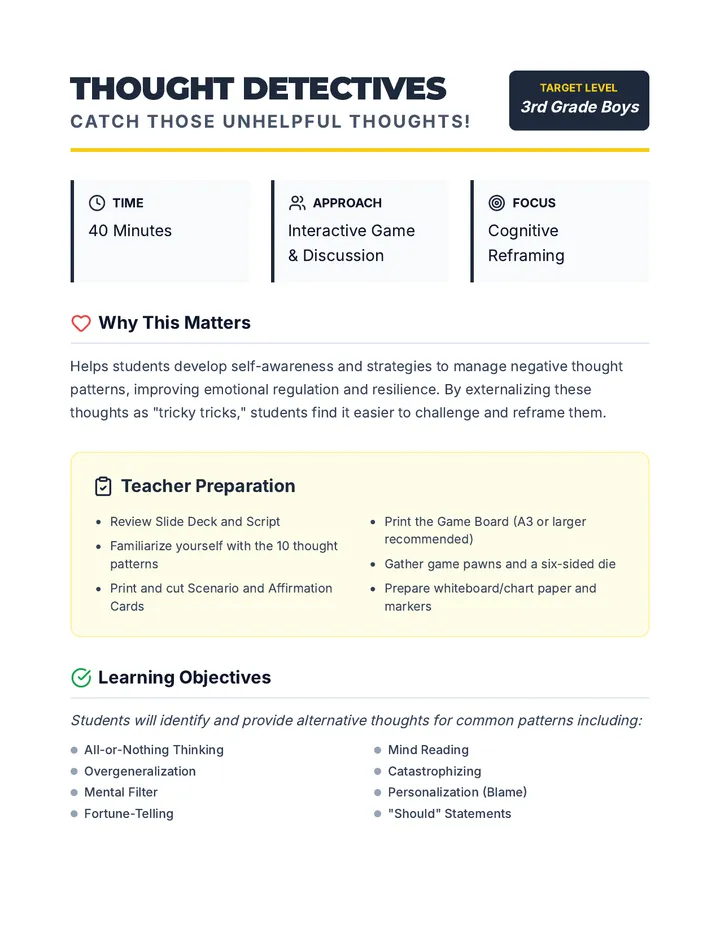
An interactive game-based lesson for 3rd-grade boys to identify and reframe unhelpful thought patterns like catastrophizing and overgeneralization using a detective theme.
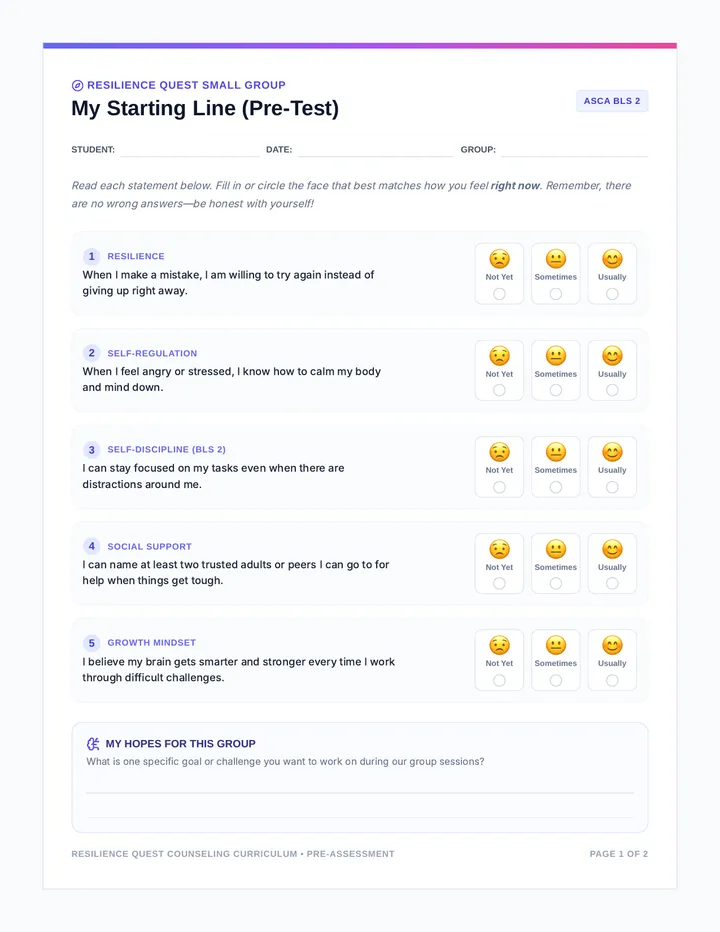
A small group counseling lesson on resilience, self-discipline, and emotional regulation (ASCA BLS 2). This lesson includes a comprehensive student workbook with pre/post assessments, reflection journals, and goal trackers.
A comprehensive 60-minute social-emotional learning lesson for high schoolers that teaches students how to identify their negative inner critic, reframe thoughts using an inner coach perspective, and utilize positive affirmations.
This lesson equips students to identify and challenge negative self-talk, reframing their internal dialogue into positive affirmations to build resilience and self-esteem. Students will explore scenarios, practice cognitive reframing, and create personal affirmation cards.
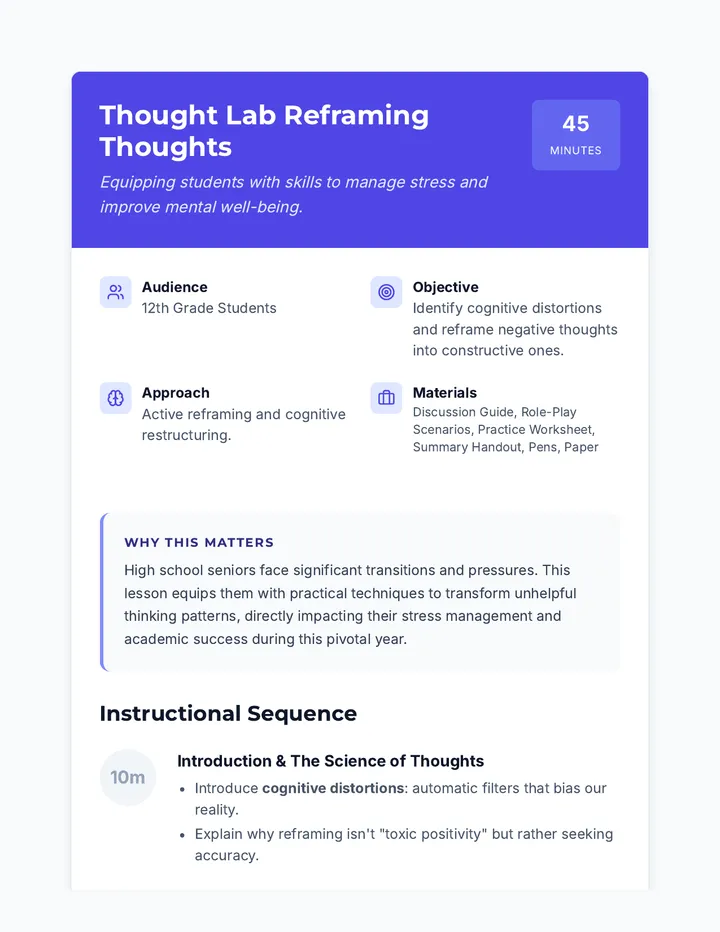
This lesson focuses on teaching students how to reframe negative thoughts caused by cognitive distortions. Through group discussions and role-playing activities, students will learn practical techniques to transform unhelpful thinking patterns into positive ones.
A small group stuttering therapy lesson focused on identifying, ranking, and discussing stressful speaking situations across everyday contexts. Students construct personal communication hierarchies and explore coping mindsets in a supportive peer environment.