Perspective-taking strategies to recognize and value diverse viewpoints across social settings. Builds empathy and conflict resolution skills by examining the impact of personal background and context on individual perceptions.
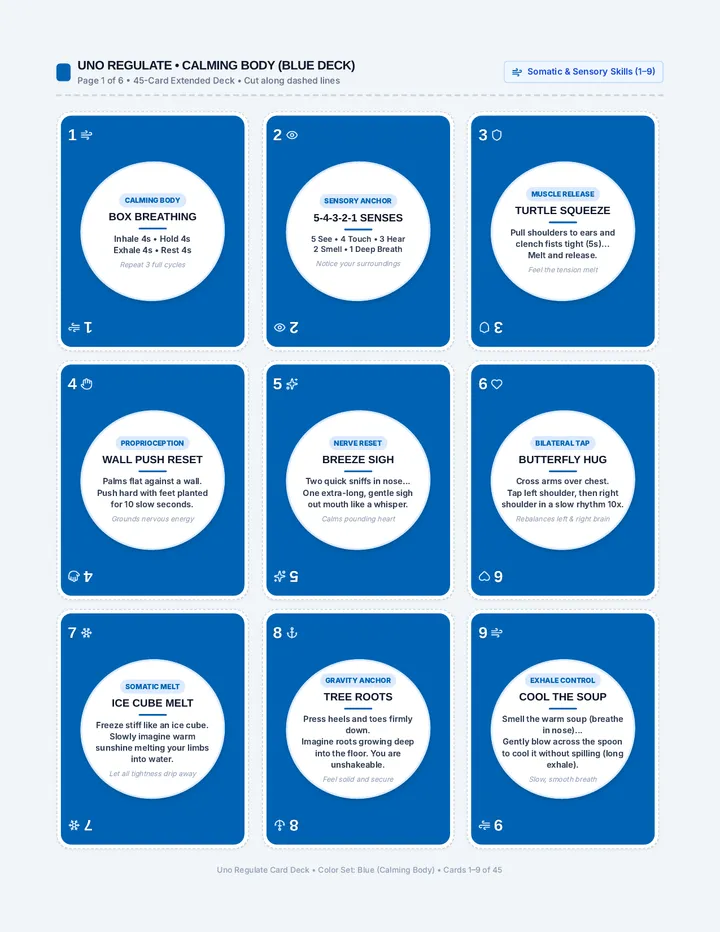
An expanded 6-page printable coping skills and self-regulation card deck styled after Uno, featuring 45 total cut-apart cards (complete 1–9 sets for all 4 color domains plus action and wild cards) and an in-depth gameplay and facilitation rulebook for classroom and small-group play.
A 20-card printable set of recess dilemma task cards covering gaga ball, soccer, tag, football, 4-square, girl drama, and social exclusion. Written at an accessible 3rd-grade reading level with white backgrounds, dashed cut lines, and without the talk-it-out section.
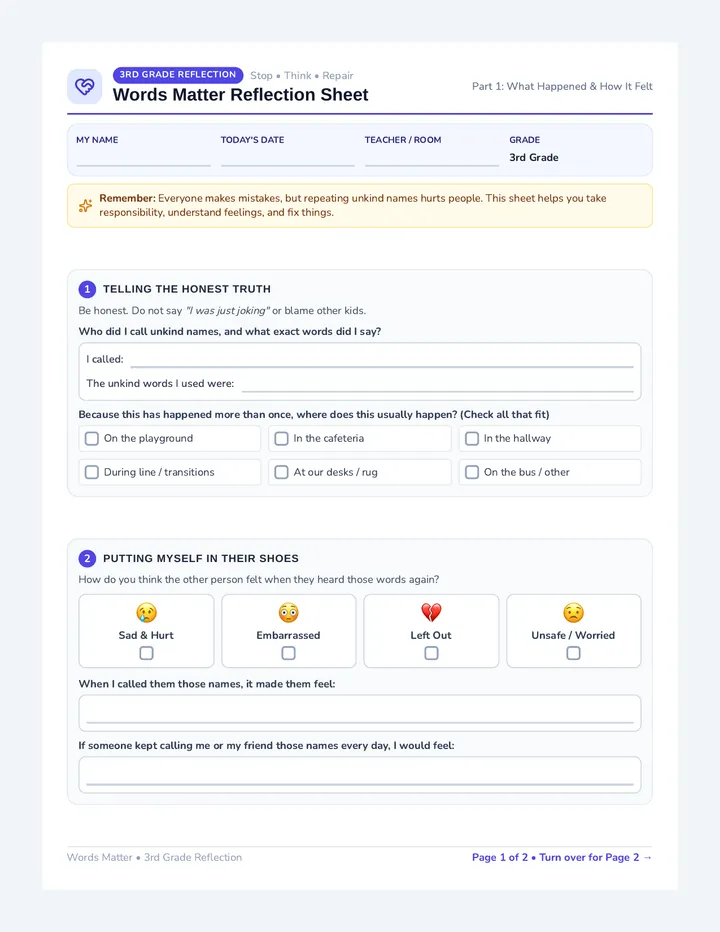
A 3rd-grade tailored restorative reflection sheet designed with accessible language, visual feeling checks, sentence starters, and guided repair steps for students who have engaged in repeated name-calling.
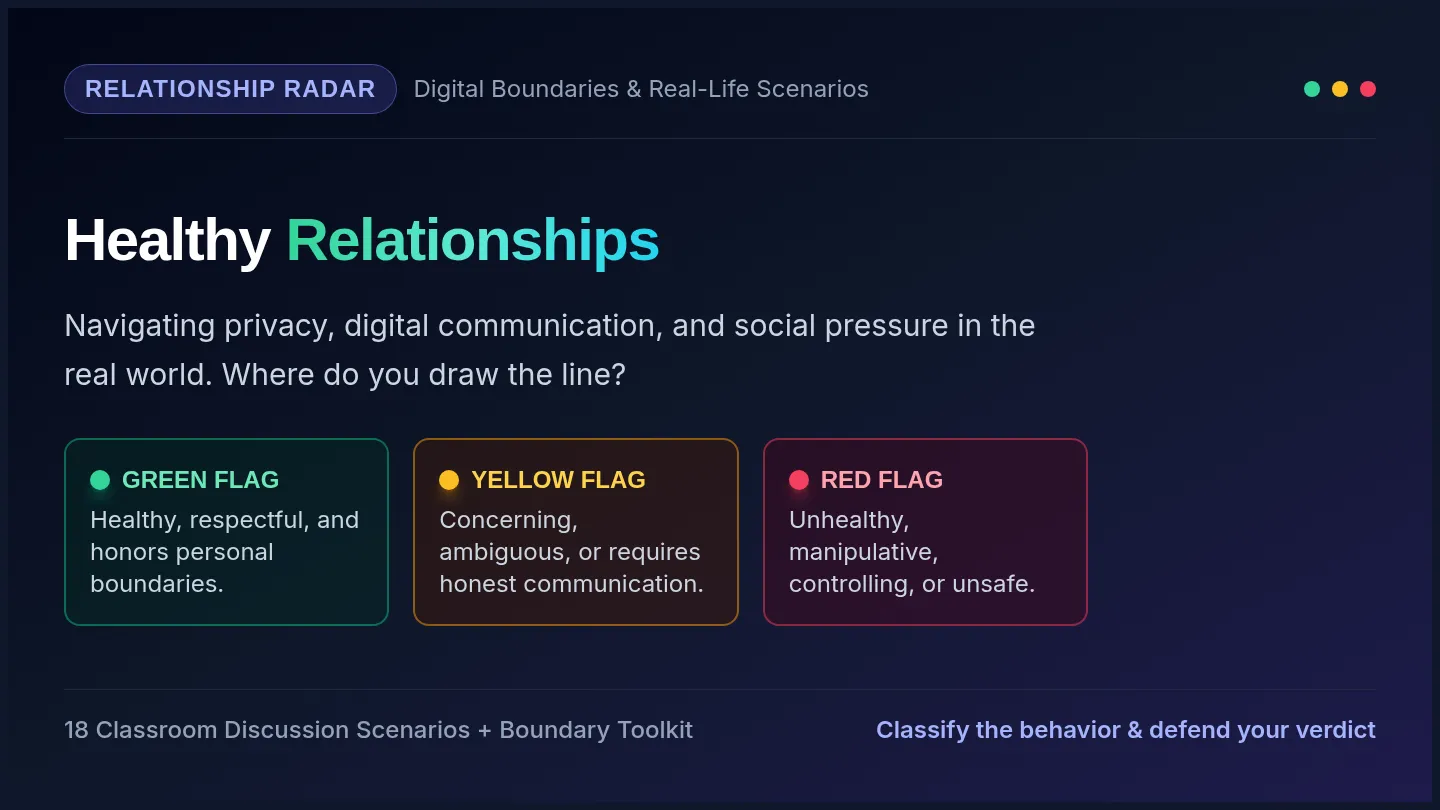
An interactive 20-slide presentation exploring 18 real-world relationship and digital boundary scenarios for students, complete with a dedicated Boundary Formula toolkit slide and a Green-Yellow-Red classification system.
A revised 12-slide Would You Rather game for 1st and 2nd graders with simplified, decodable text, early-reader friendly vocabulary, high-contrast visual cues, and a streamlined sentence starter to support low-pressure small group sharing.
A 3-page comprehensive 45-minute assignment for high school personal and social development. Features a 12-item self-assessment across communication, perspective-taking, and conflict resolution, deep self-analysis reflection prompts, a complete SMART goal instructional guide and worksheet, and an efficacy analysis comparing standard versus SMART goals with a success likelihood audit.
A 5-week individual lesson series for 8th-grade students with social-emotional disabilities, introducing core DBT modules: Mindfulness, Distress Tolerance, Emotion Regulation, Interpersonal Effectiveness, and Walking the Middle Path.
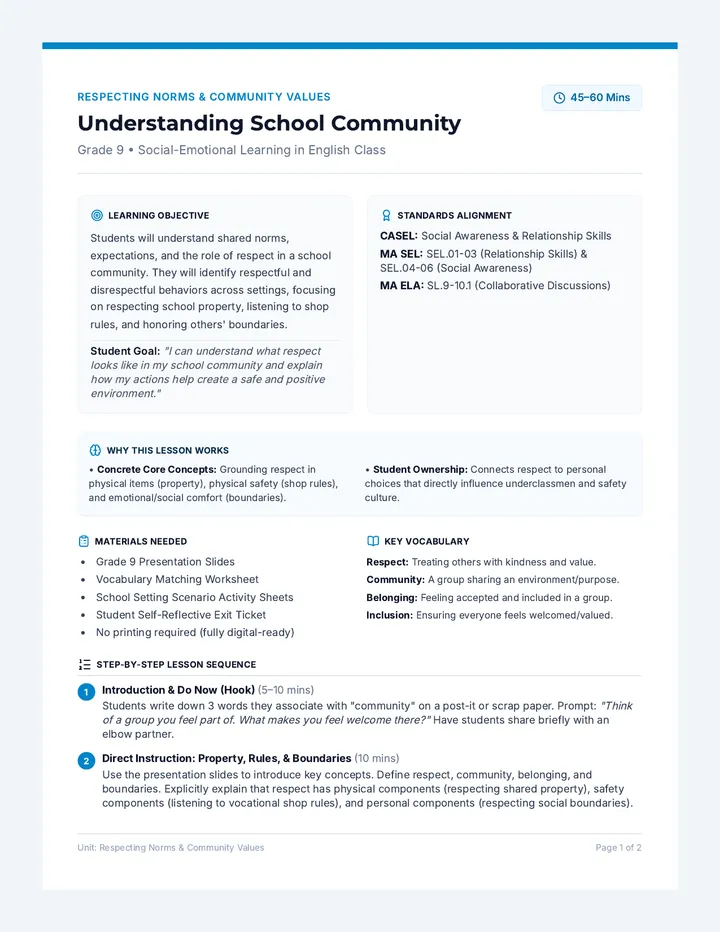
A comprehensive four-year scaffolded social-emotional learning unit for high schoolers (Grades 9-12) focused on building community, active communication, personal responsibility, and leadership around community norms and values.
A 10-session course for high school students exploring communication, boundaries, consent, and conflict resolution across romantic, platonic, and digital relationships.
A 6-week social-emotional learning program for 6th-grade girls focused on building healthy friendships, resolving conflicts, practicing empathy, and setting boundaries.
A 5-lesson unit where students become 'Friendship Detectives' to identify healthy and unhealthy relationship dynamics. Using case studies, sorting games, and creative projects, students learn to recognize green and red flags, distinguish between teasing and bullying, and resolve conflicts safely.
A 5-lesson sequence for 7th grade students focusing on restorative practices, the difference between intent and impact, crafting genuine apologies, and the long-term process of rebuilding trust after conflict.