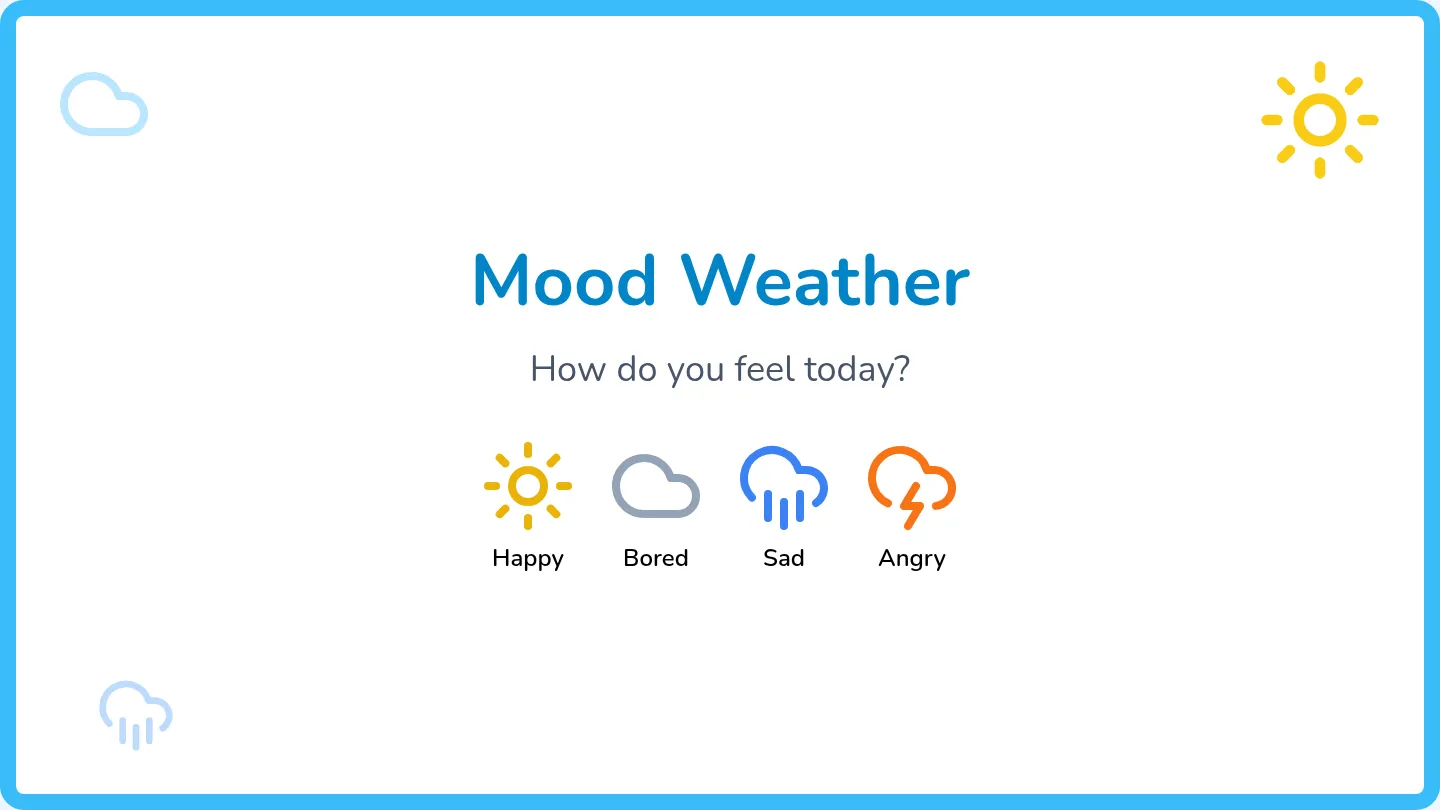
Identification of primary emotions through facial expressions, body language, and physical sensations. Builds foundational emotional literacy to help students accurately label their feelings.
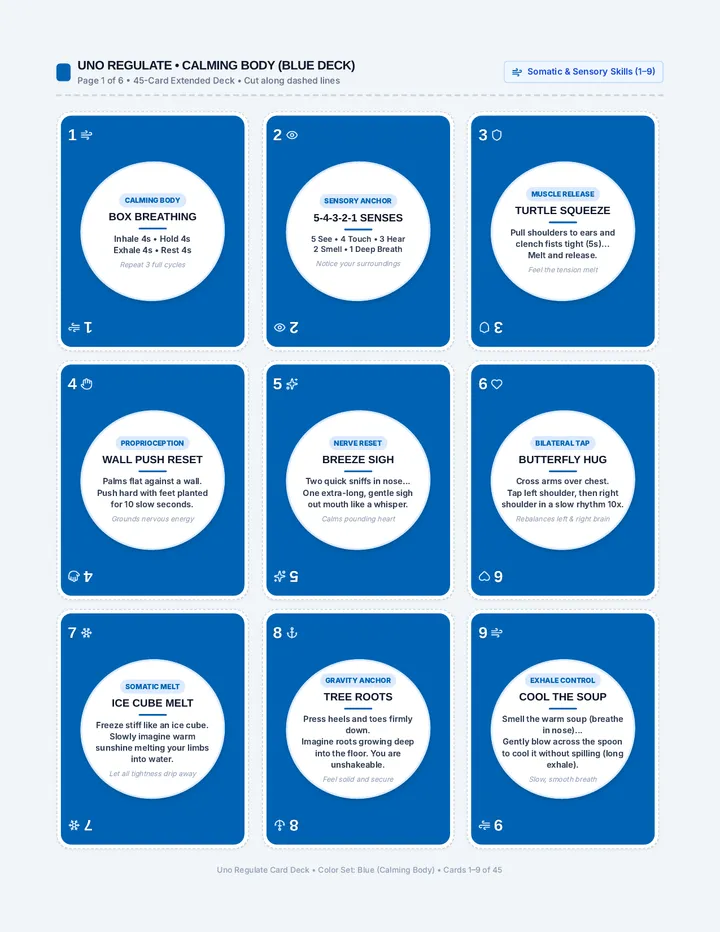
An expanded 6-page printable coping skills and self-regulation card deck styled after Uno, featuring 45 total cut-apart cards (complete 1–9 sets for all 4 color domains plus action and wild cards) and an in-depth gameplay and facilitation rulebook for classroom and small-group play.
An ultra-accessible, low-reading-demand student counseling worksheet tailored for learners with disabilities, featuring visual icon-supported checkboxes, short direct prompts, large text, and flexible draw-or-write response areas.
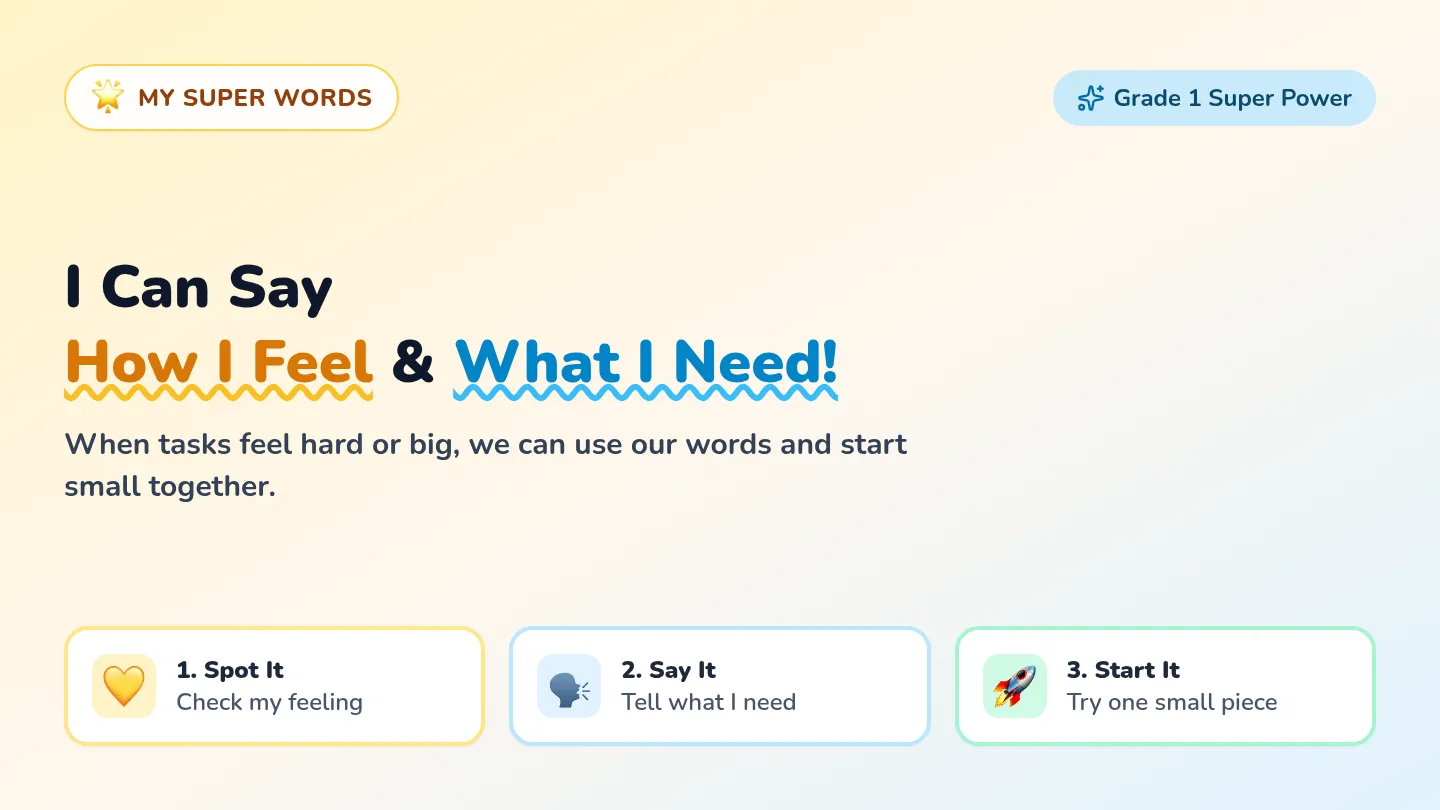
A vibrant 9-slide visual presentation designed for 1st-grade ELL students to identify emotions, express needs using supportive sentence frames, and overcome task avoidance with actionable starting strategies.
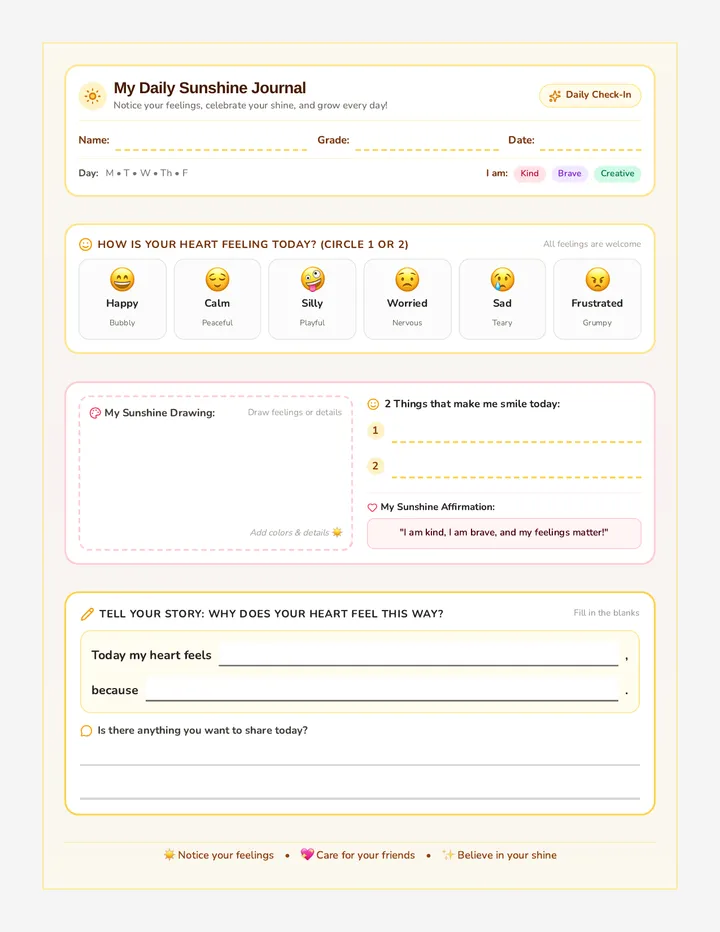
A single-page printable daily check-in journal worksheet for elementary students. It features a daily emotion selector, self-reflection drawing space, two smile spark lines, an enlarged fill-in-the-blank sentence starter, and space to share anything on their mind.
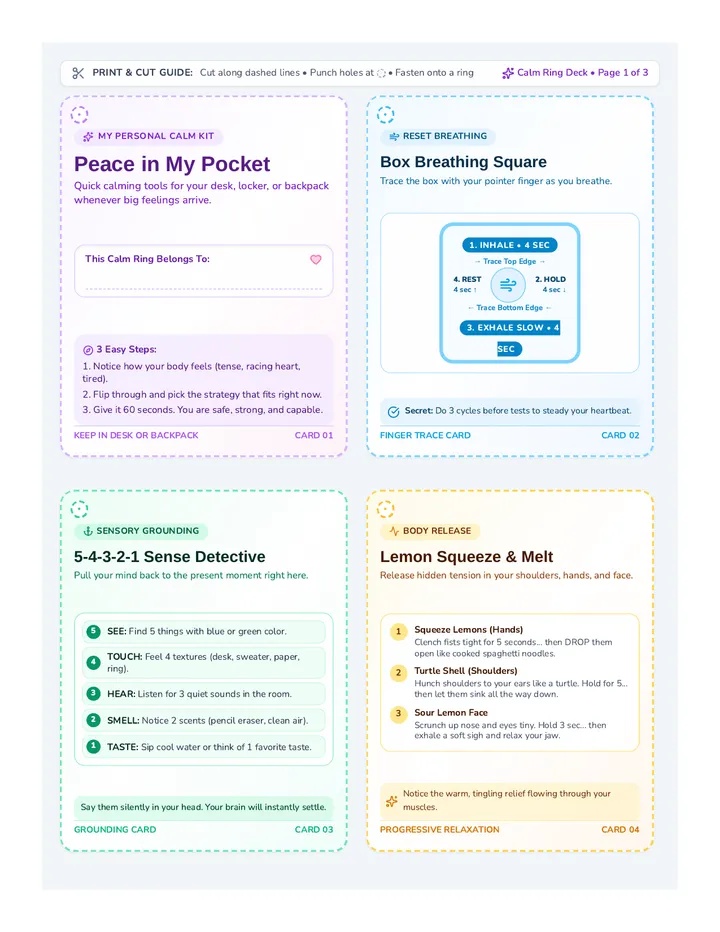
A 20-card printable ring deck featuring evidence-based calming strategies, sensory grounding, muscle release, and boy-friendly action resets (Dino Stomp, Ninja Stealth, Pit Stop, Wall Push, Gamer Reboot) tailored for 2nd grade. Includes hole-punch marks and cut guides for easy assembly into a pocket or backpack flip ring.
A 10-slide visual instructional presentation that guides students through an emotional regulation routine, helping them recognize body signals, accurately name emotions across four zones, and practice calming strategies like box breathing, sensory grounding, and muscle release, featuring an elementary-friendly classroom scenario.
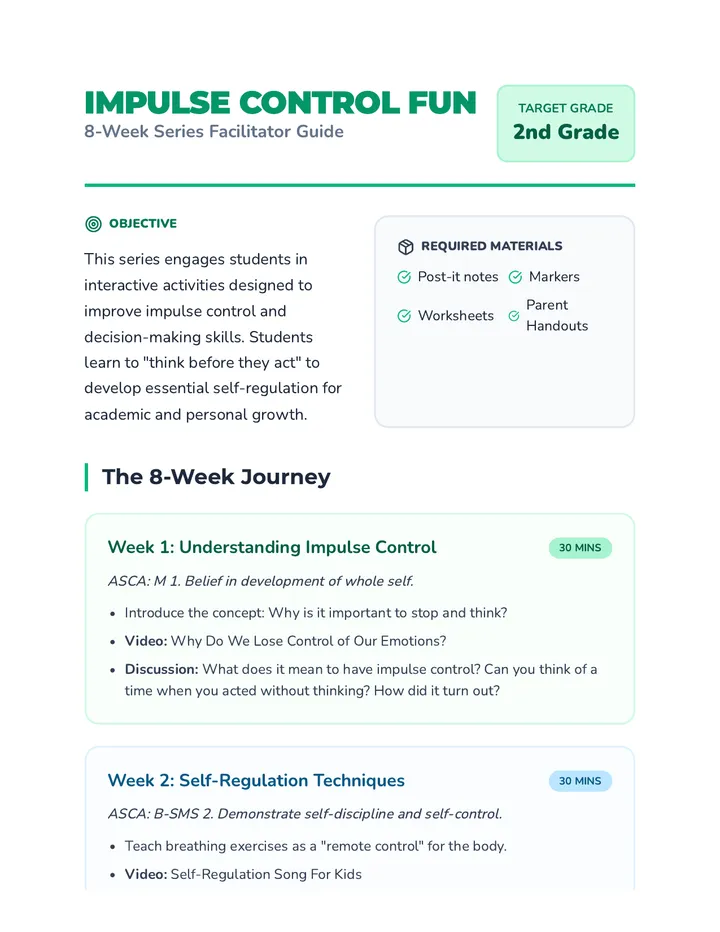
An 8-week series for 2nd graders to develop impulse control, self-regulation, and decision-making skills through interactive activities and reflection.
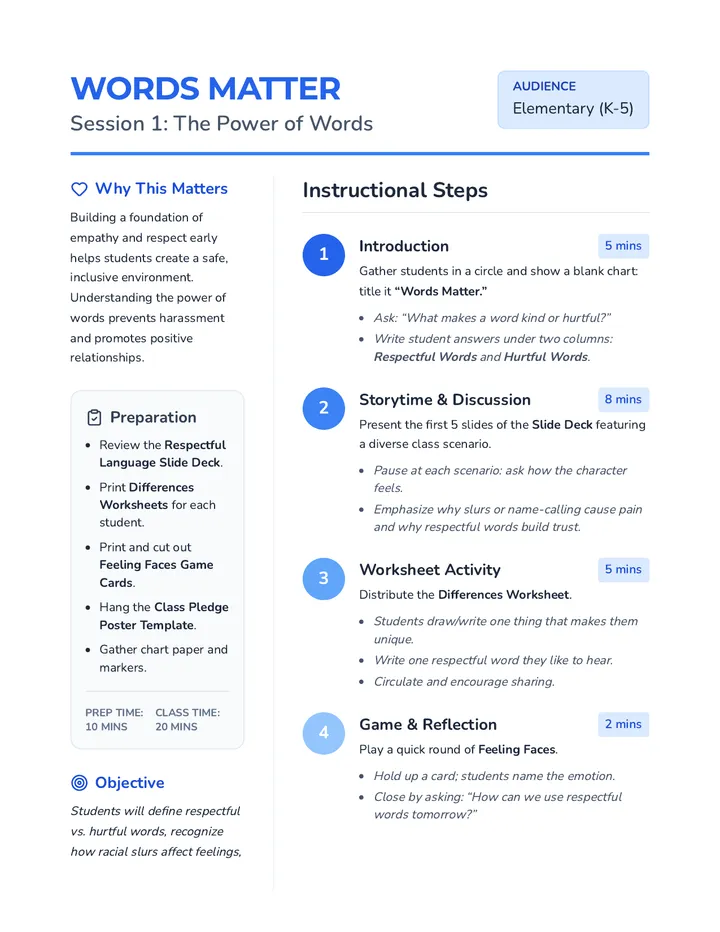
A 4-session Tier 1 sequence for K-5 students focused on racial slur prevention, respectful language, and celebrating diversity. Students learn empathy through role-play, sharing traditions, and creating a collective class pledge.
A two-session individual counseling series for 2nd-grade students to build emotional awareness by identifying physical body signals tied to dysregulation.
A 6-session small-group course for 2nd grade boys designed to build self-control, manage impulsivity, and handle frustration using the 'Stop, Think, Shine' framework.
A 6-week Tier 3 intervention sequence designed for a student with an IEP, focusing on identifying triggers, developing coping strategies, and practicing self-regulation to manage anger and anxiety.
A Kindergarten sequence focused on teaching emotional regulation through positive actions. Students learn to use activities like physical movement, deep breathing, and creative expression to 'switch the channel' from negative to positive emotions, building a toolkit of coping strategies.
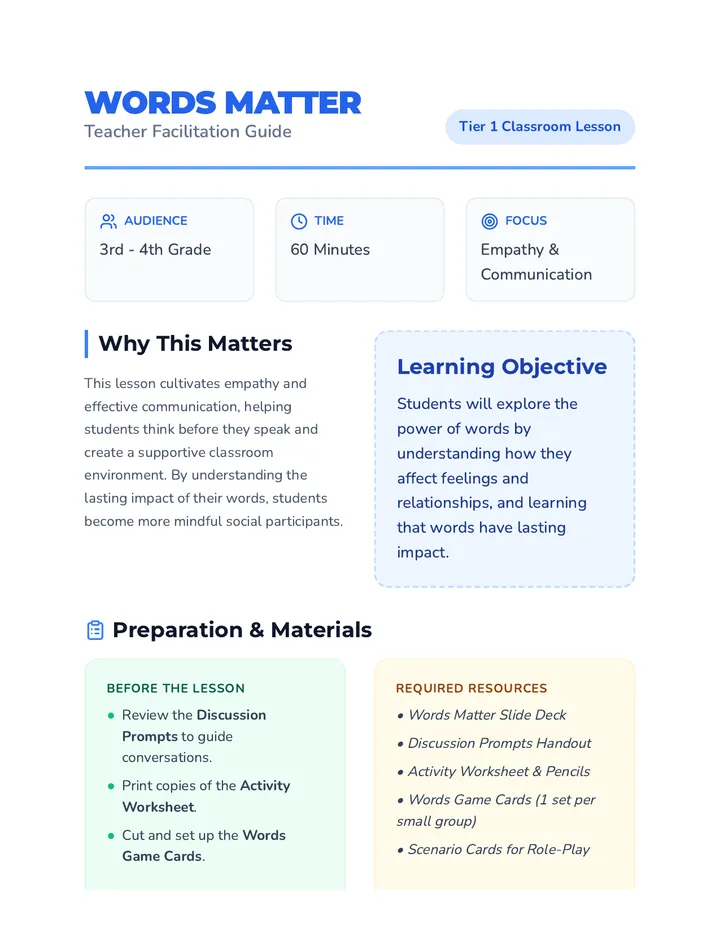
An interactive lesson for 3rd and 4th graders exploring how words impact emotions and relationships. Students learn that words have a lasting effect through discussion, role-play, and hands-on activities.
A 30-minute small group lesson for Kindergarten students to learn impulse control through the 'Stop, Think, Choose' strategy, featuring interactive voting and discussion.
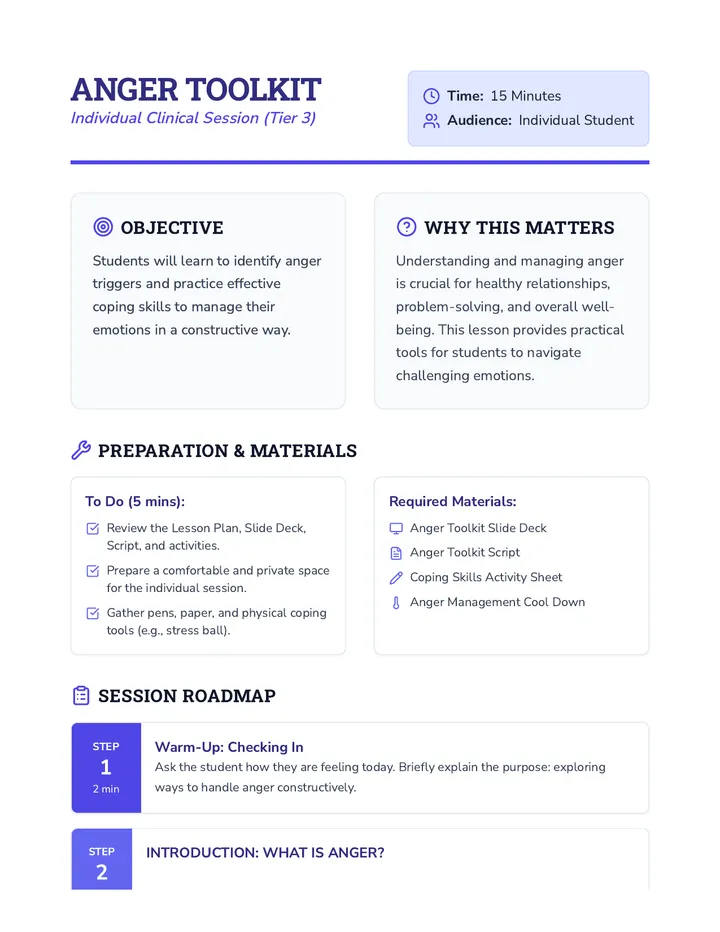
A 15-minute Tier 3 clinical lesson designed to equip individual students with practical anger coping strategies, trigger identification, and emotional regulation tools.
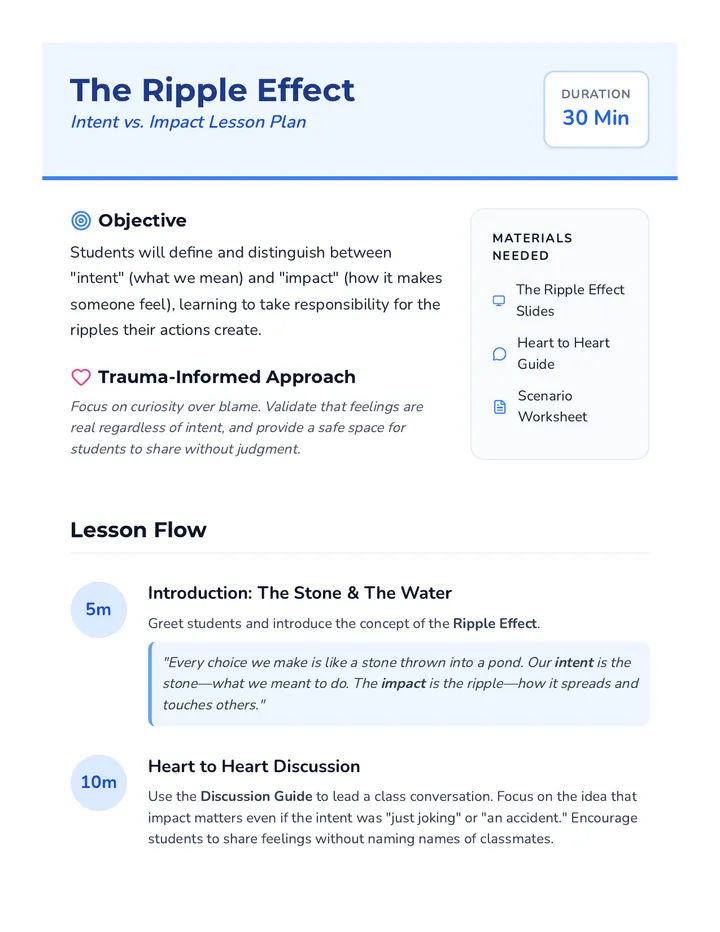
Students explore the difference between what we mean (intent) and how others feel (impact) through the 'Ripple Effect' metaphor, developing empathy and social awareness.
This lesson helps 4th-grade students understand and practice self-regulation when they feel like interrupting or speaking out impulsively. It equips them with strategies to control their impulses, fostering a more respectful and focused classroom environment.
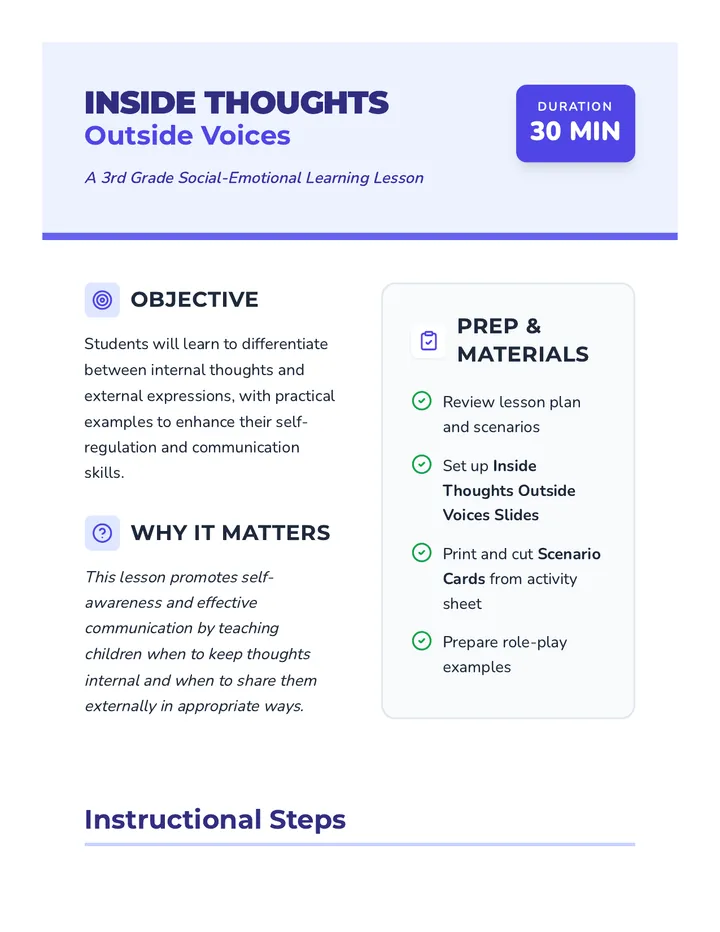
This lesson helps 3rd-grade students understand the difference between inside thoughts and outside voices, promoting self-awareness and social skills through interactive discussion and role-play.