Behavioral and situational questions commonly encountered in job interviews. Targets effective response strategies for inquiries regarding strengths, weaknesses, and professional challenges.
A comprehensive 10-session Tier 1 life-skills curriculum for transition-age students (18–22) focusing on independence, self-advocacy, and career readiness.
A comprehensive sequence designed for 9th-grade transition students to master the job acquisition cycle. Students progress from identifying soft skills to mastering resumes, applications, and interviews, with a heavy focus on the social 'hidden curriculum' of the workplace.
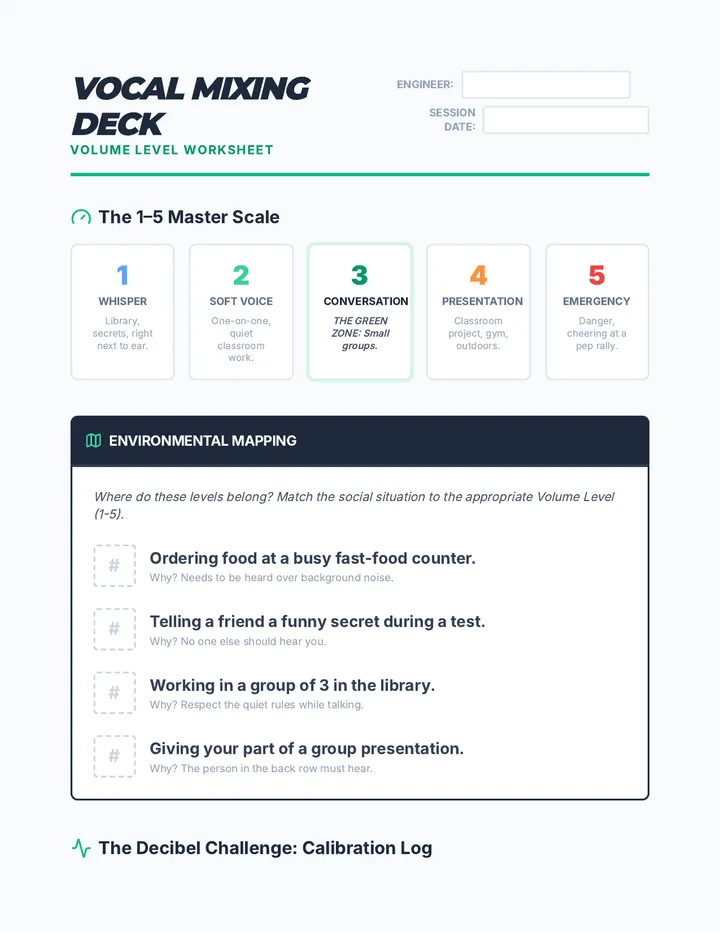
A 5-lesson sequence for 9th-grade students focusing on social communication through the lens of volume and tone regulation. Students will move from basic calibration of their 'internal volume knob' to high-stakes social and vocational simulations requiring rapid adaptation.
A comprehensive unit on professional communication, interview skills, and workplace etiquette. Students master non-verbal cues, the STAR response method, active listening, and professional follow-ups to prepare for classroom job simulations.
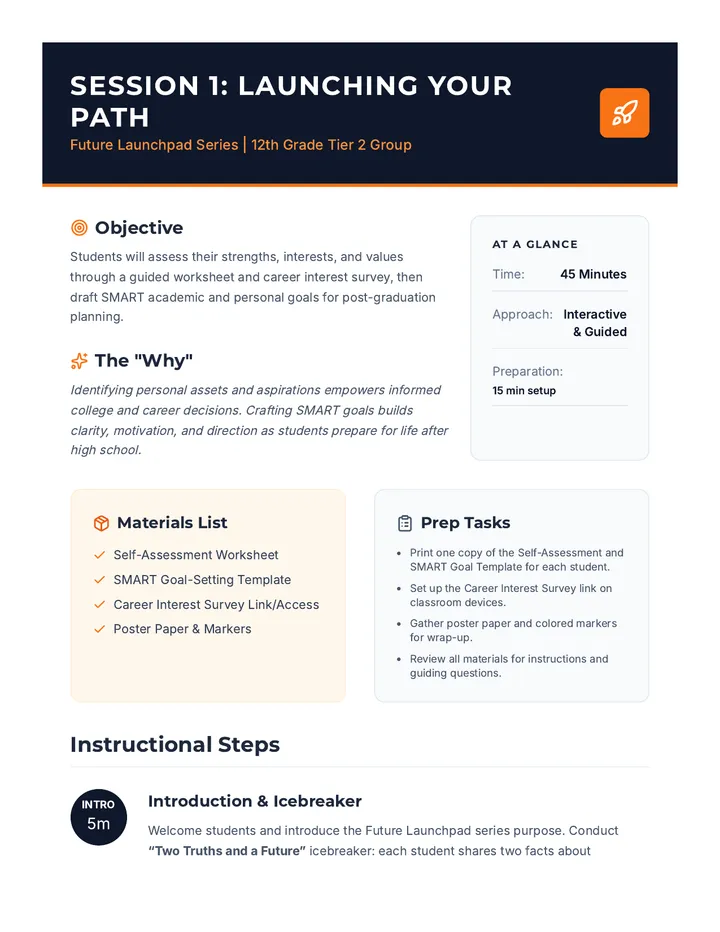
A 6-session Tier 2 group series for 12th-grade students to explore college and career pathways, develop application skills, and create a personalized post-graduation plan.
This curriculum equips transition-age learners (18–22) with essential life and work skills needed for independence and community engagement, covering daily living, financial literacy, job readiness, and more.
A workshop-style sequence for 12th graders to master the professional application process, covering resumes, personal statements, digital portfolios, networking, and interviewing.
This sequence treats interview preparation as a case study in effective communication and rhetoric. Students evaluate sample interviews, critique 'bad' STAR responses, and refine their own content based on high-level standards to create a 'Story Portfolio' for future applications.
A comprehensive workshop-style unit where 7th-grade students navigate the job-seeking process, from identifying transferable skills and drafting their first resumes to mastering professional etiquette and succeeding in mock interviews. Students will develop tangible professional documents and interpersonal communication skills critical for workforce entry.
A career-focused memory strategy sequence for high school seniors, teaching mnemonic devices for social networking, workplace procedures, and numerical data to boost professional reliability.
A comprehensive sequence designed to transform 9th-grade students from passive applicants into strategic partners by mastering employer research, job description analysis, and high-impact questioning techniques.
This inquiry-based sequence focuses on self-assessment and continuous improvement in the interview process. Students will develop habits for immediate post-interview reflection, analyze performance gaps, learn to process feedback with a growth mindset, and create actionable plans for professional growth.
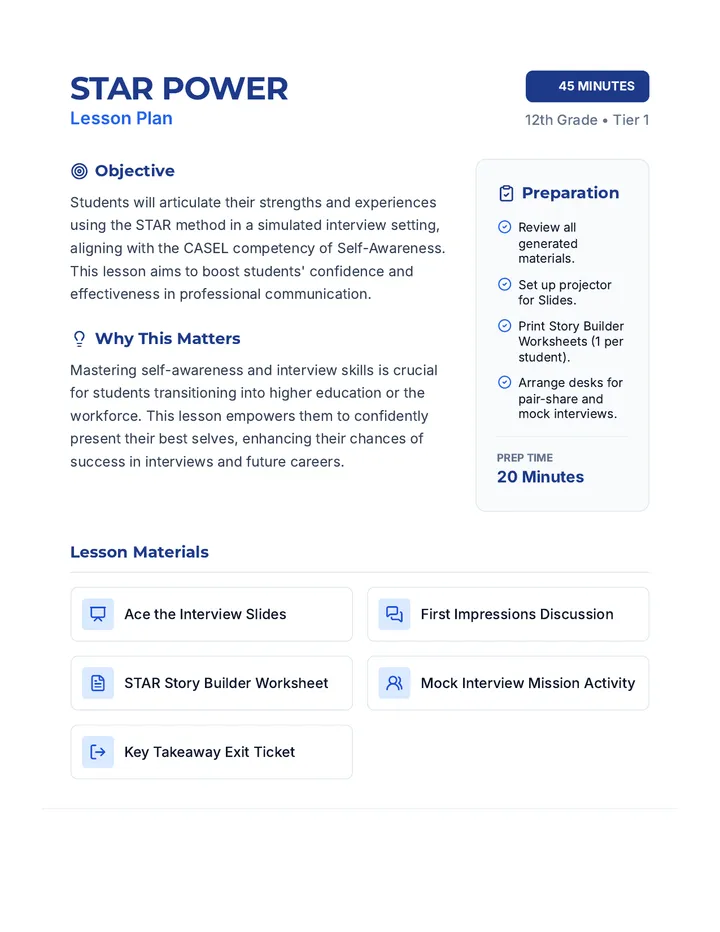
A 45-minute lesson for 12th-grade students to master the STAR method (Situation, Task, Action, Result) for job interviews, fostering self-awareness and professional communication skills.
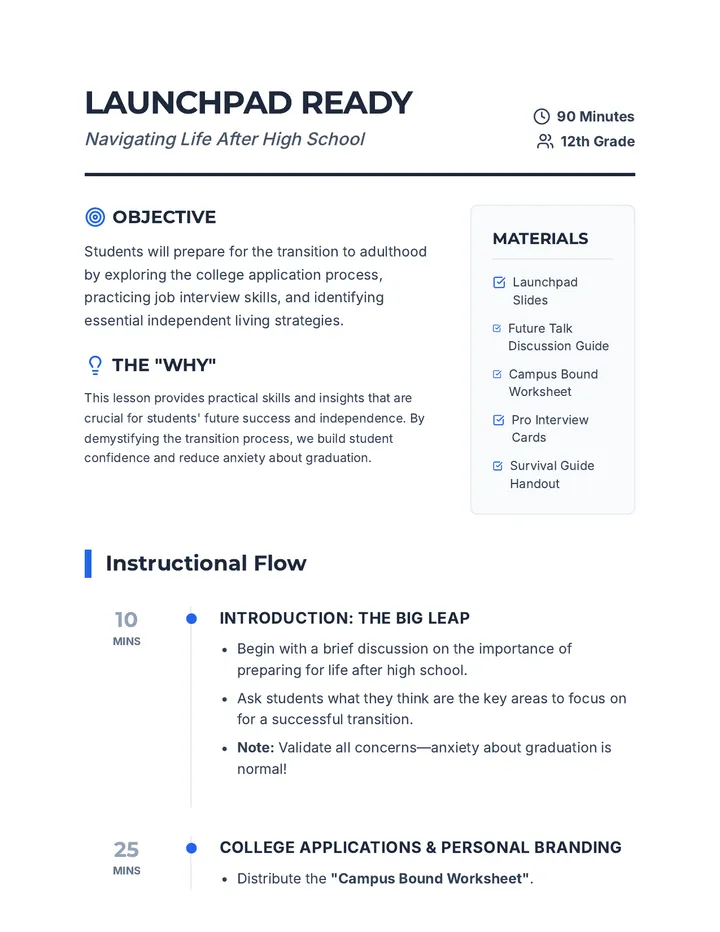
This lesson helps 12th-grade students prepare for the transition to adulthood by exploring college applications, job interviews, and independent living skills. It aims to equip students with the knowledge and confidence to succeed after graduation.
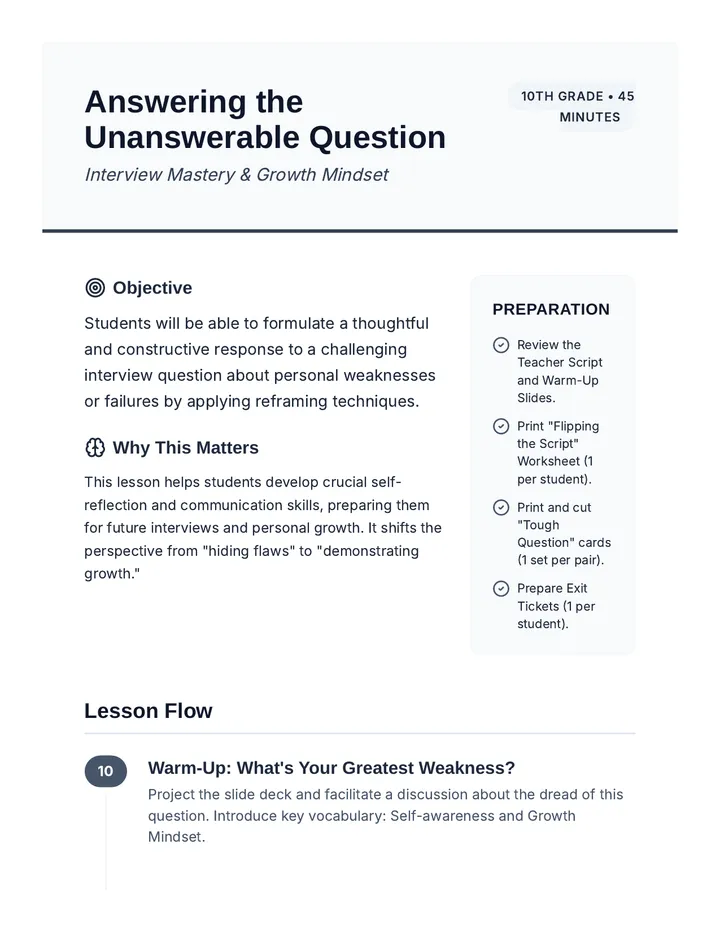
This lesson equips 10th-grade students with strategies to confidently and constructively answer challenging interview questions about personal weaknesses or failures by focusing on a growth mindset.
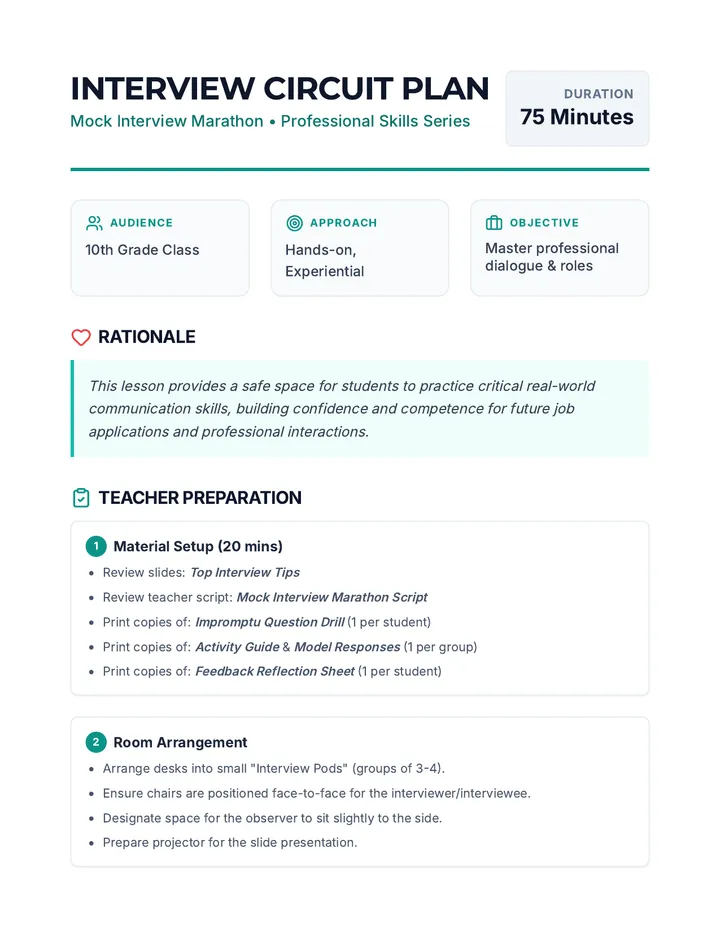
A high-energy, hands-on 75-minute session where 10th-grade students master professional dialogue through a structured mock interview circuit. Students rotate through roles as interviewer, interviewee, and observer to build confidence and employability skills.
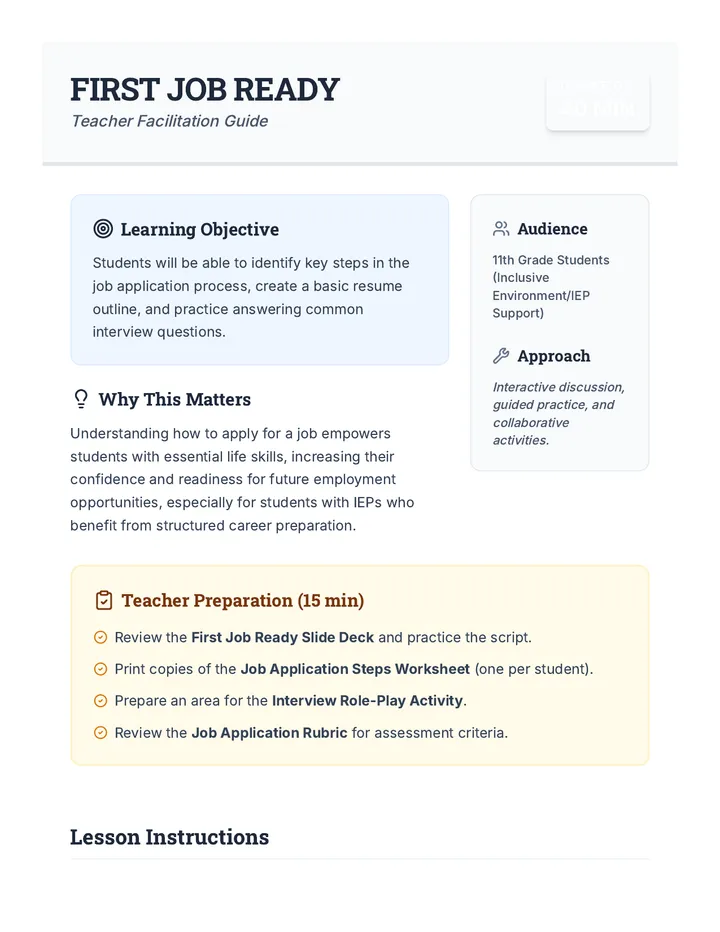
This lesson helps 11th-grade students, including those with IEPs, understand the essential steps of applying for their first job through resume building, job searching, and interview practice.
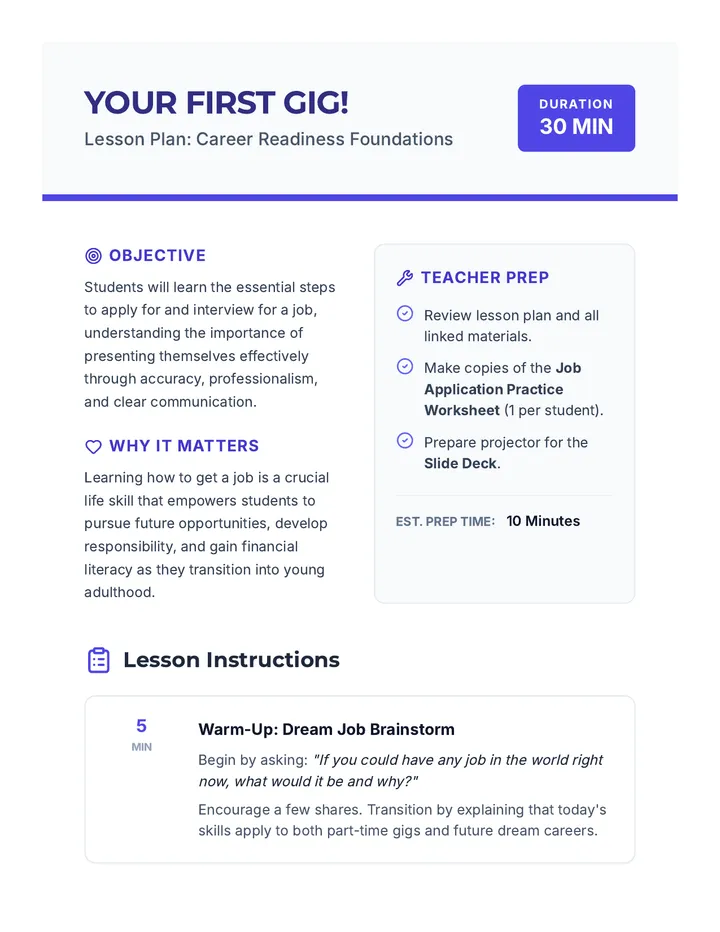
A 30-minute lesson for 8th graders on the essentials of job searching, covering application completion and interview techniques to prepare them for their first part-time jobs.
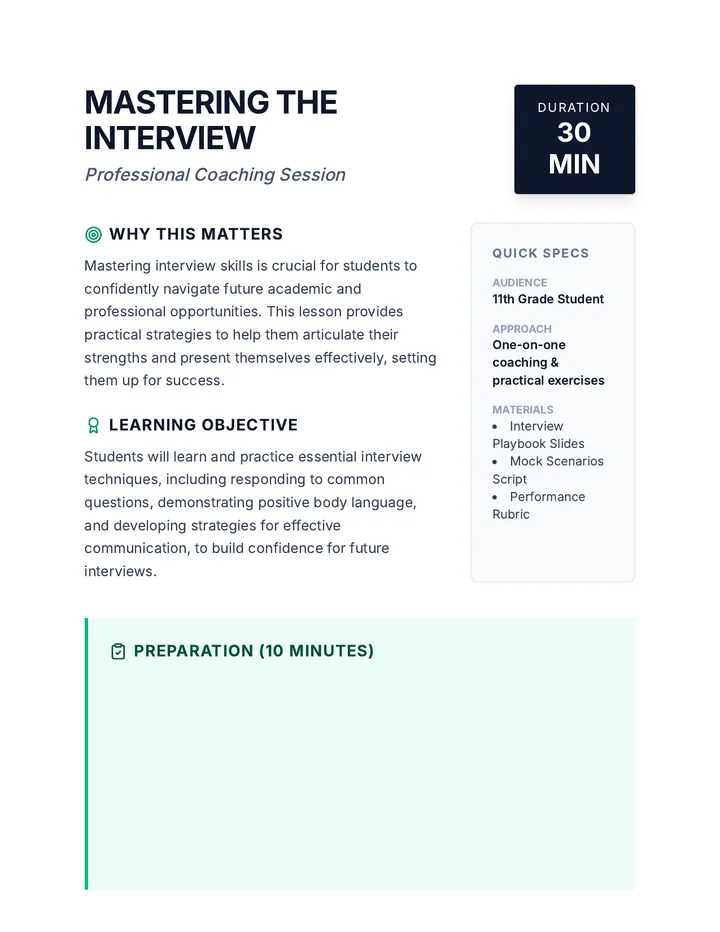
This one-on-one coaching session for 11th graders focuses on mastering interview techniques, including first impressions, the STAR method, and body language. Students will practice through mock scenarios to build the confidence needed for college and career opportunities.
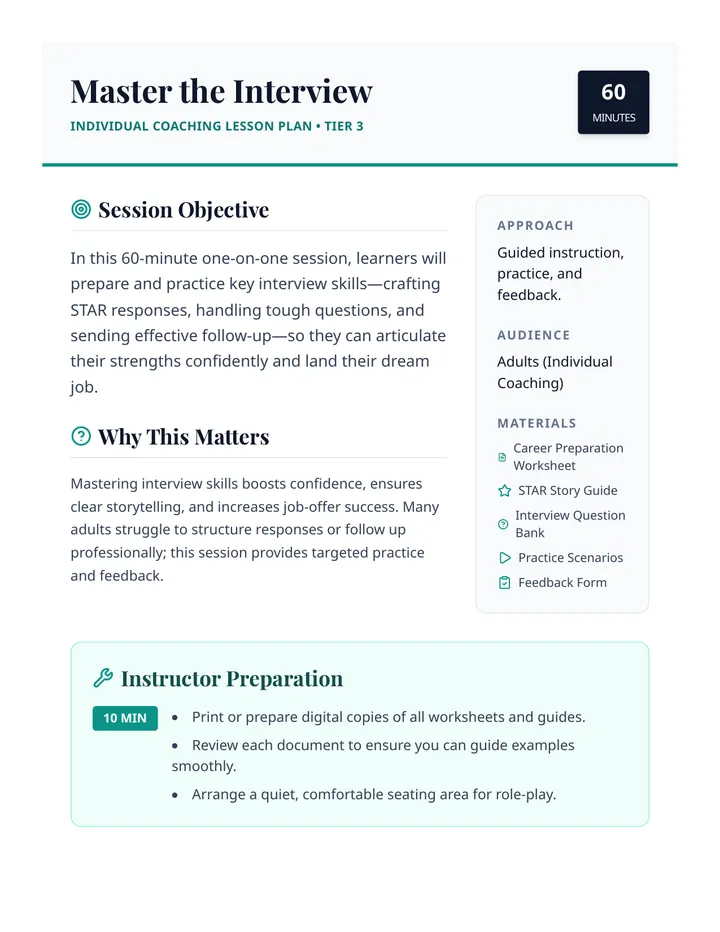
A 60-minute individual coaching session for adults focusing on interview preparation, the STAR method, handling behavioral questions, and professional follow-up techniques.
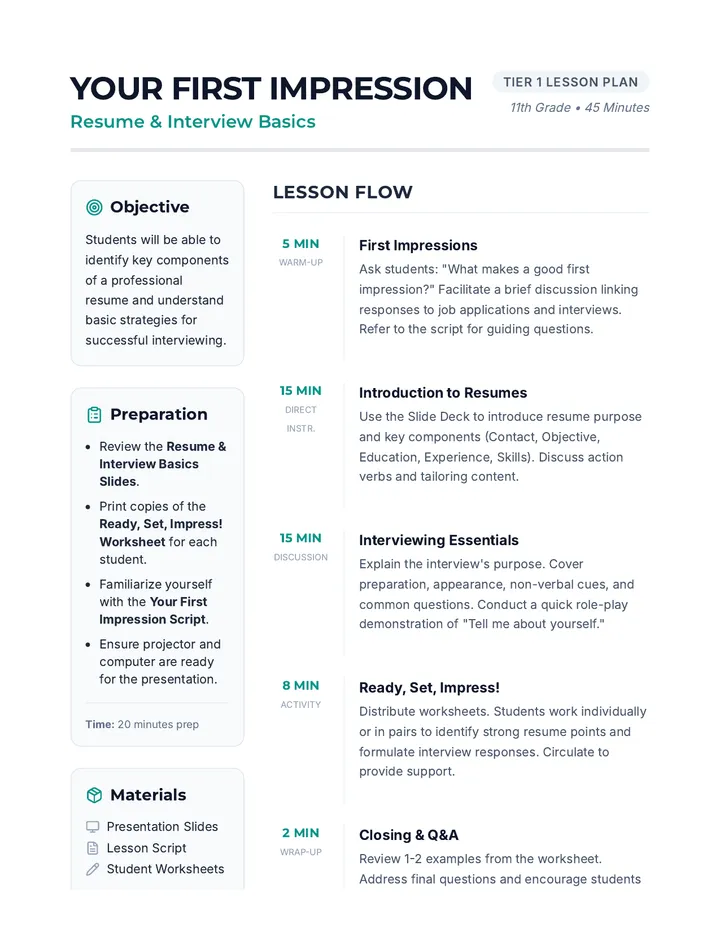
This 45-minute lesson introduces 11th-grade students to the fundamental skills of resume building and effective interviewing, empowering them to present their best selves for jobs and college admissions.
A 2-hour individualized lesson designed to empower adult males with disabilities to effectively advocate for themselves in the job search and workplace, fostering confidence and independence.
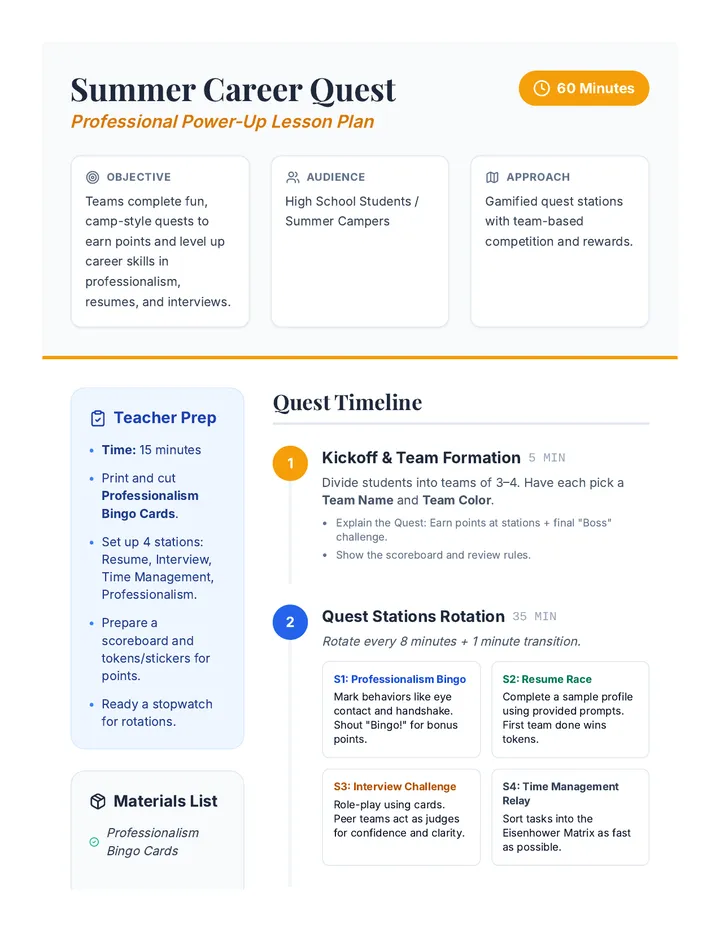
A dynamic 1-hour summer camp session where teens embark on a Career Quest to unlock professionalism skills, craft a resume, tackle mock interviews, and conquer time management challenges through interactive games.
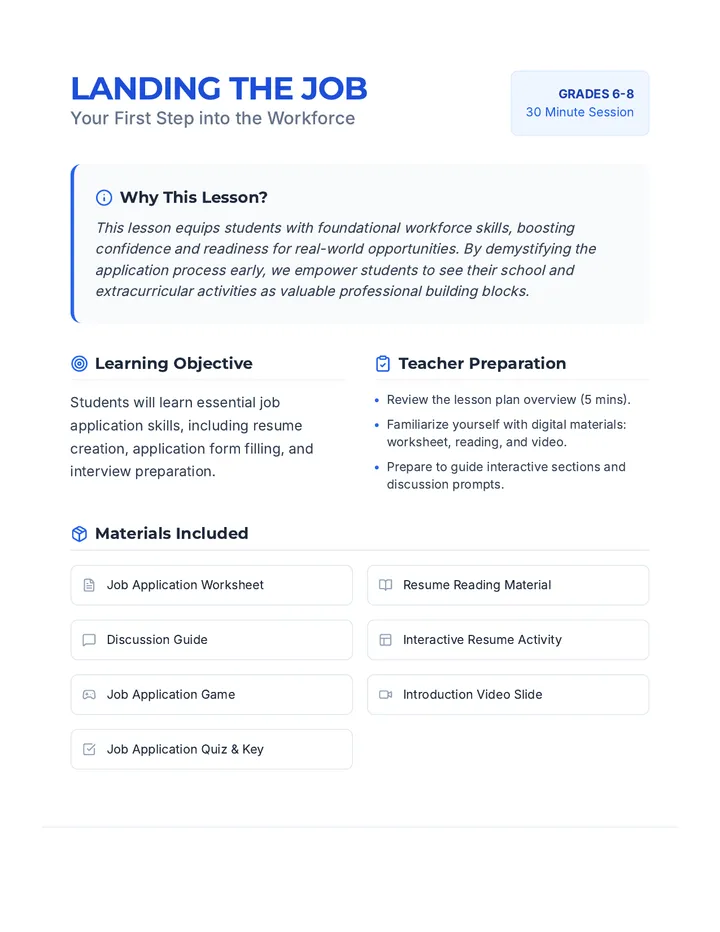
A 30-minute introductory lesson for middle schoolers on the essential skills for entering the workforce, covering resumes, job applications, and interviews.