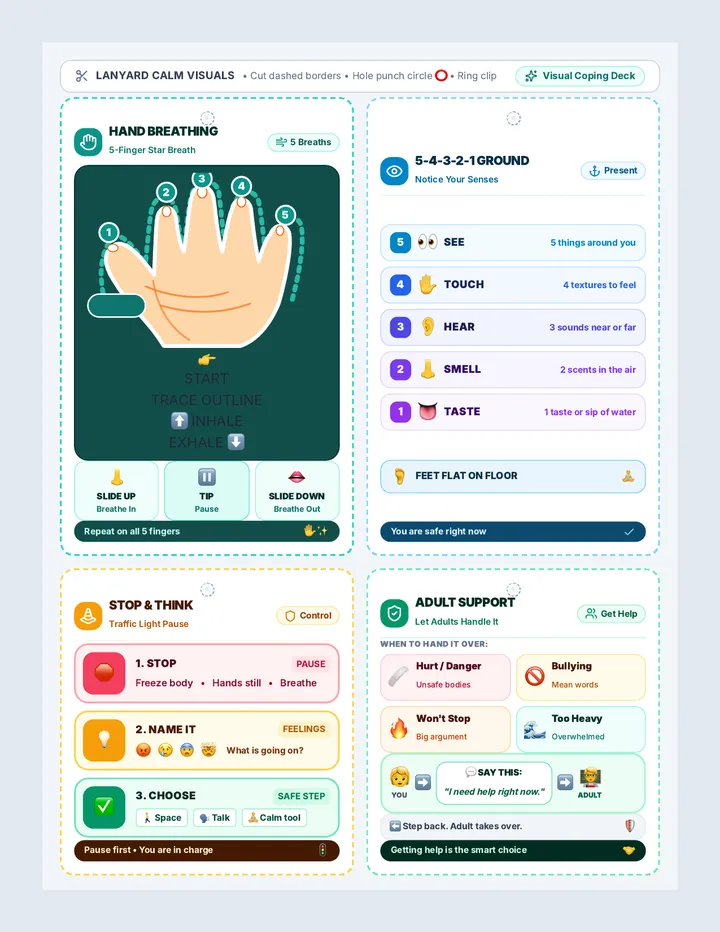
Behavioral red flags, mental health warning signs, and physical indicators requiring immediate professional intervention. Establishes criteria for accessing emergency services, hotlines, and school-based support systems.
A unified professional reference poster for healthcare, legal, accounting, and pastoral settings detailing the debt-depression-suicide link, updated to feature DebtorsAnonymous.org as the exclusive go-to resource for recovery, mutual aid, and despair alleviation.
A simplified, single-page quick-reference guide for teachers supporting a student with a psychotic disorder. Features the core golden rule, key warning signs, simple DOs and DON'Ts, two practical verbal scripts, and top three classroom accommodations.
A 6-week small group guidance program for Pre-K, Kindergarten, and 1st-grade students to manage school-related anxiety, build confidence, and develop emotional regulation skills through a superhero-themed curriculum.
A six-lesson series for K-3 students with communication IEPs, specifically those who stutter. The sequence focuses on defining bullying, identifying feelings, building self-advocacy through brave words and I-statements, and fostering empathy to become upstanders.
A comprehensive 6-session grief support sequence designed for school counselors and small groups to help students understand grief, build coping tools, process complex feelings, map support networks, prepare for milestones, and honor lasting memories.
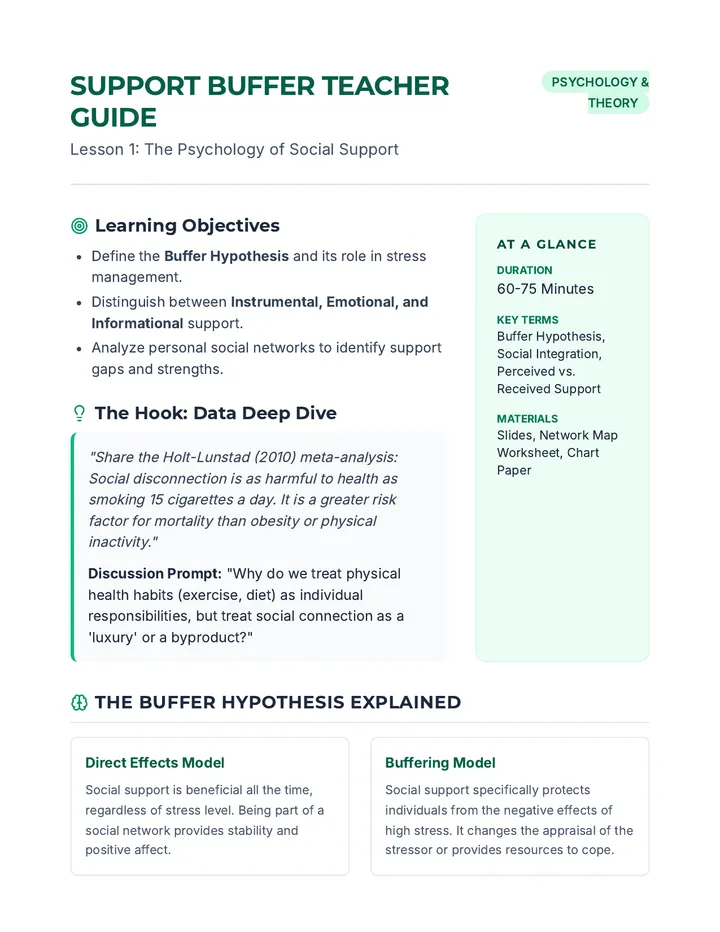
A comprehensive sequence for undergraduate students exploring the social psychology of stress and the practical skills needed to build resilient peer support networks. Students move from theoretical understanding to practical facilitation and community planning.
A graduate-level training sequence on facilitating peer support systems to mitigate stress and anxiety. Students learn the science of social support, micro-skills for active listening, boundary setting to prevent burnout, and group facilitation techniques to create sustainable communities of care.
A 10-session individual Tier 3 support program for a 7th grader with a seizure history, focusing on identifying stressors and building evidence-based coping resilience.
This sequence equips 9th-grade students to recognize signs of emotional distress and suicidal ideation using a safety-first framework. Students progress from debunking myths to identifying warning signs, understanding situational context, practicing the ACT (Acknowledge, Care, Tell) model, and mapping out support resources.
A comprehensive project-based unit where 12th-grade students master the principles of trauma-informed care. Students progress from theoretical understanding to the practical application of designing and presenting clinical intervention strategies for complex trauma cases.
A practical, workshop-based sequence for 11th graders to learn and master the TIPP physiological regulation skills. Students move from understanding the biology of stress to demonstrating proficiency in Temperature, Intense Exercise, Paced Breathing, and Paired Muscle Relaxation through simulations and hands-on practice.
A comprehensive graduate-level sequence focused on the neurobiological and clinical foundations of trauma narrative work, moving from theory to practical assessment and preparation techniques.
This sequence helps 8th-grade students distinguish between temporary sadness and clinical depression by analyzing behavioral, physical, and emotional indicators. It culminates in learning the ACT (Acknowledge, Care, Tell) strategy for seeking help from trusted adults.
A 5-lesson sequence for 7th graders to master TIPP (Temperature, Intense Exercise, Paced Breathing, Paired Muscle Relaxation) skills through relatable case studies involving academic, social, and home-based stressors. Students move from identifying crisis levels to prescribing specific physiological interventions for themselves and others.
The Social Work Coaching Framework (2026-2027) outlines the district's tiered professional support model, detailing biweekly, monthly, bimonthly, and quarterly clinical sessions and administrative requirements.
A compassionate lesson for high school students to understand the non-linear stages of grief and develop healthy coping mechanisms for navigating loss.
A 45-minute lesson for 11th graders on recognizing peer crisis warning signs and using the Notice–Name–Navigate framework to connect friends to support safely while maintaining self-care boundaries.
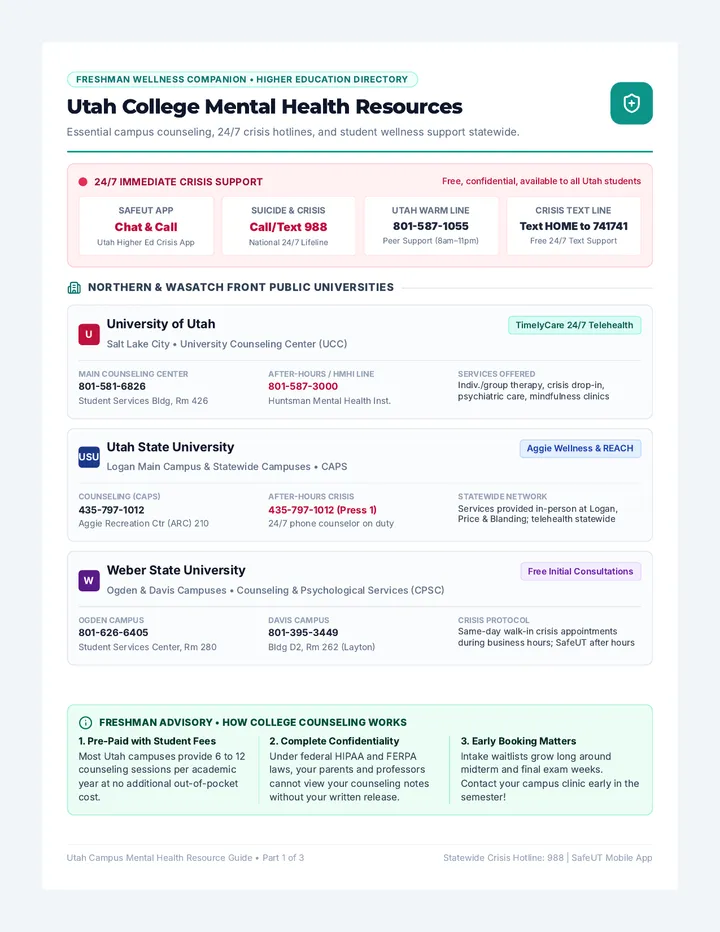
This 45-minute lesson for 12th-grade students helps them identify and utilize safety resources in postsecondary settings and develop effective advocacy skills. Students will gain practical tools for navigating new environments safely and confidently.
A 45-minute lesson for 7th graders to distinguish between trust, confidentiality, and gossip. Students use a decision tree to navigate social scenarios and practice assertive communication to maintain healthy peer environments.
A foundational Tier 1 lesson for 3rd-4th graders focused on emotional awareness, identifying trusted adults, and practicing help-seeking behaviors to foster a safe classroom environment.
Students will engage in simplified role-playing scenarios to recognize different types of bullying and understand its impact. They will also discuss simple ways to prevent and respond to bullying situations. This lesson is important as it helps young students identify bullying behaviors and encourages them to be kind and supportive to their peers.
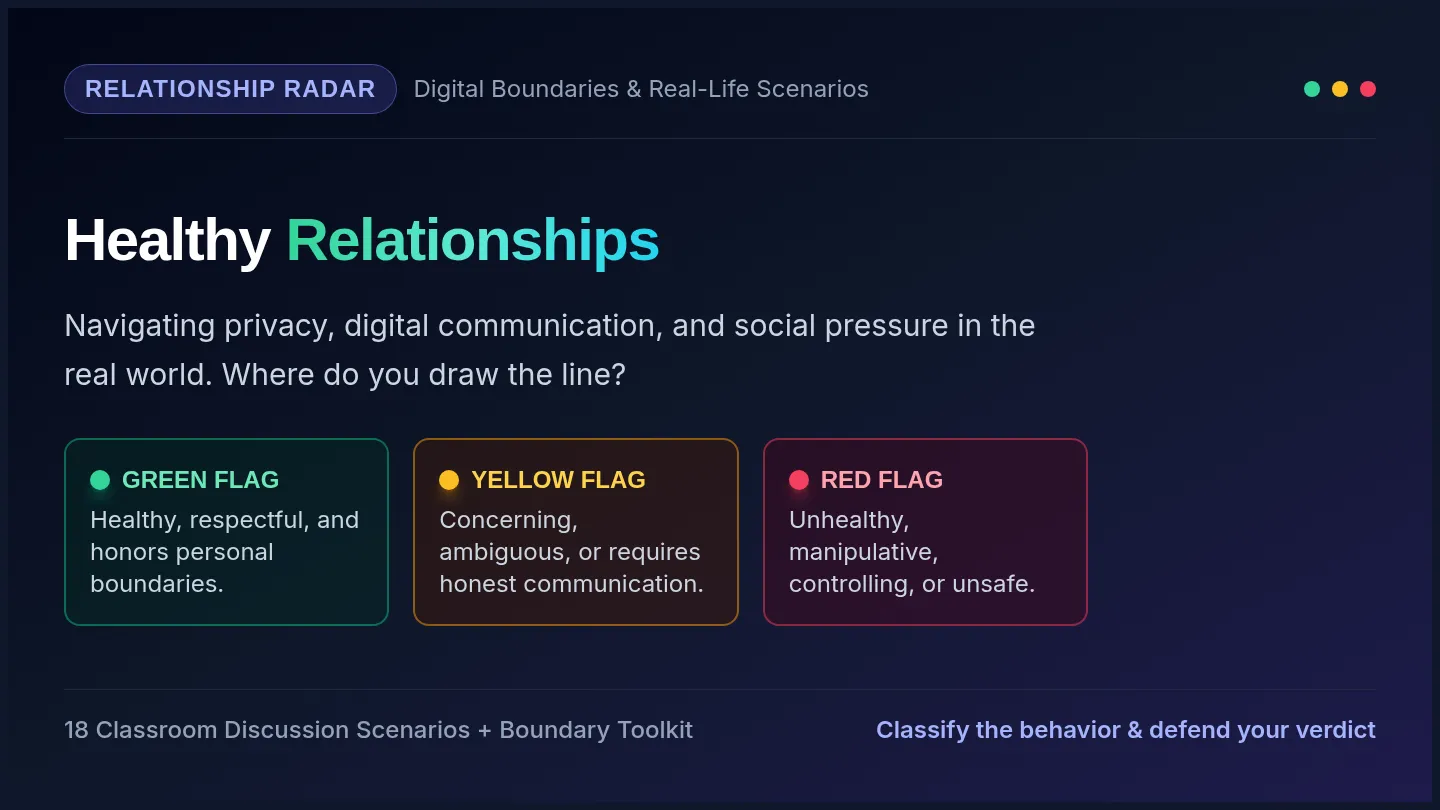
In this 45-minute lesson, 5th graders explore setting and enforcing in-person and online boundaries, practice scripts, and map out helpers for escalation support. Students will craft boundary statements and identify trusted helpers to enhance digital citizenship and safety skills.
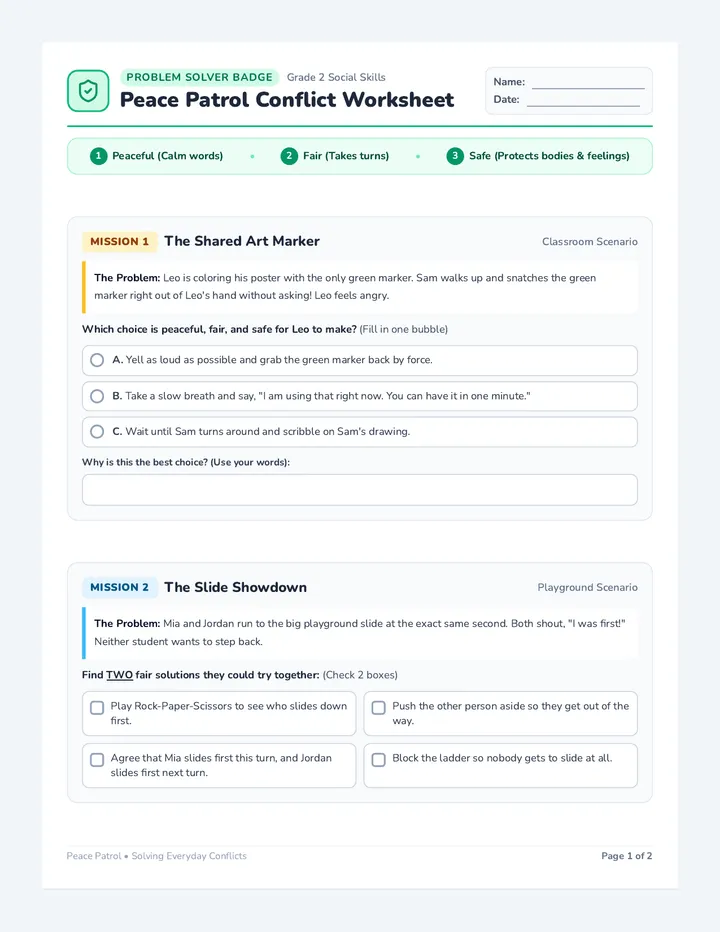
In this 45-minute 4th grade lesson, students will learn to tell the difference between conflict, rudeness, and bullying; craft personal boundary statements; and identify trusted adults and peers for help. This vital social-emotional skillset empowers students to stay safe, respectful, and confident both face-to-face and online.
A 45-minute lesson for 3rd graders on identifying personal boundaries, practicing assertive communication, and mapping out a network of trusted adults for safety and support.
A 30-minute lesson for Kindergarten students about personal body safety, consent, and identifying safe vs. unsafe touches. Students learn the 'No, Go, Tell' rule and identify trusted adults.
This Tier 2 small group lesson empowers Kindergarten students to understand personal boundaries, identify safe and unsafe touches, and practice using their voices to seek help from trusted adults.