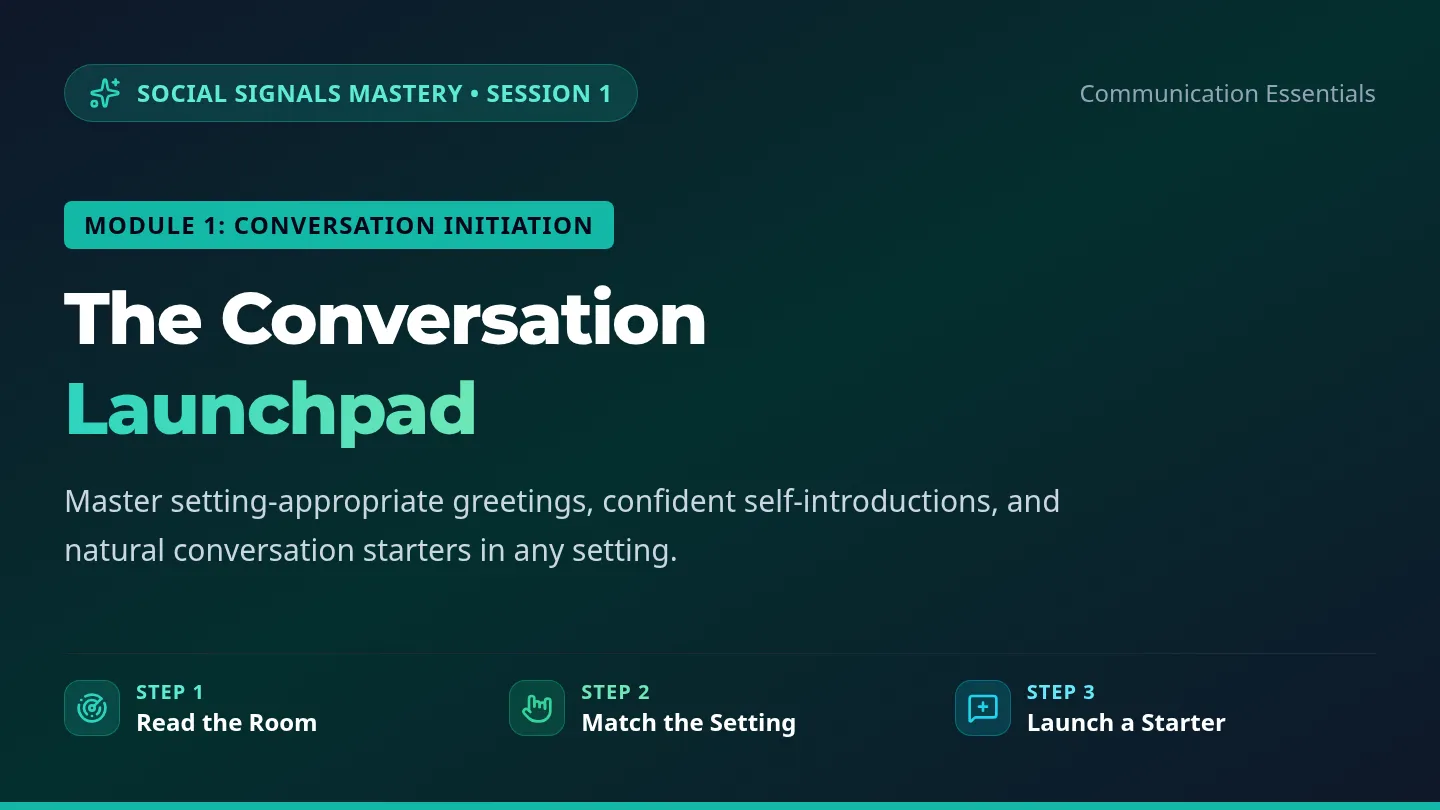
Support Science Slides Lesson 01
The Science of
Social Support
"How collective sharing functions as a buffer against individual anxiety."
The Buffering Hypothesis
Definition
Social support acts as a protective shield (buffer) that prevents the negative effects of stress on health and well-being.
Reduces perceived intensity of stressors.
Mitigates physiological response (cortisol/HRV).
Enhances coping self-efficacy.
Stressor
Buffer
Well-being
The social network absorbs the "shock" of the stressor before it causes harm.
Not All Support is Supportive
Co-Rumination
Extensive, repetitive discussing of problems.
Speculating about causes and focusing on negative feelings.
"Venting" that results in increased anxiety/depression.
Constructive Disclosure
Sharing feelings to gain new perspectives.
Focusing on emotional validation + problem solving.
Reduces distress and strengthens the bond.
"The goal is to shift from circling the problem to moving through it."
Hook: The Complaint Session
In your breakout groups, analyze the provided transcript of a "standard graduate school venting session."
Identify
Instances of co-rumination where anxiety spikes.
Analyze
Where did the group miss an opportunity to pivot?
Re-Script
One line that could turn the session constructive.
Constructive Conversations Worksheet Constructive Conversations
Lesson 01: The Science of Social Support
Name:
Date:
The Hook Activity
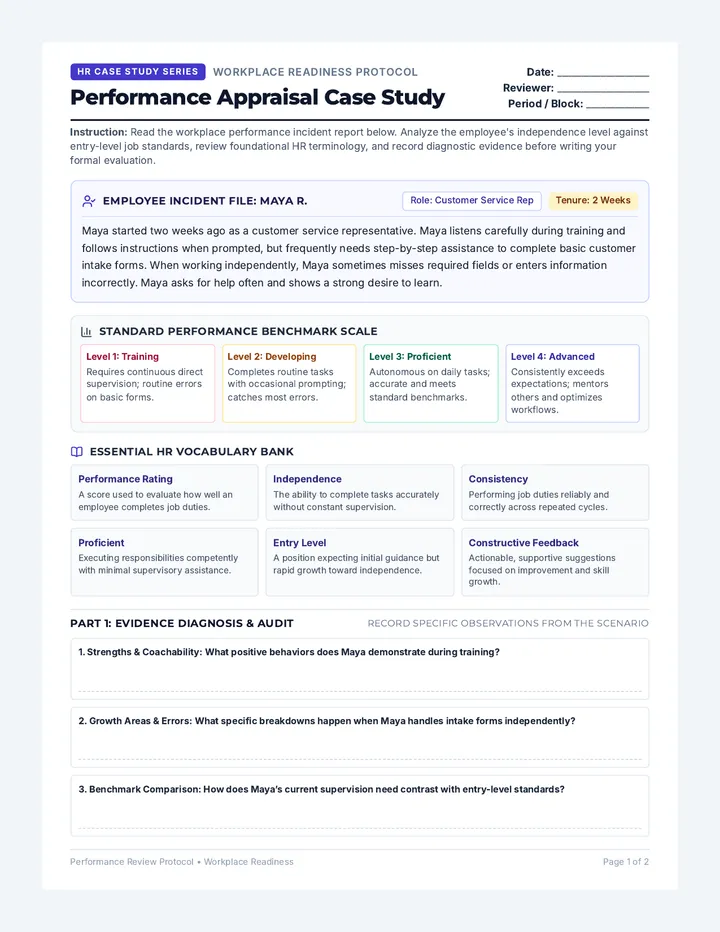
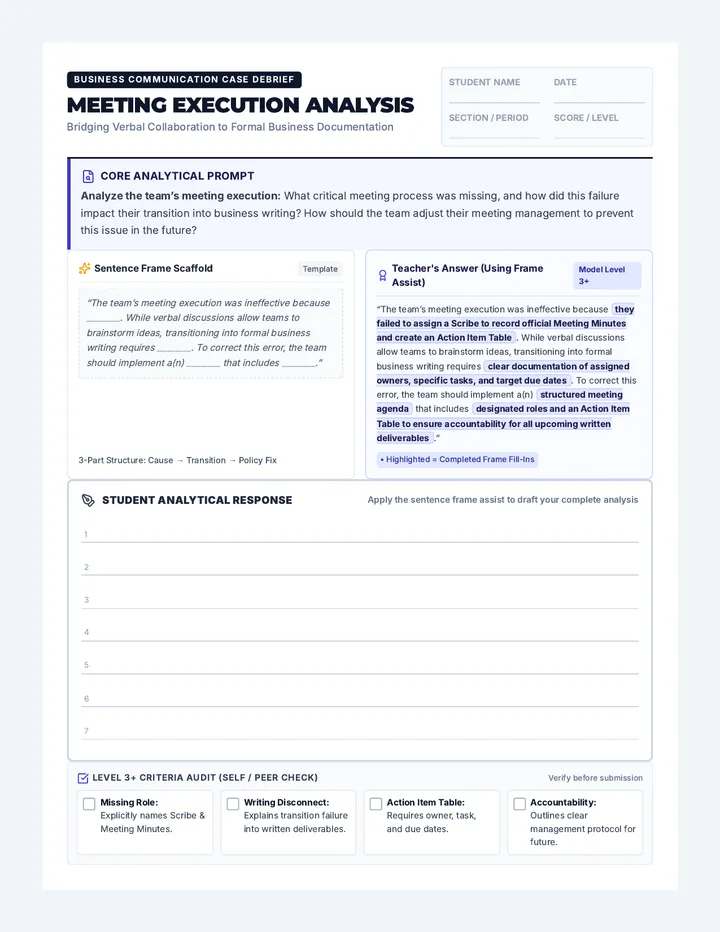
Analyze the transcript below of a typical peer interaction in a graduate student lounge. Identify the psychological mechanics at play: where is support being attempted, and where is it devolving into co-rumination ?
Transcript: Student Lounge, 11:30 PM
ALEX: I honestly don't know if I can finish this data analysis by Friday. My advisor just added three more parameters, and I haven't slept more than four hours a night all week.
JORDAN: Oh, tell me about it. Dr. Smith is the absolute worst with scope creep. I’m still drowning in the revisions from last month. It’s like they don't even care if we have lives or, you know, basic human needs.
ALEX: Exactly! And the lab equipment kept glitching today. I feel like the universe is literally conspiring against this project. Maybe I’m just not cut out for this PhD.
JORDAN: Right? I think about quitting at least once an hour. My brother is making six figures in tech and I’m here crying over a p-value. It’s totally hopeless. Why are we even doing this to ourselves?
ALEX: I don’t know. Everything feels so heavy. My heart is actually racing just talking about it.
JORDAN: Same. Now I’m stressing about my own Friday deadline too. We are both going to fail, aren't we?
1. Evidence of Co-Rumination
Highlight specific phrases in the transcript where the conversation cycles on negative affect without moving toward a solution. Why do these phrases increase anxiety?
2. The Turning Point
Identify a specific line where Jordan could have pivoted the conversation toward constructive disclosure or emotional validation instead of matching Alex's stress.
3. The Re-Write
Draft a new response for Jordan that provides a "buffer" rather than an "echo" for Alex's stress.
Theoretical Framework
The Buffering Hypothesis
Social support doesn't remove the stressor, but it changes our appraisal of it. High support provides resources (emotional or logistical) that make the stressor feel manageable, preventing the "fight or flight" system from staying chronically active.
The Venting Trap
Venting (catharsis) is often seen as positive, but research shows that repetitively focusing on negative emotions with a peer—without a cognitive shift—actually increases cortisol and reinforces neural pathways associated with anxiety.
Post-Discussion Reflection
How does the concept of "Constructive Disclosure" differ from "Positive Vibes Only" toxic positivity?
Reflect on a recent conversation with a peer. Was it a buffer or an echo? What would you change now?
Social Support Facilitator Guide Facilitator Guide
The Science of Social Support
Lesson 01 | Pacing: 60-75 Minutes
Learning Objectives
Define the Buffering Hypothesis and explain how social support mitigates physiological stress.
Distinguish between Co-Rumination and Constructive Disclosure in peer interactions.
Identify conversational "pivot points" to shift from venting to problem-solving.
Key Vocabulary
Buffering Hypothesis
The theory that social support protects individuals from the negative effects of stress.
Co-Rumination
Excessive discussion of personal problems within a dyadic relationship focusing on negative affect.
Constructive Disclosure
Sharing stressors to gain cognitive clarity, perspective, or emotional validation leading to action.
Appraisal
The cognitive process by which an individual evaluates whether an event is stressful.
Materials List
Support Science Slides
Constructive Conversations Worksheet
Highlighters (2 colors per group)
Instructional Sequence
1
The Hook: Analyzing the Lounge (15 mins)
Small Group
Distribute the Constructive Conversations Worksheet . Have students read the transcript and work in pairs to identify where the conversation "feels heavy."
Facilitator Tip: Encourage students to notice their own physical sensations (tension, heart rate) while reading the transcript. This mirrors the "vicarious stress" often felt in graduate cohorts.
2
Core Instruction: Science & Mechanics (25 mins)
Whole Class
Use the Support Science Slides to cover:
The Buffering Hypothesis: How support changes cognitive appraisal.
The physiology of stress: Cortisol vs. Oxytocin (the "tend-and-befriend" response).
Co-Rumination: Why "venting" often fails.
3
Application: The Re-Write (15 mins)
Individual
Students return to the worksheet to re-write Jordan's responses. They must use at least one technique of Constructive Disclosure (e.g., perspective-shifting, resource identification).
4
Whole-Group Debrief (10 mins)
Discussion
Key discussion questions:
Connection Skills Slides Lesson 02
Connection
Skills
Active Listening, Validation, and Holding Space.
The "Fixer" Reflex
When a peer shares anxiety, our instinct is to offer solutions immediately.
The Risk
"Premature problem-solving can feel like a dismissal of the emotion itself."
Stifles vulnerability
Creates power imbalance
Ignores the emotional core
Cognitive Loading
The brain cannot effectively process solutions until the amygdala (emotional center) is calmed through validation .
The Validation Hierarchy
1
Acknowledgment
"I hear you saying that you're feeling overwhelmed by the methodology chapter."
2
Normalization
"It makes total sense that you'd feel that way given the timeline you're on."
3
Holding Space
"I'm here with you. We don't have to solve it right this second."
Validation is not agreement. You can validate someone's feeling without agreeing with their logic.
The Active Listening Toolset
Reflecting
Paraphrasing the core message back to them to ensure clarity.
Inquiry
Using open-ended questions (How, What) to invite deeper exploration.
Silence
Using brief pauses to allow the speaker to process and continue.
Activity: "The Bad Listener"
Role Play 5 Mins
Connection Skills Workshop Connection Skills Workshop
Lesson 02: Simulation & Skill Building
Activity Type Dyadic Simulation
1
Warm-up: The "Bad Listener" Experiment (5 Mins)
The Speaker
Share a genuine minor stressor (e.g., a commute issue, a small technical glitch). Talk for 2 minutes.
The "Bad" Listener
Perform judgemental distractibility . Check your phone, interrupt with your own story, or offer shallow, unsolicited advice like "Just don't think about it."
Reflection Question
Speaker: What was the physical and emotional impact of being "listened to" this way? Did your stress level decrease or increase?
2
Skill Practice: Validation Scenarios
Swap roles. The "Listener" must now use the Validation Hierarchy (Acknowledgment → Normalization → Holding Space).
Scenario A: The Imposter Syndrome
Academic Context
"I just got feedback on my proposal. It wasn't even that bad, but I feel like I'm a total fraud. I keep thinking they’re going to realize they made a mistake admitting me to this program."
Goal for Listener
Normalize the feeling of "Imposter Syndrome" without trying to prove them wrong immediately.
Scenario B: The Funding Crisis
Life Context
"My teaching assistantship funding got cut for next semester. I have no idea how I'm going to pay rent, and I can't even focus on my research because I'm just looking at job boards all day."
Goal for Listener
Acknowledge the logistical panic and hold space before jumping into financial advice.
Remember: Your job is not to solve the problem, but to solve the feeling of being alone with the problem.
Active Listening Cheat Sheet Quick Reference Card
Active Listening
& Validation
"Listening is the highest form of hospitality."
Essential Micro-Skills
Paraphrasing
"So what I'm hearing is that the workload isn't just heavy, it's also unpredictable."
Ensures understanding & shows effort.
Reflecting Feeling
"It sounds like you're feeling really discouraged by the feedback."
Labels the emotion to help processing.
Minimal Encouragers
"Mm-hmm," "Go on," "Tell me more about that," [Nodding].
Keeps the speaker flowing.
Validation Levels
1
Unbiased Attention
Put away the phone. Lean in. Make eye contact. Show up completely.
2
Accurate Reflection
Summarize the facts and the feelings without adding your own judgment.
3
Direct Validation
Connect their behavior/emotion to their context. "Given what happened, your reaction is understandable."
4
Radical Genuineness
Treat them as an equal human being. Show your own vulnerability if appropriate.
The Magic "What" and "How" Questions
"What does that feel like for you?"
"How are you managing that right now?"
"What would be most helpful in this moment?"
"What's the hardest part of this for you?"
Sustainable Support Slides Lesson 03
Sustainable
Support
Setting Boundaries and Preventing Compassion Fatigue.
The Cost of Caring
Compassion Fatigue
A state of physical or emotional exhaustion and a reduced ability to empathize or feel compassion for others.
Warning Signs
Emotional numbness or detachment
Irritability with the peer in need
Persistent dread before interactions
The Empathy Trap
vs.
Emotional Contagion
Feeling their pain as your own.
✓
Compassionate Concern
Understanding pain while remaining distinct.
The Support Buffer
Temporal
Setting clear start and end times for support sessions.
"I have 20 minutes before my lab starts, but I'm all yours until then."
Emotional
Recognizing what you are—and aren't—equipped to handle.
"I can listen to the stress about the project, but I can't process the family conflict with you."
Referral
Knowing when the problem requires a professional expert.
"This sounds like it's becoming a safety issue. Let's look at the campus counseling site together."
The Warm Handoff
A "Warm Handoff" is more effective than a "Cold Referral."
01
Validate the need for higher-level care.
02
Normalize professional support.
03
Offer to help with the first step (e.g., website/phone).
Crucial Boundary
You are a Peer Support Facilitator , not a therapist. You cannot—and should not—provide clinical intervention.
Boundary Case Studies Boundary Case Studies
Lesson 03: Sustainable Peer Support
Status
Case Study Series
Objective
Identify boundary erosion in peer support relationships and develop specific scripts to re-establish sustainable limits.
Case Study A: The 2:00 AM Advocate
Temporal Boundary Failure
"Maya is a natural listener. Her peer, Liam, has started texting her about his anxiety multiple times a day, often late at night. Maya feels guilty if she doesn't respond immediately. Last night, Liam texted her a 500-word paragraph at 1:45 AM about a conflict with his advisor. Maya stayed up until 3:00 AM responding. Today, Maya missed her own data collection window because she was too exhausted to focus, and she feels resentful toward Liam."
1. Identification
At what specific point was the boundary crossed?
2. Scripting
Write a "gentle reset" script Maya could send Liam today.
Case Study B: The Secondary Trauma
Emotional Boundary Failure
"David is supporting Sam, who is going through a traumatic family crisis. Sam’s stories are graphic and deeply distressing. David noticed that after their lunch meetups, he can't eat and feels 'on edge' for hours. He’s starting to have intrusive thoughts about Sam’s situation. David wants to be a good friend, but he feels like he’s drowning in Sam’s trauma."
1. Identification
What signs of "Secondary Traumatic Stress" is David showing?
2. Scripting
Write a "Referral Handoff" script David can use to pivot Sam toward professional help.
Reflective Prompt
"Boundaries are not walls to keep people out; they are gates that allow us to stay in the relationship sustainably." Discuss with your partner: What is your personal 'early warning sign' that a boundary is being eroded?
Referral Resource Guide Referral Resource Guide
Sustainable Support Protocols
The Referral Triage
Use this checklist to determine if a professional referral is necessary.
Refer Immediately if:
Self-Harm or Suicidal Ideation
Threats of harm to others
Substance abuse/overdose risk
Psychosis or reality-detachment
Refer Consensually if:
Chronic depression/anxiety
Trauma processing needs
Grief and loss support
Diagnostic questions
Local Resource Directory
Complete this directory with resources specific to your university or department.
Organization
Contact / URL
Specialty / Notes
University Counseling Center
Student Health Services
Ombuds Office
Crisis Hotline (24/7)
The "Warm Handoff" Script Template
"I'm so glad you shared this with me, and I can hear how much of a burden this is. Because I want you to have the best support possible, I'd like to help you connect with [Resource Name]. They specialize in exactly this kind of situation. Would you be open to looking at their website with me right now?"
Why it works:
• Validates the sharing
• Identifies the boundary as a desire for "best support"
• Reduces the stigma of referring
• Offers immediate collaborative action
Facilitation Fundamentals Slides Lesson 04
Facilitating
Connection
"Creating psychological safety in group settings."
The Facilitator's Goal
Facilitation is not leadership in the traditional sense. It is the art of making a process easier for others.
Key Responsibility
"Maintaining the container, not filling it."
Ensure Safety
Balance Voices
Monitor Dynamics
The "Container"
Ground Rules (The Floor)
"Vulnerability is welcome, but over-exposure is not required."
"What stays here, stays here." (Confidentiality)
"One person speaks at a time; no cross-talk during sharing."
Safe Vulnerability
As a facilitator, your job is to model appropriate vulnerability.
"I'm feeling a little nervous starting this today, but I'm really glad we are all here to support each other."
A small reveal opens the door for others without pressuring them to go too deep too fast.
Navigating Group Friction
The Dominant Voice
"I appreciate that perspective, let's hear from someone who hasn't shared yet."
The Silent Participant
Do not call on them directly. Offer "the floor is open" or invite non-verbal participation (nods).
The Disruptor/Plant
"I'm going to pause us there so we can re-center on the ground rules we set."
Activity
Facilitation Rotation: 5-minute Stress Check-in
Circle Facilitation Script Circle Facilitation Guide
Leading a Stress Check-In Circle
Rotation Script
The Opening & Ground Rules
Read this script exactly as written to establish the container.
"Welcome everyone. The purpose of this 5-minute check-in is to hold space for the stressors we’re currently carrying as a cohort."
"Before we start, let's agree to a few rules: First, everything shared here stays confidential. Second, we practice 'supportive silence'—we won't interrupt or try to fix each other's problems during the share. Third, you always have the right to pass."
"Is everyone okay with these rules?" [Wait for nods]
The Check-In Prompt
Model the vulnerability yourself first, then open the circle.
"I’ll start. One thing that’s been weighing on me this week is [Share a minor academic stressor]. It's making me feel [Emotional word]. I'm passing the floor to my left."
Facilitator Interventions
If someone interrupts:
"Let's remember our rule about supportive silence—we want to make sure [Name] has the space to finish their thought."
If someone starts "fixing":
"I appreciate that you want to help, but let's focus on just hearing [Name] right now. We can problem-solve after the circle if they’d like."
The Closing
"Thank you all for being vulnerable and for listening so well. We'll close the circle here. Please take care of yourselves as you head back to your work today."
Group Dynamics Observer Tool Group Dynamics Observer Tool
Lesson 04: Simulation Feedback
Observation of
Observer Role
Your job is to remain outside the circle and track how the facilitator manages the group "container." Focus on specific behaviors rather than general impressions.
Facilitation Component Evidence / Specific Observation Impact on Group Ground Rules Modeling Vulnerability Managing Dynamics (Dominant/Silent) Closing the Container
Psychological Safety Check
One thing that worked well:
One area for improvement:
"The facilitator's presence is more important than their words. Did the facilitator feel 'present' even when they weren't speaking?"
Community Care Project Brief Community Care Project
Capstone: Designing Sustainable Support Systems
Project Weight 40% of Module
The Project Brief
Identify a specific "anxiety gap" within your current academic or professional cohort. Your mission is to design a Sustainable Community Care Initiative that buffers against this stress while maintaining professional boundaries. You will pitch this design to the "Department Chair" (the class) for feedback and potential implementation.
Core Components
A specific intervention protocol (e.g., weekly check-in, peer-mentoring circle).
Clear "Temporal and Emotional Boundaries" for facilitators.
A built-in Professional Referral pathway.
A plan for "Sustainability" (how does this avoid burning out the volunteers?).
The "Hook" Pitch
"You have 5 minutes to convince your department head that this initiative will improve cohort retention and well-being without requiring significant budget or clinical staff time."
Pitch Length: 5 Mins
Includes 2 mins Q&A
Project Milestones
01
Problem Identification & Needs Assessment
Define the specific stressor/gap in your cohort.
Due Date
02
Initiative Blueprint & Boundary Map
Draft the logistics and safety protocols.
Due Date
03
Final Presentation & Pitch Deck
Deliver the 5-minute pitch to the cohort.
Due Date
Facilitating Peer Support Series © 2026 Module Capstone
Community Care Design Template Initiative Design Template
Community Care Project | Planning Document
Team:
1
The "Anxiety Gap"
Describe the specific stressor or lack of support in your target cohort. Why is this a problem for student retention or well-being?
2
Intervention Blueprint
Format & Frequency
How often? Where? Who leads it?
Ground Rules
List 3 essential safety rules for participants.
3
Safety & Boundaries
Sustainable Limits
How will you prevent "Compassion Fatigue" for the students facilitating this initiative?
Referral Pathway
Which professional resource is the primary "handoff"?
The "Warm Handoff" Script
How will facilitators suggest professional help?
4
The Sustainability Plan
How will this initiative continue if the founders graduate or become over-burdened?
Community Care Project Rubric Project Pitch Rubric
Community Care Initiative Assessment
/ 20 Total
Criterion Exceptional (5) Competent (3) Developing (1) Rationale & Need Clear evidence-based rationale citing the "anxiety gap" in the cohort. Identifies a stressor but logic for the specific intervention is loose. Vague problem statement with no clear link to cohort needs. Boundary Integrity Robust safety plan with clear temporal and emotional limits defined. Mentions boundaries but lacks specific scripts or protocols. High risk of facilitator burnout; boundaries are not defined. Referral Pathway Seamless "Warm Handoff" protocol with specific local resources listed. Identifies a resource but lacks a clear "handoff" communication plan. No professional referral plan included; relies on peer support alone. Sustainability Detailed transition plan ensuring the project survives founding members. Plan for continuation is mentioned but lacks concrete logistics. Initiative is entirely dependent on 1-2 specific individuals.
Strengths of the Design
Critical Risks / Gaps
Evaluator Name
Community Care Pitch Session • © 2026