Active listening techniques, agenda adherence, and effective contribution strategies for professional environments. Develops skills for providing constructive feedback and managing post-meeting action items.
Plan de conduite et conducteur chronologique pour animer une réunion de rentrée de 30 minutes en CM1 / CM2, avec typographie agrandie pour une lecture fluide en réunion.
A comprehensive reference sheet and printable desk cards defining the four collaborative group roles: Director, Pacer, Scribe, and Speaker. Includes core responsibilities, actionable sentence starters, and team success protocols.
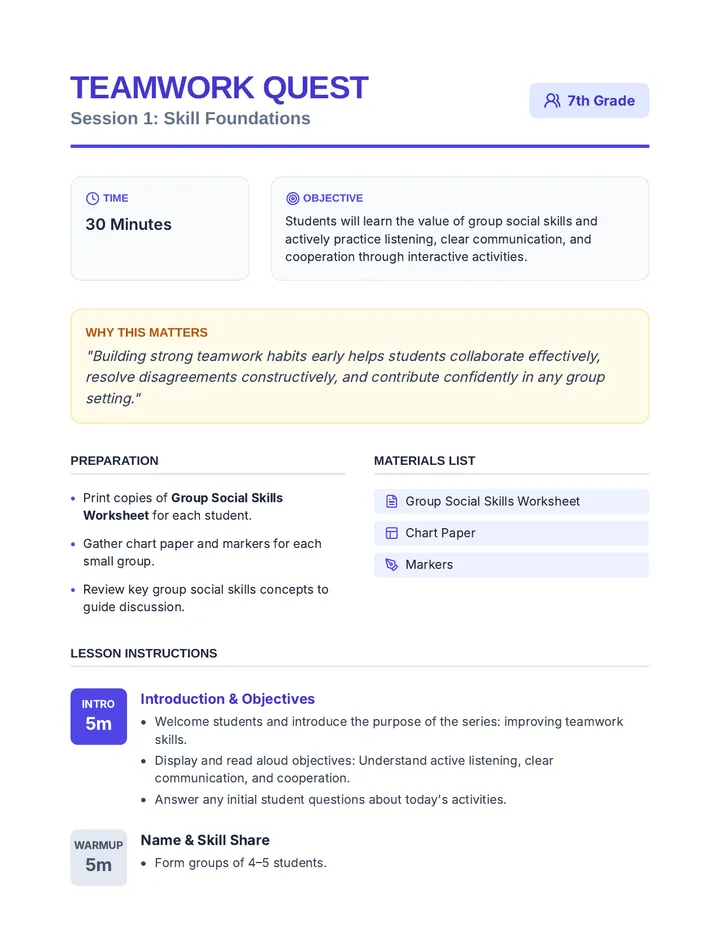
In this 6-session series, 7th graders explore and practice essential group learning social skills such as communication, cooperation, conflict resolution, and leadership to build a supportive classroom culture.
A 3-session mini-unit for 6th graders to develop effective oral, written, and active listening skills alongside practical self-advocacy strategies.
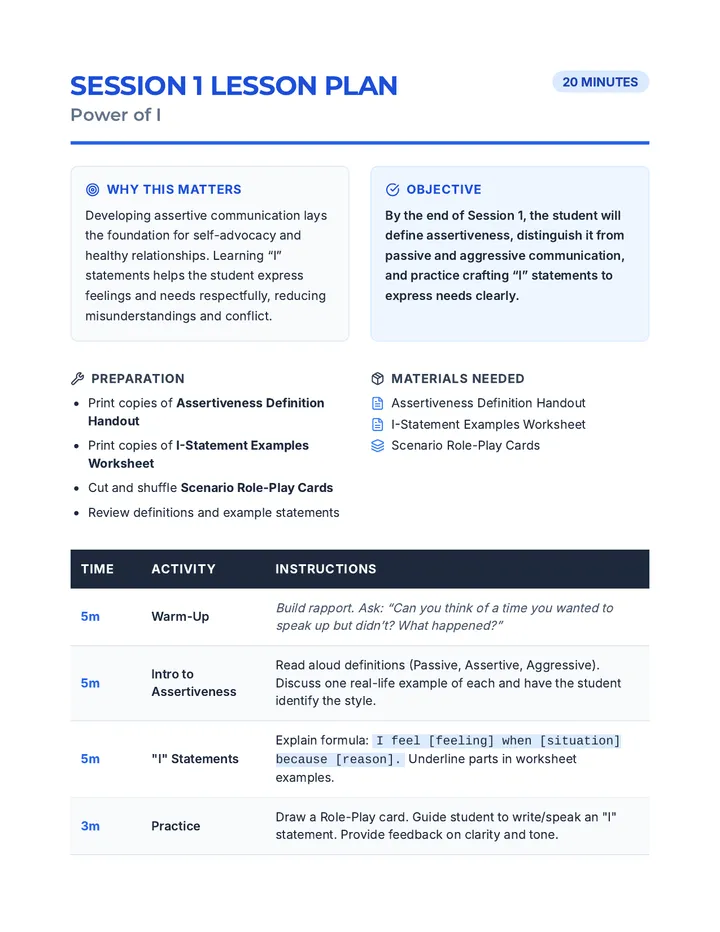
A 5-session intensive for middle school students to develop assertive communication skills, focusing on I-statements, boundaries, refusals, and long-term maintenance.
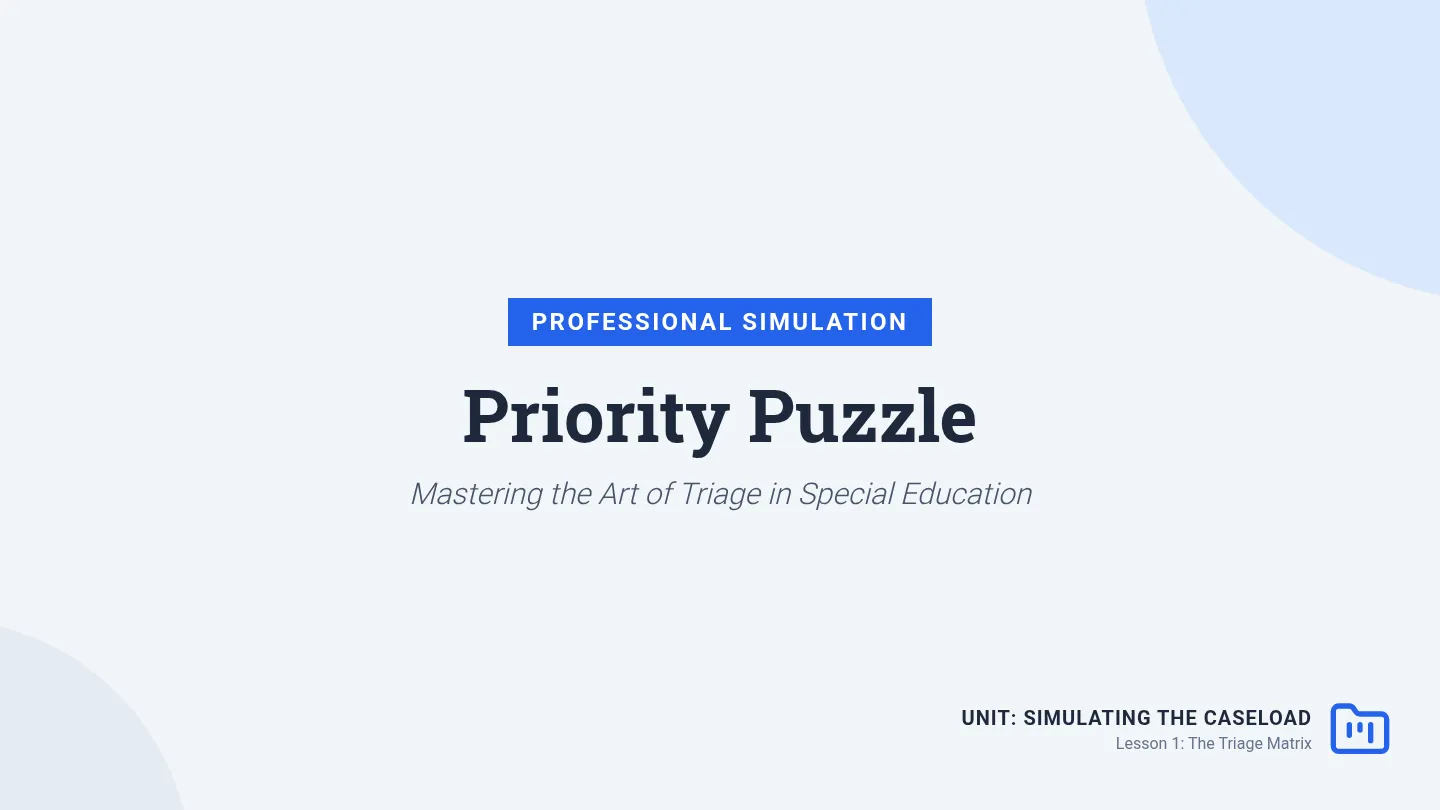
A high-stakes simulation for 12th graders transitioning to professional environments, focusing on prioritizing competing demands, managing interruptions, and professional communication in a special education caseload context.
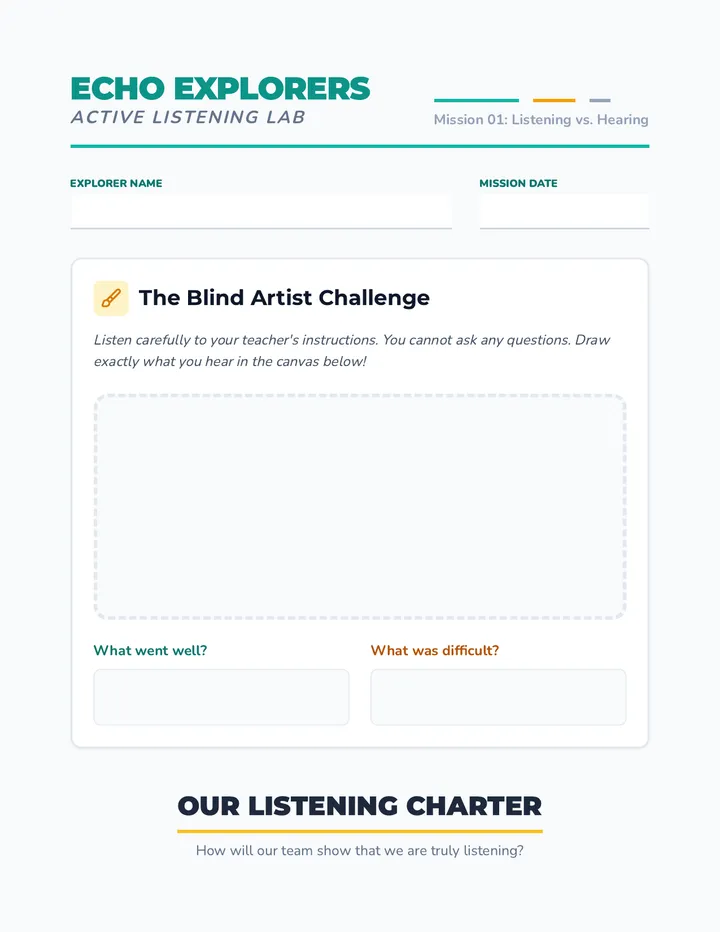
This sequence builds foundational communication skills for effective teamwork, focusing on active listening, paraphrasing, nonverbal cues, and collaborative dialogue. Students progress from individual listening skills to facilitating group problem-solving through a workshop-based approach.
A comprehensive project-based unit where 12th-grade students master the principles of trauma-informed care. Students progress from theoretical understanding to the practical application of designing and presenting clinical intervention strategies for complex trauma cases.
A comprehensive high school unit on interest-based negotiation and formal mediation. Students move from understanding individual interests to facilitating multi-party resolutions using the Harvard Negotiation Project framework and professional mediation stages.
A 5-lesson unit for undergraduates on navigating interpersonal conflict, setting boundaries, and developing communication skills for shared living and working environments. Students explore their own conflict styles, engage in simulations, and practice assertive communication and de-escalation techniques.
A career-focused memory strategy sequence for high school seniors, teaching mnemonic devices for social networking, workplace procedures, and numerical data to boost professional reliability.
This sequence explores the nuances of social communication through tone, inflection, and sarcasm. Designed for 8th-grade social communication groups, it helps students decode the 'music' of speech to better understand social context and resolve conflicts.
This sequence focuses on the distinction between aggressive shouting and assertive projection. Students learn to use their voice effectively for self-advocacy in various settings, from IEP meetings to public speaking, ensuring they are heard and respected.
An advanced course for graduate students exploring the intersection of neurobiology, psychological theory, and organizational leadership. Students develop high-level social and emotional competencies to navigate complex professional environments and foster psychological safety.
In this engaging 30-minute lesson, kindergarten students will learn why and how to raise their hands before speaking. Through interactive modeling, practice activities, and positive reinforcement, children gain confidence and classroom-ready communication skills.
A foundational CTE and career-readiness lesson on positive self-representation, professional appearance, personal qualities, virtual etiquette, and workplace standards.
A quick, 15-minute Agile check-in using weather metaphors to help teams express their emotional state and sprint experiences in a creative, low-pressure environment.
A comprehensive 5-day interactive unit designed for 30-minute daily class sessions on workplace self-representation. Students explore professional appearance, core character traits, virtual and digital etiquette, in-person workplace norms, and collaborative adaptability through scenario analysis, station rotations, and a cumulative portfolio.
This lesson helps middle school students understand why they blurt out answers and provides concrete strategies for respectful classroom communication. Students explore the impact of blurting and commit to a personal communication strategy.
A professional development session for K-12 teachers focused on strategies for fostering positive and supportive team dynamics, including communication, mutual respect, and conflict resolution.
This lesson equips adults with practical strategies for navigating disagreements and expressing needs effectively, transforming potential conflicts into opportunities for understanding. Participants will practice active listening, empathy-driven dialogue, and emotional management.
This lesson empowers 8th-grade students to understand and practice essential classroom etiquette, fostering a respectful and productive learning environment through interactive scenarios and personal goal-setting.
An introduction to workplace diversity and its importance for high school students, focusing on the benefits of diverse work environments and strategies for fostering inclusion.
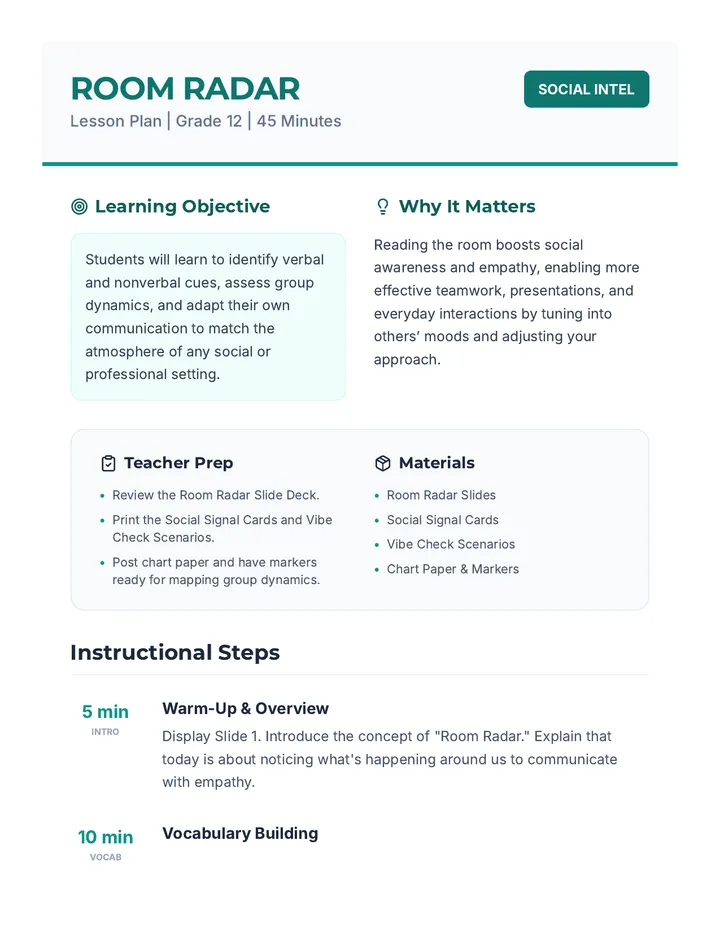
Students will learn how to 'read the room' by identifying verbal and nonverbal cues, understanding group dynamics, and adjusting their communication for various social and professional settings.
A high school lesson focused on mastering social awareness by identifying nonverbal cues, interpreting group dynamics, and adapting communication styles for professional and social success.
A 10-minute professional development lesson designed for adult meetings to improve communication and foster deeper connections through active listening and open-ended questioning.