Emotional regulation techniques and resilience-building strategies for navigating the stages of grief. Equips learners with practical tools for processing loss and supporting others through bereavement.
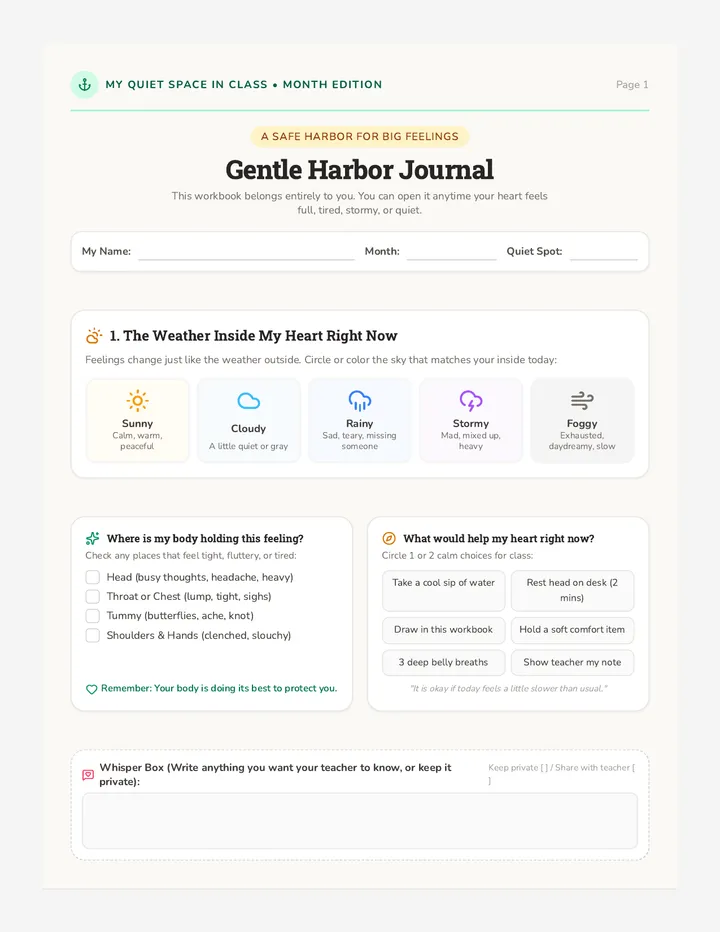
An expanded 8-page therapeutic coping workbook for a third-grade student to use over an entire month. Includes daily check-ins, grandfather memory pages, parental transition boundaries, in-class grounding, 4-week habit and emotion tracking, two intricate mindful coloring mandalas, and weekly letter prompts to her grandfather.
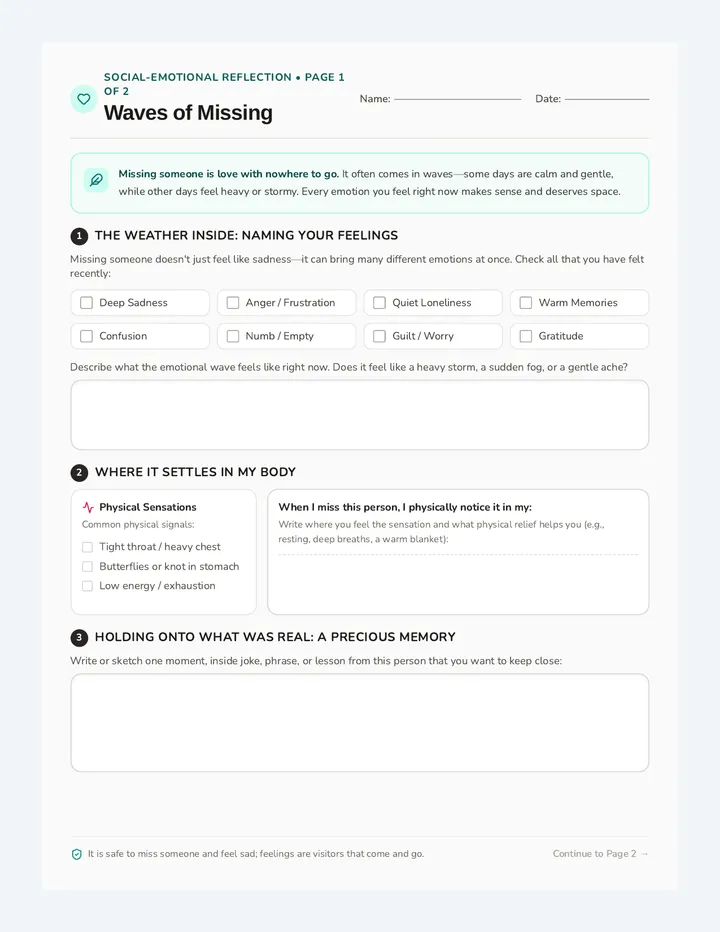
A 2-page social-emotional learning worksheet exploring the feelings that arise when missing someone, validating complex emotions, and using the Circle of Control framework to navigate what is outside versus within our power.
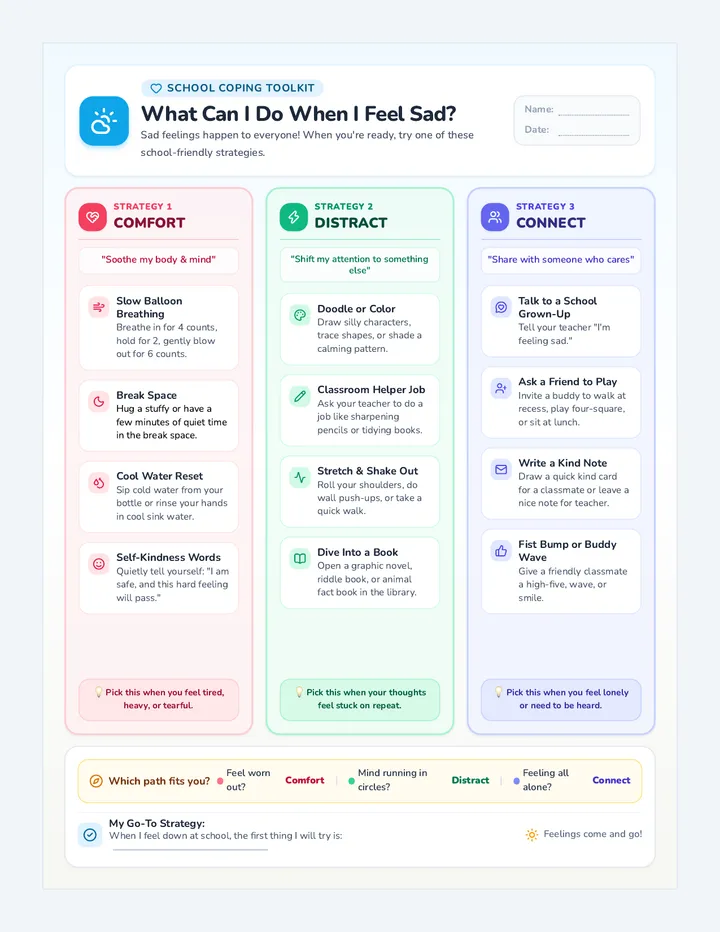
A vibrant, child-friendly 3rd-grade visual anchor chart and coping strategies toolkit for when students feel sad at school, organized into three distinct pathways: Comfort, Distract, and Connect. Features practical school-friendly actions like quiet desk rests, cool water resets, and classroom helper jobs.
A six-session Tier 2 support group for 8th-grade students processing grief and loss. The sequence focuses on creating a safe space for emotional expression, understanding the grieving process, developing healthy coping mechanisms, and building long-term support networks.
A 6-session Tier 2 small group counseling program for high schoolers to navigate the complexities of grief through understanding stages, challenging norms, and building a self-compassion toolkit.
A 6-session small group series for 7th graders focused on managing anxiety and cultivating a growth mindset. Students learn practical strategies, reflect on real-life scenarios, and build resilience.
A four-session Tier 2 small-group series for 7th-grade boys focused on mental health awareness, suicide prevention, and building supportive coping habits. Students will learn to recognize warning signs, practice self-care, and develop communication skills to help themselves and their peers.
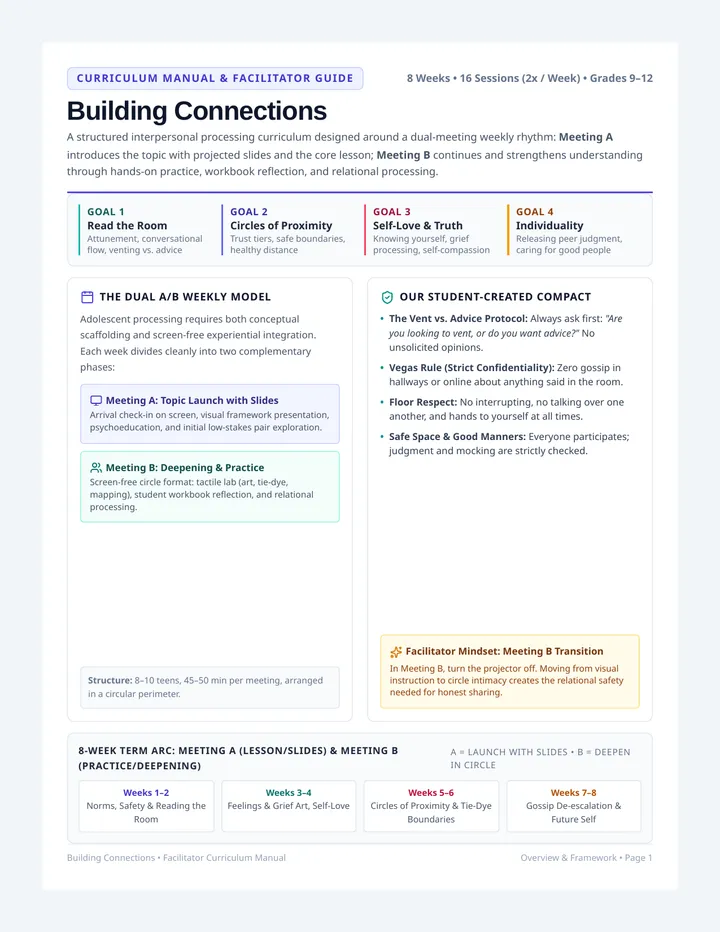
An 8-week high school interpersonal processing and social-emotional group program. It provides adolescents with structured opportunities to build self-awareness, practice healthy communication, establish boundaries, and cultivate genuine peer connection.
A 6-session grief support series for 9th-grade students, focusing on emotional understanding, healthy coping mechanisms, and building resilience through loss.
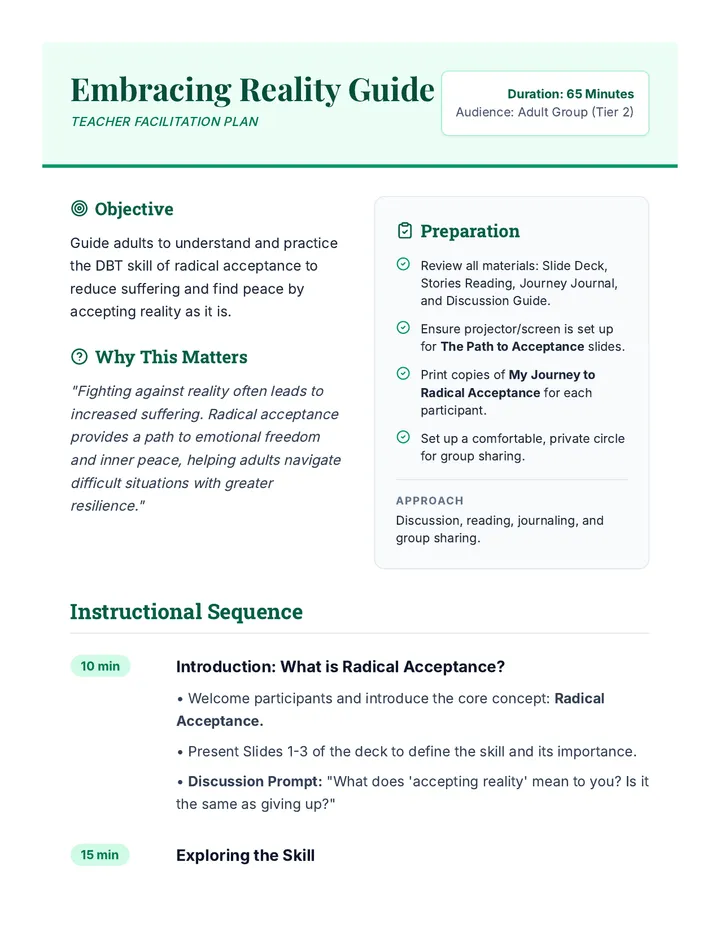
A 65-minute DBT-based lesson for adults focusing on the skill of Radical Acceptance to reduce suffering and find emotional freedom. Participants will explore the difference between pain and suffering, distinguish willingness from willfulness, and apply acceptance to personal life situations.
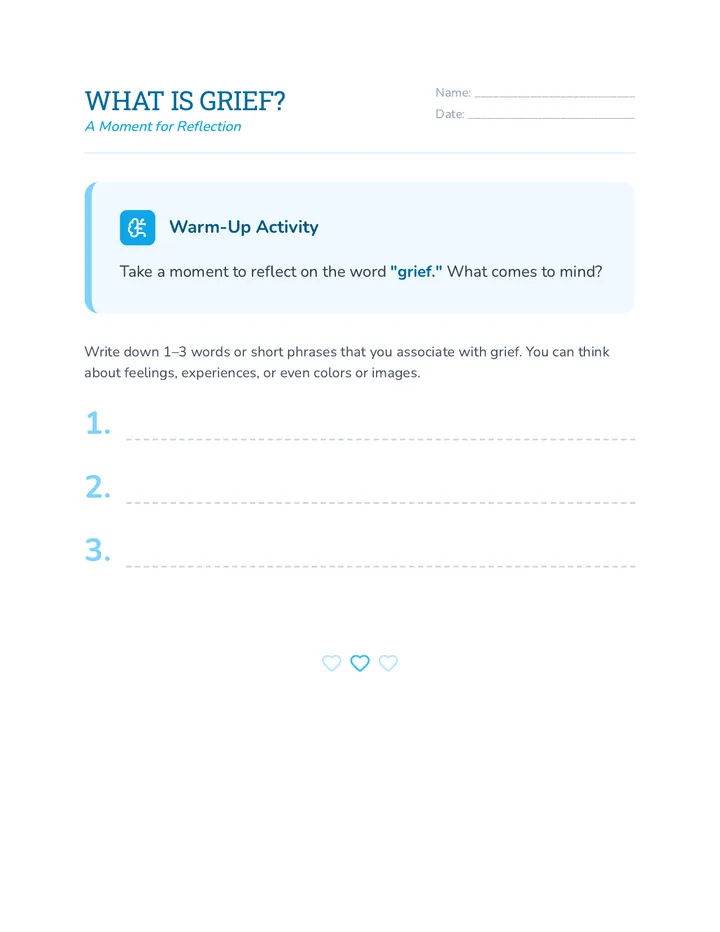
A compassionate lesson for high school students to understand the non-linear stages of grief and develop healthy coping mechanisms for navigating loss.
A 25-minute social-emotional learning lesson designed for middle schoolers to understand grief as a normal response to loss. Students explore coping strategies and build empathy through reflection, discussion, and interactive scenarios.
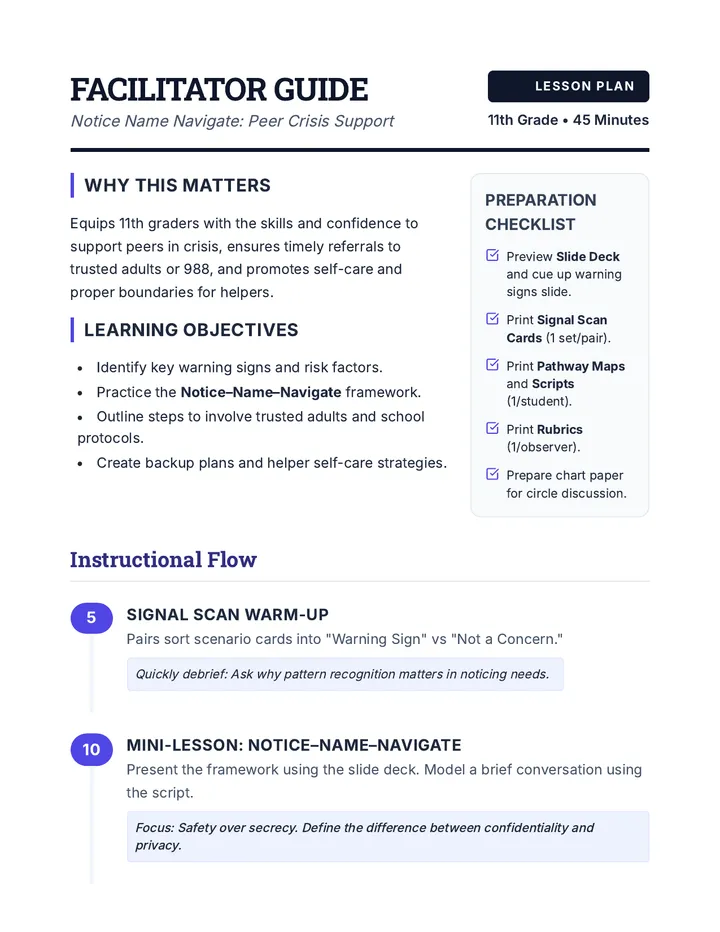
A 45-minute lesson for 11th graders on recognizing peer crisis warning signs and using the Notice–Name–Navigate framework to connect friends to support safely while maintaining self-care boundaries.
A 30-minute Tier 3 individual session for 4th graders to navigate grief through emotional identification, journaling, and coping strategy development. This lesson provides a safe, structured environment for students to build resilience and create a personalized support plan.
A 40-minute social-emotional learning lesson for 6th graders that uses storytelling and interactive activities to build resilience and coping strategies.