Strategies for cultivating intrinsic drive through autonomy, competence, and purpose. Targets goal-setting techniques and methods to sustain effort without external rewards.
An engaging, student-centered one-page goal setting worksheet featuring goal categorization, SMART goal framing, three-step action planning, obstacle problem-solving, and a commitment meter.
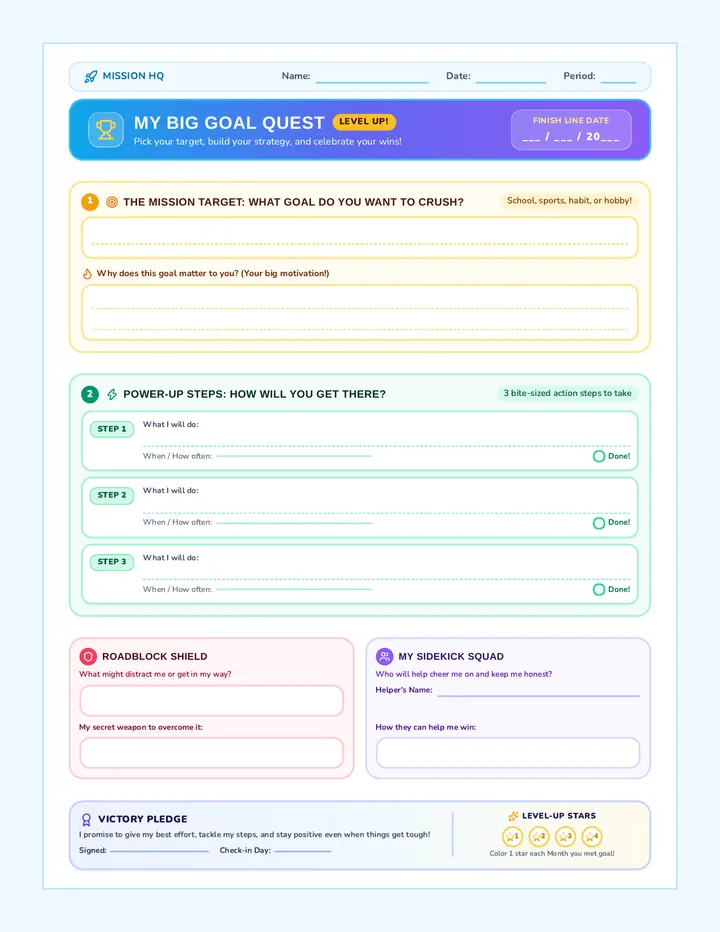
A vibrant, kid-friendly goal setting sheet designed around an engaging quest theme with bright colors, playful badges, step-by-step action plans, obstacle shielding, and a monthly level-up star tracker.
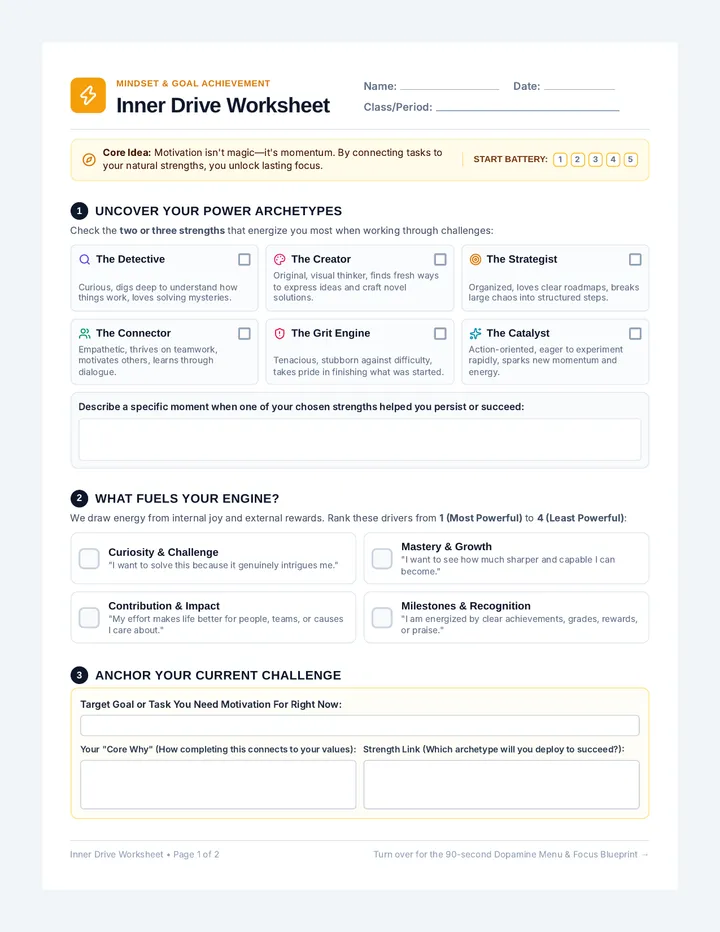
A two-page reflective and interactive worksheet that guides students to discover personal strengths, analyze internal motivation, play a 90-second Dopamine Menu quick activity to beat procrastination, and create an actionable focus blueprint.
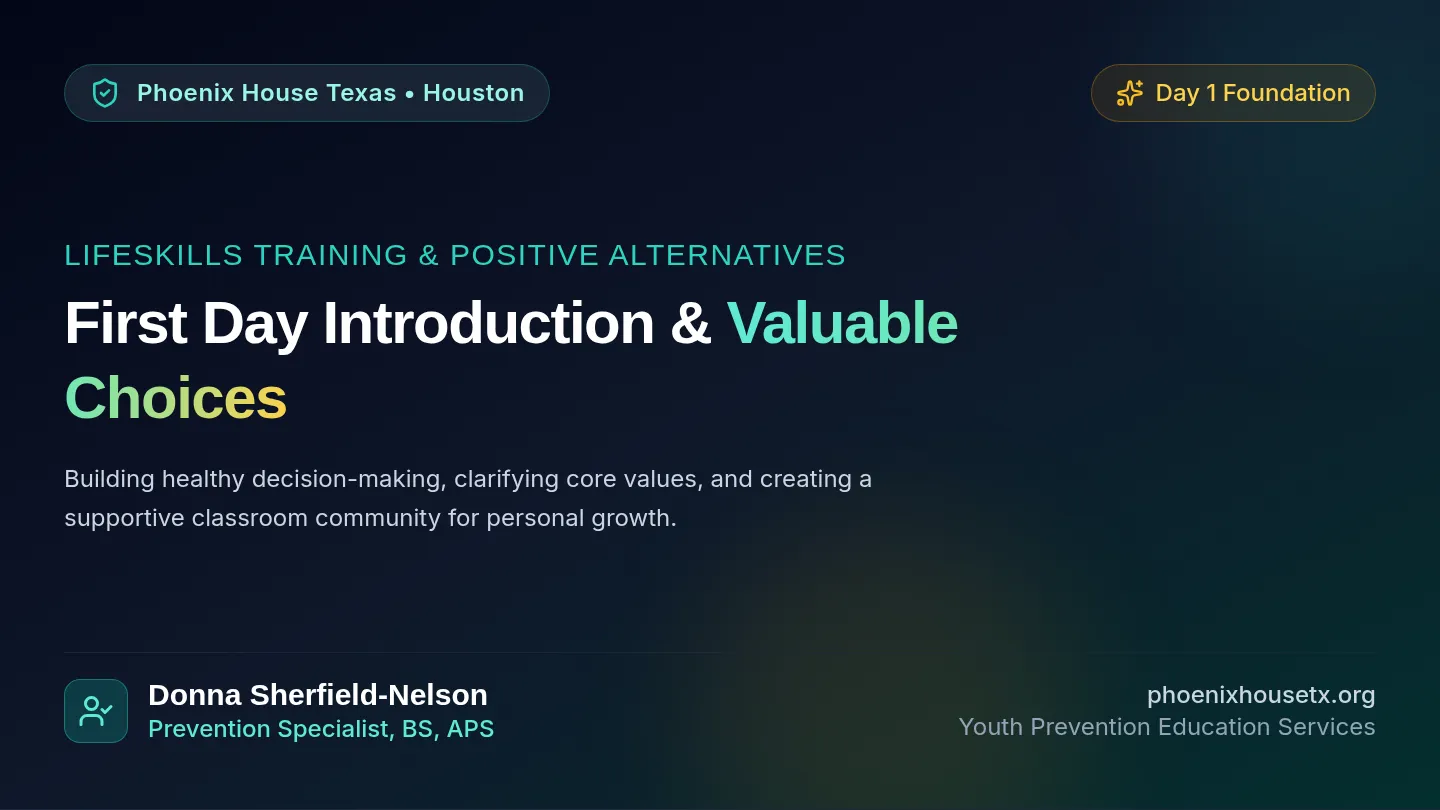
A 10-slide presentation for Phoenix House Texas LifeSkills Day 1. Features the authentic 'About Me' photo collage slide before the connection discussion, official Botvin LifeSkills scope and sequence image, bilingual Valuable Choices worksheet layout, classroom safety guidelines, and participant rights.
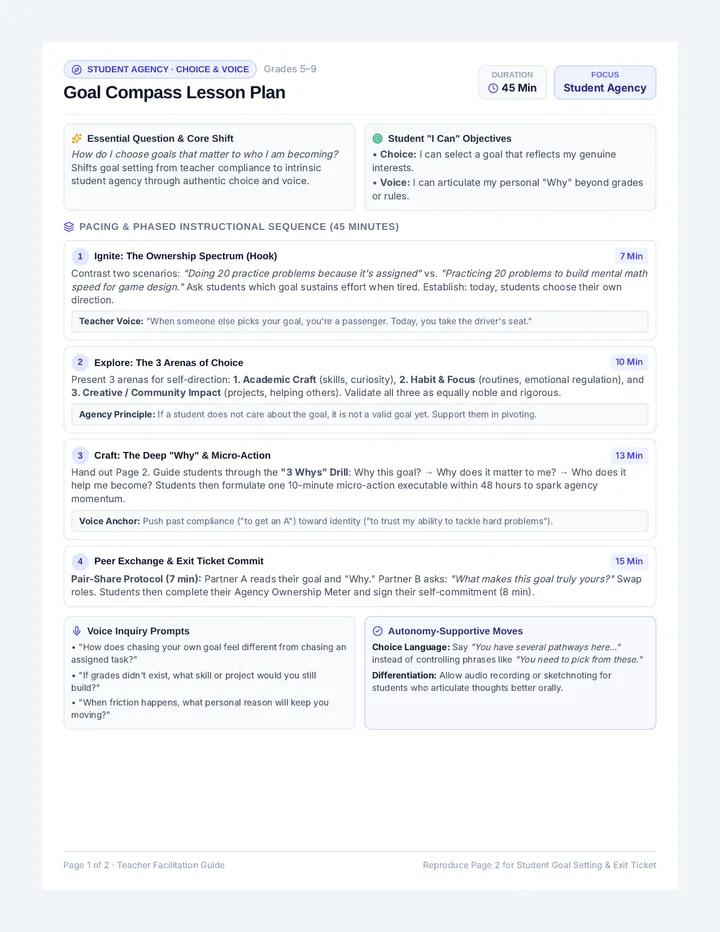
A comprehensive 2-page instructional resource featuring a complete teacher facilitation guide and a ready-to-reproduce student agency goal-setting exit ticket. Page 1 details phased pacing, inquiry prompts, and autonomy-supportive teacher moves, while Page 2 equips students to exercise authentic choice and voice by defining a personally meaningful goal, articulating their deep why, and designing micro-actions.
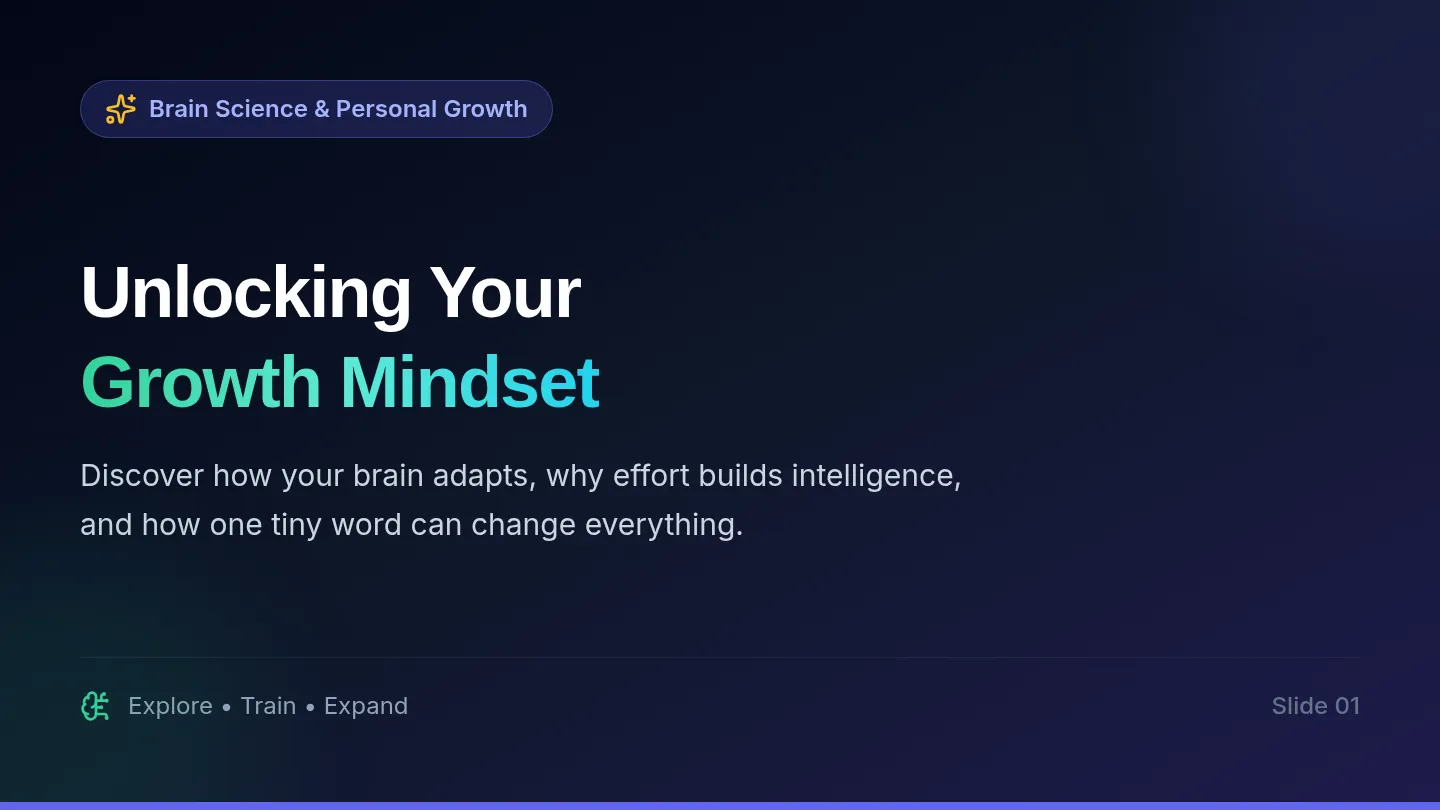
An accessible, engaging 8-slide presentation tailored specifically for 6th graders, using clear language, everyday middle school examples, simple brain science explanations, vivid SVG illustrations, and the rock vs. muscle comparison.
A 6-week social-emotional learning program for 6th-grade girls focused on building healthy friendships, resolving conflicts, practicing empathy, and setting boundaries.
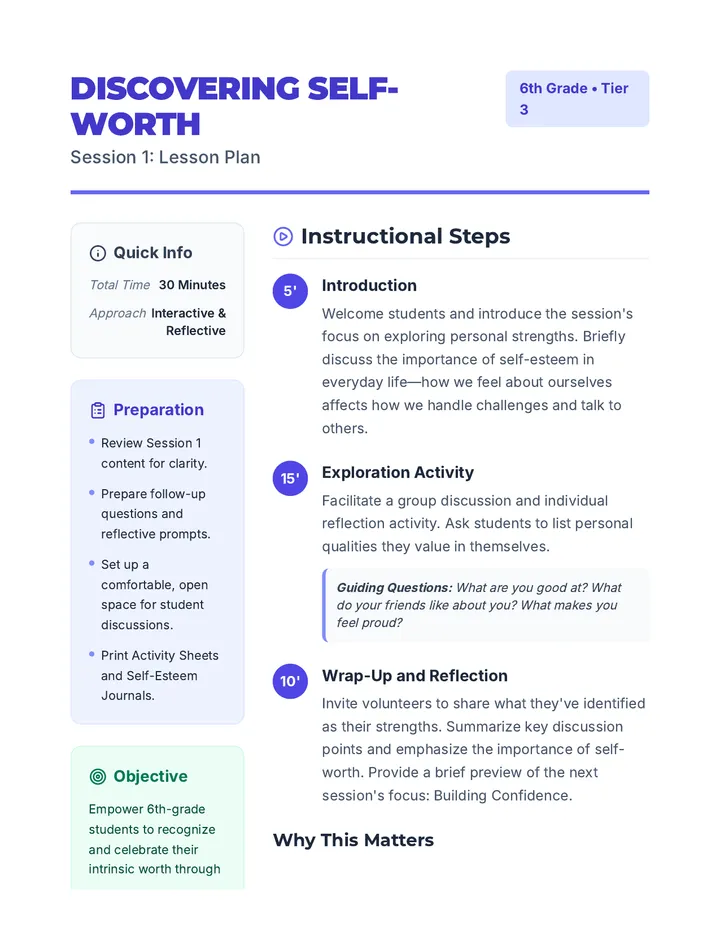
A 5-session Tier 3 intervention for 6th-grade students focused on building self-esteem, recognizing self-worth, and developing resilience through reflective activities and goal-setting.
A comprehensive sequence for 6th graders to understand and apply behavioral activation. Students learn how their actions impact their emotions, track their energy levels, brainstorm nourishing activities, and create a sustainable weekly schedule to improve their mental well-being.
In this inquiry-driven sequence, students explore behavioral activation, investigating how their actions influence their emotions. They learn to distinguish between pleasure and mastery activities, conduct personal experiments to track mood changes, and create a personalized evidence-based plan for mood regulation.
This sequence shifts focus from the design of the study guide to its utility, emphasizing active recall and self-testing strategies to help students distinguish between familiarity and actual mastery of material.
This sequence helps students overcome task initiation hurdles by combining visualization and verbal self-talk. Students learn to 'see' the finished product, reverse engineer the steps, estimate time accurately, and use micro-goals to take the first step.
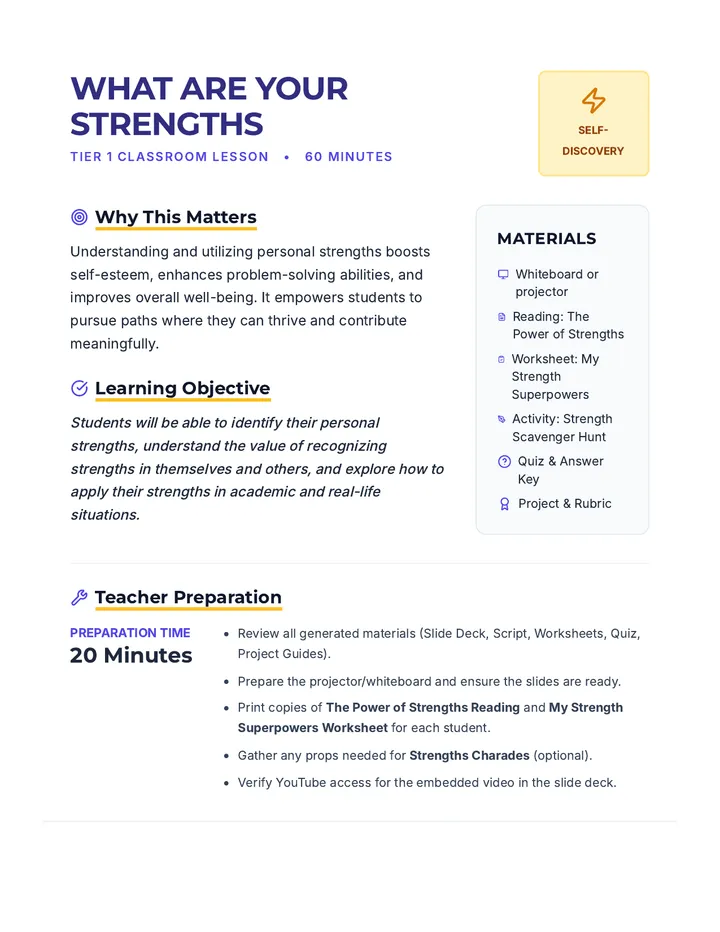
A 60-minute interactive lesson for high school students focused on identifying, appreciating, and applying personal strengths to build self-confidence and guide future choices.
This lesson helps 4th-grade students understand the importance of regular attendance for academic success and self-esteem through reading, discussion, and personal action planning.
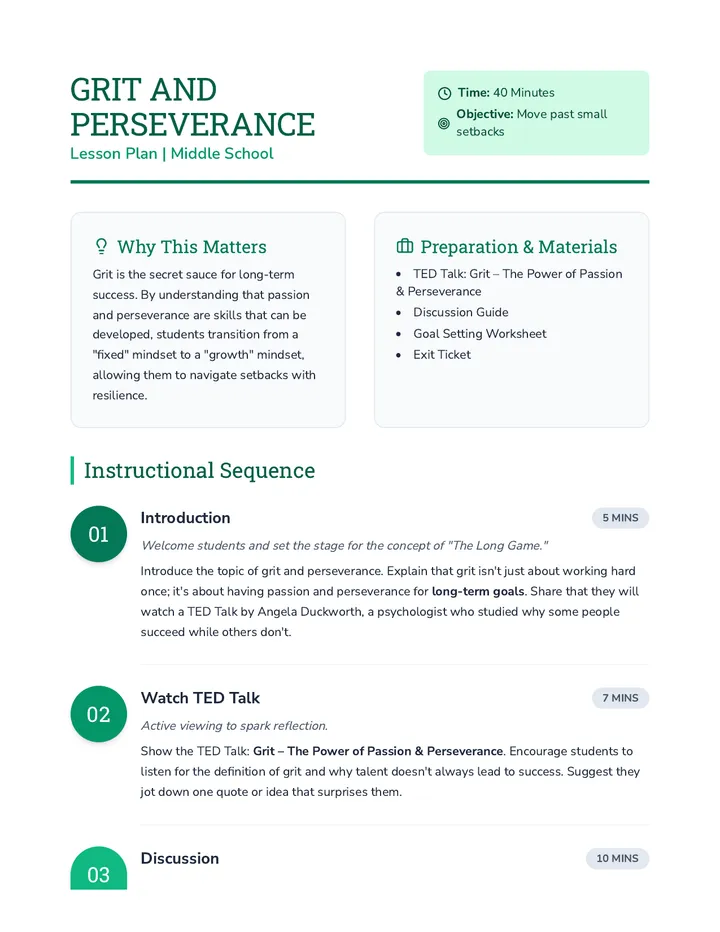
Students explore the concept of grit through Angela Duckworth's TED Talk, engage in reflective discussion, and create personalized action plans to build perseverance and a growth mindset.
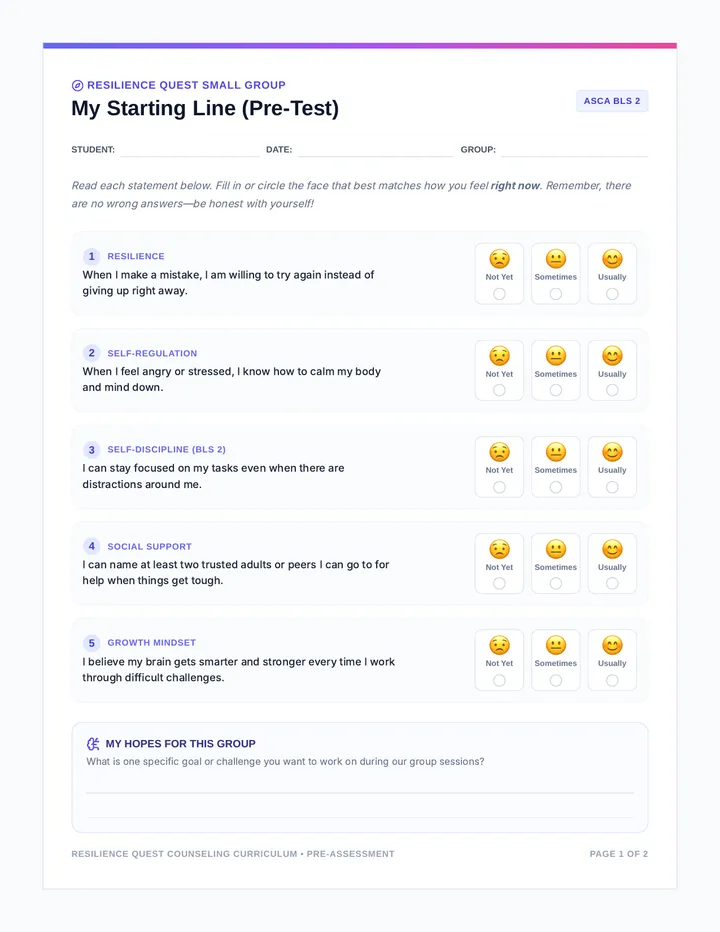
A small group counseling lesson on resilience, self-discipline, and emotional regulation (ASCA BLS 2). This lesson includes a comprehensive student workbook with pre/post assessments, reflection journals, and goal trackers.
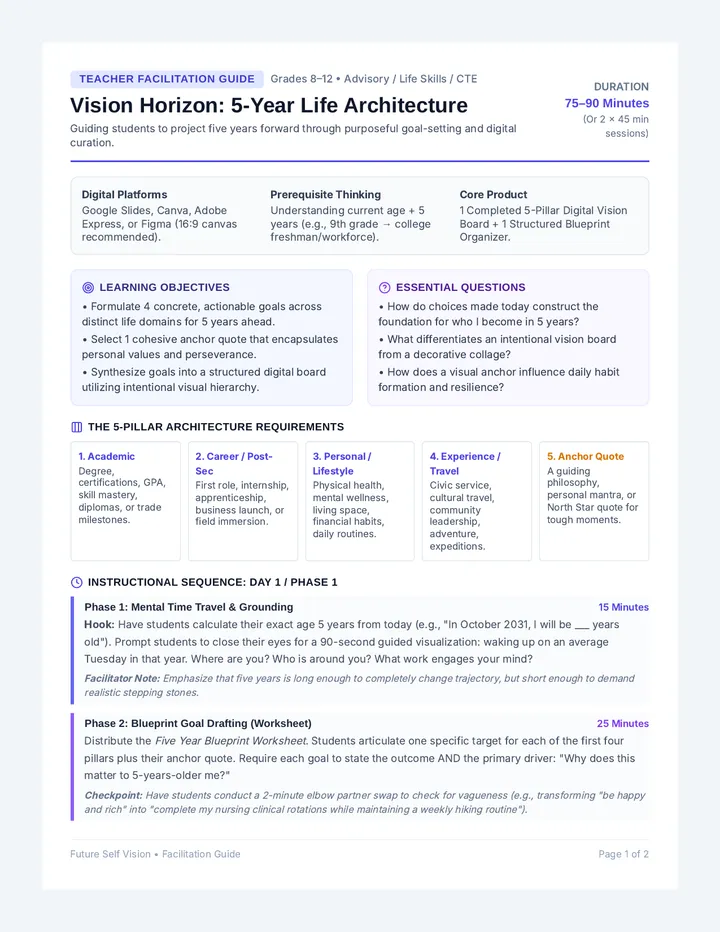
A comprehensive lesson guiding students through envisioning their lives five years ahead, setting meaningful goals across five core life pillars, and designing an intentional digital vision board.
A high-energy 30-minute lesson empowering 4th and 5th graders to take ownership of their learning through daily attendance streaks, habit loops, and clear personal goals.