Links daily engagement to emotional well-being by identifying and scheduling rewarding activities. Targets symptoms of depression through structured activity monitoring and goal-setting.
Synthesizing their learning, students create a 'Break the Glass' emergency plan for days when they feel low or anxious. They select their most effective pleasure and mastery activities and write specific implementation intentions (If I feel X, then I will do Y).
Students apply their learned strategies to help Pippin join the class, reflecting on their journey from feeling stuck to feeling active.
Students discover the mood-boosting power of kindness by practicing simple prosocial actions within the classroom community.
Students select pictures representing activities identified in previous lessons to create a personal visual 'Happy Heart' collage.
Students identify and select three specific, safe actions they can take to build their own mental 'Coping Kit' for difficult days.
Students lead Pippin through 'Action Experiments' like stretching and singing to see how small movements can create big shifts in mood.
Focusing on calm happiness, students explore textures, smells, and sounds to identify sensory inputs that help them feel safe and content.
Students meet Pippin the Penguin, a puppet who feels 'stuck' and grumpy, to explore the connection between feelings and physical stillness.
Students move outdoors or to an open space to test how physical movement affects their mood, identifying activities that generate positive energy.
Children actively sort through classroom items to decide which ones bring them the most joy, focusing on making choices based on internal preference.
Students explore the physical sensations of happiness through mirror play and storytelling, learning to identify how their bodies and faces look when they feel joyful.
Students synthesize their learning by creating a personal 'Activation Plan' to use when they feel stuck or unmotivated.
A Pre-K sequence introducing behavioral activation concepts by helping a puppet character navigate low moods through small, physical actions and kindness. Students learn that 'doing' can change 'feeling' in a developmentally appropriate, narrative-driven way.
A Pre-K sequence focused on helping young learners identify personal interests and activities that bring them joy, fostering self-awareness and emotional regulation through the creation of a 'Happy List'.
A 5-lesson sequence for 3rd grade students exploring behavioral activation. Students learn how their actions influence their emotions and develop strategies to initiate positive behaviors even when motivation is low.
A 1st-grade counseling sequence that uses game-based mechanics and metaphors to teach behavioral activation, emotional resilience, and the importance of daily positive routines.
A project-based sequence for 1st graders focused on emotional regulation through the creation of a 'Sunshine Kit'. Students explore sensory, physical, and social activities to build a personalized toolkit of positive experiences for use during challenging moments.
This sequence introduces first-grade students to the fundamental connection between their actions and their emotions, serving as a foundational introduction to behavioral activation. Students explore how specific activities can shift their mood and create a personalized action plan for emotional regulation.
A sequence for 2nd graders to learn how behavioral activation—choosing positive actions—can help regulate emotions like sadness and anxiety. Students learn to recognize physical emotional cues and develop a personal 'Bounce-Back Plan' to shift their mood.
This sequence introduces 2nd-grade students to behavioral activation by teaching them how to integrate positive activities into their daily routines to support emotional well-being. Students will create tools like a 'Happiness Jar' and a 'Positive Habit Tracker' to learn the connection between their actions and their mood.
This sequence introduces undergraduate students to the theoretical underpinnings and practical assessment tools of Behavioral Activation (BA). Students will learn to conceptualize depression as a cycle of avoidance and reduced reinforcement, mastering techniques like activity monitoring, values clarification, and functional analysis.
This sequence guides undergraduate students through the practical application of Behavioral Activation (BA) protocols. Moving from theoretical understanding to clinical implementation, students learn to design interventions, troubleshoot psychological barriers using the TRAP/TRAC model, and analyze data to refine therapeutic outcomes.
A 5-lesson project-based sequence for 5th graders focusing on building positive experiences through routine design and habit formation. Students learn to categorize wellness activities, overcome barriers like inertia, use habit-stacking techniques, and create a sustainable weekly wellness schedule to build emotional resilience.
In this inquiry-driven sequence, students explore behavioral activation, investigating how their actions influence their emotions. They learn to distinguish between pleasure and mastery activities, conduct personal experiments to track mood changes, and create a personalized evidence-based plan for mood regulation.
A personal 'Activation Plan' worksheet where students identify their emotional triggers and commit to specific actions and helpers.
A slide deck for the final lesson that summarizes the sequence and guides students in creating their personal activation plan.
A personal visual 'Happy Heart' collage template for Pre-K students to select and display activities identified in previous lessons.
Facilitation guide for teachers to lead Pre-K students through creating their personal visual 'Happy Heart' collage.
A teacher guide for the final lesson of the sequence, detailing the "Activation Plan" project and the "Break the Glass" hook.
Visual presentation for Pre-K students to conclude the sequence and prepare for their happiness collage.
A set of printable game cards featuring emotion urges and their corresponding opposite actions for students to match and practice.
A sensory scavenger hunt sheet for Pre-K students to identify sensory inputs that help them feel safe and content.
A culminating activity sheet for Lesson 5 where students create their own personal 'Bounce-Back Plan' emergency card, selecting body boosters, brain calmers, and joy makers.
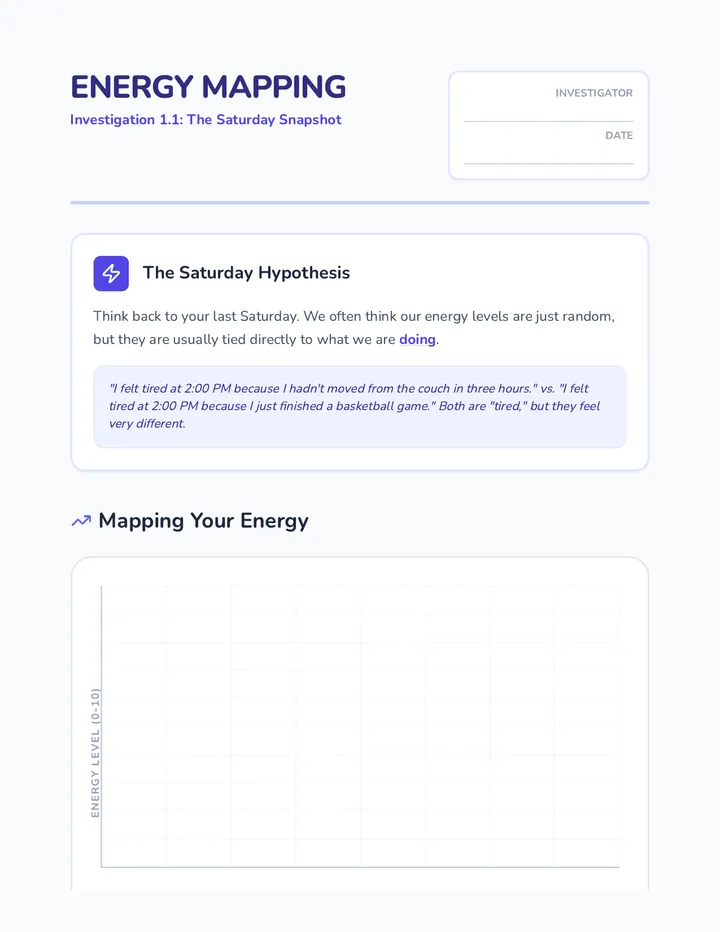
A weekend homework log for students to track their mood-boosting activity and reflect on their emotional state.
A slide deck for Lesson 4 that introduces the 'Opposite Action' skill and provides examples of how to reverse negative emotion urges.
An observational assessment tool for teachers to track student progress in emotional regulation, task initiation, and prosocial behavior.