Identification of facial expressions, body language, and tone of voice to understand the emotional states of others. Develops empathy and situational awareness across diverse social contexts.
A 20-card printable set of recess dilemma task cards covering gaga ball, soccer, tag, football, 4-square, girl drama, and social exclusion. Written at an accessible 3rd-grade reading level with white backgrounds, dashed cut lines, and without the talk-it-out section.
A comprehensive 6-page printable K-6 bulletin board display kit centered on the theme of Support, featuring an assembly blueprint with CASEL and ASCA alignments, bold title banners, anchor cards for Social Awareness, Relationship Skills, and Self-Management, and interactive student shout-out printables.
A 4-page set of printable conflict de-escalation scenario practice cards, featuring essential calm communication toolkits, five realistic school conflict role-play scenarios, and a structured peer observer scorecard.
A comprehensive high school lesson plan explicitly structured around why we should be kind, what kindness looks like in secondary settings, and concrete how-to strategies for actionable peer support.
A 3-page comprehensive 45-minute assignment for high school personal and social development. Features a 12-item self-assessment across communication, perspective-taking, and conflict resolution, deep self-analysis reflection prompts, a complete SMART goal instructional guide and worksheet, and an efficacy analysis comparing standard versus SMART goals with a success likelihood audit.
A comprehensive two-page student worksheet for 4th and 5th graders designed to develop social awareness, flexible thinking, conversational balance, and expected problem-solving responses using an engaging radar-tracking theme.
A printable collection of 18 back-to-school getting-to-know-you conversation cards for fourth graders. The cards feature engaging prompts and partner-action cues focusing on friendship, active listening, and self-expression.
A two-page restorative reflection and reentry question sheet for elementary students in grades 2-5 returning from in-school suspension. It includes emotional check-ins, restorative impact questions, self-regulation toolkit choices, and a step-by-step classroom reentry plan with teacher check-in agreements.
A two-page guided practice worksheet specifically tailored to social pragmatic skills—including perspective taking, reading social cues, choosing appropriate tone and timing, expressing goals to varied audiences, collaborative action planning, and receiving feedback constructively.
A 2-page early elementary social problem-solving worksheet featuring chicken-themed classroom and playground scenarios. Students evaluate calm peacemaker choices, explore a step-by-step conflict resolution model, and draw and write their own peaceful solution.
A 5-week individual lesson series for 8th-grade students with social-emotional disabilities, introducing core DBT modules: Mindfulness, Distress Tolerance, Emotion Regulation, Interpersonal Effectiveness, and Walking the Middle Path.
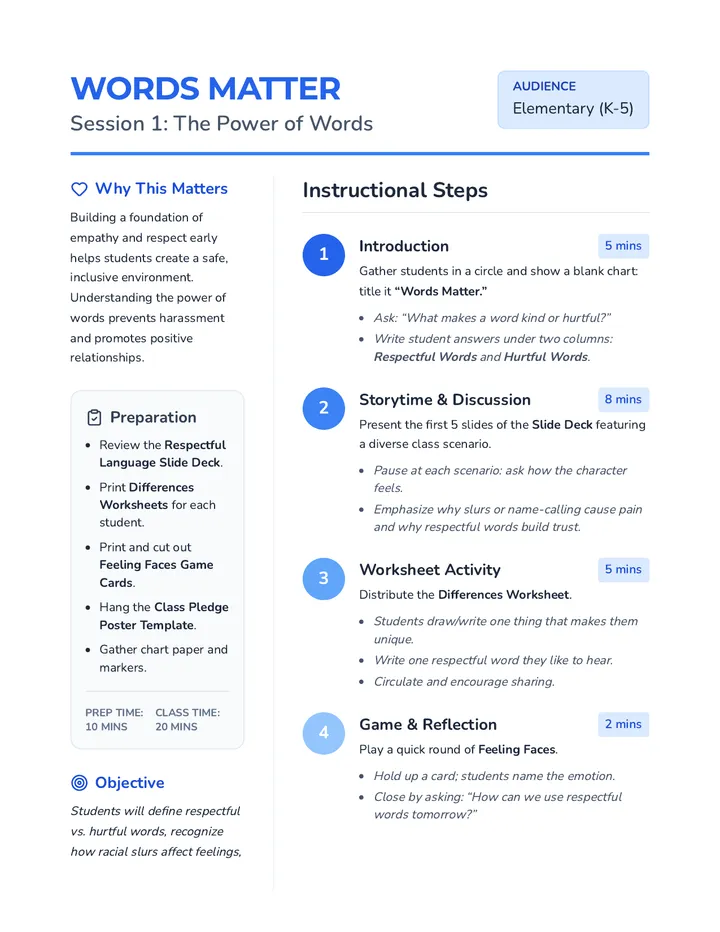
A 4-session Tier 1 sequence for K-5 students focused on racial slur prevention, respectful language, and celebrating diversity. Students learn empathy through role-play, sharing traditions, and creating a collective class pledge.
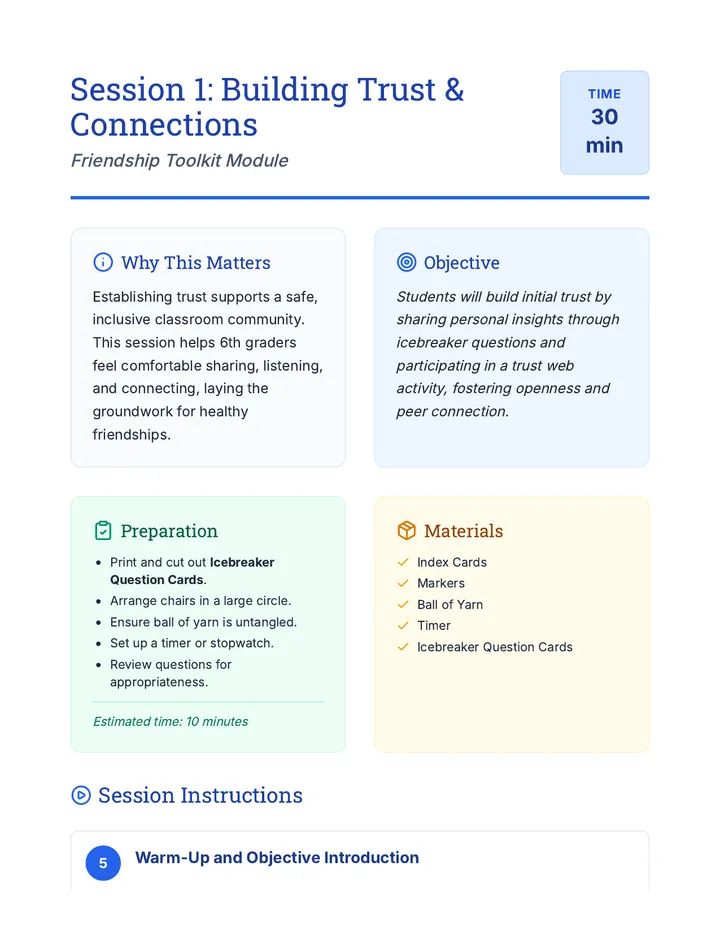
A six-session social-emotional learning module for 6th graders focused on building essential friendship skills like trust, empathy, assertive communication, and conflict resolution. through interactive activities and reflection.
A 10-session course for high school students exploring communication, boundaries, consent, and conflict resolution across romantic, platonic, and digital relationships.
A 6-week social-emotional learning program for 6th-grade girls focused on building healthy friendships, resolving conflicts, practicing empathy, and setting boundaries.
A Kindergarten sequence focused on teaching emotional regulation through positive actions. Students learn to use activities like physical movement, deep breathing, and creative expression to 'switch the channel' from negative to positive emotions, building a toolkit of coping strategies.
A 5-lesson unit where students become 'Friendship Detectives' to identify healthy and unhealthy relationship dynamics. Using case studies, sorting games, and creative projects, students learn to recognize green and red flags, distinguish between teasing and bullying, and resolve conflicts safely.
A 5-lesson sequence for 7th grade students focusing on restorative practices, the difference between intent and impact, crafting genuine apologies, and the long-term process of rebuilding trust after conflict.
This sequence explores complex conflict navigation for 12th graders, moving from the psychological roots of identity-based conflict to the practical application of restorative circles and sustainable resolution design.
A comprehensive 6th-grade sequence on conflict navigation, teaching students to identify root causes, recognize personal conflict styles, practice perspective-taking, understand escalation, and diagnose complex disputes.
An 8-week social skills group for 3rd graders focused on social observation, expected behaviors, and problem-solving using a 'Social Detective' theme. Each session provides interactive instruction and hands-on practice to build emotional intelligence.
A Pre-K sequence focused on moving from individual joy to shared happiness through social connection, invitations, collaboration, and celebration. Students learn how community and play amplify positive emotions and build resilience.
A social skills lesson for 2nd graders focusing on understanding personal boundaries and learning when to focus on one's own tasks versus when to intervene in others' business.
An interactive lesson for 3rd and 4th graders exploring how words impact emotions and relationships. Students learn that words have a lasting effect through discussion, role-play, and hands-on activities.
In this engaging 30-minute Tier 1 lesson, 2nd graders will explore the concept of respect by reading 'A Little Respectful Spot,' participating in a hands-on sorting activity, and engaging in a meaningful class discussion. This lesson builds social-emotional skills, fosters a positive classroom environment, and helps students recognize respectful behaviors in everyday life.
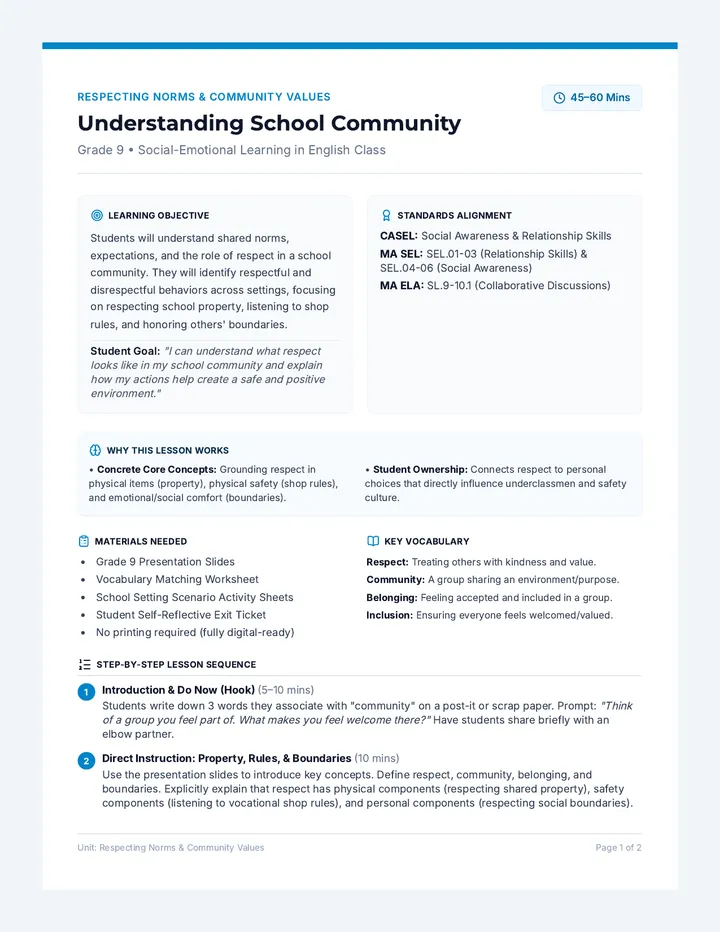
A comprehensive 60-minute lesson for middle schoolers to define, understand, and practice empathy through discussion, role-playing, and reflection. Students explore the 'Walk In My Shoes' metaphor to build stronger social-emotional skills and community.
This lesson introduces Pre-primary 1 and 2 students to the concepts of peer support and allyship. Students will learn how to be kind, helpful friends and stand up for others through stories, activities, and games.
Students explore the difference between what we mean (intent) and how others feel (impact) through the 'Ripple Effect' metaphor, developing empathy and social awareness.
A 30-minute Kindergarten lesson that helps students distinguish between playful jokes and hurtful remarks using discussion, visual slides, and interactive scenario practice.
A 30-minute Tier 2 group lesson for 4th graders focused on responsible social media use, group chat etiquette, and digital safety through scenario-based learning and interactive play.
In this fun 90-minute pre-K lesson, students will explore the difference between jokes and lies through storytelling, role-play, and interactive games. Learning this skill helps children develop honesty and social understanding essential for healthy relationships.
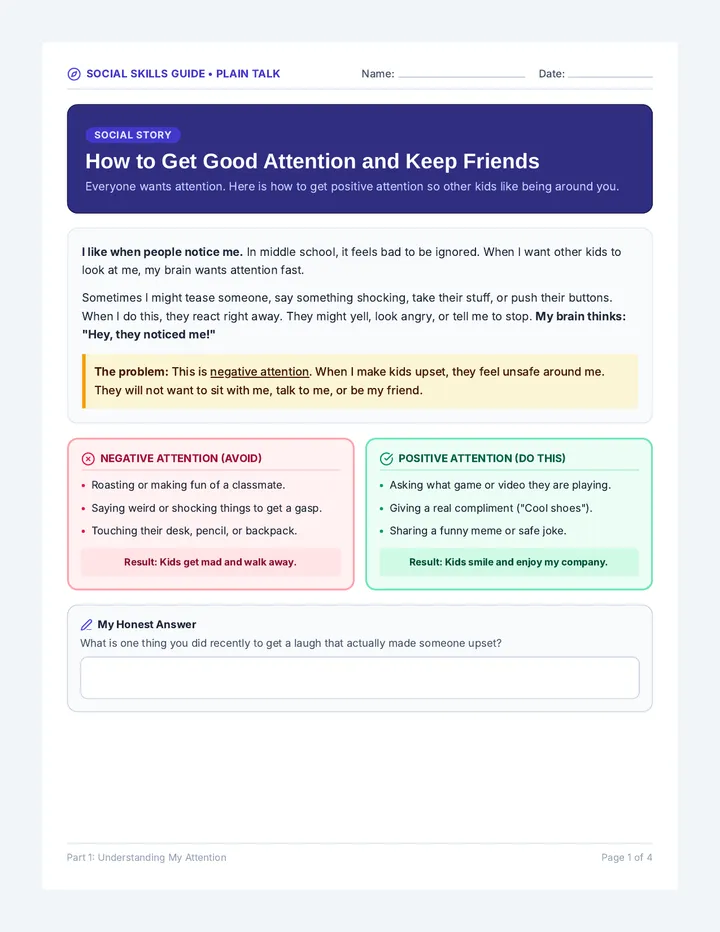
A 30-minute SEL lesson for 3rd graders focusing on the impact of words, differentiating between playful teasing and unkind roasting, and practicing empathy through kind alternatives.
A 45-minute lesson for high school students focusing on active listening, 'I' statements, empathy, and negotiation to resolve conflicts constructively.
An interactive high school lesson where students role-play scenarios to practice setting and respecting boundaries in various relationships.