Systematic identification of underlying factors contributing to interpersonal or personal challenges. Employs techniques like the 5 Whys and fishbone diagrams to develop effective, long-term interventions.
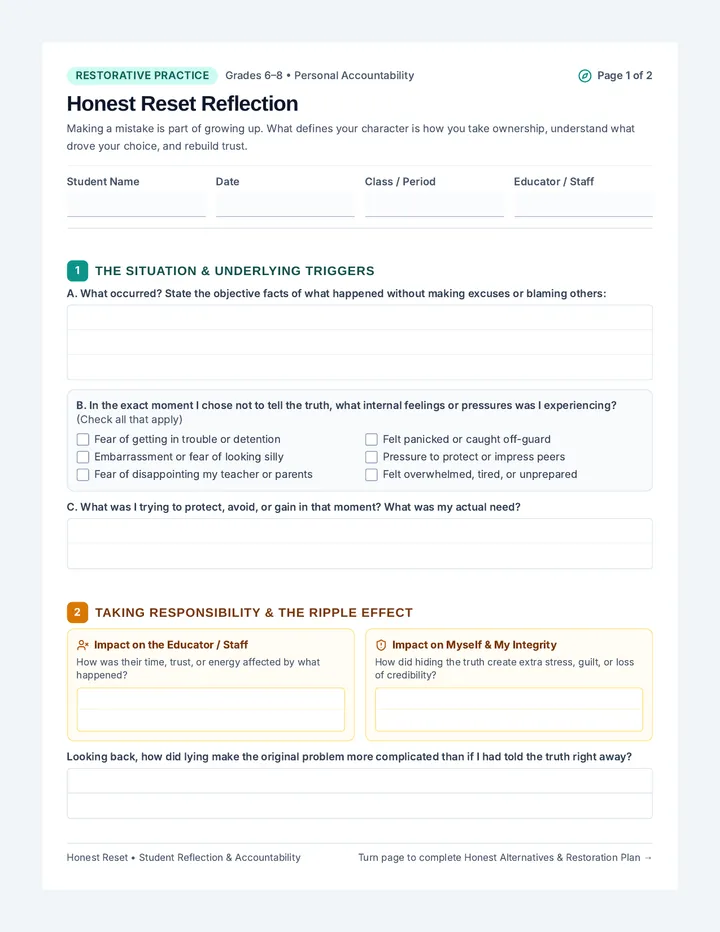
A two-page printable reflection worksheet designed for middle school students to process lying to an educator, analyze internal triggers, practice honest alternative responses, and draft a plan to repair trust and take accountability.
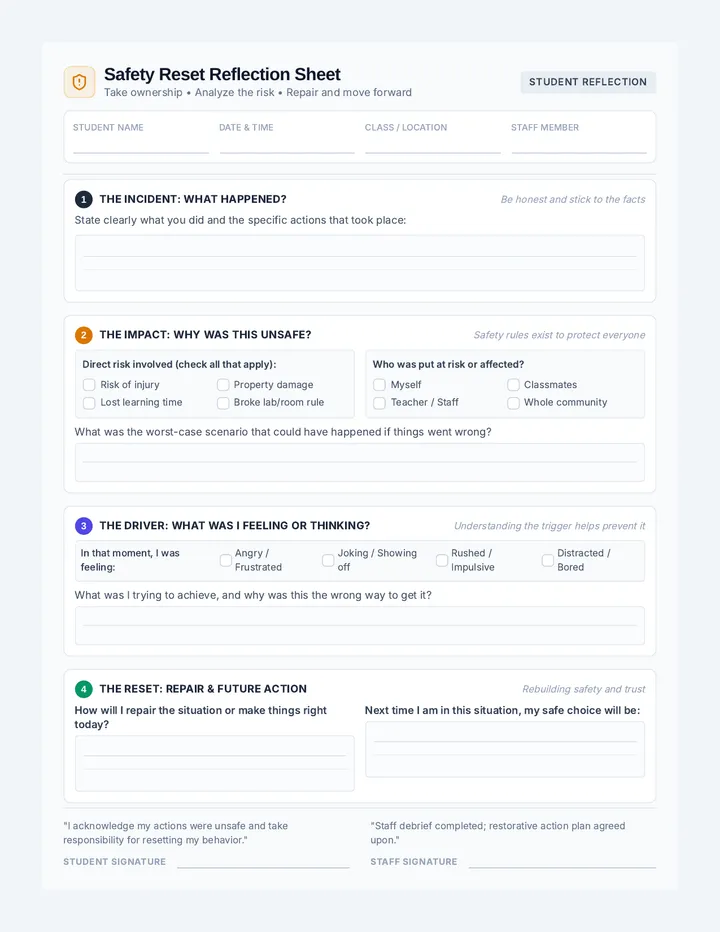
A restorative reflection sheet designed for middle school students to process unsafe choices, identify root causes, understand safety risks, and develop an actionable repair plan.
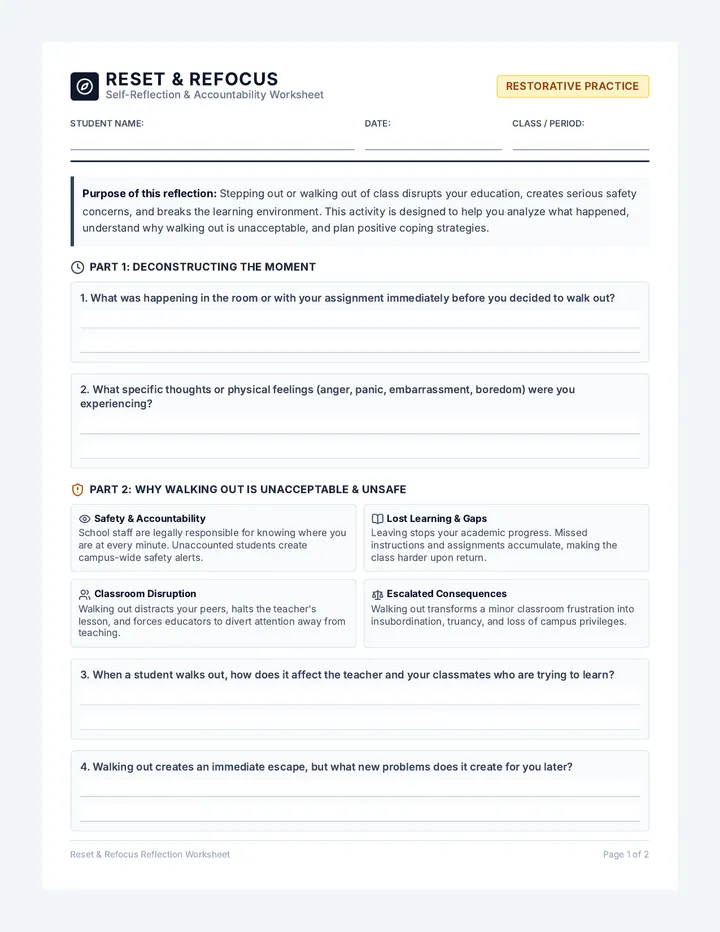
A comprehensive two-page restorative self-reflection worksheet for students who walked out of class, guiding them through emotional awareness, understanding safety and community impacts, identifying root causes, and formulating concrete replacement behaviors and repair commitments.
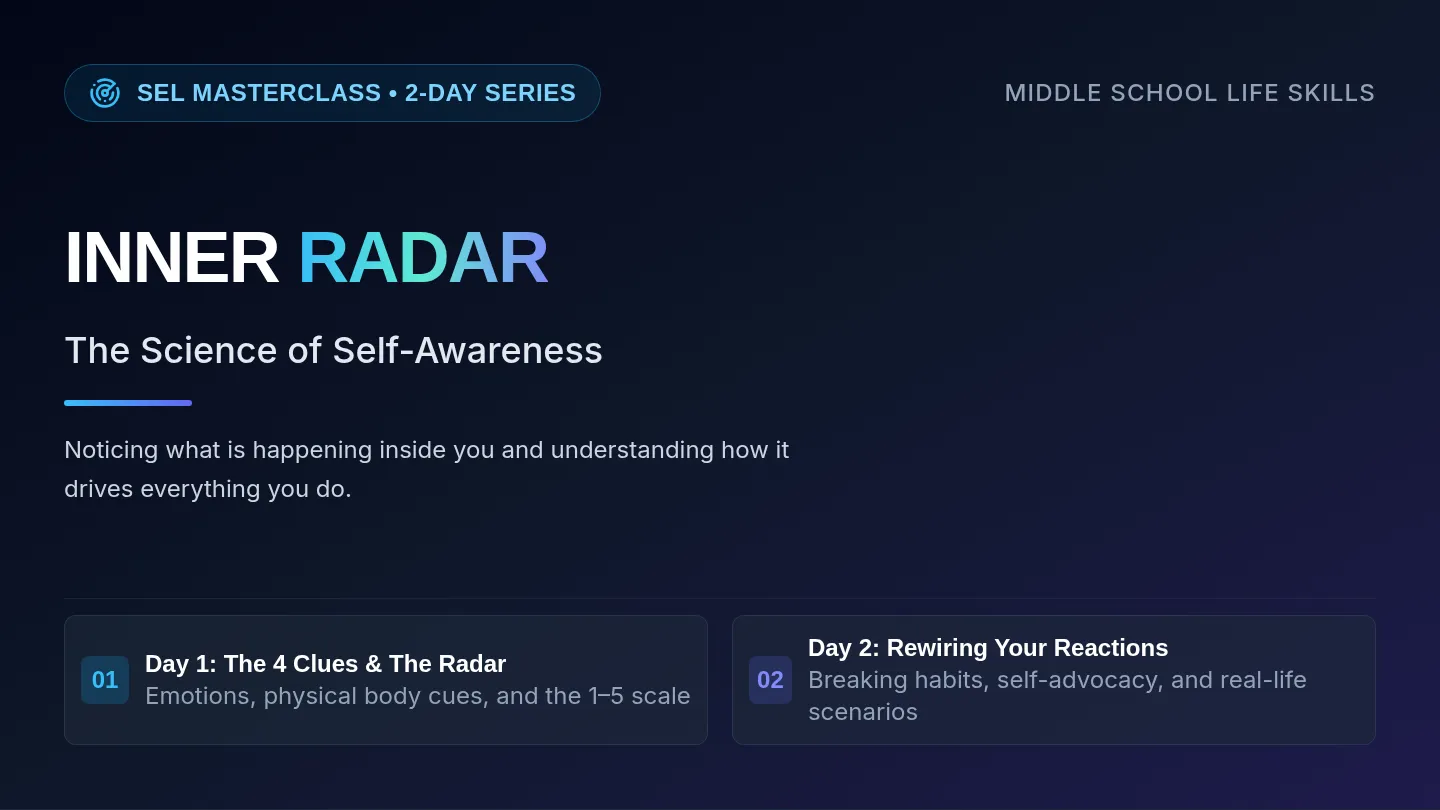
A comprehensive 15-slide student presentation for middle school self-awareness across two class periods, covering the Notice-Understand-Choose model, the 4 internal clues, the Body Detective activity, the 1-5 scale, and cognitive-behavioral scenario rewiring.
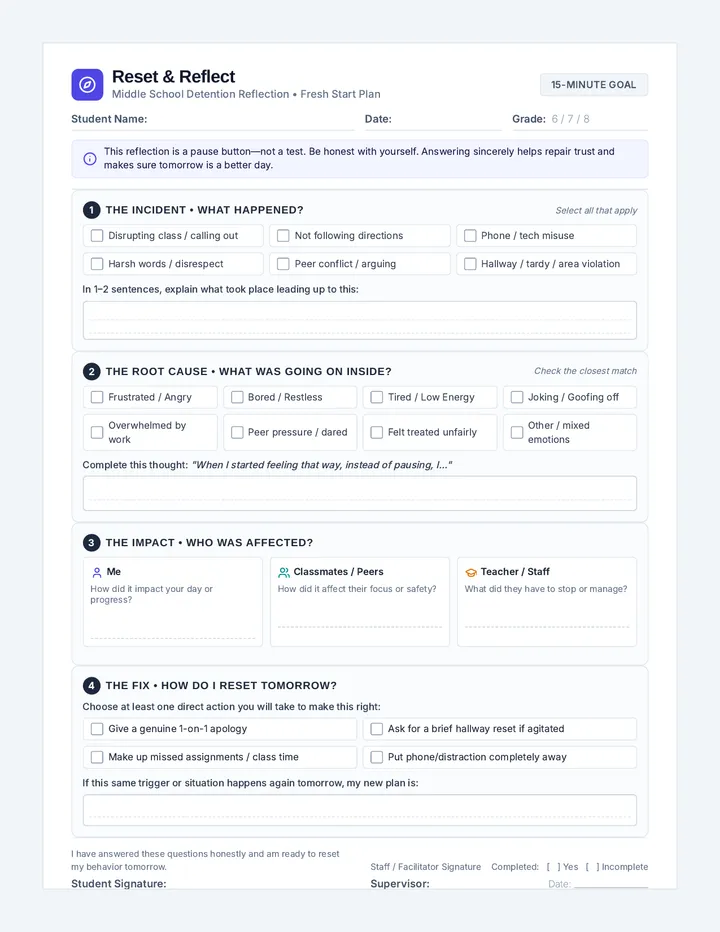
A restorative after-school detention reflection sheet designed for middle school students to complete independently in about 15 minutes. It features guided check-boxes, emotion check-ins, perspective-taking prompts, and actionable repair steps to support students who may struggle with self-reflection.
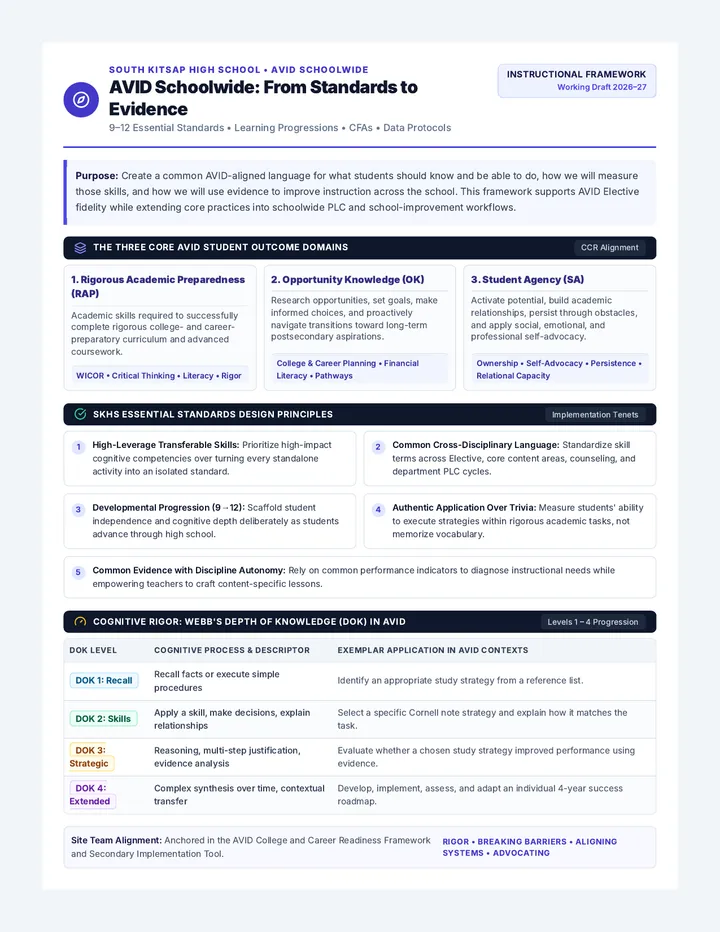
A comprehensive 7-page professional implementation guide for South Kitsap High School's AVID Schoolwide framework, featuring dedicated pages and full student prerequisites for Rigorous Academic Preparedness (RAP), Opportunity Knowledge (OK), and Student Agency (SA), alongside authentic assessment banks and PLC continuous-improvement protocols.
A 10-week series of 30-minute group lessons for high school students exploring Cognitive Behavioral Therapy. Each session builds practical skills in identifying and reframing thoughts, managing emotions, and engaging in healthy behaviors through interactive activities. This Tier 2 program develops resilience and mental wellness.
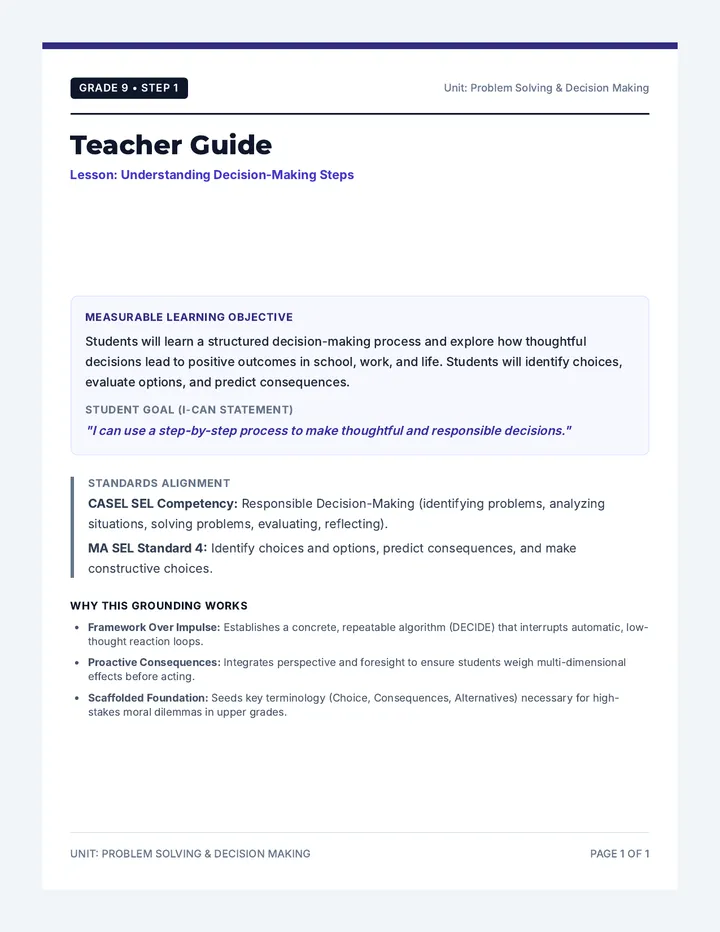
A comprehensive, scaffolded four-year social-emotional learning (SEL) unit designed for high school English classes. Students progress from fundamental decision-making steps in Grade 9 to complex problem-solving, ethical dilemmas, and strategic life transitions in Grade 12.
A 6-week Tier 3 intervention for 4th graders to develop emotional regulation and problem-solving skills to manage frustration. students learn to recognize triggers, express feelings with I-statements, and implement action plans.
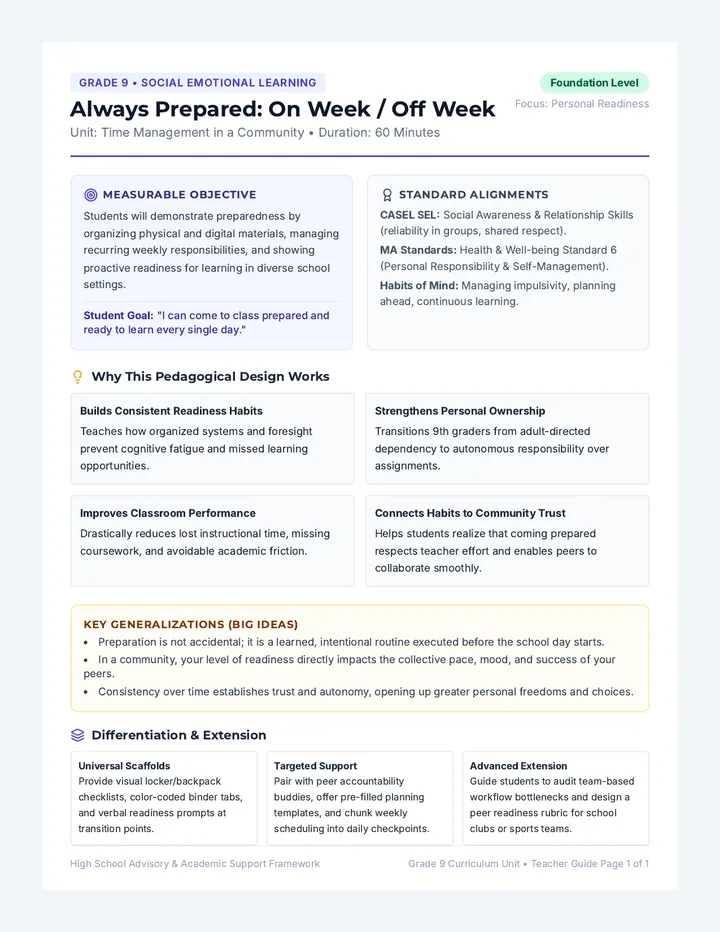
A scaffolded 4-grade social-emotional and executive functioning curriculum guiding high school students from foundational personal preparedness to balanced living, postsecondary goal alignment, and collaborative community leadership.
A 5-lesson sequence for 7th grade students focusing on restorative practices, the difference between intent and impact, crafting genuine apologies, and the long-term process of rebuilding trust after conflict.
A comprehensive 6th-grade sequence on conflict navigation, teaching students to identify root causes, recognize personal conflict styles, practice perspective-taking, understand escalation, and diagnose complex disputes.
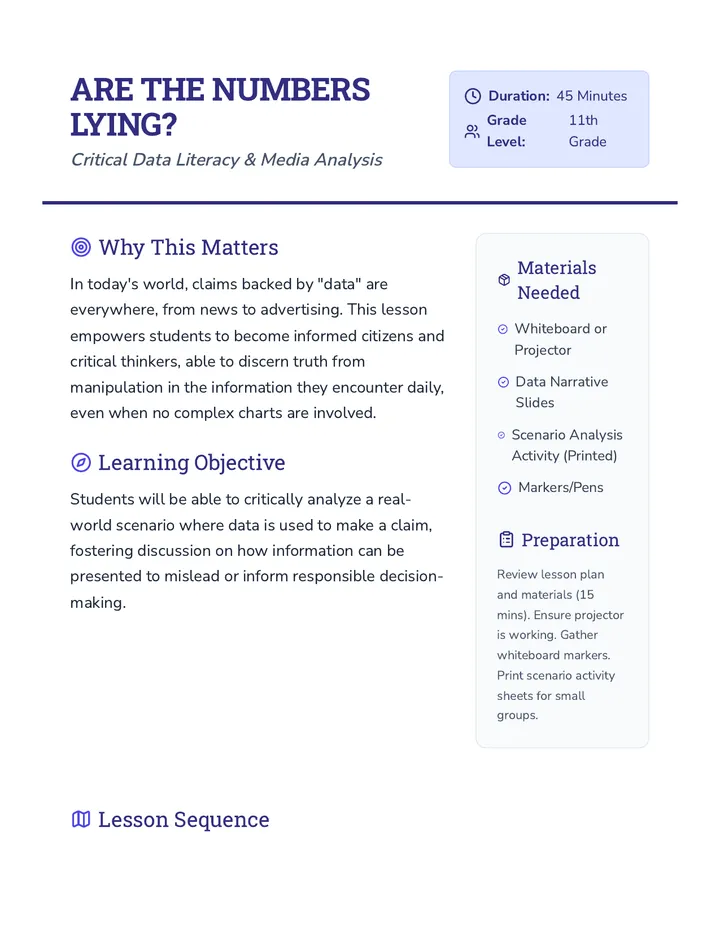
This 45-minute lesson for 11th-grade students explores how data narratives can be used to mislead or inform. Students critically analyze real-world scenarios to develop media literacy and responsible decision-making skills.
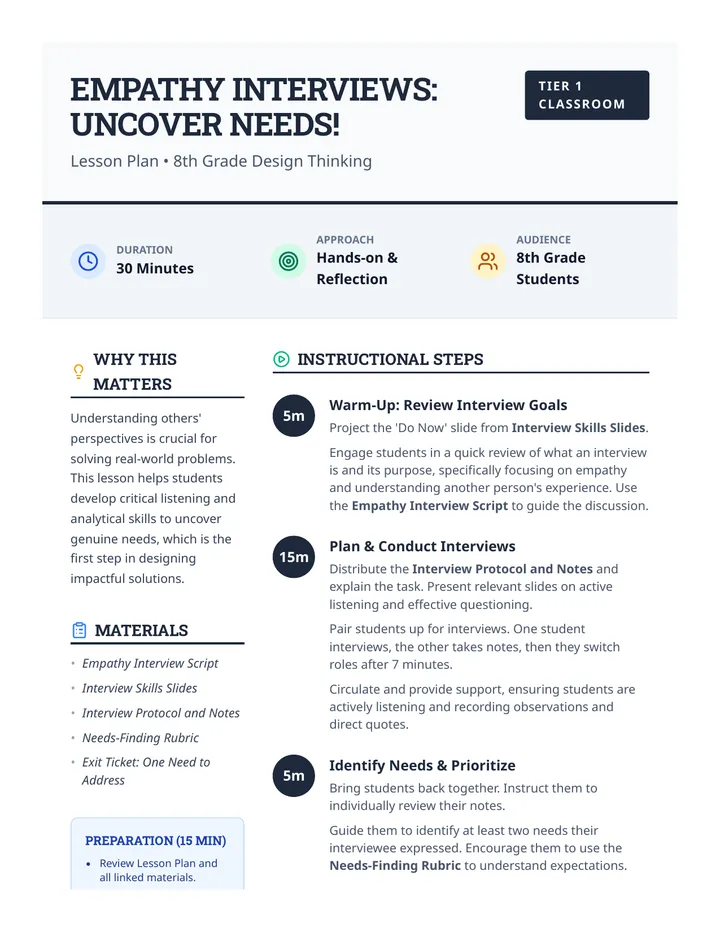
This 30-minute lesson introduces 8th-grade students to empathy interviewing, focusing on active listening and extracting core needs from user experiences. Students will conduct peer interviews to identify meaningful problems to solve in future design projects.
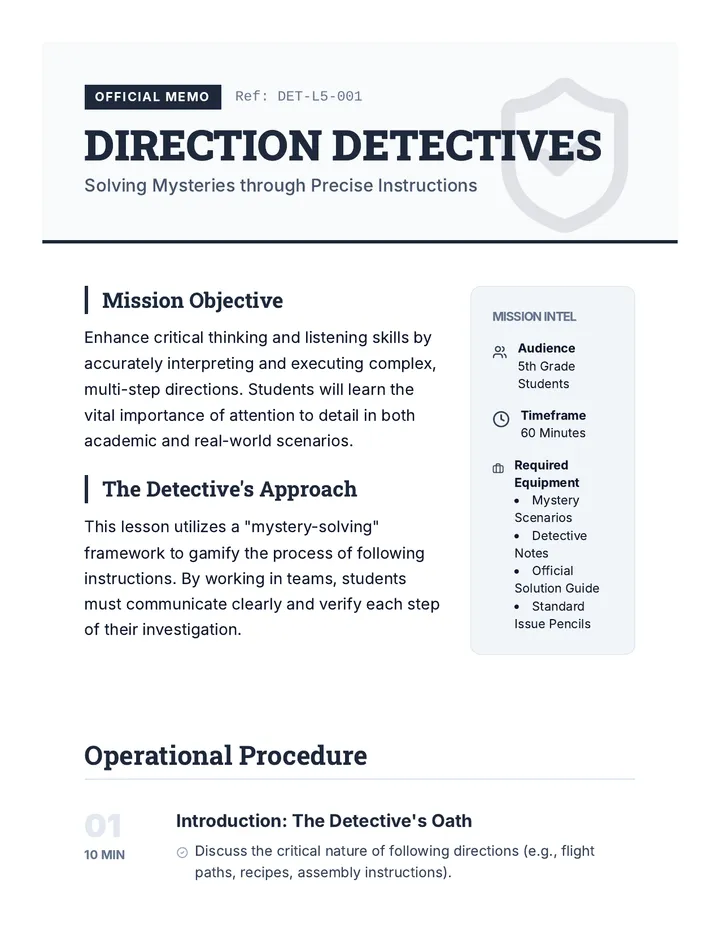
Students become detectives to solve mysteries by following multi-step instructions, enhancing critical thinking, listening skills, and attention to detail.
A comprehensive communication skills lesson guiding students through calm problem-solving, perspective-taking, I-statements, and respectful disagreement using guided practice and interactive scenarios.
A trauma-informed athletic coaching framework for Kitley Intermediate educators, transforming classroom management into proactive brain-state scouting, connection rituals, and sideline de-escalation plays.
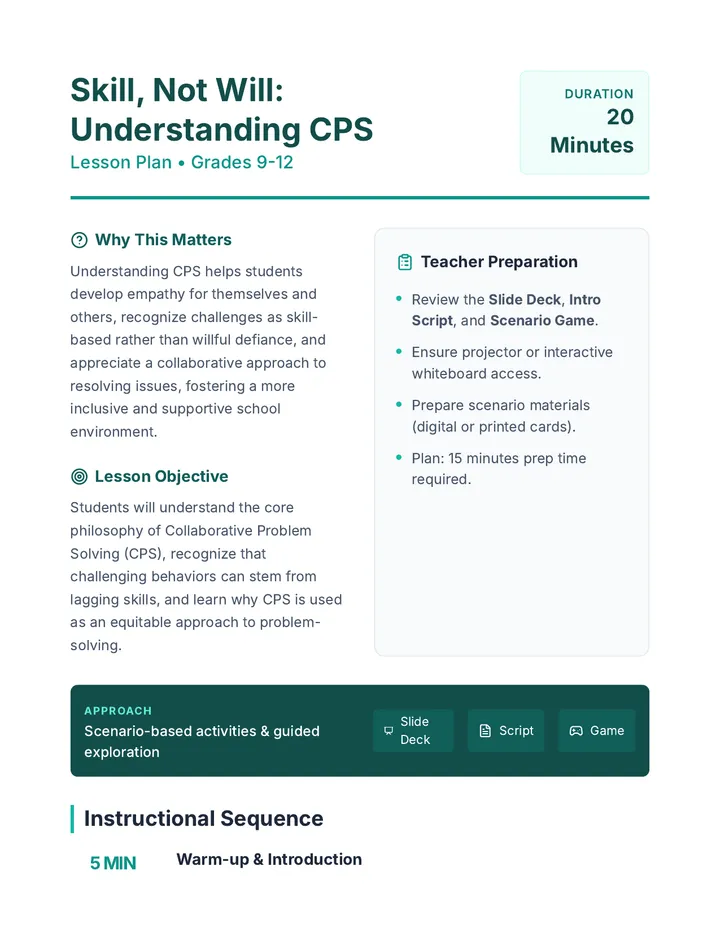
This lesson introduces high school students to Collaborative Problem Solving (CPS), emphasizing that behavioral challenges stem from a lack of skill rather than a lack of will. Students will explore lagging skills, the 'Plan B' conversation, and how this approach fosters equity and inclusion at their school.