Identification of physiological triggers and environmental stressors alongside the development of personalized coping strategies. Equips students with mindfulness techniques, time-management tools, and long-term resilience routines.
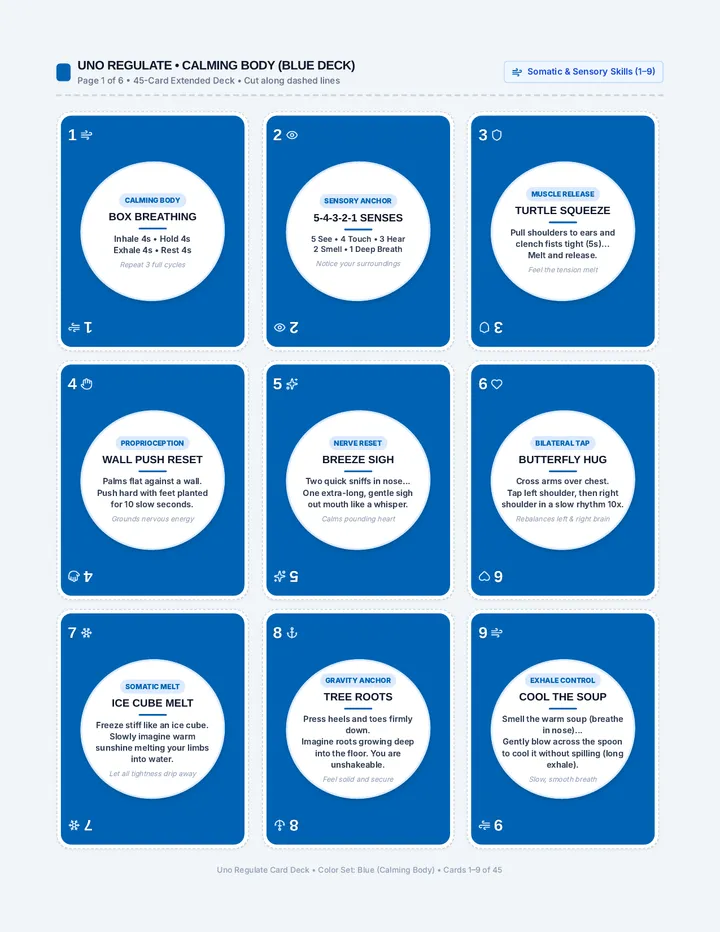
An expanded 6-page printable coping skills and self-regulation card deck styled after Uno, featuring 45 total cut-apart cards (complete 1–9 sets for all 4 color domains plus action and wild cards) and an in-depth gameplay and facilitation rulebook for classroom and small-group play.
A two-page student worksheet designed to build emotional awareness, recognize bodily warning signs, and apply calming self-regulation strategies. Students analyze emotional intensity levels, identify physical signals, and develop concrete calming action plans.
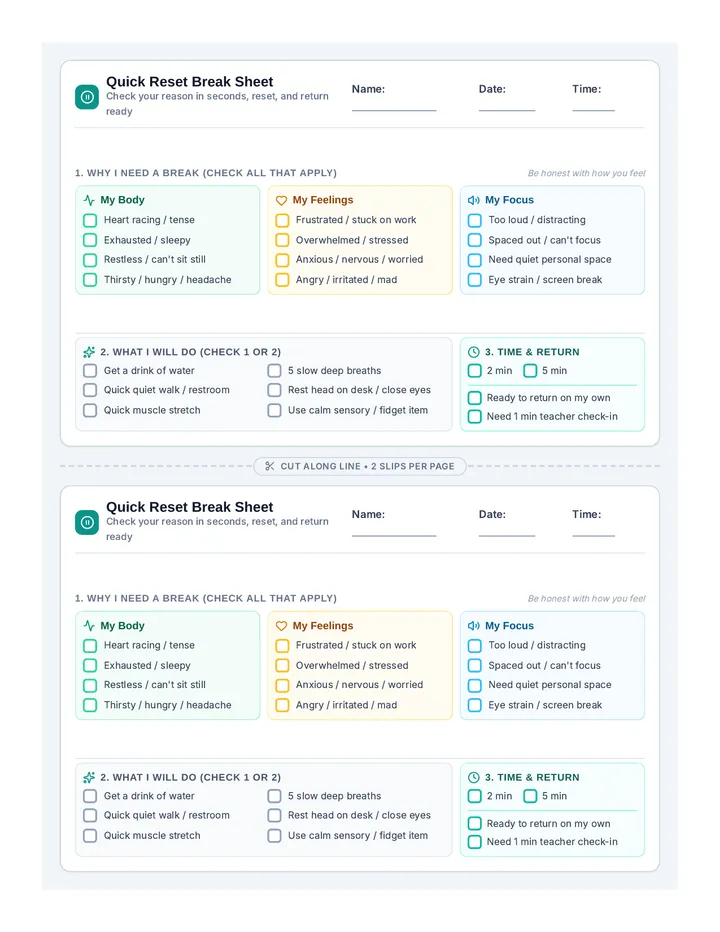
A streamlined, printable break check sheet designed for students to identify their regulation needs in seconds. Features student name, date, and time fields alongside clear checkbox categories for physical signals, emotions, triggers, and calming strategies across two half-page cut-out slips.
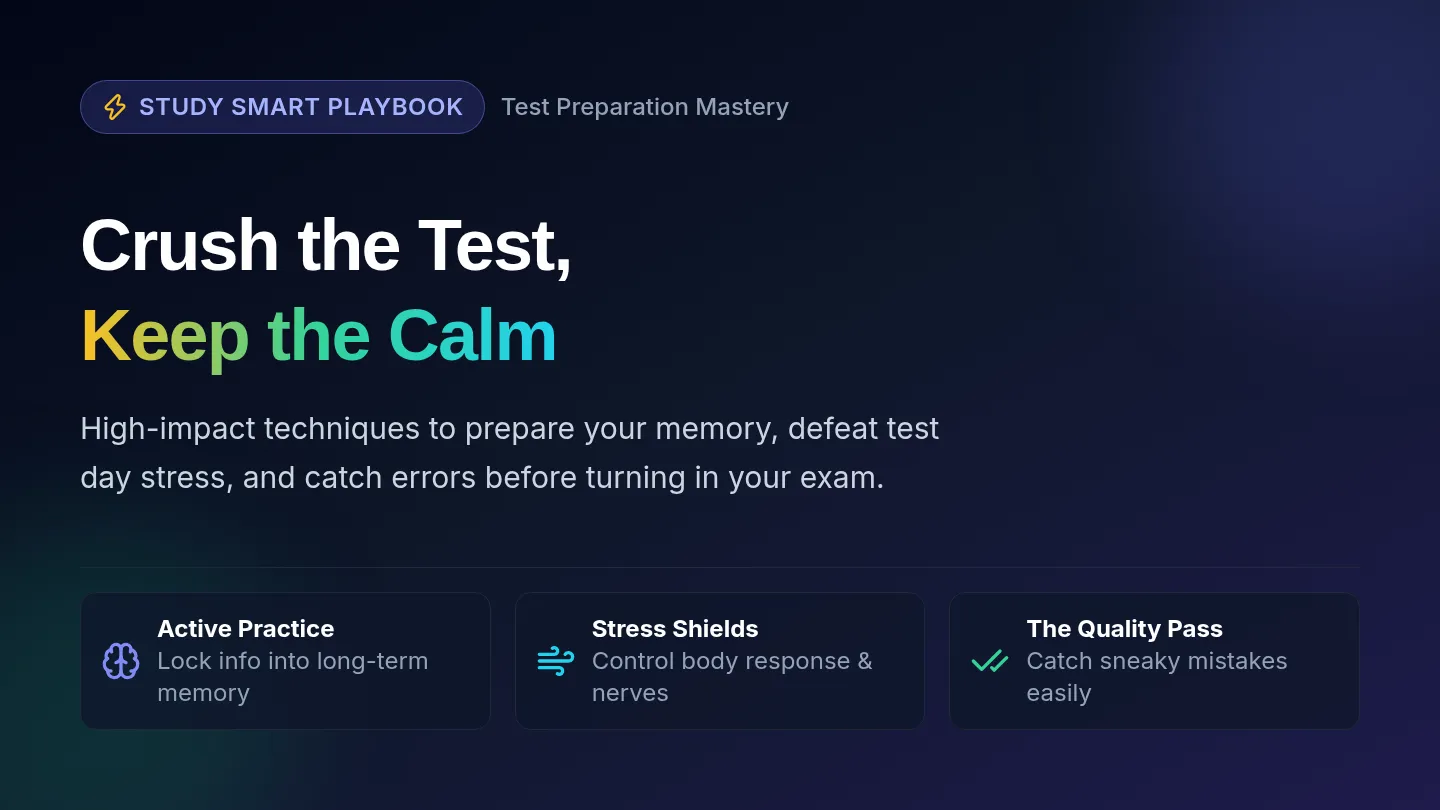
An 8-slide presentation teaching students high-impact study strategies, active recall techniques, test stress management, and systematic error-checking routines. Designed with high-contrast visual cards and clear, actionable steps for exam preparation.
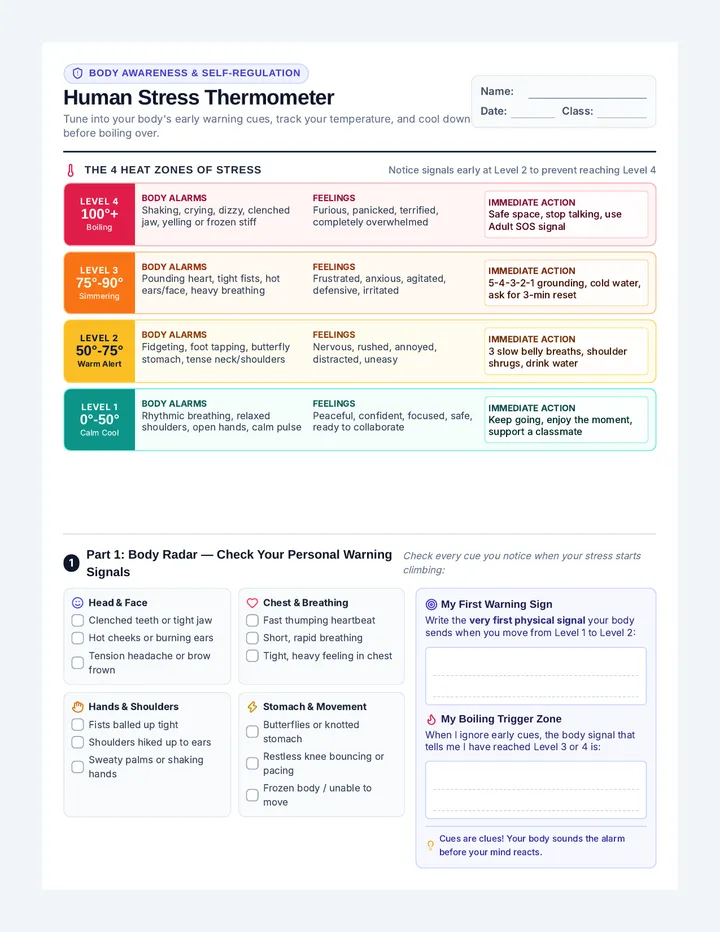
A comprehensive three-page printable worksheet featuring the Human Stress Thermometer. Students identify physical bodily warning cues, decode emotions, select coping tools, rehearse support scripts, and gauge situational intensity across real-world student scenarios.
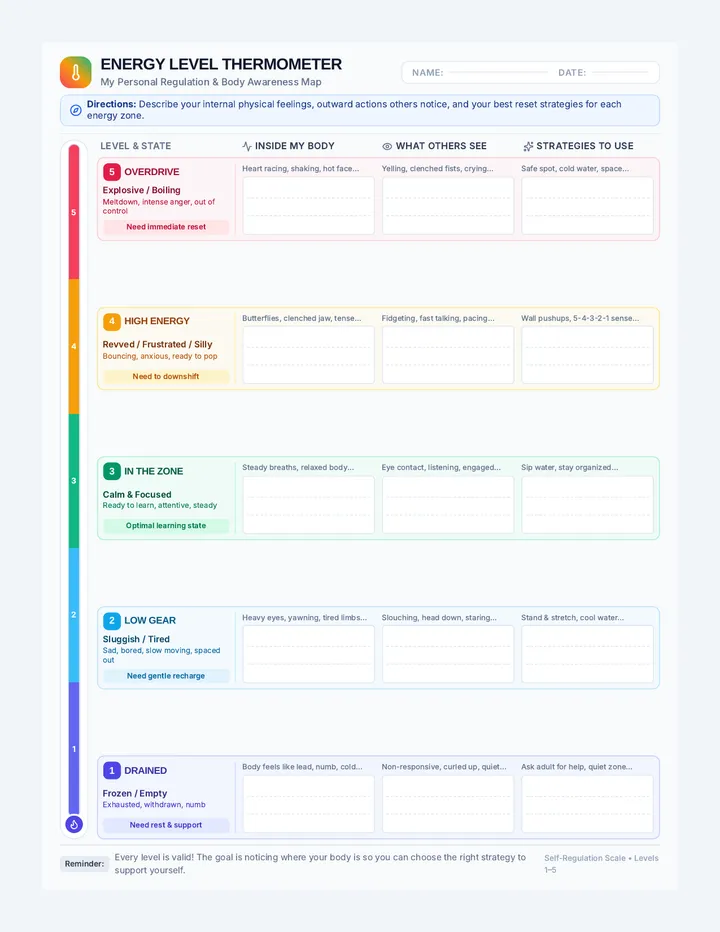
An interactive self-regulation thermometer worksheet helping students map out physical body cues, observable behaviors, and personalized reset strategies across five distinct energy levels.
A 5-week individual lesson series for 8th-grade students with social-emotional disabilities, introducing core DBT modules: Mindfulness, Distress Tolerance, Emotion Regulation, Interpersonal Effectiveness, and Walking the Middle Path.
A 10-week series of 30-minute group lessons for high school students exploring Cognitive Behavioral Therapy. Each session builds practical skills in identifying and reframing thoughts, managing emotions, and engaging in healthy behaviors through interactive activities. This Tier 2 program develops resilience and mental wellness.
In this inquiry-driven sequence, students explore behavioral activation, investigating how their actions influence their emotions. They learn to distinguish between pleasure and mastery activities, conduct personal experiments to track mood changes, and create a personalized evidence-based plan for mood regulation.
This sequence explores the neurobiological foundations of student escalation, connecting internal physiological stress responses (the 'amygdala hijack') to observable external warning signs. Students will learn to depersonalize behavior by understanding it as a biological survival mechanism, training them to recognize subtle somatic, respiratory, and muscular cues before a full behavioral outburst occurs.
An applied sequence for undergraduate students to master self-regulation and de-escalation techniques in high-pressure academic and interpersonal contexts. Students move from identifying personal physiological triggers to practicing real-time regulation during active conflict and performance.
A graduate-level exploration of the biological underpinnings of stress. Students move from theoretical understanding of the autonomic nervous system and Polyvagal Theory to practical application of somatic regulation and interoceptive awareness, culminating in a personalized physiological safety plan.
A 45-minute lesson for 9th-grade students to master the Eisenhower Matrix, learning to distinguish between urgent and important tasks to boost efficiency and reduce stress.
An introductory lesson on emotional awareness using the Mood Meter framework. Students learn to identify, categorize, and regulate their emotions through four color-coded quadrants: Red, Blue, Green, and Yellow.
A middle school lesson introducing the Circle of Control concept to help students manage stress and anxiety through interactive activities and discussion.
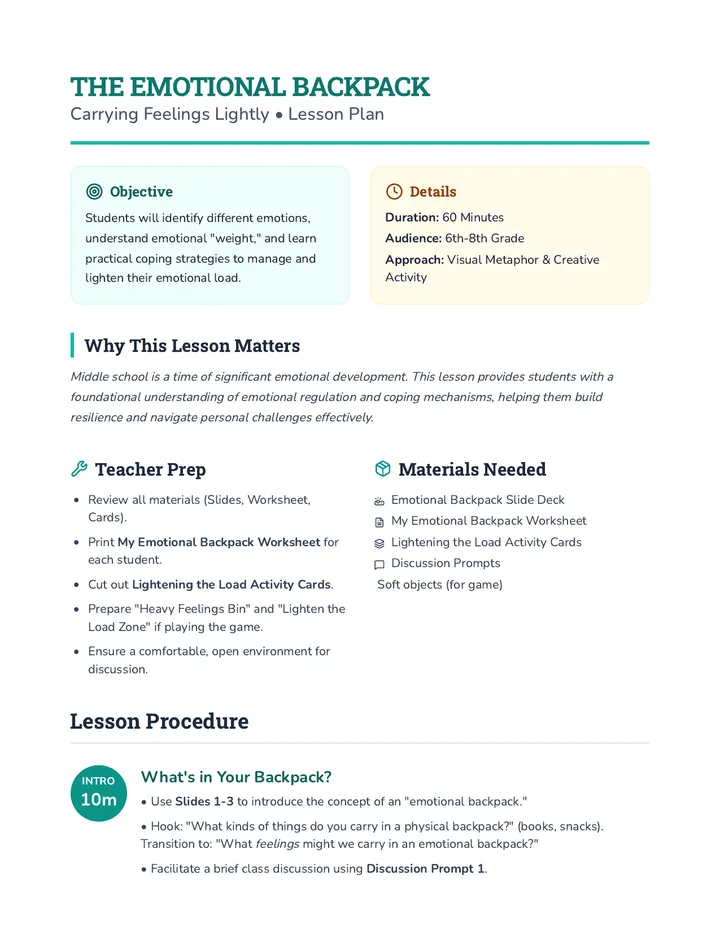
A 60-minute lesson for middle schoolers that uses the metaphor of a backpack to help students identify emotional weight and practice healthy coping strategies.
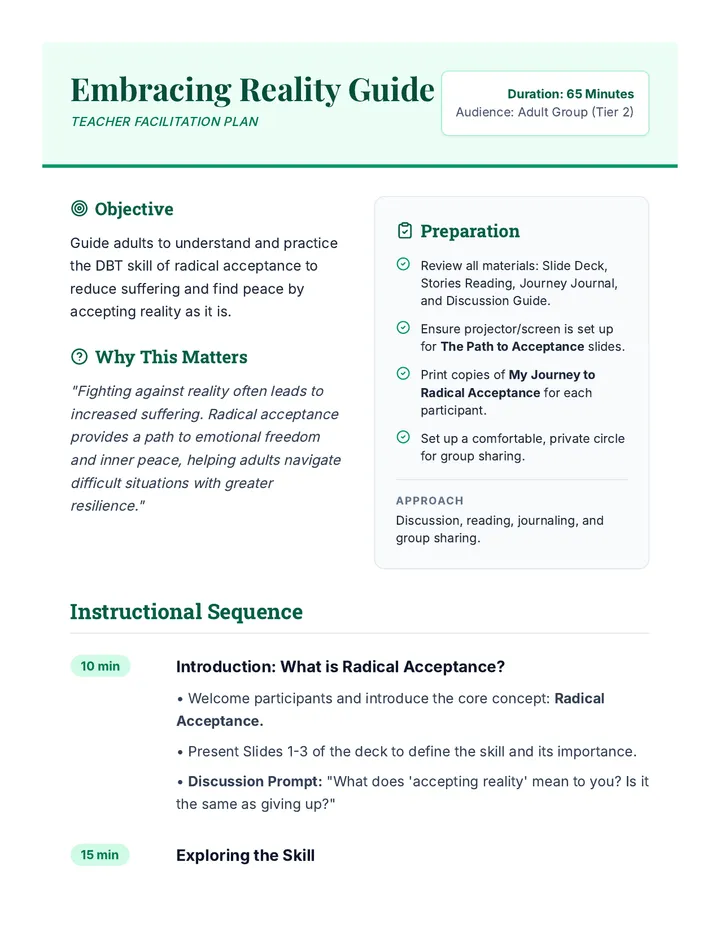
A 65-minute DBT-based lesson for adults focusing on the skill of Radical Acceptance to reduce suffering and find emotional freedom. Participants will explore the difference between pain and suffering, distinguish willingness from willfulness, and apply acceptance to personal life situations.
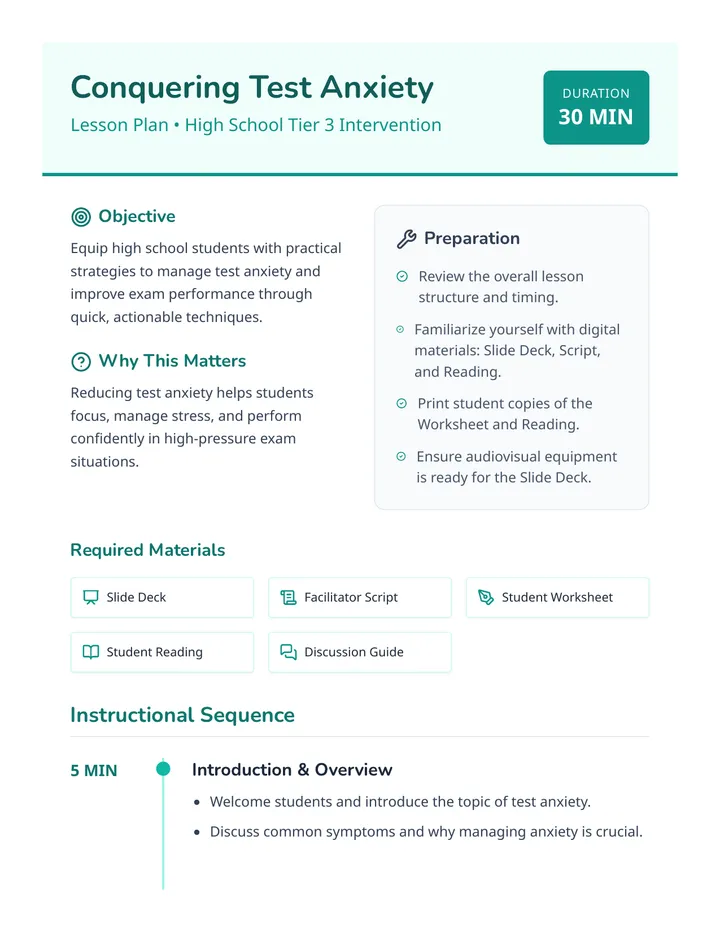
A 30-minute Tier 3 intervention lesson for high school students to manage and overcome test anxiety using relaxation techniques, positive affirmations, and practical test-taking strategies.