Lenny.com
Explore
Create
ActivitiesNewMathEnglish Language ArtsScience & EngineeringSocial StudiesGlobal LanguagesHealth & Physical EducationSpecial EducationCounseling & Life SkillsArts & CreativityESL
Lenny.com
Lenny.com
Explore
Create
ActivitiesNewMathEnglish Language ArtsScience & EngineeringSocial StudiesGlobal LanguagesHealth & Physical EducationSpecial EducationCounseling & Life SkillsArts & CreativityESL
Lenny.com
Lenny.com

Solutions

Lenny for EducatorsLenny for SchoolsLenny for Districts

Product

ExploreSign inCreateSupportAbout

Resources

Getting startedMTSS Acceleration Program

Newsletters

School Funding Newsletter

© 2026 Lenny Learning Inc.

TermsPrivacyAccessibility
LinkedInInstagramX
Lenny

Understanding Suicide Warning Signs

Identifies behavioral, verbal, and situational indicators of self-harm or suicidal ideation. Equips educators and counselors with screening protocols and immediate intervention strategies.

Counseling & Life SkillsSelf-AwarenessBasic Emotion RecognitionComplex Emotion IdentificationEmotional Nuance & Mixed FeelingsBuilding Positive Self-ImageRecognizing Strengths & Growth AreasAccurate Self-AssessmentPersonal Values IdentificationCultural & Individual Identity ExplorationValues-Based Decision MakingSelf-ManagementStop-and-Think StrategiesDelaying GratificationIndependent Impulse ManagementIdentifying Stress TriggersShort-Term Goal SettingSMART Goals DevelopmentGoal Monitoring & AdjustmentBuilding Perseverance & ResilienceInternal Motivation DevelopmentComprehensive Stress Reduction PlanningSocial AwarenessRecognizing Others' FeelingsDemonstrating EmpathyRespecting Individual DifferencesUnderstanding Cultural DiversityComplex Empathetic ResponsesMultiple Viewpoint ConsiderationMulti-Perspective AnalysisChallenging Stereotypes & BiasRelationship SkillsActive ListeningClear Verbal & Nonverbal CommunicationBuilding Positive FriendshipsWorking Cooperatively in GroupsCommunicating Personal BoundariesRespecting Others' BoundariesAssertive ExpressionPeaceful Problem-SolvingContributing to Team GoalsComplex Conflict NavigationMediation & NegotiationHealthy Romantic RelationshipsResponsible Decision-MakingDaily Problem IdentificationBrainstorming Multiple SolutionsEvaluating Pros & ConsRecognizing Risks & ConsequencesApplying Ethical FrameworksInformed Risk-Benefit DecisionsRoot Cause AnalysisMindfulnessMindful BreathingBody Scan MeditationDaily Mindfulness ApplicationDaily Self-Care RoutinesBalancing Life DemandsAdvocating for Wellness NeedsMental Health SupportUnderstanding Anxiety SymptomsWorry Management StrategiesProgressive Muscle RelaxationRecognizing Depression SignsBuilding Mood-Supporting RoutinesBehavioral Activation for MoodUnderstanding Grief StagesHealthy Grief CopingCreative Expression of LossBehavioral SupportDaily Check-In ProceduresDaily Goal Setting & ReviewRecognizing Escalation Warning SignsRequesting Breaks & SupportSelf-Calming During DistressUnderstanding Positive ReinforcementToken Economy ImplementationBehavior Chart TrackingAnalyzing Behavior PatternsIdentifying Antecedents & ConsequencesDetermining Behavior FunctionFunction-Based InterventionsIndividualized Behavior ContractsData-Driven Behavior AdjustmentTherapeutic ApproachesThoughts-Feelings-Behaviors ConnectionRecognizing Thinking PatternsChallenging Negative ThoughtsPositive Self-Talk PracticeThought Record TrackingAdvanced Cognitive RestructuringComprehensive CBT PlansBehavioral Activation TechniquesBuilding Positive ExperiencesExposure Hierarchies for AnxietyPresent-Moment AwarenessNon-Judgmental ObservationSelf-Soothing & DistractionComplex Emotion LabelingReducing Emotional Vulnerability (PLEASE)DEAR MAN CommunicationGIVE Skills for RelationshipsFAST Skills for Self-RespectRadical Acceptance PracticeCrisis Survival Skills (TIPP)Understanding Trauma EffectsTrauma Responses & TriggersIdentifying Trauma FeelingsGrounding TechniquesRegulation During Trauma DistressSafe Place VisualizationProcessing Through NarrativeDeveloping Trauma StoryPersonalized Safety PlanningGroup SupportTurn-Taking & SharingGroup Conversation SkillsSharing in Supportive EnvironmentLearning from Similar ChallengesBuilding Community & BelongingNavigating Peer RelationshipsGroup Skill PracticeGroup Mental Health EducationStress & Anxiety UnderstandingCrisis Support & SafetyKnowing When to Seek HelpIdentifying Mental Health CrisesGrounding During CrisisUsing Crisis HotlinesBuilding Support NetworksAccessing Mental Health ResourcesWarning Signs & Coping StrategiesDeveloping Personal Safety PlansUnderstanding Suicide Warning SignsGatekeeper Skills for PeersDigital LiteracySocial MediaTechnology BasicsProductivity ToolsInternet and Online ResearchWeb Design and PublishingDigital CitizenshipOnline Safety and PrivacyEmerging TechnologiesFinancial LiteracyMaking Financial DecisionsBanking and AccountsConsumer SkillsSaving and InvestingCredit and DebtEmployment and IncomeTaxesInsuranceMajor PurchasesEconomic ConceptsFinancial PlanningCollege & Post-Secondary PlanningCareer ExplorationUnderstanding Post-Secondary OptionsCollege Research & SelectionAdmission RequirementsCollege Application ProcessPersonal Statement WritingFAFSA CompletionScholarship Search & ApplicationsUnderstanding Student LoansContinuing Education PlanningInterview PreparationResearching EmployersCommon Interview QuestionsSTAR Method ResponsesProfessional Interview PresenceVirtual Interview SkillsInterview Follow-UpJob Search SkillsUnderstanding Job PostingsEffective Job Search StrategiesNetworking for OpportunitiesResume Writing BasicsAction Verbs & AchievementsTailoring Resumes to JobsCover Letter WritingProfessional ReferencesProfessional CommunicationBusiness Email EtiquettePhone & Voicemail ProfessionalismMeeting ParticipationPresentation SkillsProfessional Work EthicTime Management & ProductivityTeamwork & CollaborationAdaptability & FlexibilityProblem-Solving at WorkConstructive FeedbackWorkplace RightsUnderstanding Employment LawsPay & Benefits UnderstandingWorkplace SafetyAnti-Discrimination & Harassment

Videos

"I'm Fine" - Learning To Live With Depression | Jake Tyler | TEDxBrighton

"I'm Fine" - Learning To Live With Depression | Jake Tyler | TEDxBrighton

In this moving and humorous TEDx talk, Jake Tyler shares his personal journey of navigating severe depression and suicidal ideation. He begins by deconstructing the reflex of saying "I'm fine" and opens up about his "rock bottom" moment where he forgot what happiness felt like. Tyler details how a pivotal phone call to his mother and a reframing question from his doctor helped him distinguish between wanting to die and simply wanting his pain to stop. The talk explores Tyler's recovery strategy, which centered on physical movement and connection with nature. He recounts his experience walking 3,000 miles around Great Britain, which evolved from a personal fitness challenge into a journey of community connection. He introduces the metaphor of depression being the "biggest club in the world" that convinces you that you are the only member, highlighting the irony of isolation in mental health struggles. For educators, this video is a powerful tool for Social Emotional Learning (SEL), Health, and Psychology classes. It destigmatizes mental health discussions, introduces the concept of "movement" versus "exercise," and demonstrates how vulnerability can lead to strength. The narrative arc moves from despair to a triumphant desire to "live forever," offering a hopeful perspective on resilience and recovery.

TEDx TalksTEDx Talks

16mins 5s

Materials

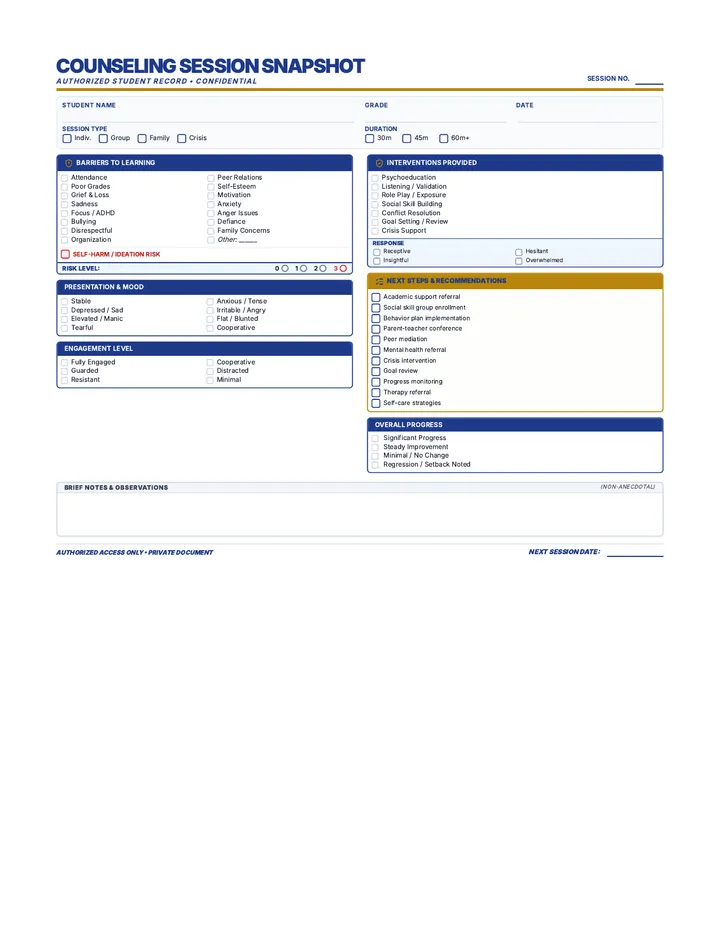
Counseling Session Snapshot Template

Counseling Session Snapshot Template

An optimized one-page school counseling session record with reduced spacing to fit A4 paper. It maintains the professional blue and gold theme while consolidating intake barriers, mood assessment, interventions, and next-step recommendations into a clean, checkbox-driven layout.

EM

Elizabeth Muvumba

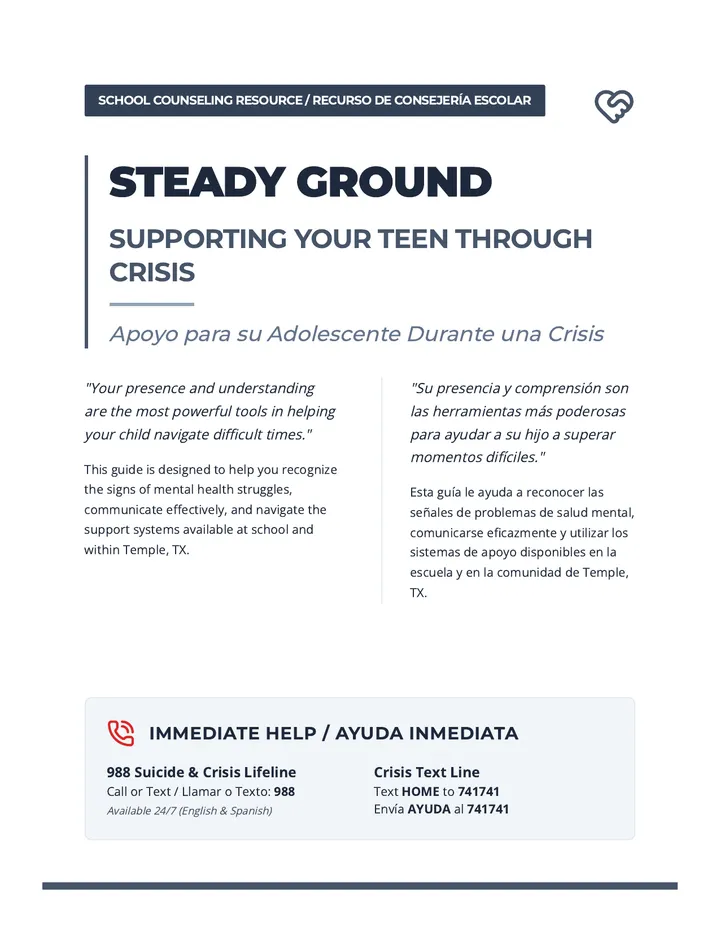
Steady Ground Support Guide

Steady Ground Support Guide

A comprehensive, bilingual (English/Spanish) parent guide for supporting teenagers through mental health crises. Includes warning signs, communication strategies, school support navigation (IEP/504), and specific community resources for Temple, TX. Revised for better page-breaking and text contrast.

Sequences

You Matter Teacher Guide

You Matter Every Day

A four-session Tier 2 small-group series for 7th-grade boys focused on mental health awareness, suicide prevention, and building supportive coping habits. Students will learn to recognize warning signs, practice self-care, and develop communication skills to help themselves and their peers.

B

brrodgers

9
Facts Not Feelings Slides

Peer Behavior Analysts

A 5-lesson sequence for 9th-grade students focused on developing social awareness and safety by identifying peer behavioral shifts and escalation warning signs through objective observation and non-verbal analysis.

12
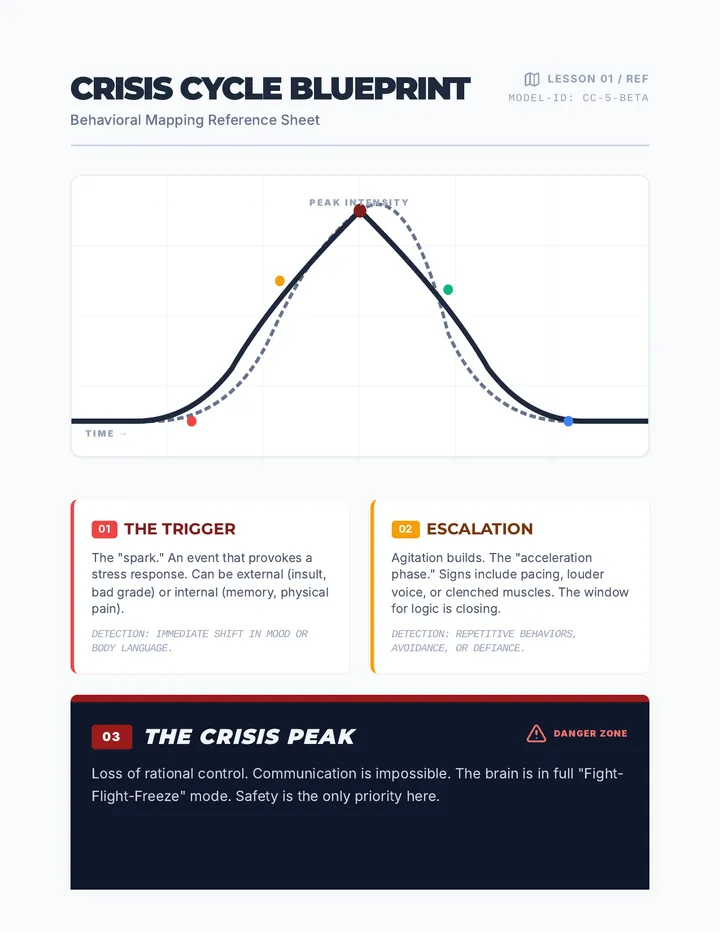
Crisis Cycle Blueprint Reference Sheet

Cycle Map Sequence

A comprehensive 5-lesson unit on the Crisis Cycle, focusing on identifying triggers, escalation stages, and intervention points through a technical mapping and simulation lens. Students move from theoretical understanding to retroactive detective work to understand behavioral patterns.

10
Baseline Basics Slides

Behavioral Cues and Escalation Cycles

A comprehensive 5-lesson unit for 12th-grade students on identifying behavioral baselines and recognizing early warning signs of emotional escalation through analytical observation of verbal, para-verbal, and non-verbal cues.

15
Truth and Stigma Slides

Safety First Warning Signs

This sequence equips 9th-grade students to recognize signs of emotional distress and suicidal ideation using a safety-first framework. Students progress from debunking myths to identifying warning signs, understanding situational context, practicing the ACT (Acknowledge, Care, Tell) model, and mapping out support resources.

15
Asking the Question Slides

Crisis Intervention Protocols

This sequence equips undergraduate counseling students with the interpersonal and procedural skills necessary for suicide intervention, covering direct communication, de-escalation, safety planning, lethal means counseling, and legal/ethical mandates.

15

Lessons

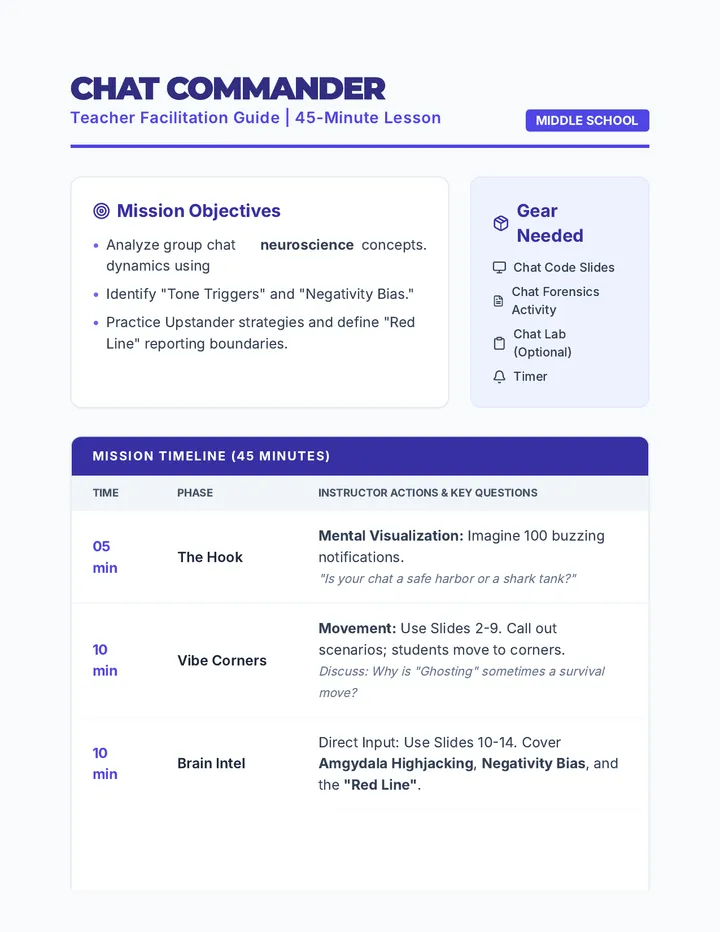
Chat Commander Guide

Chat Code

A 45-minute lesson designed for middle schoolers to navigate the social complexities of group chats, focusing on digital empathy, tone interpretation, and being a supportive 'upstander' in digital spaces.

KJ

Kayle Jordan

20
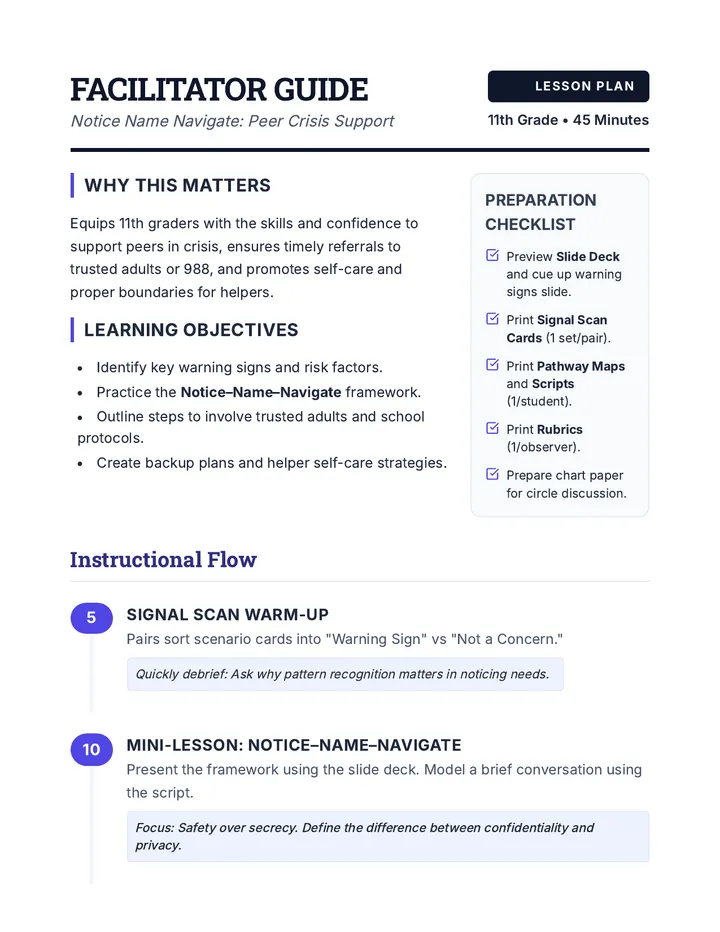
Facilitator Guide with Protocol Flowchart

Notice Name Navigate

A 45-minute lesson for 11th graders on recognizing peer crisis warning signs and using the Notice–Name–Navigate framework to connect friends to support safely while maintaining self-care boundaries.

KS

Kimest Sanders

11
First Connection Facilitation Guide

First Connection

A comprehensive first individual counseling session designed to build rapport, establish trust, and introduce the counseling relationship to high school freshmen.

A

akuilanlamboy

4
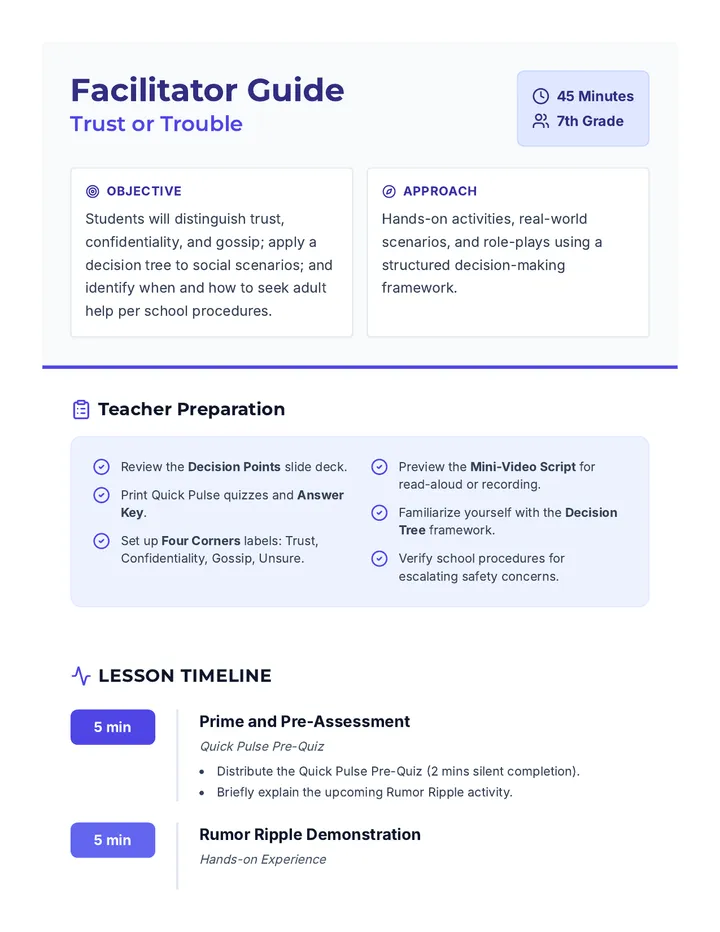
Trust or Trouble Facilitator Guide

Trust or Trouble

A 45-minute lesson for 7th graders to distinguish between trust, confidentiality, and gossip. Students use a decision tree to navigate social scenarios and practice assertive communication to maintain healthy peer environments.

KS

Kimest Sanders

10
Navigating the Fog Slides

Navigating the Fog

A supportive lesson for 7th-grade students to understand depression, identify emotions, and build a toolkit of coping strategies and self-care practices.

AW

Alexis Wiser

6
Words Matter Slides

The Weight of Words

A psychoeducation lesson focusing on the critical difference between intent and impact in communication, exploring how words can affect school safety and community trust.

KE

Karolyn Estevez

4