Integrates psychological principles, civic structures, and economic theories to analyze human decision-making and societal organization. Addresses ethical frameworks and the spatial relationships between populations and their physical environments.
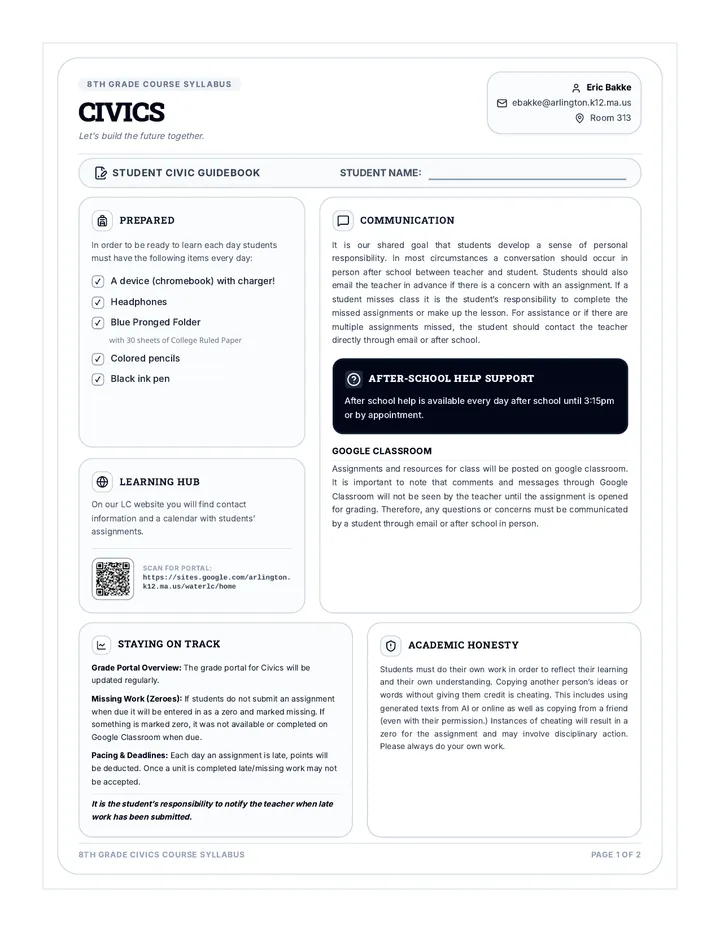
Civics Class Syllabus updated with an extra large QR code filling approximately half of the Digital Spaces container for maximum visibility and effortless scanning.
3-page scaffolded student inquiry packet fully aligned to lesson objectives (why learn history, classroom procedures, and historical thinking skills) streamlined for native English students with clear procedural guides, stacked-traits analogies, and IDCV graphic organizers.
A printable horizontal mini-composition notebook interactive vocabulary toolkit for Ohio 6th Grade Social Studies. Features wide horizontal inserts for dual-coding icon vaults, relational analogy engines, geographic semantic webs, and historical context decoders with cut lines and glue tabs.
A comprehensive Back to School Night slide for 7th Grade US History taught by Austin Nowak. Features classroom policies, course scope from Pre-Columbian societies through Reconstruction with New York State integration, and core historical thinking skills in a rich Americana visual theme.
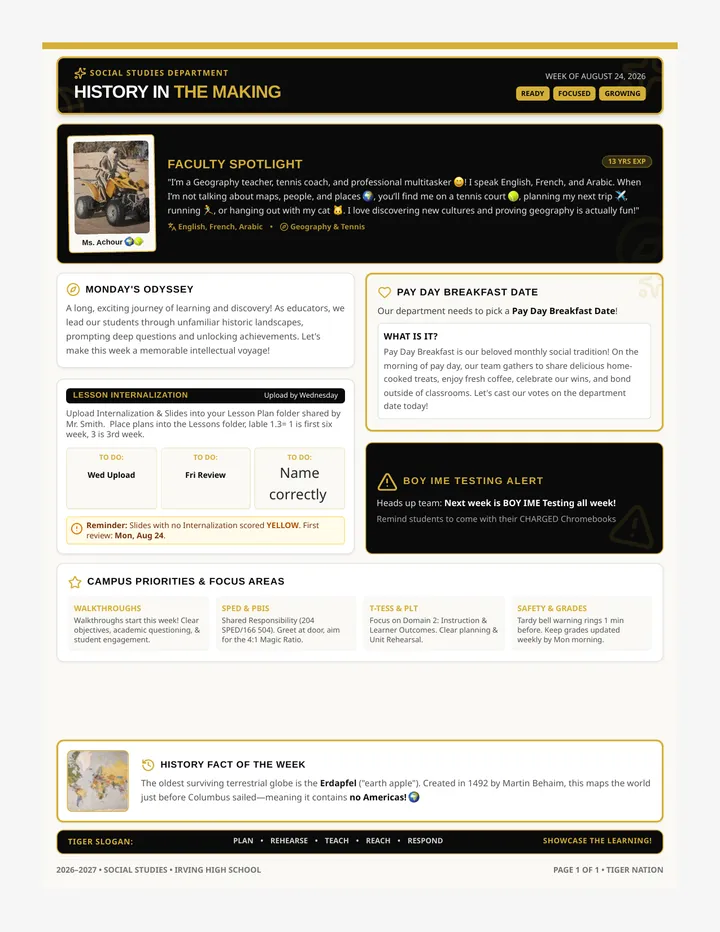
A beautiful single-page Social Studies newsletter titled 'History in the Making' in landscape orientation (960x720px), featuring a customized spotlight on Ms. Achour, a rebranded 'Monday's Odyssey' weekly focus section, instructional guidelines for lesson internalization, and campus priorities in a gorgeous black-and-gold design.
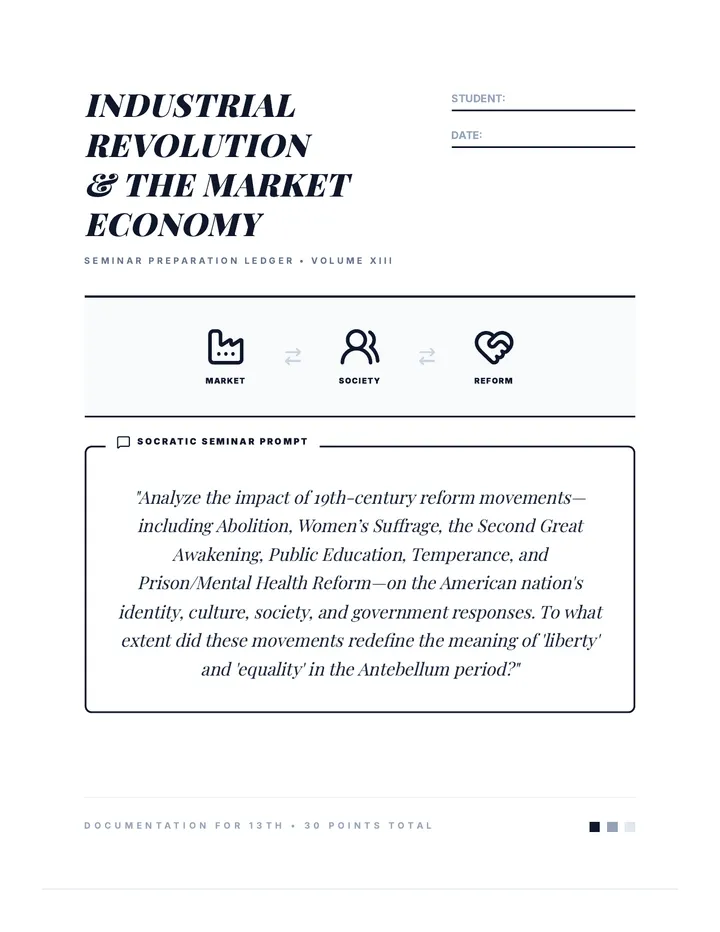
A detailed 5-page seminar preparation ledger for the Industrial Revolution and Market Economy lesson. Features a dedicated cover page with relevant historical icons and a prominent Socratic prompt, three separate article analysis pages, and a final synthesis evaluation. Writing lines are darkened for optimal print quality.
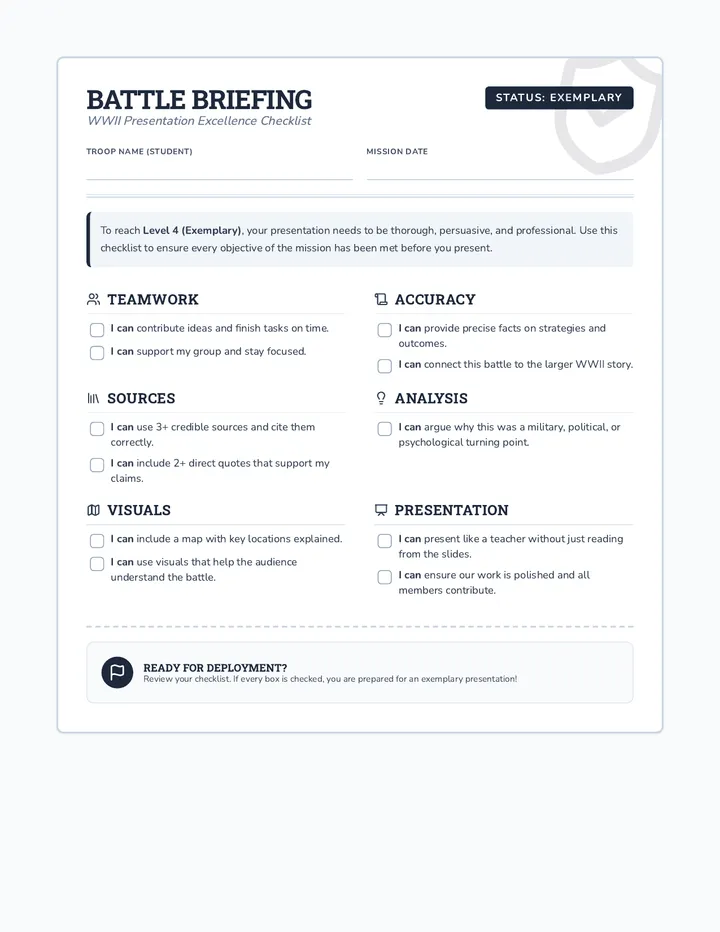
A student-friendly presentation checklist based on Level 4 criteria of a WWII Battles Project rubric, featuring 'I can' statements and visual icons. Revised to fit on a single page.
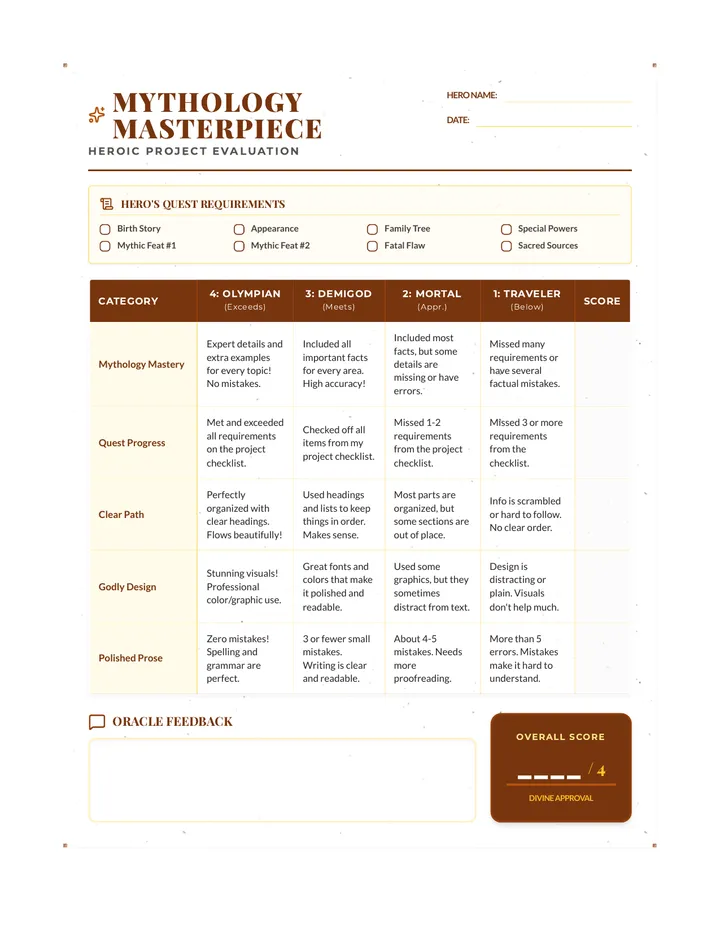
A single-page rubric for the Greek Mythology project, redesigned for space efficiency and readability. It features a horizontal checklist and consolidated footer to ensure the Oracle Feedback and Overall Score sections fit perfectly on one page without sacrificing text size. The final score is now explicitly labeled 'overall score _/4'.
A 6-page bilingual scaffolded 8th grade history packet on the ANEZZC writing method and Zoom Out strategy translated primarily into Spanish with English glossary, bilingual scaffolds, and visual supports for ELL/SGI students.
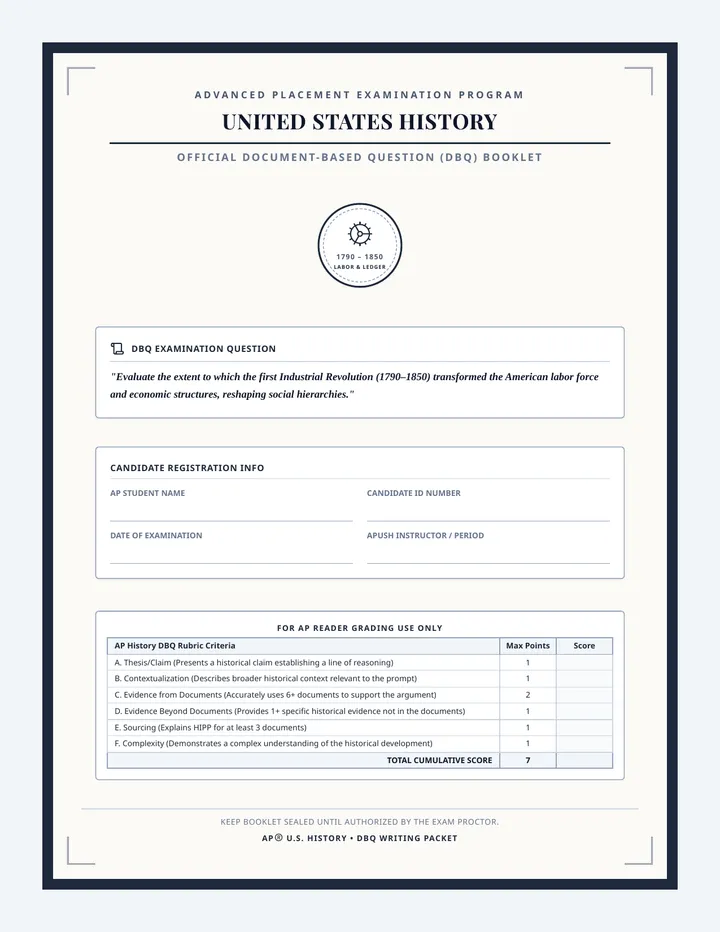
An authentic AP US History Blue Book styled essay booklet featuring a printer-friendly light-colored cover page and 5 pages of college-ruled writing paper for print or digital completion.
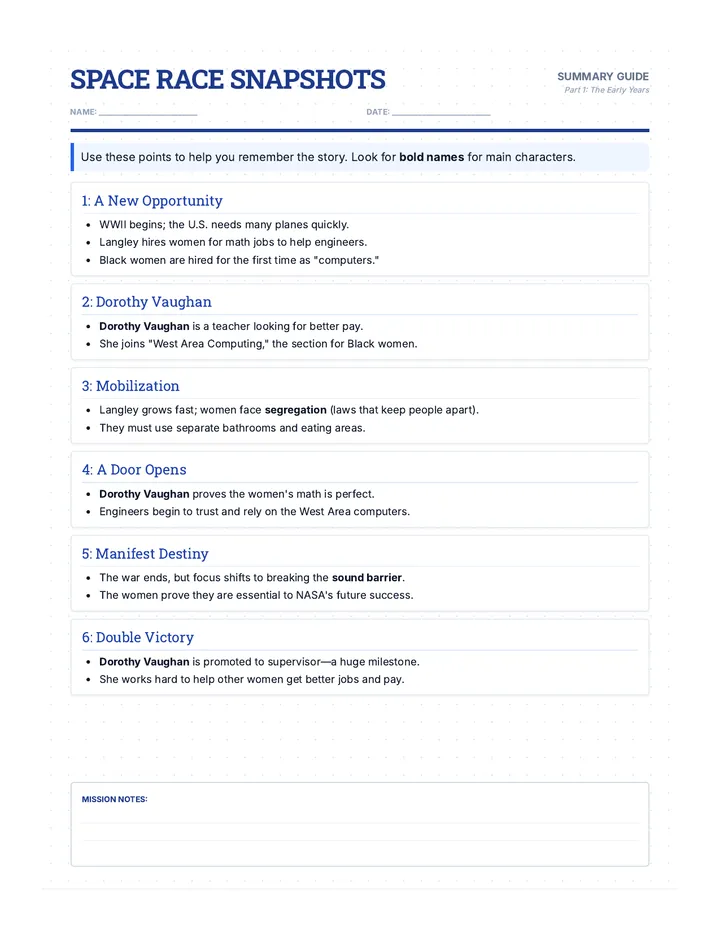
A four-page chapter-by-chapter summary guide for "Hidden Figures" (Young Readers Edition), designed specifically for struggling readers. It features bulleted main points, bolded character names, and a clean, high-contrast NASA-inspired layout to support comprehension and tracking of the narrative.
A six-page executive analytical report evaluating the Classical Five leadership paradigms: Trait, Behavioral, Situational, Transformational, and Transactional. The text is crafted with original, natural scholarly prose, dynamic sentence burstiness, nuanced case examples, APA 7th edition in-text citations, and structured four-sentence minimum paragraphs to ensure academic integrity and authenticity.
Updated outline slide with a navy blue background and sky blue text/accents for a professional look.
A 13-day journey through modern American history, from the Industrial Revolution to the present day, focusing on key historical figures and major conflicts as outlined in the 5th Grade TEKS. Each lesson is designed for a quick 30-minute block, integrating multimedia and primary source analysis.
A 7-day remediation packet for 12th-grade economics focusing on fundamental concepts like scarcity, supply and demand, economic systems, and international trade, scaffolded for accessibility.
A 4-part exploration of the deep-seated tensions and pivotal events that led the United States to the brink of the Civil War, focusing on economic shifts, legislative compromises, and political flashpoints.
A modified Modern US History curriculum (Founding to Present) for Tier 2 and 3 special education students, based on Grade 11 Social Studies standards. Focuses on government, industrialization, world wars, and civil rights.
A comprehensive introduction to business fundamentals, financial literacy, and entrepreneurship. Students explore the core purpose of enterprises, navigate roles and decisions, build business plans, and master pricing and profit dynamics.
A 4-day introductory world history sequence exploring how geographic location, natural barriers, and famous trade routes shaped the rise, wealth, and power of global empires.
This sequence immerses students in the economic mechanisms that led to the Great Depression, focusing on speculation, market failure, banking panics, and global contraction. Students move beyond memorizing dates to analyzing systemic failures through simulations, primary source analysis, and causal mapping.
This sequence explores the development of feudalism in Japan, contrasting the theoretical power of the Emperor with the actual power of the Shogunate. Students will analyze the social hierarchy, the code of Bushido, the chaos of the Sengoku period, and the eventual stability of Tokugawa isolationism.
This high-stakes diplomacy sequence immerses 12th-grade students in the Paris Peace Conference. Students navigate the conflicting motivations of the 'Big Four', dissect the Treaty of Versailles, redraw global borders, and evaluate why the settlement ultimately failed to prevent further conflict.
This sequence explores the arrival, spread, and transformative impact of the Black Death on medieval Europe. Students analyze geographic routes, compare medieval and modern medicine, simulate economic shifts, and evaluate how the pandemic triggered the collapse of the feudal system.
This sequence explores the economic drivers of the 1920s, focusing on mass production, the rise of consumer culture, and the systemic risks of credit and installment buying. Students analyze how industrial efficiency led to a middle-class boom while also creating structural weaknesses that contributed to the Great Depression.
A 5th-grade history sequence exploring the transition from the feudal Middle Ages to the early modern period. Students analyze how the devastation of the Black Death triggered economic shifts, the rise of the merchant class, and the growth of towns, setting the stage for the Renaissance.
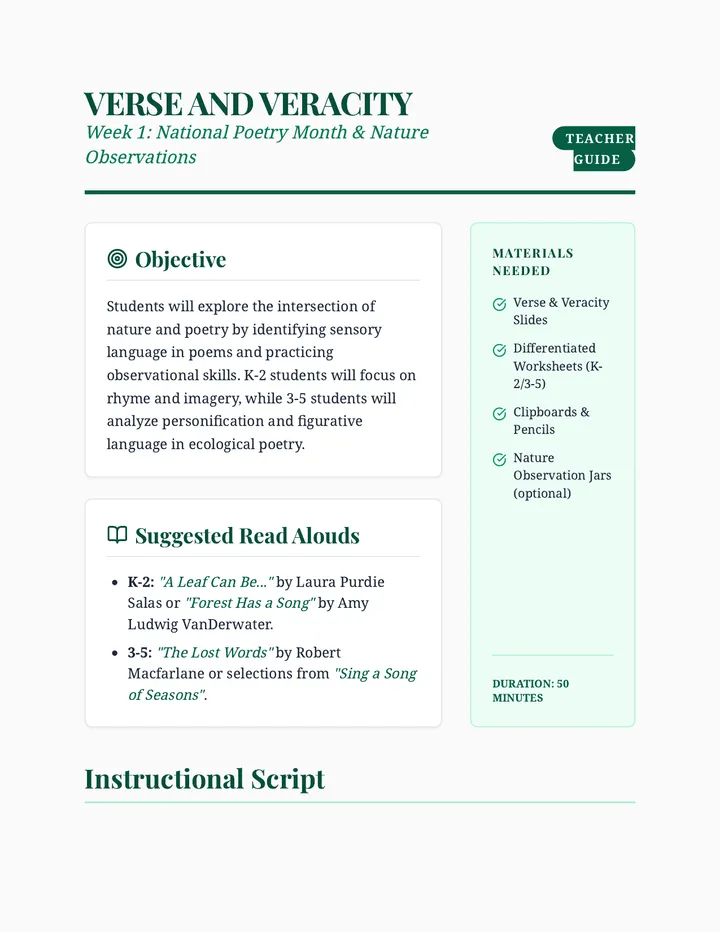
A comprehensive K-5 Media Center curriculum spanning August to May. Each month features a thematic unit integrating library skills (Dewey Decimal System, research, digital citizenship), literacy (poetry, biographies, informational texts), and STEM/Maker Space challenges. Resources are differentiated for K-2 and 3-5.
A comprehensive 3rd-grade curriculum exploring global diversity through identity, traditions, food, music, and clothing, fostering empathy and cultural appreciation.
A comprehensive 6th-grade social studies unit exploring the trajectory of human history, from nomadic hunter-gatherers and the cognitive evolution of early humans, to the agricultural revolution, and finally the development of structured ancient governments.
A comprehensive 4-lesson unit for 5th grade exploring the pivotal figures, major conflicts, and the courageous escape routes of the American Civil War. Students engage with historical primary-source styles while learning about leadership and the quest for freedom.
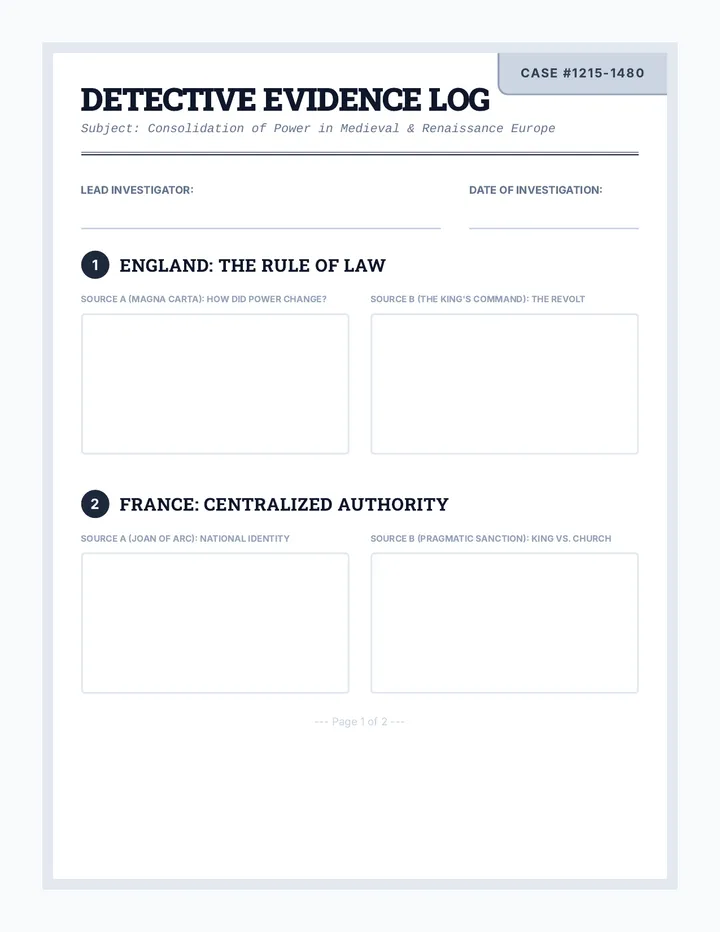
A comprehensive middle school history unit where students act as 'history detectives' to investigate the rise of nation-states in England, France, Spain, and Russia through primary source analysis.
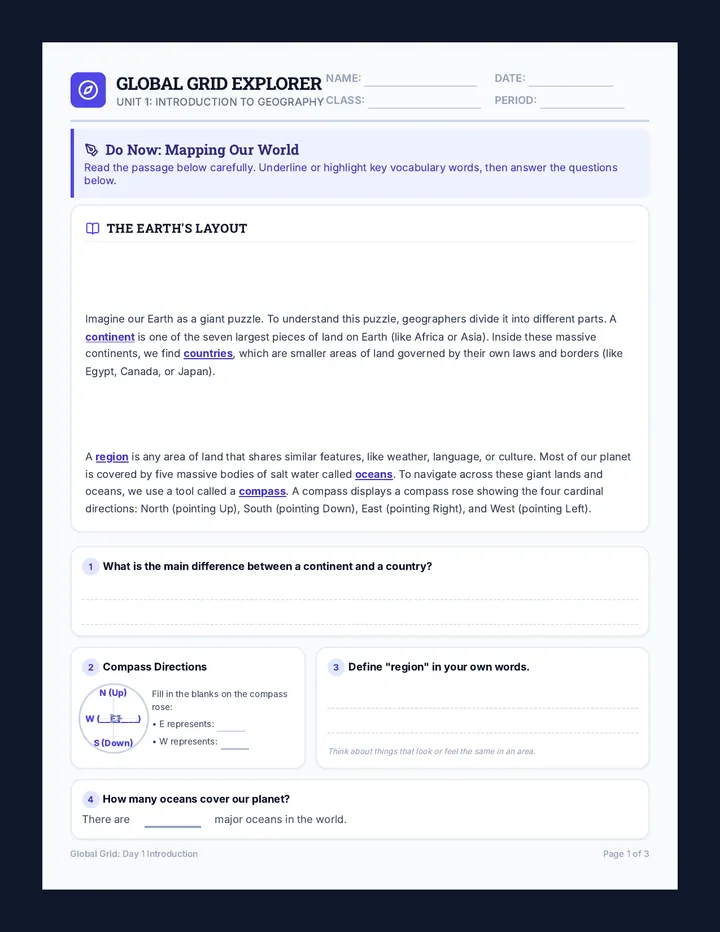
An exploration of Earth's dynamic physical and ecological systems in 9th-grade World Geography. This sequence covers natural hazard dynamics followed by an interactive study of global biomes, their geographical importance, and ecological distributions.
A 5-lesson sequence for 2nd graders exploring significant American landmarks including the Statue of Liberty, the White House, the Washington and Lincoln Memorials, and Mount Rushmore. Students learn about the geography, history, and purpose of these monuments in honoring leaders and values.
A lesson exploring how Enlightenment philosophers like Locke, Montesquieu, and Voltaire influenced the founding documents and structure of the United States government.
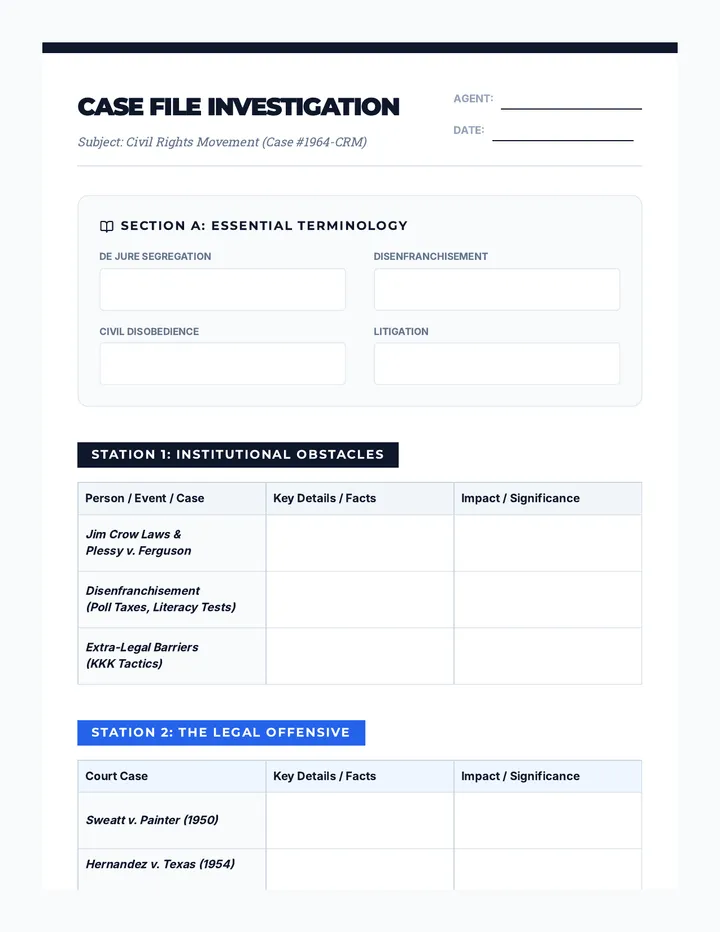
A comprehensive lesson on the Civil Rights Movement featuring gallery stations and a guided investigation worksheet. Students analyze institutional obstacles, legal strategies, non-violent and militant tactics, and the expansion of the movement to other marginalized groups.
A lesson exploring the 1787 Constitutional Convention, the roles of key Framers like James Madison, and the fundamental principles of American government including federalism, republicanism, and separation of powers.
A comprehensive review and assessment package covering World History from the Enlightenment through the Cold War, aligned with state standards.
A deep dive into the social psychology of power, exploring how leadership styles, social influence, and ethical frameworks shape historical and modern societies. Students analyze case studies of authority and resistance to understand the mechanics of influence.
A deep dive into the search for meaning through the lenses of Plato and C.S. Lewis, exploring how beauty, nature, and universal design challenge existentialist perspectives. Students will analyze primary source excerpts to understand the relationship between objective reality and human longing.
A highly interactive 45-minute civics lesson exploring the classic tension between individual liberty and collective safety. Students analyze historical quotes and modern scenarios to determine where to draw the line between freedom and security.
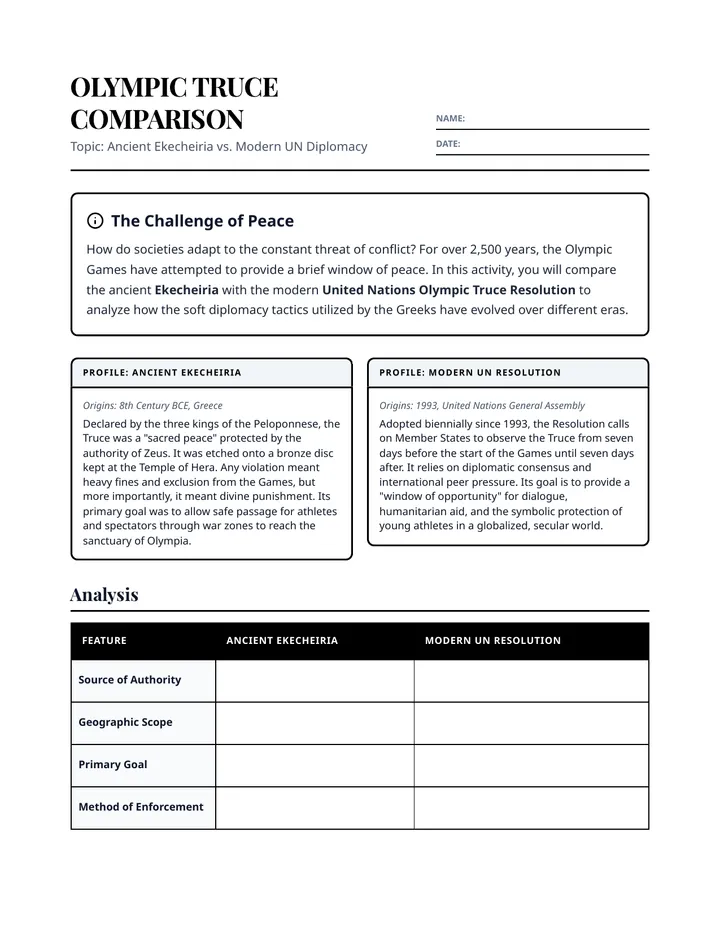
A high school social studies lesson exploring the origins, evolution, and effectiveness of the Olympic Truce from ancient Greece to the modern United Nations era. Students analyze how this institution addresses societal and political challenges through international cooperation.
A comprehensive 10th-grade history lesson comparing the French and American Revolutions, focusing on Enlightenment ideals, leadership, and long-term global impact through slides, primary sources, and structured comparison.
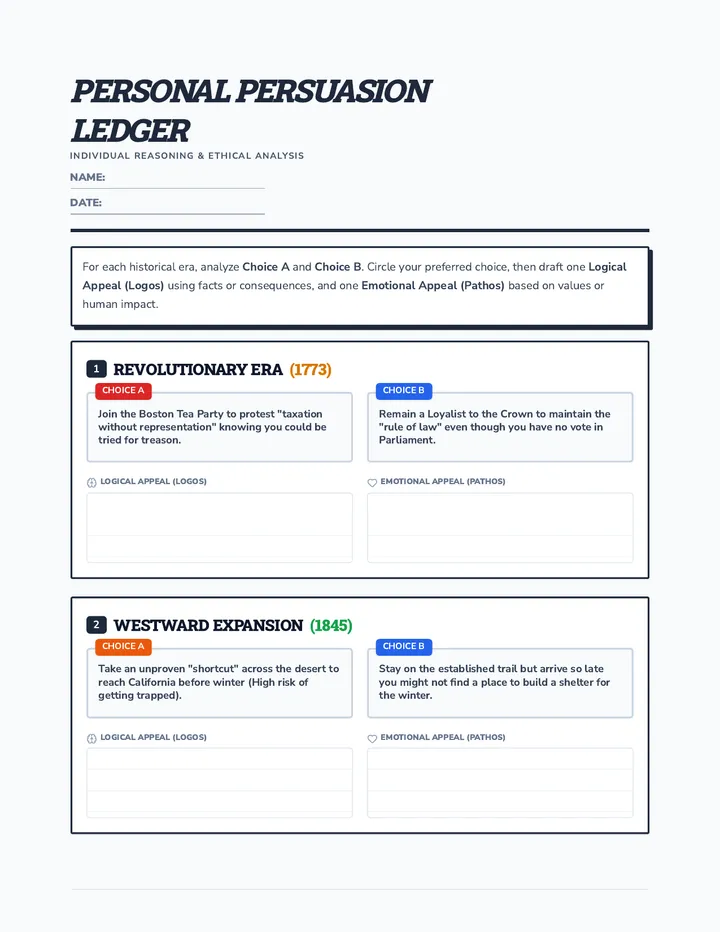
A middle school American History and Ethics lesson where students use 'Would You Rather' scenarios to practice logical and emotional appeals. Students work individually to form arguments before engaging in group debates to reach a consensus.
A pre-reading lesson on the Divine Right of Kings and European Absolutism, preparing 10th-grade students with crucial background knowledge through a close reading of King James I and Louis XIV.
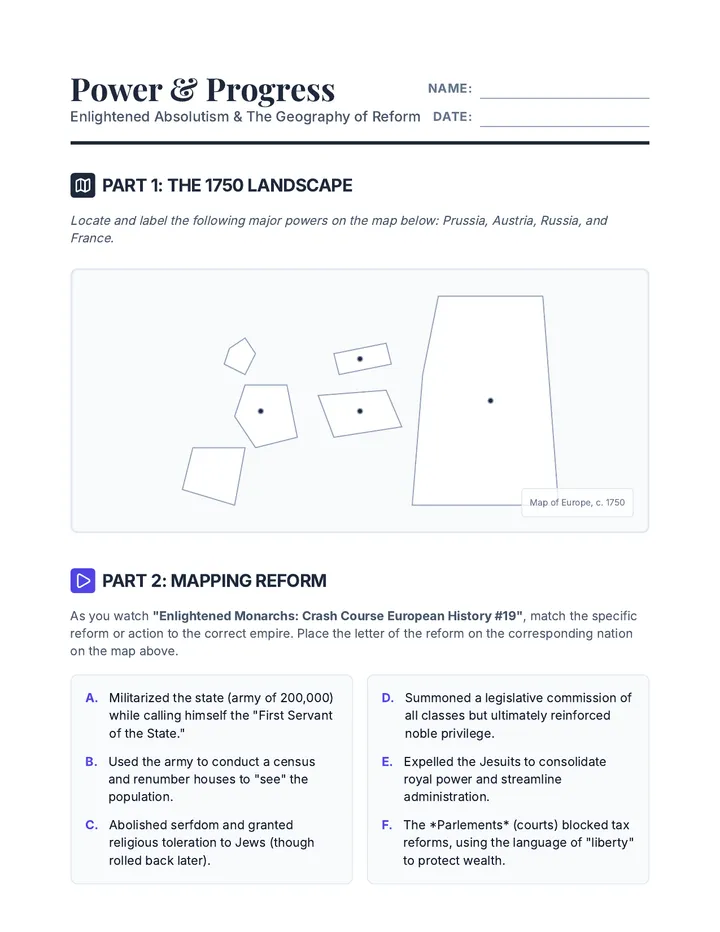
A geography and mapping lesson to visualize the spread of ideas and power in 18th-century Europe, focusing on Enlightened Absolutism and the influence of geography on governance.
A comprehensive pacing guide and activity resource designed to cover the remaining 11th Grade US History TEKS before the STAAR test on April 16th. This lesson provides a day-by-day calendar for A/B block schedules and high-engagement activities for each remaining historical era.
A lesson exploring Harriet Tubman's 1850 escape and the significance of the Mason-Dixon Line as a geographical and legal boundary in the pre-Civil War United States.
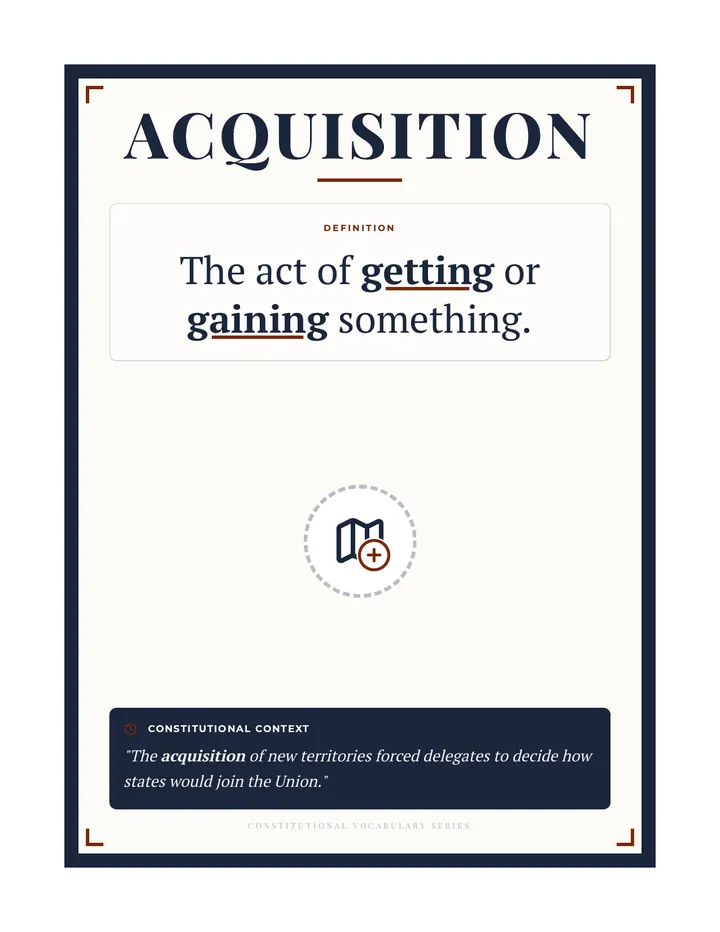
A set of vocabulary posters focused on key terms from the Constitutional Convention, including government structures, legislative roles, and foundational principles like compromise and federalism.
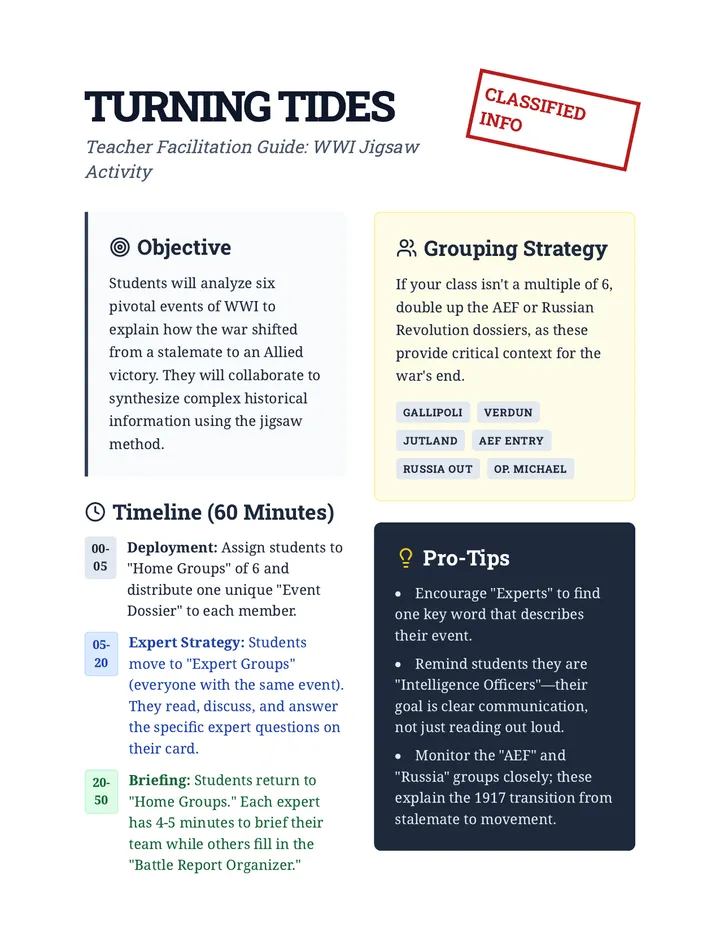
A comprehensive jigsaw activity focusing on six pivotal events of World War I, designed for a 60-minute class session. Students act as intelligence officers to piece together the shifting dynamics of the Great War.
A comprehensive exploration of the 1990s through the modern day, covering technological shifts, political milestones, military conflicts, and cultural evolution in the United States.
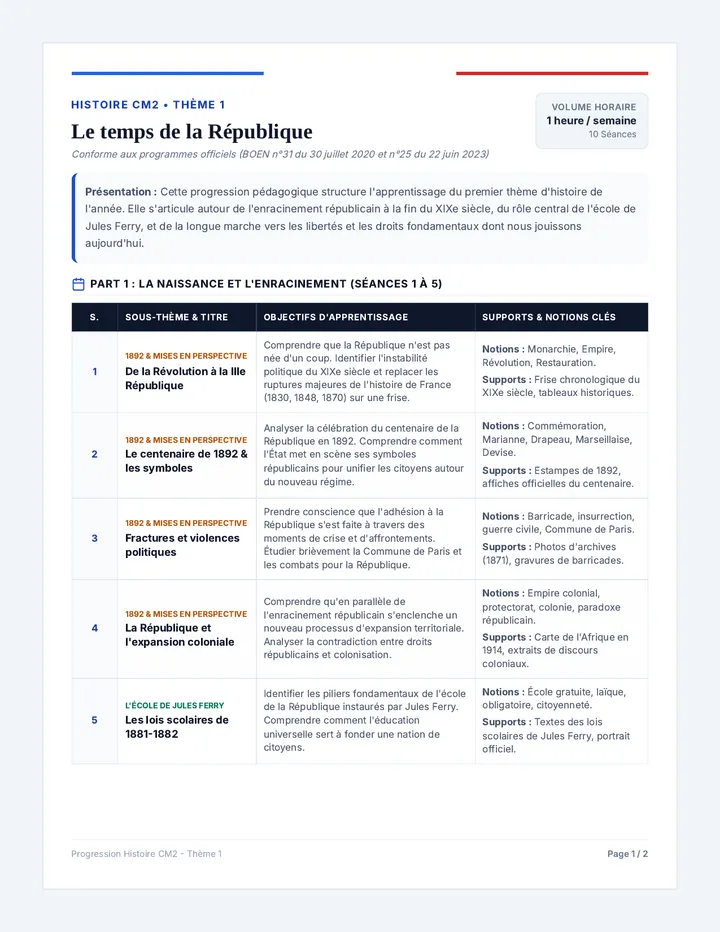
Une progression pédagogique de 10 séances d'histoire pour le CM2, couvrant l'intégralité du premier thème 'Le temps de la République' selon les programmes officiels de 2020 et 2023. Elle structure la mise en perspective historique de 1892, l'école de Jules Ferry, ainsi que la conquête des libertés, droits et devoirs.
A comprehensive introduction to the three branches of the U.S. government, focusing on the roles and responsibilities of the Legislative, Executive, and Judicial branches.
A 10th-grade social studies stations activity investigating the Constitutions of 1791, 1793, and 1795. Students analyze how France repeatedly drafted and revised its foundational laws in a turbulent quest for a more democratic society.
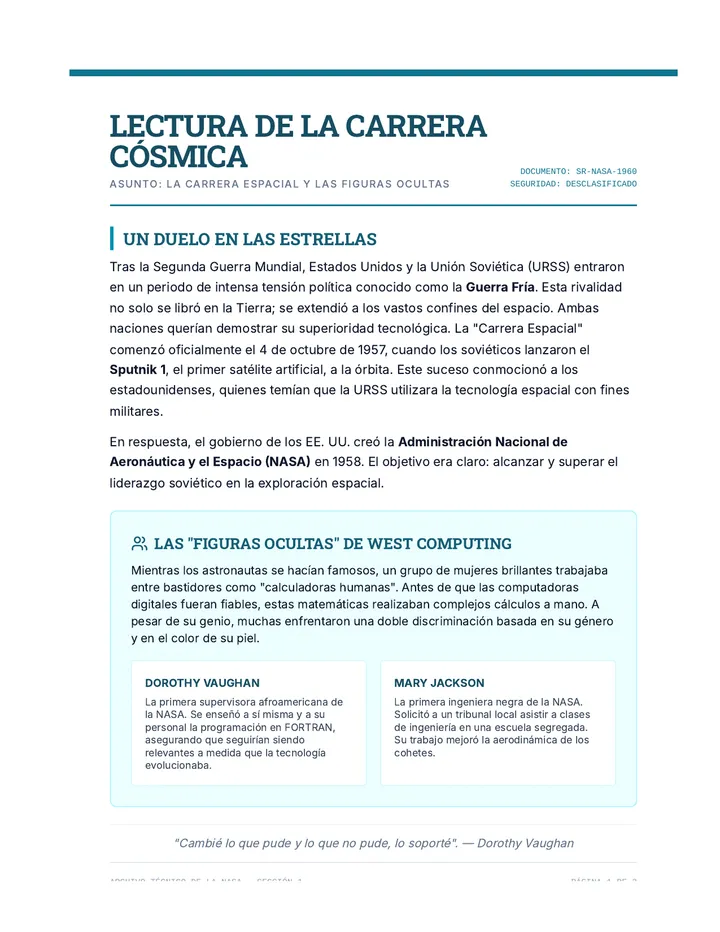
A comprehensive exploration of the Space Race, highlighting the technological competition between the US and USSR, the essential contributions of African American women at NASA, and the international agreements that keep space a peaceful frontier.
A 45-minute stand-alone lesson centered on the Constitutional Convention's debate over representation and the Three-Fifths Compromise. It includes chunked reading for accessibility, a high-engagement 'Four Corners' activity, and a graphic organizer assessment designed for formal observation alignment with the Danielson Framework.
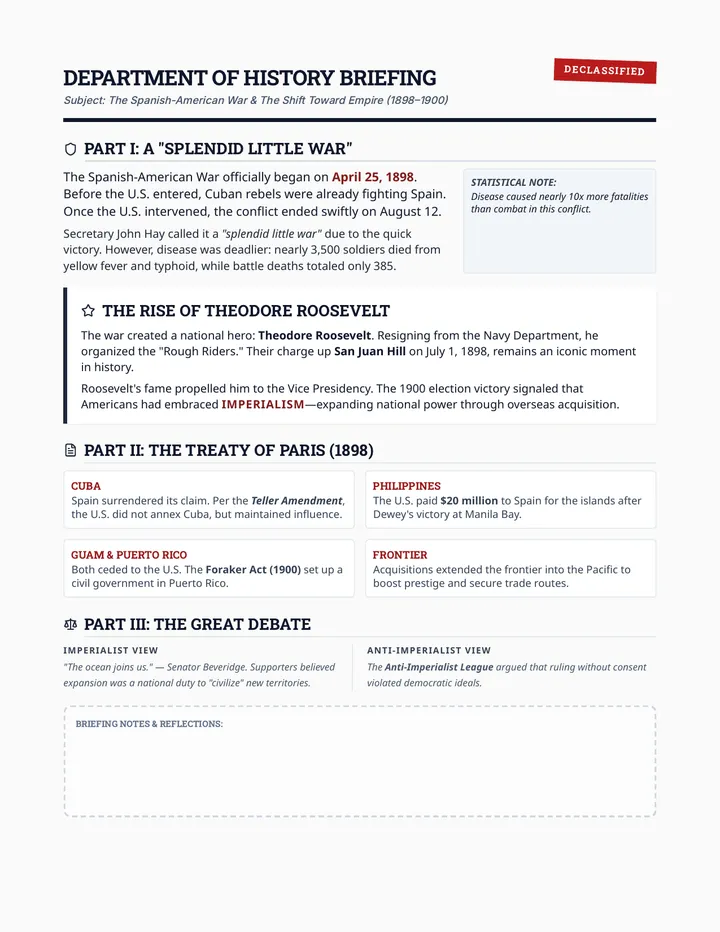
This lesson explores the Spanish-American War, focusing on Theodore Roosevelt's rise, the Treaty of Paris, and the United States' transition from isolationism to an imperial power. Students will analyze the motives and arguments surrounding the annexation of the Philippines and other territories.
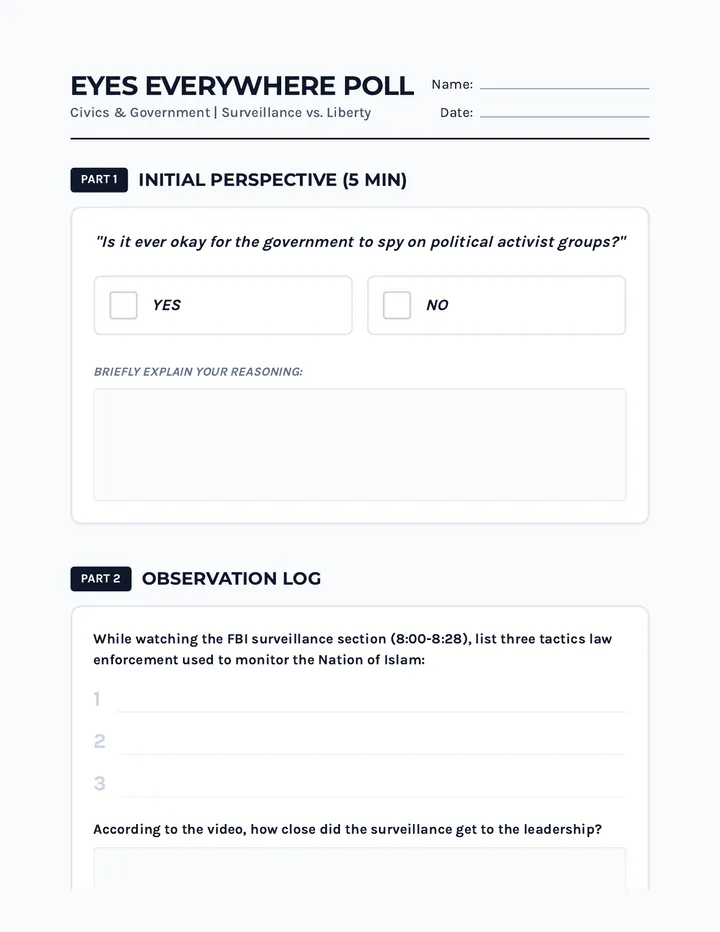
A high school civics lesson exploring the tension between national security and civil liberties through the lens of FBI surveillance of Malcolm X and the Nation of Islam during the Civil Rights era.