Lenny.com
Explore
Create
ActivitiesNewMathEnglish Language ArtsScience & EngineeringSocial StudiesGlobal LanguagesHealth & Physical EducationSpecial EducationCounseling & Life SkillsArts & CreativityESL
Lenny.com
Lenny.com
Explore
Create
ActivitiesNewMathEnglish Language ArtsScience & EngineeringSocial StudiesGlobal LanguagesHealth & Physical EducationSpecial EducationCounseling & Life SkillsArts & CreativityESL
Lenny.com
Lenny.com

Solutions

Lenny for EducatorsLenny for SchoolsLenny for Districts

Product

ExploreSign inCreateSupportAbout

Resources

Getting startedMTSS Acceleration Program

© 2026 Lenny Learning Inc.

TermsPrivacyAccessibility
LinkedInInstagramX
Lenny

Self and Identity

Psychological frameworks for self-concept, self-esteem, and the development of social identity. Examines the interplay between individual personality traits and external cultural influences.

Social StudiesSocial Studies PracticesLocation WordsMapsOrder EventsChronology and CausationEvaluating SourcesHistorical ThinkingGeography, Humans, & the EnvironmentAmerican Symbols and LandmarksCitiesStatesState CapitalsRegions of the United StatesGeographic SkillsPhysical GeographyHuman GeographyRegional GeographyGeography of AfricaGeography of AsiaGeography of EuropeGeography of OceaniaGeography of the AmericasSociety and Environment of EuropeSociety and Environment of AsiaSociety and Environment of The AmericasSociety and Environment of the Middle EastSociety and Environment of AfricaHistoryPrehistoryComparing Ancient River CivilizationsAncient MesopotamiaAncient Egypt and KushAncient South AsiaEarly ChinaGreeceRome and the Byzantine EmpireAncient World HistoryNative Peoples of North AmericaNative Peoples of Mesoamerica and South AmericaAfrican EmpiresMedieval AsiaMedieval EuropeThe Silk RoadMedieval HistoryIslamic EmpiresWorld ReligionsRenaissance PeriodAge of ExplorationThe Thirteen ColoniesThe American RevolutionUS History Early RepublicFounding of the United StatesUS History AntebellumUS Civil WarReconstruction PeriodThe Gilded AgeUS ImperialismWorld ImperialismWorld War IUS History 1920sGreat DepressionWorld War IIThe Cold WarUS History 1950-60sUS History 1960s-70sWorld History 20th CenturyContemporary US HistoryContemporary World HistoryHolidaysCivics and GovernmentCitizenshipGovernment FoundationsThe ConstitutionUS ConstitutionExecutive BranchLegislative BranchJudicial BranchState and LocalPolitical ParticipationPublic PolicyPolitical SystemsPower and AuthoritySocial MovementsDefining DevianceTheories of DevianceCrime and Criminal JusticeEconomicsBasic Economic PrinciplesSupply and DemandWhat is MoneyEconomic FundamentalsMicroeconomicsMacroeconomicsBanking and FinanceEconomic SystemsGlobal EconomicsCorporations and PowerThe Changing WorkplaceUnemployment and LaborClass and InequalitySocial MobilityGlobal InequalityPsychologyHistory of PsychologyPsychology as a ScienceBrain and Nervous SystemNeuroscience and BehaviorGenetics and BehaviorSleep and ConsciousnessSensory ProcessesPerceptual OrganizationClassical ConditioningOperant ConditioningObservational LearningCognitive LearningMemory ProcessesThinking and Problem SolvingLanguage and CognitionTheories of MotivationStress and CopingPrenatal and Infant DevelopmentChildhood DevelopmentAdolescent DevelopmentAdulthood and AgingSelf and IdentitySocial CognitionSocial InfluenceAttraction and RelationshipsGroup BehaviorPrejudice and DiscriminationAnxiety and Mood DisordersClinical PsychologyForensic PsychologyPhilosophy & EthicsIntroduction to PhilosophyMajor Philosophers & IdeasMind and Body ProblemFree Will vs DeterminismEthics & MoralityReligion & PhilosophyPolitical Philosophy

Videos

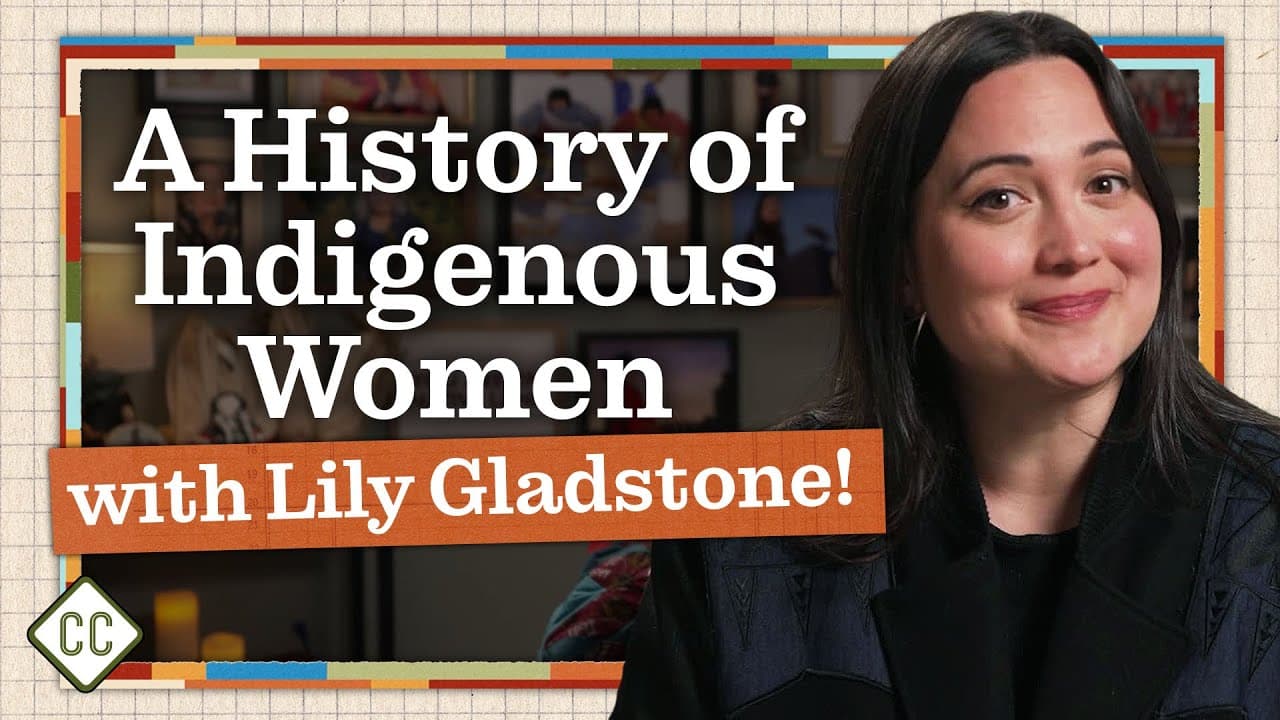
The Power, Resilience, and History of Native American Women

The Power, Resilience, and History of Native American Women

Hosted by Lily Gladstone, this episode of Crash Course Native American History explores the pivotal and diverse roles of Native women, Femmes, and Two-Spirit people from pre-contact times to the present day. It challenges the monolithic view of Native gender roles by highlighting the existence of matriarchal and matrilineal societies, such as the Diné (Navajo), where women hold significant economic and decision-making power. The video details historical figures like the warrior Buffalo Calf Road Woman and the diplomat Jikonsaseh, who helped found the Haudenosaunee Confederacy, illustrating that Native women have always served as leaders, healers, and protectors of their nations. The video also tackles the dark history of colonization and its specific targeting of Indigenous women to destabilize tribal societies. It addresses difficult topics including the imposition of European patriarchal values, the forced sterilization of thousands of Native women in the 1970s, and the ongoing crisis of Missing and Murdered Indigenous Women (MMIW). The narrative explains how settler colonialism disrupted traditional gender balances and how systemic failures in law enforcement continue to impact Native communities today. Despite these challenges, the video emphasizes resilience and modern activism. It profiles influential leaders like Elouise Cobell, who successfully sued the U.S. government for billions in mismanagement of funds, and Deb Haaland, the first Native American cabinet secretary. For the classroom, this resource is invaluable for teaching about gender studies, civil rights, and the complex legal and social history of Native Americans. It provides students with a nuanced understanding of how historical trauma and contemporary triumph coexist in Indigenous communities.
CrashCourseCrashCourse

13mins 42s

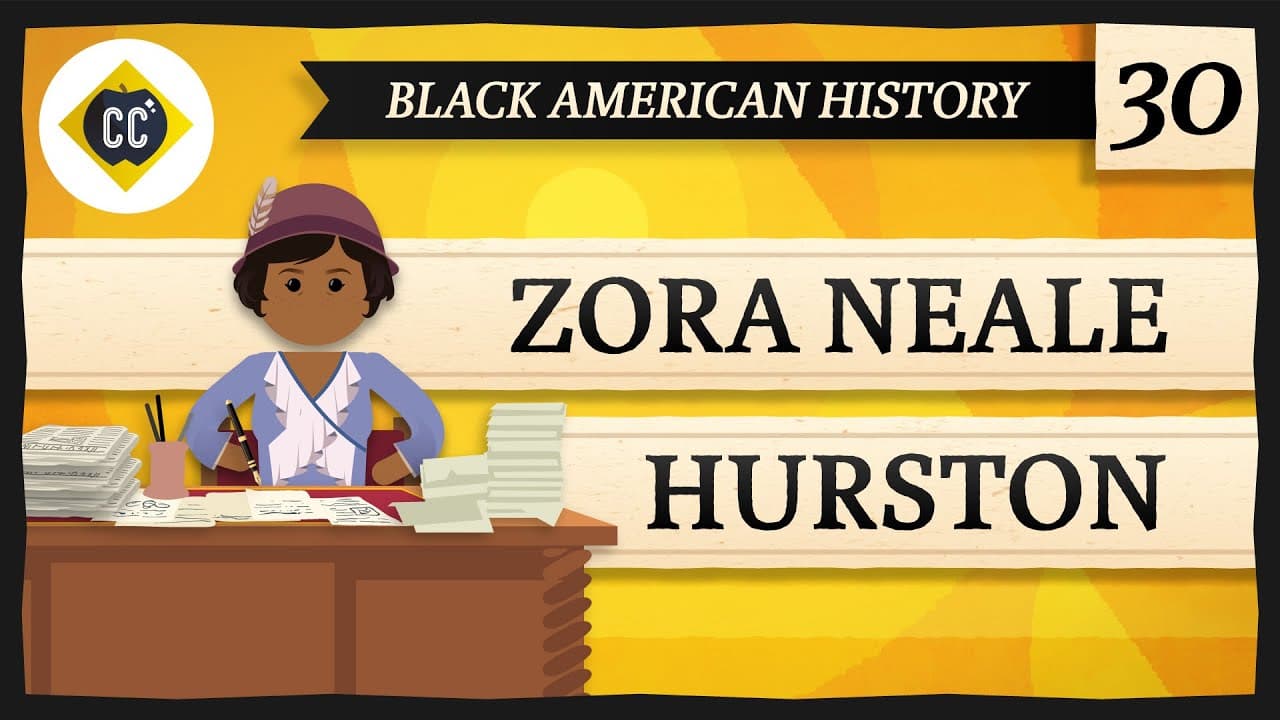
Exploring the Life and Legacy of Zora Neale Hurston

Exploring the Life and Legacy of Zora Neale Hurston

This installment of Crash Course Black American History explores the life, work, and enduring legacy of Zora Neale Hurston, a central figure of the Harlem Renaissance who broke literary barriers. Hosted by Clint Smith, the video traces Hurston's journey from her childhood in the all-Black town of Eatonville, Florida, through her education at Howard and Columbia Universities, to her rise as a uniquely anthropological storyteller. It examines how she utilized her training under Franz Boas to document Black Southern life and folklore with dignity and complexity, rather than using her characters merely as political symbols.

CrashCourseCrashCourse

10mins 4s

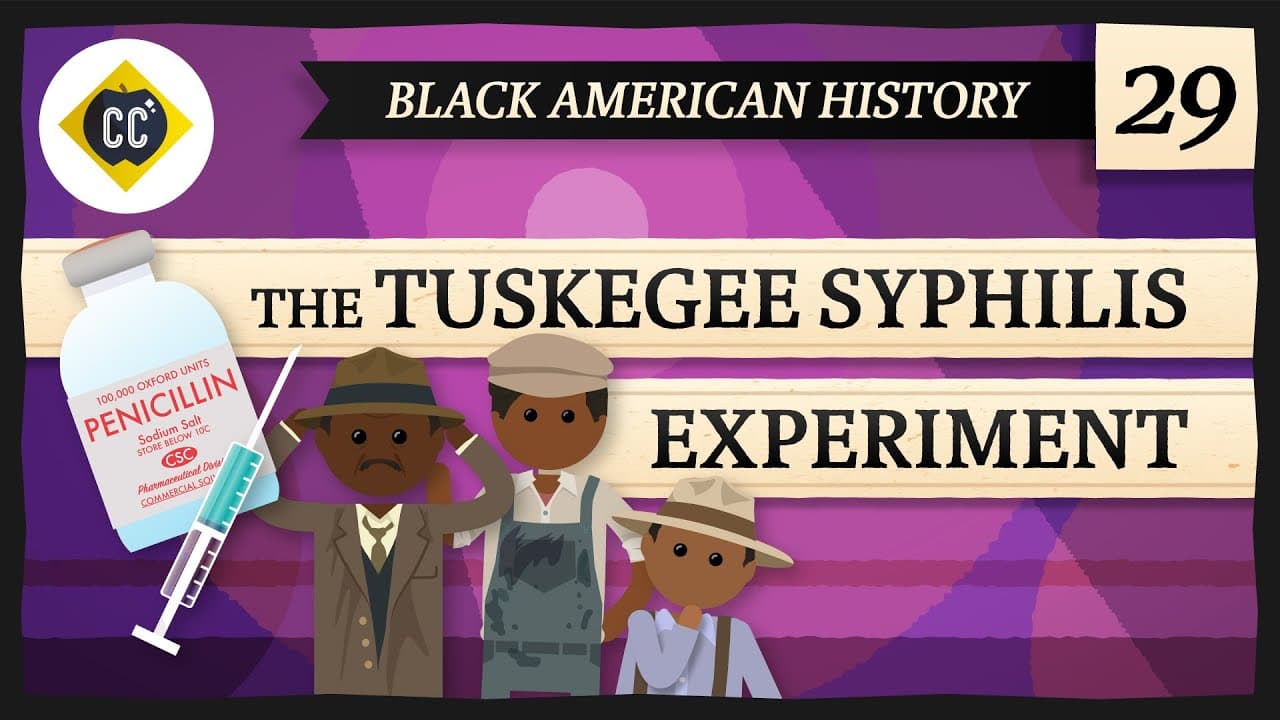
The History and Ethics of the Tuskegee Syphilis Study

The History and Ethics of the Tuskegee Syphilis Study

This educational video from Crash Course Black American History, hosted by Clint Smith, provides a comprehensive examination of the Tuskegee Syphilis Study (1932-1972). It details how the United States Public Health Service recruited 600 Black men in Macon County, Alabama, under the guise of receiving free health care, only to withhold life-saving treatment for syphilis to observe the disease's progression. The video explores the historical context of scientific racism that fueled the study, the specific unethical methodologies employed, and the devastating impact on the men, their families, and the broader Black community's trust in the medical system. The narrative delves into the complex layers of the study, including the role of the Great Depression and poverty in coercing participation, the lack of informed consent, and the involvement of Black medical professionals like Nurse Eunice Rivers. It highlights the eventual exposure of the study by whistleblower Peter Buxtun in 1972, the subsequent class-action lawsuit led by Fred Gray, and the resulting changes in medical ethics laws, including the National Research Act of 1974 and the establishment of Institutional Review Boards. For educators, this video is a powerful tool for teaching about bioethics, civil rights history, and systemic racism in healthcare. It connects historical events to contemporary issues, such as medical mistrust and health disparities, encouraging students to think critically about the responsibilities of scientific institutions. The video serves as a case study for understanding the importance of informed consent and the long-term sociological effects of unethical government actions.

CrashCourseCrashCourse

13mins 48s

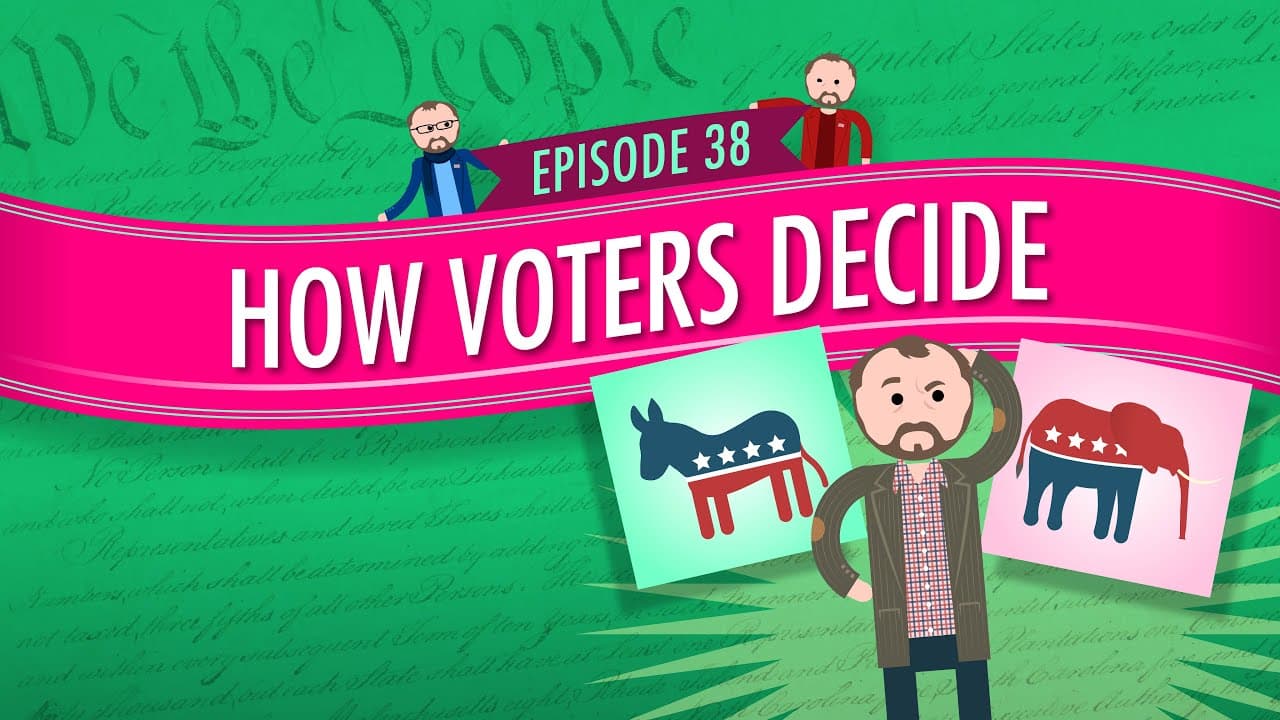
How Voters Decide: The Three Factors Influencing American Elections

How Voters Decide: The Three Factors Influencing American Elections

In this episode of Crash Course Government and Politics, host Craig Benzine explores the complex psychology and political science behind how American voters make decisions at the ballot box. While we might like to think every vote is a carefully weighed policy decision, the video reveals that voting behavior is largely driven by three distinct factors: party loyalty, candidate characteristics, and specific political issues. Craig explains that for most voters, the single strongest predictor of their vote is simply the political party they identify with, often influenced by their family upbringing.

CrashCourseCrashCourse

7mins 36s

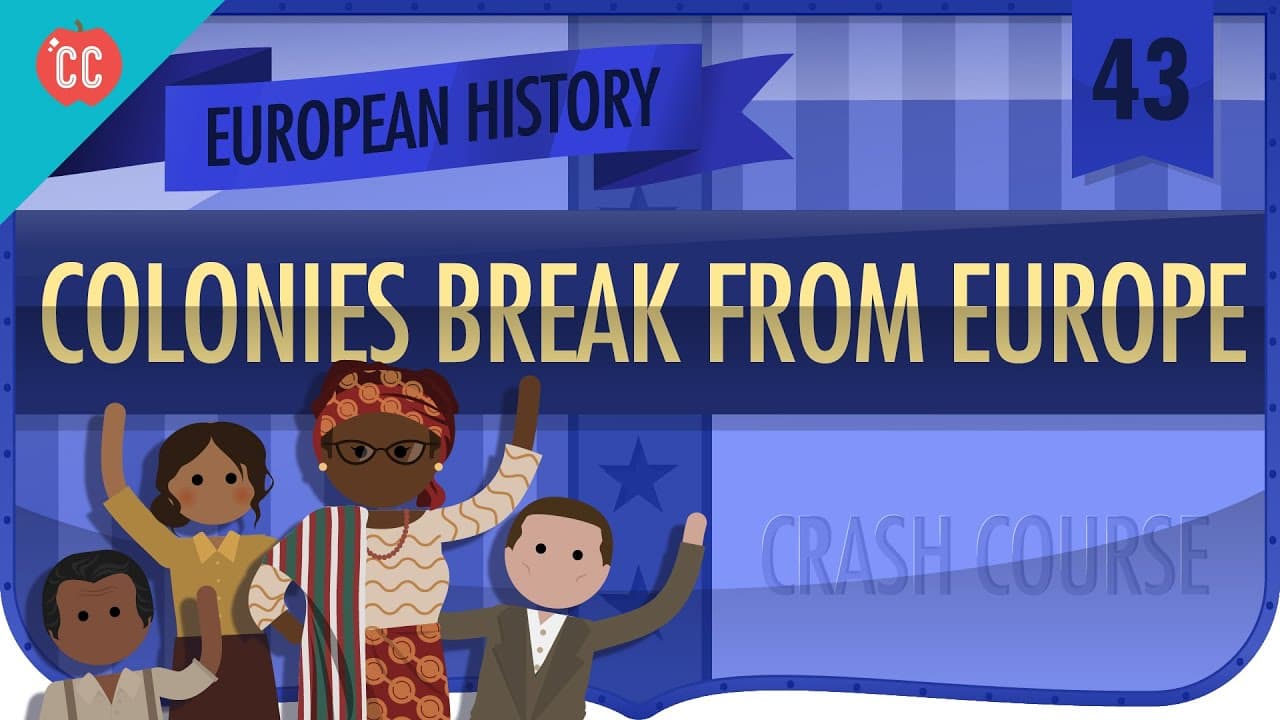
How Decolonization Reshaped the World After WWII

How Decolonization Reshaped the World After WWII

This educational video explores the complex and often violent process of decolonization that reshaped the world following World War II. It examines how European powers lost control of their empires in Asia and Africa, highlighting the distinct paths to independence taken by nations such as India, China, Kenya, and Algeria. The narrative contrasts negotiated transfers of power with brutal wars of liberation, providing specific historical examples of the human cost involved in these transitions. Key themes include the impact of the Cold War on emerging nations, the concept of neo-imperialism, and the psychological dimensions of colonization as articulated by thinkers like Frantz Fanon. The video also discusses the phenomenon of reverse migration, where colonized peoples moved to Europe to rebuild war-torn infrastructure, facing racism and discrimination in the process. It connects these historical events to cultural shifts, such as the rejection of Western dress codes and the influence of immigrant musicians on Western pop culture. For educators, this video serves as a powerful resource for teaching 20th-century World or European History. It moves beyond simple dates and maps to address the nuances of post-colonial infrastructure, the economic dependence created by foreign aid systems, and the lasting legacy of partition violence. The video provides graphic primary source quotes that can spark deep classroom discussions about human rights, the ethics of war, and the ongoing challenges faced by the Global South.

CrashCourseCrashCourse

13mins 23s

How World War I Innovations Created Modern Consumer Culture

How World War I Innovations Created Modern Consumer Culture

This educational video explores the profound cultural and economic shifts that occurred in Western society following World War I, specifically focusing on the transition into the "Roaring Twenties." It connects the technological innovations and propaganda techniques developed during the war to the rise of modern consumer culture, mass marketing, and changing social norms. The narrator explains how wartime advancements in infrastructure, such as electricity and transportation, laid the groundwork for a boom in consumer goods, while psychological tactics used to sell the war were repurposed by figures like Edward Bernays to sell products.

Miacademy & MiaPrep Learning ChannelMiacademy & MiaPrep Learning Channel

11mins 1s

Materials

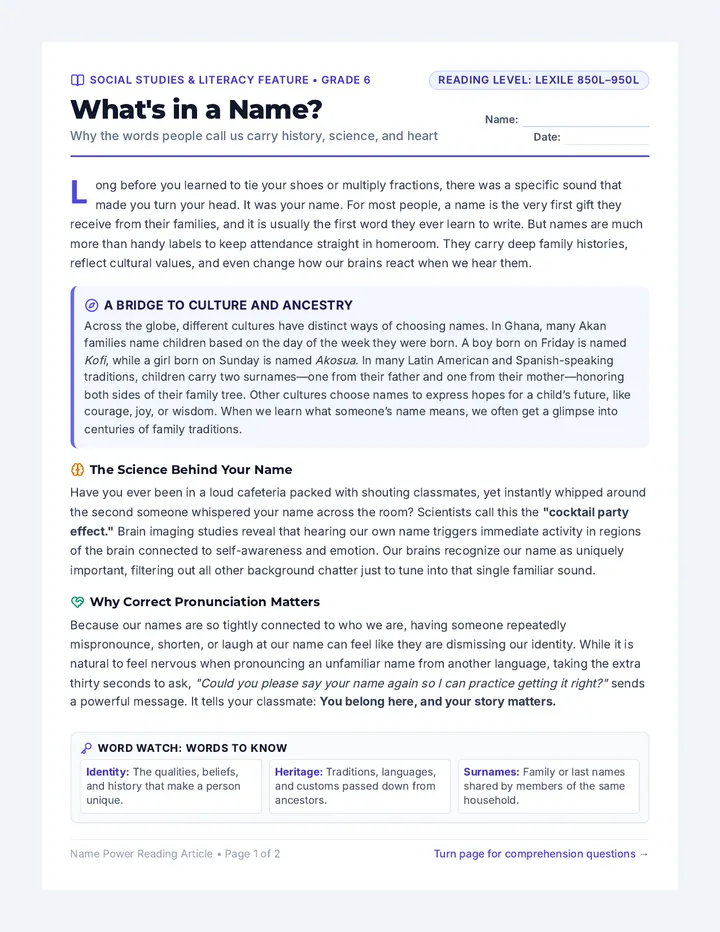
Name Power Article

Name Power Article

A two-page 6th-grade reading passage and comprehension activity exploring how names shape personal identity, cultural heritage, and mutual respect, complete with text-dependent questions and personal reflection.

M

michael.ward

Family Outline Slide

Family Outline Slide

Updated outline slide with a navy blue background and sky blue text/accents for a professional look.

YA

Yara Alqwaizani

Sequences

Soulful Cyphers Lesson Plan

We Gon’ Be Alright- A Century of Black Excellence

A comprehensive 6-lesson Black History Month curriculum for 5th-8th graders, exploring historical excellence, emotional expression, and community through the lens of five core values: Virtus, Kenkyo, Sankofa, Ubuntu, and Ganas. Inspired by a century of resilience and brilliance.

JS

Joleen Shillingford

18
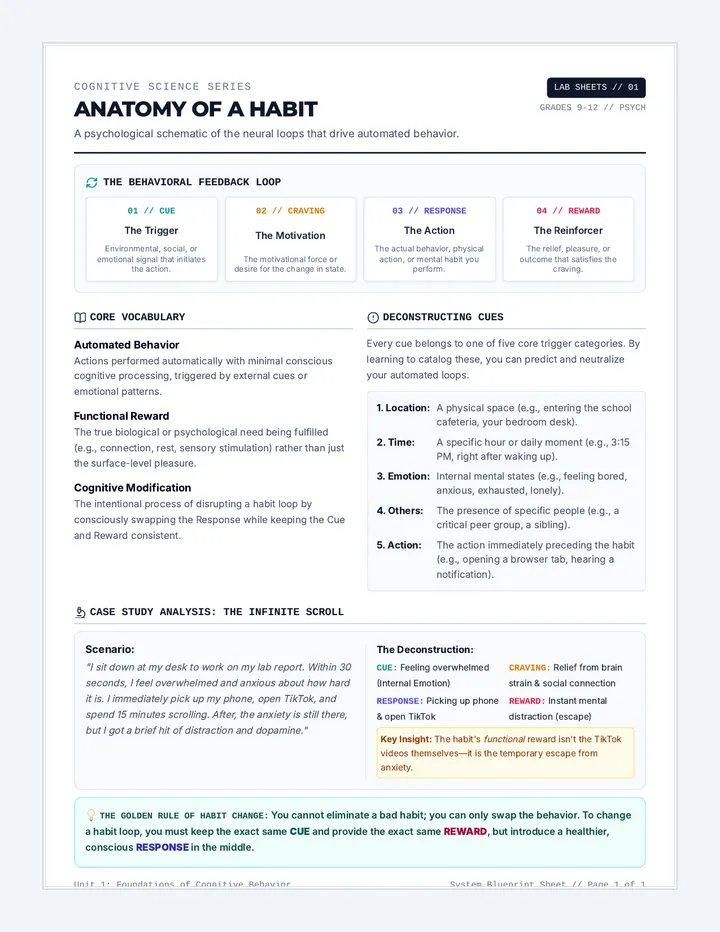
Anatomy of a Habit Guide & Vocabulary Sheet

Habit Architects

A three-part cognitive psychology series designed for Grades 9-12. Students learn the science of automation, explore how to isolate triggers and cravings, redesign unhelpful routines, and restructure their environments to make habit modification effortless.

DC

Diane Celona

19
Mission Message Guide Enseignant

Expertise Formation Premier Degré

Une série de modules de formation destinés aux conseillers pédagogiques pour renforcer leur expertise en ingénierie de formation continue, spécifiquement appliquée à l'enseignement du français à l'école primaire.

VD

Val Désirée

27
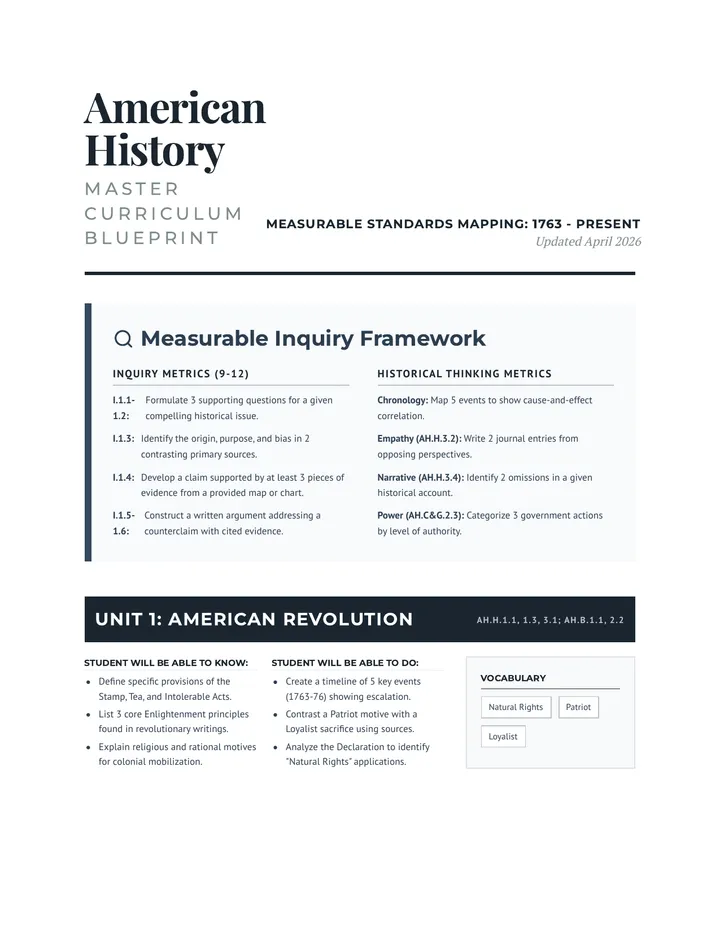
Curriculum Blueprint Document v2

History Horizon Sequence

A comprehensive high school curriculum plan for American History, covering 13 units from the American Revolution to the modern era, aligned with North Carolina Social Studies standards.

AK

Amity Kea

21
Archetype Playbook Slides Extension

Game Changers

A 4-week unit exploring the construction of heroism and villainy in sports through media analysis, persuasive writing, and investigative interview techniques. Students will analyze how public perception is shaped and ultimately create their own investigative podcast script.

W

william.whitlow

46
G5 Ubuntu Joy Slides

Centennial Soul Sequence

A 6-lesson sequence divided by grade level (5th, 6th, and 7th), celebrating 100 years of Black history through school values. Each grade explores two distinct lessons focusing on community joy, personal excellence, and mental health advocacy.

JS

Joleen Shillingford

15