Lenny.com
Explore
Create
ActivitiesNewMathEnglish Language ArtsScience & EngineeringSocial StudiesGlobal LanguagesHealth & Physical EducationSpecial EducationCounseling & Life SkillsArts & CreativityESL
Lenny.com
Lenny.com
Explore
Create
ActivitiesNewMathEnglish Language ArtsScience & EngineeringSocial StudiesGlobal LanguagesHealth & Physical EducationSpecial EducationCounseling & Life SkillsArts & CreativityESL
Lenny.com
Lenny.com

Solutions

Lenny for EducatorsLenny for SchoolsLenny for Districts

Product

ExploreSign inCreateSupportAbout

Resources

Getting startedMTSS Acceleration Program

Newsletters

School Funding Newsletter

© 2026 Lenny Learning Inc.

TermsPrivacyAccessibility
LinkedInInstagramX
Lenny

Prejudice and Discrimination

Psychological roots of bias, stereotyping, and systemic discrimination. Examines social identity theory and evaluates cognitive strategies for prejudice reduction.

Social StudiesSocial Studies PracticesLocation WordsMapsOrder EventsChronology and CausationEvaluating SourcesHistorical ThinkingGeography, Humans, & the EnvironmentAmerican Symbols and LandmarksCitiesStatesState CapitalsRegions of the United StatesGeographic SkillsPhysical GeographyHuman GeographyRegional GeographyGeography of AfricaGeography of AsiaGeography of EuropeGeography of OceaniaGeography of the AmericasSociety and Environment of EuropeSociety and Environment of AsiaSociety and Environment of The AmericasSociety and Environment of the Middle EastSociety and Environment of AfricaHistoryPrehistoryComparing Ancient River CivilizationsAncient MesopotamiaAncient Egypt and KushAncient South AsiaEarly ChinaGreeceRome and the Byzantine EmpireAncient World HistoryNative Peoples of North AmericaNative Peoples of Mesoamerica and South AmericaAfrican EmpiresMedieval AsiaMedieval EuropeThe Silk RoadMedieval HistoryIslamic EmpiresWorld ReligionsRenaissance PeriodAge of ExplorationThe Thirteen ColoniesThe American RevolutionUS History Early RepublicFounding of the United StatesUS History AntebellumUS Civil WarReconstruction PeriodThe Gilded AgeUS ImperialismWorld ImperialismWorld War IUS History 1920sGreat DepressionWorld War IIThe Cold WarUS History 1950-60sUS History 1960s-70sWorld History 20th CenturyContemporary US HistoryContemporary World HistoryHolidaysCivics and GovernmentCitizenshipGovernment FoundationsThe ConstitutionUS ConstitutionExecutive BranchLegislative BranchJudicial BranchState and LocalPolitical ParticipationPublic PolicyPolitical SystemsPower and AuthoritySocial MovementsDefining DevianceTheories of DevianceCrime and Criminal JusticeEconomicsBasic Economic PrinciplesSupply and DemandWhat is MoneyEconomic FundamentalsMicroeconomicsMacroeconomicsBanking and FinanceEconomic SystemsGlobal EconomicsCorporations and PowerThe Changing WorkplaceUnemployment and LaborClass and InequalitySocial MobilityGlobal InequalityPsychologyHistory of PsychologyPsychology as a ScienceBrain and Nervous SystemNeuroscience and BehaviorGenetics and BehaviorSleep and ConsciousnessSensory ProcessesPerceptual OrganizationClassical ConditioningOperant ConditioningObservational LearningCognitive LearningMemory ProcessesThinking and Problem SolvingLanguage and CognitionTheories of MotivationStress and CopingPrenatal and Infant DevelopmentChildhood DevelopmentAdolescent DevelopmentAdulthood and AgingSelf and IdentitySocial CognitionSocial InfluenceAttraction and RelationshipsGroup BehaviorPrejudice and DiscriminationAnxiety and Mood DisordersClinical PsychologyForensic PsychologyPhilosophy & EthicsIntroduction to PhilosophyMajor Philosophers & IdeasMind and Body ProblemFree Will vs DeterminismEthics & MoralityReligion & PhilosophyPolitical Philosophy

Videos

How Decolonization Reshaped the World After WWII

How Decolonization Reshaped the World After WWII

This educational video explores the complex and often violent process of decolonization that reshaped the world following World War II. It examines how European powers lost control of their empires in Asia and Africa, highlighting the distinct paths to independence taken by nations such as India, China, Kenya, and Algeria. The narrative contrasts negotiated transfers of power with brutal wars of liberation, providing specific historical examples of the human cost involved in these transitions. Key themes include the impact of the Cold War on emerging nations, the concept of neo-imperialism, and the psychological dimensions of colonization as articulated by thinkers like Frantz Fanon. The video also discusses the phenomenon of reverse migration, where colonized peoples moved to Europe to rebuild war-torn infrastructure, facing racism and discrimination in the process. It connects these historical events to cultural shifts, such as the rejection of Western dress codes and the influence of immigrant musicians on Western pop culture. For educators, this video serves as a powerful resource for teaching 20th-century World or European History. It moves beyond simple dates and maps to address the nuances of post-colonial infrastructure, the economic dependence created by foreign aid systems, and the lasting legacy of partition violence. The video provides graphic primary source quotes that can spark deep classroom discussions about human rights, the ethics of war, and the ongoing challenges faced by the Global South.

CrashCourseCrashCourse

13mins 23s

The History and Ethics of the Tuskegee Syphilis Study

The History and Ethics of the Tuskegee Syphilis Study

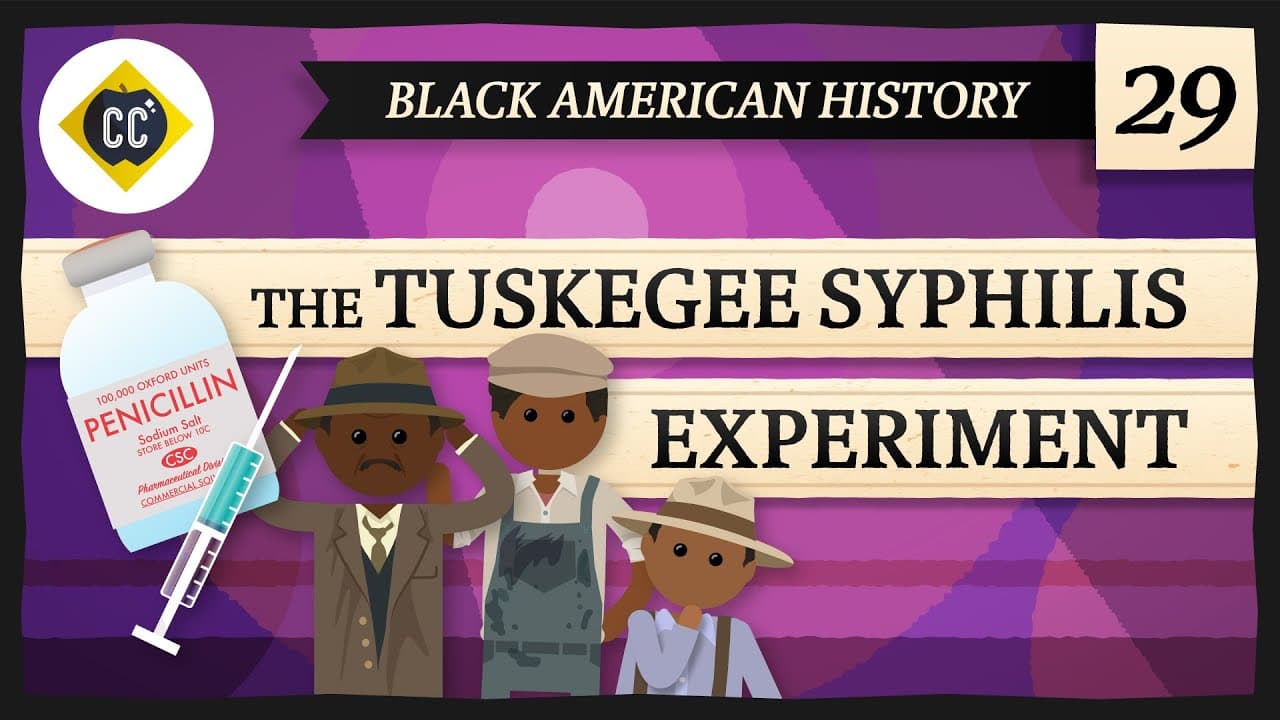
This educational video from Crash Course Black American History, hosted by Clint Smith, provides a comprehensive examination of the Tuskegee Syphilis Study (1932-1972). It details how the United States Public Health Service recruited 600 Black men in Macon County, Alabama, under the guise of receiving free health care, only to withhold life-saving treatment for syphilis to observe the disease's progression. The video explores the historical context of scientific racism that fueled the study, the specific unethical methodologies employed, and the devastating impact on the men, their families, and the broader Black community's trust in the medical system. The narrative delves into the complex layers of the study, including the role of the Great Depression and poverty in coercing participation, the lack of informed consent, and the involvement of Black medical professionals like Nurse Eunice Rivers. It highlights the eventual exposure of the study by whistleblower Peter Buxtun in 1972, the subsequent class-action lawsuit led by Fred Gray, and the resulting changes in medical ethics laws, including the National Research Act of 1974 and the establishment of Institutional Review Boards. For educators, this video is a powerful tool for teaching about bioethics, civil rights history, and systemic racism in healthcare. It connects historical events to contemporary issues, such as medical mistrust and health disparities, encouraging students to think critically about the responsibilities of scientific institutions. The video serves as a case study for understanding the importance of informed consent and the long-term sociological effects of unethical government actions.

CrashCourseCrashCourse

13mins 48s

How the Great Depression Fueled the Rise of European Dictators

How the Great Depression Fueled the Rise of European Dictators

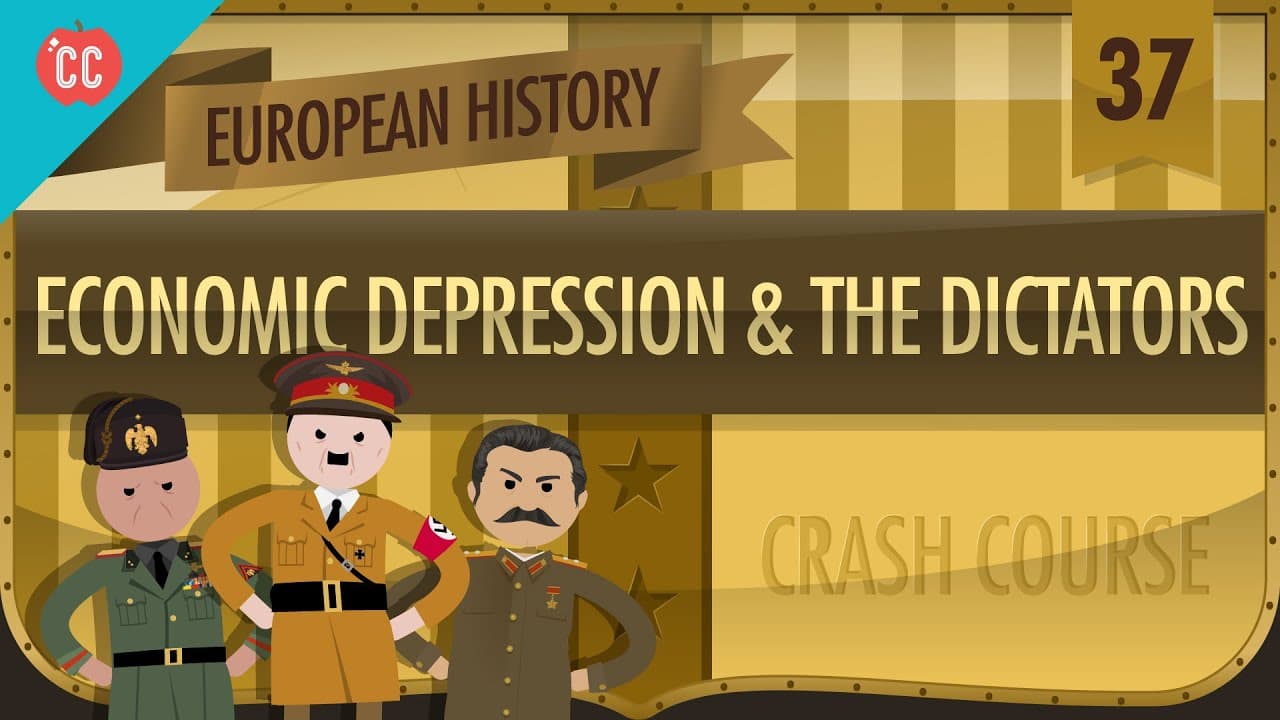
This episode of Crash Course European History explores the tumultuous period following the 1929 US stock market crash, illustrating how economic disaster rippled across the Atlantic to destabilize Europe. Host John Green explains the direct correlation between the Great Depression and the rise of authoritarian regimes, specifically focusing on the ascendance of Adolf Hitler in Germany and the consolidation of power by Joseph Stalin in the Soviet Union. The video details how economic desperation creates fertile ground for extremist ideologies that promise stability and national rejuvenation at the cost of liberty and human rights. Key themes include the fragility of democracy during economic crises, the mechanics of totalitarian control, and the sociological concept of "negative integration"—unifying a group by defining and demonizing a common enemy. The video contrasts the methods of fascism and communism while highlighting their shared reliance on terror, propaganda, and state violence. It covers significant historical events such as the Holodomor (famine in Ukraine), the Great Purge, the Night of the Long Knives, the Nuremberg Laws, and the Spanish Civil War. For educators, this video serves as a powerful tool to teach the interwar period. It moves beyond dates and battles to examine the social and psychological factors that allowed dictators to gain popular support. By connecting the US economy to European politics and highlighting the global spread of authoritarianism (including Japan and Spain), it helps students understand the interconnected nature of modern history. It provides a nuanced look at how ordinary citizens can become complicit in atrocity through propaganda and the gradual erosion of moral norms.

CrashCourseCrashCourse

16mins 34s

Debunking Common Myths in Native American History

Debunking Common Myths in Native American History

In this inaugural episode of Crash Course Native American History, host Che Jim takes viewers on a critical journey through the "Hall of Myths and Misconceptions" to dismantle pervasive stereotypes about Indigenous peoples. The video systematically addresses and debunks four major myths: the romanticized narrative of the First Thanksgiving, the "Vanishing Indian" trope perpetuated by Hollywood Westerns, the controversy surrounding Native American sports mascots, and the stereotype of the "Rich Casino Indian." Through a mix of humor, historical evidence, animations, and expert citations, the video contrasts popular cultural narratives with the complex, often difficult realities of history and modern existence. Key themes explored include the power of media representation, the psychological impact of stereotypes on Native youth, and the legal and economic realities of Tribal sovereignty. The video delves into specific historical events, such as the Wampanoag's strategic alliance with Pilgrims and the dark history behind the "Redskin" slur, linking them to contemporary issues like the Washington Football Team's name change. It also clarifies misunderstandings regarding government benefits, taxation, and the Indian Gaming Regulatory Act, providing a nuanced look at the relationship between Tribal nations and the U.S. government. This video is an invaluable resource for high school social studies and history classrooms. It serves as a powerful tool for media literacy, helping students distinguish between historical fact and cultural myth. Teachers can use it to spark discussions about the ethics of representation, the lasting effects of colonization, and the importance of Indigenous perspectives in American history. By addressing common misconceptions head-on, it lays a foundation for students to engage more deeply and accurately with Native American history and current events.

CrashCourseCrashCourse

12mins 35s

Innovation, Mass Culture, and the Ethics of Progress (1880-1914)

Innovation, Mass Culture, and the Ethics of Progress (1880-1914)

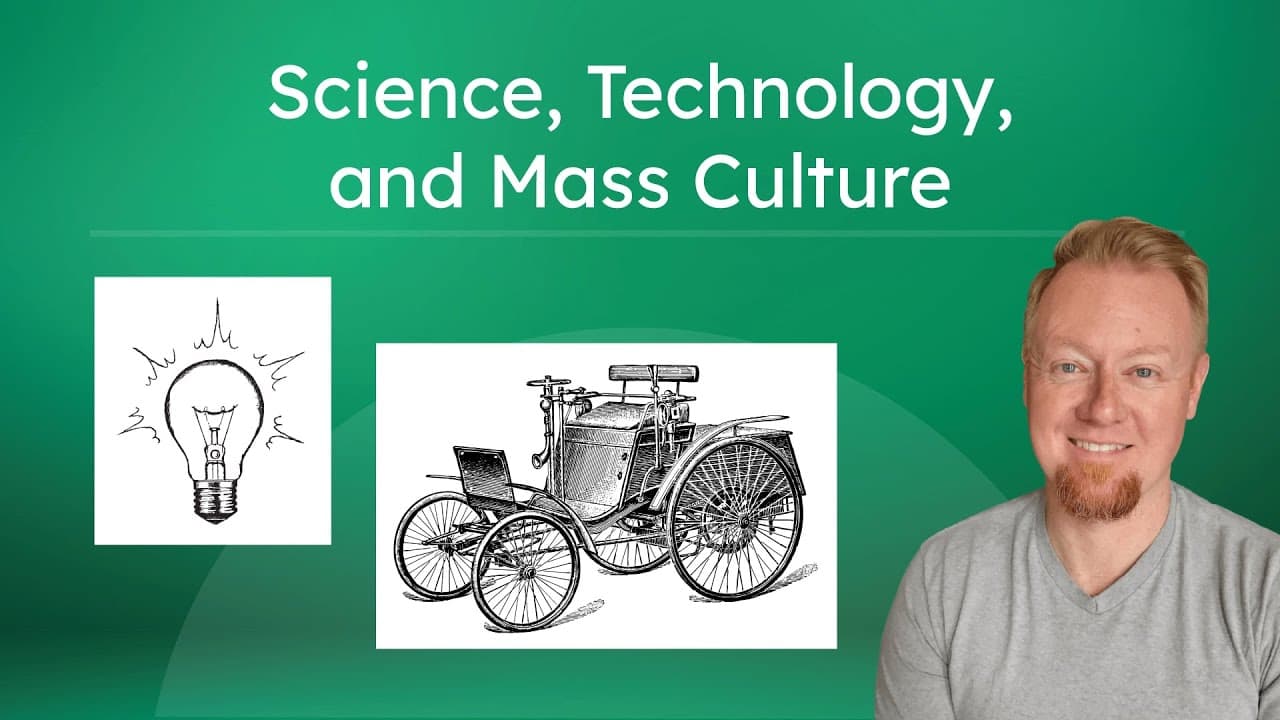
This video explores the dynamic period between 1880 and 1914, often called the Progressive Era or the Belle Époque, examining the explosion of scientific and technological innovation that defined the age. It details how industrial powers like Britain, the United States, and Germany funded research and public health initiatives, highlighting key figures like Josephine Cochrane, George Soper, and Madame C.J. Walker. The narrative explains the shift from a survival-based economy to a consumer culture driven by mass media, advertising, and the rise of the middle class. The video delves into the complex relationship between capitalism, industrialization, and popular culture, illustrating how wealthy industrialists influenced scientific progress and how businesses shaped consumer desires. Crucially, it also addresses the darker side of this era, discussing the rise of pseudosciences like phrenology and eugenics. It explains how scientific language was misused to justify racism, oppression, and unethical experimentation, grounding these concepts in the historical context of Social Darwinism. For educators, this resource serves as an excellent synthesis of early modern history, connecting technological advancements with social and ethical questions. It challenges students to consider the moral implications of progress, asking the big-picture question: "Just because we can, does it mean we should?" It is particularly useful for World History and U.S. History units on the Industrial Revolution, providing diverse examples of inventors and prompting critical thinking about the double-edged sword of scientific discovery.
Miacademy & MiaPrep Learning ChannelMiacademy & MiaPrep Learning Channel

11mins 20s

Why Europe Hunted Witches: History and Context

Why Europe Hunted Witches: History and Context

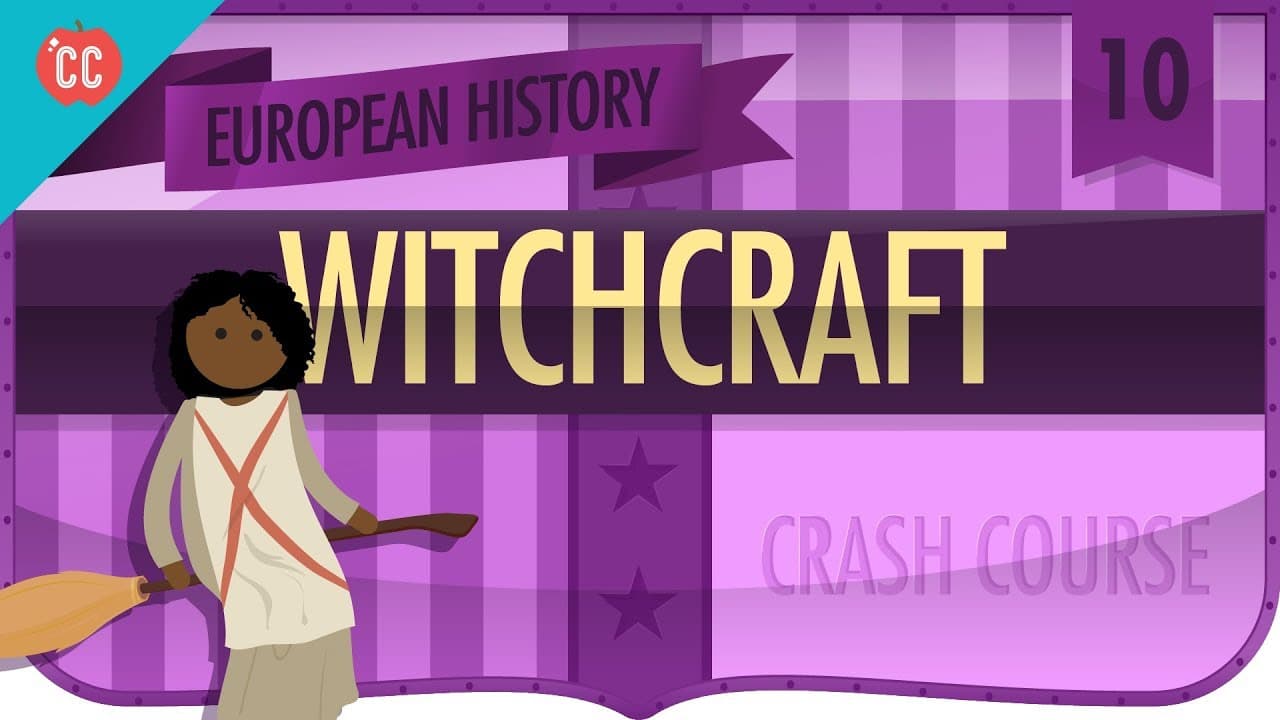
This episode of Crash Course European History explores the complex and tragic history of witchcraft and witch hunting in Europe between the 15th and 18th centuries. Hosted by John Green, the video investigates why rational people in the early modern period believed in "unseen powers," how religious and political turmoil fueled paranoia, and the specific historical context that led to the execution of tens of thousands of people. It moves beyond stereotypes to examine the societal fears, print culture, and power dynamics that drove these persecutions. Key themes include the intersection of religion and magic, the role of the printing press (specifically the "Malleus Maleficarum") in standardizing and spreading fear, and the systemic misogyny that made women—particularly older women and those in healing professions—vulnerable targets. The video analyzes how the Reformation, the Counter-Reformation, and the lack of scientific explanation for natural disasters created a climate of anxiety where "witches" became scapegoats for societal misfortunes. For educators, this video offers a powerful opportunity to discuss "historical empathy"—understanding how people in the past made sense of their world without modern scientific knowledge. It provides a nuanced look at gender history, moving the narrative from simple folklore to a serious study of social control. The content is an excellent resource for AP European History or World History units, supporting critical thinking about how scapegoating functions in society and how belief systems shape historical events.

CrashCourseCrashCourse

15mins 33s

Sequences

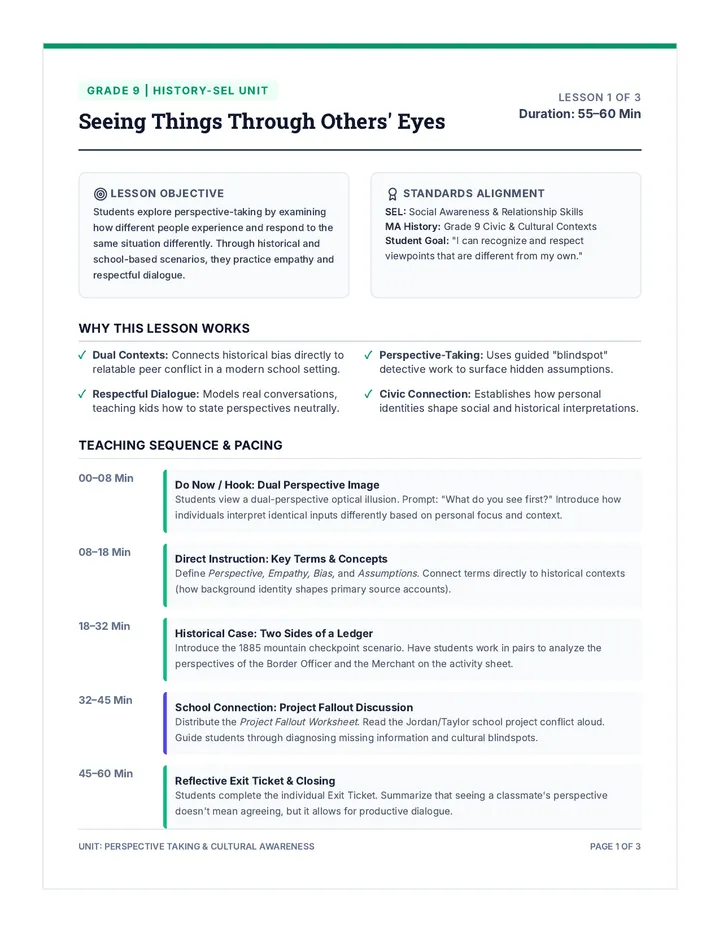
Empathy and Perspective Teacher Guide

Perspective Taking and Cultural Awareness

A comprehensive high school social-emotional learning unit integrated into history curricula. Students progress from basic empathy in grade 9, to active listening and respectful dialogue in grade 10, and complex global and cultural analysis in grade 11, aligning with the Vision of the Graduate.

J

jtoomey

27
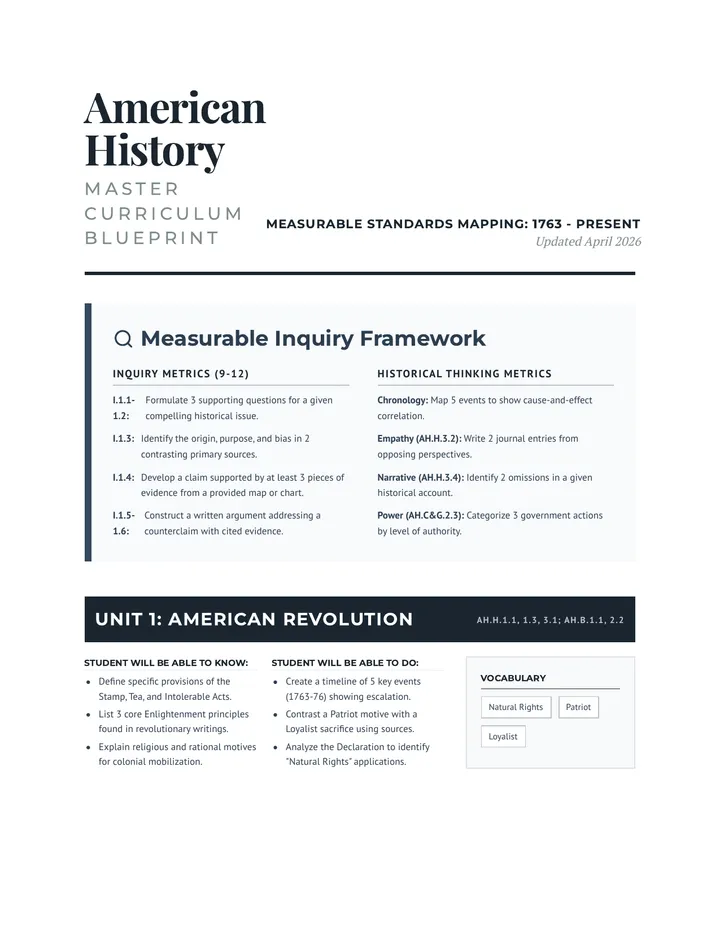
Curriculum Blueprint Document v2

History Horizon Sequence

A comprehensive high school curriculum plan for American History, covering 13 units from the American Revolution to the modern era, aligned with North Carolina Social Studies standards.

AK

Amity Kea

21
Archetype Playbook Slides Extension

Game Changers

A 4-week unit exploring the construction of heroism and villainy in sports through media analysis, persuasive writing, and investigative interview techniques. Students will analyze how public perception is shaped and ultimately create their own investigative podcast script.

W

william.whitlow

46
Titans Intro Slides

Titan Leadership

A comprehensive study of leadership, civil rights, and social ethics through the lens of the film Remember the Titans.

MK

Marlyce Kemp

7
Sighet Stories Slides

Night Prelude

A two-block introductory unit for Elie Wiesel's 'Night' designed for students with ADHD and SLD, focusing on character introduction, historical context, and the psychological impact of the Holocaust through movement and tactile activities.

EC

Erin Cloutier

7
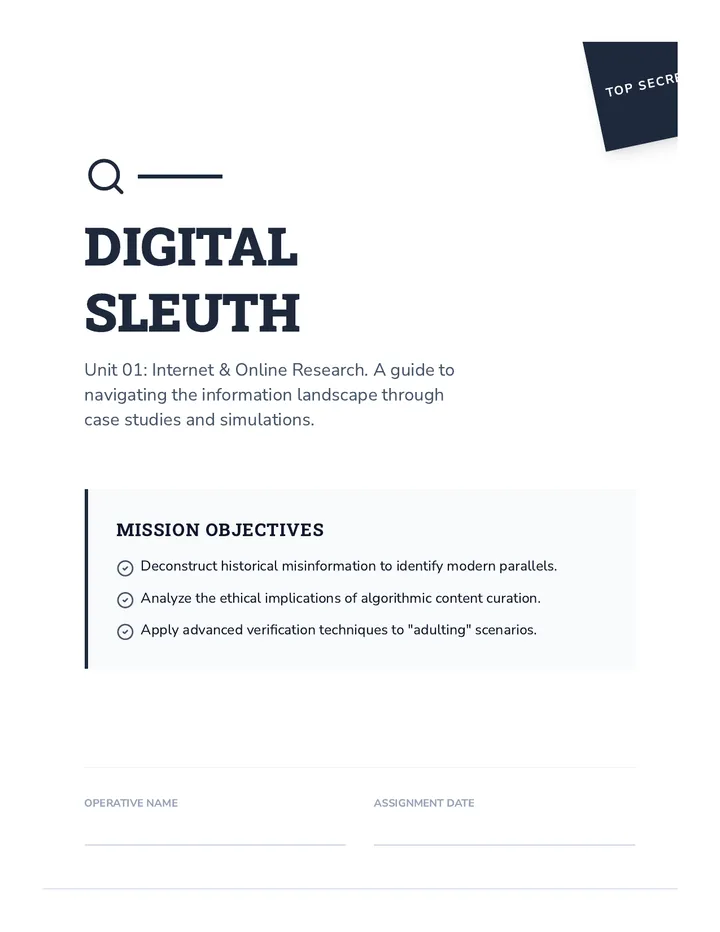
Digital Sleuth Workbook

The Citizen Dossier

A comprehensive curriculum covering financial literacy, economic principles, and civic systems through historical case studies, ethical dilemmas, and real-world simulations.

CM

carley Martin

10

Lessons

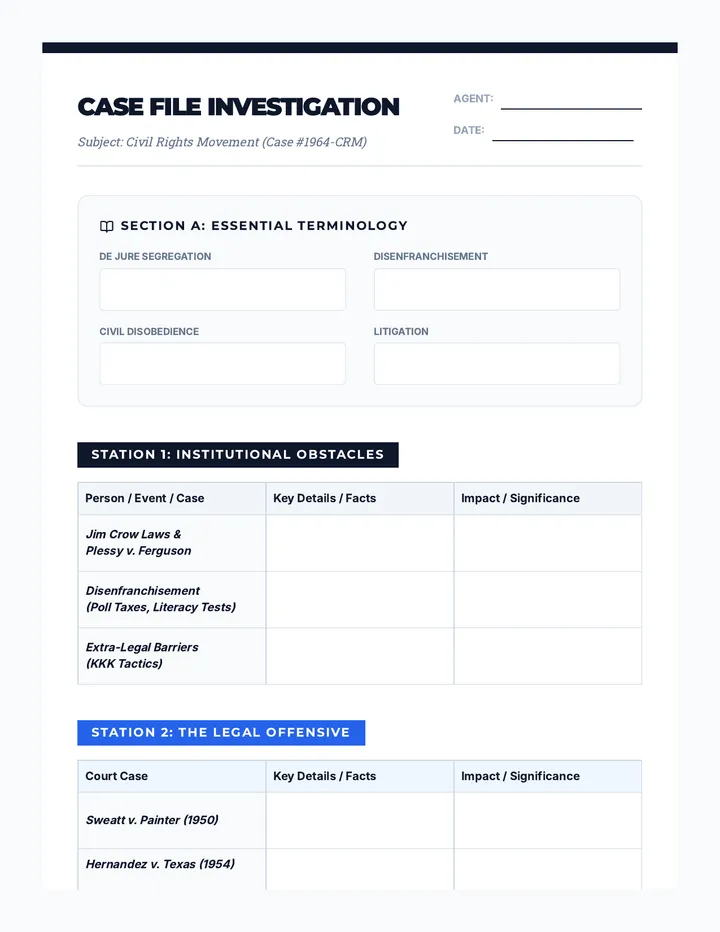
Justice Gallery Investigation Worksheet

Justice Gallery Case Files

A comprehensive lesson on the Civil Rights Movement featuring gallery stations and a guided investigation worksheet. Students analyze institutional obstacles, legal strategies, non-violent and militant tactics, and the expansion of the movement to other marginalized groups.

CE

Chelsea Elliott

25
Voices of Conflict Master Key

Voices of Global Conflict

A comprehensive collection of primary source analysis activities covering the major events and themes of World War II, from the rise of dictators to the dawn of the atomic age.

BB

Bridgette Burdick

4
Mob Mindset Worksheet

Madness of Crowds

A deep dive into the psychology of collective behavior, examining how individuals lose their sense of self in a crowd. Students analyze historical examples from the 1692 Salem Witch Trials, the French Revolution, and modern social media to understand the triggers and consequences of mob mentality.

LC

Leeah Cavanaugh

9
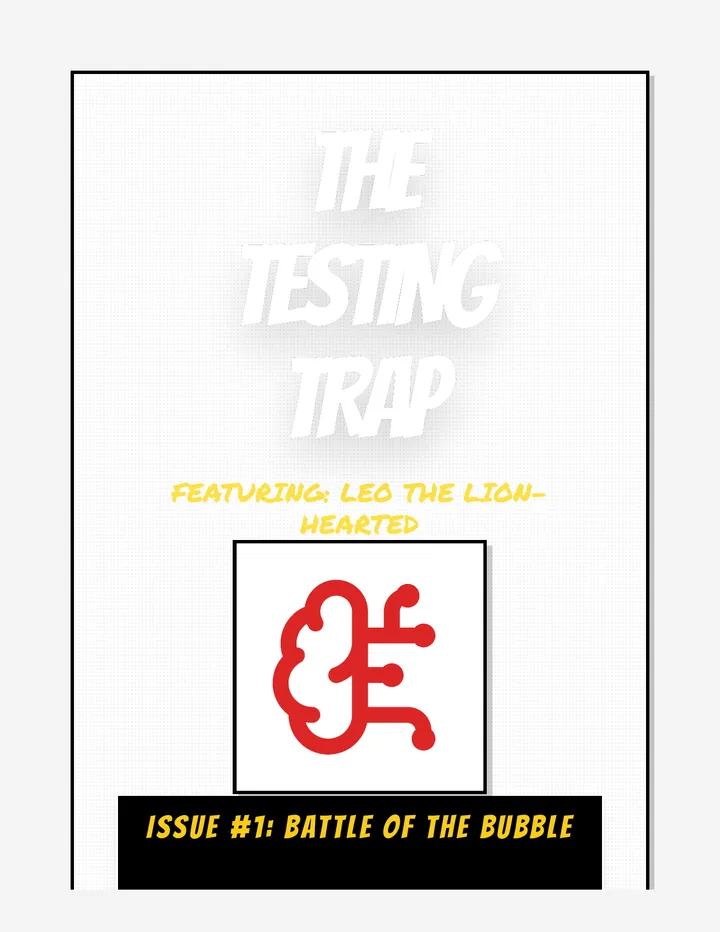
Testing Trap Comic

The Testing Trap

An exploration of the history, mechanics, and fairness of standardized testing through the lens of a neurodivergent student's experience. This lesson uses a retro-style comic to illustrate the disconnect between traditional testing and real-world intelligence.

J

JLaytner

3
Scroll to Action Pitch Slides

Scroll to Action Pitch

A pitch deck and supplementary handout designed to help educators present the 'Scroll to Action' program to school leadership for integration into the curriculum.

NZ

Noor Zain Al-Abdin

2
Home Front Slides

War at Home

An exploration of life in the United States during World War II, focusing on economic mobilization, social changes, and the pervasive influence of government propaganda.

TS

Tomas Salazar

3