Lenny.com
Explore
Create
ActivitiesNewMathEnglish Language ArtsScience & EngineeringSocial StudiesGlobal LanguagesHealth & Physical EducationSpecial EducationCounseling & Life SkillsArts & CreativityESL
Lenny.com
Lenny.com
Explore
Create
ActivitiesNewMathEnglish Language ArtsScience & EngineeringSocial StudiesGlobal LanguagesHealth & Physical EducationSpecial EducationCounseling & Life SkillsArts & CreativityESL
Lenny.com
Lenny.com

Solutions

Lenny for EducatorsLenny for SchoolsLenny for Districts

Product

ExploreSign inCreateSupportAbout

Resources

Getting startedMTSS Acceleration Program

Newsletters

School Funding Newsletter

© 2026 Lenny Learning Inc.

TermsPrivacyAccessibility
LinkedInInstagramX
Lenny

Geography of Africa

Diverse biomes, major waterways, and tectonic features across the continent's five regions. Connects physical landscapes to human settlement patterns, resource management, and cultural development.

Social StudiesSocial Studies PracticesLocation WordsMapsOrder EventsChronology and CausationEvaluating SourcesHistorical ThinkingGeography, Humans, & the EnvironmentAmerican Symbols and LandmarksCitiesStatesState CapitalsRegions of the United StatesGeographic SkillsPhysical GeographyHuman GeographyRegional GeographyGeography of AfricaGeography of AsiaGeography of EuropeGeography of OceaniaGeography of the AmericasSociety and Environment of EuropeSociety and Environment of AsiaSociety and Environment of The AmericasSociety and Environment of the Middle EastSociety and Environment of AfricaHistoryPrehistoryComparing Ancient River CivilizationsAncient MesopotamiaAncient Egypt and KushAncient South AsiaEarly ChinaGreeceRome and the Byzantine EmpireAncient World HistoryNative Peoples of North AmericaNative Peoples of Mesoamerica and South AmericaAfrican EmpiresMedieval AsiaMedieval EuropeThe Silk RoadMedieval HistoryIslamic EmpiresWorld ReligionsRenaissance PeriodAge of ExplorationThe Thirteen ColoniesThe American RevolutionUS History Early RepublicFounding of the United StatesUS History AntebellumUS Civil WarReconstruction PeriodThe Gilded AgeUS ImperialismWorld ImperialismWorld War IUS History 1920sGreat DepressionWorld War IIThe Cold WarUS History 1950-60sUS History 1960s-70sWorld History 20th CenturyContemporary US HistoryContemporary World HistoryHolidaysCivics and GovernmentCitizenshipGovernment FoundationsThe ConstitutionUS ConstitutionExecutive BranchLegislative BranchJudicial BranchState and LocalPolitical ParticipationPublic PolicyPolitical SystemsPower and AuthoritySocial MovementsDefining DevianceTheories of DevianceCrime and Criminal JusticeEconomicsBasic Economic PrinciplesSupply and DemandWhat is MoneyEconomic FundamentalsMicroeconomicsMacroeconomicsBanking and FinanceEconomic SystemsGlobal EconomicsCorporations and PowerThe Changing WorkplaceUnemployment and LaborClass and InequalitySocial MobilityGlobal InequalityPsychologyHistory of PsychologyPsychology as a ScienceBrain and Nervous SystemNeuroscience and BehaviorGenetics and BehaviorSleep and ConsciousnessSensory ProcessesPerceptual OrganizationClassical ConditioningOperant ConditioningObservational LearningCognitive LearningMemory ProcessesThinking and Problem SolvingLanguage and CognitionTheories of MotivationStress and CopingPrenatal and Infant DevelopmentChildhood DevelopmentAdolescent DevelopmentAdulthood and AgingSelf and IdentitySocial CognitionSocial InfluenceAttraction and RelationshipsGroup BehaviorPrejudice and DiscriminationAnxiety and Mood DisordersClinical PsychologyForensic PsychologyPhilosophy & EthicsIntroduction to PhilosophyMajor Philosophers & IdeasMind and Body ProblemFree Will vs DeterminismEthics & MoralityReligion & PhilosophyPolitical Philosophy

Videos

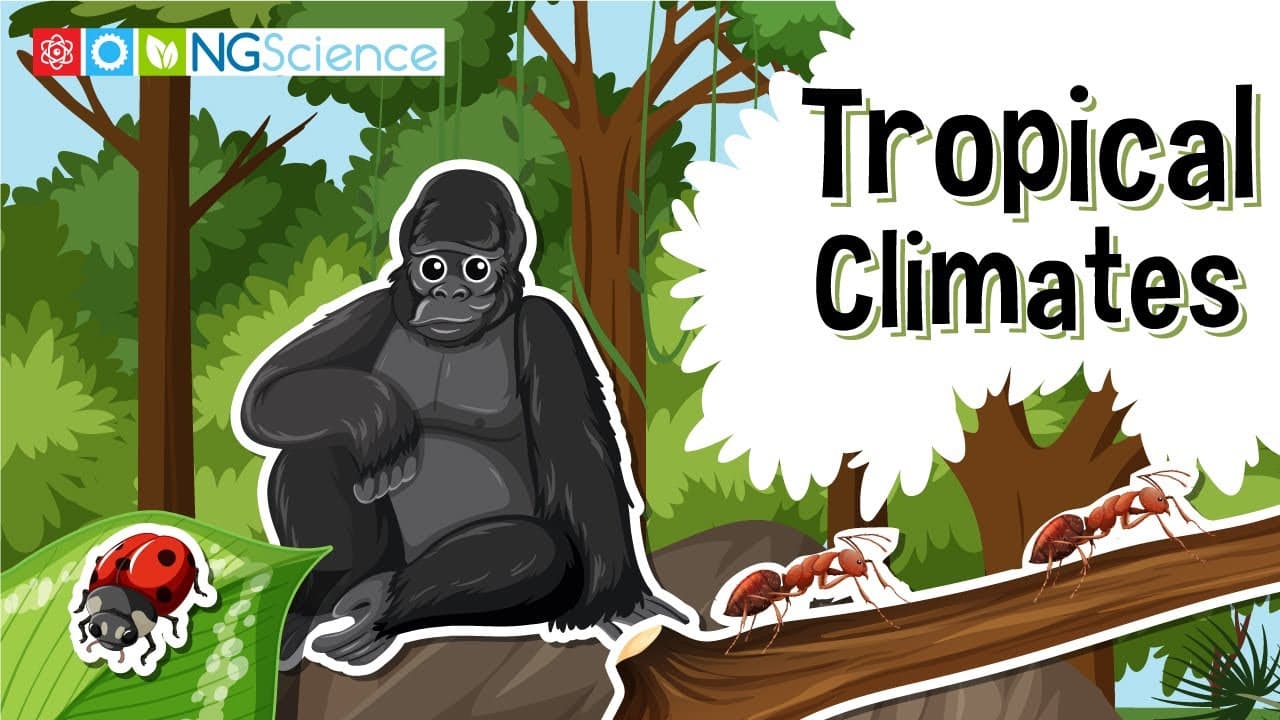
Exploring Tropical Climates and Rainforests

Exploring Tropical Climates and Rainforests

This educational video provides a comprehensive overview of tropical climates, also known as equatorial climates. It explains the geographical location of these zones near the equator, covering approximately one-third of Earth's land surface. The video details the defining characteristics of tropical climates, specifically their consistent high temperatures year-round and significant rainfall, distinguishing their two-season cycle (wet and dry) from the four-season cycle found in temperate regions. The content highlights major tropical rainforest regions including the Amazon Basin in Brazil, the Congo Basin in Africa, and forests throughout Southeast Asia. It emphasizes the incredible biodiversity of these habitats, noting that they are the most diverse land ecosystems on Earth and home to millions of plant and animal species, many of which remain undiscovered. The video features high-quality footage of various rainforest animals such as monkeys, colorful frogs, exotic birds, and insects. The final segment addresses the critical environmental issue of deforestation, showing powerful imagery of logging and land clearing for agriculture and infrastructure. It concludes with a conservation message, urging viewers to understand the importance of protecting these vital ecosystems to ensure the survival of their unique flora and fauna for future generations.

Next Generation ScienceNext Generation Science

2mins 26s

Why and How People Move: The Geography of Migration

Why and How People Move: The Geography of Migration

This educational video from Crash Course Geography provides a comprehensive overview of human migration, using the vast Indian diaspora as a primary case study to illustrate key concepts. Hosted by Alizé Carrère, the video breaks down the "how" and "why" of human movement, moving beyond simple definitions to explore the complex historical, economic, and environmental drivers behind migration. It covers a wide range of migration types, from the historical indentured labor systems in Trinidad and Tobago to ancient monsoon-driven trade routes, and modern political displacements like the 1972 expulsion of Asians from Uganda.

CrashCourseCrashCourse

11mins 16s

Global Conflict and Total War: The End of World War I

Global Conflict and Total War: The End of World War I

This educational video provides a comprehensive overview of the latter half of World War I, detailing how a European conflict expanded into a global war involving Africa, Asia, and North America. It explains the strategic importance of colonies for resources, the entry of major powers like the United States and the Ottoman Empire, and the disastrous Gallipoli campaign. The narrative transitions into the concept of "Total War," illustrating how the conflict reshaped civilian life through mass mobilization, women entering the workforce, economic rationing, and government propaganda. The video explores several key historical themes including imperialism, the definition and impact of total war, the role of propaganda and censorship in shaping public opinion, and the geopolitical shifts that occurred as empires collapsed. It covers significant events such as the sinking of the Lusitania, the Russian Revolution, and the signing of the Treaty of Versailles. The content highlights the staggering human and economic costs of the war and foreshadows the rise of totalitarian regimes. For educators, this video serves as an excellent anchor for a unit on the Great War. It features clear definitions of complex terms like "Total War," "Price Controls," and "Armistice," supported by historical photographs and animated maps. The video structure, which includes built-in pauses for guiding questions, allows teachers to easily segment the lesson for note-taking and class discussion. It effectively connects military history with social history, making it valuable for exploring both the battlefield and the home front.
Miacademy & MiaPrep Learning ChannelMiacademy & MiaPrep Learning Channel

10mins 52s

How the Silk Roads Spread Ideas and Religions

How the Silk Roads Spread Ideas and Religions

This educational video explores the concept of cultural diffusion through the historical lens of the Silk Roads. While often remembered for the trade of luxury goods like silk and spices, the video argues that the most significant exchange was actually invisible: the spread of ideas, worldviews, and religious beliefs. Host Alizé Carrère guides viewers through how religions like Buddhism, Islam, and Christianity spread and evolved across Asia, Africa, and Europe via these networks, illustrating complex geographic concepts such as relocation, expansion, contagion, and hierarchical diffusion.

CrashCourseCrashCourse

11mins 30s

How History Defined Europe as a Functional Region

How History Defined Europe as a Functional Region

This educational video explores the concept of Europe as a "functional region," examining how its boundaries and influence have been defined not just by physical geography, but by historical connections, trade networks, and cultural legacies. The narrator guides viewers through a chronological journey, starting with the Greco-Roman era and moving through the Crusades, the Age of Exploration, the Scramble for Africa, the Cold War, and finally the modern European Union. The video explains how these events created networks of interaction that extended Europe's "functional" borders far beyond its physical continent. Key themes include the difference between formal and functional regions, the lasting impact of Roman infrastructure and language, the spread of religion (Christianity and Islam), the geopolitical consequences of colonization, and the role of economic integration in the modern era. It specifically addresses how political ideologies during the Cold War divided the continent into two distinct functional zones and how the EU has since worked to reintegrate them through trade and a common currency. For educators, this video serves as an excellent bridge between geography and history, demonstrating how spatial relationships change over time. It provides concrete examples of abstract geographic concepts like "functional regions" and "spheres of influence." Teachers can use this resource to help students understand complex topics such as why French Guiana is part of Europe, how the Roman Empire laid the groundwork for modern Western culture, and the economic rationale behind the European Union.

Miacademy & MiaPrep Learning ChannelMiacademy & MiaPrep Learning Channel

9mins 54s

How 19th Century Imperialism Shaped the Modern World

How 19th Century Imperialism Shaped the Modern World

This episode of Crash Course European History explores the complex and often brutal history of 19th-century European imperialism. Host John Green examines the paradox of European nations expanding rights and democracy at home while simultaneously stripping rights and sovereignty from people across Asia, Africa, and the Pacific. The video details the economic motivations behind expansion, such as the demand for raw materials like palm oil, rubber, and diamonds, and the specific mechanisms used to enforce control. Key themes include the "Tools of Empire"—technological advancements like steamships, machine guns, railroads, and the medical breakthrough of quinine—that enabled Europeans to penetrate and dominate the interiors of Africa and Asia. The video also highlights the shift in justification for empire from religious conversion to "Social Darwinism," a pseudoscientific belief in racial superiority used to excuse exploitation. Crucially, the video moves beyond the perspective of the colonizers to focus on indigenous resistance and experience. It covers the Opium Wars in China, the Indian Rebellion of 1857, and forms of non-violent resistance such as "reproductive strikes" in the Congo and Caribbean. This resource is invaluable for helping students understand the systemic nature of colonialism, the technological disparity of the era, and the lasting geopolitical legacy of these events.

CrashCourseCrashCourse

13mins 14s

Materials

Patterns of Survival Worksheet

Patterns of Survival Worksheet

A two-page 7th grade social studies worksheet exploring three enduring issues: Migration and Settlement, Scarcity, and Geography and Environment. Includes bilingual Spanish-English vocabulary supports, an accessible case reading, scaffolded questions with sentence frames, an honors extension, and a formative exit ticket.

AN

Austin Nowak

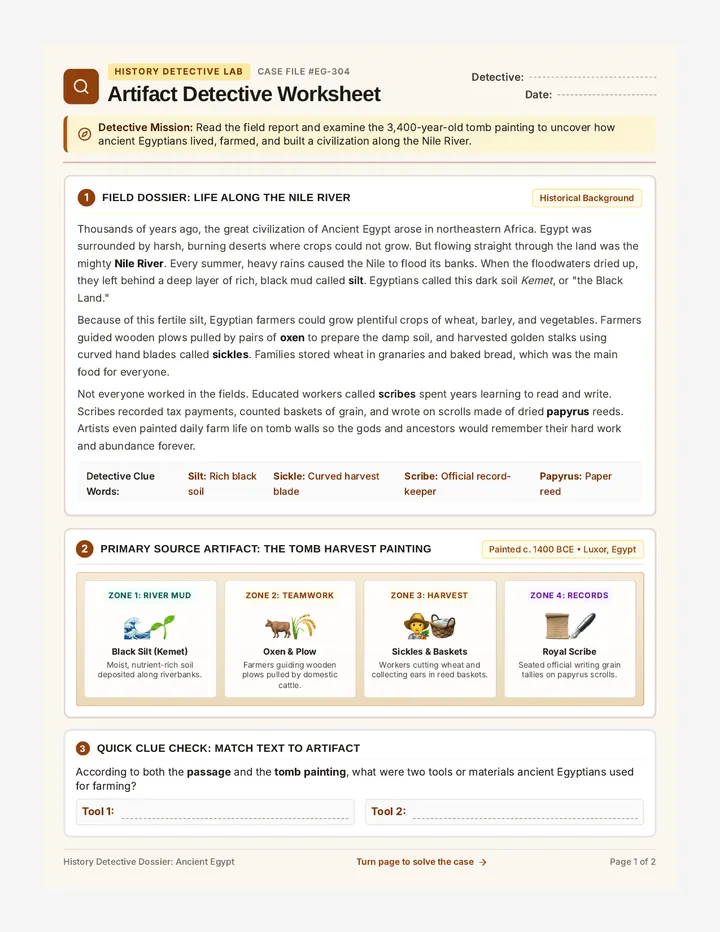
Artifact Detective Worksheet

Artifact Detective Worksheet

A 2-page 3rd grade history worksheet featuring an informational reading passage about Ancient Egypt alongside an ancient tomb painting artifact, guiding students through reading comprehension, primary source observation, and written conclusions.

SS

Samantha Slentz

Cultural Geography Curriculum Map

Cultural Geography Curriculum Map

A comprehensive 5-page annual curriculum map and pacing guide aligning BJU Cultural Geography (4th Edition) with 6th Grade Social Studies Texas TEKS standards, organized month-by-month from August to May with essential questions, weekly lesson breakdowns, map quizzes, chapter tests, and quarterly project milestones.

L

lindseyward.inspiretx

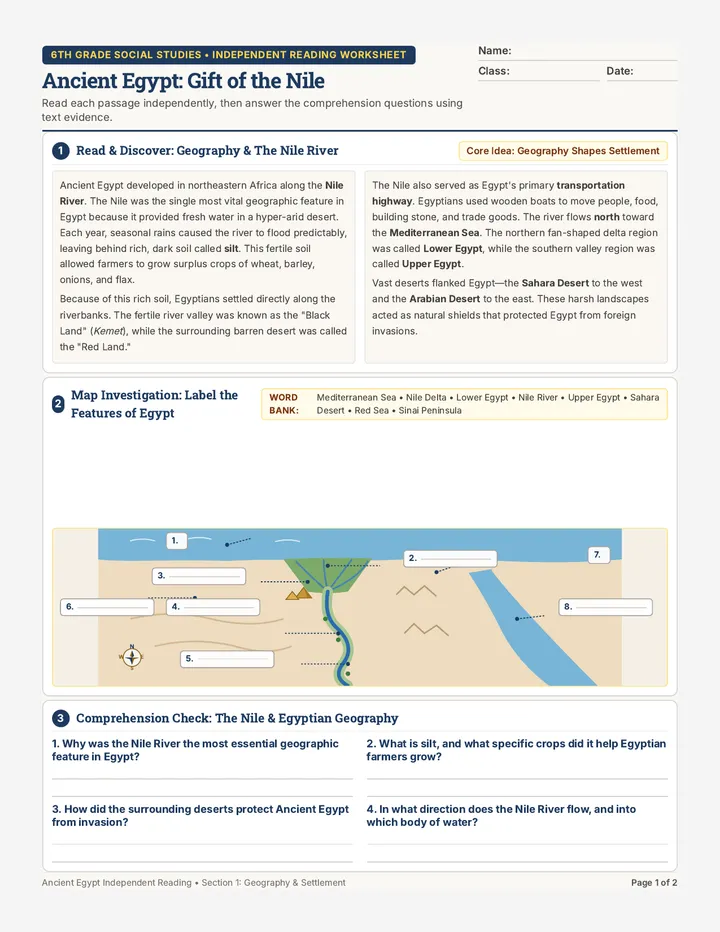
Gift of Nile Worksheet

Gift of Nile Worksheet

A self-contained, two-page independent reading and comprehension worksheet on Ancient Egypt, redesigned with significantly larger, highly legible font sizes, expanded writing spaces, and a maximized layout that fills the page.

M

maryroxanne.abella

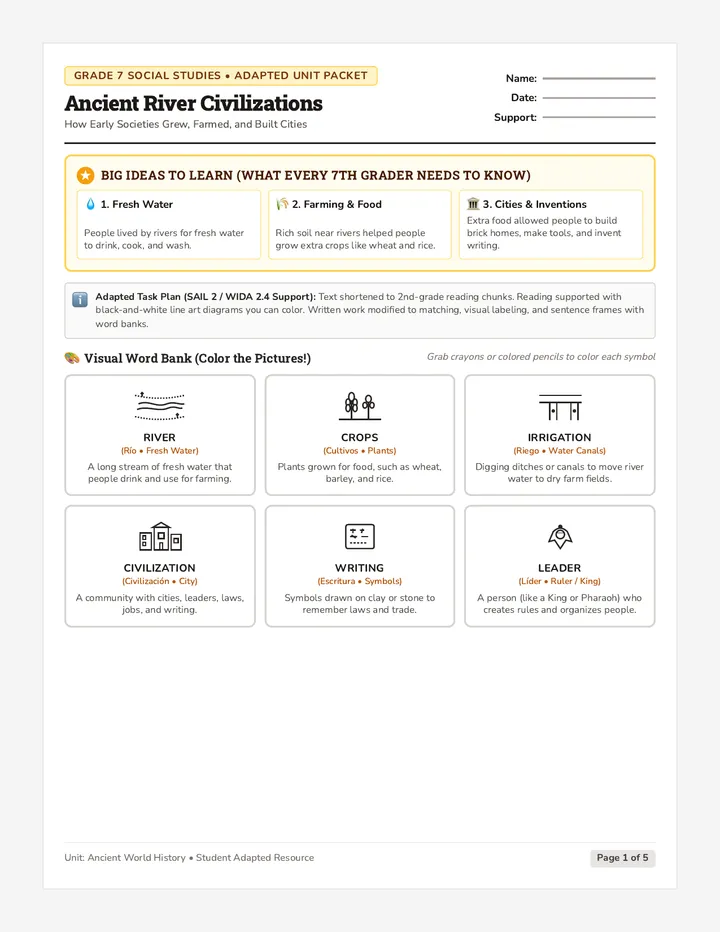
River Civilizations Adapted Packet

River Civilizations Adapted Packet

A 5-page adapted student learning packet on ancient river civilizations tailored for a 7th-grade English learner in a SAIL 2 inclusion model (WIDA 2.4). Features simplified chunked text, black-and-white line art illustrations ready for coloring, visual vocabulary cards, an organizer matrix, sentence frames, and a creative draw-and-label culminating task.

CQ

Colleen Quinn

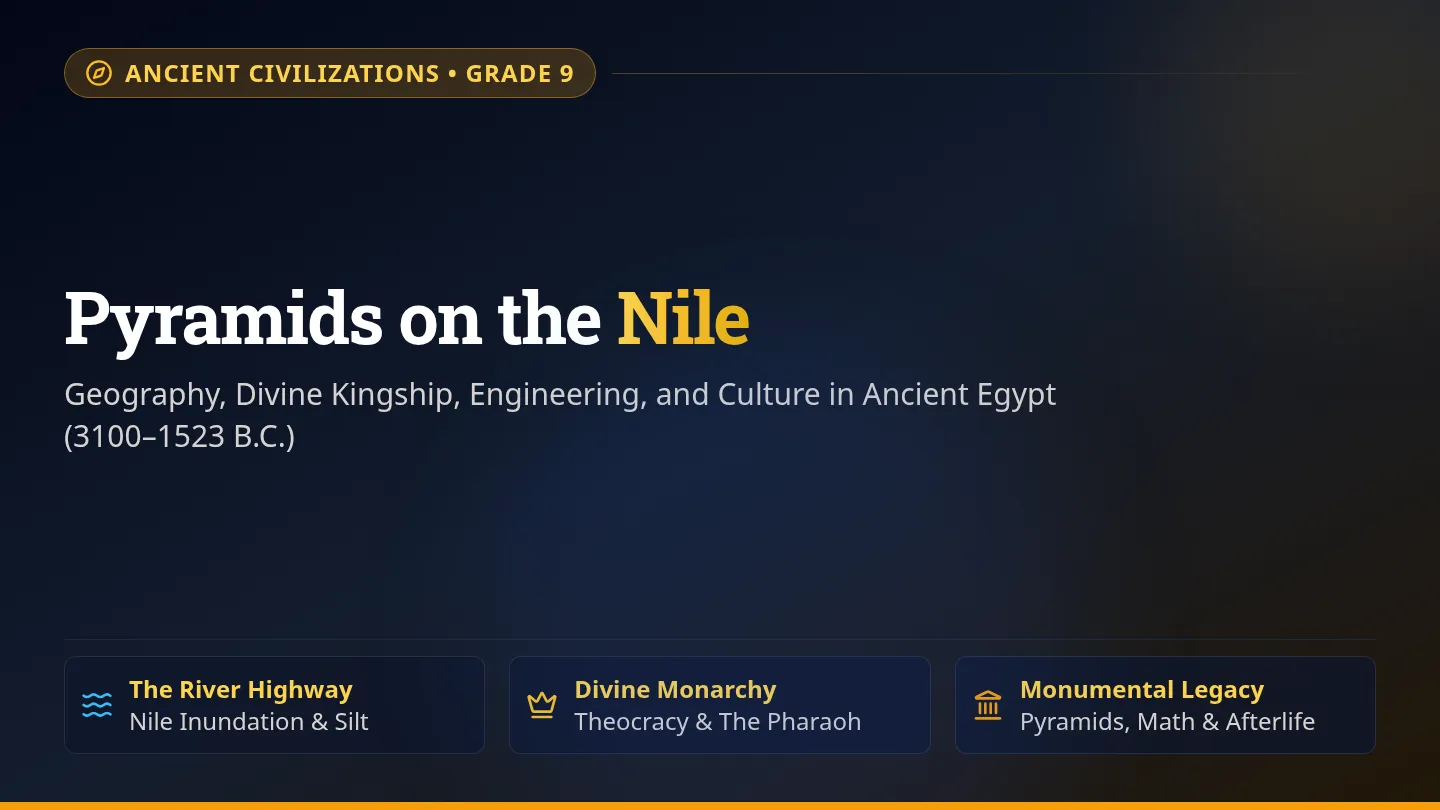
Pyramids Nile Slides

Pyramids Nile Slides

Comprehensive 18-slide instructional presentation for 9th-grade Ancient Civilizations on Ancient Egypt and the Nile River. Includes interactive classroom review quiz slides and answer key covering geography, theocracy, pyramids, hieroglyphics, math, columns, and science.

E

ebakke

Sequences

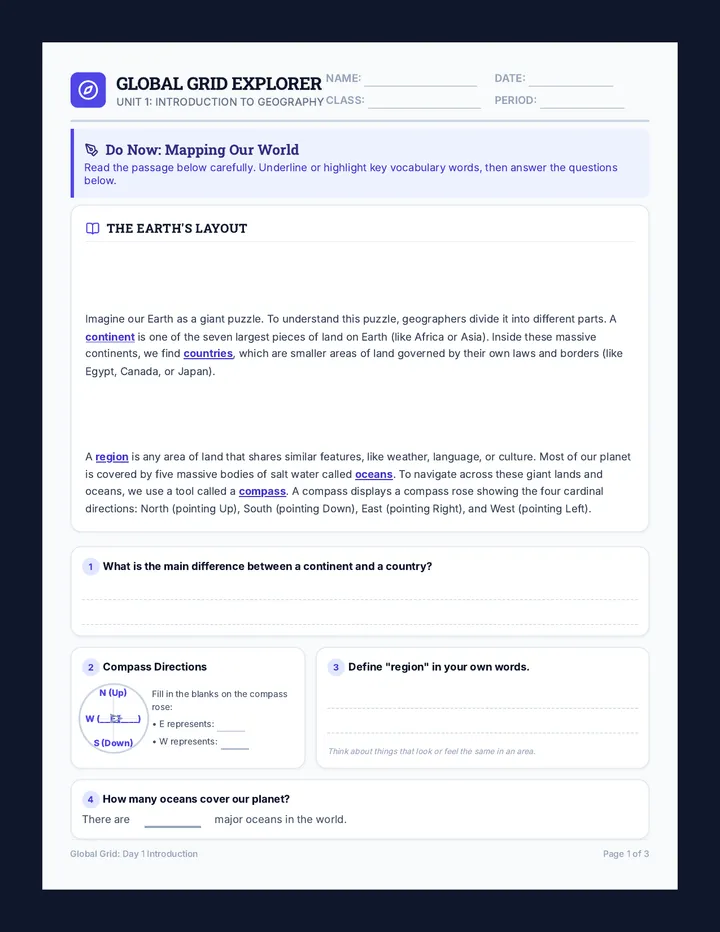
Global Grid Student Handbook

Power of Position

A 4-day introductory world history sequence exploring how geographic location, natural barriers, and famous trade routes shaped the rise, wealth, and power of global empires.

AG

Amina Gueye

14
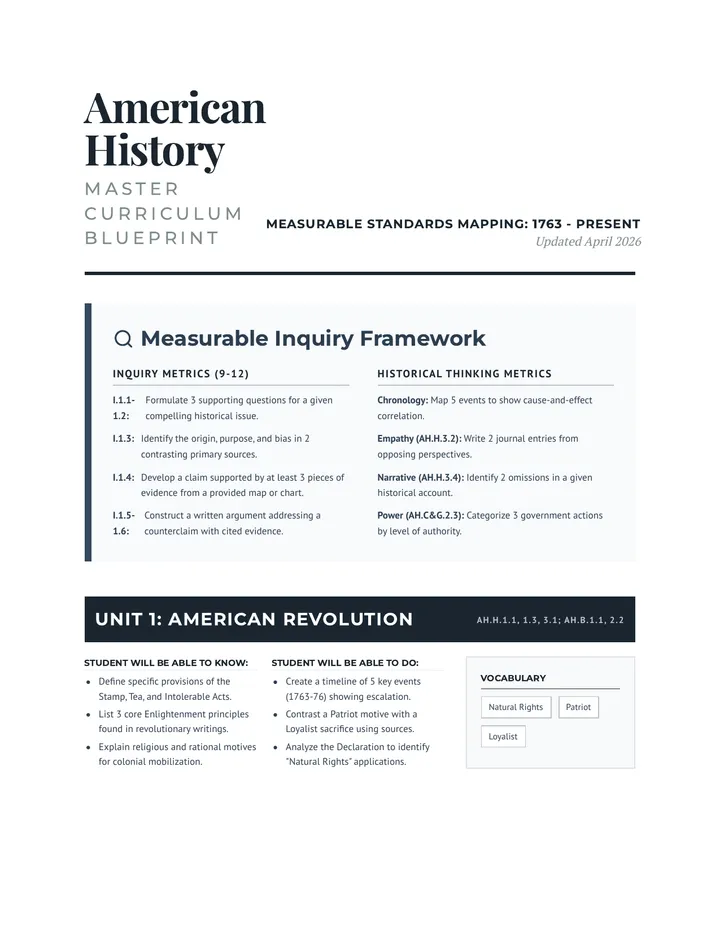
Curriculum Blueprint Document v2

History Horizon Sequence

A comprehensive high school curriculum plan for American History, covering 13 units from the American Revolution to the modern era, aligned with North Carolina Social Studies standards.

AK

Amity Kea

21
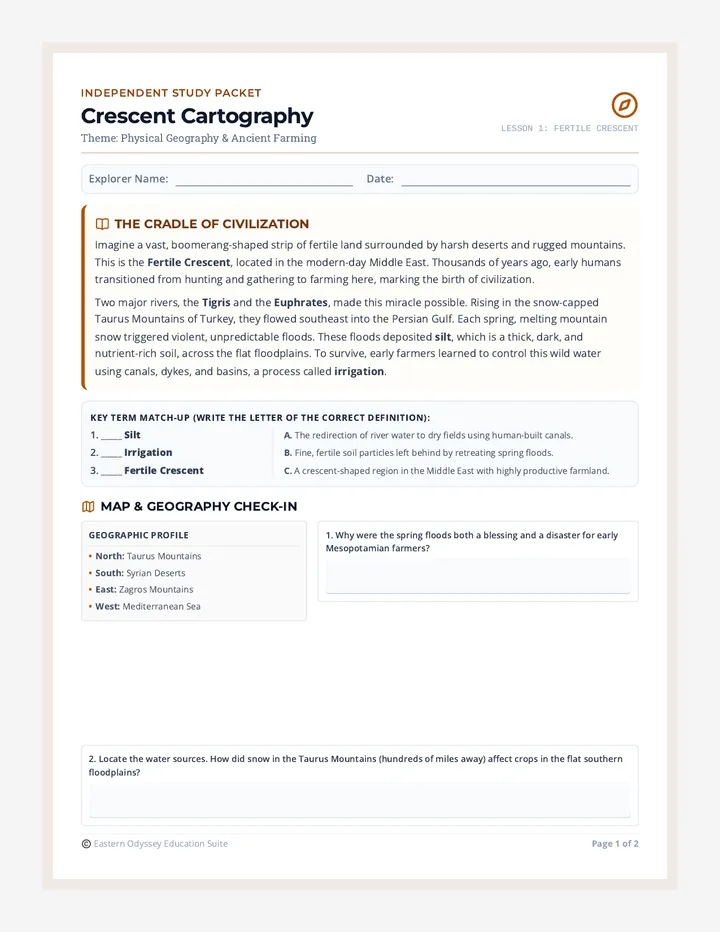
Crescent Cartography Student Packet

Eastern Odyssey Sub Packets

A sequence of 5 highly engaging, self-guided emergency sub plans for 6th-grade Eastern Hemisphere Social Studies, focusing on Ancient Egypt, Mesopotamia, the Fertile Crescent, Monsoon Asia, and Japan's island geography. Each sub plan includes a student packet and a teacher guide.

T

tpayne

10
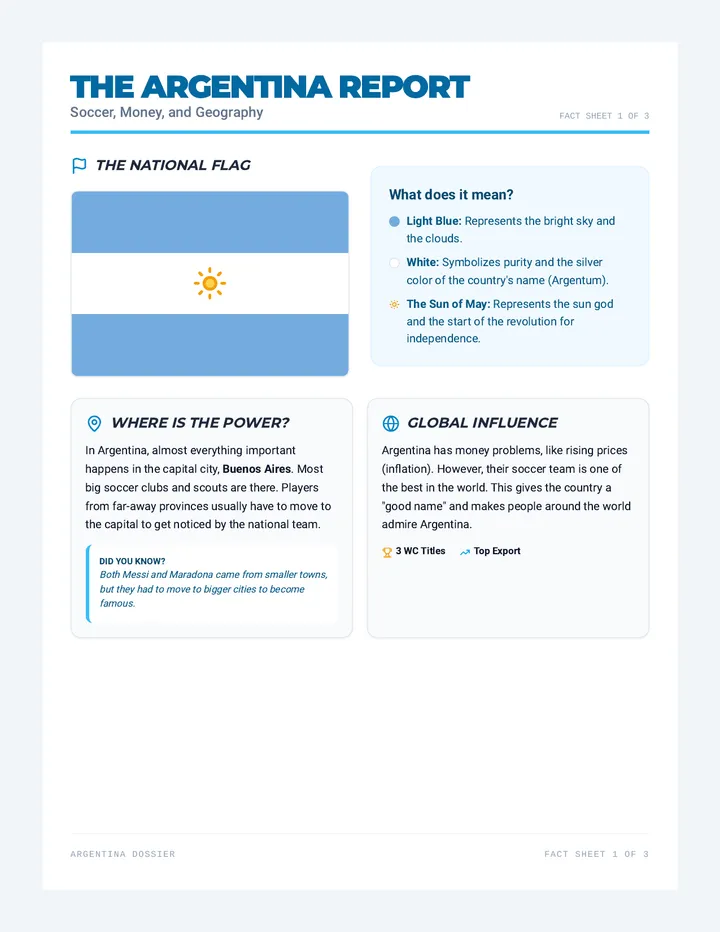
Albiceleste Dossier Packet

Pitch Power World Tour

A comparative study series exploring the geopolitics and economics of different nations through their national soccer teams.

AA

Adam Amster

25
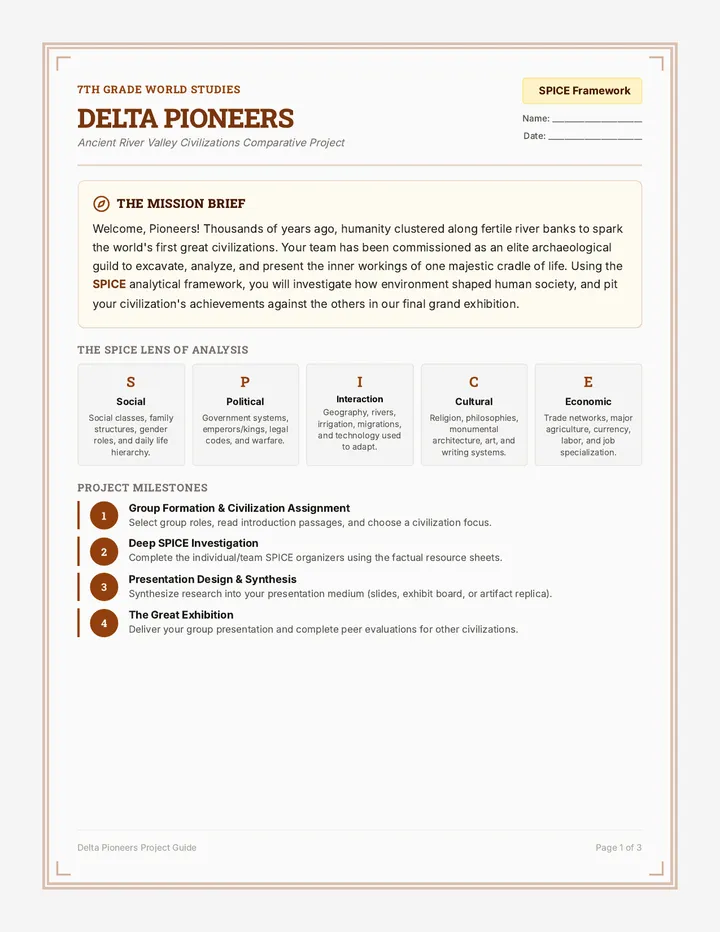
Pioneer Portfolio Project Guide

River Kingdoms

An immersive historical sequence guiding 7th-grade students through the excavation, comparison, and long-term legacy of the world's four primary river valley civilizations using the SPICE framework.

NE

Nicole Elder

9
Earth's Anatomy Slides

Global Landscapes Mastery

A global geography unit focusing on the identification and analysis of the Earth's diverse landscapes. Students will master map-reading skills including elevation, contour lines, and global physical regions to understand how geography shapes our world.

YP

Yovanna Plummer

27

Lessons

Asia Expedition Teacher Guide

Asia Expedition Stations微

A four-station rotation activity exploring the geography, culture, and innovations of Asia. Students investigate literary themes, analyze historical conflicts and migrations, map technological impacts, and play a geography-themed speaking game.

JR

Jessica Ross

6
Explorer Epochs Wall Chart

Early World Explorers

A comprehensive lesson on early world exploration from 300 BCE to 1500 CE, focusing on the geographical, cultural, and religious impacts of key explorers across different continents.

J

jcasey

14
Agora Adventure Slides

Agora Adventure

An introductory lesson on the economy of Ancient Greece, focusing on maritime trade, agriculture, specialization, and the use of coinage through a simulated marketplace experience.

LB

Laurel Bartos

7
Green Boom Slides

Green Boom

An AP World History lesson exploring the technological innovations and environmental consequences of the Green Revolution in the mid-20th century.

K

knickell

4
Olympic Profiles Passages

Chasing Gold

A lesson focused on the Winter Olympics through the lens of five participating nations: Norway, USA, Japan, Italy, and Canada. Students explore geography, culture, and athletic achievements to understand the global spirit of the games.

M

mkeohane

3
Change Makers Canvas Worksheet Reduced head-to-toe

Solutions for Equality

A lesson focused on exploring and illustrating solutions to women's rights challenges in African nations, covering political representation, economic empowerment, and healthcare access. Students analyze case studies and create visual solutions for progress.

KB

Kenneth Brown

5