Lenny.com
Explore
Create
ActivitiesNewMathEnglish Language ArtsScience & EngineeringSocial StudiesGlobal LanguagesHealth & Physical EducationSpecial EducationCounseling & Life SkillsArts & CreativityESL
Lenny.com
Lenny.com
Explore
Create
ActivitiesNewMathEnglish Language ArtsScience & EngineeringSocial StudiesGlobal LanguagesHealth & Physical EducationSpecial EducationCounseling & Life SkillsArts & CreativityESL
Lenny.com
Lenny.com

Solutions

Lenny for EducatorsLenny for SchoolsLenny for Districts

Product

ExploreSign inCreateSupportAbout

Resources

Getting startedMTSS Acceleration Program

Newsletters

School Funding Newsletter

© 2026 Lenny Learning Inc.

TermsPrivacyAccessibility
LinkedInInstagramX
Lenny

US History Early Republic

Political, social, and economic developments from the ratification of the Constitution through the War of 1812. Examines the rise of the first party system, expansion of federal power, and early territorial growth.

Social StudiesSocial Studies PracticesLocation WordsMapsOrder EventsChronology and CausationEvaluating SourcesHistorical ThinkingGeography, Humans, & the EnvironmentAmerican Symbols and LandmarksCitiesStatesState CapitalsRegions of the United StatesGeographic SkillsPhysical GeographyHuman GeographyRegional GeographyGeography of AfricaGeography of AsiaGeography of EuropeGeography of OceaniaGeography of the AmericasSociety and Environment of EuropeSociety and Environment of AsiaSociety and Environment of The AmericasSociety and Environment of the Middle EastSociety and Environment of AfricaHistoryPrehistoryComparing Ancient River CivilizationsAncient MesopotamiaAncient Egypt and KushAncient South AsiaEarly ChinaGreeceRome and the Byzantine EmpireAncient World HistoryNative Peoples of North AmericaNative Peoples of Mesoamerica and South AmericaAfrican EmpiresMedieval AsiaMedieval EuropeThe Silk RoadMedieval HistoryIslamic EmpiresWorld ReligionsRenaissance PeriodAge of ExplorationThe Thirteen ColoniesThe American RevolutionUS History Early RepublicFounding of the United StatesUS History AntebellumUS Civil WarReconstruction PeriodThe Gilded AgeUS ImperialismWorld ImperialismWorld War IUS History 1920sGreat DepressionWorld War IIThe Cold WarUS History 1950-60sUS History 1960s-70sWorld History 20th CenturyContemporary US HistoryContemporary World HistoryHolidaysCivics and GovernmentCitizenshipGovernment FoundationsThe ConstitutionUS ConstitutionExecutive BranchLegislative BranchJudicial BranchState and LocalPolitical ParticipationPublic PolicyPolitical SystemsPower and AuthoritySocial MovementsDefining DevianceTheories of DevianceCrime and Criminal JusticeEconomicsBasic Economic PrinciplesSupply and DemandWhat is MoneyEconomic FundamentalsMicroeconomicsMacroeconomicsBanking and FinanceEconomic SystemsGlobal EconomicsCorporations and PowerThe Changing WorkplaceUnemployment and LaborClass and InequalitySocial MobilityGlobal InequalityPsychologyHistory of PsychologyPsychology as a ScienceBrain and Nervous SystemNeuroscience and BehaviorGenetics and BehaviorSleep and ConsciousnessSensory ProcessesPerceptual OrganizationClassical ConditioningOperant ConditioningObservational LearningCognitive LearningMemory ProcessesThinking and Problem SolvingLanguage and CognitionTheories of MotivationStress and CopingPrenatal and Infant DevelopmentChildhood DevelopmentAdolescent DevelopmentAdulthood and AgingSelf and IdentitySocial CognitionSocial InfluenceAttraction and RelationshipsGroup BehaviorPrejudice and DiscriminationAnxiety and Mood DisordersClinical PsychologyForensic PsychologyPhilosophy & EthicsIntroduction to PhilosophyMajor Philosophers & IdeasMind and Body ProblemFree Will vs DeterminismEthics & MoralityReligion & PhilosophyPolitical Philosophy

Videos

The U.S. Constitution and Bill of Rights Explained

The U.S. Constitution and Bill of Rights Explained

This educational video provides a comprehensive overview of the United States Constitution and the Bill of Rights, serving as an essential primer on American civics. It begins by establishing the historical context, explaining why the original Articles of Confederation were replaced and how the Founding Fathers convened in Philadelphia in 1787 to draft a stronger framework for government. The host, Maya, guides viewers through the structure of the Constitution, breaking down the Preamble and the seven Articles that define the three branches of government and federal relations. The video dedicates a significant portion of its runtime to the Bill of Rights, clarifying that these first ten amendments were added to protect individual liberties in response to citizen concerns. It lists each of the first ten amendments with clear, simplified explanations of the freedoms they secure, such as free speech, the right to bear arms, and protection against unreasonable searches. It also briefly touches upon later amendments, specifically highlighting voting rights changes in the 19th and 26th amendments. For educators, this resource is a valuable tool for introducing or reviewing the structure of the U.S. government. Its systematic breakdown of the Articles (I-VII) and the Bill of Rights (1-10) makes it ideal for note-taking exercises, memorization, and understanding the distinct roles of the Legislative, Executive, and Judicial branches. The clear visual aids and straightforward narration help demystify complex political terminology for students in upper elementary and middle school grades.

Miacademy & MiaPrep Learning ChannelMiacademy & MiaPrep Learning Channel

9mins 16s

The History of Religion and Diversity in America

The History of Religion and Diversity in America

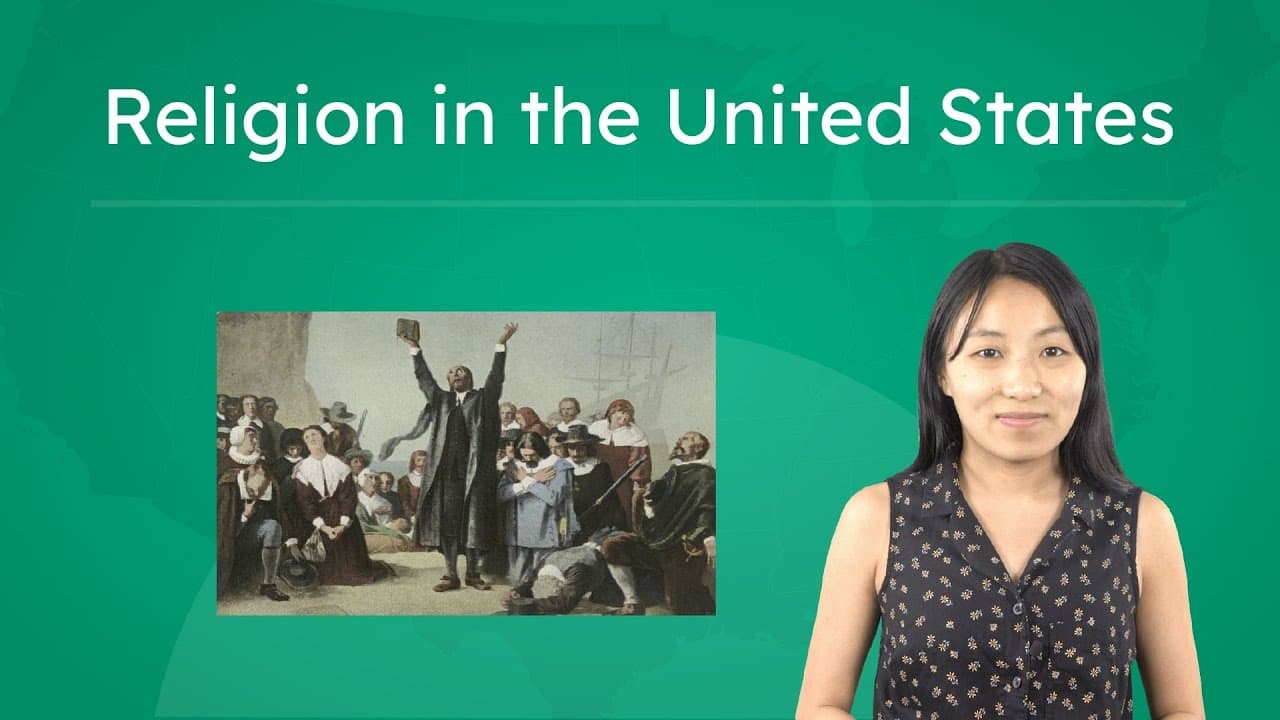
This educational video explores the evolution of the religious landscape in the United States, tracing the journey from a predominantly Protestant nation to a diverse "kaleidoscope" of faiths. The narrator guides students through three major historical phases: the dominance of Protestant Christianity reinforced by the Great Awakening, the diversification brought about by waves of immigration, and the challenges of discrimination faced by minority religious groups. Through clear definitions and historical examples, the video connects these past events to the modern cultural fabric of America. Key themes include the tension between religious freedom and societal discrimination, the impact of immigration on cultural demographics, and the role of religious revivals in American history. The video specifically highlights the Great Awakening's effect on Protestantism, the influx of Catholic and non-Christian immigrants in the 19th century, and a detailed case study on the antisemitism faced by Jewish immigrants. It emphasizes how legal protections like the First Amendment often conflicted with social realities. This resource is highly valuable for U.S. History and Civics classrooms. It provides a structured framework for understanding how American society became religiously diverse. Teachers can use the built-in pause points to facilitate analysis of primary sources (like Jonathan Edwards' sermons) or discuss the gap between constitutional ideals and historical practices. The video encourages critical thinking about tolerance, diversity, and the immigrant experience.

Miacademy & MiaPrep Learning ChannelMiacademy & MiaPrep Learning Channel

11mins 56s

Defining Heroes and Traitors in American History

Defining Heroes and Traitors in American History

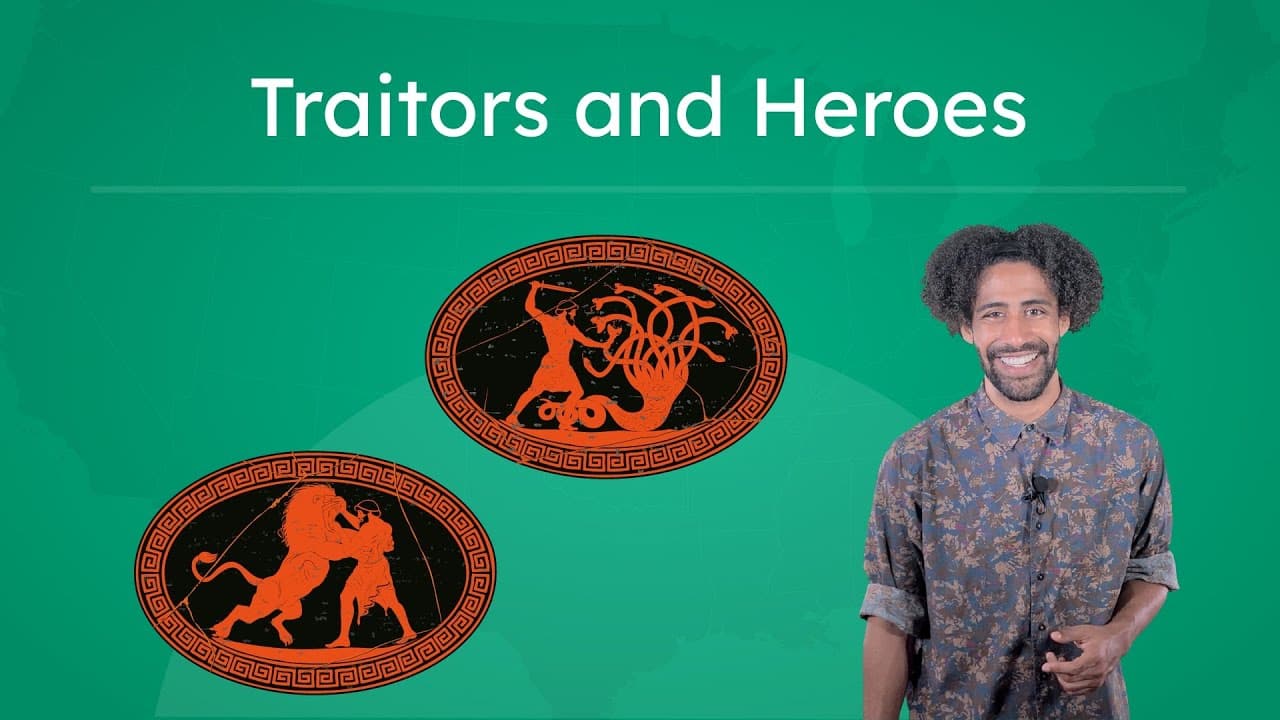
This educational video explores the complex and often subjective definitions of "hero" and "traitor" through three distinct case studies from American history. The narrator challenges students to look beyond simple definitions and consider how historical context, personal values, and perspective shape these labels. The video examines John Adams' controversial defense of British soldiers after the Boston Massacre, Colonel John Chivington's role in the horrific Sand Creek Massacre, and Carry Nation's radical "hatchetations" during the temperance movement. The video delves into deep ethical questions about justice, duty, and morality. It asks students to evaluate whether John Adams was a traitor to the colonial cause or a hero of justice for defending the enemy. It contrasts Chivington's self-proclaimed heroism in protecting settlers with the brutal reality of massacring peaceful Cheyenne and Arapaho people. Finally, it analyzes Carry Nation's crusade against alcohol, asking if her violent methods undermined her virtuous goals. Each segment includes pauses for reflection and specific guiding questions. Teachers can use this video to foster critical thinking and historical analysis skills. It serves as an excellent anchor for lessons on the American Revolution, Native American history, or the Prohibition era. By presenting historical figures who defy easy categorization, the video encourages students to engage with nuance and ambiguity. It is particularly useful for sparking debates about the rule of law, the ethics of war, and the validity of different protest methods.

Miacademy & MiaPrep Learning ChannelMiacademy & MiaPrep Learning Channel

11mins 30s

Understanding the U.S. Constitution and Bill of Rights

Understanding the U.S. Constitution and Bill of Rights

This engaging educational video provides a comprehensive and child-friendly introduction to the United States Constitution. It breaks down the document's structure into three main parts: the Preamble, the seven Articles, and the Amendments. The narrator simplifies complex civics concepts, explaining that the Constitution is the "highest law in the land" and establishes a government that is "for the people, by the people." A significant portion of the video is dedicated to the Bill of Rights, walking students through the first ten amendments with relatable examples and clear definitions of rights and freedoms. Key themes include the structure of the U.S. government, individual liberties, and the historical context of the nation's founding. The video highlights specific amendments, such as the freedom of speech (1st), the right to a speedy trial (6th), and the abolition of slavery (13th). It also covers the historical significance of the Constitutional Convention of 1787, introducing key figures like George Washington and James Madison, known as the "Father of the Constitution." The connection between Constitution Day and Citizenship Day is also explored, emphasizing the value of American citizenship. For educators, this video is a versatile tool for social studies and civics curricula. It transforms abstract political concepts into concrete examples students can understand, such as comparing the 4th Amendment to privacy in one's home or the 9th Amendment to the right to build a snowman. It serves as an excellent anchor for lessons on the three branches of government, the importance of laws, or commemorative activities for Constitution Day in September.

Homeschool PopHomeschool Pop

17mins 40s

Understanding Federalism and the Constitutional Debates

Understanding Federalism and the Constitutional Debates

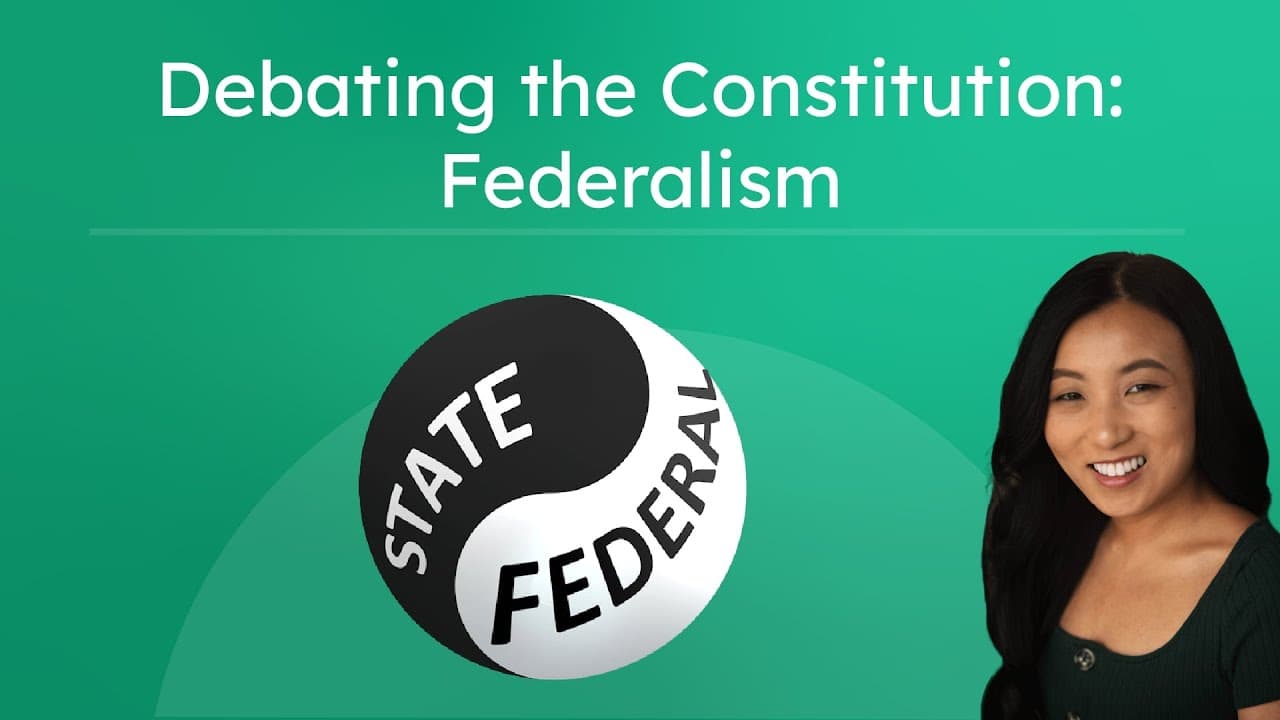
This educational video introduces students to the concept of Federalism through the lens of the historical debates surrounding the ratification of the United States Constitution. Using a relatable analogy of a difficult classroom group project, the narrator explains the tension and compromise required during the Constitutional Convention. The video defines key political terms including federalism, ratification, and factions, while outlining the central conflict between the Federalists, who favored a strong national government, and the Anti-Federalists, who advocated for stronger state powers.

Miacademy & MiaPrep Learning ChannelMiacademy & MiaPrep Learning Channel

6mins 5s

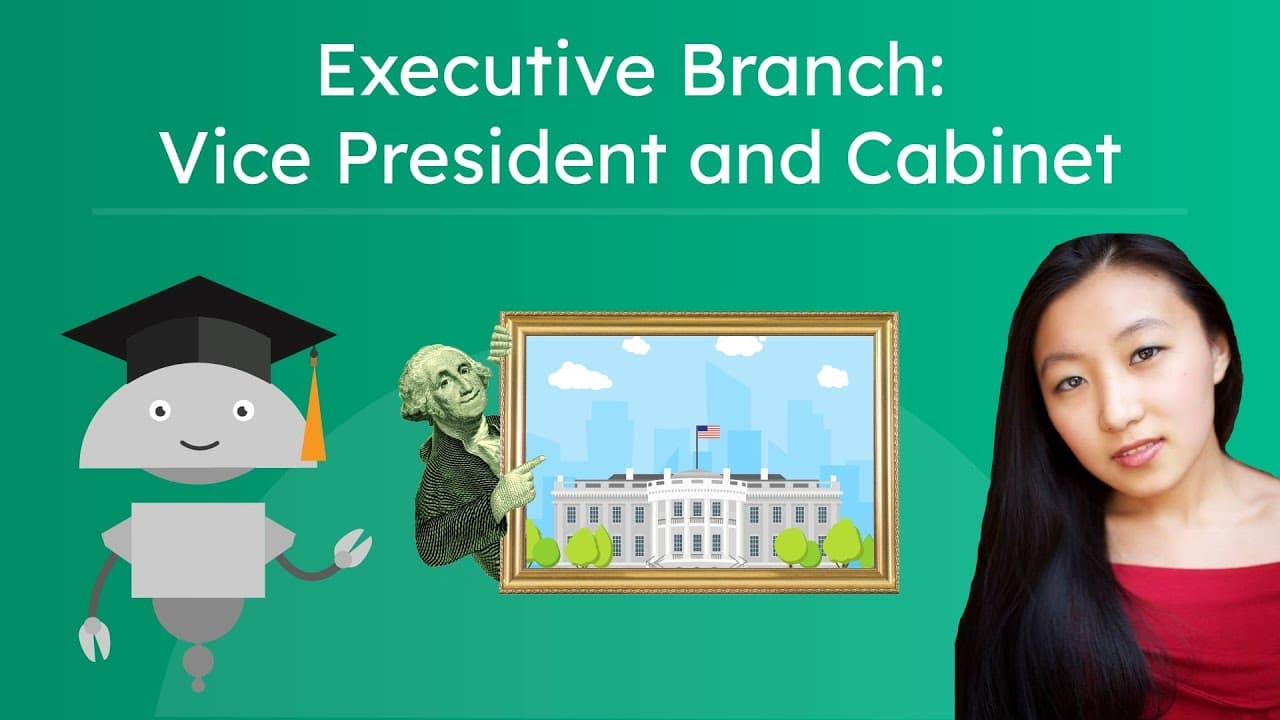
Beyond the President: The Vice President and Cabinet Explained

Beyond the President: The Vice President and Cabinet Explained

This educational video provides an in-depth look at the Executive Branch of the United States government, moving beyond the presidency to explore the critical roles of the Vice President and the Cabinet. It details the constitutional requirements, selection processes, and responsibilities associated with these positions, highlighting how the executive branch functions as a massive team rather than a one-person show. The video uses historical examples, such as George Washington's original cabinet and the relationship between early presidents and vice presidents, to illustrate how these roles have evolved over time. The content breaks down the specific duties of key Cabinet departments, including the \"Original Four\"—State, Treasury, Defense, and Justice—explaining how they support the President in managing national affairs. It also covers the Vice President's dual role as the President of the Senate and a key advisor, as well as the importance of other staff members like the Chief of Staff. The video clarifies the checks and balances involved, particularly the Senate's role in confirming appointments. For educators, this video serves as an excellent resource for Civics and U.S. History units. It transforms abstract government structures into concrete examples, making it easier for students to understand federal administration. The clear explanations of department functions and the visuals of historical figures help contextualize the scale of the executive branch, making it a perfect launchpad for lessons on government hierarchy, the separation of powers, and career exploration in public service.
Miacademy & MiaPrep Learning ChannelMiacademy & MiaPrep Learning Channel

9mins 26s

Materials

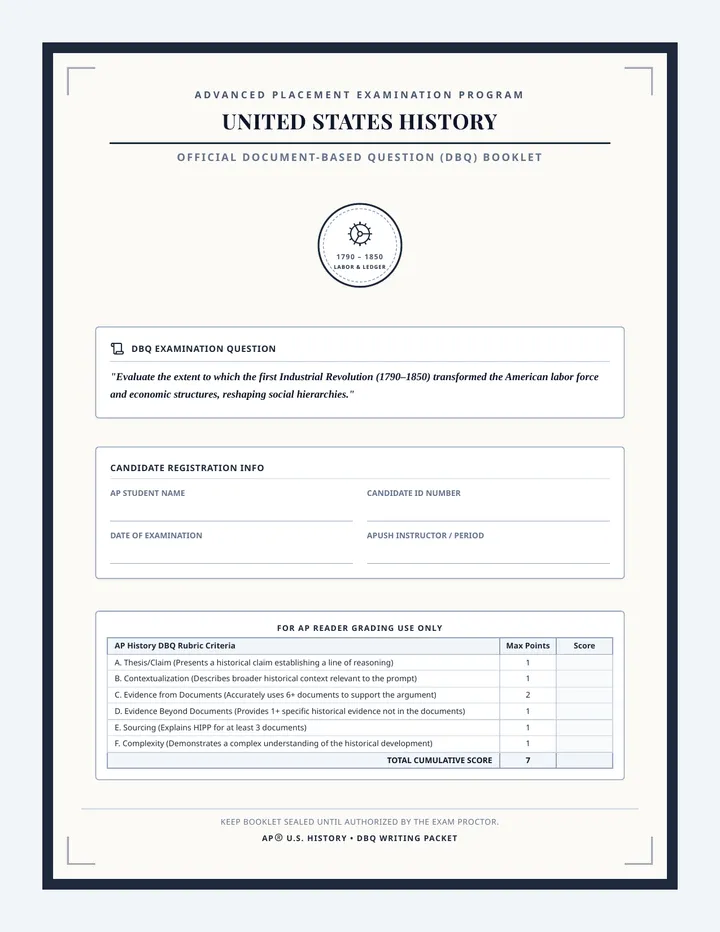
APUSH Blue Book DBQ Essay Booklet

APUSH Blue Book DBQ Essay Booklet

An authentic AP US History Blue Book styled essay booklet featuring a printer-friendly light-colored cover page and 5 pages of college-ruled writing paper for print or digital completion.

JG

Joshua Griffith

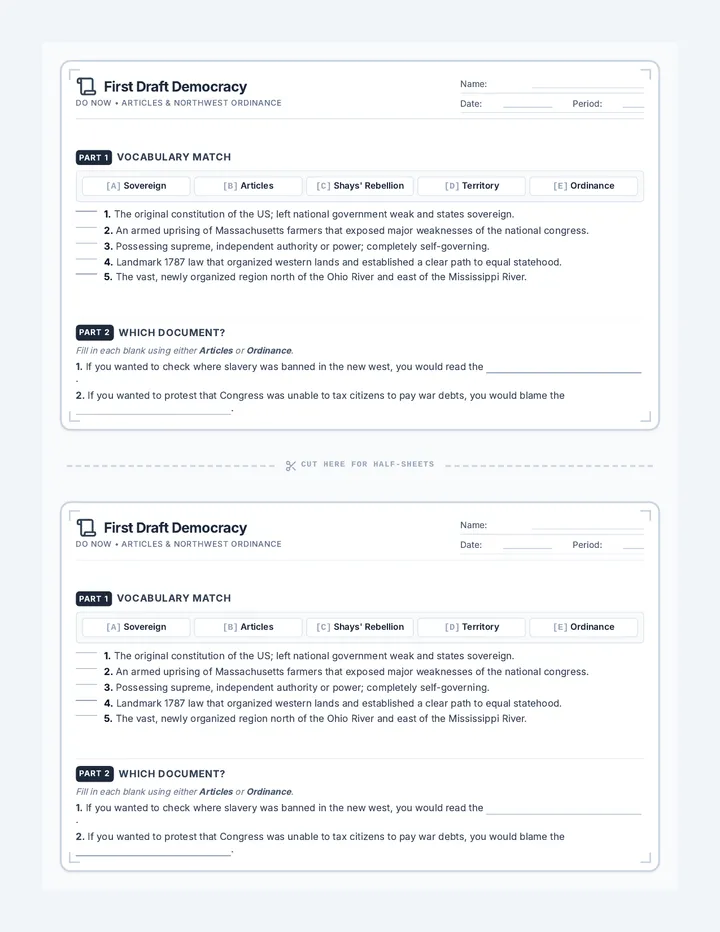
First Draft Democracy Handout

First Draft Democracy Handout

A printable student warm-up handout styled as two identical half-sheets on a single page. It features a direct-recall matching section and a quick application fill-in-the-blank reviewing the Articles of Confederation and the Northwest Ordinance of 1787.

MB

Mr. Britt

Trail Blazer Reading Sheet

Trail Blazer Reading Sheet

A guided reading worksheet about Sacagawea, adapted for 4th-5th grade readers. It features informational sections followed by a multiple-choice assessment to check comprehension.

NP

Nicole Palmiotto

Madison Essay Planning Template Student Document

Madison Essay Planning Template Student Document

An essay planning template designed to help students organize their historical facts and textual evidence before writing their Madison essay, emphasizing content accuracy and citations.

SM

Stephanie Marcus

Court Power Play Worksheet

Court Power Play Worksheet

A student-friendly worksheet summarizing the Marbury v. Madison case, designed for a 5th-grade reading level. It features a simple explanation of the 'midnight judges' conflict, a clear visual flow chart, a highlighted vocabulary spotlight for 'judicial review', and handwriting lines for student answers.

NP

Nicole Palmiotto

Sequences

Thirteen Friends Worksheet

Democratic Foundations

A series of lessons exploring the foundational documents and processes of the United States government, from the birth of the nation to the creation of modern laws.

SB

Stephanie Bizeur

40
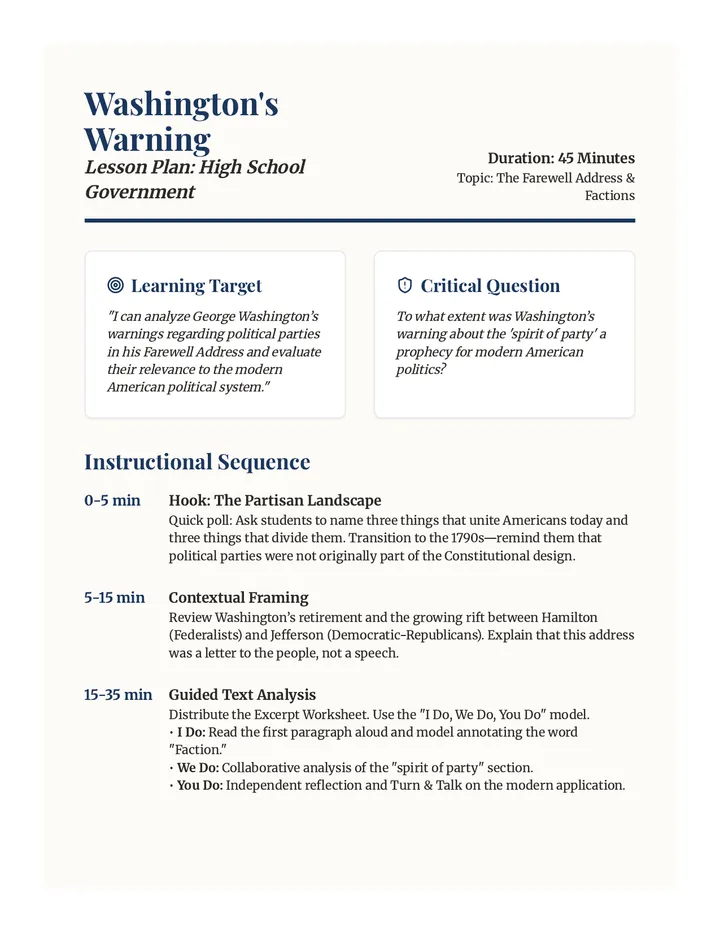
Washingtons Warning Lesson Plan

Washington's Farewell Legacy

A two-part sequence that takes students from a deep-dive analysis of George Washington's Farewell Address to a modern-day evaluation of his warnings regarding political parties, media bias, and national unity.

CE

Chelsea Elliott

24
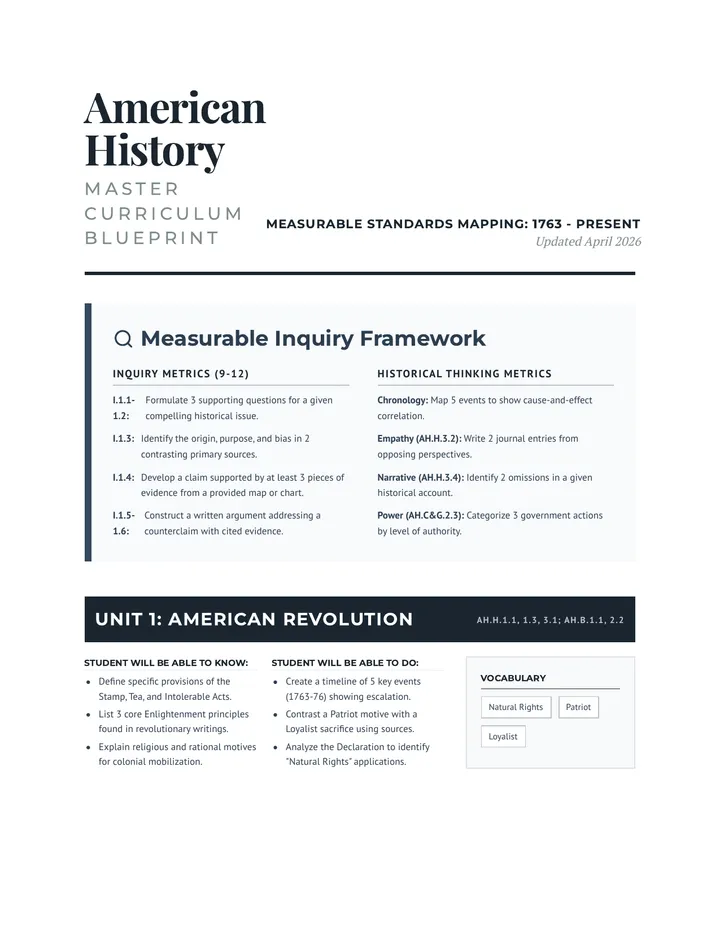
Curriculum Blueprint Document v2

History Horizon Sequence

A comprehensive high school curriculum plan for American History, covering 13 units from the American Revolution to the modern era, aligned with North Carolina Social Studies standards.

AK

Amity Kea

21
Foundations Comprehension Quiz

The American Ledger USH Remediation

A 25-day intensive remediation program for 11th Grade US History students, focusing on the Cold War, Civil Rights, Vietnam, the Reagan Era, and contemporary history. Each day features a 'Ledger' reader with embedded annotations and a review worksheet, aligned with Texas TEKS standards.

CE

Chelsea Elliott

62
Rights Roadmap Slides

Rights Blueprint

A comprehensive guide to the Bill of Rights designed for different learning needs. Students explore the first ten amendments through visual planning, vocabulary building, and a creative poster project.

D

dfleisch

9
Blueprint Slides

Republic Reboot

A comprehensive review unit for incoming 8th graders covering early American history to 1850. Students will review the structure of the US government, the Bill of Rights, early presidential administrations, the War of 1812, and the impacts of westward expansion.

AM

Amy Metheny

8

Lessons

History Sprint Pacing Guide

STAAR History Sprint

A comprehensive pacing guide and activity resource designed to cover the remaining 11th Grade US History TEKS before the STAAR test on April 16th. This lesson provides a day-by-day calendar for A/B block schedules and high-engagement activities for each remaining historical era.

BB

Bridgette Burdick

51
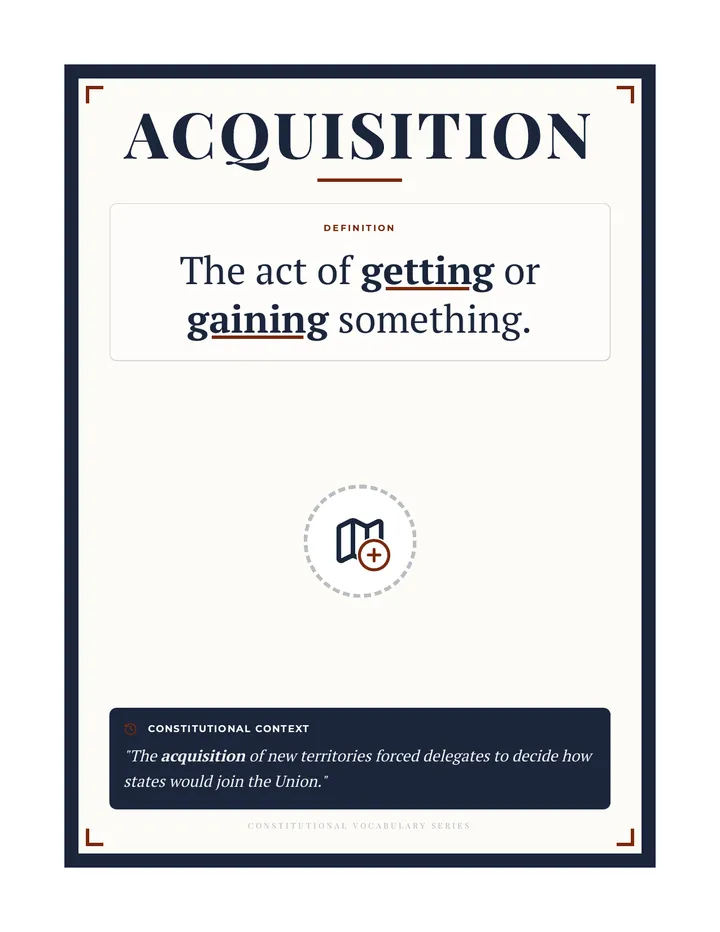
Constitutional Vocabulary Poster Set

Constitutional Vocabulary

A set of vocabulary posters focused on key terms from the Constitutional Convention, including government structures, legislative roles, and foundational principles like compromise and federalism.

SA

Senta Agnello-Shelton

21
Compromise Conundrum Activity Signs

Compromise Conundrum

A 45-minute stand-alone lesson centered on the Constitutional Convention's debate over representation and the Three-Fifths Compromise. It includes chunked reading for accessibility, a high-engagement 'Four Corners' activity, and a graphic organizer assessment designed for formal observation alignment with the Danielson Framework.

SA

Senta Agnello-Shelton

11
Reason for Revolution Worksheet V4 Refined Final

Architects of Liberty

A lesson exploring how Enlightenment philosophers like Locke, Montesquieu, and Voltaire influenced the founding documents and structure of the United States government.

KB

Kenneth Brown

10
Amendment Process Slides

The Living Constitution

A comprehensive lesson on the U.S. Constitution's amendment process and the Bill of Rights, featuring a chunked reader, instructional slides, and formative assessments. Students will analyze how the Constitution adapts to changing times while protecting fundamental liberties.

CE

Chelsea Elliott

5
Founding Fractures Lesson Script

Founding Fractures

A 45-60 minute lesson exploring the weaknesses of the Articles of Confederation, the impact of Shays' Rebellion, and the eventual call for a constitutional convention. The lesson uses high-engagement strategies like Think-Pair-Share and Stop-and-Jot to support all learners.

CE

Chelsea Elliott

10