Lenny.com
Explore
Create
ActivitiesNewMathEnglish Language ArtsScience & EngineeringSocial StudiesGlobal LanguagesHealth & Physical EducationSpecial EducationCounseling & Life SkillsArts & CreativityESL
Lenny.com
Lenny.com
Explore
Create
ActivitiesNewMathEnglish Language ArtsScience & EngineeringSocial StudiesGlobal LanguagesHealth & Physical EducationSpecial EducationCounseling & Life SkillsArts & CreativityESL
Lenny.com
Lenny.com

Solutions

Lenny for EducatorsLenny for SchoolsLenny for Districts

Product

ExploreSign inCreateSupportAbout

Resources

Getting startedMTSS Acceleration Program

Newsletters

School Funding Newsletter

© 2026 Lenny Learning Inc.

TermsPrivacyAccessibility
LinkedInInstagramX
Lenny

Great Depression

Economic triggers of the 1929 stock market crash, systemic bank failures, and widespread social impacts like the Dust Bowl. Examines New Deal legislative responses and their role in reshaping the American federal government.

Social StudiesSocial Studies PracticesLocation WordsMapsOrder EventsChronology and CausationEvaluating SourcesHistorical ThinkingGeography, Humans, & the EnvironmentAmerican Symbols and LandmarksCitiesStatesState CapitalsRegions of the United StatesGeographic SkillsPhysical GeographyHuman GeographyRegional GeographyGeography of AfricaGeography of AsiaGeography of EuropeGeography of OceaniaGeography of the AmericasSociety and Environment of EuropeSociety and Environment of AsiaSociety and Environment of The AmericasSociety and Environment of the Middle EastSociety and Environment of AfricaHistoryPrehistoryComparing Ancient River CivilizationsAncient MesopotamiaAncient Egypt and KushAncient South AsiaEarly ChinaGreeceRome and the Byzantine EmpireAncient World HistoryNative Peoples of North AmericaNative Peoples of Mesoamerica and South AmericaAfrican EmpiresMedieval AsiaMedieval EuropeThe Silk RoadMedieval HistoryIslamic EmpiresWorld ReligionsRenaissance PeriodAge of ExplorationThe Thirteen ColoniesThe American RevolutionUS History Early RepublicFounding of the United StatesUS History AntebellumUS Civil WarReconstruction PeriodThe Gilded AgeUS ImperialismWorld ImperialismWorld War IUS History 1920sGreat DepressionWorld War IIThe Cold WarUS History 1950-60sUS History 1960s-70sWorld History 20th CenturyContemporary US HistoryContemporary World HistoryHolidaysCivics and GovernmentCitizenshipGovernment FoundationsThe ConstitutionUS ConstitutionExecutive BranchLegislative BranchJudicial BranchState and LocalPolitical ParticipationPublic PolicyPolitical SystemsPower and AuthoritySocial MovementsDefining DevianceTheories of DevianceCrime and Criminal JusticeEconomicsBasic Economic PrinciplesSupply and DemandWhat is MoneyEconomic FundamentalsMicroeconomicsMacroeconomicsBanking and FinanceEconomic SystemsGlobal EconomicsCorporations and PowerThe Changing WorkplaceUnemployment and LaborClass and InequalitySocial MobilityGlobal InequalityPsychologyHistory of PsychologyPsychology as a ScienceBrain and Nervous SystemNeuroscience and BehaviorGenetics and BehaviorSleep and ConsciousnessSensory ProcessesPerceptual OrganizationClassical ConditioningOperant ConditioningObservational LearningCognitive LearningMemory ProcessesThinking and Problem SolvingLanguage and CognitionTheories of MotivationStress and CopingPrenatal and Infant DevelopmentChildhood DevelopmentAdolescent DevelopmentAdulthood and AgingSelf and IdentitySocial CognitionSocial InfluenceAttraction and RelationshipsGroup BehaviorPrejudice and DiscriminationAnxiety and Mood DisordersClinical PsychologyForensic PsychologyPhilosophy & EthicsIntroduction to PhilosophyMajor Philosophers & IdeasMind and Body ProblemFree Will vs DeterminismEthics & MoralityReligion & PhilosophyPolitical Philosophy

Videos

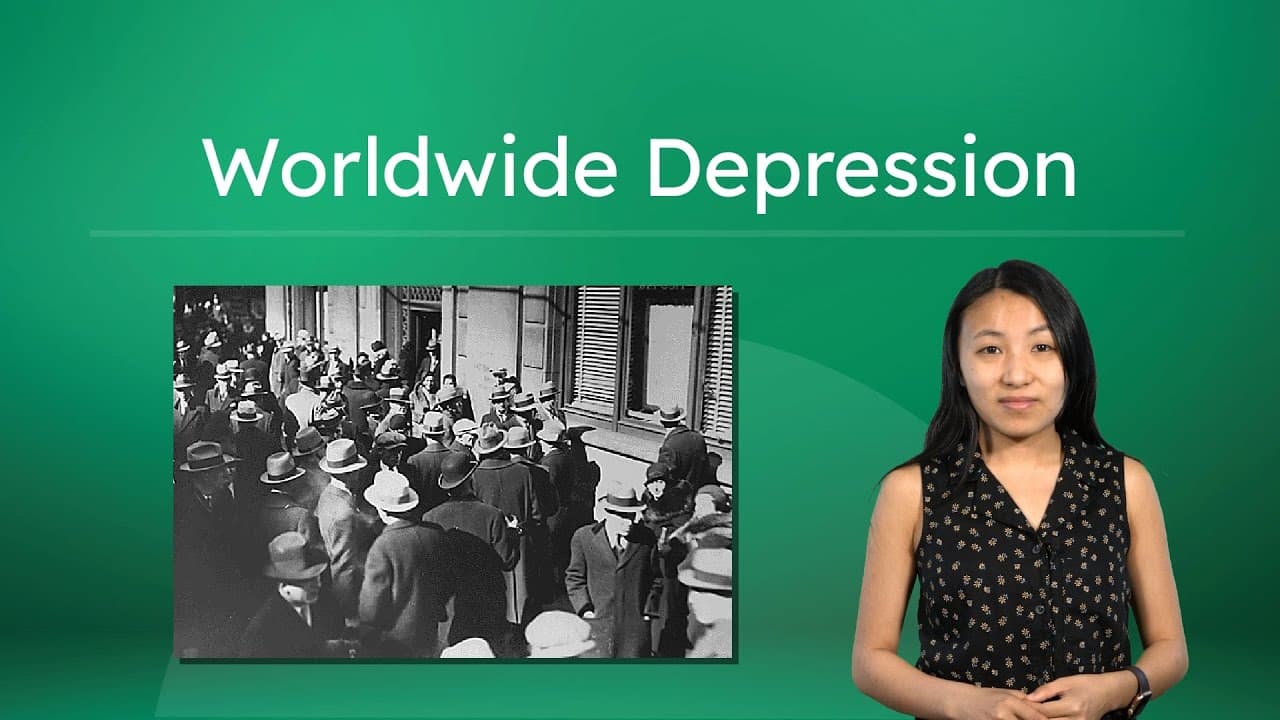
Causes and Global Consequences of the Great Depression

Causes and Global Consequences of the Great Depression

This educational video provides a comprehensive overview of the Great Depression, examining its root causes, the mechanisms of the economic collapse, and the subsequent global impact. It moves beyond the stock market crash to explore structural weaknesses in the 1920s economy, such as income inequality and agricultural overproduction, while explaining complex financial concepts like "buying on margin" in accessible terms. The video illustrates the cyclical nature of economic depression, showing how a downturn in one sector led to layoffs and reduced consumption, spiraling into a wider crisis. It also highlights the international scope of the Depression, connecting American bank failures to economic struggles in Europe, Asia, and Latin America. This global perspective helps students understand the interconnectedness of modern economies. Finally, the video compares how different nations responded to the crisis, contrasting the approaches of Great Britain and Scandinavia with Franklin D. Roosevelt's "New Deal" in the United States. This comparative analysis makes it an excellent resource for history and economics classrooms, offering teachers a solid foundation for discussing government intervention, economic policy, and the resilience of democratic institutions during times of crisis.

Miacademy & MiaPrep Learning ChannelMiacademy & MiaPrep Learning Channel

11mins 15s

The Real Causes of the Great Depression

The Real Causes of the Great Depression

In this installment of Crash Course US History, John Green explores the complex causes and devastating effects of the Great Depression. The video challenges the common misconception that the Stock Market Crash of 1929 was the sole cause of the economic collapse, instead presenting it as a symptom of deeper structural issues. Green details the perfect storm of factors that led to the crisis, including America's weak banking system, the freezing of credit, massive agricultural overproduction, and the tangled web of international debt and reparations following World War I. The narrative examines the response of the Hoover administration, critiquing the inadequacy of relying on volunteerism and limited government intervention in the face of unprecedented economic failure. It explains difficult economic concepts like deflation and the gold standard in accessible terms, using analogies to help students grasp why the economy ground to a halt. The video also highlights the profound social impact of the Depression, discussing the rise of "Hoovervilles," the bonus marchers, and the disproportionate effect on minority communities. For educators, this video serves as a crucial resource for moving students beyond a superficial understanding of the 1930s. It provides a platform to discuss the role of government in stabilizing economies, the difference between correlation and causation in history, and the human cost of macroeconomic failure. The content bridges the gap between the Roaring Twenties and the New Deal, setting the stage for understanding the massive expansion of federal power that followed.

CrashCourseCrashCourse

14mins 27s

Push and Pull: The Story of Internal Migration in the U.S.

Push and Pull: The Story of Internal Migration in the U.S.

This educational video explores the dynamics of internal migration within the United States during the 19th and 20th centuries through the lens of "push and pull" factors. The narrator uses a relatable opening scenario about moving for college to introduce the concepts of why people leave their homes (push factors) and what draws them to new locations (pull factors). The video then dives into three major historical case studies: the migration of the Latter-day Saints to Utah, the First Great Migration of Black Americans from the South to the North and West, and the Dust Bowl migration of "Okies and Arkies" to California. The content examines the specific social, economic, and political drivers for each group. For the Mormon migration, it highlights religious persecution and the search for a "promised land." For the Great Migration, it frankly discusses the impact of Jim Crow laws, KKK violence, and the economic allure of industrial jobs in the North, alongside cultural explosions like the Harlem Renaissance. Finally, it details the environmental and economic devastation of the Dust Bowl that forced families to travel Route 66 in search of agricultural work in the West. Teachers can use this video to help students understand that migration is rarely random; it is driven by specific historical forces. The video is particularly valuable for its interdisciplinary approach, connecting geography, sociology, and history. It encourages students to analyze primary sources, specifically highlighting the photography of Dorothea Lange, and fosters historical empathy by examining the human cost of displacement and the resilience required to start over.

Miacademy & MiaPrep Learning ChannelMiacademy & MiaPrep Learning Channel

10mins 49s

How the New Deal Transformed the Role of Government

How the New Deal Transformed the Role of Government

In this installment of Crash Course US History, John Green explores the complex legacy of Franklin D. Roosevelt's New Deal. The video breaks down the massive set of government programs initiated during the Great Depression into two conceptual frameworks: the "Three Rs" (Relief, Recovery, and Reform) and the chronological division between the First and Second New Deals. It examines how these programs fundamentally shifted the relationship between the American citizenry and the federal government, moving from a laissez-faire approach to one where economic security became a guaranteed liberty.

CrashCourseCrashCourse

14mins 57s

The History and Ethics of the Tuskegee Syphilis Study

The History and Ethics of the Tuskegee Syphilis Study

This educational video from Crash Course Black American History, hosted by Clint Smith, provides a comprehensive examination of the Tuskegee Syphilis Study (1932-1972). It details how the United States Public Health Service recruited 600 Black men in Macon County, Alabama, under the guise of receiving free health care, only to withhold life-saving treatment for syphilis to observe the disease's progression. The video explores the historical context of scientific racism that fueled the study, the specific unethical methodologies employed, and the devastating impact on the men, their families, and the broader Black community's trust in the medical system. The narrative delves into the complex layers of the study, including the role of the Great Depression and poverty in coercing participation, the lack of informed consent, and the involvement of Black medical professionals like Nurse Eunice Rivers. It highlights the eventual exposure of the study by whistleblower Peter Buxtun in 1972, the subsequent class-action lawsuit led by Fred Gray, and the resulting changes in medical ethics laws, including the National Research Act of 1974 and the establishment of Institutional Review Boards. For educators, this video is a powerful tool for teaching about bioethics, civil rights history, and systemic racism in healthcare. It connects historical events to contemporary issues, such as medical mistrust and health disparities, encouraging students to think critically about the responsibilities of scientific institutions. The video serves as a case study for understanding the importance of informed consent and the long-term sociological effects of unethical government actions.
CrashCourseCrashCourse

13mins 48s

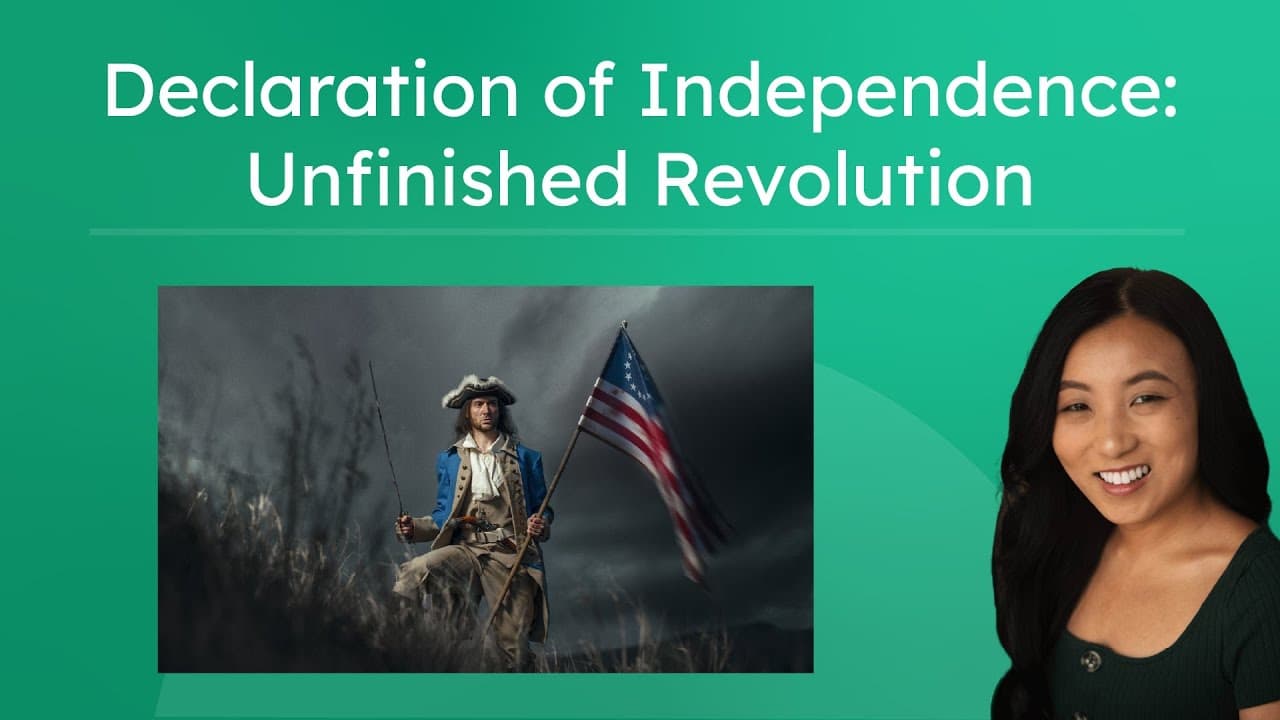
How the Declaration of Independence Sparked a Continuous Revolution

How the Declaration of Independence Sparked a Continuous Revolution

This educational video explores the concept of the "unfinished revolution" in American history, arguing that the principles embedded in the Declaration of Independence created a framework for continuous social and political change. The narrator, Caroline, guides viewers through three major historical movements—the abolition of slavery, the labor movement, and the civil rights movement—demonstrating how each utilized the Declaration's ideals to challenge the status quo and expand democratic rights.

Miacademy & MiaPrep Learning ChannelMiacademy & MiaPrep Learning Channel

8mins 2s

Materials

Harlem History Guide Document

Harlem History Guide Document

Updated Harlem History Guide by removing Grade/Level references and replacing historical photographs with representative emojis for a more stylized, illustrative look.

CG

Connor Green

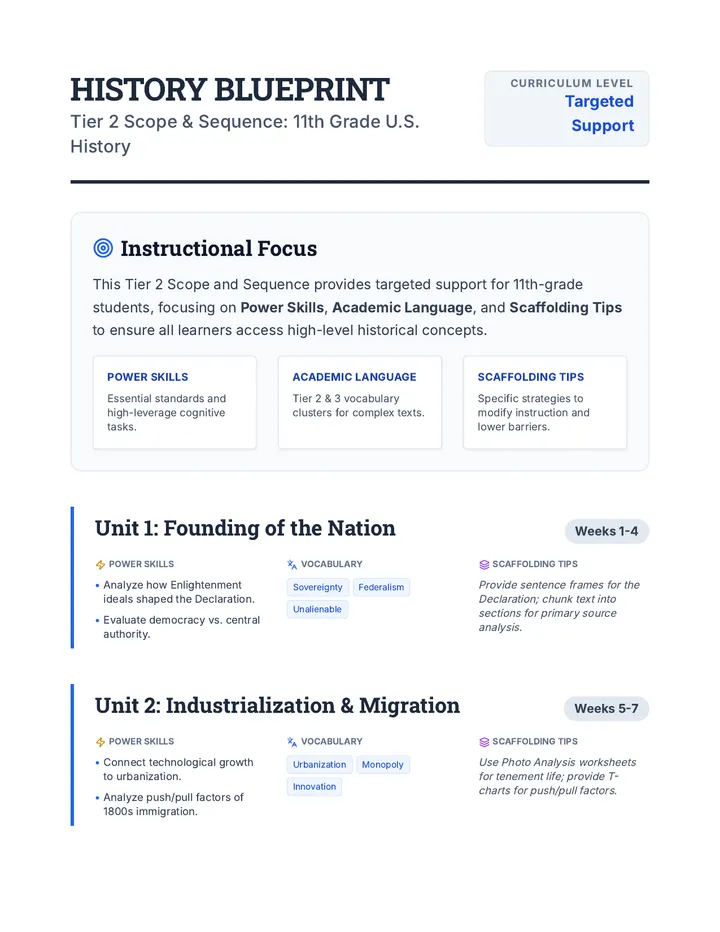
History Blueprint Scope and Sequence

History Blueprint Scope and Sequence

An updated Tier 2 Scope and Sequence for 11th Grade U.S. History, now including specific scaffolding tips for each unit alongside power skills and academic vocabulary. The layout is optimized for teacher reference with instructional strategies tailored for targeted support.

D

dfleisch

Inflation Time Machine Worksheet

Inflation Time Machine Worksheet

A comprehensive two-page economics worksheet that connects the BLS Consumer Price Index (CPI) inflation calculator to major US historical economic eras from 1913 to the present. Students analyze purchasing power shifts, compare deflationary and stagflationary periods, and evaluate real versus nominal values.

MQ

Melanie Quick

Harlem Words Pretest Revised

Harlem Words Pretest Revised

Updated vocabulary pre-assessment for the Harlem Renaissance unit, featuring the exact response wording requested ("I know this!", "I've heard it before...", "I've never heard..."). Designed for middle school students with 2nd-grade reading levels in a self-contained setting.

CG

Connor Green

Sequences

Invention Boom Slides

Modern Era Odyssey

A 13-day journey through modern American history, from the Industrial Revolution to the present day, focusing on key historical figures and major conflicts as outlined in the 5th Grade TEKS. Each lesson is designed for a quick 30-minute block, integrating multimedia and primary source analysis.

CH

Courtney Holdren

49
Unity Roadmap Teacher Guide

Unity and Growth

A modified Modern US History curriculum (Founding to Present) for Tier 2 and 3 special education students, based on Grade 11 Social Studies standards. Focuses on government, industrialization, world wars, and civil rights.

D

dfleisch

26
Reconstruction Reckoning Worksheet

Modern America

A comprehensive journey through United States history from the aftermath of the Civil War to the contemporary era, exploring the social, political, and economic shifts that shaped the modern nation.

DP

Darren Polamalu

18
Mobilization Intro Slides

Global Conflict WWII

A comprehensive 2-day unit covering World War II for 11th Grade US History, aligned with TEKS. It focuses on the transition from isolationism to total war, the home front experience, major turning points in both the European and Pacific theaters, and the strategic decisions that ended the conflict.

BB

Bridgette Burdick

17
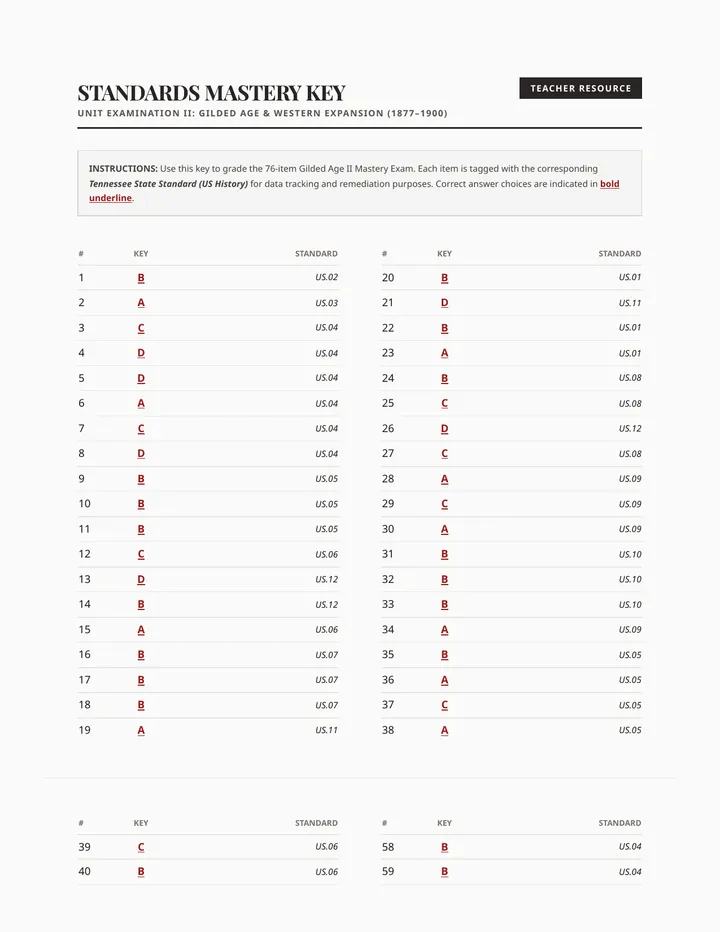
Gilded Age II Standards Key

Modern America Mastery

A comprehensive curriculum sequence covering late 19th and early 20th-century American history, focusing on economic transformation, Western expansion, global imperialism, and the impact of the Great War.

A

Andrew

29
Gilded Age WICOR Handout

History Hustle

A comprehensive US History EOC review sequence designed for AVID classrooms, utilizing WICOR strategies to master key eras from the Gilded Age through modern turning points.

ES

Erin Sims

15

Lessons

History Sprint Pacing Guide

STAAR History Sprint

A comprehensive pacing guide and activity resource designed to cover the remaining 11th Grade US History TEKS before the STAAR test on April 16th. This lesson provides a day-by-day calendar for A/B block schedules and high-engagement activities for each remaining historical era.

BB

Bridgette Burdick

51
Era Review Challenge Practice Sheet

Era Review Challenge

A quick review lesson designed to prepare students for US History STAAR assessments, focusing on four key eras: Imperialism, the Roaring 20s, the Great Depression, and WWII.

BB

Bridgette Burdick

14
Broken Bank Slides

Economic Collapse

An in-depth look at the multi-faceted causes of the Great Depression, including the Stock Market Crash of 1929, bank failures, and agricultural overproduction. Students will analyze primary sources to understand the human impact of these economic shifts.

S

styrken

6
Boom to Bust Slides

Broken Boom

An inquiry-based lesson investigating the transition from the roaring 1920s to the Great Depression. Students analyze how economic policies, consumer credit, and social tensions fueled a cultural boom that ended in systemic collapse.

YP

Yovanna Plummer

4
Dusty Days Slides

Hard Times and High Winds

This lesson explores the personal impact of the Great Depression and the Dust Bowl on everyday Americans, focusing on the challenges of city life, the struggles of farm families, and the resilience shown during one of America's toughest eras.

TB

Tonya Bagwell

4
Before the Dust Pre-Reading Worksheet

Rising from Dust

A Grade 5 history and literature lesson exploring the real-world historical context of Pam Muñoz Ryan's novel *Esperanza Rising*, investigating the Mexican Revolution, Great Depression, Dust Bowl, and Mexican Repatriation.

DD

Debra Dearie

3