DOC C
Fact: Farm Depression started in 1920
During World War I, American farmers heavily expanded fields to feed allied nations. Post-war, European farms recovered. Crop prices collapsed under oversupply. Farmers were unable to sell for a profit and faced foreclosures long before 1929.
1. Based on Doc A, explain how the gap between manufacturing output and worker wages created a major structural problem.
2. According to Doc B, how did installment plans mask the reality of stagnant worker wages?
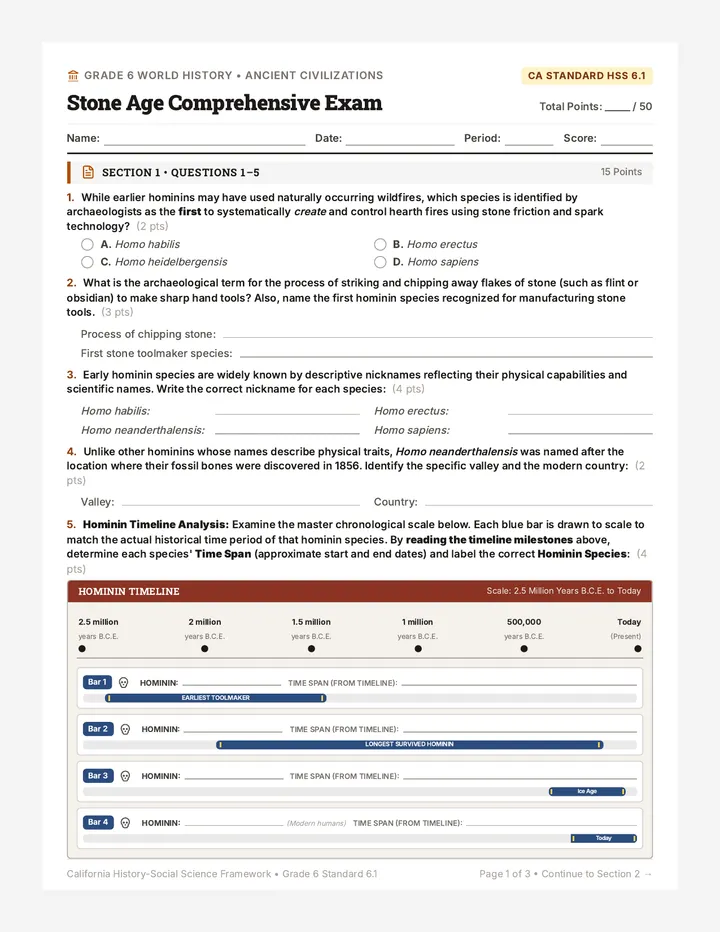
3. Why were American farmers (Doc C) experiencing an economic depression a decade before the stock market crashed?
Guided Note-Taking & Inquiry Page 2 of 3
Boom to Bust Inquiry Notes & Synthesis
• Black Thursday (Oct 23, 1929): Stocks plummeted, erasing over $_______ billion in investor wealth within hours.
• Black Tuesday (Oct 29, 1929): Panic selling wiped out $_______ billion to $_______ billion in single-day value.
• Margin Squeeze: Speculators borrowed up to _______ % of a stock's cost, forcing margin calls as prices collapsed.
• Banking Runs: By March 1933, over _______ ,000 banks collapsed entirely, erasing all depositor savings.
Complete the blanks using notes from the presentations to map the cause-and-effect relationship:
1. Speculative Bubble
Investors buy stocks on margin, driving prices far beyond their actual worth.
2. Margin Calls
What happens when stock prices start to drop?
3. Crash & Runs
Stocks crash, prompting frantic bank runs as institutions run completely out of cash.
Using evidence from Documents A-C and your lecture notes, answer: Was the Great Depression an inevitable crash of a fundamentally flawed system, or a preventable crisis of bad choices?
Guided Note-Taking & Inquiry Page 3 of 3
• This worked as long as stocks went up, but a dip triggered _________________ calls, forcing investors to dump shares and creating a massive selling panic.
SLIDE 7
• On Black Tuesday (October 29, 1929), panic selling wiped out over $_______ billion in stock values in one day.
• Because commercial banks had invested depositors' savings directly in the stock market and lent to speculators, more than _______ ,000 banks collapsed entirely, erasing families' life savings.
SLIDE 8
• Unemployment: Reached a staggering peak of _______ %, with over 15 million Americans out of work.
• Hoovervilles: Homeless families built shacks out of scrap materials, naming these shantytowns after President _________________.
• Children: Chronic hunger was rampant, schools went bankrupt, and over _______ million kids left school entirely to seek work.
Evaluate the relationship between the agricultural depression of the 1920s and the general economic collapse of the 1930s. How did rural economic pain eventually spread to destroy the financial systems in the cities?
Lecture Companion Guide Page 2 of 2
Boom to Bust Teacher Guide Page 1 of 2
Confidential Teacher Guide Investigation Answers & Rubrics
Question 1 (Doc A - Wage Gap): Ideal responses must identify that while factory efficiency increased drastically (+32%), wage growth (+8%) stayed stagnant. This meant workers had no purchasing power to buy the products, causing inventory buildup and mass factory layoffs.
Question 2 (Doc B - Installment Plans): Students should describe how credit acts as an economic delay-timer. It let families ignore flat salaries temporarily until the debt bubble broke, resulting in immediate personal bankruptcies.
Question 3 (Doc C - Rural Depression): Responses must outline that post-WWI mechanized crop expansion and recovered global competition crashed wheat prices, destroying family farms. This means 25% of the country was in poverty *before* the stock market crash.
Scale of 1-4 Points based on standard AP/US History DBQ rubric standards:
4 Points: Mastered Asserts clear thesis. Uses 2+ Document references (Doc A-C). Accurately relates credit overextension or agricultural decline directly to 1930s systemic crash.
3 Points: Proficient Presents thesis and references documents. Explains the connection between 1920s structures and the Depression, with minor gaps in causation.
2 Points: Developing States a simple opinion but relies on vague general statements. Limited direct citations or poor reasoning between credit traps and the crash.
1 Point: Incomplete Incomplete attempt. Simply repeats document text without formulating any causal argument or historical reasoning.
• Hook Facilitation: When students do the "Millionaire Mirage" simulation, poll the class to see how many bought "luxury mansions" or "speculated further". Use their initial shock when the bank closes to introduce the fragility of fractional reserve banking.
• Formative Checkpoint: Walk around during Slide 5 of the lecture to ensure students grasp that 1920s farmers experienced a "silent depression" first. This prevents the common misconception that the stock crash alone caused the Great Depression.
Boom to Bust Teacher Guide Page 2 of 2