Lenny.com
Explore
Create
ActivitiesNewMathEnglish Language ArtsScience & EngineeringSocial StudiesGlobal LanguagesHealth & Physical EducationSpecial EducationCounseling & Life SkillsArts & CreativityESL
Lenny.com
Lenny.com
Explore
Create
ActivitiesNewMathEnglish Language ArtsScience & EngineeringSocial StudiesGlobal LanguagesHealth & Physical EducationSpecial EducationCounseling & Life SkillsArts & CreativityESL
Lenny.com
Lenny.com

Solutions

Lenny for EducatorsLenny for SchoolsLenny for Districts

Product

ExploreSign inCreateSupportAbout

Resources

Getting startedMTSS Acceleration Program

Newsletters

School Funding Newsletter

© 2026 Lenny Learning Inc.

TermsPrivacyAccessibility
LinkedInInstagramX
Lenny

Historical Thinking

Primary source analysis, contextualization, and corroboration strategies for evaluating evidence. Strengthens the ability to identify perspectives and build arguments based on diverse historical viewpoints.

Social StudiesSocial Studies PracticesLocation WordsMapsOrder EventsChronology and CausationEvaluating SourcesHistorical ThinkingGeography, Humans, & the EnvironmentAmerican Symbols and LandmarksCitiesStatesState CapitalsRegions of the United StatesGeographic SkillsPhysical GeographyHuman GeographyRegional GeographyGeography of AfricaGeography of AsiaGeography of EuropeGeography of OceaniaGeography of the AmericasSociety and Environment of EuropeSociety and Environment of AsiaSociety and Environment of The AmericasSociety and Environment of the Middle EastSociety and Environment of AfricaHistoryPrehistoryComparing Ancient River CivilizationsAncient MesopotamiaAncient Egypt and KushAncient South AsiaEarly ChinaGreeceRome and the Byzantine EmpireAncient World HistoryNative Peoples of North AmericaNative Peoples of Mesoamerica and South AmericaAfrican EmpiresMedieval AsiaMedieval EuropeThe Silk RoadMedieval HistoryIslamic EmpiresWorld ReligionsRenaissance PeriodAge of ExplorationThe Thirteen ColoniesThe American RevolutionUS History Early RepublicFounding of the United StatesUS History AntebellumUS Civil WarReconstruction PeriodThe Gilded AgeUS ImperialismWorld ImperialismWorld War IUS History 1920sGreat DepressionWorld War IIThe Cold WarUS History 1950-60sUS History 1960s-70sWorld History 20th CenturyContemporary US HistoryContemporary World HistoryHolidaysCivics and GovernmentCitizenshipGovernment FoundationsThe ConstitutionUS ConstitutionExecutive BranchLegislative BranchJudicial BranchState and LocalPolitical ParticipationPublic PolicyPolitical SystemsPower and AuthoritySocial MovementsDefining DevianceTheories of DevianceCrime and Criminal JusticeEconomicsBasic Economic PrinciplesSupply and DemandWhat is MoneyEconomic FundamentalsMicroeconomicsMacroeconomicsBanking and FinanceEconomic SystemsGlobal EconomicsCorporations and PowerThe Changing WorkplaceUnemployment and LaborClass and InequalitySocial MobilityGlobal InequalityPsychologyHistory of PsychologyPsychology as a ScienceBrain and Nervous SystemNeuroscience and BehaviorGenetics and BehaviorSleep and ConsciousnessSensory ProcessesPerceptual OrganizationClassical ConditioningOperant ConditioningObservational LearningCognitive LearningMemory ProcessesThinking and Problem SolvingLanguage and CognitionTheories of MotivationStress and CopingPrenatal and Infant DevelopmentChildhood DevelopmentAdolescent DevelopmentAdulthood and AgingSelf and IdentitySocial CognitionSocial InfluenceAttraction and RelationshipsGroup BehaviorPrejudice and DiscriminationAnxiety and Mood DisordersClinical PsychologyForensic PsychologyPhilosophy & EthicsIntroduction to PhilosophyMajor Philosophers & IdeasMind and Body ProblemFree Will vs DeterminismEthics & MoralityReligion & PhilosophyPolitical Philosophy

Videos

Comparing Primary and Secondary Historical Sources

Comparing Primary and Secondary Historical Sources

This educational video uses the 1893 Chicago World's Fair as a case study to explain the critical difference between primary and secondary sources in historical analysis. The narrator breaks down definitions of each source type before presenting concrete examples: a first-hand letter written by a fair attendee in 1893 (primary) and a modern National Park Service article about the fair (secondary). Through this comparison, viewers learn how to distinguish between direct observation and retrospective analysis. The video explores key themes of historical perspective, bias, and the construction of historical narratives. It specifically highlights how primary sources capture immediate, subjective experiences (like the spectacle of the Egyptian exhibit), while secondary sources provide broader context and critical analysis that may be unavailable to contemporary witnesses (such as the structural sexism faced by women organizers). The video uses a Venn diagram to visually map out where these accounts overlap and diverge. For educators, this resource is an excellent tool for teaching historical thinking skills and source evaluation. It moves beyond simple definitions to demonstrate *how* historians use different sources to build a complete picture of the past. The video includes a built-in pause for student reflection and concludes with a powerful metaphor about history being a "conversation between the past and the present," helping students understand that history is an evolving interpretation rather than a static set of facts.

Khan AcademyKhan Academy

5mins 1s

The Scramble for Africa and the Struggle for South Africa

The Scramble for Africa and the Struggle for South Africa

This educational video provides a comprehensive overview of the "Scramble for Africa," explaining how European powers divided the African continent in the late 19th century without regard for existing ethnic or linguistic boundaries. The lesson begins with a relatable analogy of a stranger taking over one's house to help students empathize with the African experience of colonization. It then details the 1884-1885 Berlin Conference, the transition from subsistence farming to cash crops, and the exploitation of natural resources like diamonds and gold. The video specifically zooms in on the complex history of South Africa, detailing the conflicts between three main groups: the indigenous Zulu Kingdom, the Dutch settlers (Boers), and the British Empire. It covers key historical events including the Battle of Isandlwana, the Great Trek, and the Boer Wars. The narrative highlights the concepts of total war, guerilla warfare, and the establishment of concentration camps, while also acknowledging the often-overlooked role and suffering of Black South Africans during these European conflicts. For educators, this resource serves as an excellent core lesson for World History units on Imperialism. It simplifies complex geopolitical maneuvers using clear maps and analogies while encouraging critical thinking about the long-term impacts of colonization. The video includes built-in pause points with guiding questions, making it ready-to-use for checking understanding and facilitating classroom discussions about borders, sovereignty, and historical perspective.

Miacademy & MiaPrep Learning ChannelMiacademy & MiaPrep Learning Channel

10mins 5s

The Murder of Emmett Till: A Catalyst for the Civil Rights Movement

The Murder of Emmett Till: A Catalyst for the Civil Rights Movement

This episode of Crash Course Black American History, hosted by Clint Smith, examines the tragic 1955 murder of 14-year-old Emmett Till in Mississippi and its profound impact on the Civil Rights Movement. The video details the events leading up to his kidnapping by Roy Bryant and J.W. Milam, the brutal murder, and the subsequent trial that resulted in a hasty acquittal by an all-white jury. Central to the narrative is the courageous decision by Emmett's mother, Mamie Till, to hold an open-casket funeral, allowing the world to witness the brutality of white supremacy through the publication of photographs in Jet magazine. The video explores key themes such as the systemic failure of the justice system in the Jim Crow South, the vital role of Black-owned media (like the Chicago Defender and Jet) in exposing racial terror, and the concept of double jeopardy. It highlights how domestic terrorism was used to enforce social hierarchy and how this specific event galvanized Black Americans to mobilize for civil rights. The host also connects historical events to the present day, using a personal anecdote about visiting the National Museum of African American History and Culture to illustrate how recent this history truly is. For educators, this video serves as a powerful tool to teach about the catalyst of the modern Civil Rights Movement and the realities of life under Jim Crow. It provides a nuanced look at how legal structures protected perpetrators of racial violence and how media was used as a form of resistance. The content allows for deep discussions on the ethics of photojournalism, the limitations of the legal system, and the intergenerational trauma of racism, making it highly relevant for American History, Civics, and Social Justice curricula.

CrashCourseCrashCourse

11mins 45s

The History of the Conflict in Israel and Palestine

The History of the Conflict in Israel and Palestine

This fast-paced educational video provides a comprehensive historical overview of the conflict between Israel and Palestine, challenging the common misconception that the struggle is the result of ancient religious hatreds. Narrated by John Green, the video traces the roots of the modern conflict back to the late 19th century, examining the rise of competing nationalisms—Zionism and Arab nationalism—under the Ottoman Empire and the subsequent British Mandate. It details the complex web of contradictory promises made by the British during World War I, the impact of the Holocaust and World War II, and the pivotal 1948 and 1967 wars that shaped the current geopolitical map. Key themes explored include the effects of colonialism and "divide and rule" policies, the role of international bodies like the United Nations, and the tension between security and sovereignty. The video covers critical events such as the UN Partition Plan, the Nakba, the Intifadas, the rise of the PLO and Hamas, and the failed peace processes of the 1990s and 2000s. It places significant emphasis on understanding the legitimacy of the historical narratives held by both sides, framing the conflict as a dispute over land and nationhood rather than purely theology. For educators, this video serves as an essential primer for High School World History or Current Events units. It models historical thinking by analyzing primary sources, maps, and shifting demographics. The content encourages students to move beyond polarizing headlines and understand the internal logic of both Israeli and Palestinian perspectives. It provides a neutral, fact-based foundation for discussing difficult topics like military occupation, terrorism, refugees, and the two-state solution, making it a powerful tool for fostering critical thinking and empathy.
CrashCourseCrashCourse

12mins 53s

Investigating the Causes of World War I

Investigating the Causes of World War I

This engaging educational video adopts a creative "detective" persona to investigate the complex origins of World War I. Framed as a murder mystery solving the assassination of Archduke Franz Ferdinand, the video breaks down the long-term geopolitical tensions that turned a single event into a global conflict. It systematically explores the "facts," the "scene," and the "murder" to help students understand the causality of history. Key themes include the four main causes of the war: Nationalism, Imperialism, Militarism, and Alliances. The video provides detailed explanations of specific historical contexts, such as the Franco-Prussian War, the decline of the Ottoman Empire, the "Powder Keg" of the Balkans, and the web of secret treaties between European powers like Germany, Austria-Hungary, Russia, France, and Britain. It also profiles key figures like Otto von Bismarck, Kaiser Wilhelm II, and Gavrilo Princip. For educators, this video serves as an excellent anchor for a unit on WWI. Its unique narrative structure keeps students engaged while simplifying complex political concepts through clear definitions and map visualizations. The video includes built-in pause points for checking understanding and encourages critical thinking about how regional disputes can escalate into world-altering events.

Miacademy & MiaPrep Learning ChannelMiacademy & MiaPrep Learning Channel

10mins 9s

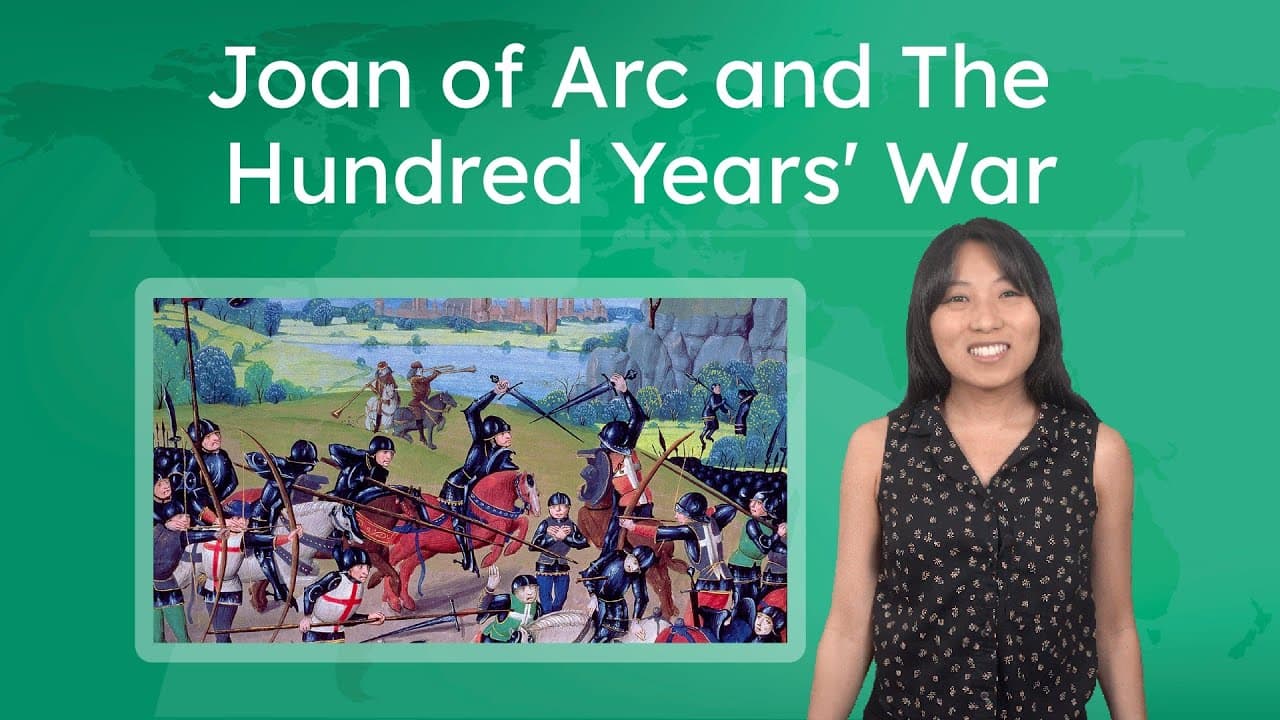
How Joan of Arc Turned the Tide of the Hundred Years' War

How Joan of Arc Turned the Tide of the Hundred Years' War

This engaging educational video explores the life and legacy of Joan of Arc, a teenage peasant girl who became a pivotal figure in the Hundred Years' War between France and England. Through a mix of dramatic reenactments featuring Joan and Bishop Pierre Cauchon, alongside clear narration and animated graphics, the video breaks down the complex causes of the war, including the crisis of succession and the failing system of feudalism.

Miacademy & MiaPrep Learning ChannelMiacademy & MiaPrep Learning Channel

9mins 58s

Materials

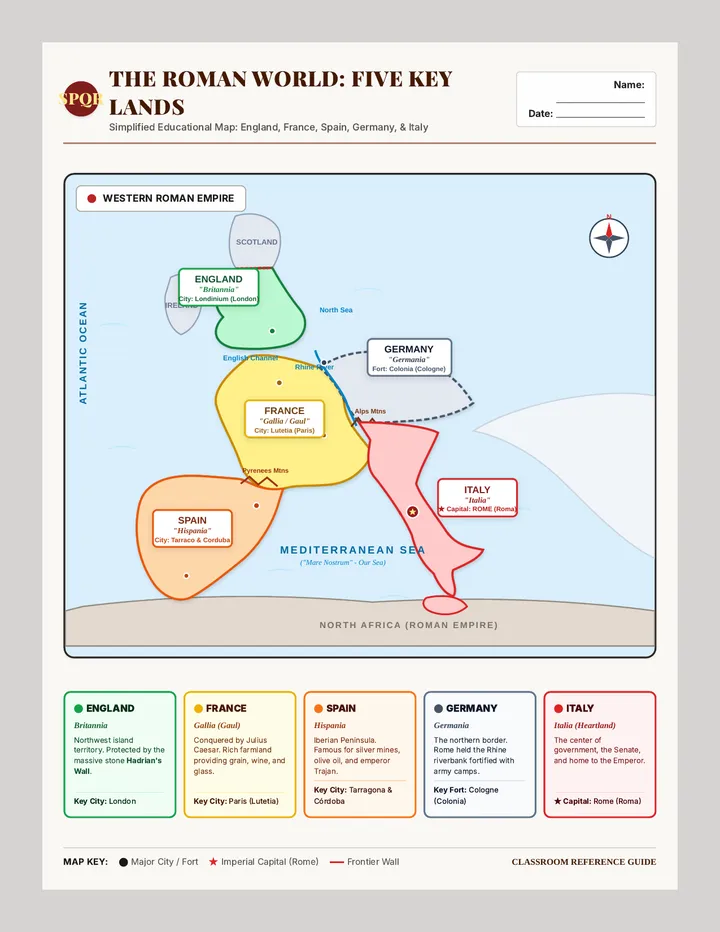
Empire Frontiers Reference Map

Empire Frontiers Reference Map

A simplified, high-clarity single-page reference map of Western Europe under Roman rule. Clearly highlights and labels Spain (Hispania), France (Gallia), England (Britannia), Germany (Germania), and Italy (Italia) with bold color coding, ancient and modern names, key capitals, and a student reference guide.

JT

Julie Teske

History Inquiry Guided Worksheet

History Inquiry Guided Worksheet

3-page scaffolded student inquiry packet fully aligned to lesson objectives (why learn history, classroom procedures, and historical thinking skills) streamlined for native English students with clear procedural guides, stacked-traits analogies, and IDCV graphic organizers.

SP

Sheridan Pickett

Central American Freedom Reading Worksheet

Central American Freedom Reading Worksheet

A Grade 8-9 dual-language reading and multiple-choice worksheet covering Central American Independence Day (September 15, 1821). Features a 4-paragraph parallel English and Spanish text alongside 6 standards-aligned bilingual multiple choice questions assessing key historical concepts, leaders, and civic traditions.

GJ

Gerardo Jimenez Ramirez

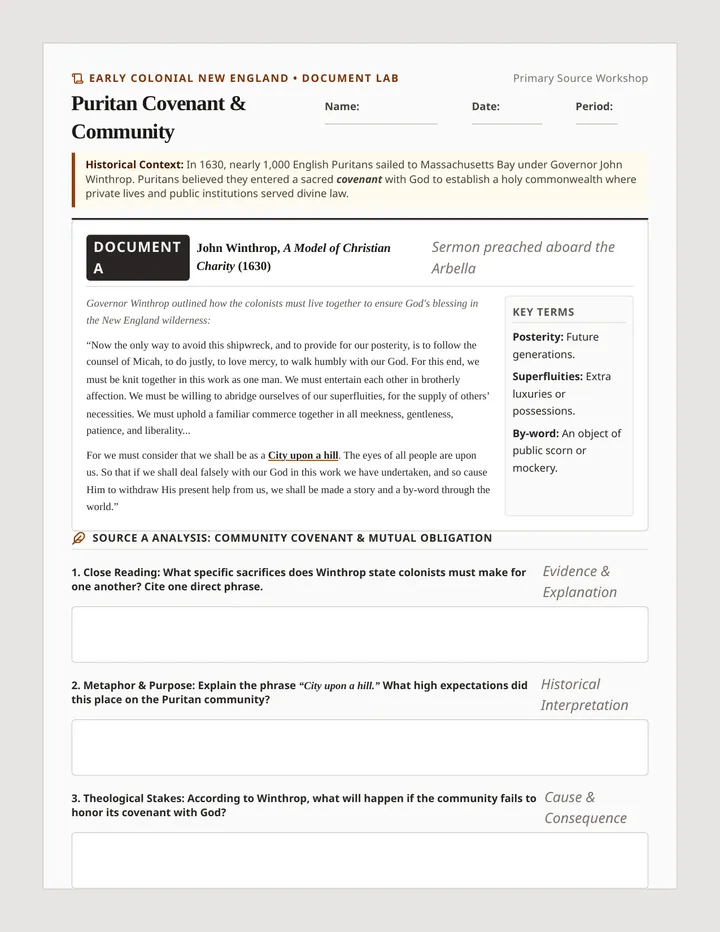
Puritan Covenant Source Analysis Worksheet

Puritan Covenant Source Analysis Worksheet

A two-page primary source analysis worksheet exploring early colonial New England through John Winthrop's 'A Model of Christian Charity' and Anne Bradstreet's personal devotional poetry. Students examine religious doctrines, covenant theology, communal expectations, and individual piety using guided text-dependent questions and evidence collection spaces.

SS

Shannon Slygh

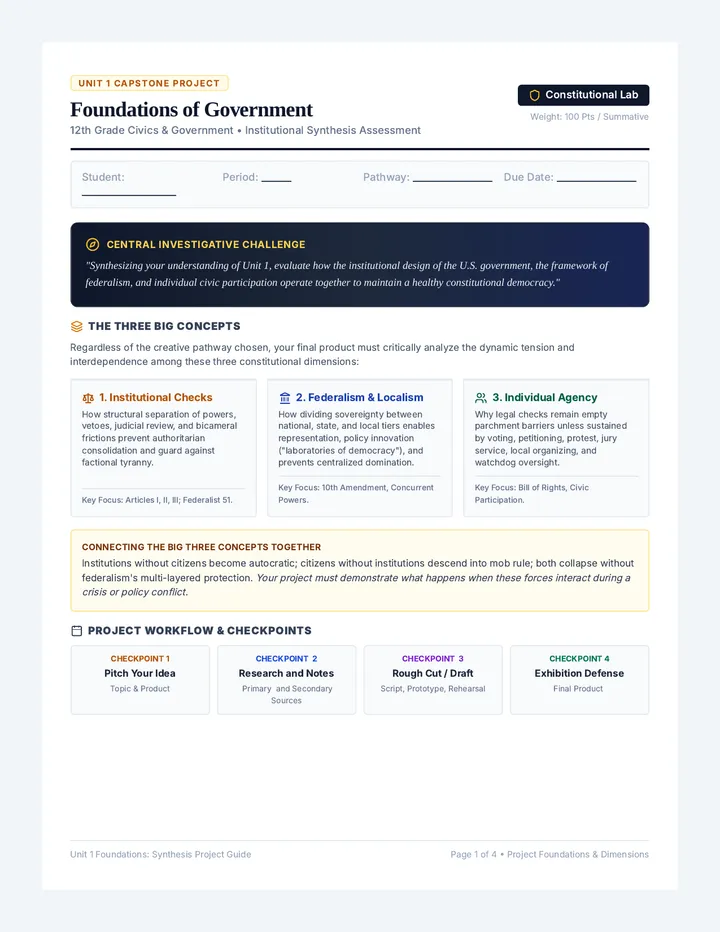
Democracy Design Project Guide

Democracy Design Project Guide

A comprehensive 4-page student project assignment guide for 12th-grade Civics and Government, detailing 5 creative project pathways (podcast, documentary, interview simulation, reader's theater drama, and board/card game), an analytical rubric across the three core constitutional dimensions, and a student planning blueprint.

JG

Joshua Griffith

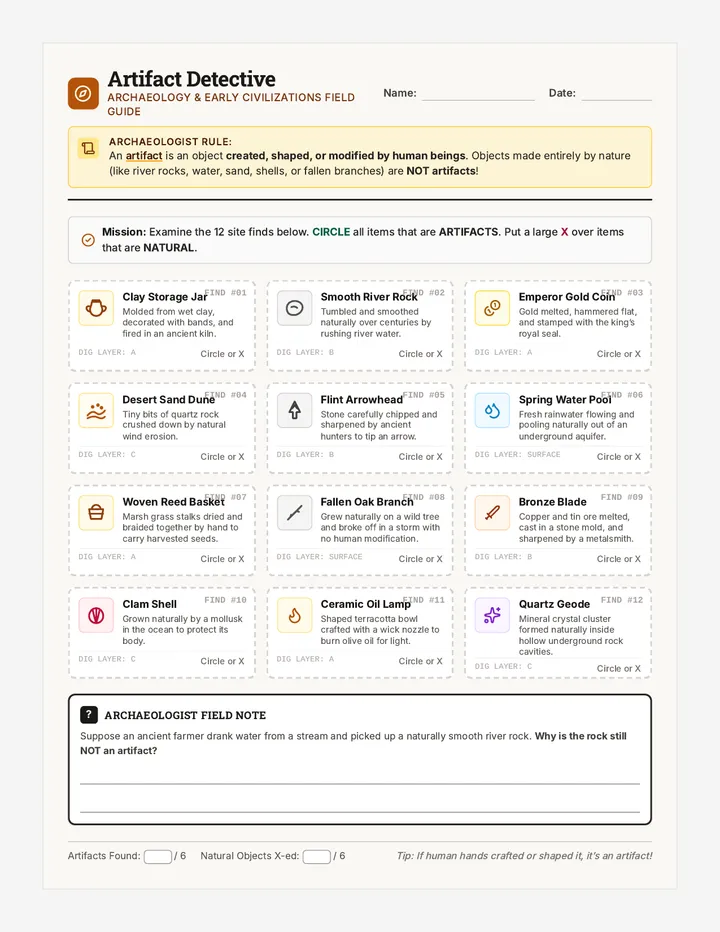
Artifact Detective Worksheet

Artifact Detective Worksheet

An archaeology worksheet where students differentiate between human-made ancient artifacts and natural non-artifacts. Students inspect illustrated field discoveries, circling true artifacts and crossing out natural objects.

KM

Kristina Martin

Sequences

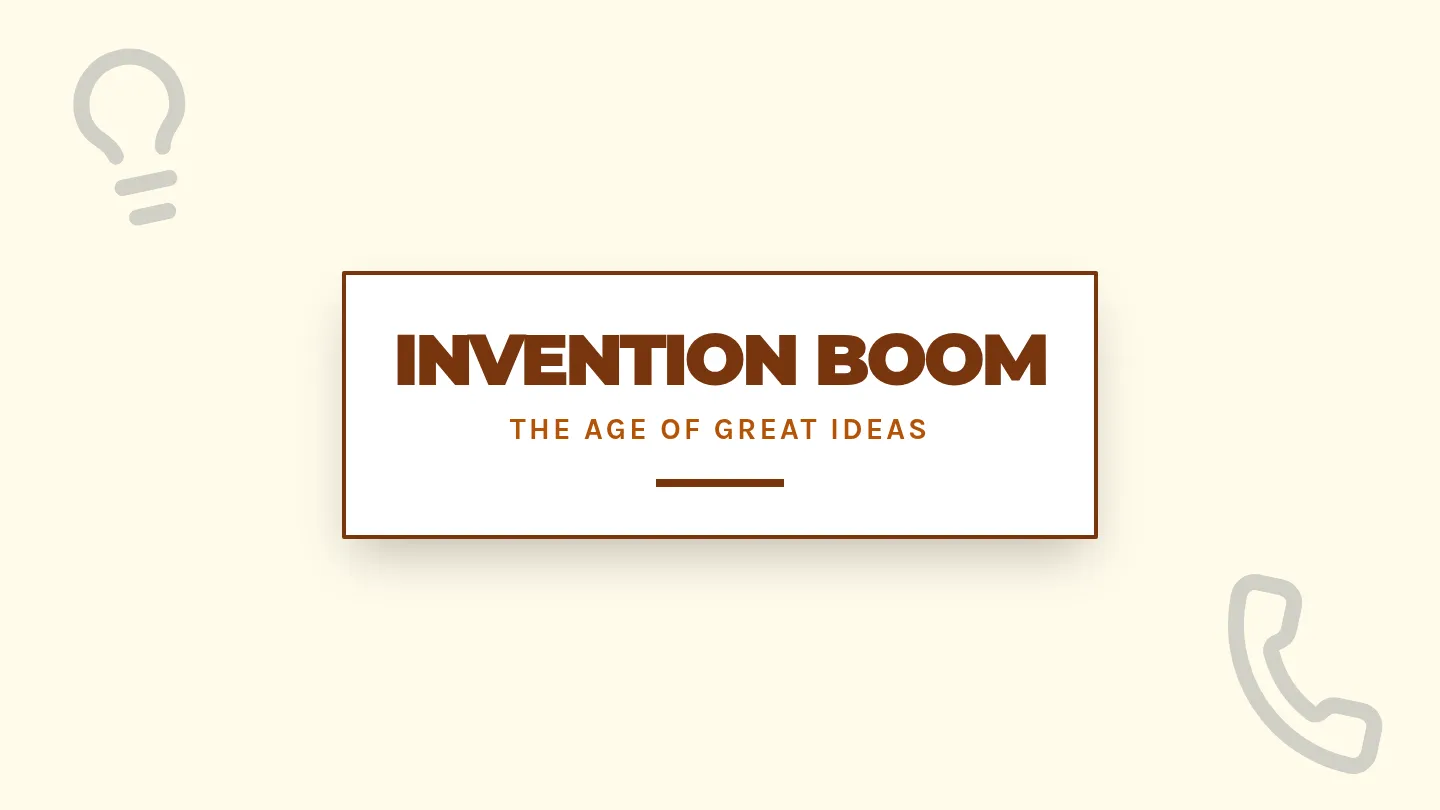
Invention Boom Slides

Modern Era Odyssey

A 13-day journey through modern American history, from the Industrial Revolution to the present day, focusing on key historical figures and major conflicts as outlined in the 5th Grade TEKS. Each lesson is designed for a quick 30-minute block, integrating multimedia and primary source analysis.

CH

Courtney Holdren

49
Master Organizer Slides

Think Like Aristotle

A four-part series for middle schoolers on Aristotelian logic and philosophy, focusing on categorization, reasoning, and ethics, with a historical tie-in to Alexander the Great.

DB

Danielle Burham

21
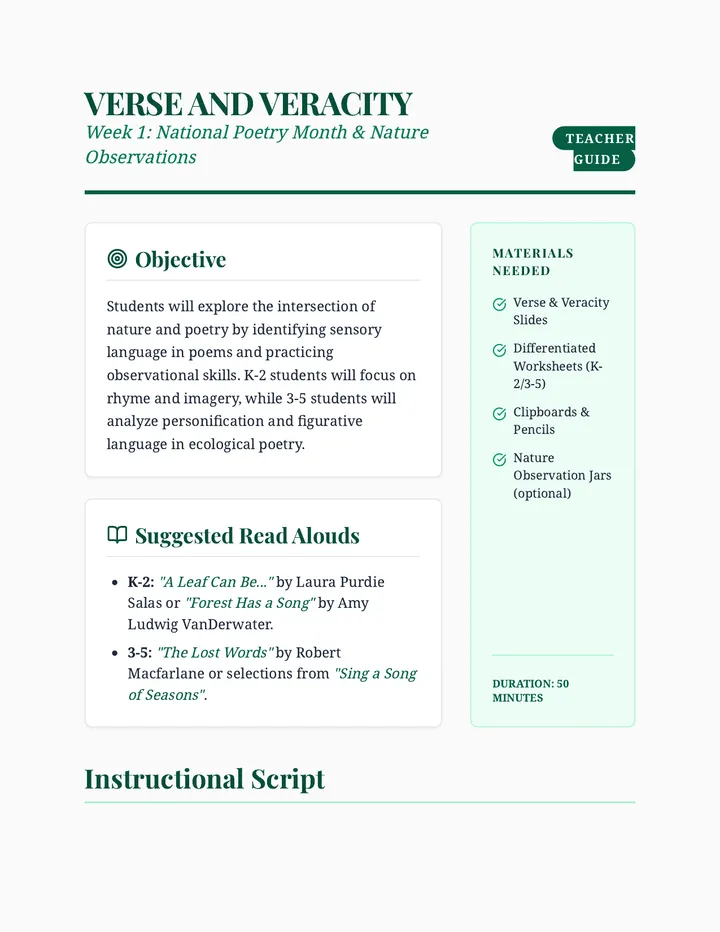
Verse and Veracity Teacher Guide

Media Center Year Curriculum

A comprehensive K-5 Media Center curriculum spanning August to May. Each month features a thematic unit integrating library skills (Dewey Decimal System, research, digital citizenship), literacy (poetry, biographies, informational texts), and STEM/Maker Space challenges. Resources are differentiated for K-2 and 3-5.

B

bethany.nied

50
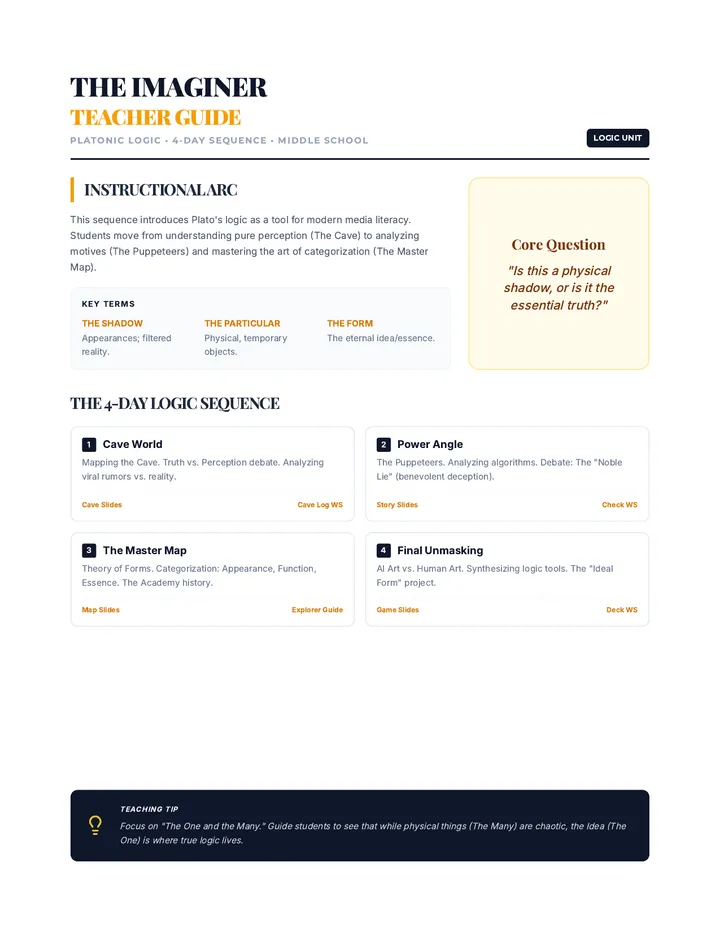
The Imaginer Teacher Guide

The Imaginer Plato Logic

A four-day introductory logic and philosophy sequence for middle schoolers focusing on Plato's 'Thinking Style.' Students explore the Allegory of the Cave, perception vs. reality, and the Theory of Forms through the lens of 'The Imaginer,' culminating in a visual analysis game.

DB

Danielle Burham

12
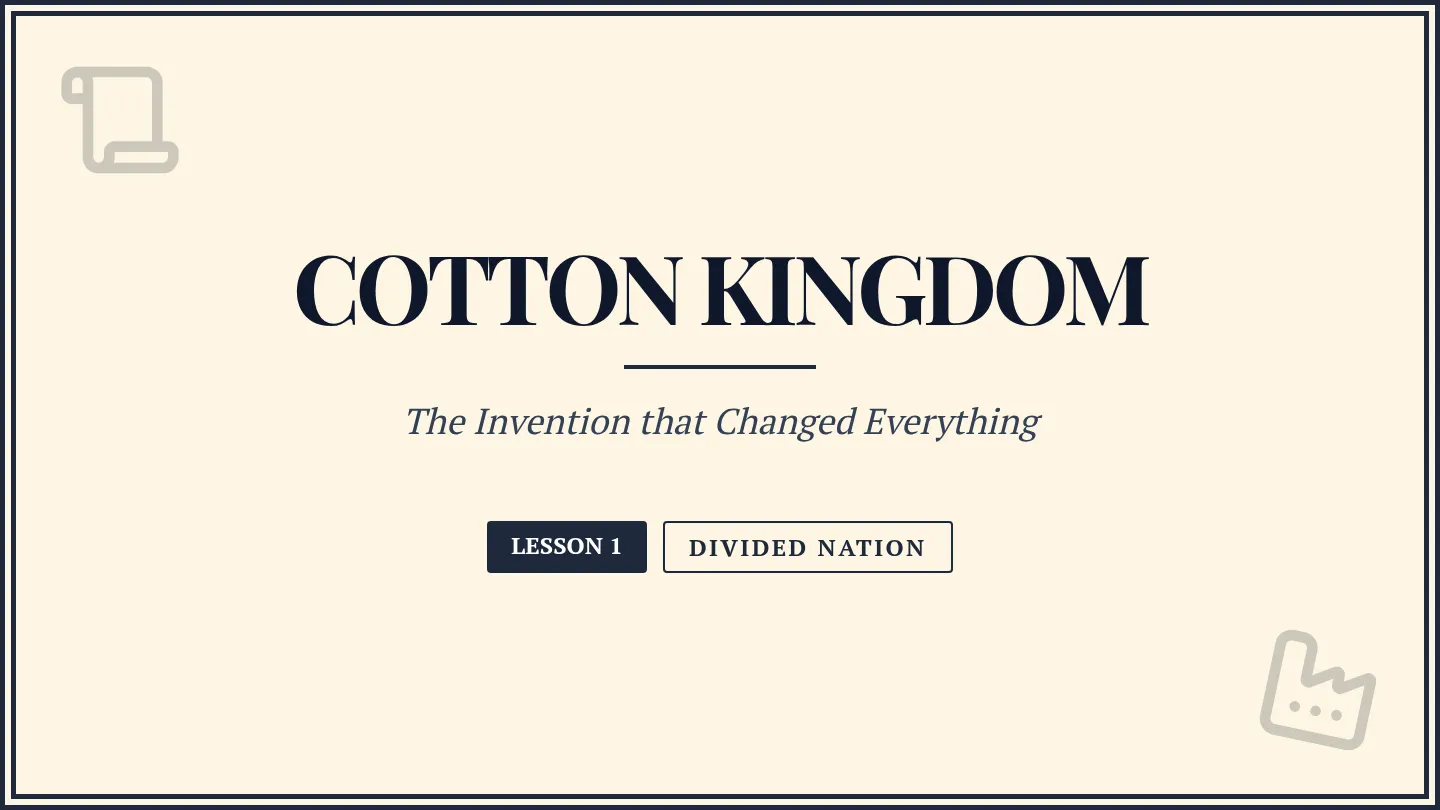
Cotton Kingdom Slides

Divided Nation

A 4-part exploration of the deep-seated tensions and pivotal events that led the United States to the brink of the Civil War, focusing on economic shifts, legislative compromises, and political flashpoints.

IA

Isabella Adkins

9
Soulful Cyphers Lesson Plan

We Gon’ Be Alright- A Century of Black Excellence

A comprehensive 6-lesson Black History Month curriculum for 5th-8th graders, exploring historical excellence, emotional expression, and community through the lens of five core values: Virtus, Kenkyo, Sankofa, Ubuntu, and Ganas. Inspired by a century of resilience and brilliance.

JS

Joleen Shillingford

18

Lessons

History Sprint Pacing Guide

STAAR History Sprint

A comprehensive pacing guide and activity resource designed to cover the remaining 11th Grade US History TEKS before the STAAR test on April 16th. This lesson provides a day-by-day calendar for A/B block schedules and high-engagement activities for each remaining historical era.

BB

Bridgette Burdick

51
Border Lines Activity

Harriet Tubman Escape

A lesson exploring Harriet Tubman's 1850 escape and the significance of the Mason-Dixon Line as a geographical and legal boundary in the pre-Civil War United States.

TL

Tanya Larson

46
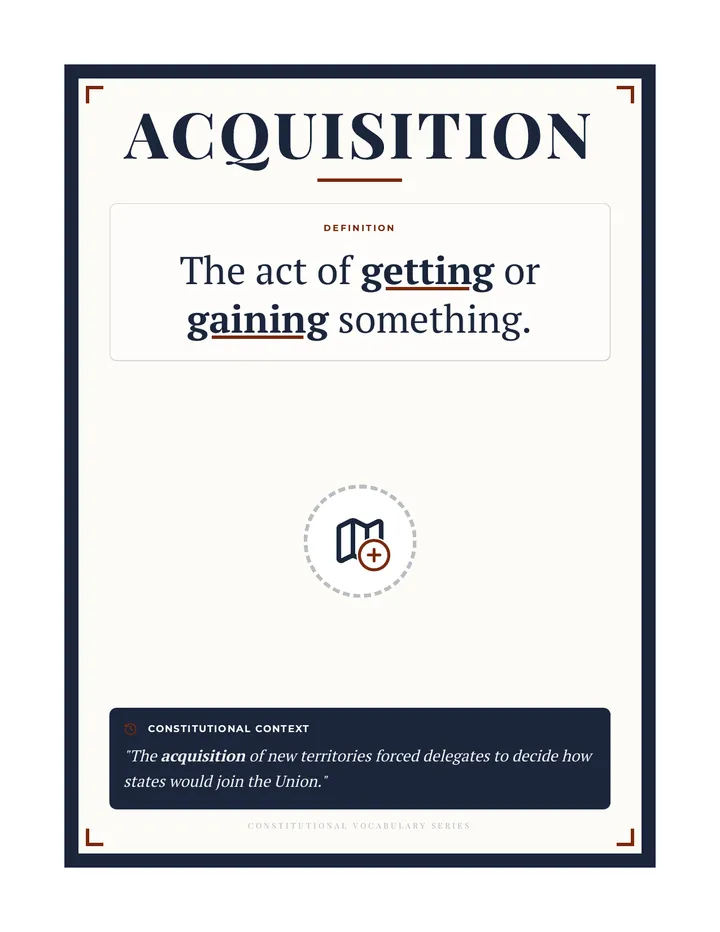
Constitutional Vocabulary Poster Set

Constitutional Vocabulary

A set of vocabulary posters focused on key terms from the Constitutional Convention, including government structures, legislative roles, and foundational principles like compromise and federalism.

SA

Senta Agnello-Shelton

21
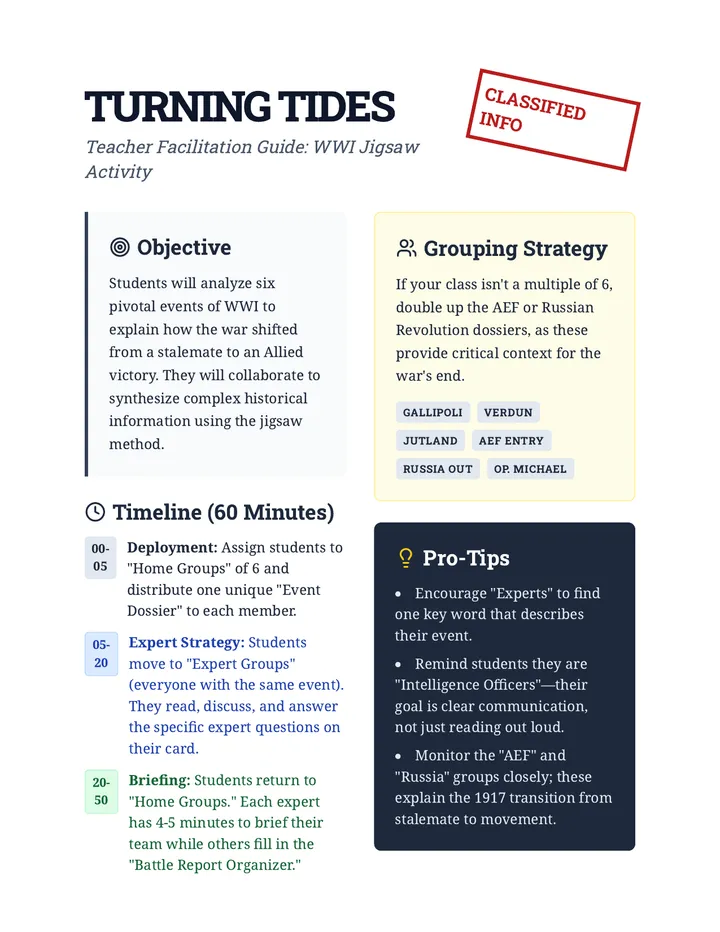
Turning Tides Teacher Guide

Turning Tides

A comprehensive jigsaw activity focusing on six pivotal events of World War I, designed for a 60-minute class session. Students act as intelligence officers to piece together the shifting dynamics of the Great War.

B

bliddy

34
Modern Era Reader Part 1

The Modern Ledger

A comprehensive exploration of the 1990s through the modern day, covering technological shifts, political milestones, military conflicts, and cultural evolution in the United States.

CE

Chelsea Elliott

20
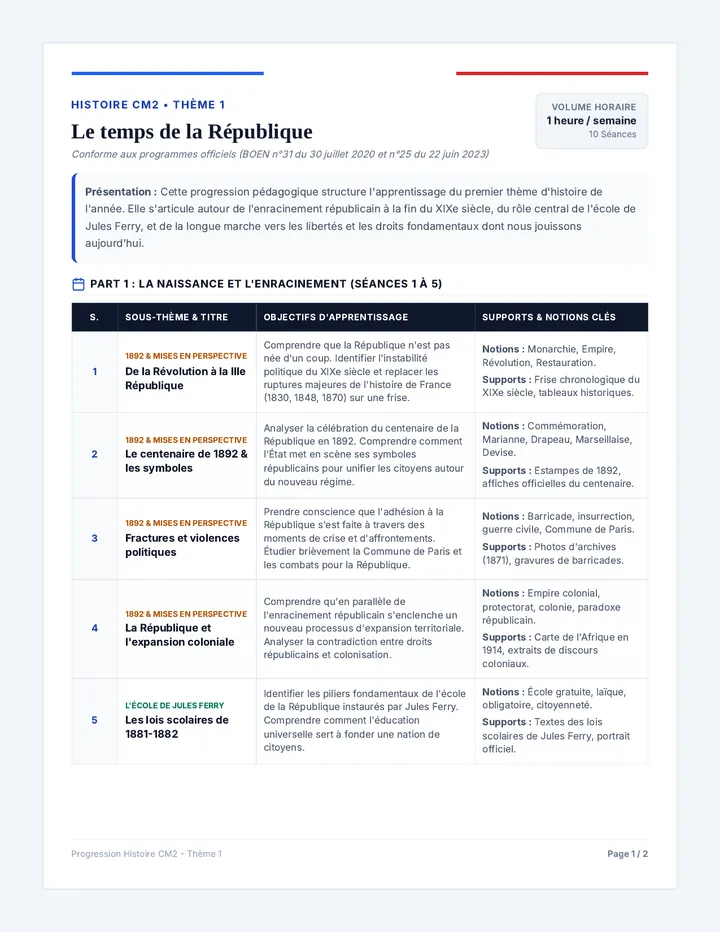
Progression Annuelle Histoire CM2

Le Temps de la République

Une progression pédagogique de 10 séances d'histoire pour le CM2, couvrant l'intégralité du premier thème 'Le temps de la République' selon les programmes officiels de 2020 et 2023. Elle structure la mise en perspective historique de 1892, l'école de Jules Ferry, ainsi que la conquête des libertés, droits et devoirs.

AC

anne chandelier

37