Lenny.com
Explore
Create
ActivitiesNewMathEnglish Language ArtsScience & EngineeringSocial StudiesGlobal LanguagesHealth & Physical EducationSpecial EducationCounseling & Life SkillsArts & CreativityESL
Lenny.com
Lenny.com
Explore
Create
ActivitiesNewMathEnglish Language ArtsScience & EngineeringSocial StudiesGlobal LanguagesHealth & Physical EducationSpecial EducationCounseling & Life SkillsArts & CreativityESL
Lenny.com
Lenny.com

Solutions

Lenny for EducatorsLenny for SchoolsLenny for Districts

Product

ExploreSign inCreateSupportAbout

Resources

Getting startedMTSS Acceleration Program

© 2026 Lenny Learning Inc.

TermsPrivacyAccessibility
LinkedInInstagramX
Lenny

Clinical Psychology

Clinical assessment techniques, diagnostic frameworks, and evidence-based therapeutic interventions. Examines the etiology and treatment of psychological disorders through diverse theoretical perspectives.

Social StudiesSocial Studies PracticesLocation WordsMapsOrder EventsChronology and CausationEvaluating SourcesHistorical ThinkingGeography, Humans, & the EnvironmentAmerican Symbols and LandmarksCitiesStatesState CapitalsRegions of the United StatesGeographic SkillsPhysical GeographyHuman GeographyRegional GeographyGeography of AfricaGeography of AsiaGeography of EuropeGeography of OceaniaGeography of the AmericasSociety and Environment of EuropeSociety and Environment of AsiaSociety and Environment of The AmericasSociety and Environment of the Middle EastSociety and Environment of AfricaHistoryPrehistoryComparing Ancient River CivilizationsAncient MesopotamiaAncient Egypt and KushAncient South AsiaEarly ChinaGreeceRome and the Byzantine EmpireAncient World HistoryNative Peoples of North AmericaNative Peoples of Mesoamerica and South AmericaAfrican EmpiresMedieval AsiaMedieval EuropeThe Silk RoadMedieval HistoryIslamic EmpiresWorld ReligionsRenaissance PeriodAge of ExplorationThe Thirteen ColoniesThe American RevolutionUS History Early RepublicFounding of the United StatesUS History AntebellumUS Civil WarReconstruction PeriodThe Gilded AgeUS ImperialismWorld ImperialismWorld War IUS History 1920sGreat DepressionWorld War IIThe Cold WarUS History 1950-60sUS History 1960s-70sWorld History 20th CenturyContemporary US HistoryContemporary World HistoryHolidaysCivics and GovernmentCitizenshipGovernment FoundationsThe ConstitutionUS ConstitutionExecutive BranchLegislative BranchJudicial BranchState and LocalPolitical ParticipationPublic PolicyPolitical SystemsPower and AuthoritySocial MovementsDefining DevianceTheories of DevianceCrime and Criminal JusticeEconomicsBasic Economic PrinciplesSupply and DemandWhat is MoneyEconomic FundamentalsMicroeconomicsMacroeconomicsBanking and FinanceEconomic SystemsGlobal EconomicsCorporations and PowerThe Changing WorkplaceUnemployment and LaborClass and InequalitySocial MobilityGlobal InequalityPsychologyHistory of PsychologyPsychology as a ScienceBrain and Nervous SystemNeuroscience and BehaviorGenetics and BehaviorSleep and ConsciousnessSensory ProcessesPerceptual OrganizationClassical ConditioningOperant ConditioningObservational LearningCognitive LearningMemory ProcessesThinking and Problem SolvingLanguage and CognitionTheories of MotivationStress and CopingPrenatal and Infant DevelopmentChildhood DevelopmentAdolescent DevelopmentAdulthood and AgingSelf and IdentitySocial CognitionSocial InfluenceAttraction and RelationshipsGroup BehaviorPrejudice and DiscriminationAnxiety and Mood DisordersClinical PsychologyForensic PsychologyPhilosophy & EthicsIntroduction to PhilosophyMajor Philosophers & IdeasMind and Body ProblemFree Will vs DeterminismEthics & MoralityReligion & PhilosophyPolitical Philosophy

Videos

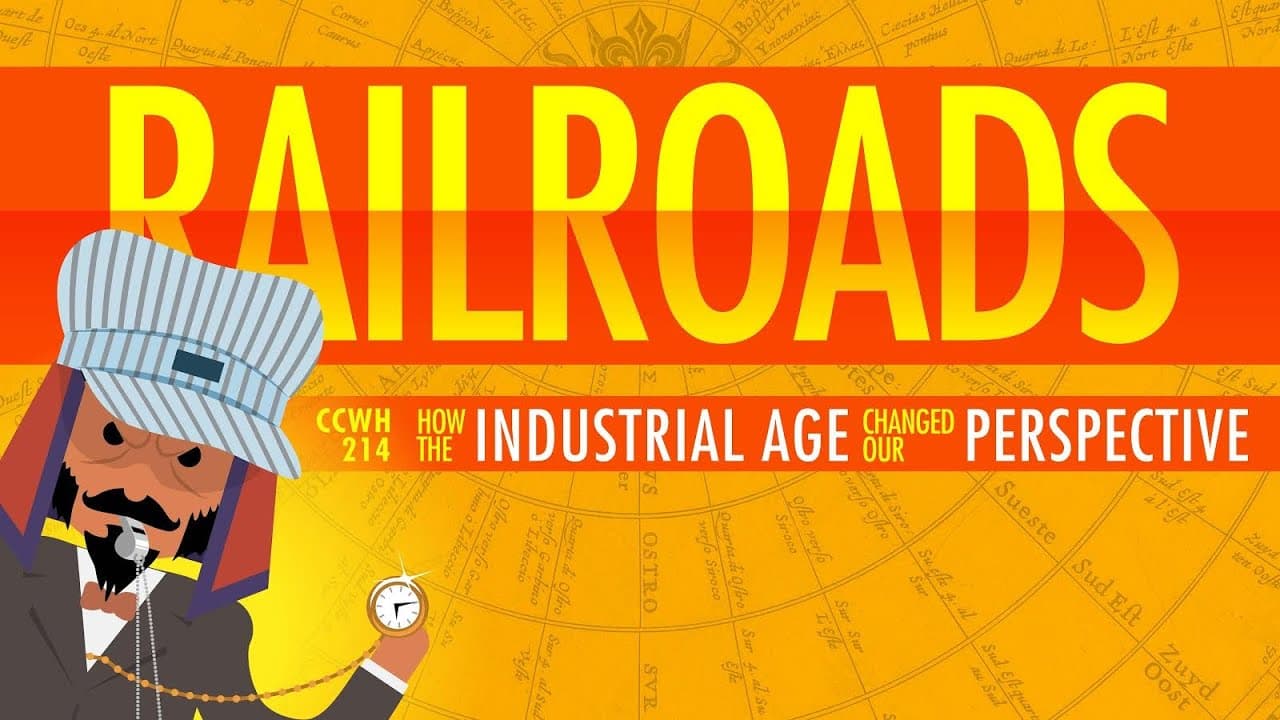
How Railroads Reshaped Time, Space, and Society

How Railroads Reshaped Time, Space, and Society

In this episode of Crash Course World History, John Green explores the Industrial Revolution through the specific lens of the railroad. Rather than focusing solely on the mechanics of steam engines, the video delves into the profound sociological and psychological shifts caused by rail travel, drawing heavily from Wolfgang Schivelbusch's book 'The Railway Journey'. It examines how railroads fundamentally altered human perceptions of time, space, and nature, introducing concepts like standard time zones and the 'annihilation of time and space.' The video investigates the cultural anxiety that accompanied this technological leap. It discusses how high-speed travel changed the way people looked at landscapes—turning detailed nature into a blur—and how it influenced social behaviors, such as reading on public transport to avoid conversation. The narrative also covers the medical history of 'railway spine,' a precursor to the diagnosis of traumatic neurosis, illustrating how new technologies often bring new fears and psychological categories. Ideally suited for high school history and sociology students, this video serves as a powerful tool for connecting past technological revolutions to current ones. By comparing the disruption of the railroad to the disruption of the internet and smartphones, John Green helps students understand that the anxiety surrounding rapid technological change is a recurring historical theme. It challenges the notion that all change equals progress, encouraging critical thinking about innovation.

CrashCourseCrashCourse

12mins 31s

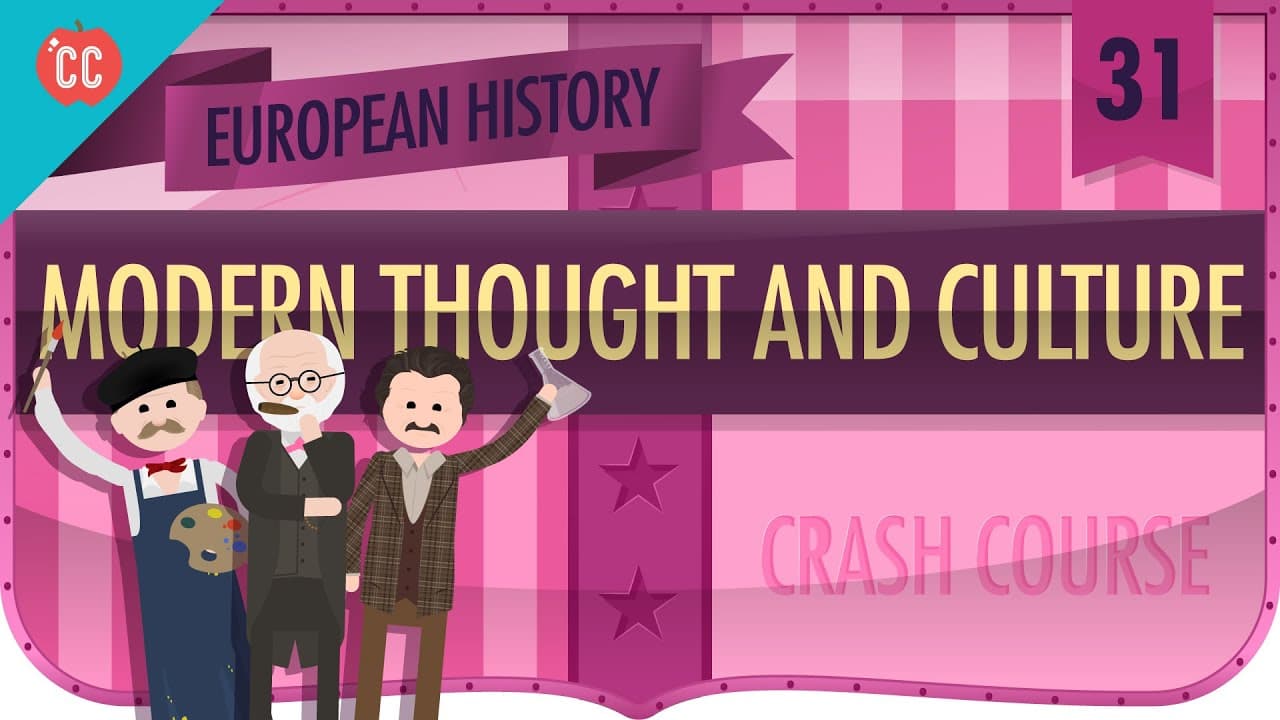
How Modernism Transformed Art, Science, and Philosophy

How Modernism Transformed Art, Science, and Philosophy

This educational video from Crash Course European History explores the profound cultural and intellectual shifts that occurred in Europe around the turn of the 20th century. Host John Green examines the rise of Modernism, a movement characterized by the rejection of traditional forms and the embrace of uncertainty, subjectivity, and innovation. The video covers the transition from Realism to Impressionism and Cubism in art, the departure from classical ballet in dance, and the move from Newtonian physics to Quantum Theory and Relativity in science. The content delves into key themes such as the breakdown of absolute truths, the exploration of the human subconscious, and the impact of non-European influences on Western culture. Significant figures like Sigmund Freud, Friedrich Nietzsche, Albert Einstein, and Pablo Picasso are discussed in depth, highlighting how their revolutionary ideas challenged the Enlightenment's focus on rationality and objective reality. The video illustrates how these disruptions in art, science, and philosophy mirrored the political and social upheavals of the era. For educators, this resource serves as an excellent synthesis of the intellectual history of the early 1900s. It provides a multidisciplinary approach, connecting visual arts, music, physics, and psychology to explain the "paradigm shift" that defined the modern era. The video is particularly useful for helping students understand abstract concepts like relativity, psychoanalysis, and existential philosophy by grounding them in their historical context and demonstrating how they shaped the 20th-century worldview.

CrashCourseCrashCourse

15mins 9s

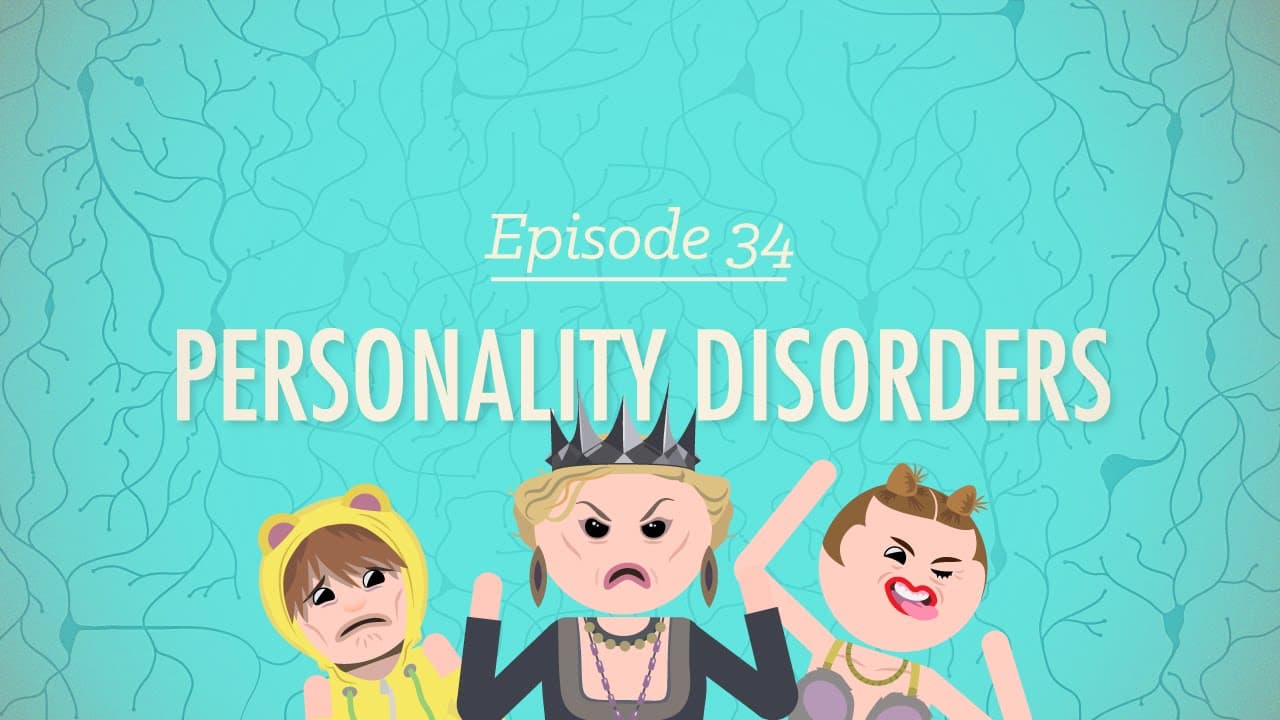
Personality Disorders: Crash Course Psychology #34

Personality Disorders: Crash Course Psychology #34

This educational video provides a comprehensive overview of personality disorders, explaining how they differ from other psychological conditions due to their enduring, inflexible nature and often ego-syntonic characteristics. The host, Hank Green, breaks down the ten specific personality disorders listed in the DSM-5, organizing them into three distinct clusters: Cluster A (odd/eccentric), Cluster B (dramatic/emotional/impulsive), and Cluster C (anxious/fearful/avoidant). This structured approach helps viewers categorize complex behaviors and understand the nuances between similar-sounding diagnoses. The content dives deeply into two specific and often misunderstood disorders: Borderline Personality Disorder (BPD) and Antisocial Personality Disorder. It explores the complex interplay of biological, genetic, and environmental factors that contribute to these conditions, such as the "bio-psycho-social" roots of BPD and the neurological differences observed in those with antisocial traits. The video also discusses historical perspectives, modern diagnostic challenges, and the potential future shift toward a "dimensional model" of diagnosis rather than rigid categories. For educators, this video serves as an excellent resource for psychology and health classes. It demystifies conditions often sensationalized in media, like psychopathy and sociopathy, replacing stigma with scientific understanding. By explaining the neurological underpinnings—such as reduced frontal lobe activity in violent offenders—and the impact of childhood trauma, it fosters empathy and critical thinking. Teachers can use this to spark discussions on nature vs. nurture, the criminal justice system's intersection with mental health, and the importance of early intervention.

CrashCourseCrashCourse

10mins 58s

Not Real, But Feels Real: Demystifying Psychosis & Delusions

Not Real, But Feels Real: Demystifying Psychosis & Delusions

A clear, clinical, yet accessible breakdown of psychosis, distinguishing between its two main components: hallucinations and delusions. Dr. Tracey Marks, a psychiatrist, systematically explains the five types of hallucinations (auditory, visual, olfactory, tactile, and gustatory) and clarifies the difference between a true hallucination and a sensory misperception. She then categorizes various types of delusions, including persecutory, referential, grandiose, and somatic delusions. The video explores the diverse causes of psychosis, moving beyond just psychiatric illnesses like schizophrenia to include medical conditions, seizures, medication side effects (like steroid psychosis), and substance use. This broadens the viewer's understanding of mental health symptoms as having potentially physiological origins. For educators, this resource provides a foundational vocabulary for psychology, health, and biology classrooms. It demystifies terms often used loosely in pop culture, offering a medical perspective that reduces stigma and encourages scientific understanding of how the brain perceives reality.
Dr. Tracey MarksDr. Tracey Marks

5mins 58s

Sequences

Empathy Engine Slides

Inner Compass

A unit exploring the foundations of humanistic psychology, focusing on person-centered approaches, therapeutic relationships, and the drive toward self-actualization.

SW

Shenika Williams

4
Neural Foundations Slides

Synaptic Circuits

A comprehensive introductory psychology sequence for university students, exploring the biological, cognitive, and social foundations of human behavior through a lens of scientific inquiry and critical analysis.

KM

Kyaw Min Oo

15
Dusky Standard Slides

Competency and Responsibility

A comprehensive graduate-level sequence on the clinical assessment of competency to stand trial and criminal responsibility, focusing on legal standards, assessment instruments, and ethical considerations.

15
Dusky Standard Slides

Forensic Minds Sequence

An undergraduate sequence exploring the psychological and legal intersection of competency and criminal responsibility. Students learn to apply legal standards like Dusky and M'Naghten, assess malingering, predict violence risk, and prepare for expert testimony.

15
Depression Decoded Worksheet

Depression Decoded

An undergraduate psychology lesson centered on critiquing the Biopsychosocial Model of depression through video analysis and gap identification. Students categorize clinical findings and propose expanded educational content to address systemic and environmental complexities.

4
Theory of Leakage Slides

Forensic Affect Lab

This graduate-level sequence explores the detection and analysis of micro-expressions and subtle affect. Students move from theoretical foundations of emotional leakage to high-fidelity real-time clinical simulations.

15

Lessons

Clinical Crossroads Worksheet

Clinical Crossroads

A lesson exploring the ethical complexities of end-of-life medical decisions through real-world case studies and discussion.

MM

Michele Magee

2
Decoding the DSM-5 Framework Lesson Plan

DSM-5 Decoded

This lesson breaks down the structure and key concepts of the DSM-5, making complex diagnostic criteria accessible for undergraduate psychology students. It covers organization, diagnostic criteria, specifiers, and the shift from the multi-axial system.

LM

Leigh Miller

4
Insanity Inquiry Worksheet

Mind on Trial

A fast-paced opening activity designed to spark debate and critical thinking about the insanity defense through primary source analysis. Students examine historical legal standards and grapple with the moral complexities of criminal responsibility.

JC

James Card

3
Rights and Wrongs Worksheet

Justice and Juries

An exploration of the legal complexities of police interrogations and the psychological impact of media-driven forensic expectations on modern courtrooms.

JB

Jonathan Becker

9
Thorne Case File Document

Legal Mind Lab

A forensic mental health simulation where students or patients analyze a criminal case and competency report for a defendant with Schizoaffective Disorder charged with a felony in Texas.

L

lindsey

5
The Anxiety Spectrum Slides

The Anxiety Spectrum

A comprehensive lesson exploring anxiety disorders, distinguishing between normal stress and clinical diagnoses using the 4 Ds (Deviance, Distress, Dysfunction, Danger), and addressing the stigma of mental health terminology.

4