Internal mental processes including memory, attention, and problem-solving. Examines how individuals acquire, process, and store information through schema development and metacognition.
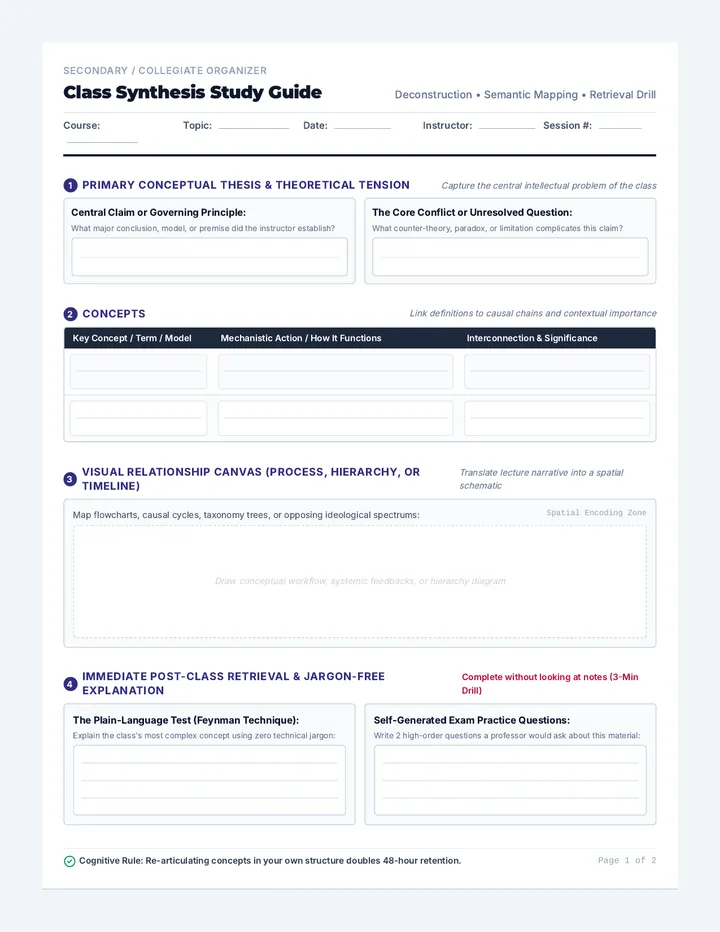
A comprehensive two-page collegiate and secondary study guide format to organize class notes, theoretical mechanisms, seminar debate contributions, discussion notes, and spaced study schedules with lined rulings in student writing sections.
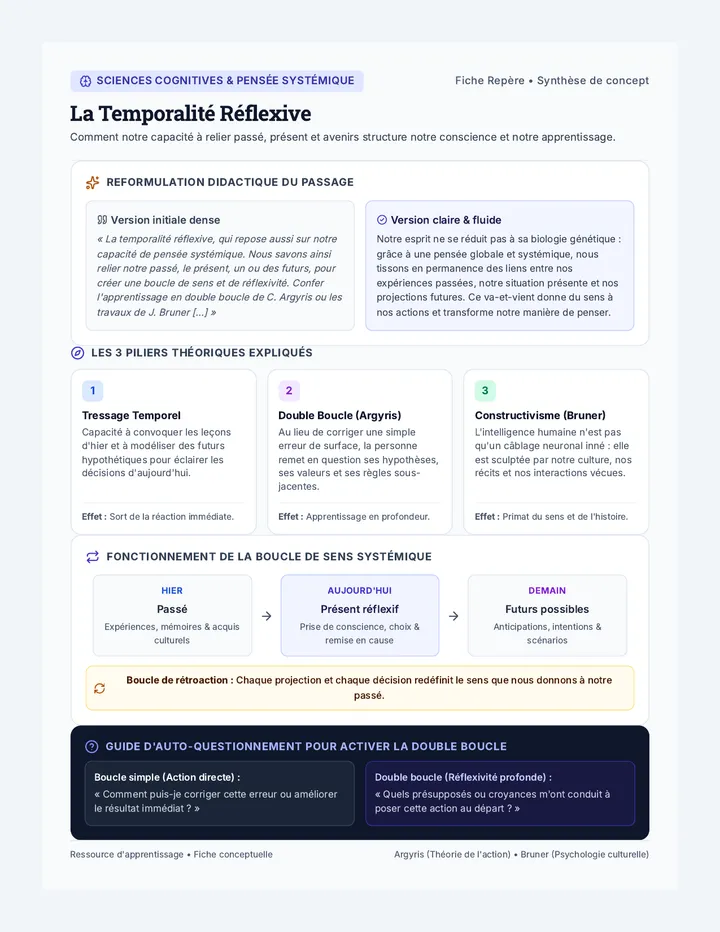
Fiche de synthèse et d'analyse clarifiant le concept de temporalité réflexive, de pensée systémique et les apports théoriques de Chris Argyris et Jerome Bruner.
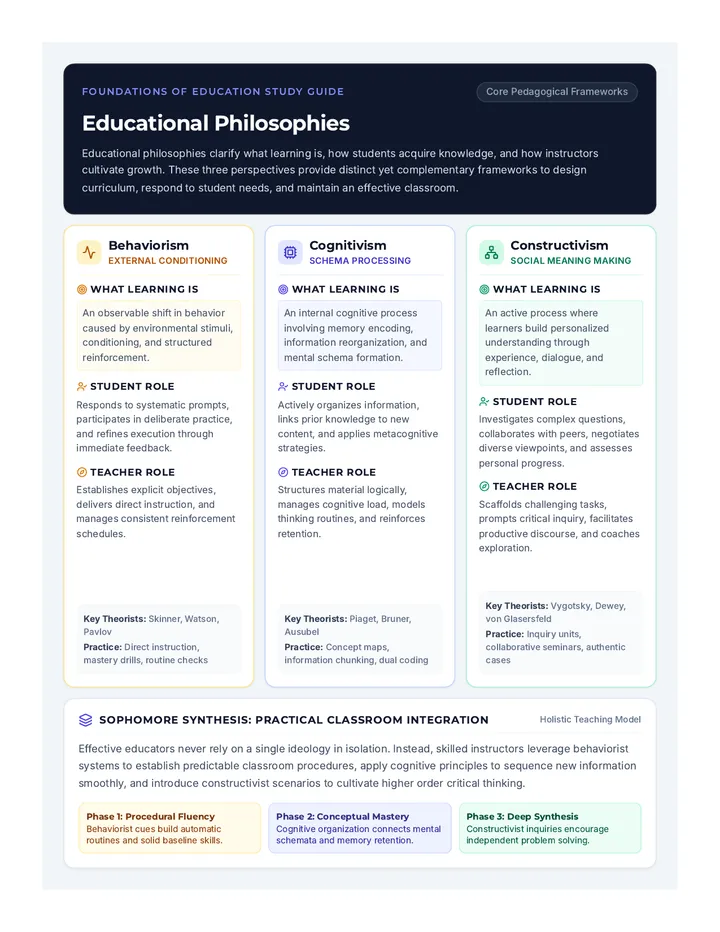
A streamlined collegiate poster synthesizing the three foundational educational philosophies for undergraduate education students. It outlines core learning mechanisms, student and instructor roles, and integrated classroom applications with all punctuation dashes removed.
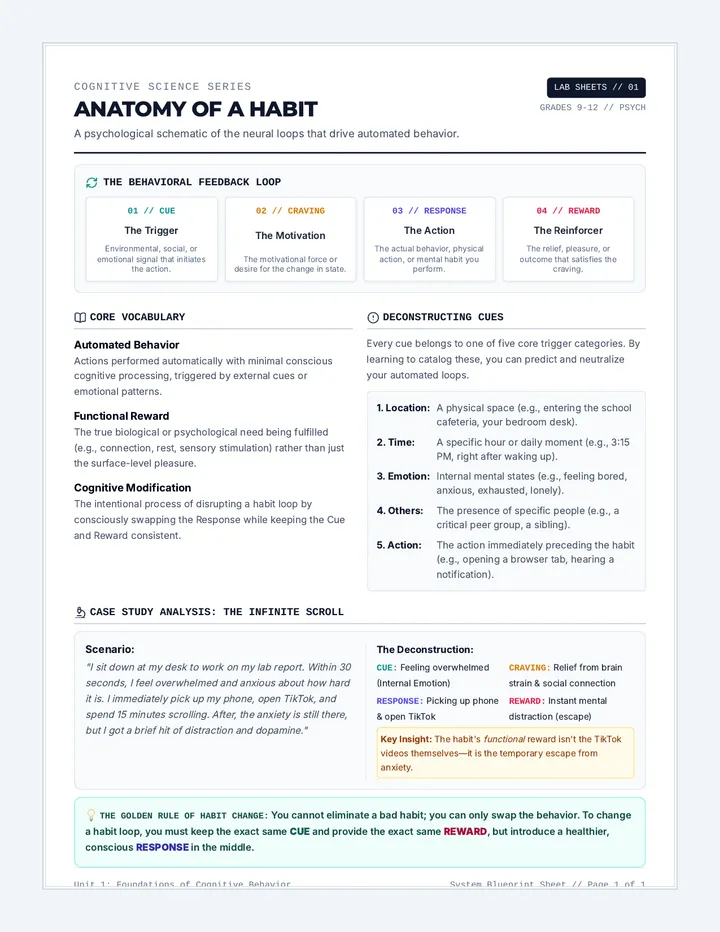
A three-part cognitive psychology series designed for Grades 9-12. Students learn the science of automation, explore how to isolate triggers and cravings, redesign unhelpful routines, and restructure their environments to make habit modification effortless.
A comprehensive multi-day review sequence for psychology units on emotion, motivation, memory, and forgetting, featuring structured study aids, interactive challenges, and practice assessments.
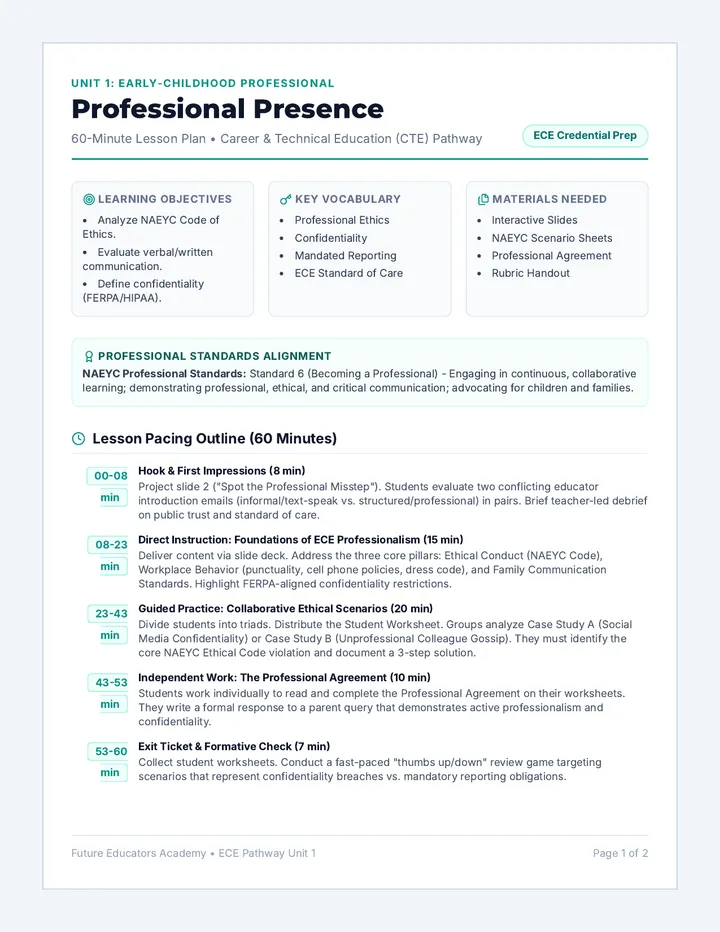
A comprehensive, 4-unit sequence designed for a CTE Career Pathway in Early Childhood Education. Each lesson equips high school/adult students with formal workplace preparation, industry-standard credentials, and professional habits.
A two-day intensive sequence for high school students to master media literacy skills, focusing on bias detection, fact-checking, and the analysis of political narratives in the modern digital age.
A comprehensive 10th-grade history sequence exploring the cognitive and cultural evolution of Paleolithic humans through their tools, art, and rituals. Students analyze the transition from survival technology to symbolic expression and spiritual belief.
A 12-lesson intensive course on reasoning and critical thinking, aligned with the 'Reasoning Skills Success' framework. This sequence covers everything from the distinction between reason and emotion to complex logical fallacies, statistical analysis, and deductive/inductive logic.
A high school child development lesson using a jigsaw strategy to explore Piaget's four stages of cognitive development, featuring expert research and peer-to-peer teaching.
An exploration of TikTok's psychological and marketing influence, focusing on algorithmic power, social proof, and peer-driven trends through modeled annotation practices.
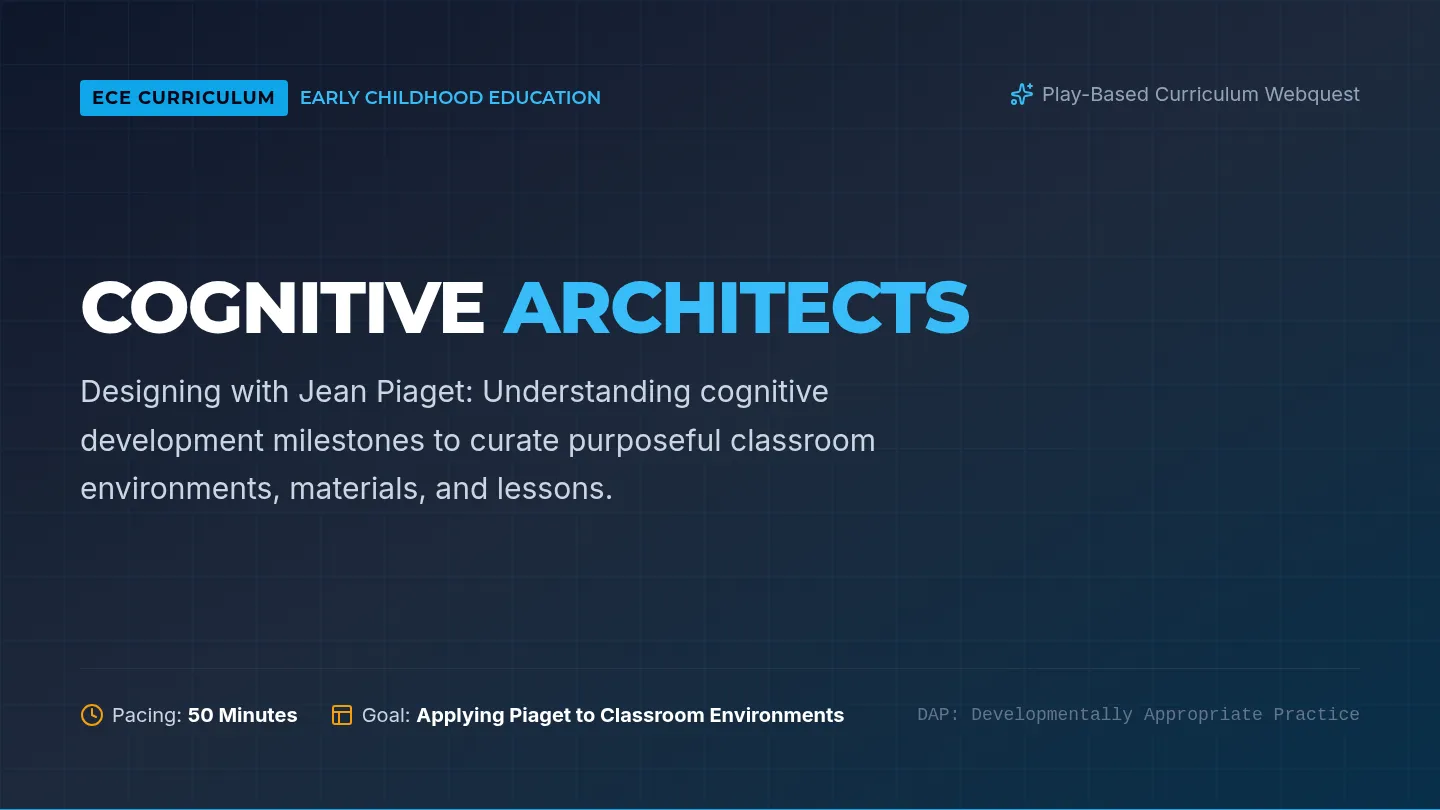
An active, group-based Early Childhood Education (ECE) Curriculum lesson built around Jean Piaget's Theory of Cognitive Development. ECE students work in collaborative squads to navigate a webquest, analyze developmental milestones, watch developmental experiments, and apply theoretical principles directly to designing play-based preschool curricula and choosing developmentally appropriate materials.
A comprehensive look at why we remember and why we forget, covering the stages of memory, types of interference, and strategies for improving recall.
This lesson explores the Gurmat perspective on the five senses, moving from sensory bondage to spiritual mastery through the teachings found in the 'Slave to the Senses' discourse.
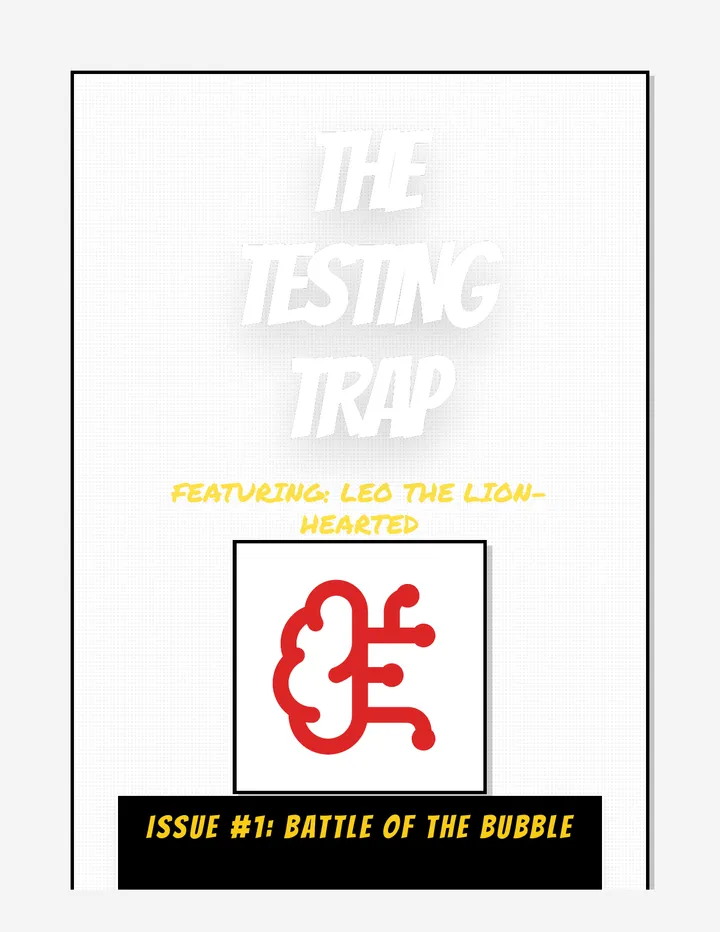
An exploration of the history, mechanics, and fairness of standardized testing through the lens of a neurodivergent student's experience. This lesson uses a retro-style comic to illustrate the disconnect between traditional testing and real-world intelligence.