Testing Trap Comic
THE
TESTING
TRAP
FEATURING: LEO THE LION-HEARTED
ISSUE #1: BATTLE OF THE BUBBLE SHEET
APPROVED BY THE ACADEMY
MID-MORNING AT CENTRAL HIGH...
"You have 45 minutes remaining. Please ensure your pencils are #2."
T h e q u e s t i o n i s...
W h i c h v a r i a b l e...
D e t e r m i n e s t h e...
b p d q
LEO LOOKS AT THE PAGE... BUT THE PAGE LOOKS BACK.
I know the answer. I can SEE the logic in my head. But these lines... they're like barbed wire around the truth.

GASP!
A FLASHBACK TO THE ORIGINS!
1916: STANFORD UNIVERSITY
Stanford
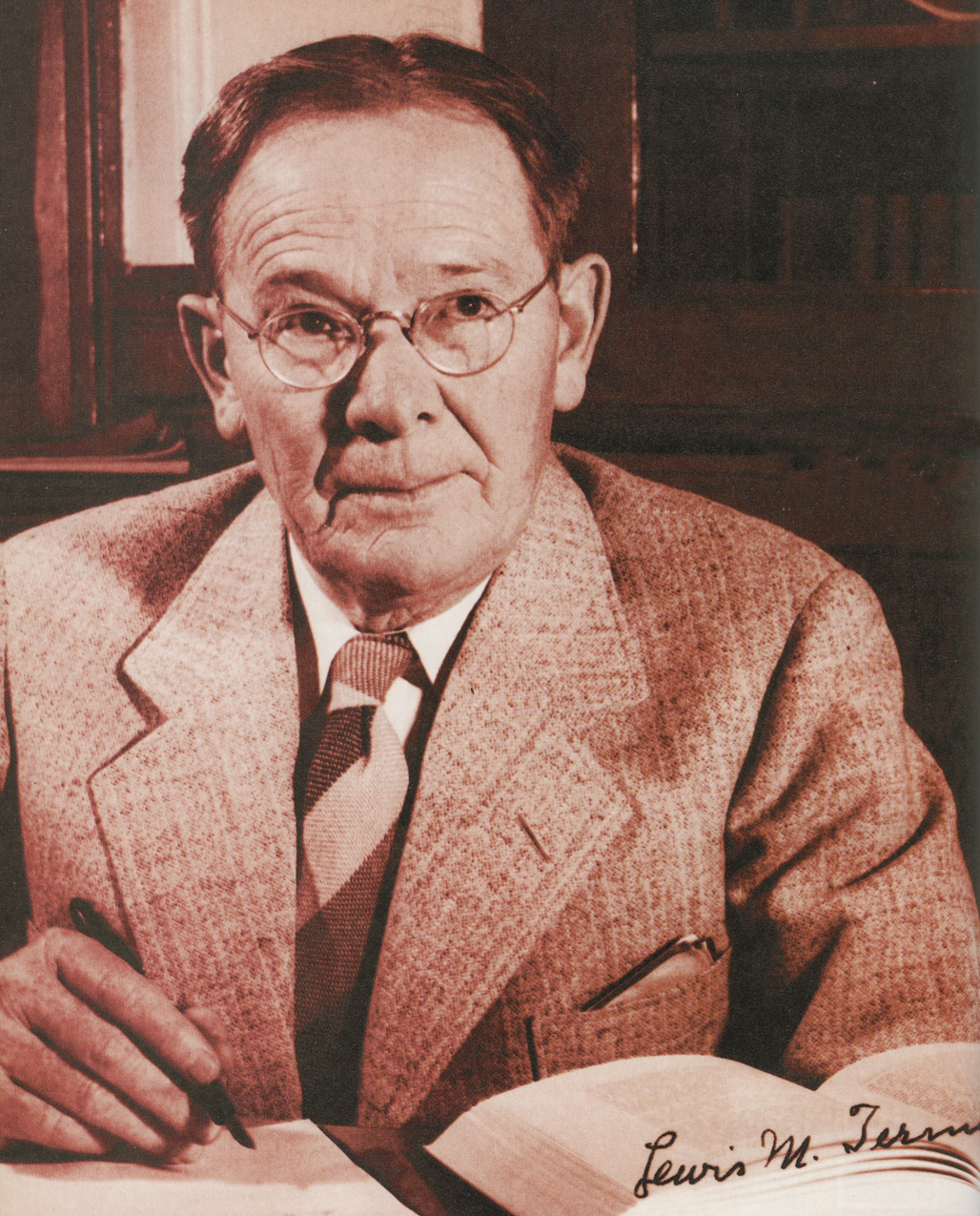
Meet LEWIS TERMAN.
He adapted the Binet-Simon test into the IQ test.
"I want to classify people! Those who are 'bright' and those who... aren't."
History Note: Early IQ tests were often used to justify limiting opportunities for those with different backgrounds, or those considered "inferior."
👨🏼🎓
The IQ tests were designed for a narrow slice of society: Western, white, and literate.
THE TARGET AUDIENCE
Terman believed IQ was fixed. He didn't account for neurodiversity or different learning styles.
THE 1970s & 80s
State testing arrives at the
Middle School level!
The goal: "Accountability."
El resultado: Massive pressure.
THE CRITICS CRY OUT!
"NARROWING CURRICULUM!"
Focusing only on what is tested. Arts, social skills, and creative projects vanish!
"CULTURAL BIAS!"
Questions reflecting only the majority culture, leaving diverse students behind.
"ANXIETY ENGINE!"
Measuring stress levels and test-taking speed as much as actual knowledge.
"ONE SIZE FITS NONE!"
Intelligence is a vast garden, but these tests are a single concrete ruler.
"LEO! SNAP OUT OF IT! TIME IS RUNNING OUT!"
I'm not slow... I'm just playing a rigged game. The rules were written by some biased people in a language my brain doesn't use.
FORM NO. 100-D
ON PAPER:
A
B
C
D
A
B
C
D
A
B
C
D
A
B
C
D
"FAILING STANDARDS"
IN REAL LIFE:
LEO CONNECTS PEOPLE.
LEO PERSUADES WITH EASE.
LEO CAN TELL HOW PEOPLE FEEL AND KNOWS HOW TO RESPOND.
10 YEARS LATER...
PR POWERHOUSE!

"I don't need a test to prove I can communicate. I craft stories. I manage perceptions. I connect brands with the world."
Leo's interpersonal intelligence made him the Public Relations Manager for a global brand. The test never saw him coming.
THE END
Standardized tests are a snapshot, not a sculpture. They capture a moment, but they don't define the soul.
Grades are just marks on a page, not the map of your future. They track progress, but they never measure potential.
Testing Trap Teacher Guide
THE TESTING TRAP
Teacher's Instructional Guide
HISTORY & EQUITY
Lesson Overview
This lesson uses the "Testing Trap Comic" as a central artifact to explore the history, mechanics, and systemic biases of standardized testing. Students will examine the experience of "Leo," a student with dyslexia, to understand how standardized assessments often fail to capture diverse forms of intelligence.
Learning Objectives
- Identify the historical origins of IQ testing and the role of Lewis Terman.
- Analyze the impact of standardized testing on students with neurodivergence (e.g., dyslexia).
- Critically evaluate common criticisms of standardized testing (bias, narrowing curriculum, etc.).
- Recognize and define Howard Gardner's theory of Interpersonal Intelligence.
Key Vocabulary
- Eugenics: The study of how to arrange reproduction within a human population to increase the occurrence of heritable characteristics regarded as desirable.
- Neurodiversity: The idea that people experience and interact with the world around them in many different ways; there is no one "right" way of thinking.
- Interpersonal Intelligence: The ability to understand and interact effectively with others.
Historical Context for Teachers
"The use of IQ tests was initially framed as a tool for efficiency, but it quickly became a tool for exclusion."
1. Lewis Terman and the Stanford-Binet (1916)
Lewis Terman was a professor at Stanford University who adapted the Binet-Simon scale for American audiences. While Binet intended the test to identify students needing extra help, Terman used it to categorize and rank children into "mental classes." Terman was a member of the American Eugenics Society and believed intelligence was a fixed trait that could be used to determine a person's value to society.
2. The 1970s and Minimum Competency Testing (MCT)
By the 1970s, many states began requiring students to pass "minimum competency" tests to graduate middle or high school. Critics argue this led to "teaching to the test," where schools cut subjects like art, music, and physical education to focus on the limited skills measured by the tests.
3. Common Criticisms
Cultural Bias: Tests often assume knowledge of specific cultural norms (e.g., questions about "yachts" or "symphonies") that disadvantage students from lower socioeconomic backgrounds.
Narrow Focus: Standardized tests primarily measure verbal-linguistic and logical-mathematical intelligence, ignoring many other types of human ability.
Discussion Facilitation
Q1: Look at the panel on page 1 where the letters are "dancing." How does this visual represent Leo's internal experience?
Testing Trap Reflection Worksheet
THE TESTING TRAP
STUDENT REFLECTION & ANALYSIS
ISSUE #1 WORKBOOK
NAME:
DATE:
Part 1: Analyzing Leo's Experience
1. In the first few panels, how does the comic visual represent Leo's dyslexia? Why do you think the artist chose that visual?
2. Look at page 4, "On Paper vs. In Real Life." If a teacher only looked at Leo's test scores, what would they miss about him?
Part 2: The Hall of History
3. Lewis Terman adapted the IQ Test. What was his primary goal for this test?
4. Why did critics say state tests were "narrowing the curriculum"?
5. What does "cultural bias" mean in testing? Give an example from your own thoughts or the comic.
Part 3: Beyond the Bubble Sheet
Leo had high Interpersonal Intelligence. This means he can tell how people feel and knows how to respond.
Think about your own "Hidden Intelligence." What is one skill you have that a standardized test CANNOT measure? How will this skill help you in the future?
Final Thought Challenge:
If you could redesign the "Testing Trap" to be more fair for students like Leo, what is one major change you would make to how we assess students?
OFFICIAL ACADEMY WORKBOOK
THE TESTING TRAP • ISSUE #1: BATTLE OF THE BUBBLE SHEET