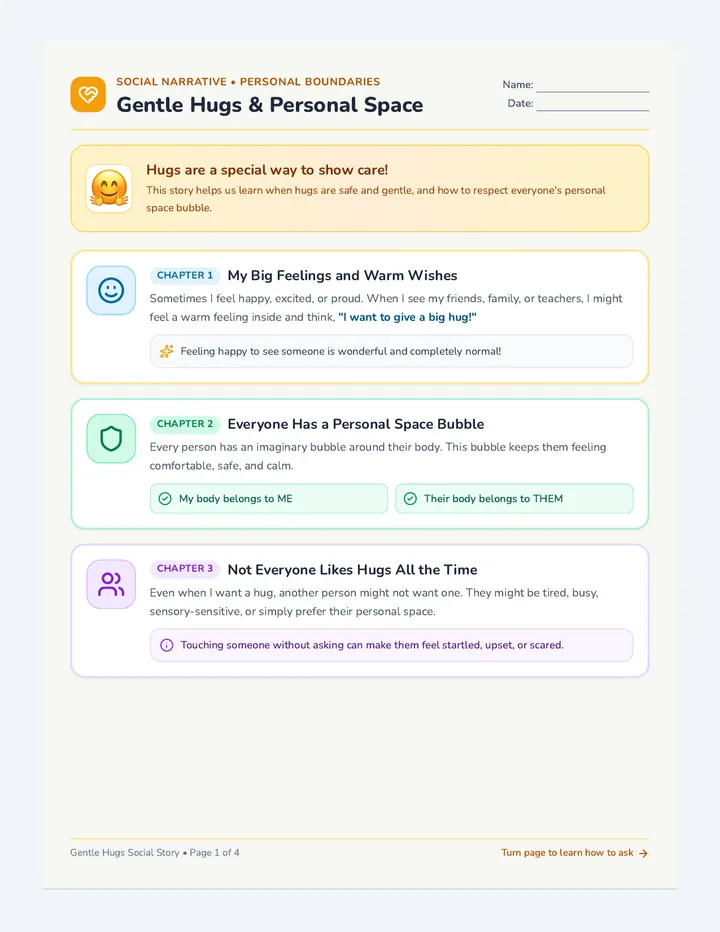
Gaze modulation, nonverbal cues, and physical boundary awareness for social interactions. Strengthens the ability to recognize and respect personal space across various environments.
A highly visual, 2-page student worksheet designed to accompany the Circle Slides lesson. Features a step-ordering activity, speech bubble templates for student-written dialogues, a board-game style social path activity, and a self-reflection scorecard.
An expanded, highly visual slide deck for teaching students how to join a peer conversation. Features step-by-step guidance, three school-based practice scenarios, a Game Show challenge, and classroom discussion prompts with text size optimized for visibility.
A student-facing 1-page exit ticket with multiple-choice questions assessing expected vs. unexpected school greetings. Designed with a clean Space Cadet theme, clear visual instructions, and identical choice styling.
A 2-page personal space tracker and data log. Page 1 is a student-facing 'Space Cadet Daily Log' self-monitoring sheet. Page 2 is a teacher-facing 'IEP Progress Monitoring Data Sheet' with a detailed trials table and prompt level keys.
A beautifully designed, high-contrast visual communication board styled as a Spaceship Control Dashboard. Includes large, easily touchable panels with Lucide icons for greeting friends, teachers, attracting attention, and requesting personal space.
An instructional guide and printable material for 'The Greeting Circle' practice game. Page 1 contains clear setup rules, gameplay instructions, and scoring metrics. Page 2 includes high-contrast printable 'Space Launch Pad' floor markers for teacher cut-out and physical floor placement.
A comprehensive 2-page instructional script and facilitation guide for teachers. It details how to teach personal space boundaries, lead the Greeting Circle game, facilitate AAC use, and address common student misconceptions.
An engaging 6-slide presentation for Grades 5-8 teaching personal space boundaries, the arm's-length rule, respectful attention-seeking, and communication methods. Designed with a high-contrast Space Mission Control theme and large, readable text.
A 1-page printable desk strip and individual visual reminder cards designed to be taped to a student's desk or kept on a keyring to reinforce alternative greetings.
A 2-page individual counseling worksheet set designed for 2nd graders to map their own personal space bubbles, identify bubble-friendly situations, and select replacement greetings. Now updated with explicit questions on bodily privacy and personal touch rules.
A professional 3-page clinical and instructional guide for educators, providing step-by-step guidance, directive redirection scripts, parent communication templates, and structured behavioral tracking logs. Now updated with explicit instruction on bodily privacy and rules of personal touch.
A 2-page cut-out printable featuring 6 structured social scenario cards (Interrupting Ivan, Sharing Space Sarah, Kitchen Ken, Register Ronnie, Line-Waiting Leo, and Greeting Grace) and 4 printable "Social Champion" recognition reward labels, optimized for small group discussion.
Teaches students how to join an ongoing peer conversation or group activity at school (e.g., at lunch or recess) using clear, structured visual steps. Includes an interactive slide deck and a visual reflection worksheet.
A Life Skills lesson for Grades 5-8 teaching personal space boundaries during school greetings. Students learn to maintain an arm's length distance, avoid unexpected touching, use respectful attention-seeking strategies, and practice greetings using AAC and visual supports.
A directive behavioral intervention lesson designed for 2nd-grade students to learn explicit physical boundary limits, replace inappropriate touching of peers and adults, and practice structured attention-seeking replacement actions. Includes a professional guidance packet with de-escalation scripts, student workbooks, and desk visual reminders.
A 90-minute interactive lesson on social manners and respect designed specifically for adults with intellectual and developmental disabilities (IDD), featuring slides, a complete activity guide, scenario cards, and a facilitation plan.
Students apply unit learning to a chosen career or post-secondary education path, identifying workplace accommodations and constructing a self-advocacy plan.
Under the Pre-ETS category of Counseling on Post-Secondary Opportunities, this lesson equips transitioning high school students with knowledge of workplace accommodations, visible/invisible disabilities, and self-advocacy. Students explore equity rights to prepare for post-secondary career and vocational opportunities.
This lesson introduces students to real-world career fields (Healthcare, Trades, Education, Retail, Engineering, Restaurant, Animal Care) while exploring how each industry organizes authority and resolves crises. Students research job roles and solve situational scenarios using industry-specific chains of command.
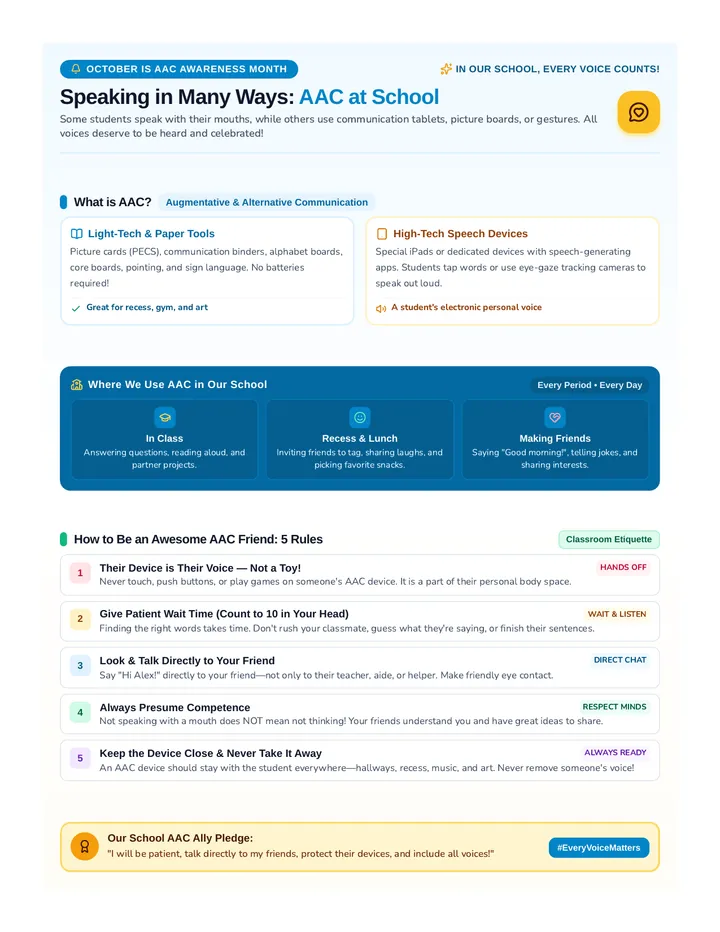
A visual, structured social story and visual support package designed for a kindergarten student with autism and communication impairments. Focuses on peer interaction, stopping teasing and bullying behaviors, utilizing AAC devices, and following classroom rules.
A highly structured social-skills unit for 7th-grade students with ASD, focusing on non-verbal signals, group work compromise, and navigating peer conflicts.
A 1-on-1 life skills lesson for middle schoolers with intellectual disabilities. Focuses on using simple, concrete language to teach appropriate ways to get attention, ask for help, or connect with peers using "Green Choice" (helpful) and "Red Choice" (unhelpful) visuals.
A social communication lesson designed for 5th-grade students with autism, focusing on understanding how our spoken words affect people around us in public, unfamiliar settings.
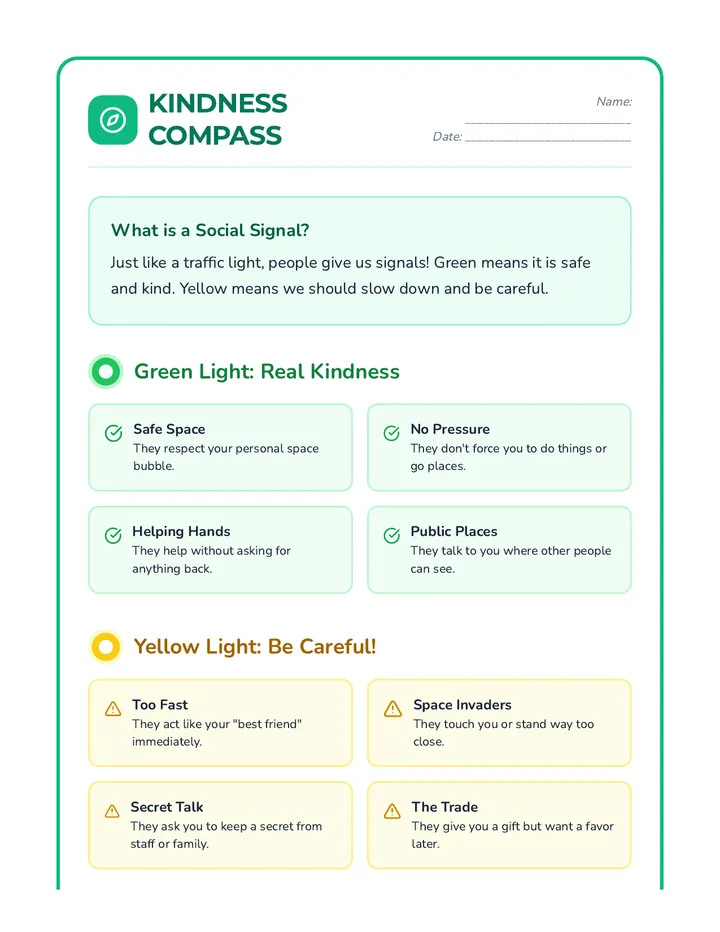
A structured social boundaries lesson designed for an 8th-grade student with an intellectual disability. This lesson uses visual supports, color-coded zones, and a step-by-step social narrative to teach personal space, proximity, and physical consent.
A comprehensive 15-lesson social skills curriculum designed specifically for middle and high school students with intellectual disabilities. It uses highly structured, visual-heavy layouts to teach conversational skills, peer dynamics, self-advocacy, and community safety through concrete social scenarios.
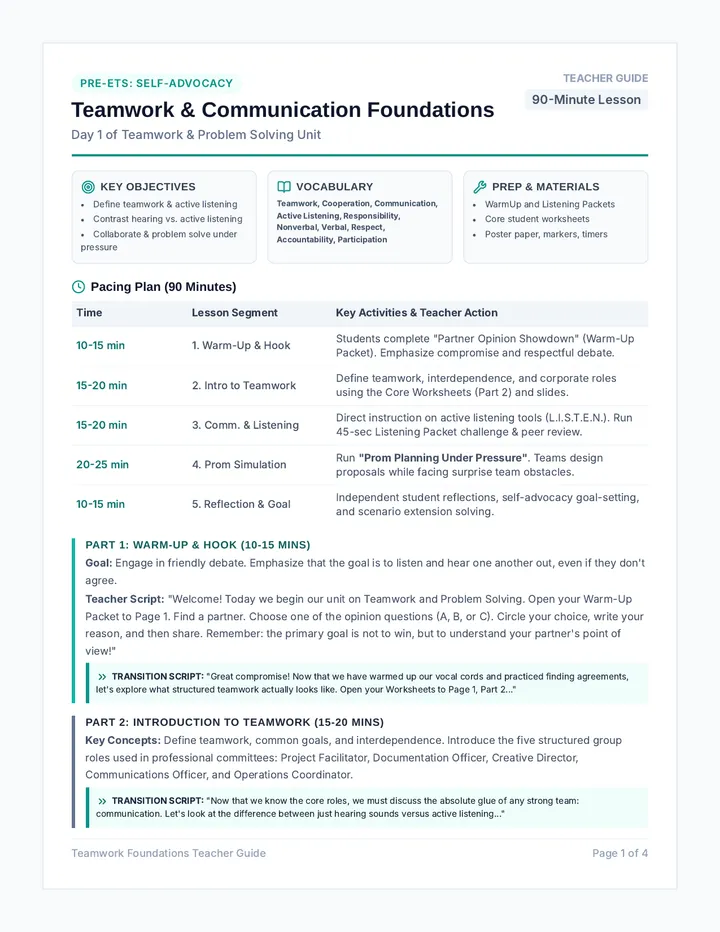
A unit introducing high school students to essential teamwork, communication, and problem-solving skills, focusing on workplace readiness, self-advocacy, and Pre-ETS skills.
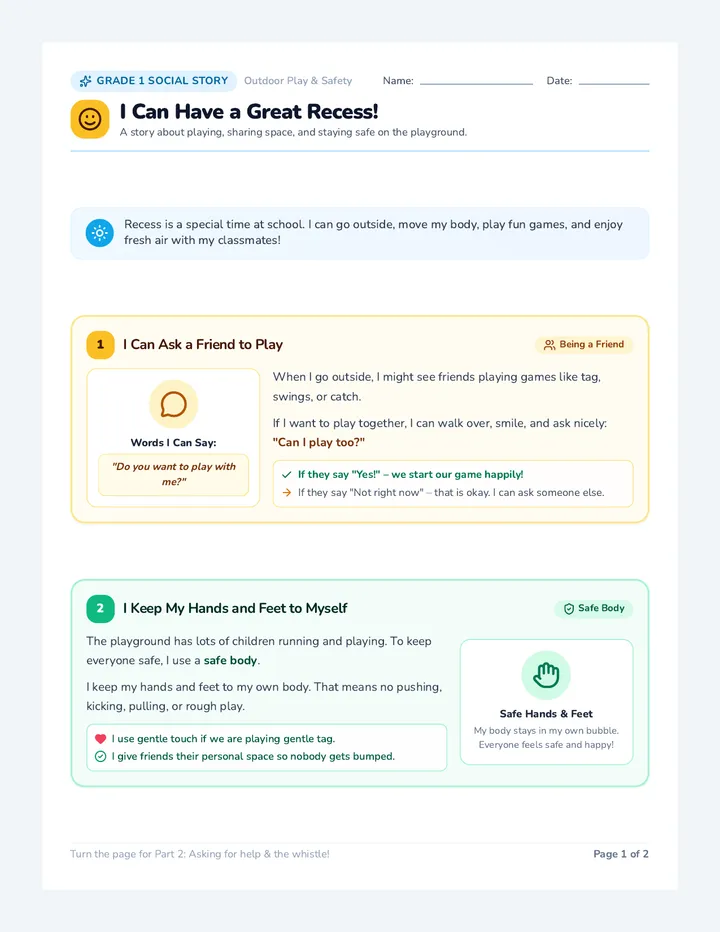
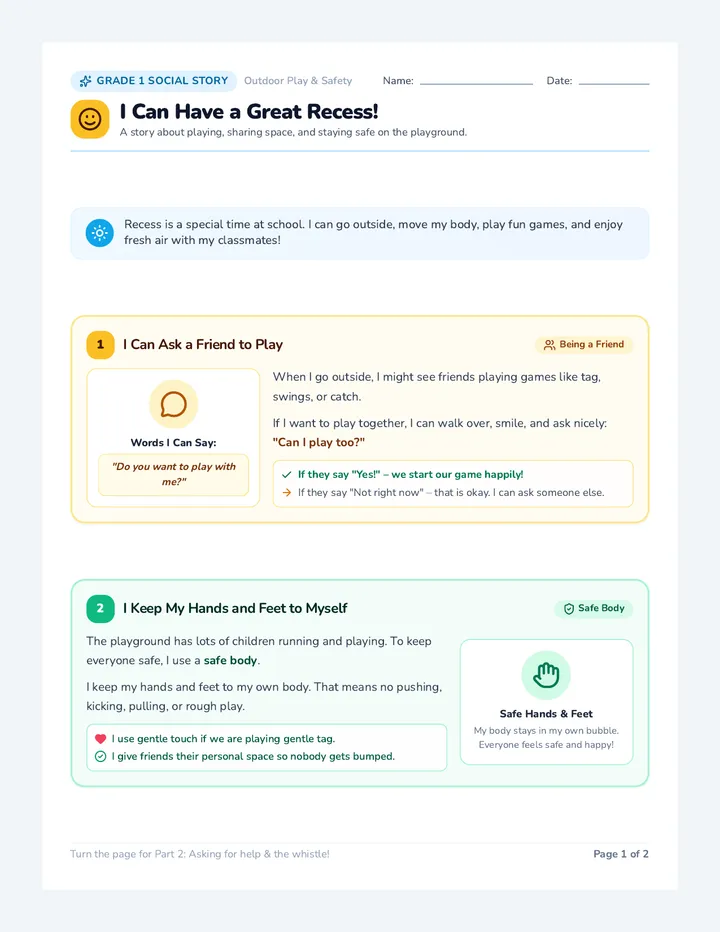
A social-emotional and social skills sequence for 1st graders, specifically tailored for autistic learners. Uses a space-themed metaphor of 'Space Scouts' to teach bodily autonomy, personal space, flexible thinking, and alternative playtime choices.
A comprehensive social skills unit focusing on personal space and boundaries across various school settings and routines for the week of May 25th. This unit differentiates for four distinct classroom groups (Kean, Ramapo, WP, and WashU) with tailored social stories and activities.
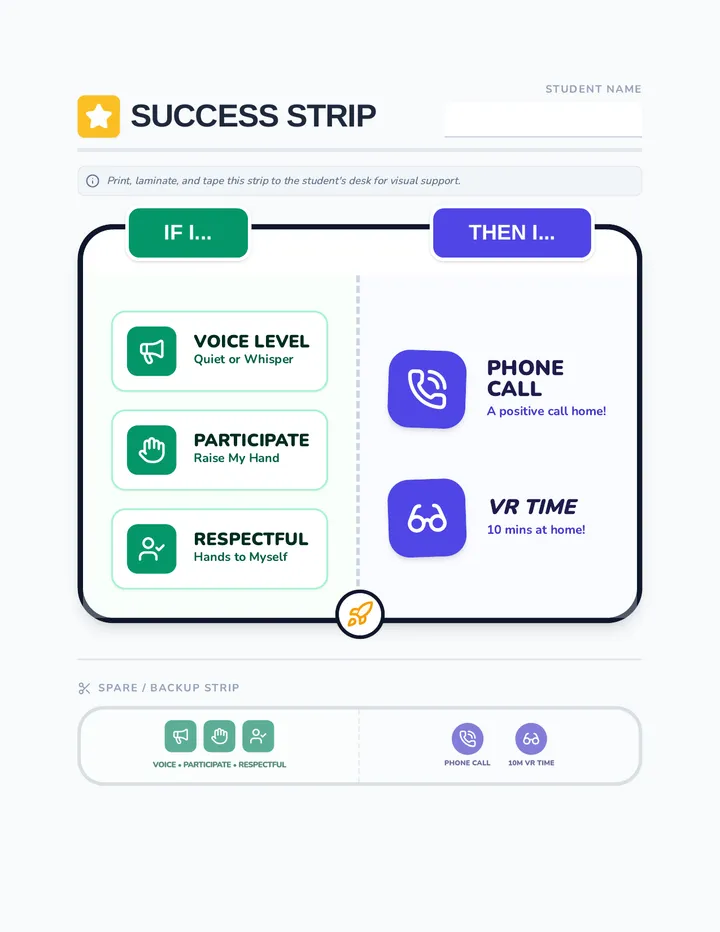
A behavior support system designed like an architectural blueprint, focusing on building self-regulation, reducing interruptions, and establishing clear structural boundaries for student success.
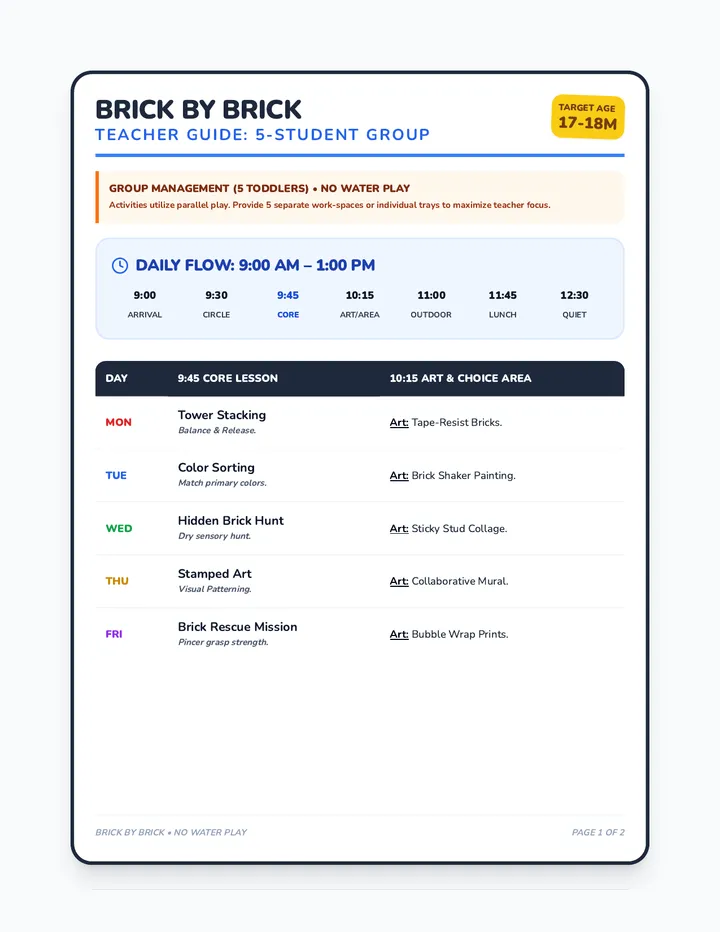
A collection of comprehensive week-long curricula for toddlers aged 17-18 months. Each themed week focuses on developmental play, sensory exploration, and fine motor skills for a group of 5 students with zero water play.
A collection of adaptive social skills and behavior lessons for students with autism, focusing on classroom engagement, emotional regulation, and social boundaries.
A series of five 15-minute assessment sessions designed for 3rd-5th grade special education students to collect data on key SEL competencies including Self-Awareness, Self-Management, Emotions, Relationship Skills, and Decision-Making.
A 15-lesson SEL sequence for Grade 9 students with ASD and LD, focusing on social nuance, self-regulation, and interpersonal skills within a math classroom context. This program uses a 'Lab Notebook' theme to gamify social learning and advocacy.
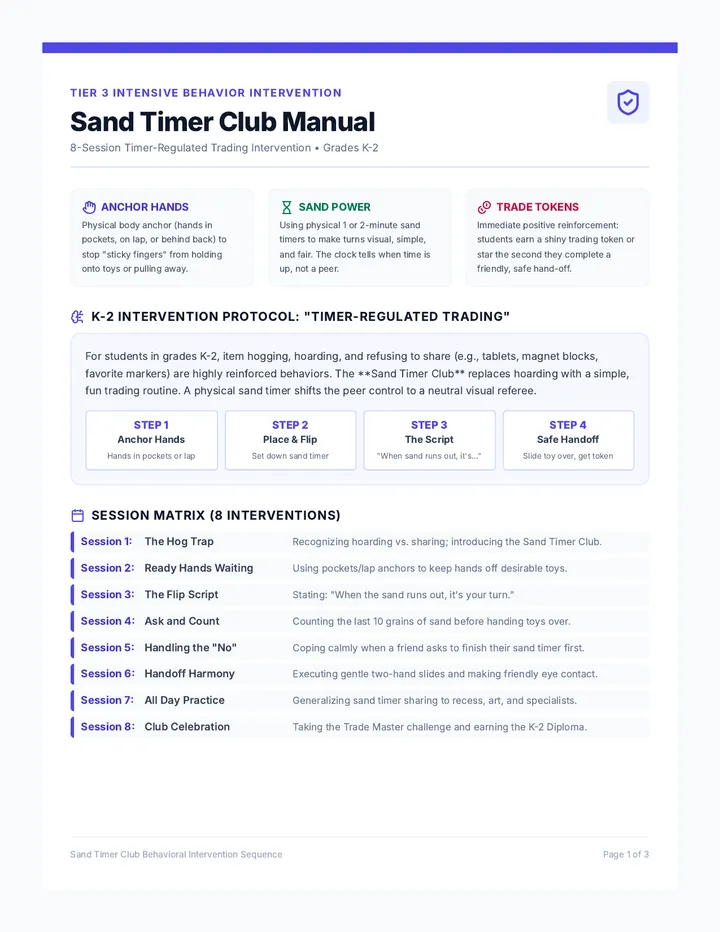
A 4-week structured social skills intervention designed for kindergarten students with ASD, focusing on greeting, turn-taking, and sharing through 20-minute sessions.
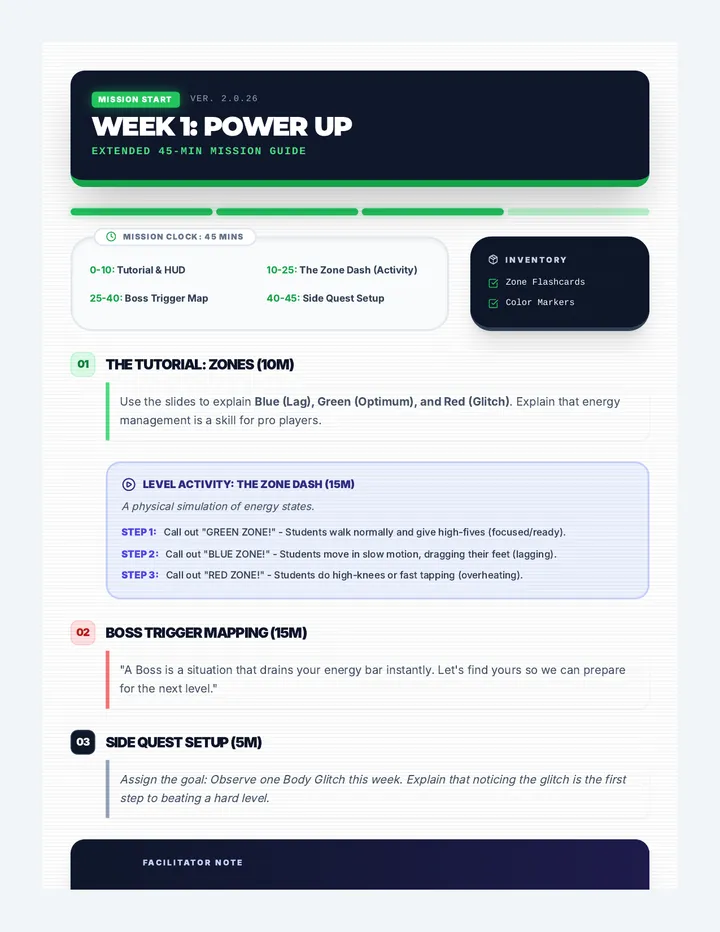
A 6-week social-emotional learning curriculum designed for 4th-grade students with ADHD, focusing on self-regulation, flexible thinking, and respectful communication through a high-engagement 'Level Up' video game theme.
A sequence focused on high school social-emotional learning, specifically teaching students how to distinguish between problem sizes and use tactical ignoring to manage small social distractions.