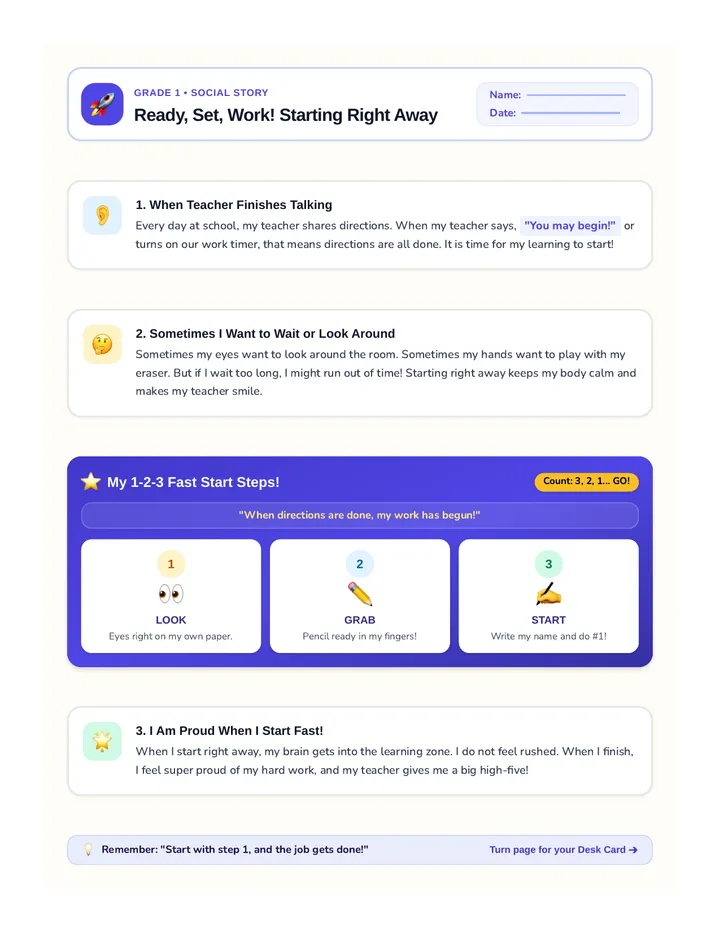
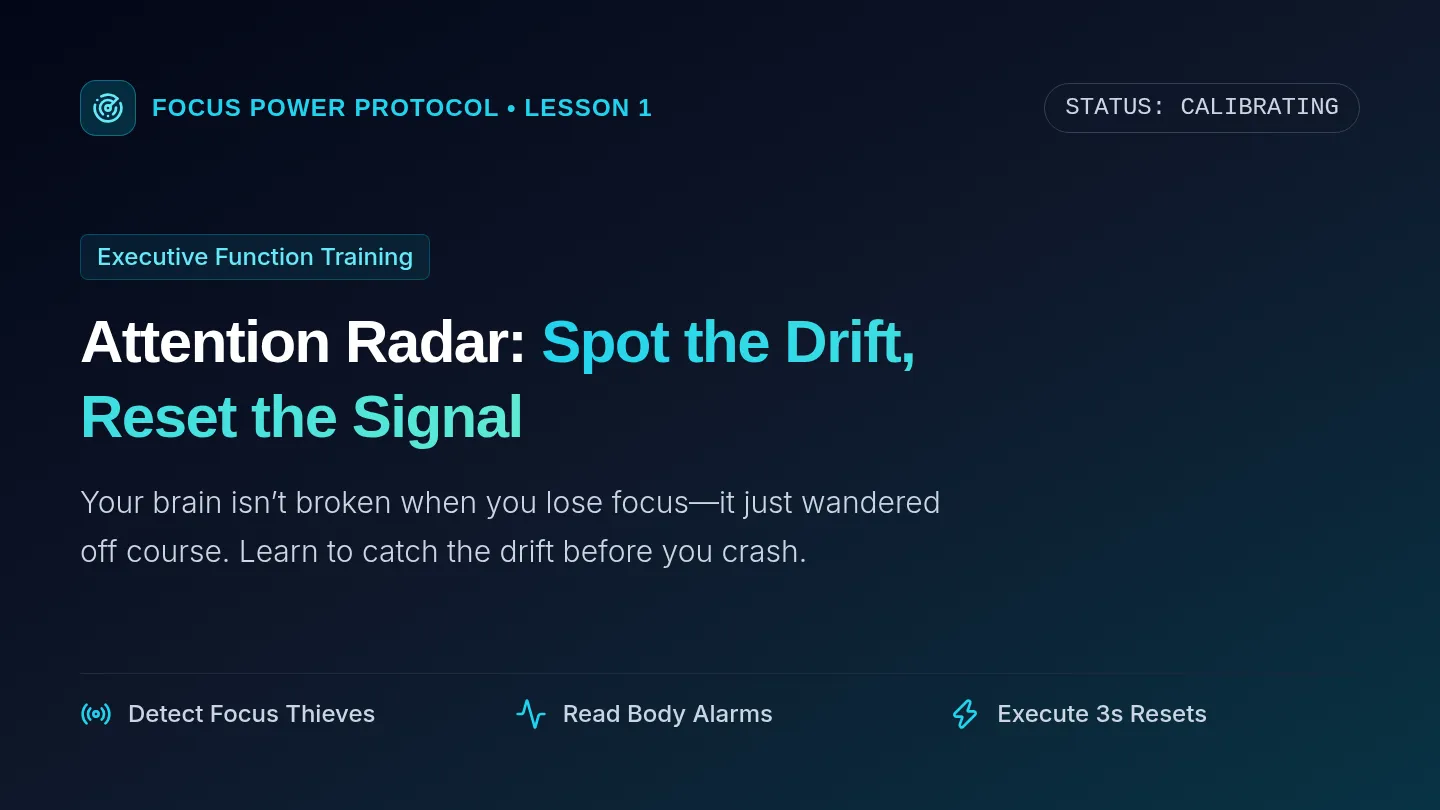
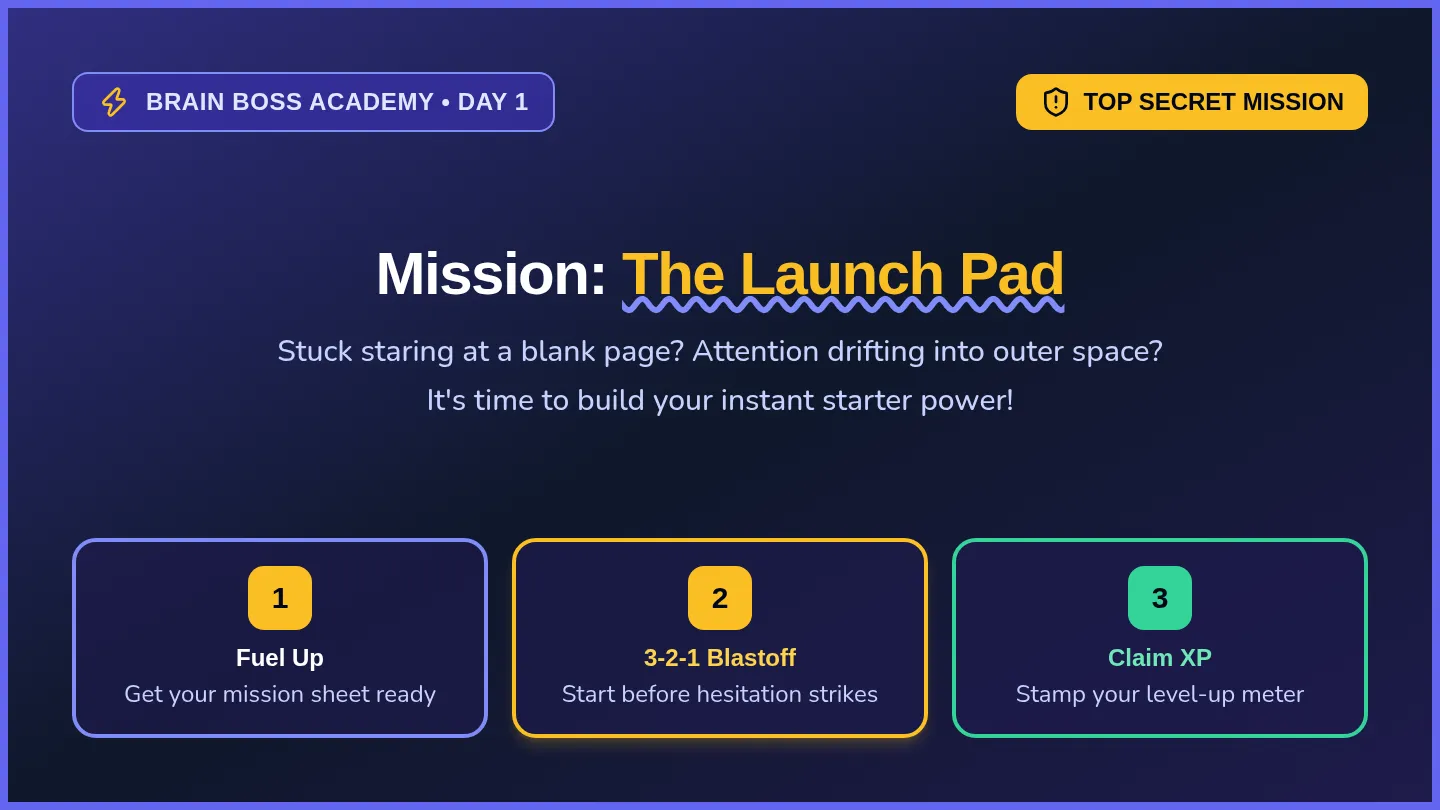
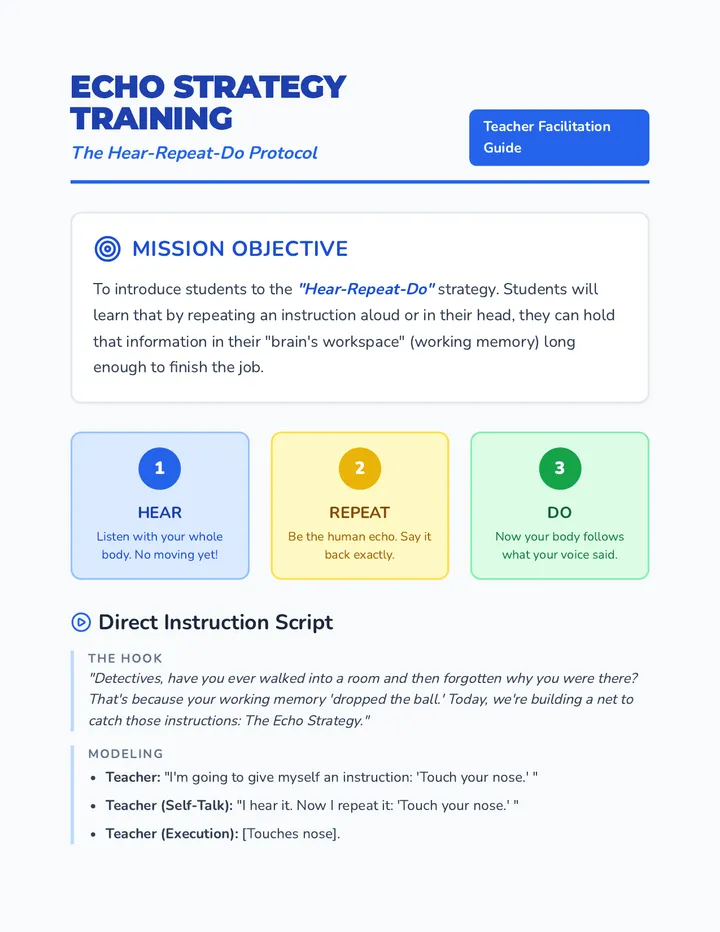
Internalized verbal prompting and cognitive rehearsal strategies to overcome task initiation barriers. Builds executive functioning skills for students struggling to begin independent work.
This sequence teaches 3rd-grade students how to use text-to-speech (TTS) as a strategic tool for narrative comprehension. Students learn to use audio for identifying story elements, summarizing via the 'Listen-Stop-Think' routine, citing evidence by re-listening, and visualizing descriptive text.
This sequence shifts the focus from assistive technology to the cognitive strategies required for auditory learning. Students engage in inquiry-based activities to distinguish between passive hearing and active listening, applying specific comprehension strategies while using text-to-speech (TTS) to access grade-level texts.
A 5th-grade sequence focused on using Text-to-Speech (TTS) technology as a cognitive strategy for reading comprehension. Students learn bi-modal reading, text chunking, evidence collection, and active annotation to transition from passive listening to active engagement with digital text.
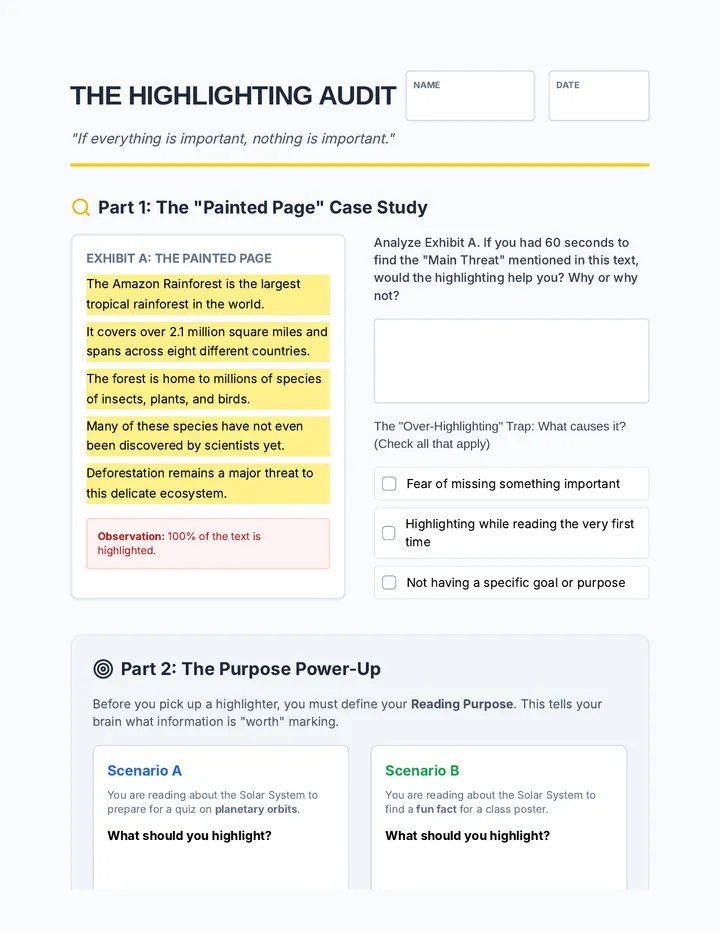
A 5-lesson sequence for 9th-grade students to master a systematic, three-color highlighting strategy, moving from identifying 'over-highlighting' pitfalls to independent application on non-fiction texts.
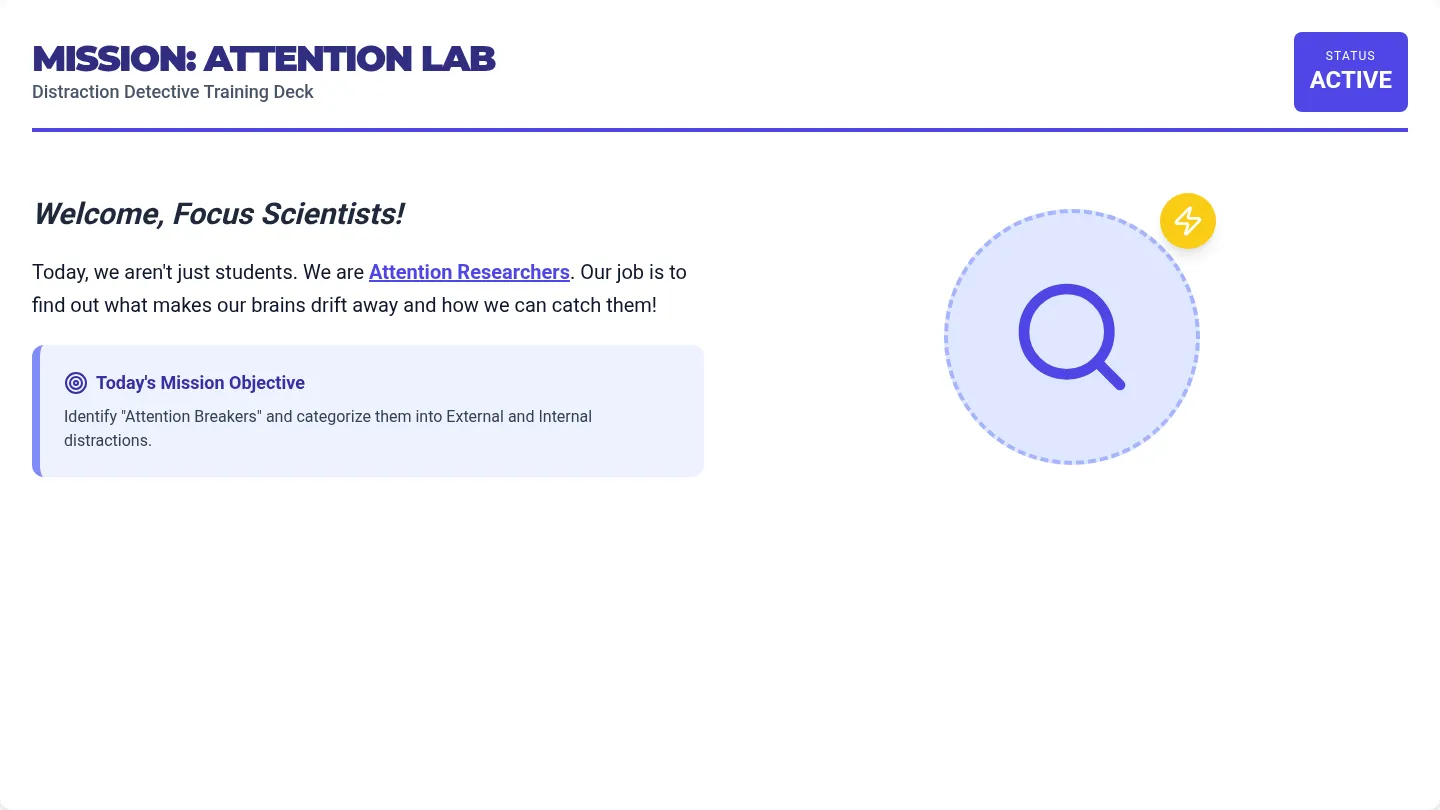
A 5-lesson sequence for 9th Grade Special Education students focused on the neurobiology of attention, interval-based work techniques, environmental management, and energy regulation to improve task execution and self-regulation.
A graduate-level sequence focused on the mechanics of administrative compliance in Special Education. Students will design and implement a comprehensive IEP workflow system using project management principles, automation, and deep work strategies to prevent burnout and ensure 100% legal compliance.
A comprehensive sequence for 11th-grade students to master Text-to-Speech (TTS) technology for high-level academic research. Students progress from software evaluation and auditory optimization to advanced annotation strategies and troubleshooting complex document formats.
A comprehensive sequence for undergraduate special education students focused on tailoring text engagement and annotation strategies for learners with SLD, ADHD, and visual processing needs. Students analyze case studies, evaluate assistive technologies, and design bespoke support plans.
A Kindergarten sequence focused on task persistence and emotional regulation for Special Education students. Students learn to identify frustration, use 'yet', ask for help strategically, break tasks into steps, and apply these skills in an obstacle course.
A 10th-grade special education sequence focused on the strategic use of virtual manipulatives to bridge the gap between concrete modeling and abstract algebraic reasoning. Students progress from tool exploration to independent selection and justification.
A Kindergarten sequence focused on reducing cognitive load for multi-step directions using visual supports. Students move from teacher-led cues to self-directed visual sequencing through movement-based activities and games.
A comprehensive unit designed for 2nd-grade special education students to develop executive functioning skills, focusing on task persistence, stamina, and self-regulation through concrete strategies like chunking and positive self-talk.
Scoring rubric and answer key for the final assessment, focusing on both comprehension and the correct application of text-to-speech reading strategies.
A final assessment for the audio comprehension sequence, testing story understanding and evaluating strategic tool usage (pausing, re-listening, visualization).
Slides for Lesson 5, reviewing all text-to-speech comprehension strategies before the final assessment.
Teacher guide for Lesson 4, facilitating visualization exercises and guiding students to notice descriptive language through audio.
Student reflection and final assessment sheet for Lesson 5, allowing students to plan strategies and evaluate their comprehension performance.
Final assessment worksheet for Lesson 5, challenging students to map two contrasting auditory viewpoints and synthesize them into a coherent written summary.
A student worksheet for visualizing descriptive audio, including a drawing space for the 'Mystery Monster' and reflection questions.
Teacher guide for Lesson 5, outlining the final synthesis task and providing a step-by-step facilitation plan for the culminating lesson.
Slides for Lesson 4, introducing the 'Mind Movie' concept and focusing on using TTS to free up cognitive energy for visualization.
Detailed teacher guide for Lesson 5, focusing on strategy selection, metacognitive reflection, and identifying when to use TTS support versus silent reading.
Slide deck for Lesson 5: Synthesizing Auditory Information, introducing the final challenge of summarizing contrasting viewpoints using all previous auditory strategies.
Teacher guide for Lesson 3, including how to facilitate the witness game and specific coaching prompts for re-listening strategies.
Students apply all strategies to read a grade-level fiction passage using TTS and answer standard comprehension questions. They document when they paused and what sections they re-played.
Students focus on mental imagery while listening to descriptive passages read by the TTS tool. They compare how listening helps them picture the action compared to struggling with decoding alone.
Students learn to use TTS to scan back and re-listen to specific sections to answer comprehension questions. They practice locating evidence in the text by listening to a paragraph multiple times.
This lesson teaches students the strategy of pausing TTS at the end of every page or section to summarize what happened. Students practice the 'Listen-Stop-Think' routine to ensure they aren't just letting the audio wash over them.
Students use TTS to listen to a story, focusing on identifying characters and setting. They practice pausing the audio to record these elements on a graphic organizer.
Students listen to two contrasting viewpoints on a topic using TTS and synthesize the information into a coherent summary. This tests their ability to maintain focus and organize auditory information over a longer duration.
Students encounter challenging vocabulary words within a text. They use TTS to hear proper pronunciation and use context clues from the audio flow to define words before checking definitions.
This lesson introduces graphic organizers designed for auditory learners. Students practice listening to a TTS-read article and simultaneously mapping out key ideas and supporting details.
Students learn the 'Stop and Think' method, using the pause button to break dense text into manageable chunks. They practice paraphrasing orally or in writing after every segment played by the TTS tool.
Students compare retention when passively listening to TTS versus active engagement. They identify distractions and brainstorm environments and behaviors that support deep listening.
Students assess their own comprehension after using TTS strategies and reflect on which tools and settings work best for their specific learning needs.
Introduces the skill of taking digital notes or highlighting key information while the text-to-speech audio continues to play.