Evaluates student growth through data-driven analysis of IEP goals and behavioral benchmarks. Guides educators in adjusting instructional strategies based on documented performance trends and student self-reflection.
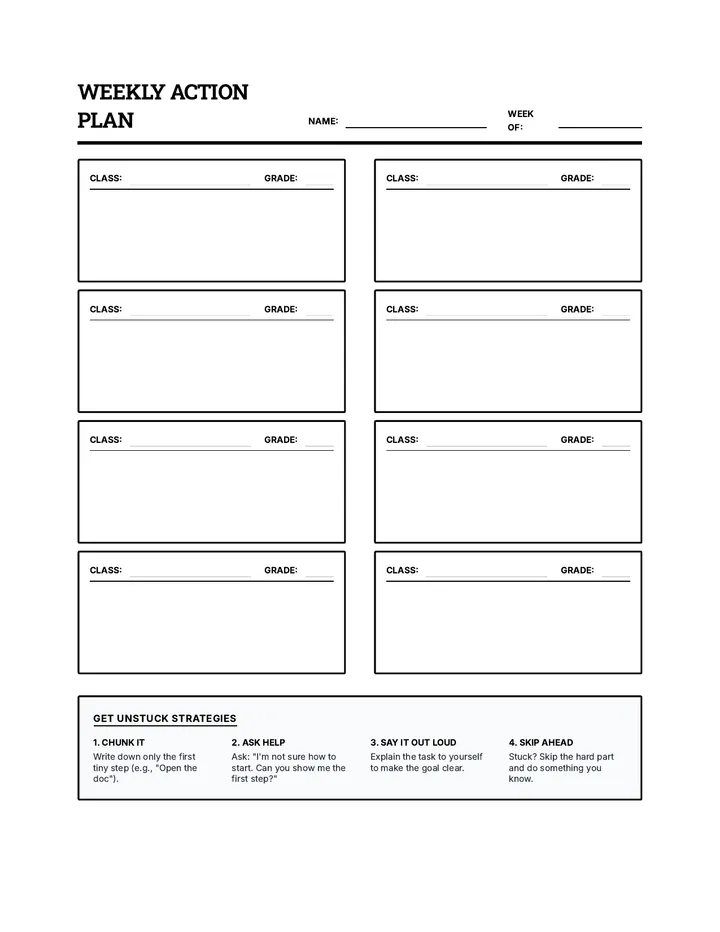
A highly efficient, single-page Weekly Action Plan designed for students with executive functioning needs. It features 8 streamlined class boxes with space for subjects and grades, plus a concise footer with 'Get Unstuck' strategies, all formatted to fit within a single printable page.
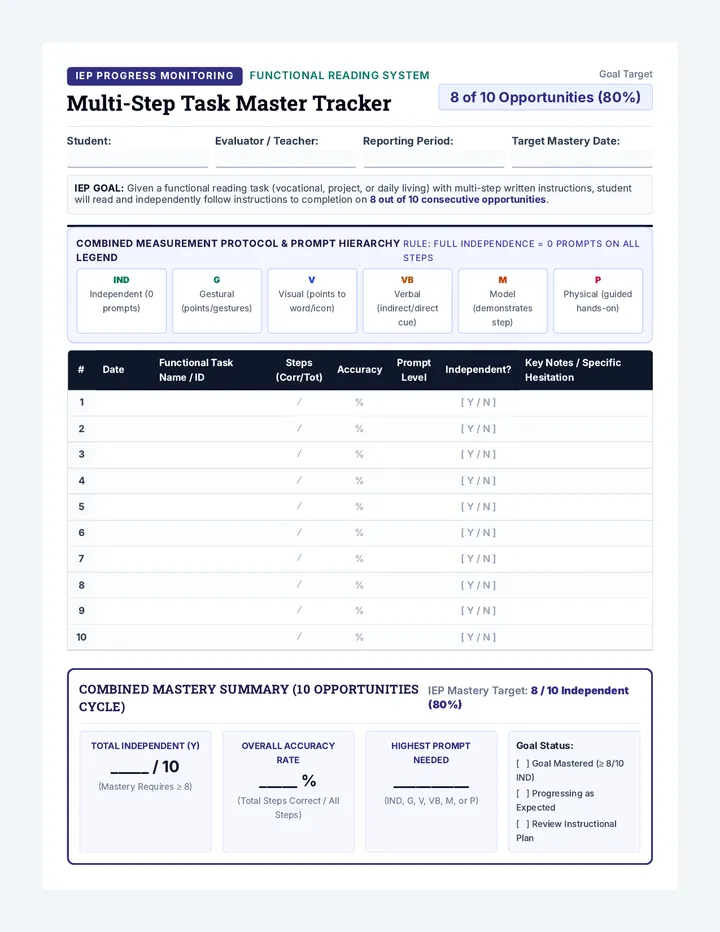
A multi-day progress-monitoring system designed to assess and track IEP goals for following multi-step functional reading instructions. It includes 10-trial combined-measure data sheets, realistic vocational and project task cards, and assessment administration protocols.
This sequence teaches undergraduate students how to use systematic data collection to identify behavioral escalation patterns. Students transition from subjective descriptions to objective operational definitions, analyze antecedents, track behavior metrics, and use scatterplots to predict future incidents, culminating in the creation of data-driven Behavior Intervention Plans.
This sequence explores the implementation and monitoring of IEPs for 11th-grade students, focusing on data collection, progress reporting, secondary transition planning (ITP), and the ethical balance between legal compliance and educational quality. Students transition from being passive participants to active designers and evaluators of the IEP process.
A comprehensive graduate-level sequence on the visual analysis of behavioral data, covering graph construction, interpretive dimensions (level, trend, variability), statistical aids, and experimental design logic. Students learn to make evidence-based clinical decisions through rigorous data interpretation.
A graduate-level sequence focused on the instructional methodology for teaching self-advocacy skills, specifically requesting accommodations. Graduate students will learn to task-analyze requests, design tiered scripts, facilitate behavioral rehearsals, collect data on advocacy behaviors, and plan for generalization.
This advanced sequence explores the integration of measurement and analysis into behavioral intervention decision-making. Students learn to establish stable baselines, monitor treatment fidelity, and use quantitative data to determine when to modify, fade, or maintain supports.
A comprehensive lesson to prepare students for fire drills, focusing on evacuation steps, identifying emergency signals, and maintaining calm. Includes visual slides, role-play activities, and assessment tools.
A comprehensive toolkit for students to track and improve their executive functioning skills through daily logging and descriptive rubrics.
A comprehensive mock interview training program designed for learners seeking retail positions, focusing on visual supports, simple scripting, and situational problem-solving.
A set of checklists for instructors to ensure fidelity to housing education goals and provide appropriate supports for neurodivergent participants.