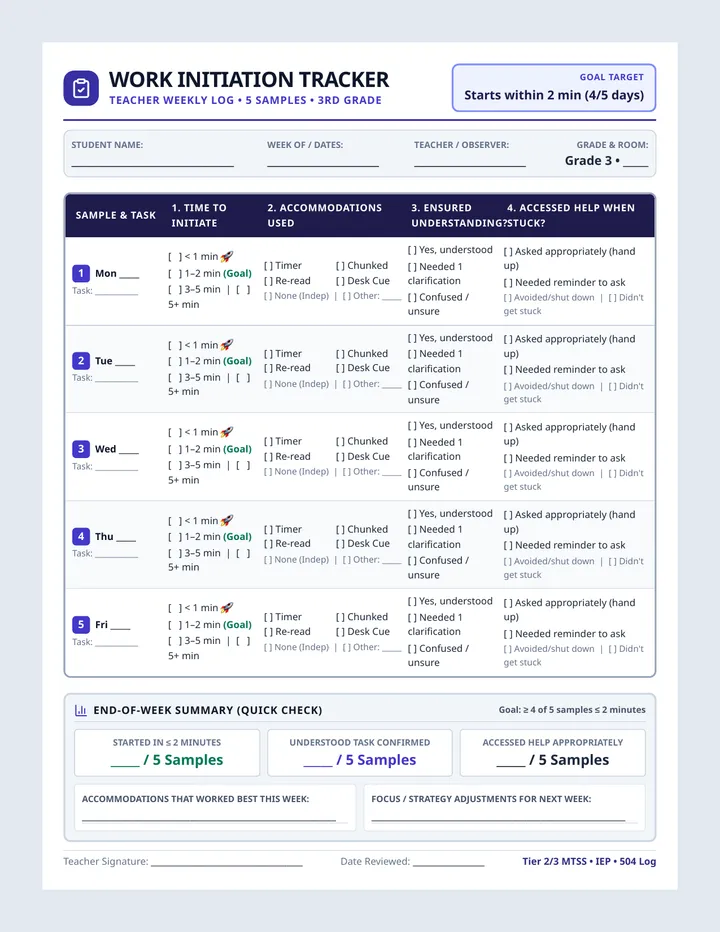
Systematic fading of verbal and physical cues to encourage independent task initiation. Targets executive functioning skills and reduces prompt dependency in learners with diverse needs.
A comprehensive 5-day transition curriculum designed for high school SPED students to master real-world scheduling, time management, workplace organization, and self-advocacy.
A training sequence for building executive functioning and focus skills in neurodivergent adults. Through physical simulations, peer challenges, and leader-led distraction games, participants develop real-world attention-management strategies.
A professional growth sequence focusing on student emotional regulation and systematic data-driven instructional leadership. This series pairs practical behavioral systems with rigorous academic reflection tools.
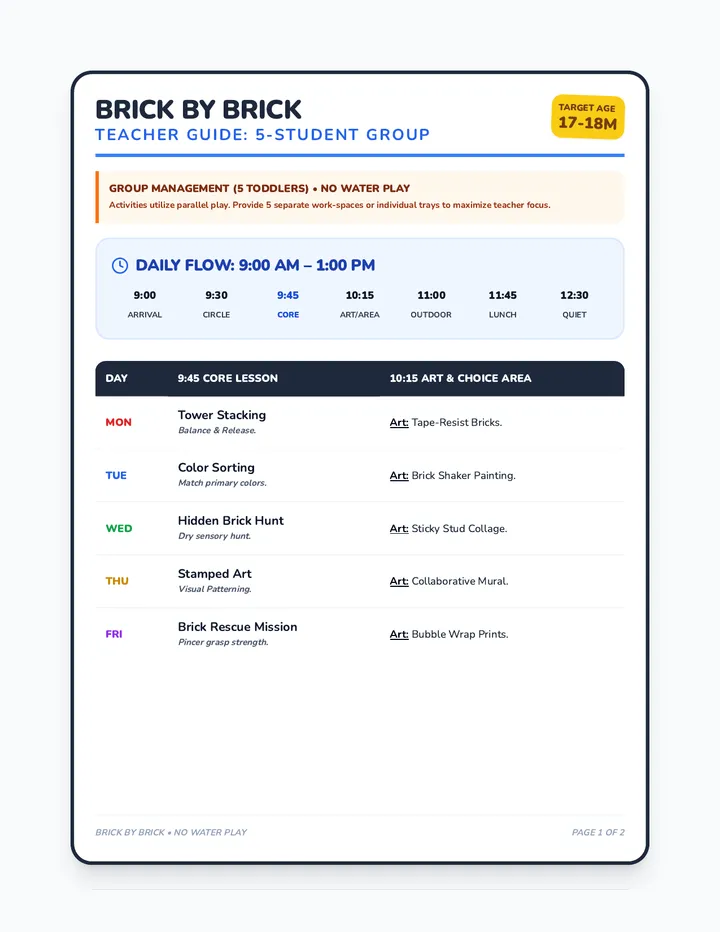
A collection of comprehensive week-long curricula for toddlers aged 17-18 months. Each themed week focuses on developmental play, sensory exploration, and fine motor skills for a group of 5 students with zero water play.
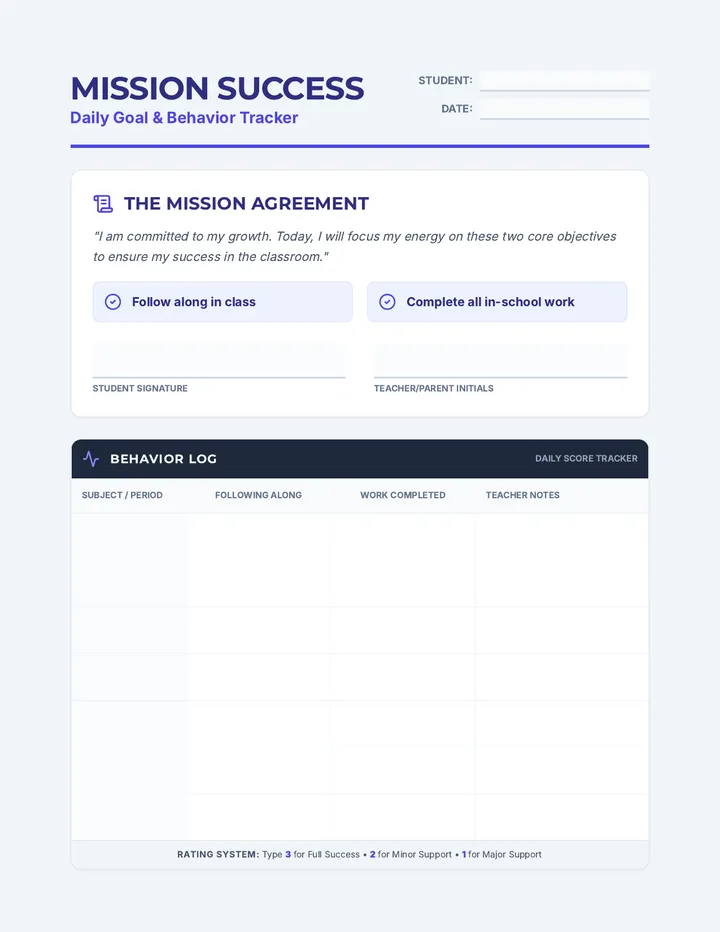
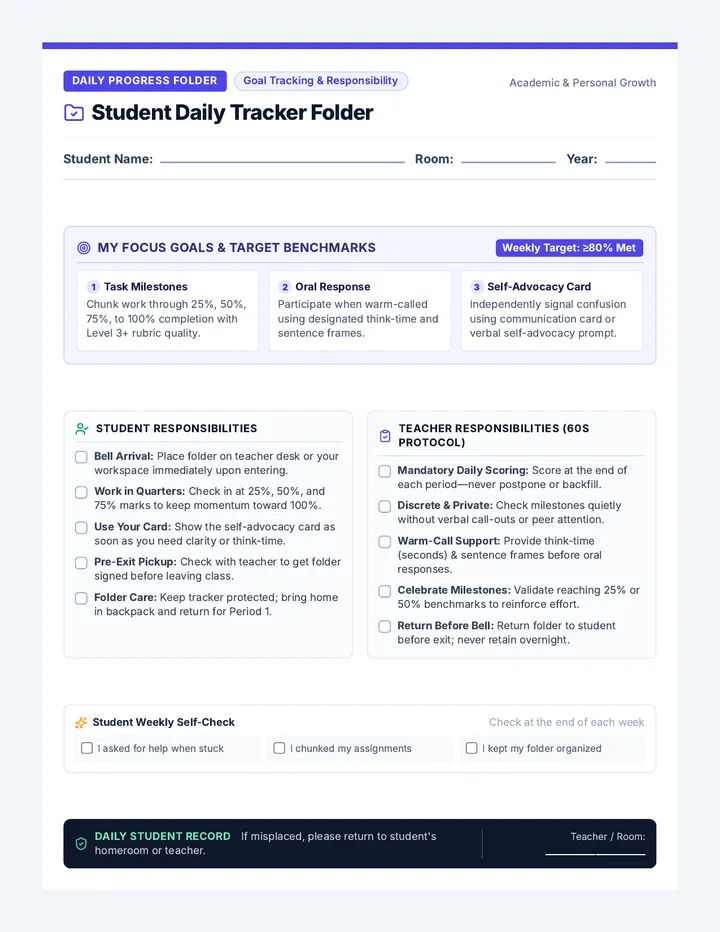
A series of lessons designed to improve student independence in academic task completion and executive functioning through structured tracking and self-monitoring.
A 4-part mini-lesson series for high schoolers focusing on time management, organization, and attention regulation through a blueprint-themed executive coaching lens.
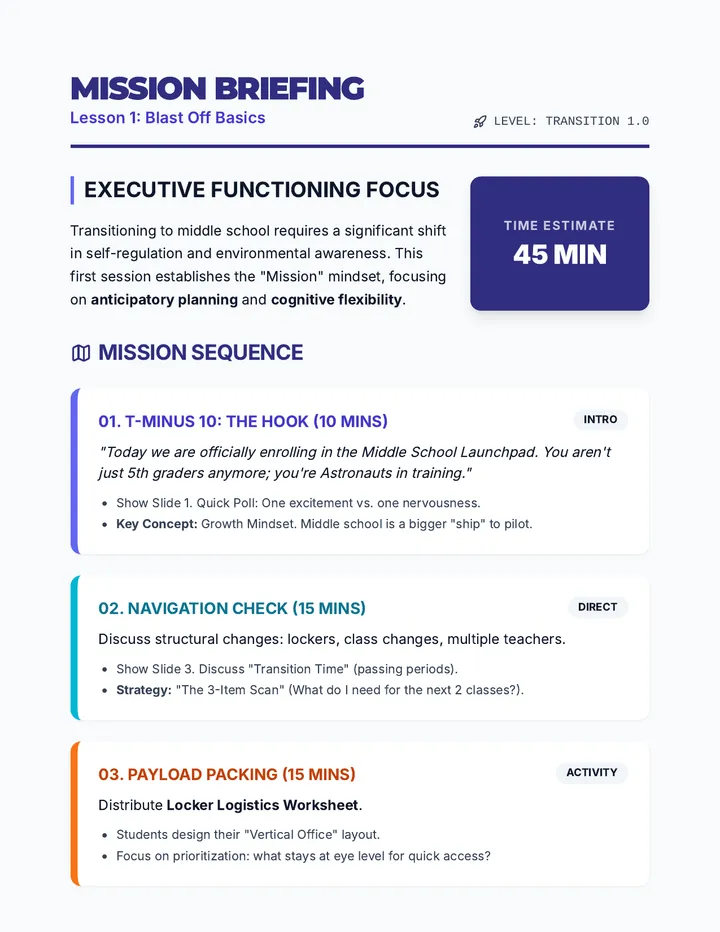
A unit focused on building executive functioning and independence for middle schoolers through the Superflex curriculum, moving from classroom autonomy to community-based self-reliance.
A framework for developmentally challenged high schoolers that combines Agile workflow with Neuro-Linguistic Programming (NLP) to foster independence, reframing, and sensory awareness.
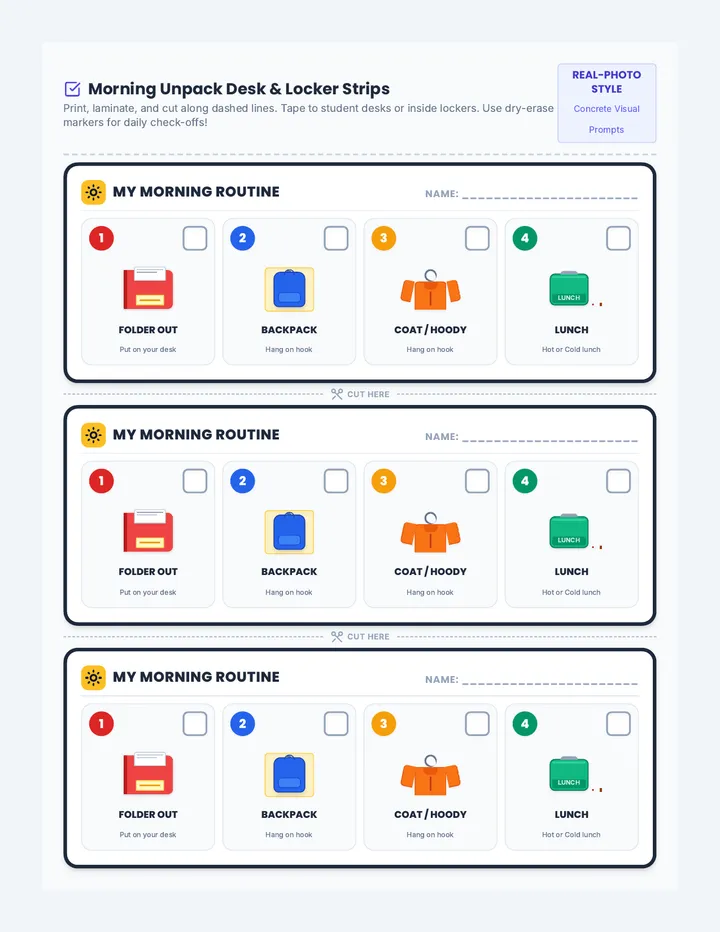
A series of daily morning activities designed for special education classrooms, focusing on routine, emotional regulation, and basic life skills with high visual support.
A 5-lesson self-regulation sequence for Grade 9 Math students, focusing on executive functioning skills like task initiation, distraction management, and self-advocacy through a gamified 'Level Up' theme. Each lesson is designed for 15-20 minutes of high-impact, visual-heavy instruction and practice.
A collection of specialized support frameworks for high-achieving neurodivergent students, focusing on balancing academic rigor with sensory regulation.
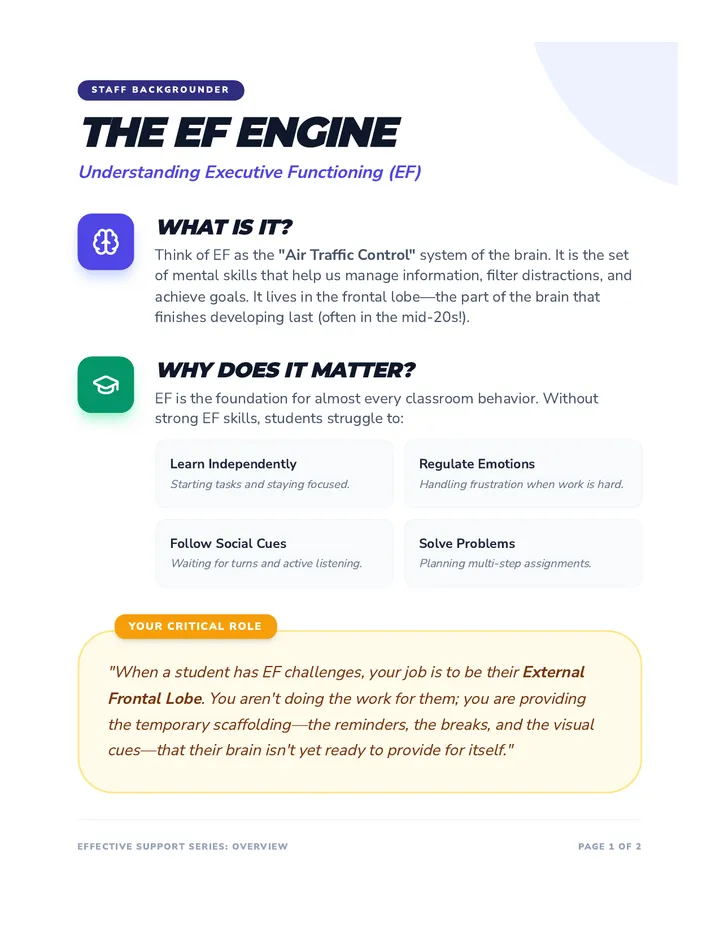
A comprehensive course designed for young adults to understand and master the core components of executive functioning, moving from theory to practical life application.
A comprehensive IEP support packet focused on third-grade task initiation and planning within the writing process. Includes teacher data tracking, structured graphic organizers, and self-monitoring visual checklists to help students start writing without getting stuck.
Students explore the critical role of time management in the workplace, learn how to estimate task durations, examine real-world punctuality consequences, and build essential skills for professional success.
This lesson introduces and structures the '1, 2, 3' transition protocol (1: Organize, 2: Stand, 3: Move) to establish class-wide efficiency. Through modeling, guided practice, and independent application, students master essential classroom routines.
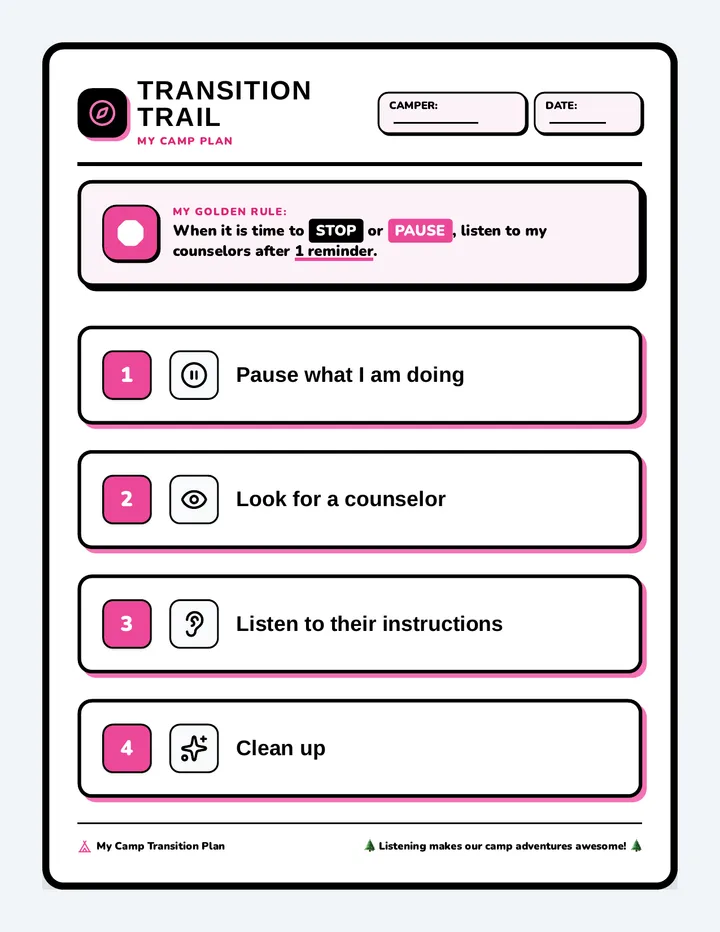
A structured mini-lesson and resource bundle to teach, practice, and master the classroom chime routine. Features a clear 'I Do, We Do, You Do' progression to establish the immediate 'Stop, Look, and Listen' behavior.
A comprehensive IEP goal planning and progress tracking system designed to transition a student from shared aide dependence to independent classroom work completion.
Students explore how schedules are used across various career paths, analyze real-world shift and appointment schedules, and practice reading workplace timetables.
A modified math lesson on solving multi-step word problems, specifically designed for students with IEP accommodations. It features highly structured visual graphic organizers, pictorial supports, and sentence frames to break down complex multi-step problems into manageable, sequential steps.
A specialized intervention lesson designed for neurodiverse students, particularly those with ASD, to help them manage hyperfocus, transition attention from preferred topics, and utilize self-regulation strategies like the Brain Parking Lot, Self-Talk, and Help Cards.
A 1-to-1 intervention lesson designed to help students master multi-step cleaning instructions while ignoring external and internal distractions. Includes a visual board game, specialized scenario cards, and self-regulation visual supports.
A high-energy, hands-on workshop where neurodivergent adults practice focus and self-regulation. Participants complete physical stations while testing their Focus Shield against both peer-led and leader-led distraction challenges.
An executive functioning and focus intervention lesson designed to help students build independence during independent work. Framed as a tactical 'solo mission', the lesson guides students through managing distractions and planning tasks with low adult prompting.
A local community vocational training project bundle tailored for adults with IDD at Club Challenge of Orange Park. Teams select a real local employer (such as Publix or Target), gather key 'Employer Intel' about job roles and uniforms, build a mock physical workstation modeled after that business, and run a simulated work shift to practice authentic job duties.
A student-facing self-monitoring checklist styled as a cockpit control panel. Guides third-grade students through a chronological step-by-step checklist (Ready, Set, Write) to build confidence, manage stress, and independently start their writing tasks.
A student-facing graphic organizer styled as a rocket launchpad. Provides structured, bite-sized sections for students to record their writing prompt, brainstorm exactly three helper ideas, and construct their first sentence to overcome initial writer's block.
A teacher-facing IEP Goal and progress monitoring guide. Includes the formal third-grade IEP goal, quarterly benchmarks, a four-tier task initiation rubric, and a weekly data tracking sheet to measure planning and initiation time.
A 4-page student-facing worksheet designed to help students identify common "time thieves" (distractions), calculate the actual time needed to complete a task with distractions, and create a personal action plan to minimize interruptions.
A 4-page student guided notes packet for Day 2 Workplace Time Tactics. Page 1 contains key vocabulary matching, Page 2 covers fill-in-the-blank direct instruction notes, Page 3 features two real-life delay scenarios, and Page 4 guides personal time management reflections.
A 1-page student exit ticket for Day 2 Workplace Time Tactics. It features multiple-choice and prioritizing questions, an open-ended self-advocacy scenario response, and a 3-2-1 reflection block.
A 2-page student worksheet containing 4 cut-out workplace punctuality scenarios on Page 1 and a structured Consequence Board analysis sheet on Page 2 to trace immediate and ripple-effect professional impacts.
A 2-page printable student worksheet focusing on estimating task durations for both workplace and at-home scenarios. Page 1 guides students to guess and then record standard times for workplace tasks. Page 2 covers everyday at-home chores, prompting reflections on time awareness in independent living.
A premium, highly-structured 10-slide presentation deck for Day 2 Workplace Time Tactics. It covers why employers value time management, what happens when workers are late, deadlines, planning ahead, time estimation, and good vs. poor time management comparisons.
A detailed 3-page master facilitation guide for Day 2 Workplace Time Tactics. It outlines a 90-minute pacing structure, step-by-step teacher instructions, specific slide and worksheet references, SPED accommodations, and a material checklist. Page 3 provides the complete "Guess & Reveal" standard times answer key for both workplace and home tasks.
A premium, highly-visual 9-slide vocabulary deck for Day 1. It introduces core shift scheduling terms with 10-point larger fonts, simplified definitions, large visual icons, and an interactive 2-part checkpoint.
A comprehensive, step-by-step teacher lesson plan designed to guide educators through introducing, practicing, and reinforcing the 1-2-3 transition protocol. Includes slide walkthroughs, interactive rehearsal drills, and exit ticket assessment strategies.