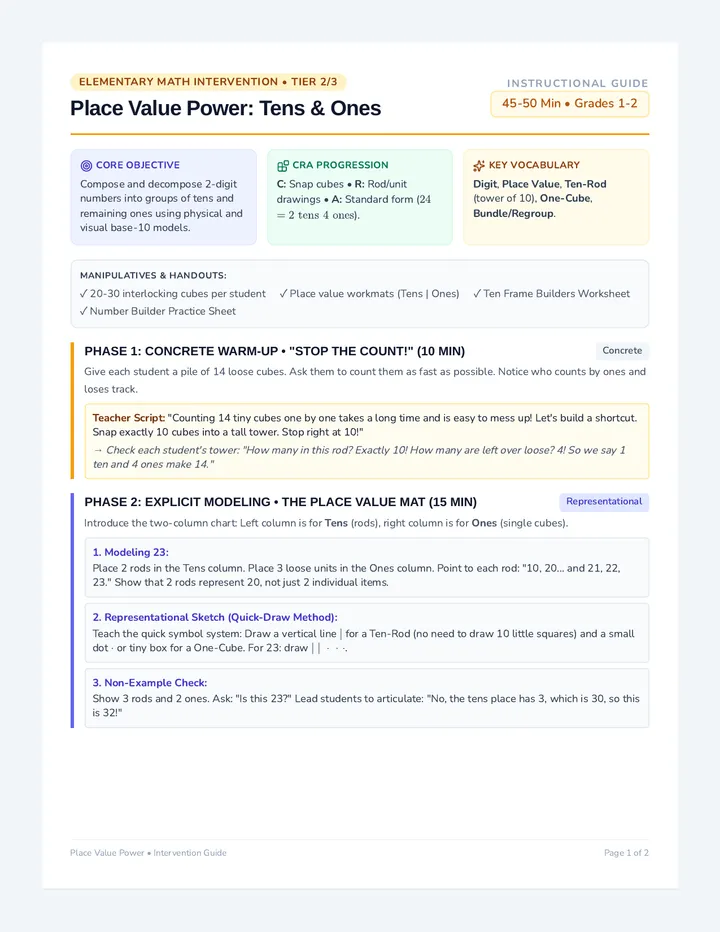
Integrates base-ten blocks, counters, and virtual tools to scaffold the Concrete-Representational-Abstract (CRA) sequence. Targets conceptual understanding of arithmetic, place value, and fractions for students with learning disabilities.
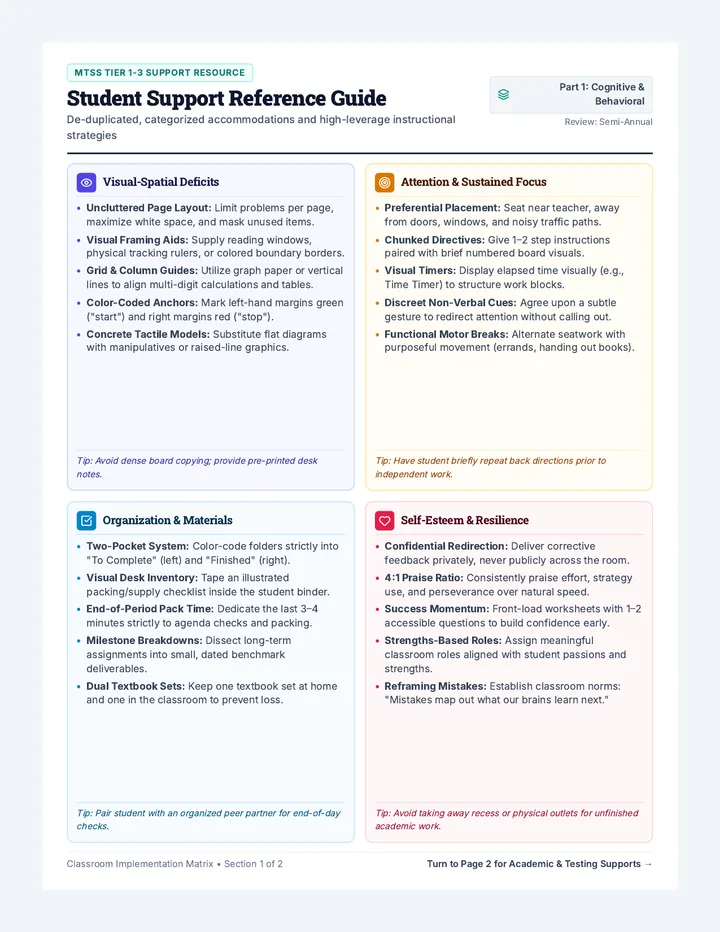
A comprehensive, de-duplicated reference guide for educators organizing evidence-based accommodations across seven core domains: visual-spatial deficits, attention, organization, self-esteem, writing, math, and testing/environmental accommodations.
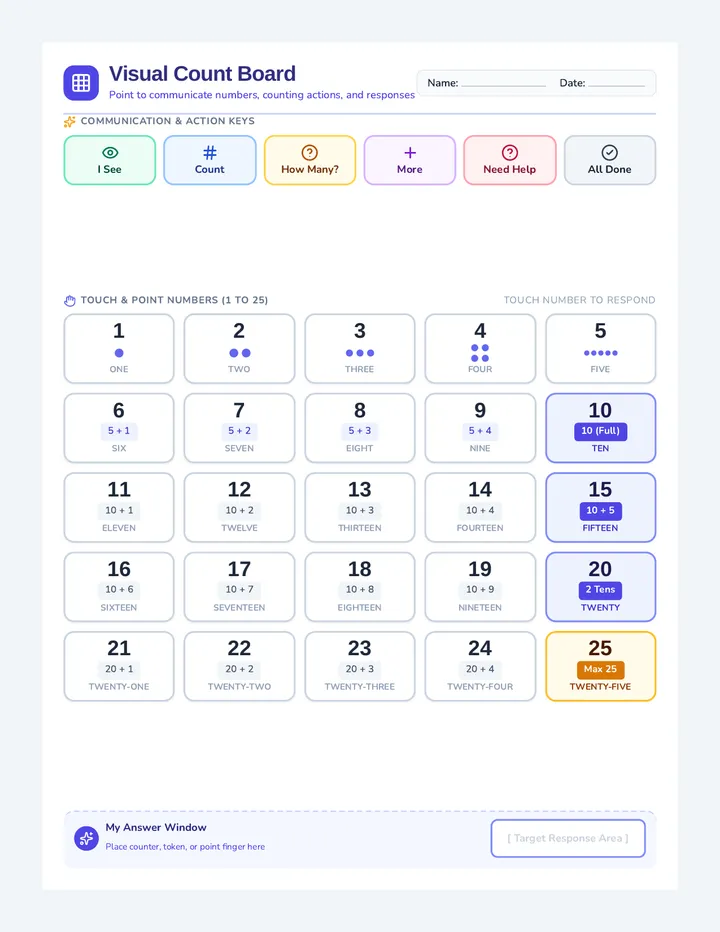
A comprehensive 5-page visual counting packet designed for non-verbal learners featuring an AAC-style communication and number pointing board up to 25, touch-point counting cards, ten-frame visual sets, and hands-on matching activities.
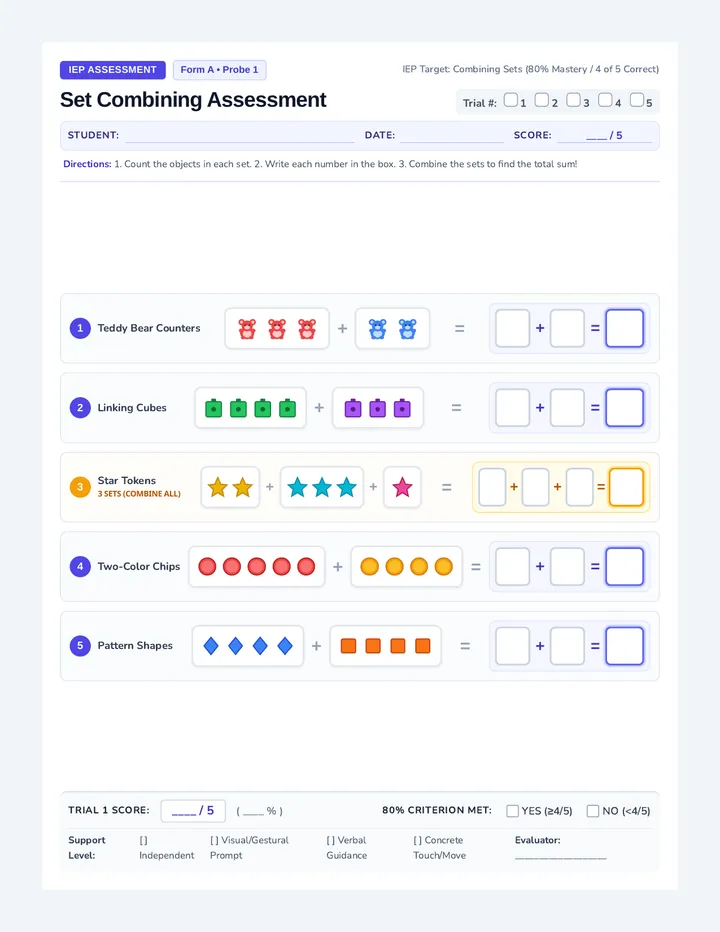
A 2-page print-ready IEP assessment worksheet designed to evaluate addition by combining two or more sets of concrete manipulatives. Features Form A and Form B with diverse visual sets, clear write-in equation frames, and a 5-trial progress monitoring data tracking rubric.
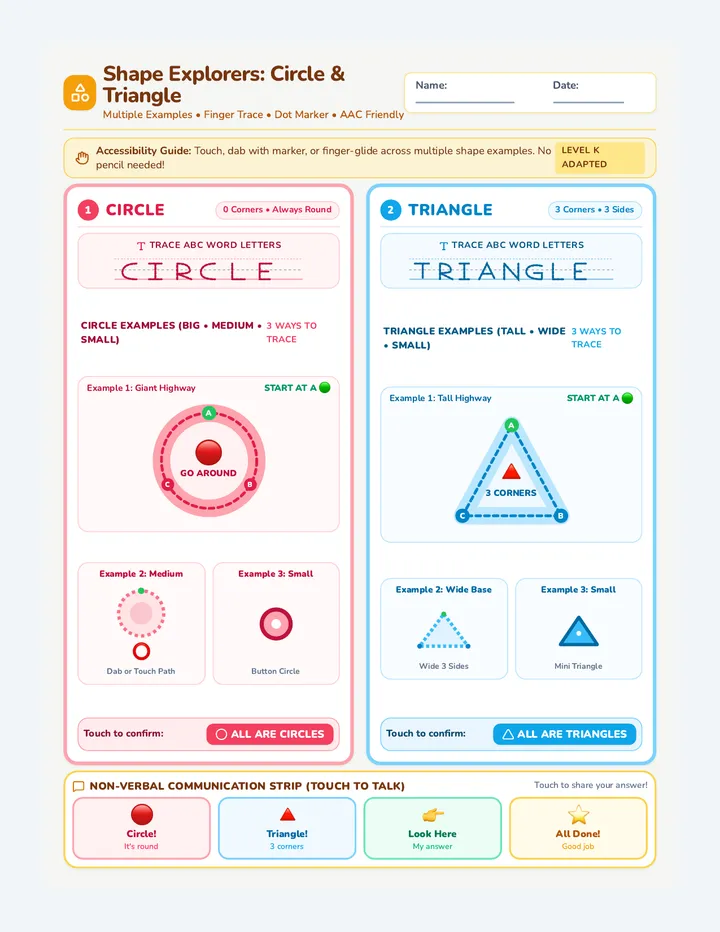
A 2-page adapted kindergarten worksheet for students learning circles and triangles with physical and communication impairments. Real-world pictures on Page 2 now feature high-contrast dashed tracing outlines with A-B-C guide dots so students can finger-trace or dab the shape directly on each familiar picture, alongside touch choice buttons and AAC supports.
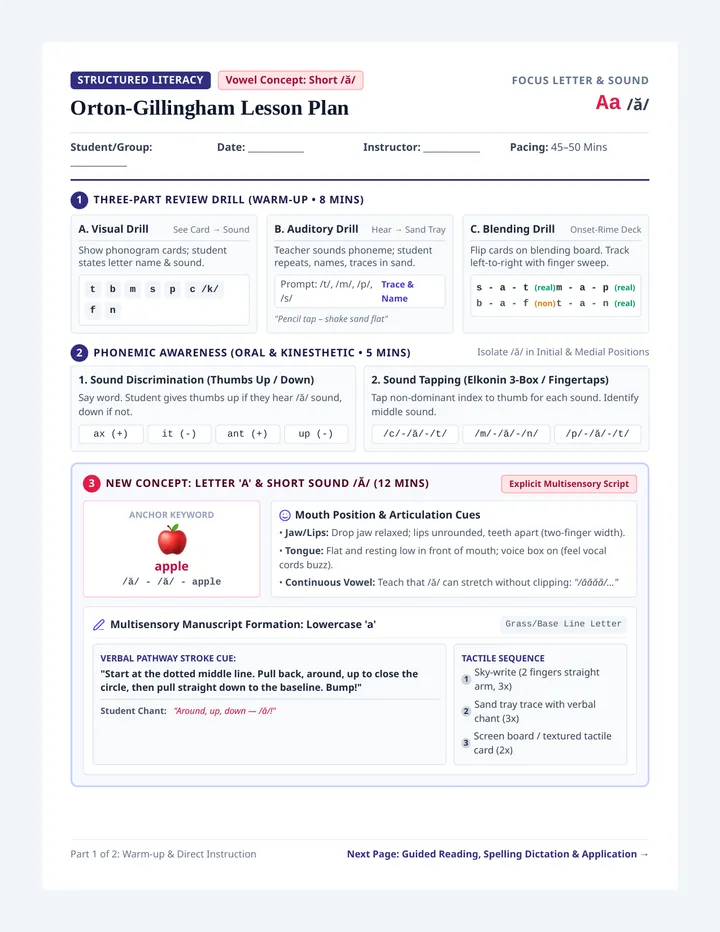
A comprehensive Orton-Gillingham lesson plan for introducing and reviewing the short vowel sound /ă/ and manuscript letter formation. Features structured drills, multisensory routines, decodable word lists, dictation scripts, and decodable text.
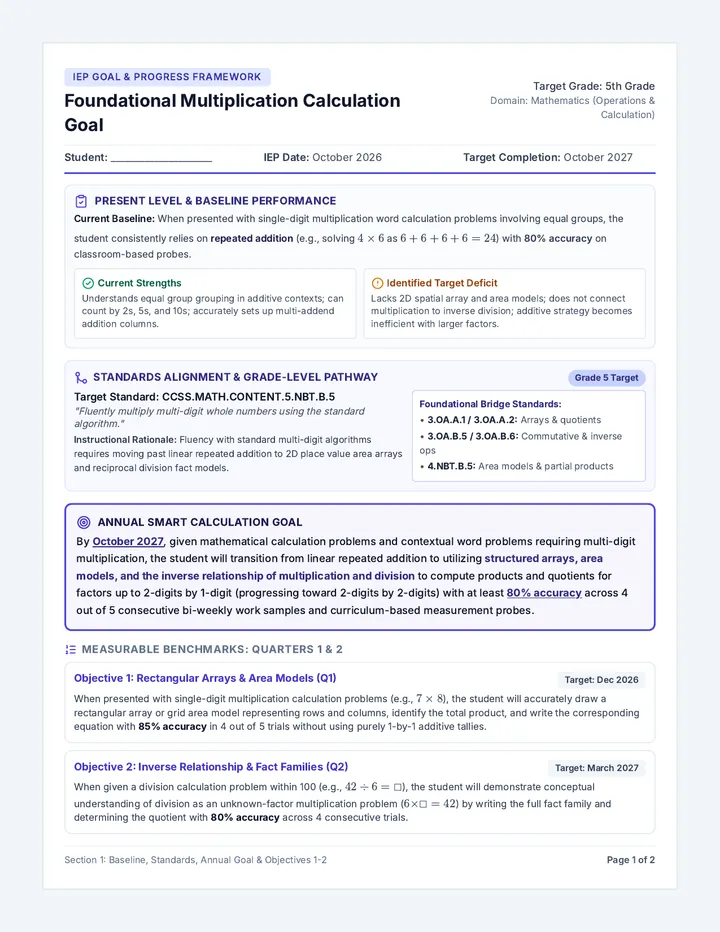
A comprehensive IEP math calculation goal document for a 5th grade student transitioning from repeated addition to foundational multiplication concepts, complete with baseline data, standards alignment, measurable objectives, and progress monitoring tools.
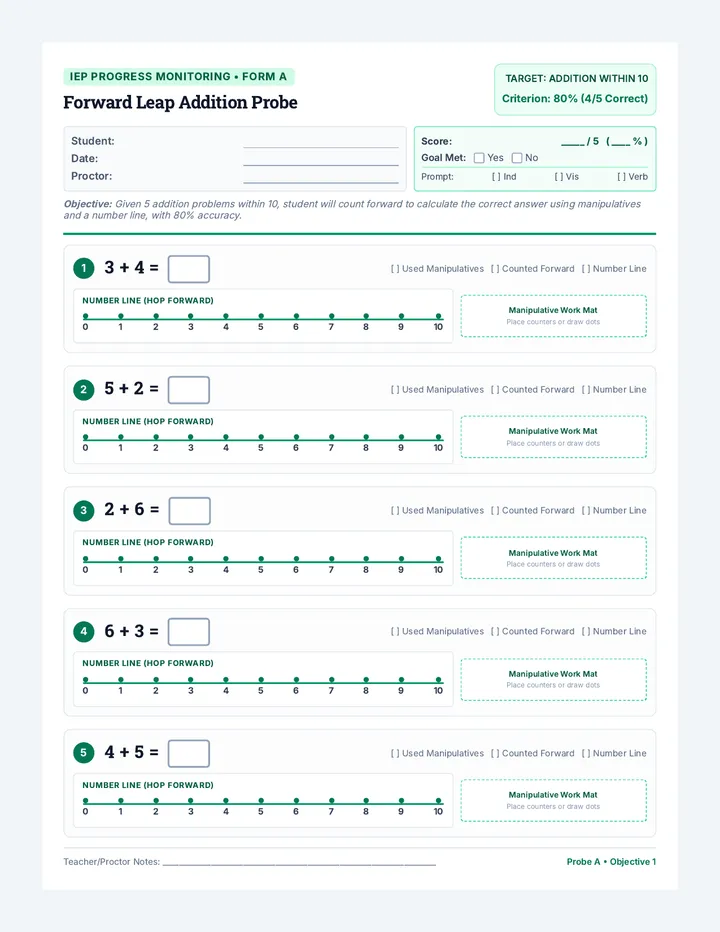
A comprehensive progress monitoring collection designed for special education and tier intervention math goals. The sequence contains targeted assessment probes aligned to specific counting strategies on number lines and visual supports within 10 and 20.
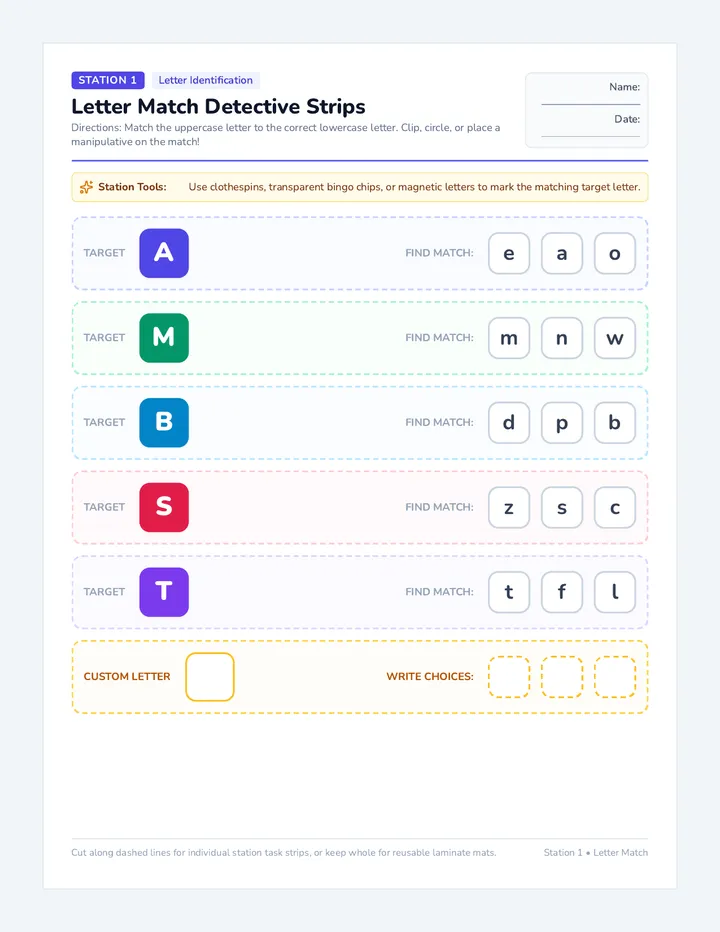
A multi-day station rotation sequence designed for essential skills classrooms, targeting letter identification, sound correspondence, word building with tiles, and sight word recognition through hands-on, multi-sensory activities.
A 12-session Tier 2 intervention series focusing on making ten and decomposing strategies for addition and subtraction word problems within 20 and 200. Designed for students with learning and intellectual disabilities using direct instruction and hands-on practice.
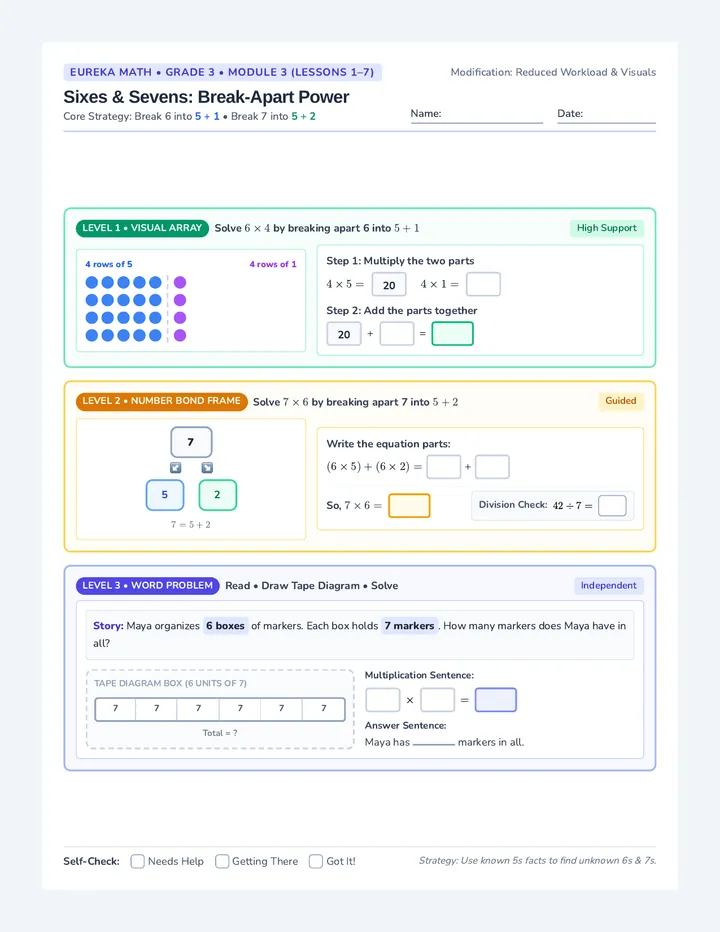
A comprehensive instructional sequence providing differentiated, reduced-workload, and visually scaffolded modifications for Eureka Math Grade 3 Module 3. Covers all 21 lessons organized across four focused mastery clusters with multi-tiered student practice and teacher modification guides.
A targeted intervention sequence providing structured multi-sensory support in foundational numeracy and reading comprehension. Built for elementary learners needing visual scaffolding, chunked tasks, and explicit strategy routines.
A pair of targeted 15-minute Tier 2 intervention lessons for 1st grade, focusing on foundational phonics (Short 'a' CVC words) and mental math (Number Bonds to 10).