Data collection methods for specific IEP objectives and systematic analysis of student performance trends. Provides tools for visualizing growth and streamlining mandatory reporting requirements.
The ultimate compact version of the Adulting Celebration Chart with ultra-reduced line spacing and minimal vertical gaps. It utilizes tiny icons, condensed font sizes, and tight leading to provide a high-density workplace tracking experience that fits multiple players and comprehensive metrics in a single printable view. It moves metric descriptions inline to save vertical space.
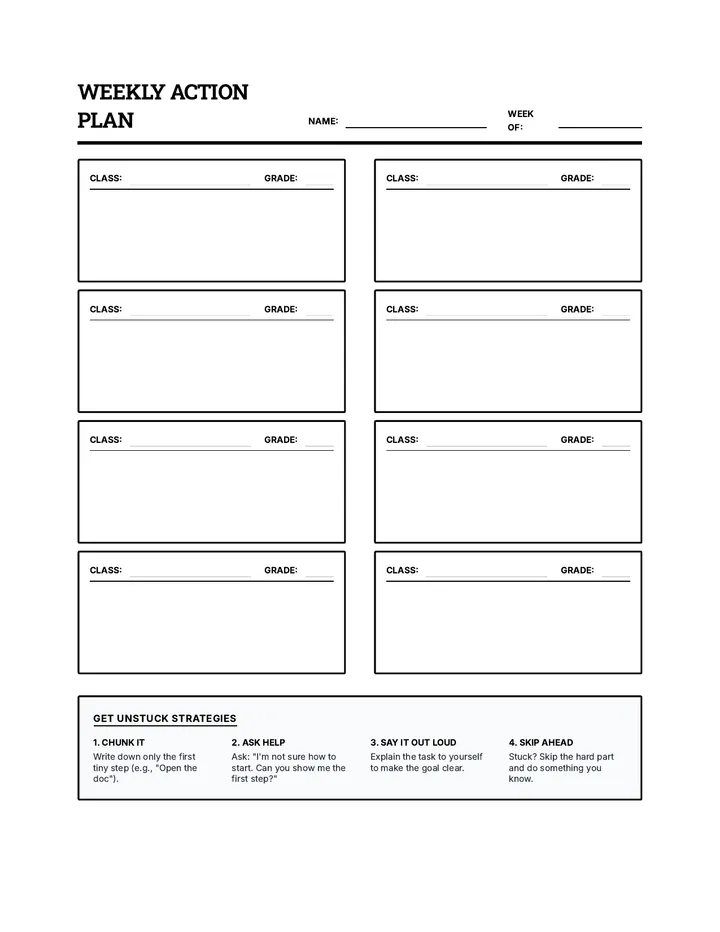
A highly efficient, single-page Weekly Action Plan designed for students with executive functioning needs. It features 8 streamlined class boxes with space for subjects and grades, plus a concise footer with 'Get Unstuck' strategies, all formatted to fit within a single printable page.
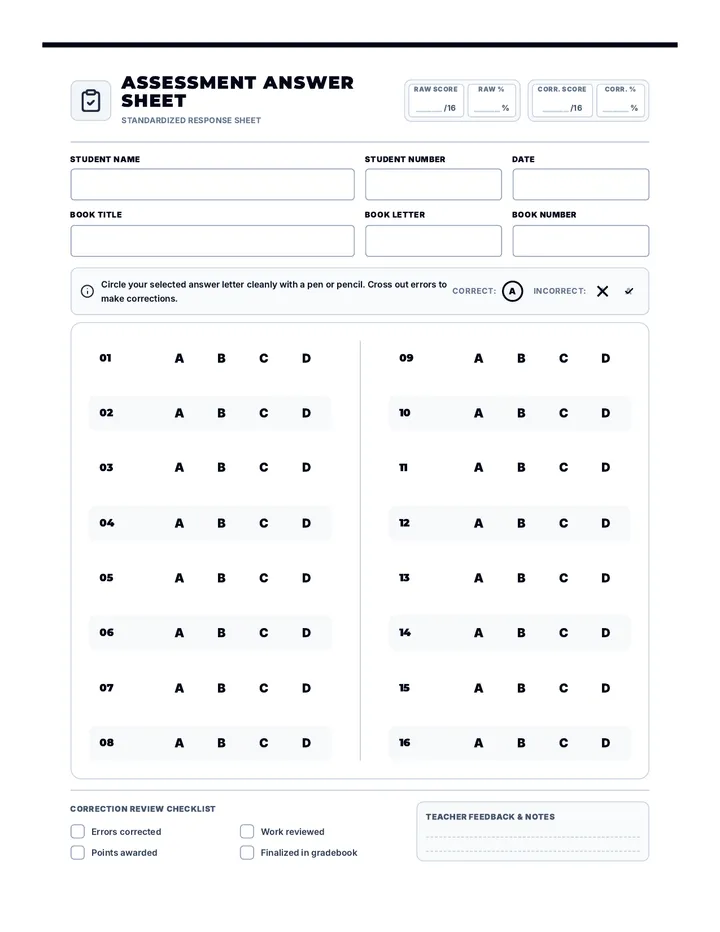
An optimized black-and-white printable 1-page assessment response sheet. It features plain-text letters A-D, a matching set of raw and corrected score blocks with clean fill-in-the-blank spaces, a correction checklist, and structured fields for student name, student number, date, book title, book letter, and book number.
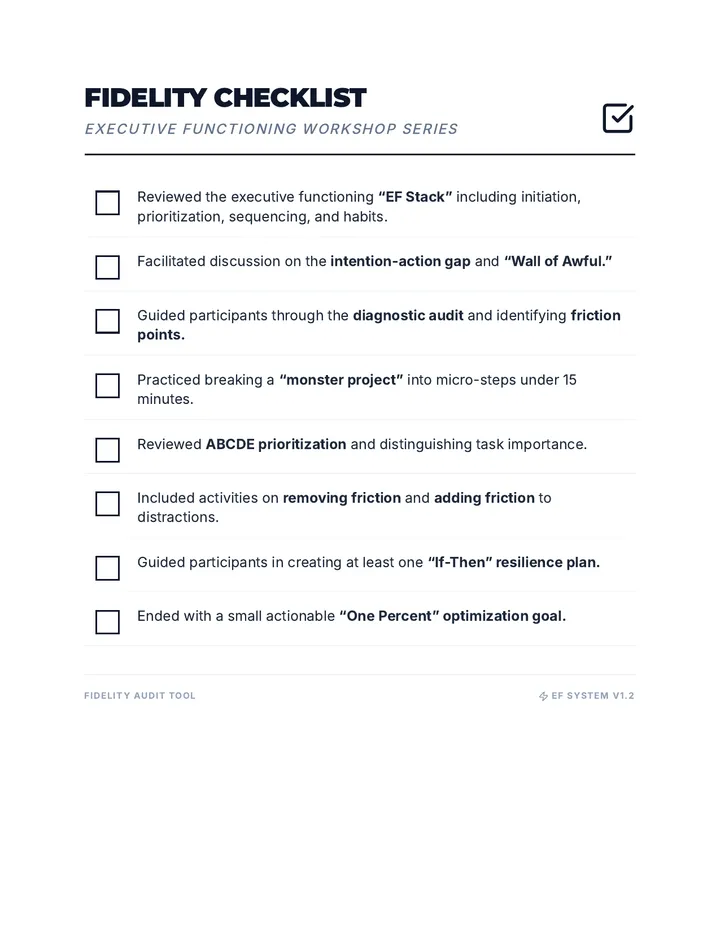
A simplified fidelity checklist for facilitators focusing solely on the core workshop components. Metadata and notes sections have been removed for a cleaner, item-focused layout. Fits on a single page.
A revised blank answer sheet for a 25-question multiple choice exam. Features a two-column layout optimized for a single page, with labeled columns and individual question rows for clear student tracking. Includes a student info header and a feedback section.
This sequence teaches undergraduate students how to use systematic data collection to identify behavioral escalation patterns. Students transition from subjective descriptions to objective operational definitions, analyze antecedents, track behavior metrics, and use scatterplots to predict future incidents, culminating in the creation of data-driven Behavior Intervention Plans.
This sequence explores the implementation and monitoring of IEPs for 11th-grade students, focusing on data collection, progress reporting, secondary transition planning (ITP), and the ethical balance between legal compliance and educational quality. Students transition from being passive participants to active designers and evaluators of the IEP process.
A comprehensive graduate-level sequence on the visual analysis of behavioral data, covering graph construction, interpretive dimensions (level, trend, variability), statistical aids, and experimental design logic. Students learn to make evidence-based clinical decisions through rigorous data interpretation.
A graduate-level sequence focused on the instructional methodology for teaching self-advocacy skills, specifically requesting accommodations. Graduate students will learn to task-analyze requests, design tiered scripts, facilitate behavioral rehearsals, collect data on advocacy behaviors, and plan for generalization.
This graduate-level sequence focuses on the technical proficiencies required for high-quality Functional Behavior Assessments (FBAs). Students will master indirect assessment methods and direct observation techniques, critiquing the validity and reliability of various data systems to ensure accurate behavioral triangulation.
This theoretical sequence establishes the foundational knowledge required to understand Daily Check-In procedures within a Multi-Tiered System of Supports (MTSS). Students analyze the psychological principles behind Check-In/Check-Out (CICO) interventions, examine feedback loops, review evidence-based research, and investigate trauma-informed perspectives and organizational readiness.
A lesson focused on identifying and navigating community resources and institutions specifically within Irving, Texas, to support student independence and community engagement.
A comprehensive lesson to prepare students for fire drills, focusing on evacuation steps, identifying emergency signals, and maintaining calm. Includes visual slides, role-play activities, and assessment tools.
A comprehensive toolkit for students to track and improve their executive functioning skills through daily logging and descriptive rubrics.
A comprehensive comparison of IEP and 504 Plan requirements specifically within the Colorado Department of Education (CDE) framework, designed for graduate-level study of special education law and compliance.
A comprehensive mock interview training program designed for learners seeking retail positions, focusing on visual supports, simple scripting, and situational problem-solving.
A set of checklists for instructors to ensure fidelity to housing education goals and provide appropriate supports for neurodivergent participants.