Customized organizational systems tailored to diverse learning needs and executive function profiles. Addresses workspace management, task tracking, and visual supports for specific student requirements.
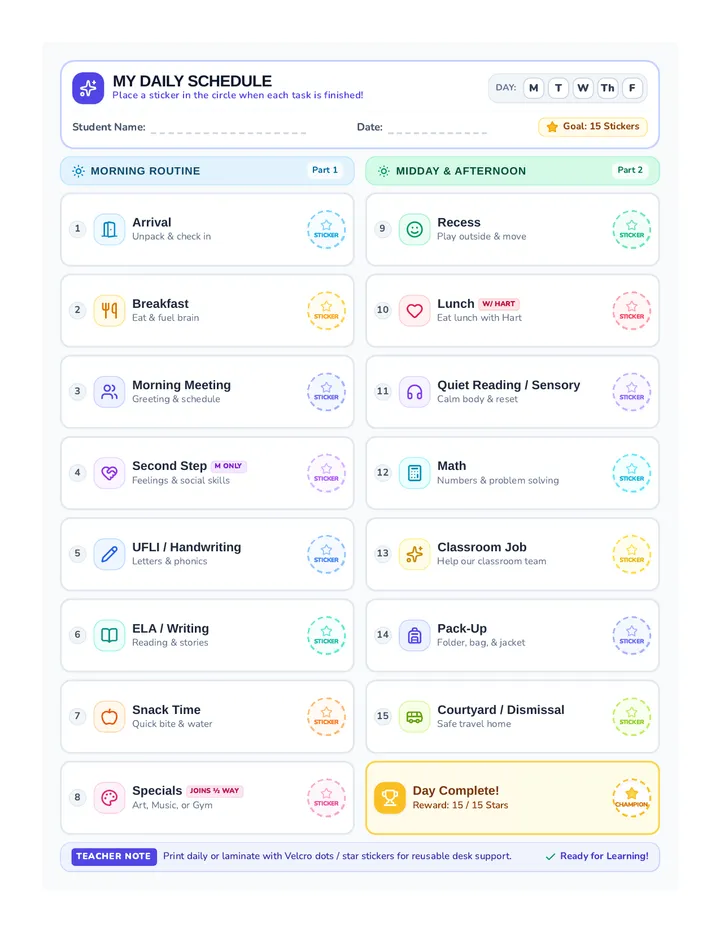
A structured, full-day printable visual schedule checklist with sticker spots for 15 classroom activities from arrival through dismissal. Includes visual icons, contextual tags (e.g. Mondays only, Joins ½ way, With Hart), student date tracking, and an end-of-day goal reward spot.
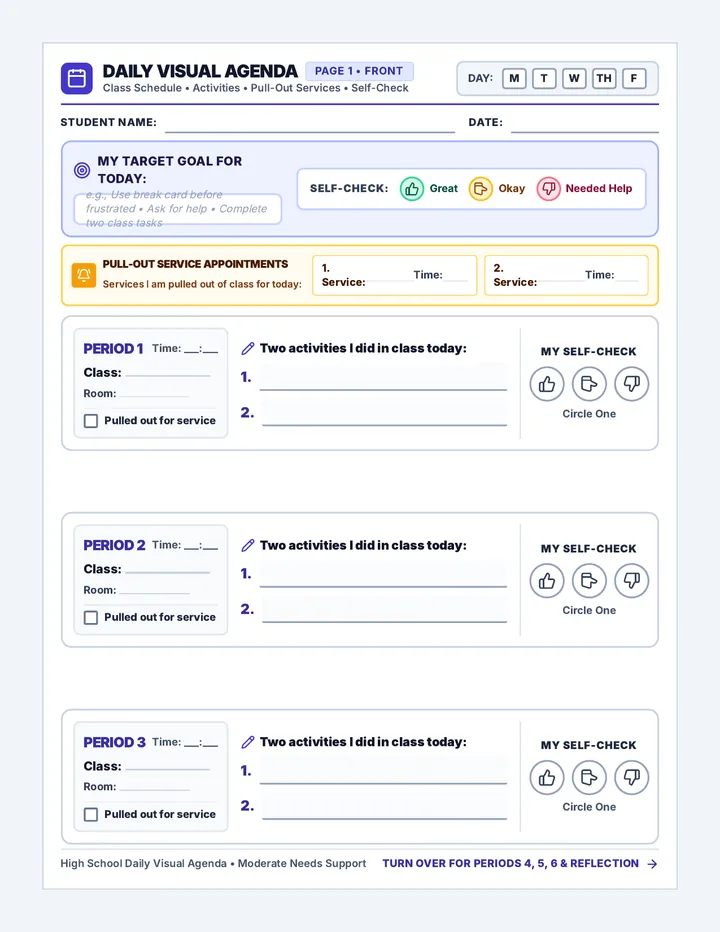
An updated two-page daily visual agenda and self-regulation template for high school students with moderate needs, with significantly enlarged font sizes across all period cards, class activity writing areas, and self-check labels for enhanced vision access.
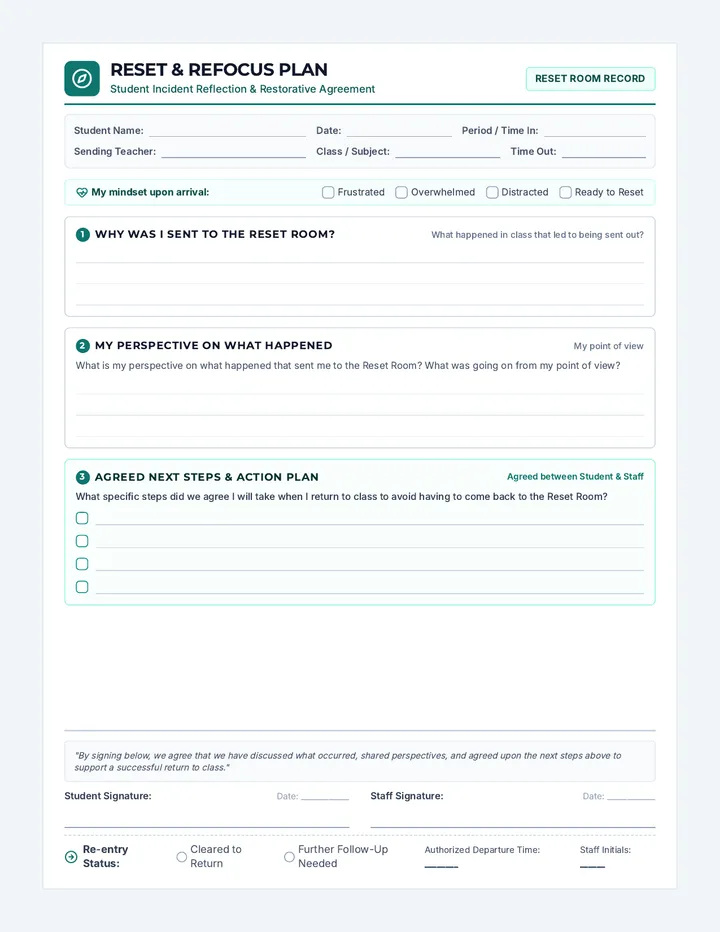
A restorative reset room reflection form with intake data, incident reason, a dedicated student perspective section, custom agreed-upon next steps, and dual student-staff signatures.
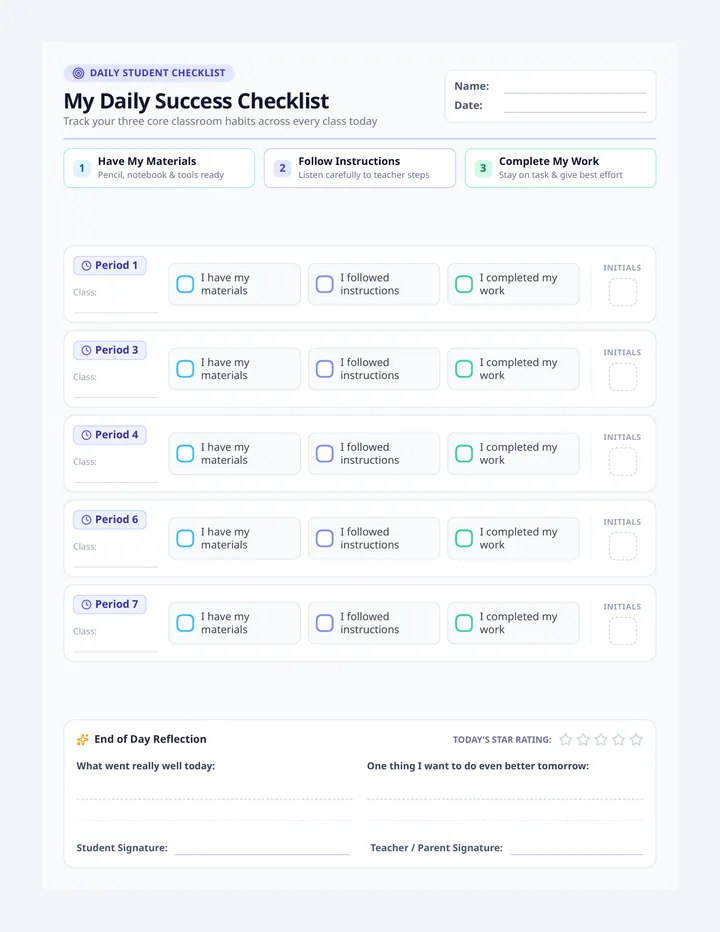
A single-day student self-monitoring checklist organized by class periods (1, 3, 4, 6, and 7). Each period features dedicated checkboxes for having materials ready, following teacher instructions, completing work, and teacher initials, followed by an end-of-day reflection.
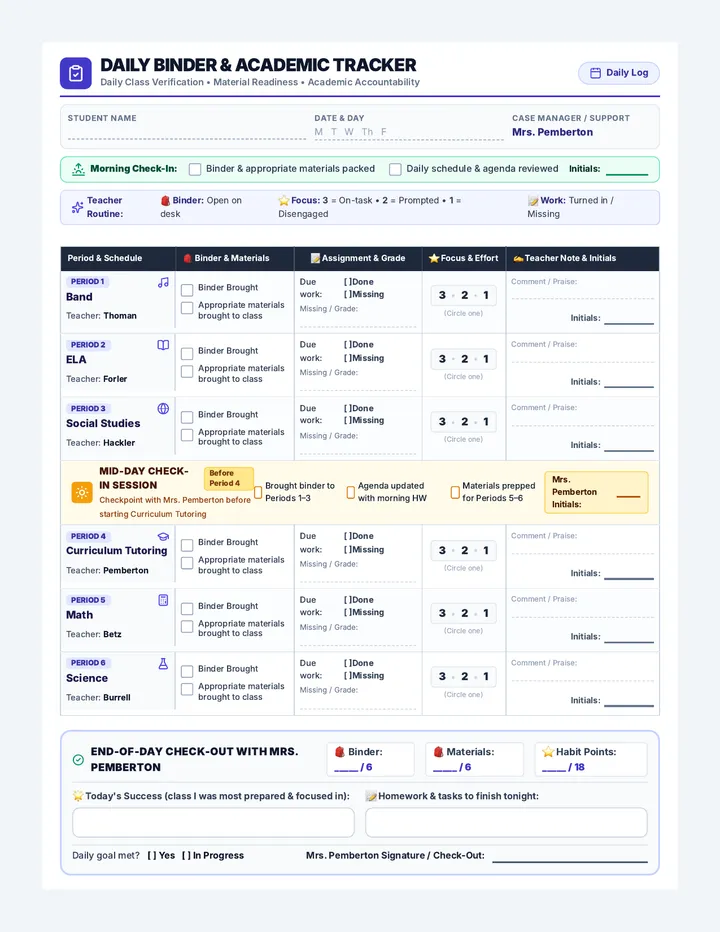
A 1-page daily behavior and academic accountability chart optimized to fill the printable page cleanly without overflow. Features a unified table with a colspan Mid-Day Check-In row before Period 4, larger font sizes, expanded writing boxes, and an End-of-Day Check-Out with Mrs. Pemberton.
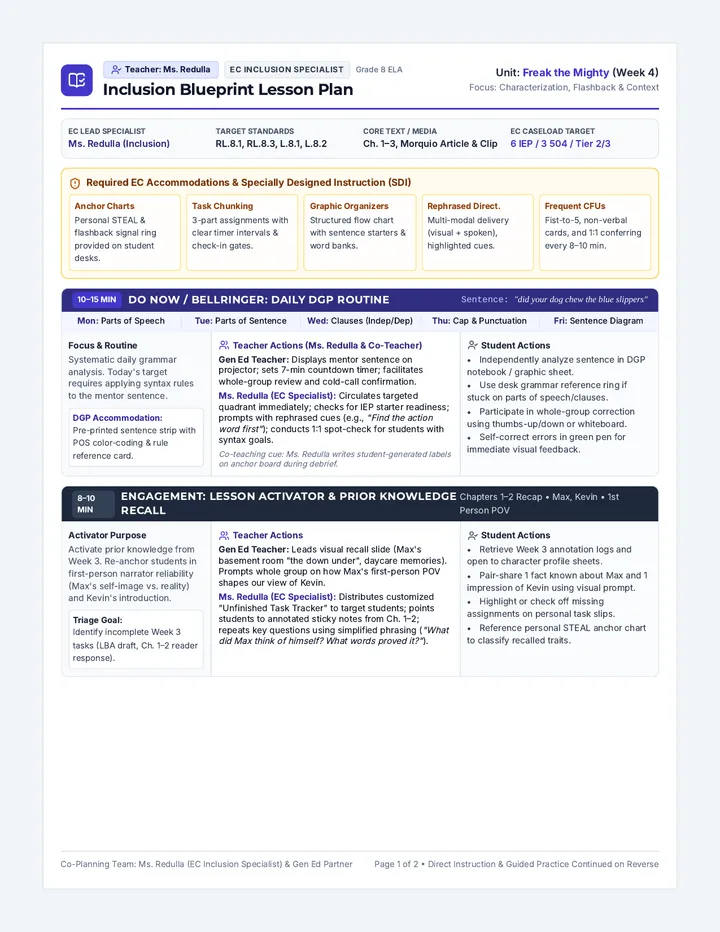
A comprehensive two-page co-teaching inclusion lesson plan designed for Ms. Redulla (EC Inclusion Specialist) and General Education ELA partner. It details the five-day DGP bellringer routine, novel study integration with *Freak the Mighty*, Morquio syndrome background reading, and explicit specially designed instruction (SDI) accommodations throughout each instructional framework phase.
A comprehensive 9-session curriculum for 6th-grade students to master executive functioning skills like organization, planning, self-control, and emotional regulation through the metaphor of becoming their own 'Brain CEO'.
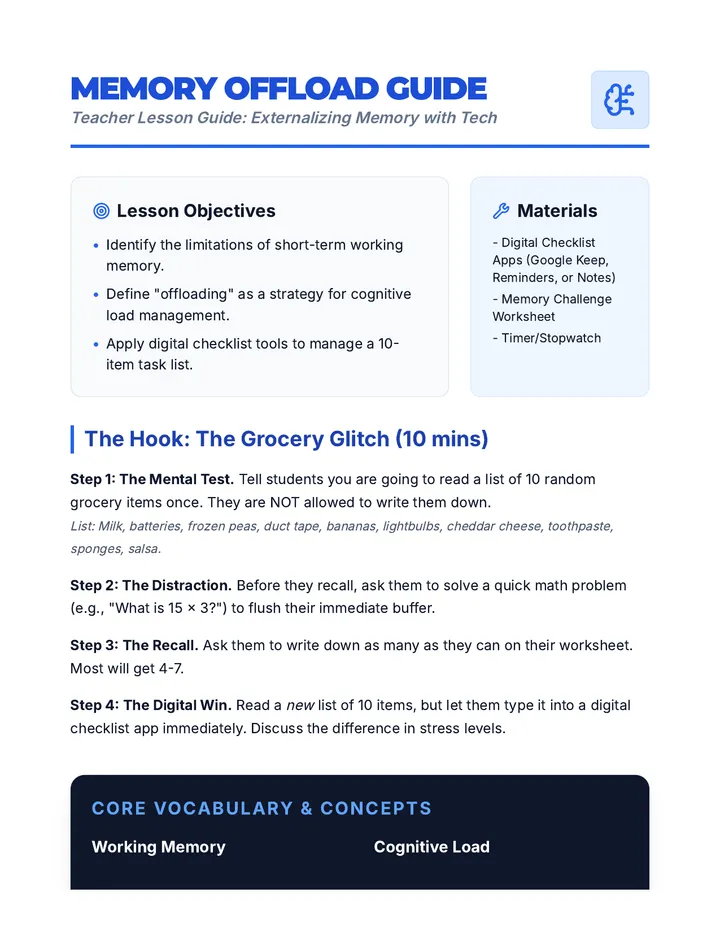
A 5-lesson unit for 8th-grade students focusing on using digital tools to offload working memory and manage cognitive load. Students learn to use task managers, focus modes, sequential reminders, and assistive speech technologies to create a personalized digital workflow for school success.
A sequence for 6th-grade students focusing on identifying distractions, designing effective workspaces, and mastering time-management techniques like Pomodoro and single-tasking to improve executive function and focus.
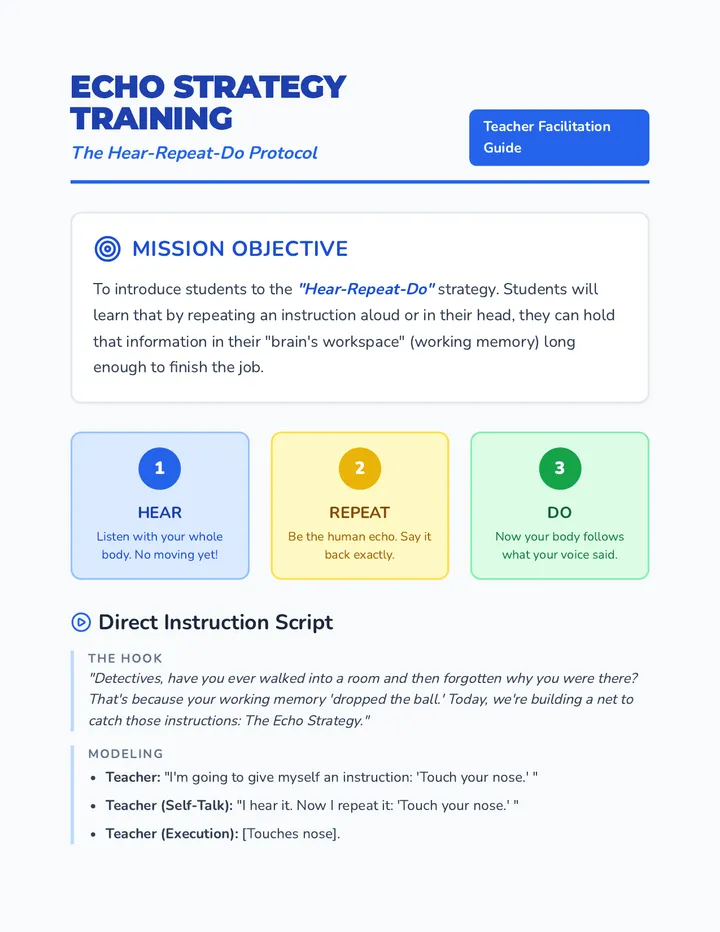
A specialized sequence for 4th-grade students to develop working memory through verbal rehearsal. Students practice the 'Hear-Repeat-Do' strategy, identify action keywords, utilize processing pauses, and verify their work to improve follow-through on single-step directions.
This sequence teaches 11th-grade students with working memory challenges how to deconstruct complex academic prompts into single, manageable steps using masking, checklists, and verification protocols.
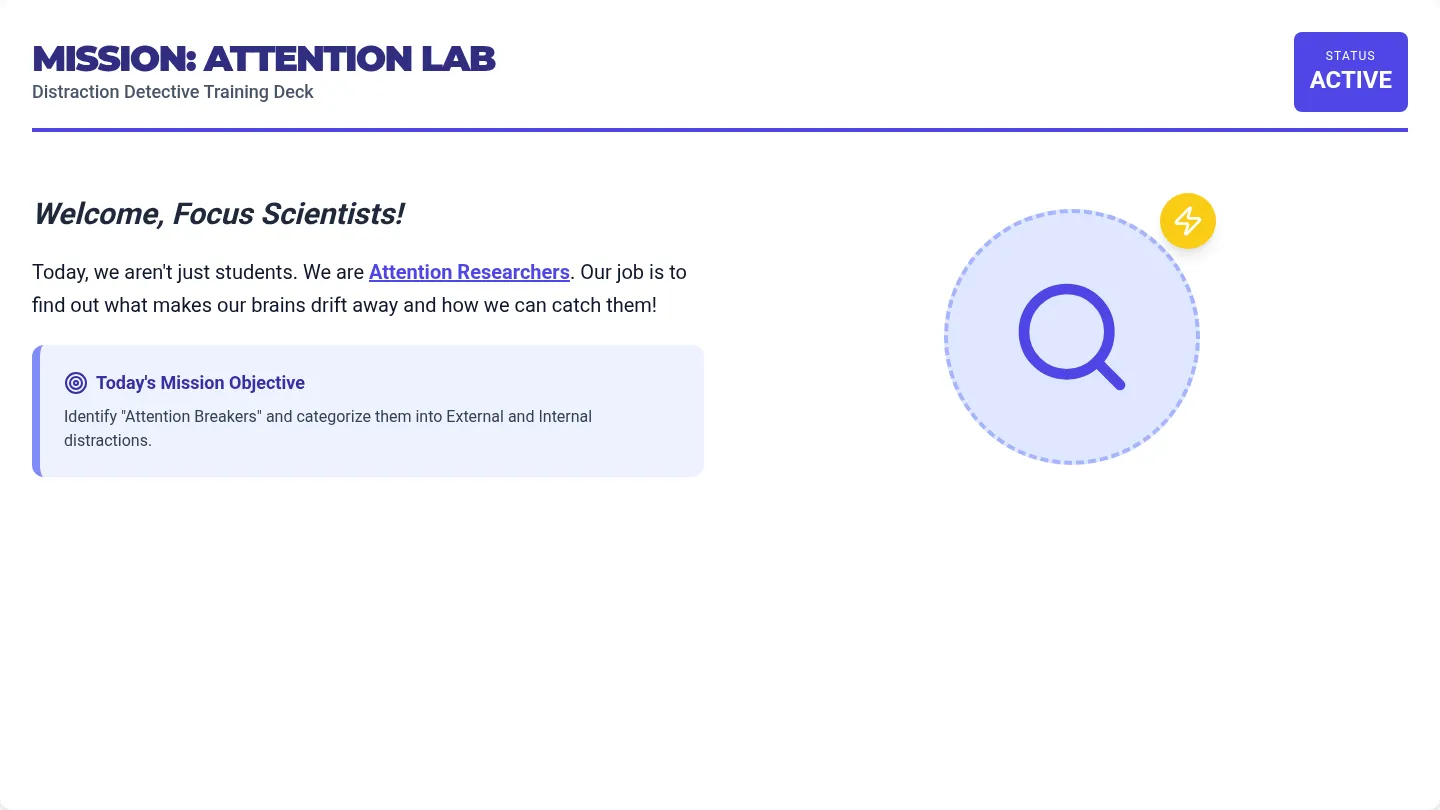
A 5-lesson sequence for 4th Grade students focused on developing metacognitive awareness of attention, utilizing timer techniques, internalizing positive self-talk, and designing supportive environments to sustain focus on complex tasks.
Comprehensive staff implementation guides and class-by-class daily data tracking sheets for middle school students receiving behavioral, emotional, and academic support services.
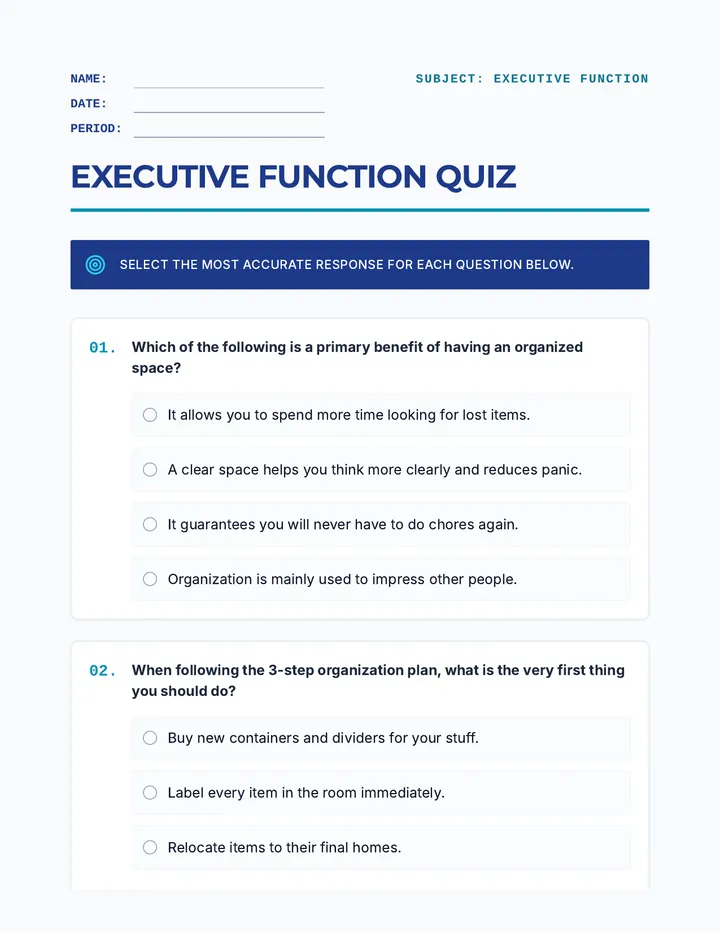
A lesson focusing on key executive function skills including organization, planning, working memory, and impulse control, featuring a 'Mission Control' theme.
A structured unit providing daily entry procedures, self-regulation habits, and teacher observation tools for secondary executive functioning seminars.
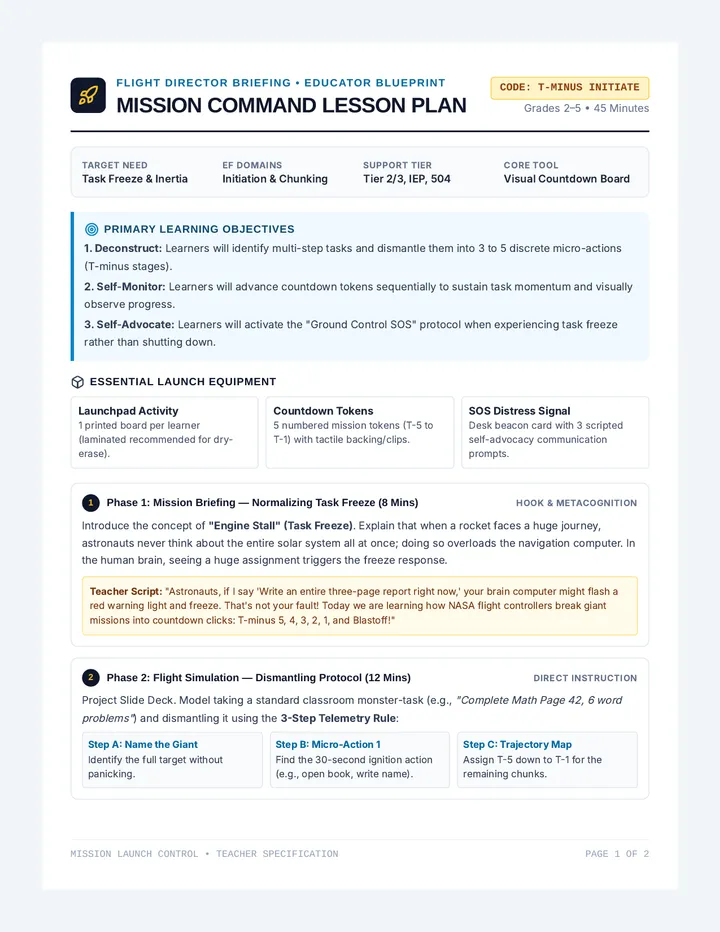
A comprehensive executive functioning and self-advocacy lesson guiding grades 2-5 learners to overcome task freeze by deconstructing multi-step assignments into visual trajectory checklists with countdown tokens and self-advocacy distress beacons.
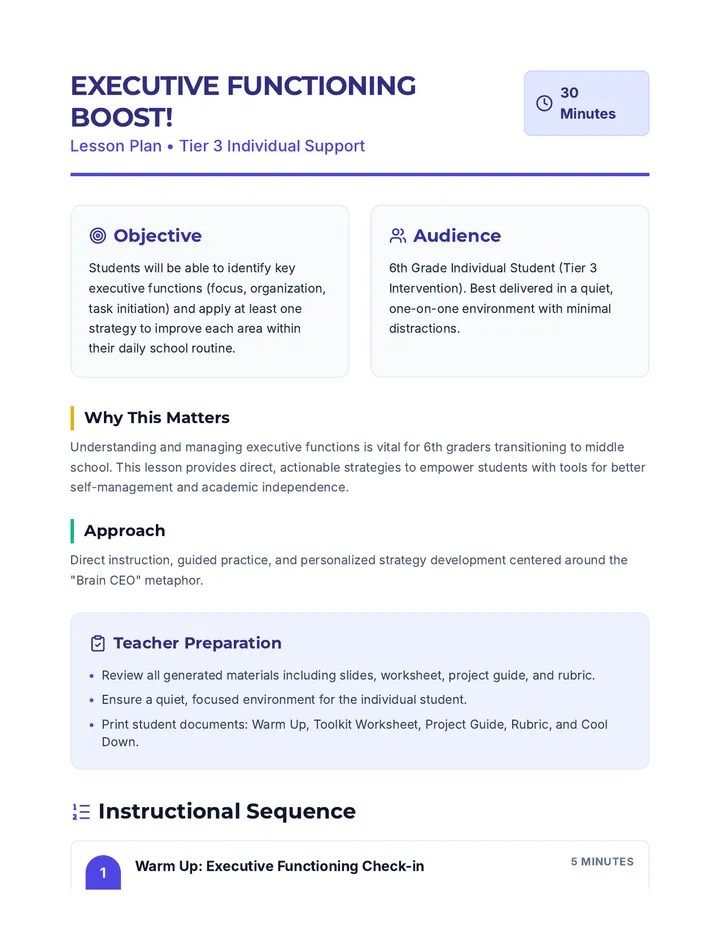
This 30-minute, Tier 3 lesson for a 6th-grade individual student focuses on understanding executive functions and developing practical strategies to improve focus, organization, and task initiation.
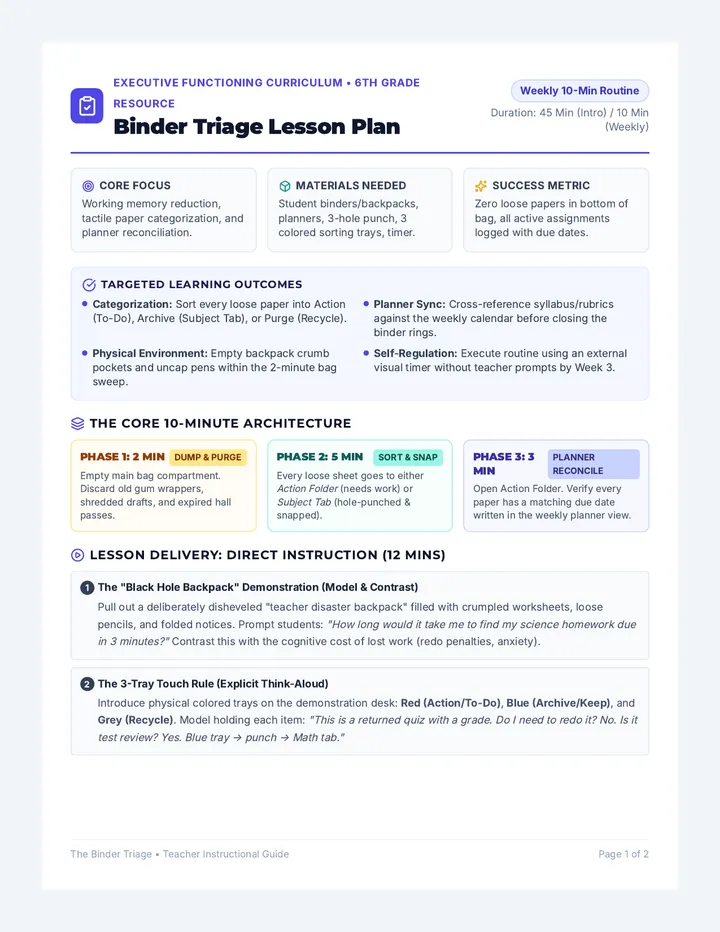
A targeted executive functioning lesson designed for sixth-grade resource students to master a ten-minute weekly triage routine. Students learn concrete sorting categories to organize loose papers, reconcile assignments with their academic planner, and purge backpack clutter before missing work cascades.