Interpreting non-literal language including idioms, metaphors, and sarcasm within social interactions. Strengthens inferencing skills to bridge the gap between literal words and intended meaning.
A multi-page printable card set and game mat focused on puns and figurative ambiguity for students with ASD. Features 12 pun and idiom detective cards, an interactive Pun Patrol game tracker, and an ASD instructional guide with literal-to-figurative bridging strategies.
A simplified, highly structured 12-slide interactive presentation designed for 6th grade autistic students in a small group. Uses short bulleted scenarios, clear visual icons, simplified vocabulary, and direct matching choices for emotions, intentions, sarcasm, and problem solving.
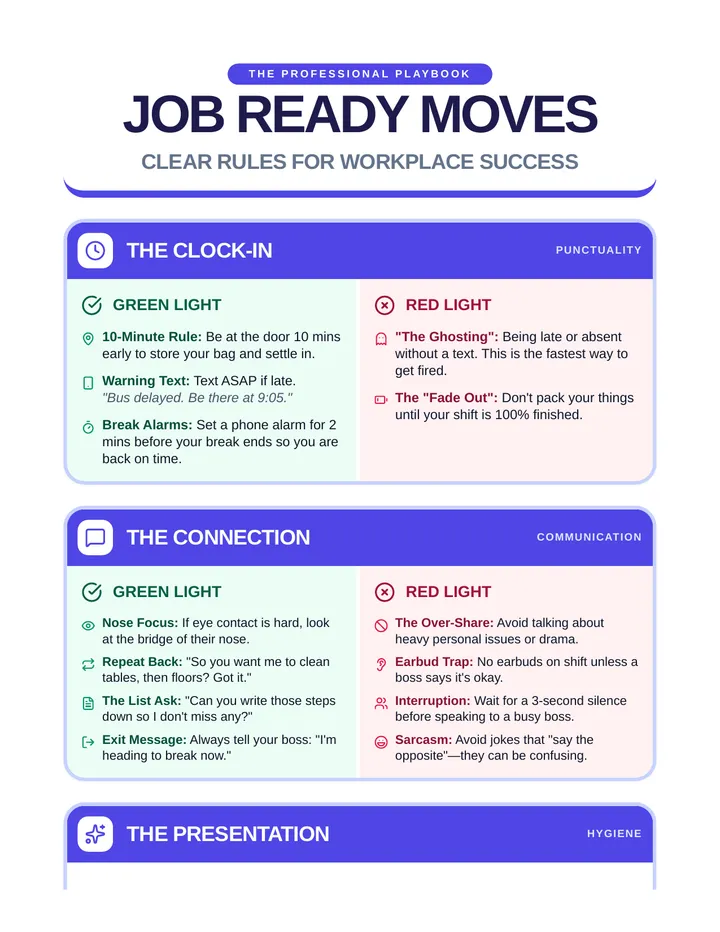
An updated version of the Job Ready Moves Poster with expanded hygiene tips, including specific advice on handwashing, hair grooming, and avoiding common hygiene pitfalls for students facing housing instability.
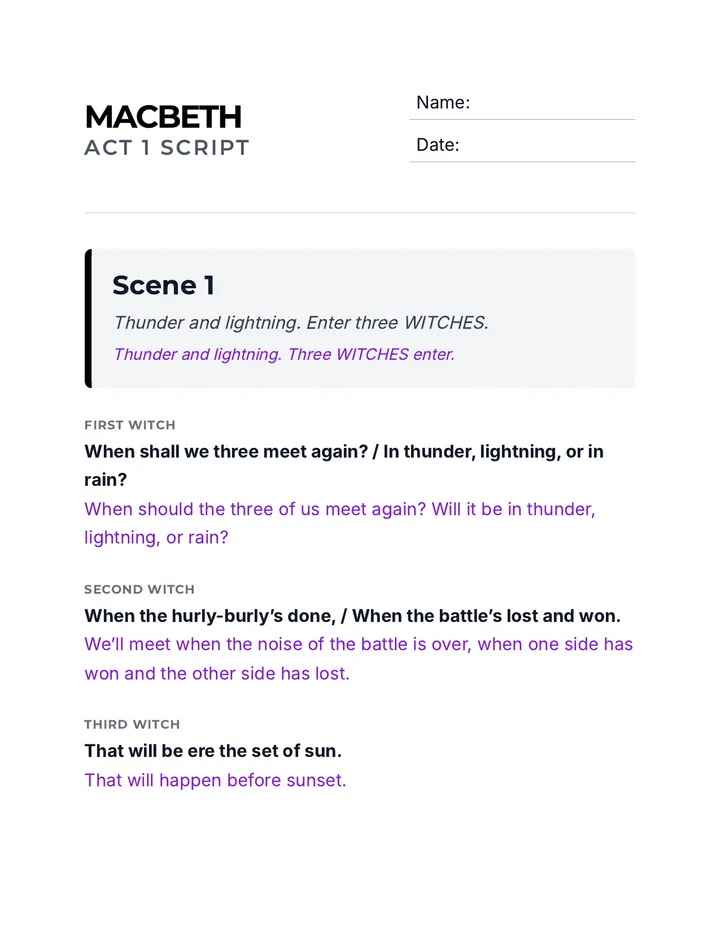
A comprehensive large-print (20pt) version of Macbeth Act 1 (Scenes 1-7). Specifically designed for accessibility, it features original Shakespearean text in bold black with modern purple translations directly beneath, maintaining line integrity for classroom use.
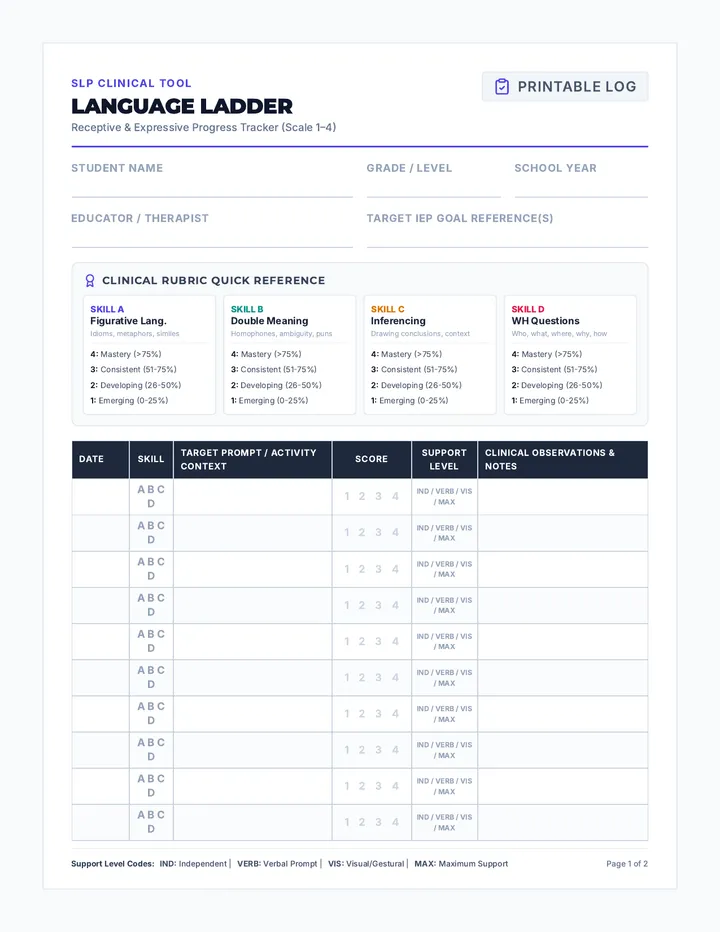
A complete two-page Speech-Language Pathology toolkit containing a print-ready data logging sheet with an integrated 1-4 scoring rubric, alongside clean, formatted templates designed specifically to copy and paste directly into Google Sheets for instant digital tracking of figurative language, double meanings, inferencing, and WH-questions.
A 6-week social-emotional learning program for teenagers on the autism spectrum, delivered in focused 20-minute sessions. The program uses visual "blueprints" to teach energy management, body awareness, and Comic Strip Conversation techniques for emotional regulation and perspective taking.
An 8-week deep dive into Kafka's Metamorphosis for special education students, focusing on abstract thinking, social value, and the human condition through high-engagement activities and visual organizers.
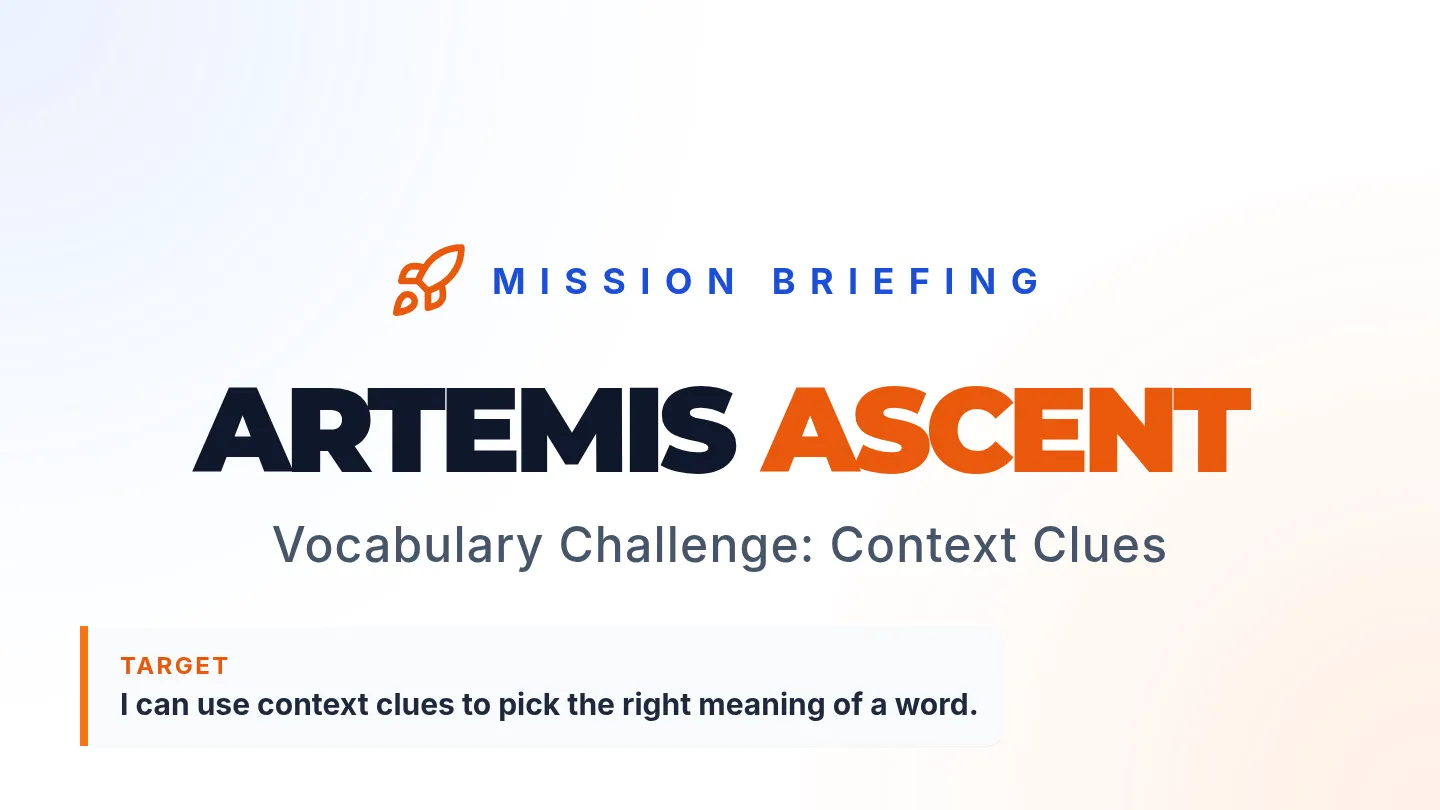
A multi-part speech-language therapy unit for middle schoolers focused on vocabulary development through the lens of NASA's Artemis II mission. Students use context clues strategies (IDEAS) to master mission-specific terminology.
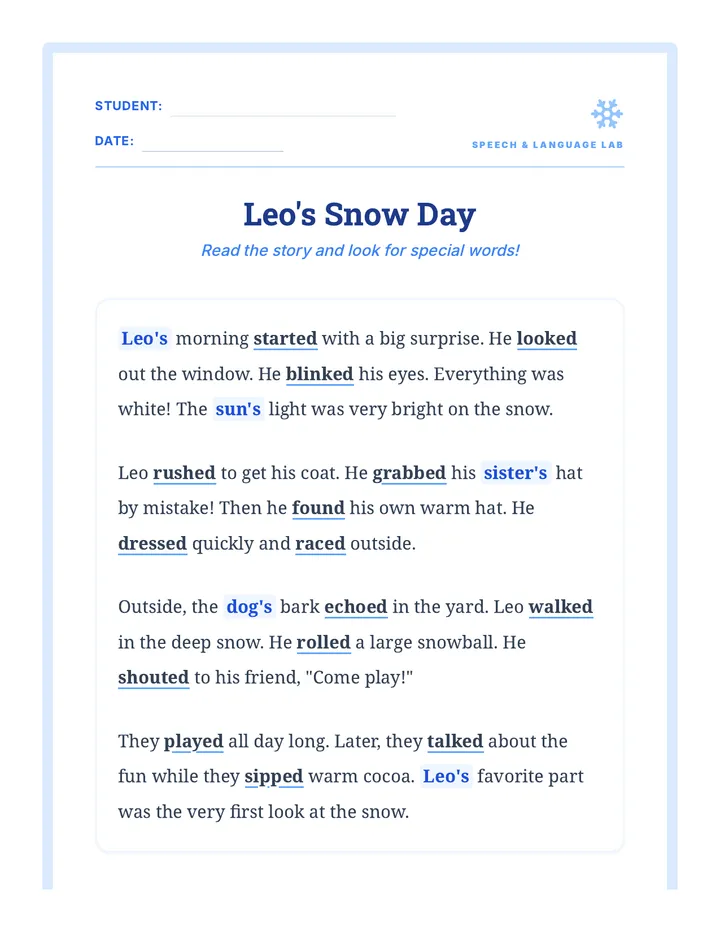
A thematic unit centered on winter and snow, exploring grammar, functional language, and descriptive comparison skills.
A series of activities focused on morphological awareness, teaching students to 'unpack' words by identifying prefixes, roots, and suffixes to determine meaning.
A comprehensive year-long, 36-week individual social skills intervention curriculum for a 6th grade student. Structured into four 9-week modules targeting topic maintenance, social cue decoding, problem-solving, and integrated real-world application.
A comprehensive speech therapy lesson focused on identifying and interpreting idioms, metaphors, similes, and multiple-meaning words through hands-on activities and visual aids.
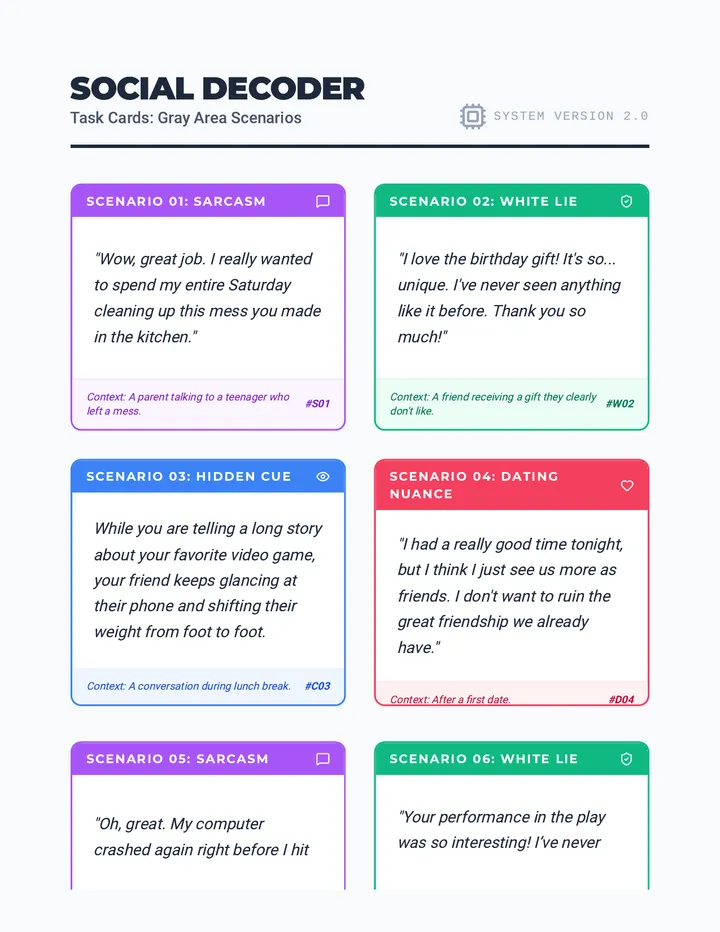
A comprehensive set of materials designed for a 10th-grade student with Autism to master identifying social intent and unspoken rules in complex, gray-area scenarios involving sarcasm, white lies, hidden cues, and dating nuances.
A targeted 1:1 intervention lesson focused on inferential reasoning and evidence-based explanations using a noir mystery theme. Students will practice identifying implied meanings in short scenarios and using specific sentence frames to justify their conclusions.
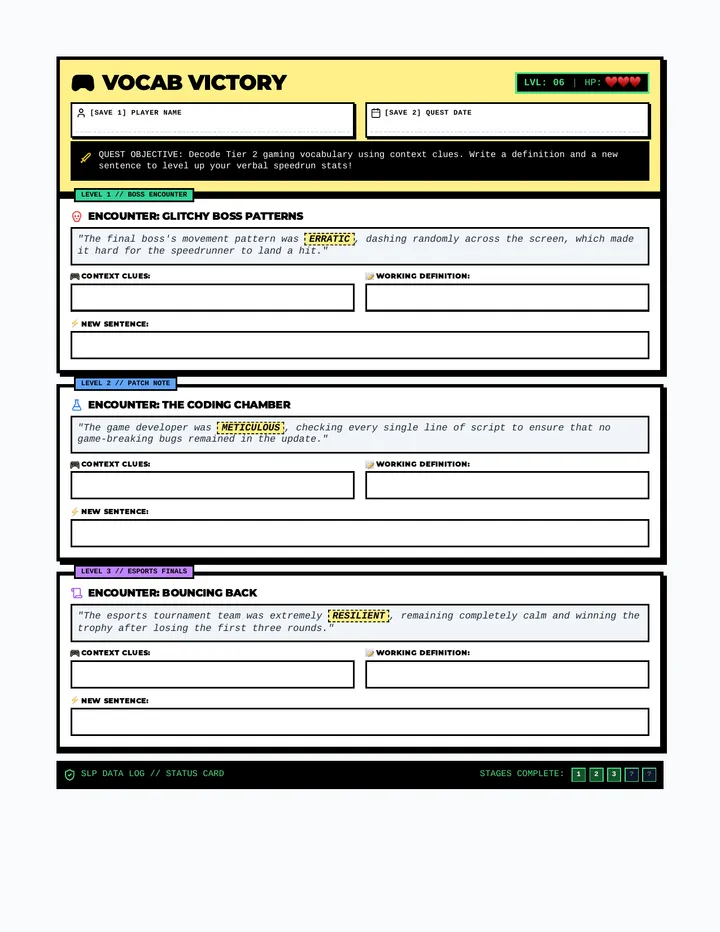
A comprehensive set of speech-language therapy activities designed for 6th-grade students, focusing on Tier 2 vocabulary, figurative language comprehension, and communication style identification through a Fantasy Quest video game theme.
A comprehensive speech-language therapy unit designed for 7th-grade students (targeting 4th-5th grade reading levels) to master temporal concepts, figurative language, story retell, and comprehension strategies within the context of daily life routines.
A specialized instructional framework for students with ASD and language processing challenges. This lesson uses a micro-step 'Success Pathway' game to build coding independence by leveraging numerical strengths and providing visual memory anchors to support memory retention.