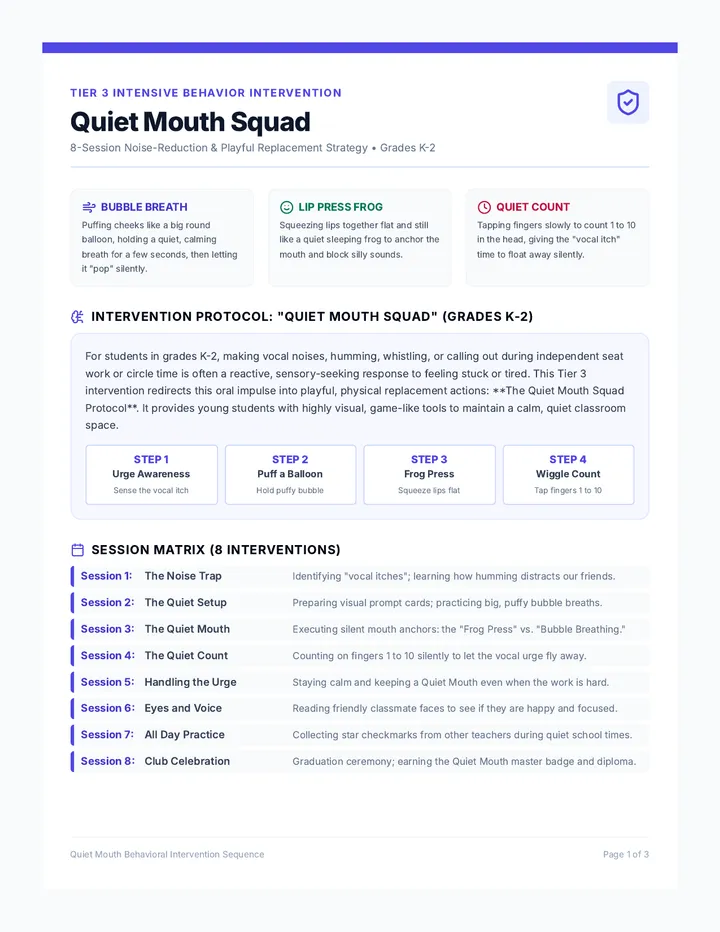
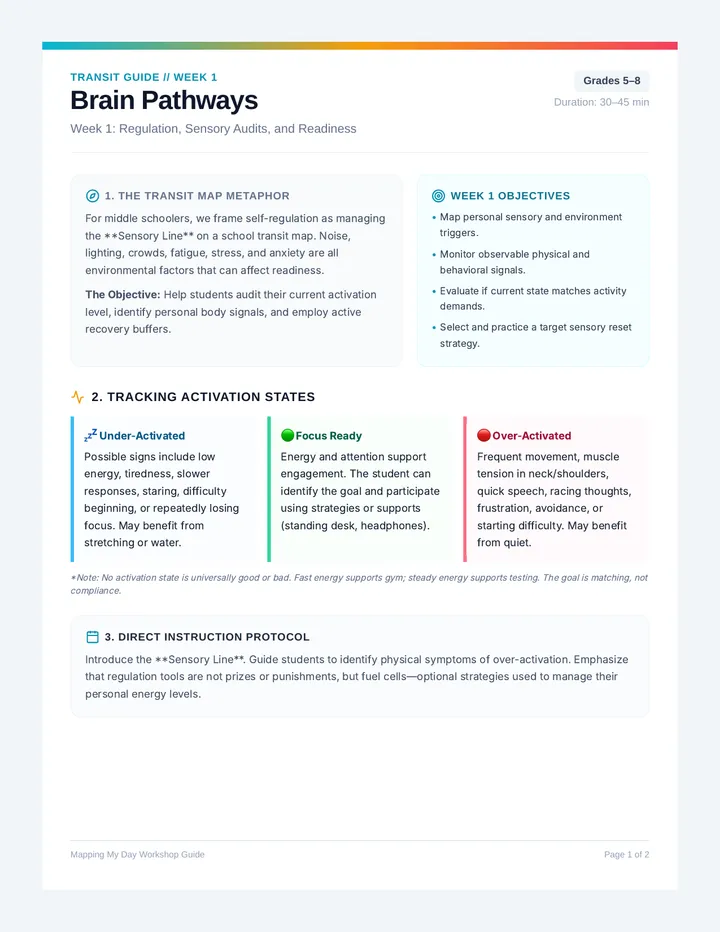
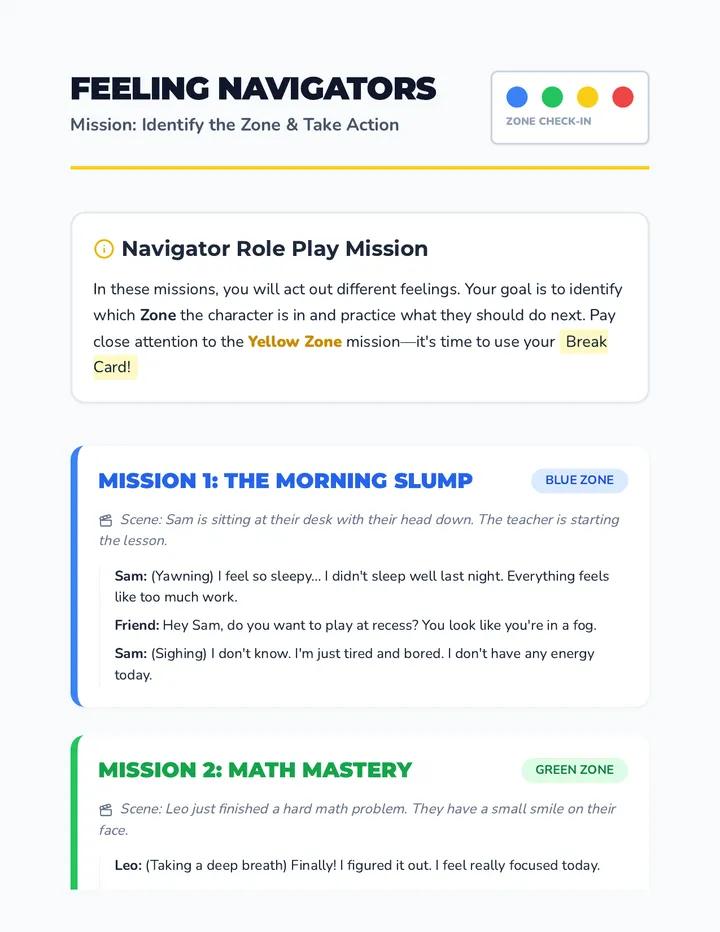
Tactile, vestibular, and proprioceptive tool implementation to support student self-regulation. Guides educators in selecting, monitoring, and adjusting sensory supports like fidgets, weighted items, and noise-canceling equipment.
A multi-week emotional regulation and social self-advocacy curriculum designed specifically for high schoolers with ADHD and BIPs. This sequence provides a modern, gamified framework for identifying triggers, practicing coping mechanisms, tracking daily goals, and resolving peer conflicts.
A comprehensive nine-week professional development sequence for middle school staff, delivering 10-15 minute training sessions on relationship-building, mindfulness, and de-escalation strategies. Includes interactive slides, facilitator guides, teacher reference cards, and digital newsletter templates.
A high school transition support sequence focusing on tracking and empowering students with autism as they develop critical independence, vocational, and self-advocacy skills. This sequence helps connect the classroom, student self-reflection, and home support.
A professional growth sequence focusing on student emotional regulation and systematic data-driven instructional leadership. This series pairs practical behavioral systems with rigorous academic reflection tools.
A highly visual, sensory-friendly 2-day curriculum designed for non-verbal teenage students with severe autism. This unit uses repetitive, concrete processing, visual humor, and 2-choice interactive structures to teach the life-critical routines of daily showering and changing clothes while avoiding sensory overload.
A 6-week intervention sequence designed for a first-grade student with autism, focusing on functional communication, task completion, and elopement prevention using a Paw Patrol theme.
A set of professional tools for conducting functional behavior assessments and implementing targeted interventions for students with ADHD.
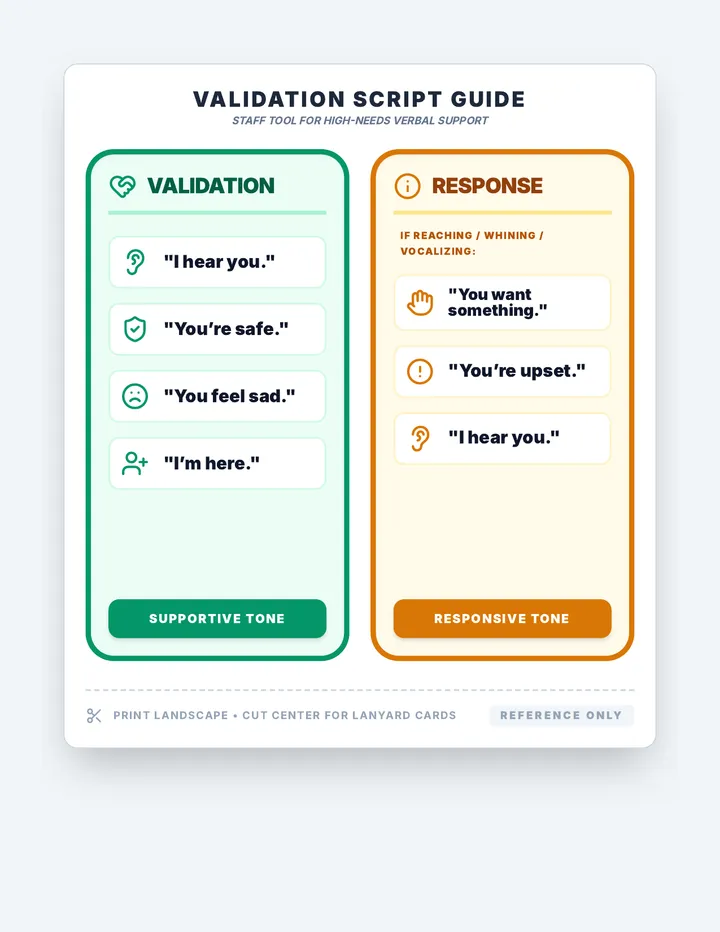
A specialized counseling sequence focused on replacing physical aggression with functional communication and sensory regulation for students with high-needs autism. This sequence emphasizes 'Gentle Hands' and provides visual tools for managing frustration when denied access.
A comprehensive regulation system for a 4th-grade student with autism, focused on academic frustration, motivation, and communication support using the Zones of Regulation framework. Includes strategies for both classroom and home environments.
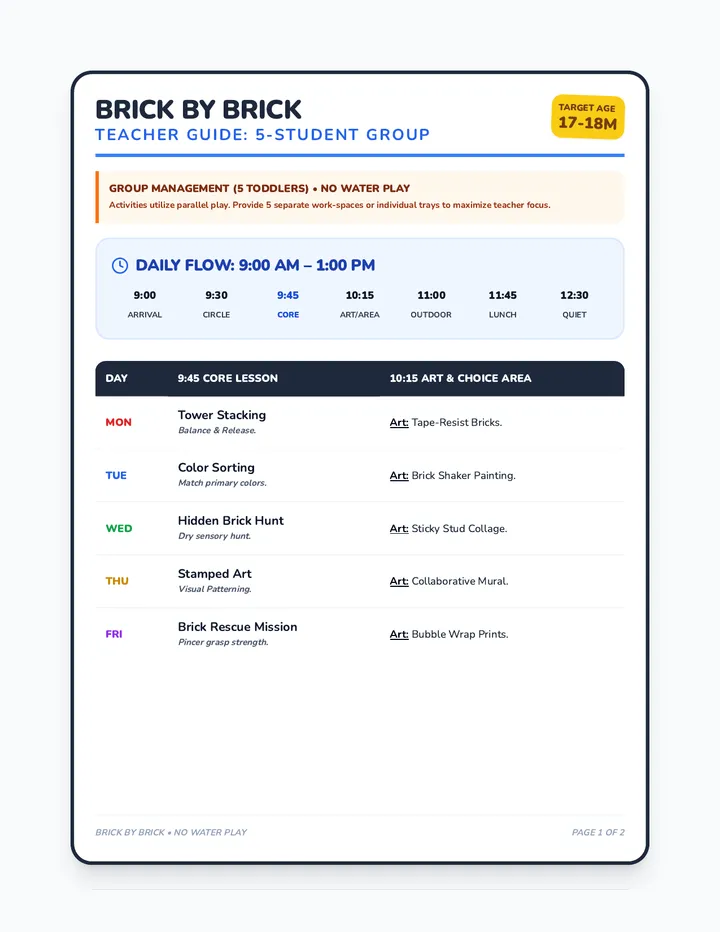
A collection of comprehensive week-long curricula for toddlers aged 17-18 months. Each themed week focuses on developmental play, sensory exploration, and fine motor skills for a group of 5 students with zero water play.
A sequence designed to help Junior High students with special needs navigate the unpredictable nature of end-of-school-year schedule changes using visual supports and self-regulation strategies.
A series of collaborative lessons designed for Best Buddies pairs to foster social connection through shared creative projects, from gardening to storytelling.
A comprehensive behavioral tracking and self-regulation kit focused on competitive grit, cooperative peer play, and calming strategies. This lesson contains a high-density daily data tracking sheet and a portable visual coping menu for desk-side student support.
A comprehensive social emotional learning lesson designed to help children navigate fears of the outdoors, specifically focusing on sensory overload (loud noises, bright lights, weather) and unpredictable insects. Includes an interactive social story workbook, visual coping cards, and a teacher support guide.
A simple, kid-friendly daily emotional regulation check-in system based on the Zones of Regulation model. Features a clean student desk mat, a coping strategy menu, a teacher instruction guide, and tracking logs.
A comprehensive visual support bundle designed for student emotional self-regulation, featuring an interactive board, PECS-style communication cards, a data tracker, and a step-by-step implementation guide.
A comprehensive preparation resource set for Field Day, designed for upper elementary and sensory-sensitive students. It includes a structured, coping-strategy-focused social story booklet and a beautifully organized, visual rotation schedule poster to support seamless transitions.
A resource hub designed to support teachers in managing classroom adjustments and implementing trauma-informed strategies for students experiencing acute family transitions.
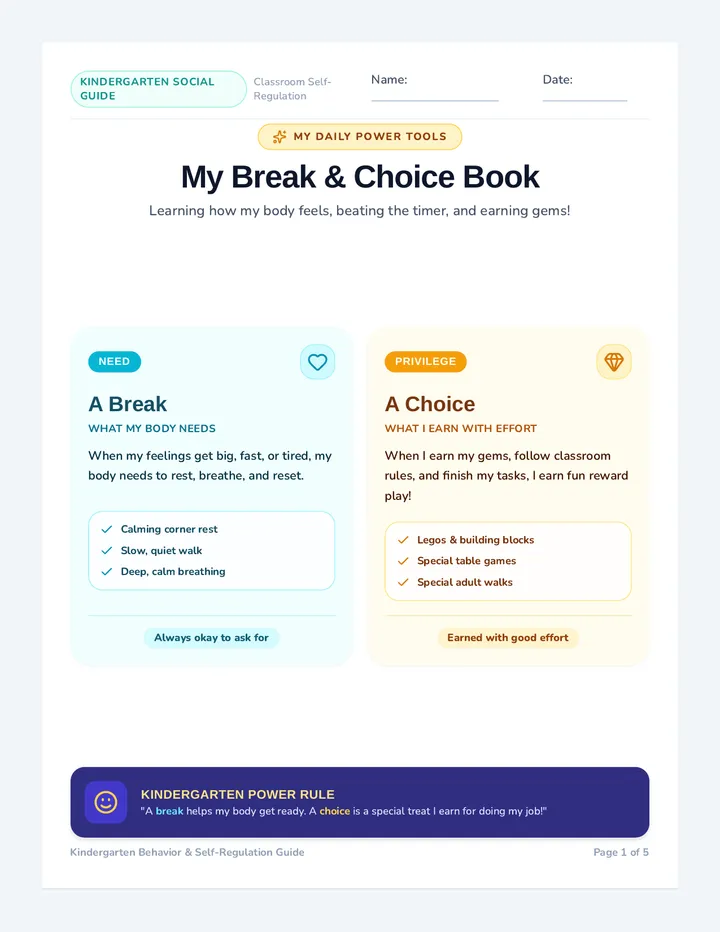
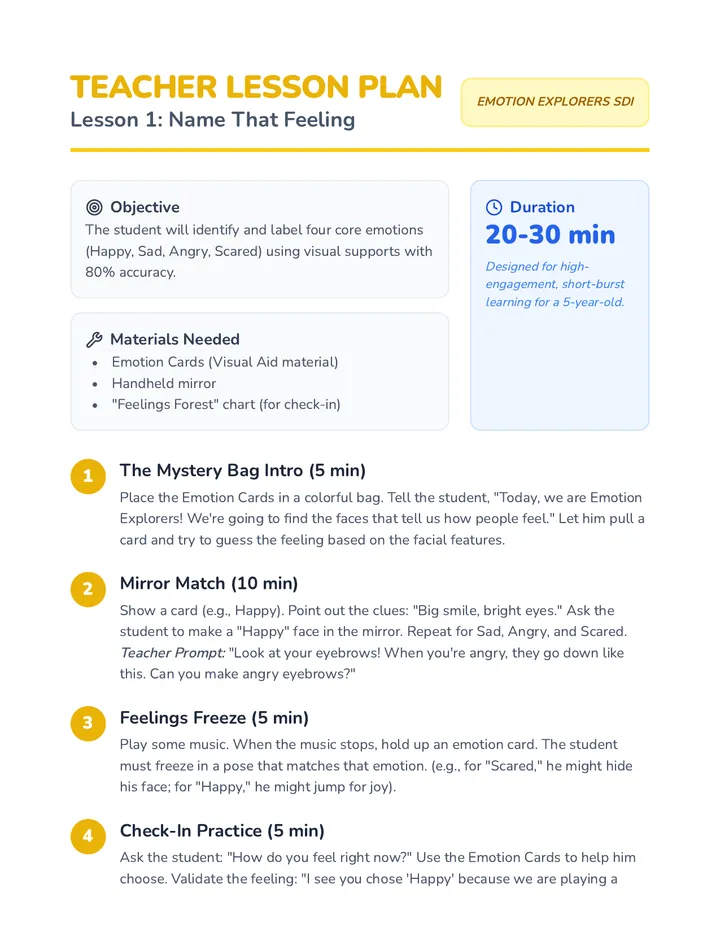
A specialized kit designed to support a Kindergarten student with autism in identifying emotions and practicing coping strategies. Includes a clear IEP goal and data collection sheet, along with printable visual support cards.
A supportive social story and teacher facilitation kit designed to help kindergarteners develop self-regulation, stay with their class, maintain a safe body, and choose safe physical outlets instead of eloping, hitting, or climbing.
A science-backed exploration of sensory self-regulation, analyzing how physical micro-movements, somatosensory inputs, and attention regulation theories help students optimize focus and calm in high school and beyond.
A self-advocacy and transition planning project where students identify their strengths, learning preferences, and sensory needs to build a physical passport portfolio for their next-grade teachers.
Month 4 focus on peer-to-peer conflict resolution, de-escalating social tension, responding to sarcasm, and reading social feedback cues without dysregulating.
Addresses social skills, self-advocacy with teachers, navigating peer-to-peer conflict, and reading social feedback cues without dysregulating.
A student-facing printable desk reference card with rich visual prompts for deep breathing, taking a classroom break, and using a fidget tool. It features a box-breathing finger-tracing guide and four cut-out keyring cards for portable self-regulation support.
A clean, simplified single-page student behavioral tracking sheet to log responses to winning, losing, or not being first, cooperative peer exchanges, and coping skill usage during heightened moments. It features 5 spacious, date-based tracking boxes with large check squares and is themed cohesively with emerald and indigo tones.
A professional facilitation and implementation guide for teachers or parents, including reading prompts for the social story, common sensory misconceptions, preparation protocols for outdoor sensory walks, and an observation progress checklist.
Printable pocket-sized coping cards that students can cut out, color, and carry with them. Includes 6 distinct cards with clear visual icons and actionable coping strategies for outdoors sensory triggers and insects.
An interactive printable social story workbook designed for children with sensory sensitivities or bug fears. It tells the story of Leo, a boy learning to take brave steps outside using simple coping tools, and includes reflection questions, matching activities, and a personal coping plan page.
A daily parent-communication slip designed to be cut in half, allowing teachers to share a student's emotional regulation success, coping strategies used, and a positive highlight of the school day.
A teacher data logging sheet to monitor student emotional states at key intervals during the school day. Helps track triggers, measure self-regulation success, and note effective coping strategies.
A clean, teacher-facing facilitation guide outlining a mini introductory lesson to teach a student how to use the Daily Zone Mat and Coping Strategy Menu. Includes scripts and supportive verbal cues.
A kid-friendly visual choice board presenting three actionable, evidence-based coping skills for each of the four emotional zones.
A printable desk-sized strip featuring the four colored emotional zones. Includes student status tokens and indicators that can be laminated and attached with velcro for interactive daily check-ins.
An educator-facing step-by-step guide explaining how to build, introduce, model, and fade prompts for the interactive regulation board, complete with troubleshooting tips.
A daily tracking log for teachers and support staff to document a student's emotional triggers, selected tools, regulation progress, and key behavior trends.