Voice-to-text tools and implementation strategies for students with writing or physical disabilities. Addresses software selection, student training, and editing workflows to increase independence in written expression.
Focuses on data management and synthesis, teaching students how to move annotations from source texts into a structured research matrix.
Students learn to turn static text into rich resources by hyperlinking to external evidence, definitions, and multimedia.
A collaborative lesson where students use shared documents to debate and analyze text in real-time using only digital annotation tools.
Using the analogy of social media threads, students learn to use digital comments as marginalia to record their internal dialogue and questions.
Students explore the technical toolsets of digital annotation, including highlighting palettes and comment features, while navigating the ergonomic differences of screen reading.
A synthesis lesson where participants design a 2-week writing unit integrating assistive technology. Includes modeling, guided practice, and assessment of tech-integrated writing products.
Addresses the transition from adult-prompted technology use to student independence. Focuses on data-driven fading plans and teaching students to manage their own troubleshooting.
Teaches the 'Listen-Read' method for auditory editing using Text-to-Speech (TTS). Participants develop student checklists to catch syntax errors and omissions that visual reading might miss.
Focuses on 'dictation fluency' and the coaching techniques required for effective speech-to-text use. Covers 'think-alouds', short-burst drafting, and creating visual scaffolds for voice commands.
Explores how digital graphic organizers support executive function in the pre-writing stage. Graduate students learn to teach the conversion of mind-maps to linear outlines using drag-and-drop technology.
Master the legal and administrative requirements for documenting AT in the IEP. Draft SMART goals and data-driven justification statements for assistive devices.
Synthesize student profiles and environmental data using the SETT Framework to propose a hierarchy of assistive writing solutions. Includes a consultancy protocol for complex cases.
Final mastery check and exit ticket for the 5-lesson sequence, allowing students to self-assess their technical skills and pedagogical understanding of digital annotation.
A rubric for peer evaluation of the capstone unit design. Criteria focus on theoretical integration, modeling quality, fading plans, and feasibility.
Student data management tool for organizing digital research annotations, quotes, and sources into a structured table.
A comprehensive planning template for graduate students to design a 2-week writing unit that integrates assistive technology. Includes sections for student profiling, instructional scaffolding, and fading plans.
Introductory slide deck for Lesson 5, explaining how a Research Matrix helps organize digital annotations from multiple sources into one master document.
Slides for Lesson 5 focusing on the synthesis of previous lessons into a cohesive 2-week writing unit. Emphasizes pedagogy over tool selection and student autonomy.
Reference sheet for students providing safe and reliable websites for finding definitions, facts, maps, and multimedia to use as hyperlinks.
A set of role-play/troubleshooting cards for common assistive technology glitches. Designed to help students practice independent problem-solving before seeking adult help.
Student activity guide for Lesson 4, challenging students to transform a plain text paragraph into a rich, multi-dimensional resource with four types of hyperlinks.
Introductory slide deck for Lesson 4, explaining how hyperlinks turn static text into rich, multi-dimensional resources.
A data collection/tracking tool for teachers to monitor student independence with assistive technology across four stages of support.
Student rubric and peer feedback form for Lesson 3, focusing on collaborative annotation quality and engagement.
A 5-lesson sequence designed for 9th-grade students in an academic support setting to master digital annotation, highlighting, and collaborative text analysis tools. The sequence focuses on transitioning traditional paper-based strategies to digital environments like Google Docs and PDFs, emphasizing visible thinking and peer collaboration.
A comprehensive graduate-level sequence focused on the pedagogical implementation of assistive writing technology. It shifts the focus from tool selection to instructional methodologies that scaffold digital organizers, dictation, and text-to-speech for student autonomy.
This graduate-level sequence prepares educators to evaluate and select assistive writing technologies using evidence-based frameworks like SETT. It covers the neurology of dysgraphia, technical analysis of speech-to-text and word prediction, and the legal requirements for IEP implementation.
This sequence prepares pre-service teachers to evaluate, select, and implement assistive technology (AT) tools specifically designed for students with dysgraphia and physical motor impairments. Students will move from understanding neurological barriers to designing comprehensive, data-driven AT implementation plans.
This sequence empowers 3rd-grade students to bypass physical writing barriers using assistive technology tools like speech-to-text, digital organizers, and word prediction. Students progress from basic dictation mechanics to publishing a fully edited personal narrative, fostering independence and confidence in their writing abilities.
A 5-lesson unit for 6th-grade students focused on mastering assistive writing technologies, including speech-to-text, word prediction, and digital graphic organizers, culminating in a personal narrative and a self-advocacy tech plan.
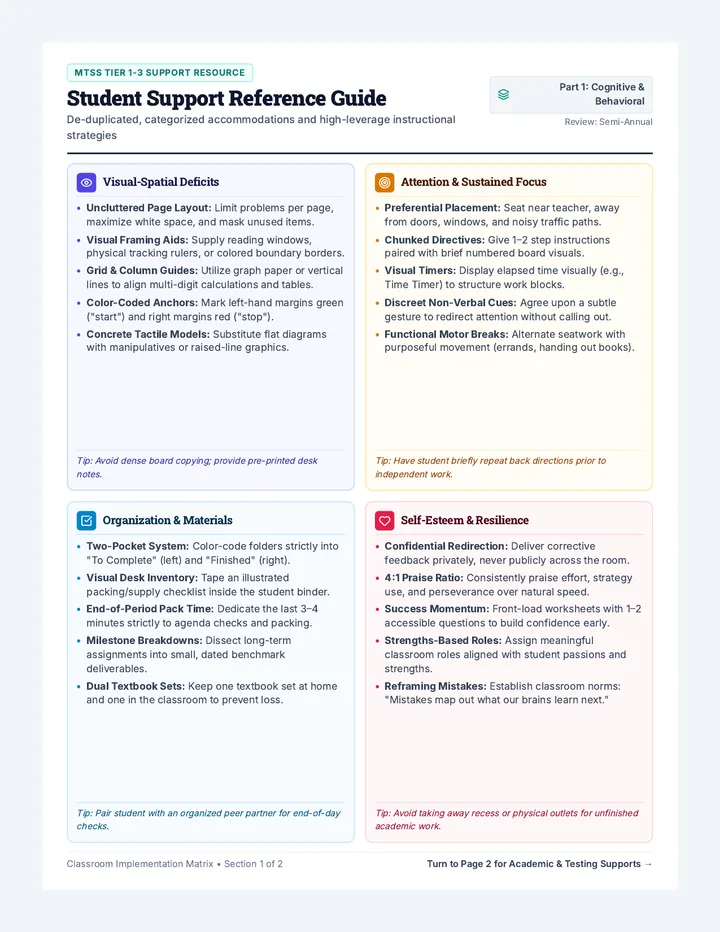
A comprehensive sequence for undergraduate special education students focused on tailoring text engagement and annotation strategies for learners with SLD, ADHD, and visual processing needs. Students analyze case studies, evaluate assistive technologies, and design bespoke support plans.
This sequence introduces 2nd-grade students to assistive writing technology, including speech-to-text, digital organizers, word prediction, and text-to-speech, to foster independence in writing.
This sequence teaches 11th-grade students with working memory challenges how to use digital tools as external memory aids. Students learn to capture, process, and execute instructions using voice-to-text, micro-tasking, auditory alarms, and visual freezing techniques.
This sequence empowers students with working memory challenges to use digital tools to linearize tasks. Students learn to offload cognitive burden by using task managers, voice assistants, QR codes, and accessibility features to focus on one step at a time.
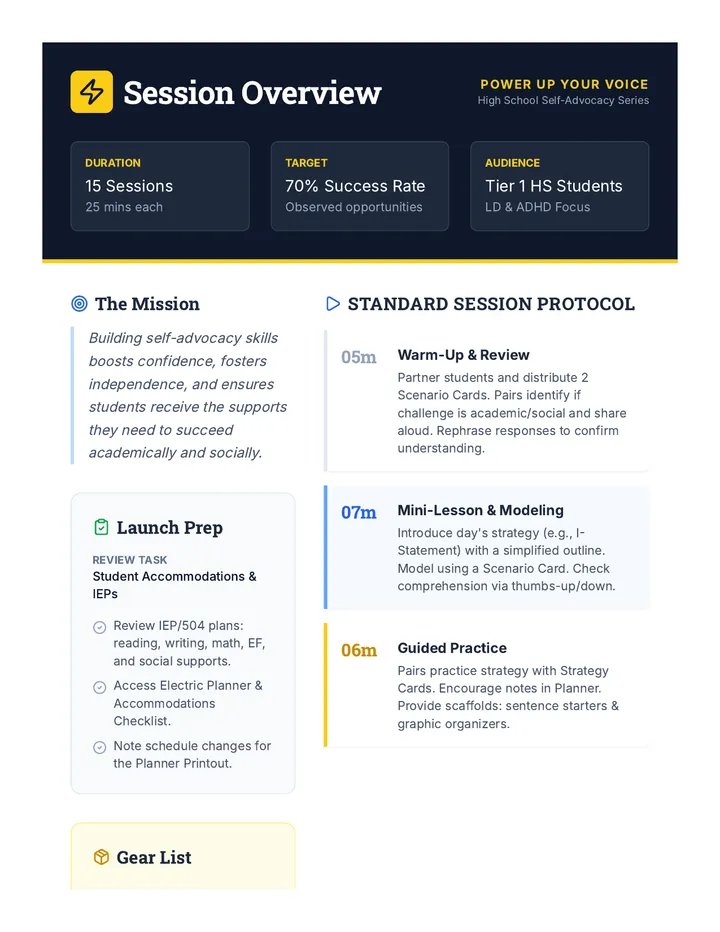
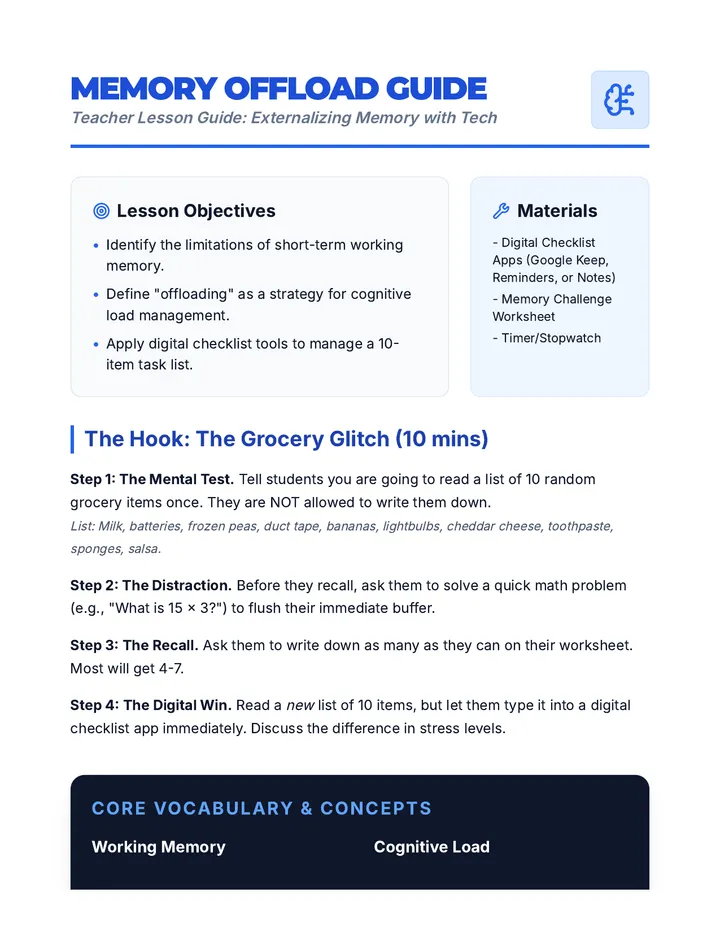
A 5-lesson unit for 8th-grade students focusing on using digital tools to offload working memory and manage cognitive load. Students learn to use task managers, focus modes, sequential reminders, and assistive speech technologies to create a personalized digital workflow for school success.
A graduate-level sequence focused on modifying computing environments via text expansion, key remapping, and macros to enhance accessibility for individuals with motor impairments. Students progress from basic software configurations to designing bespoke automation profiles for complex client cases.