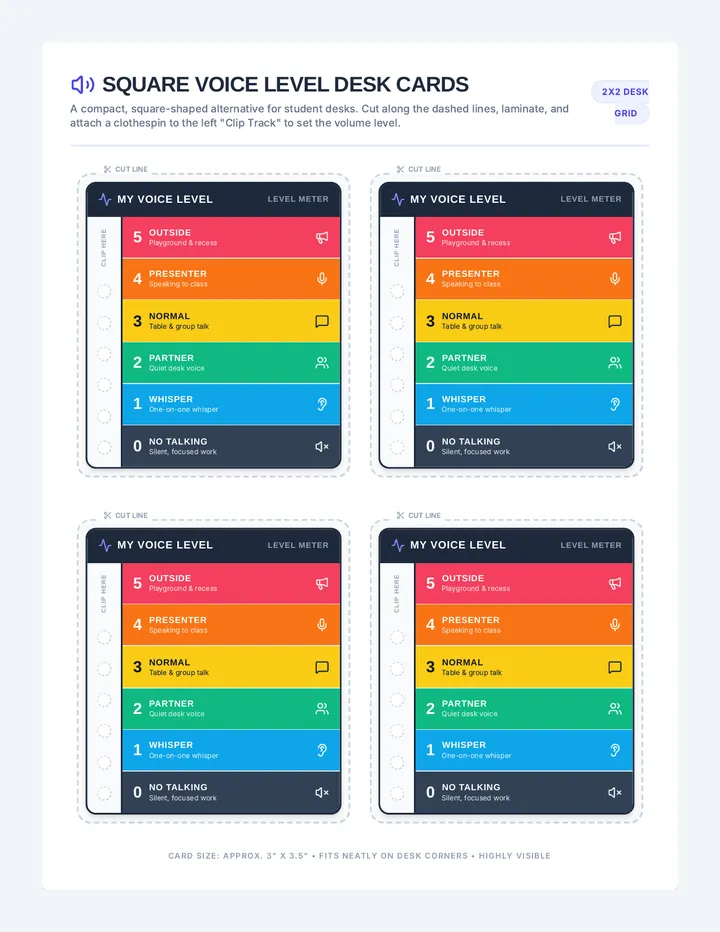
Regulation of vocal volume across diverse social settings, from quiet classrooms to outdoor play. Targets the impact of pitch and inflection on social interactions and message interpretation.
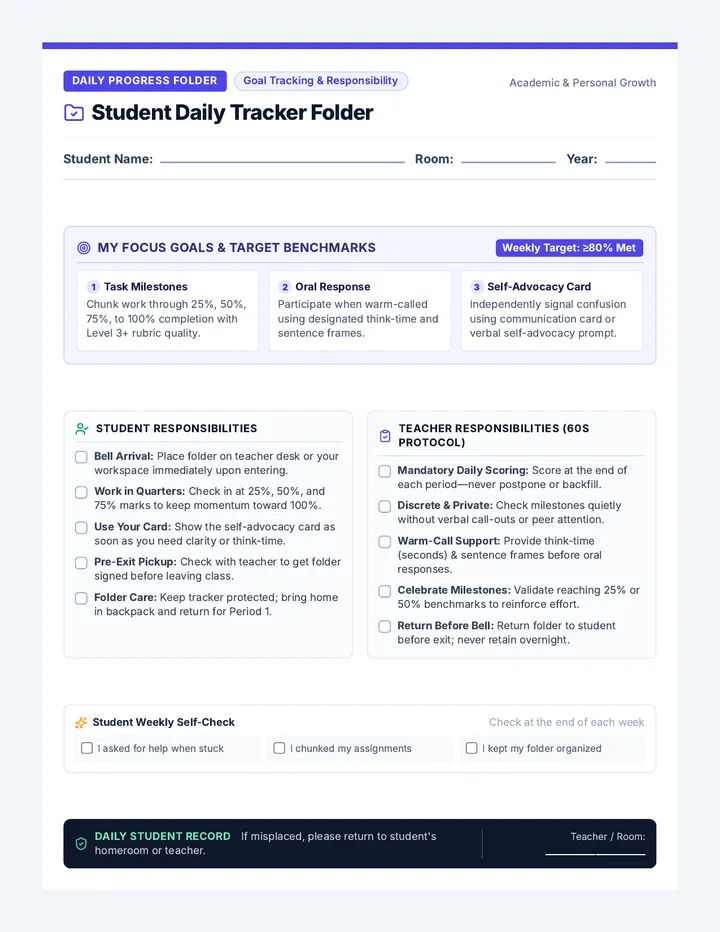
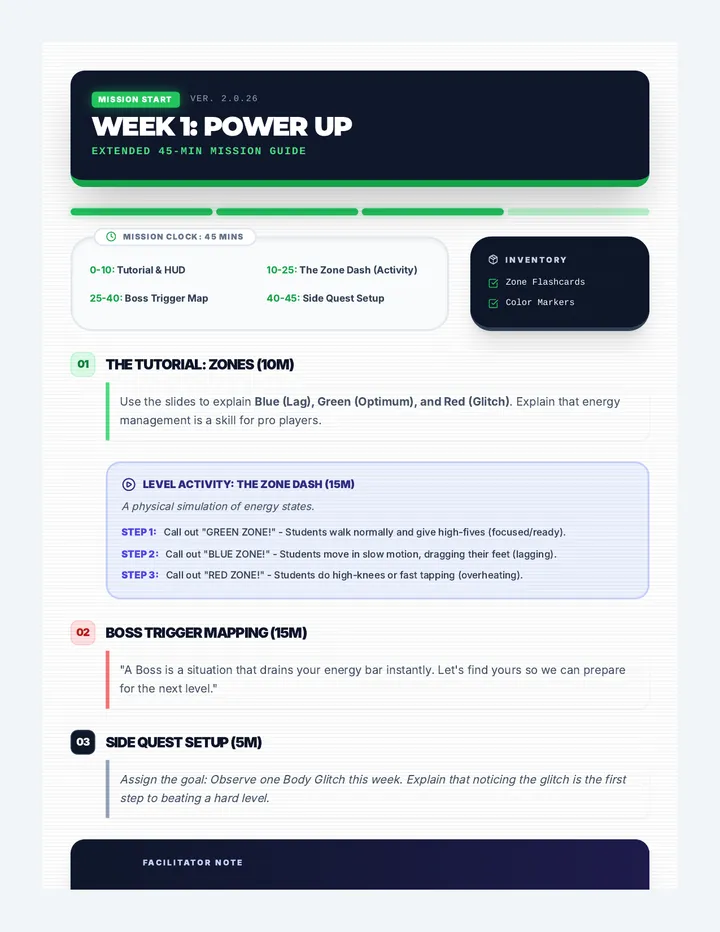
A multi-week emotional regulation and social self-advocacy curriculum designed specifically for high schoolers with ADHD and BIPs. This sequence provides a modern, gamified framework for identifying triggers, practicing coping mechanisms, tracking daily goals, and resolving peer conflicts.
A unit introducing high school students to essential teamwork, communication, and problem-solving skills, focusing on workplace readiness, self-advocacy, and Pre-ETS skills.
A comprehensive 5-day Pre-ETS and SPED transition unit introducing high school students to workplace readiness, professional communication, hard vs. soft skills, self-advocacy, and career exploration.
A professional growth sequence focusing on student emotional regulation and systematic data-driven instructional leadership. This series pairs practical behavioral systems with rigorous academic reflection tools.
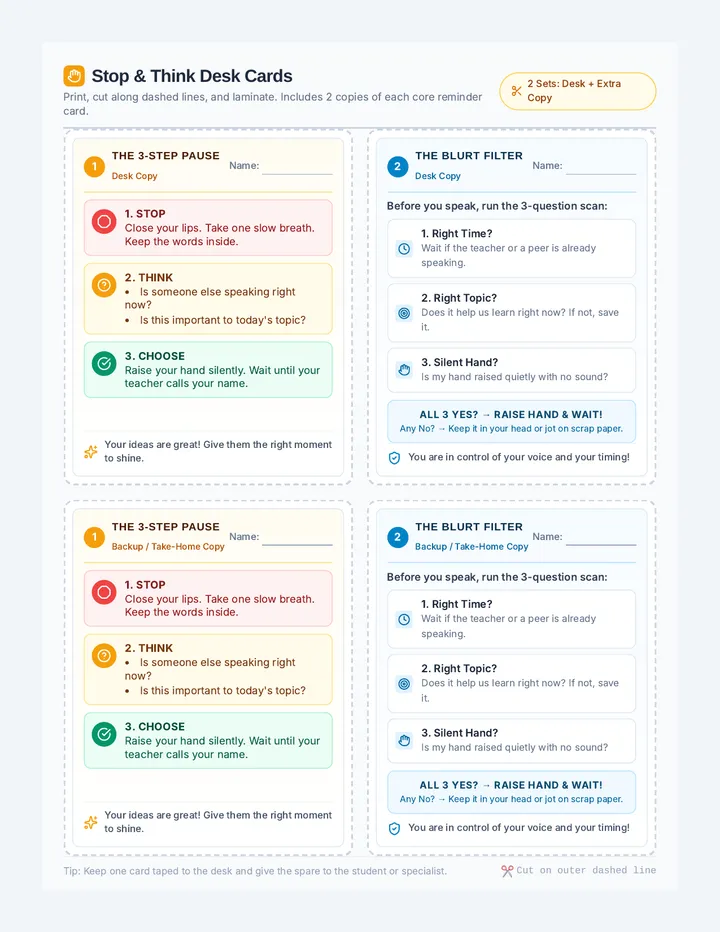
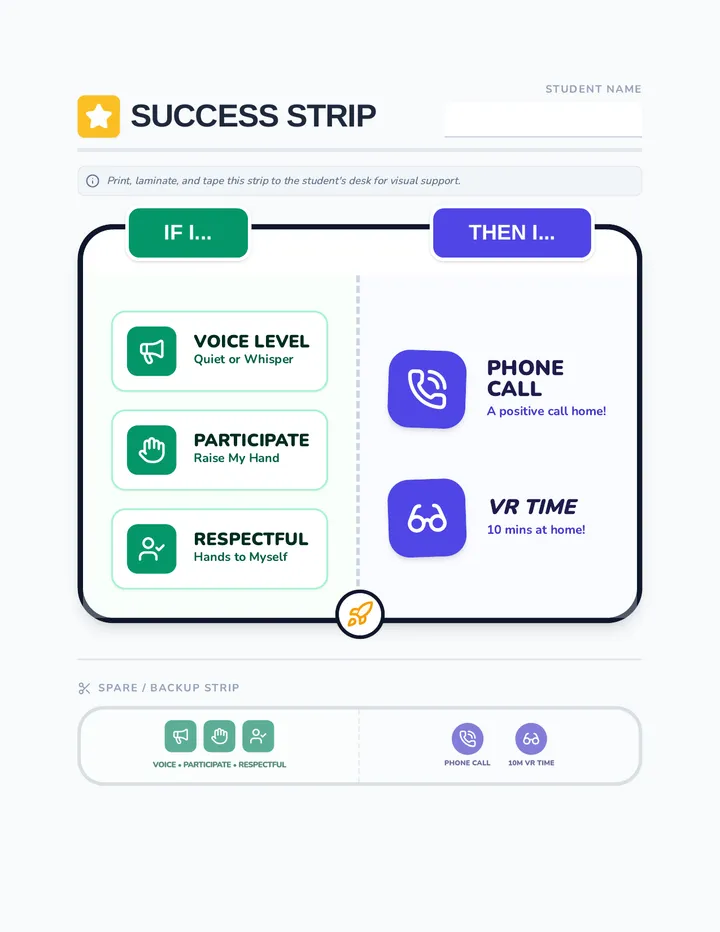
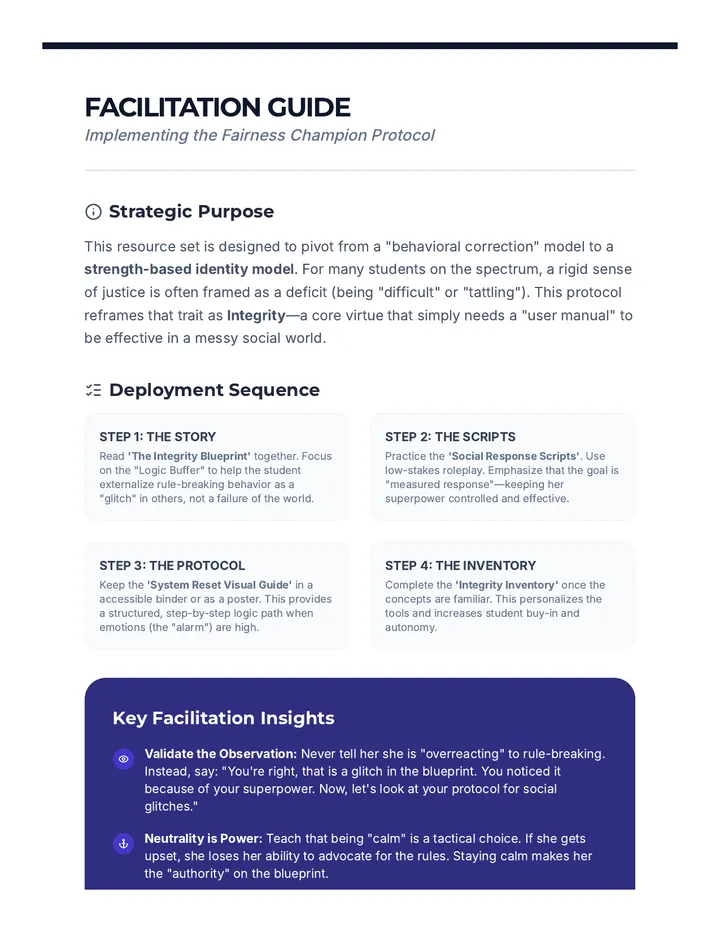
A behavior support system designed like an architectural blueprint, focusing on building self-regulation, reducing interruptions, and establishing clear structural boundaries for student success.
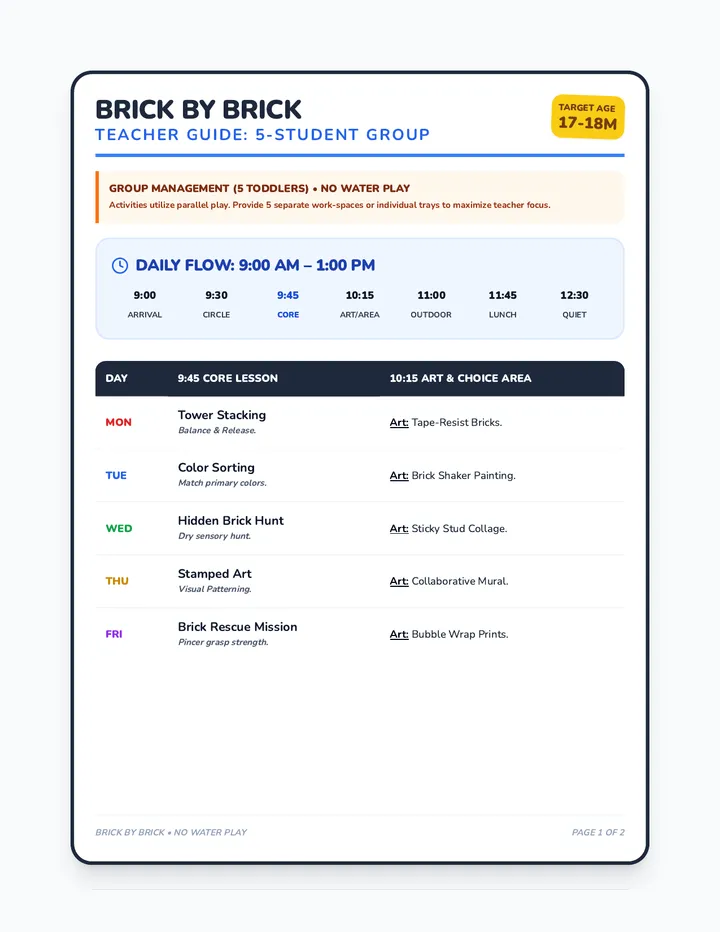
A collection of comprehensive week-long curricula for toddlers aged 17-18 months. Each themed week focuses on developmental play, sensory exploration, and fine motor skills for a group of 5 students with zero water play.
A series of five 15-minute assessment sessions designed for 3rd-5th grade special education students to collect data on key SEL competencies including Self-Awareness, Self-Management, Emotions, Relationship Skills, and Decision-Making.
A 15-lesson SEL sequence for Grade 9 students with ASD and LD, focusing on social nuance, self-regulation, and interpersonal skills within a math classroom context. This program uses a 'Lab Notebook' theme to gamify social learning and advocacy.
A comprehensive 4-lesson program designed to support students with Autism in their transition from elementary to middle school. The program uses a 'Mission' theme to provide explicit instruction on structural changes, social advocacy, emotional regulation, and daily routines.
A sequence focused on building self-advocacy skills through experiential learning, specifically for scheduling and managing various types of professional and personal appointments.
A social-emotional unit for 3rd grade students in inclusive programs, focused on building 'Social Detective' skills. Students learn to scan environmental cues, interpret non-verbal communication, and flexibly adjust their behavior to match the social energy of different contexts.
A comprehensive 7-day unit for Grade 11/12 Designing Your Future students, focusing on leveraging AI tools like Gemini for workplace and college success. Designed for special education contexts, it emphasizes self-advocacy, professional communication, research, and project management through visual and digital tasks.
A 4-week space explorer themed morning meeting series for middle school ESY scholars with disabilities. Led by Commander Sosnoff, it covers Mars Rover, Asteroid Navigation, Saturn Rings, and Nebula sectors with calendar ship logs, cosmic energy checks, stellar affirmations, and turn-and-talk communication prompts.
A comprehensive small-group counseling lesson designed to help high school special needs students use context clues to decode social intent in workplace, community, and safety situations.
A highly structured social-skills unit for 7th-grade students with ASD, focusing on non-verbal signals, group work compromise, and navigating peer conflicts.
A 1-on-1 life skills lesson for middle schoolers with intellectual disabilities. Focuses on using simple, concrete language to teach appropriate ways to get attention, ask for help, or connect with peers using "Green Choice" (helpful) and "Red Choice" (unhelpful) visuals.
Month 4 focus on peer-to-peer conflict resolution, de-escalating social tension, responding to sarcasm, and reading social feedback cues without dysregulating.
Addresses social skills, self-advocacy with teachers, navigating peer-to-peer conflict, and reading social feedback cues without dysregulating.
Focuses on calming techniques, active anger management, and frustration tolerance when triggers spike, introducing personalized 'Pivot Plans' for classroom situations.
Establishes the foundation of self-awareness by helping students map their physical trigger responses ('Internal Radar') and setting up their baseline self-monitoring daily tracker.
A social communication lesson designed for 5th-grade students with autism, focusing on understanding how our spoken words affect people around us in public, unfamiliar settings.
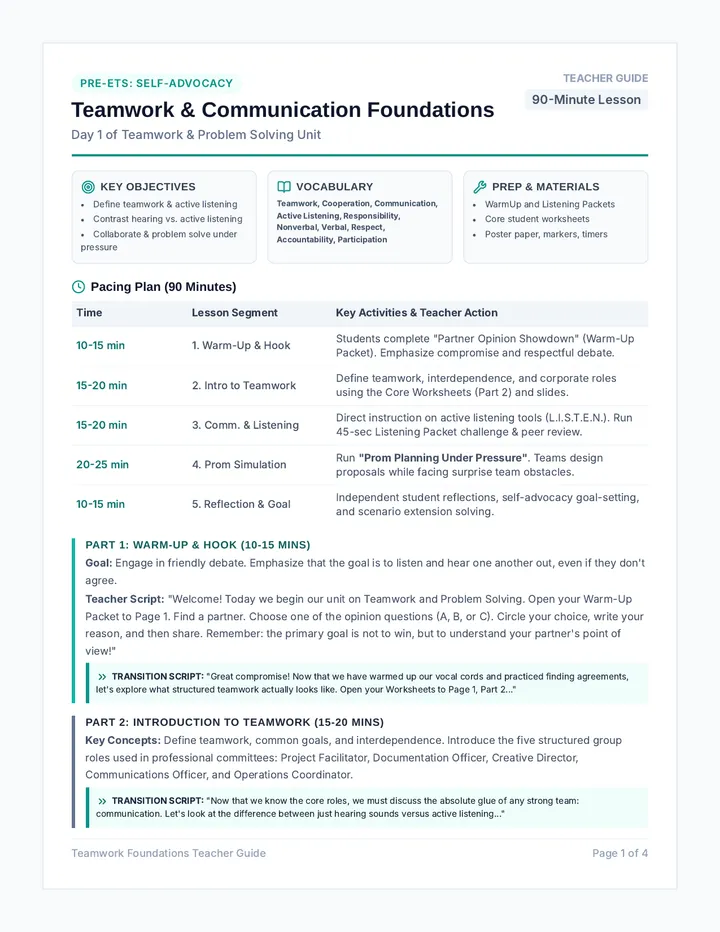
This introductory lesson establishes the fundamental principles of teamwork, verbal/nonverbal communication, and active listening. Students learn roles in a team and practice active listening through partner exercises, connecting these self-advocacy skills directly to workplace readiness and internships.
A gentle, step-by-step social narrative lesson designed for second graders who are beginning to vocalize in the classroom. This mini-lesson uses a warm, low-pressure approach to model friendly greetings, expressing basic needs, and making simple one-word requests at the student's own comfortable pace.
A comprehensive lesson designed to teach elementary students essential classroom self-regulation and active listening skills. It includes interactive presentation slides and a targeted social story with reflection activities to reinforce behavioral expectations.
A 2-page printable student daily workbook and self-regulation tracker for the 4-week Orbit Odyssey. It features intuitive layouts with name/date fields, visual check-ins for daily cosmic energy states, simplified reflection boxes, and partner-connection star ratings. Tailored for middle school scholars with disabilities.
A comprehensive 3-page teacher facilitation guide for the 4-week Orbit Odyssey morning meetings. It features a detailed 15-minute pacing breakdown, explicit verbal scripts for choral responses (ship logs and daily affirmations), active sensory cues for daily cosmic energy checks, and structured guidelines for a timed crew turn-and-talk sharing session. Featuring Commander Sosnoff.
A 26-slide presentation for a 4-week, 20-day space explorer themed morning meeting series. Designed specifically for middle school scholars with disabilities, it is led by Commander Sosnoff. Features daily ship logs, cosmic energy/sensory checks, stellar affirmations, and timed turn-and-talk sharing prompts, with no text smaller than 24px.
An interactive slide deck featuring six structured slides that introduce the C.L.U.E. Framework, walk through step-by-step social scenarios, and guide student practice.
A two-page student practice worksheet featuring four real-world scenarios. Students apply the C.L.U.E. Framework to identify context clues, voice tone, body language, and intent, providing four structured opportunities for IEP tracking.
A two-page printable set of 12 scenario cards depicting real and hypothetical social situations in workplace, community, and public safety environments. Includes dotted cut lines.
A comprehensive, two-page facilitator guide providing counselors and teachers with lesson scripts, pacing, targeted discussion questions, and scaffolding strategies for teaching social context clues.
A visually striking, one-page anchor chart summarizing the C.L.U.E. Framework for decoding social context. It includes concrete indicators for workplace, community, and safety situations.
A 2-page print-ready lesson delivery plan and complete answer key for the Social Decoder Worksheet, featuring concrete pacing, ASD accommodations, and visual scaffolding cues.
A 3-page structured student worksheet packet with visual guides, matching sections, and scaffolded graphic organizers for analyzing middle school social scenarios.
A student-facing self-reflection sheet and a weekly connection tracker. Includes a frequency self-check meter, targeted open-ended reflection prompts, and a daily signal log to maintain accountability.
A 3-page, highly visual printable social story booklet for a student with an intellectual disability. Uses extremely simple sentences and color-coded Green/Red choice visual blocks to explain positive attention-seeking and personal boundaries.